|
Hello from THE CHRYSALIS, an irregular email newsletter especially for volunteers for the Second Vermont Butterfly Atlas, where we offer advice and report on the progress of the atlas.
Thanks for joining the atlas!
Kent McFarland, Conservation Biologist
Dana Williams, Community Science Coordinator
| | | |
- Season 3 Surpasses First Atlas
- Which Butterflies are Declining?
- Spotlight: Other Migrating Butterflies
- Build a Butterfly Garden
- Quick Tip: IDing on eButterfly
- Ask, Discuss, Learn: Join VTLEPS listserv
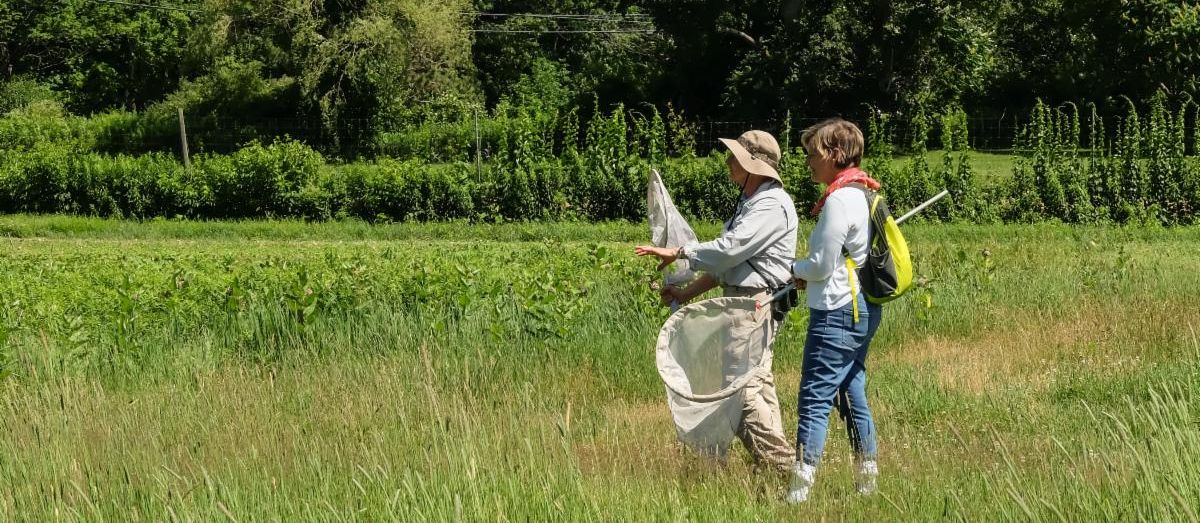
| | Season 3 Surpasses First Atlas | | Participants in last June's Pollinator Safari led by Kent McFarland and Spencer Hardy © Alden Wicker | | |
We want to thank all of you—the numerous organizations who helped host our butterfly trainings, the attendees new and experienced who joined us to spread the love of butterflying, and the hundreds of people like you who have contributed butterfly observations to the atlas—for the work you have put in to the Vermont Butterfly Atlas. After three field seasons, we are well ahead of the first atlas in all ways.
First of all, nearly 50% of the 184 priority blocks have now been adopted, with 40 new survey blocks adopted by volunteers this year.
Getting 40 species to "complete" a block is a tall order, but it's the best way to ensure a block has been thoroughly surveyed! Our goal is to complete all priority blocks by the end of 2027. To that end, five adopted blocks were completed this year, two of which were priority blocks. And many more are close. We have 32 adopted blocks that are less than 10 away from being complete, including 18 adopted blocks that are five or less species away from being done and dusted. Overall, we've completed 19 blocks in our first three years. We have more work to do—scroll down to see how you can help us get there!
We want to celebrate the volunteers behind these accomplishments. Congratulations to Craig Hunt, Courtney Fitzpatrick, Emily Friedman, Kate Taylor, Madeline Bergstrom, Shawn Langston, Sara Reynolds, David Hoag and Terri Armata for completing their blocks! (Bolded names completed a block in 2025.) Our top number of species added to a block in 2025 was by Iliana Freiday, who added 24 species to one block this year (and 47 species across all her adopted blocks). She was followed by Melanie Rosser-Parr (+19 species) and Linda Lynton (+18 species).
You can check how close your block is to completion by visiting the Butterfly Block Mapper. Click on your block and selected 'Get species list' to see the number of species that have been identified on your block since 2023. You can even compare how many were found in the first atlas with how many you have now. If you can't reach 40 species, you can still surpass the last atlas!
The preferred survey method for the atlas is checklist surveys which include location, information for effort (distance, time, number of observers, etc.), and a list of species with counts. These semi-structured surveys are shared with us at eButterfly. But, we recognize that many people might not have the time for these types of surveys and so we have created a presence-only project on iNaturalist. These records only require a photograph, a location, and date to be used. This method helps build our volunteer base, including those who may not even know about the Second Vermont Butterfly Atlas. Despite having more volunteers on the iNaturalist project, both methods have produced the same number of observations!
Thank you to partner organizations for hosting trainings and events for the atlas this year: Vermont Land Trust, Vermont Institute of Natural Science, NorthWoods Stewardship Center, Fairbanks Museum, Farm & Wilderness, Bonnyvale Environmental Center, VT Coverts, the conservation commissions of Burke, Monkton, Guilford, Brattleboro, and Starksboro, and the Brattleboro and Starksboro Libraries. None of this would be possible without the support of a Vermont Fish & Wildlife Department State Wildife Action Grant.
| | |
Join Our Block-Busting Field Trips in 2026
There are 16 priority blocks that still have 0 species on them. In 2026, we're going to change that with the Year of the Block-Busting Field Trip. Across the state, we will host Block Busting Field Days, where you can join our biologists in the field to try to record as many butterflies in a single day as we can from clusters of these unadopted blocks. Some likely areas include Stowe, Middlebury, Craftsbury and Brunswick. Keep an eye out next spring for field trip dates!
Don't forget to submit your hours for our state wildlife grant!
Your efforts with the Second Vermont Butterfly Atlas count as an in-kind match to receive federal funding! Help unlock conservation dollars for Vermont by logging into the online portal and entering your survey hours and mileage.
How?
-
Visit your e-Butterfly.org account and collect all the dates and hours you were surveying
- Add your best estimate of time spent traveling to a site, entering data, or even helping to identify other user's observations.
-
Sign in to the reporting portal and add your information by date.
- Sign off on your hours and then we'll approve them.
Need more help? Find the step-by-step instructions here!
| | Which Butterflies are Declining? | | | | |
The State of the Butterflies in the United States report released in spring found a 20% decline in butterflies populations across the country from 2000 – 2020.
In the Northeast, a region they defined as Virginia to Maine, there was an even greater decline of 33% – the second highest rate of decline in the country.
Tortoiseshells (Compton's and Milbert's) are at the top of the list with 98% and 96% declines respectively. Other species like the Eastern Comma and Least Skipper declined ~21%, not as dramatic but alarming nonetheless.
It wasn't all bad news – eight species examined in the report were increasing in our region, from the modestly increasing Appalachian Brown (+32%) to the explosive Common Buckeye (+602%).
| | |
Some of these increasing populations are driven by new species expanding northward with a warming climate, including recently recorded species such as Eastern Giant Swallowtail, Zabulon Skipper, and Red-banded Hairstreak.
But what are the trends specifically here in Vermont? Thankfully, we have robust data from the first atlas over two decades ago, and today, we are collecting checklist surveys to compare and help understand changes in greater detail than ever before. Your checklist surveys provide the information we need to build a roadmap for future butterfly conservation here in the Green Mountain State.
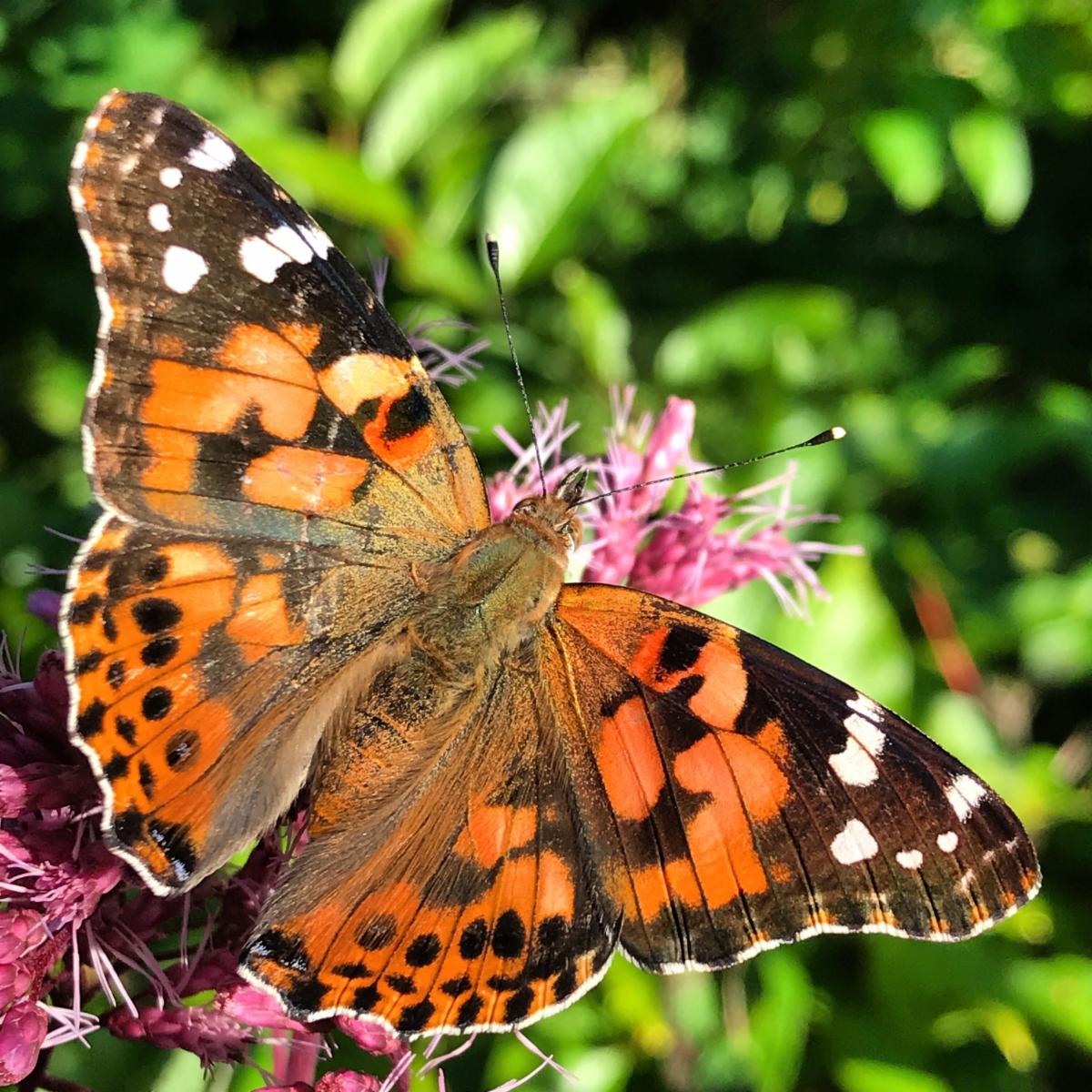
| | Spotlight: The Other Migrating Butterflies | | A Painted Lady, the other long distance migratory butterfly © Kent McFarland | | |
Monarchs are the most popular and well-documented butterfly in North America. They score almost three times as many iNaturalist observations as the next most recorded species, the Eastern Tiger Swallowtail. What draws people to these orange and black butterflies? In part, it's their incredible annual migration to Mexico and (nearly) back each year. But did you know Monarch's aren't the only migrating butterfly?
Two of our early butterflies – the Question Mark and Mourning Cloak – are actually living double lives. These species split their overwintering strategies with half of their populations seeking warmer weather to the south, while the other half bear out the cold behind strips of bark and other cozy-ish places.
The genus Vanessa, including the Painted Lady, American Lady and Red Admiral, are all long distance migrants. In the Americas, the Painted Lady traverses the same arduous path as the Monarch, but it's their European members that impress with the longest butterfly migration on Earth. These stalwart butterflies travel 9,000 miles between tropical Africa and the Arctic Circle each year.
Many butterfly species have individuals who don't migrate but who also can't survive the cold. Every summer, enterprising new volunteers of these warm weather species make their way north. Unfortunately, the chilly conditions of winter put a stop to any successful breeding attempts and prevent them from maintaining a local population. Some of these species include the Northern Buckeye, arriving around the end of June, and the Sassacus Skipper, appearing at the end of May. Other butterflies rare in Vermont in this category include the Little Yellow, Cloudless Sulphur, Fiery Skipper, and Gulf Fritillary; we may see more of them as warmer weather may eventually allow them to survive.
Keep an eye out in the future for two potential arrivals: the Long-tailed Skipper and the Ocola Skipper. Both species consistently make it north into Massachusetts every summer and may appear in Vermont eventually!
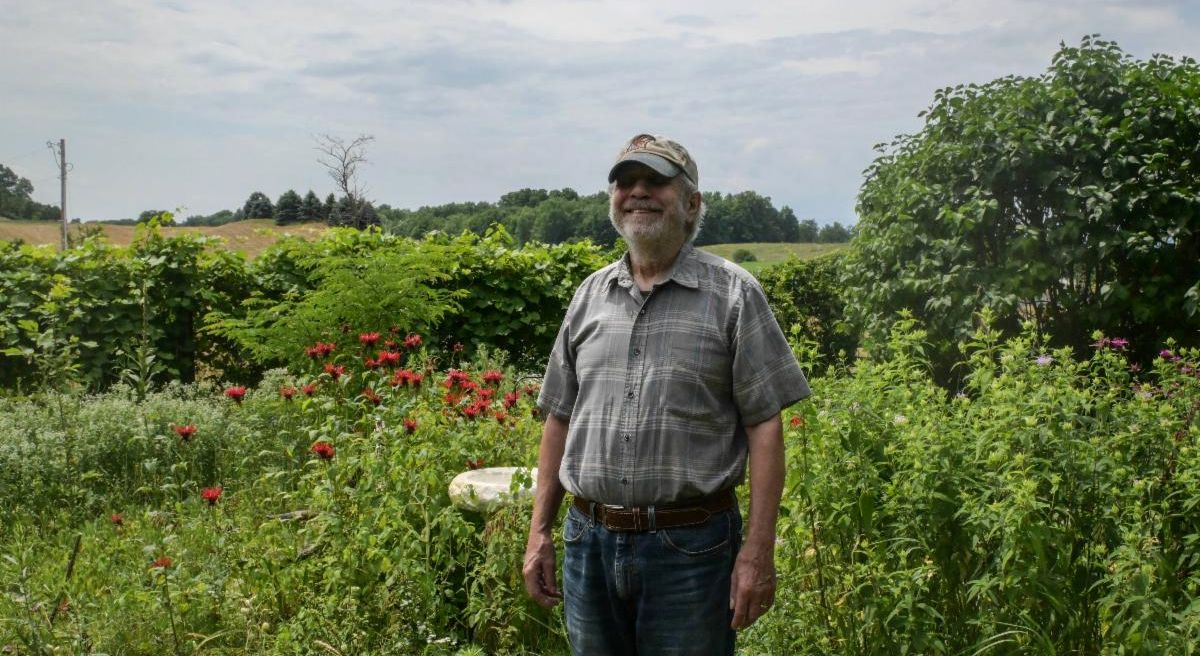
| | Build a Butterfly Garden with Terry Cecchini | | Terri Cecchini stands in his pollinator habitat garden at Shelburne Farms © Alden Wicker | | |
Winter is the perfect time to settle in with a warm blanket, a cup of hot cocoa, and plan how to make your yard more butterfly-friendly next summer. For many people their first stop is the local nursery, but Terry Cecchini, former employee at Green Mountain Power, had a different source: the first Vermont Butterfly Atlas.
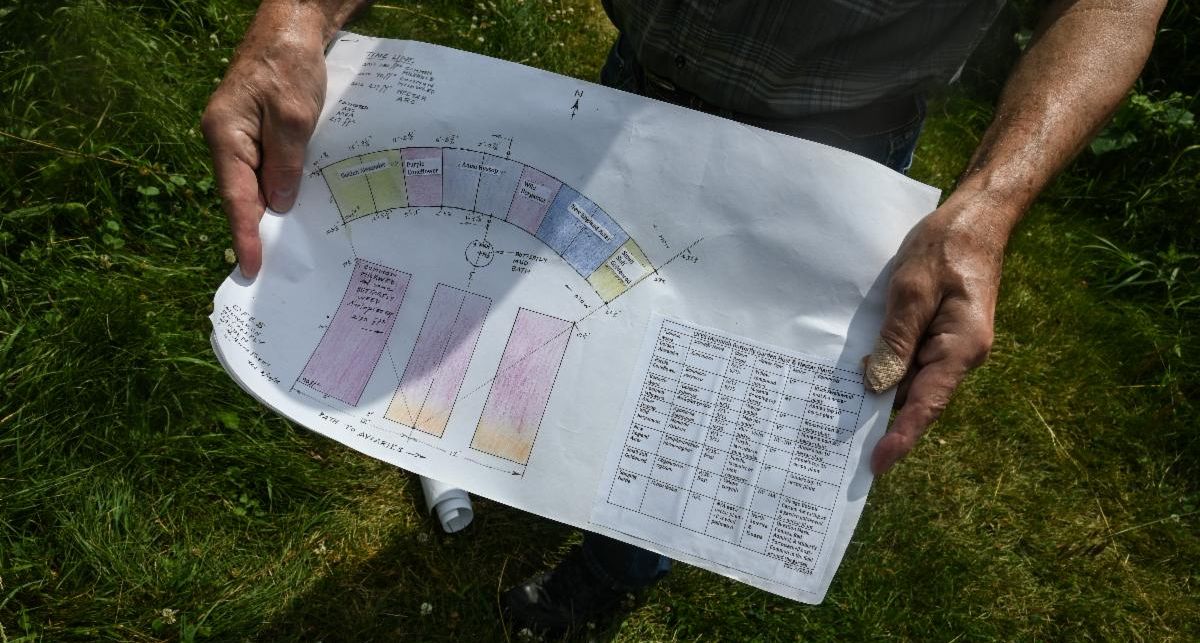
When Terry decided to install a pollinator garden at Shelburne Farms around 2011, he first thought about Monarchs and Milkweeds. In his telling, he came across the VBA1 and discovered the whole plethora of Vermont butterflies that live in his area. Scouring over the records of which species lived near him and what habitats they liked, he created a wish list of butterflies he wanted to support and then researched their host plants to include in the garden.
Today, his garden has over 60 different plant species. Some of these are from his original plant list, but others have been added from fortuitous front porch forum finds or as host plants for other pollinators, like native bees. The garden has been a hit with insects – Terry's colleague, Craig Newman, has recorded over 1,200 insect visitors on iNaturalist.
If you want to learn more, make sure you're on the list for our magazine Field Notes, which will have a deep dive for its spring issue! Email afishman@vtecostudies.org to get on the list.
Ready to enhance your garden? Find out which species live near you, find their host plants, and figure out which plants will grow best near you!
| | Terri Cecchini shows his original garden map © Alden Wicker | | Quick Tip: IDing on eButterfly | | |
Beat the winter blues by helping us get butterfly records in Vermont to research grade on iNaturalist and eButterfly. (You must have an account to identify on each site.)
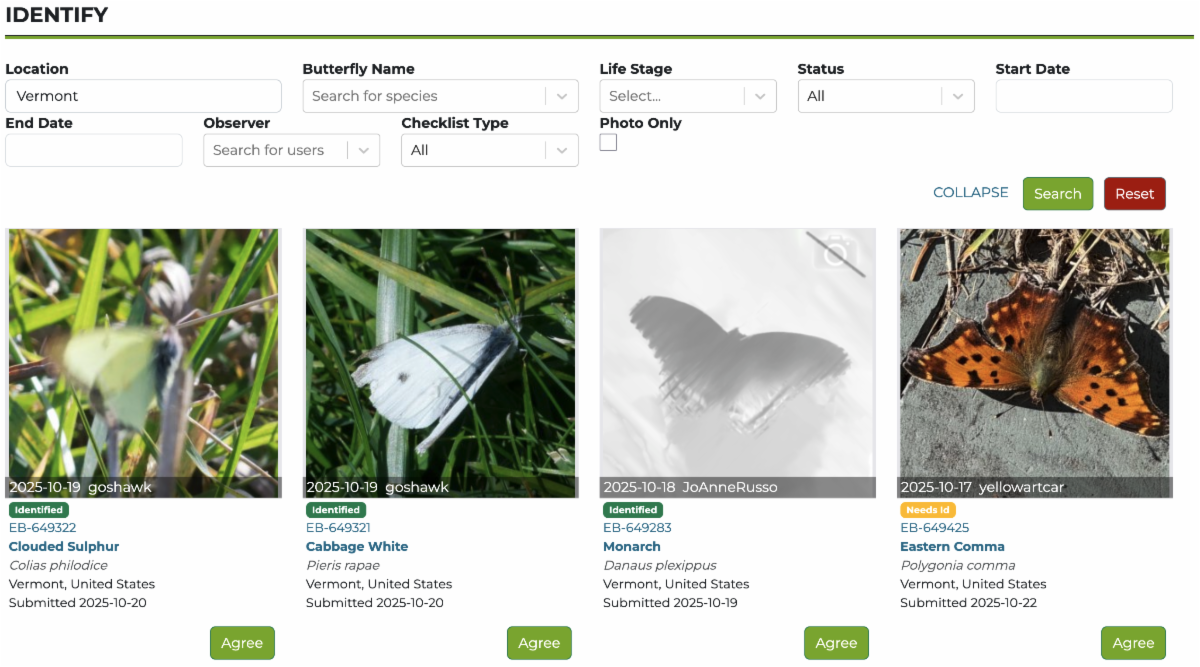
To identify records on eButterfly:
-
Go to e-Butterfly.org and find the navigation bar in the top left. Select the 'Identify' tab.
- Enter a Location like Vermont (you can also search for a town) and click 'Advanced Filter' to bring up the rest of the boxes. Click 'Status' and set it to 'Needs IDs' and specify anything else you would like to narrow the search down to. For instance, if you really want to get into Skippers, you can put 'Skippers' or 'Hesperiidae' in the Butterfly Name field. Then click the green 'Search' button.
- You will see a grid of butterfly pictures and identifications. If you agree with the identification listed with the picture, click the green 'Agree' button. If you disagree or want to see who has contributed to this observation, click on the butterfly picture. You can add a different ID in the 'Butterfly Name' box. When offering an alternate suggestion, it is good practice to include a few comments in the box below that to detail out why you have made an alternate suggestion.
Don't forget that you can identify things to higher levels such as genus or family! And, it is best practice to not rely on computer vision for final identifications.
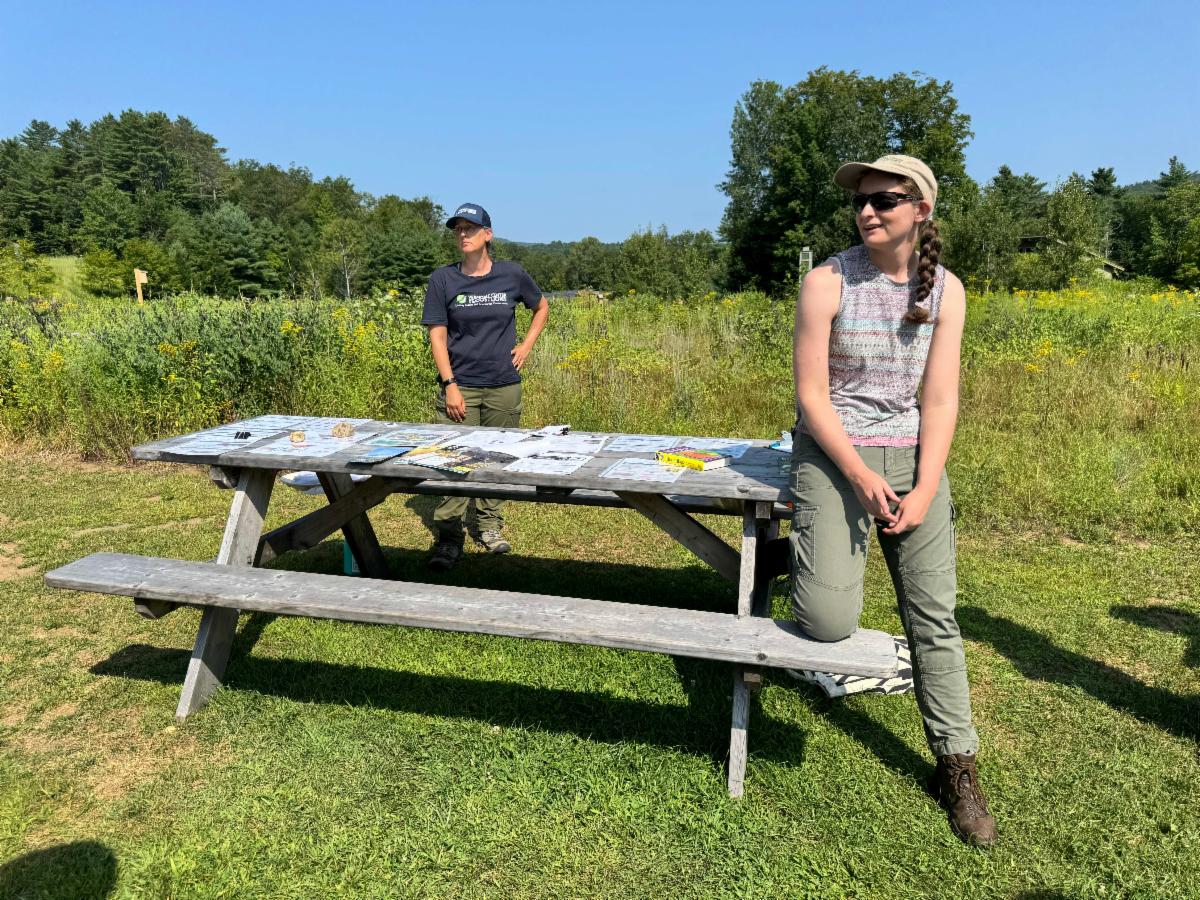
| | | | The iNaturalist ID-a-thon is taking place December 15, 2025 - January 15, 2026. Join the iNaturalist community as we focus on one of the most meaningful ways to support biodiversity knowledge: making identifications. Whether you’ve added thousands of IDs or have only ever made observations, the ID-a-thon is your invitation to jump in, learn new skills, and help connect observations to the organisms they represent. | | Ask, Discuss, Learn: Practice Your Butterfly ID | | Amber Jones (left) and Dana Williams (right) lead a pollinator walk at VINS © Jill DeVito | | |
Spend your winter brushing up on butterfly ID skills with NH Butterfly Monitoring Networks' 2025 webinar recordings. Try out your skills on the e-Butterfly Identify page (instructions above). Please note that the e-Butterfly forums will close down in January, so for all of your butterfly questions, stories, and the weekly butterfly quiz, join us on the email based, VTLEPS listserv! Click the three stacked lines on the right, select 'Subscribe' and follow the instructions to sign up.
| | |
Test your butterfly knowledge:
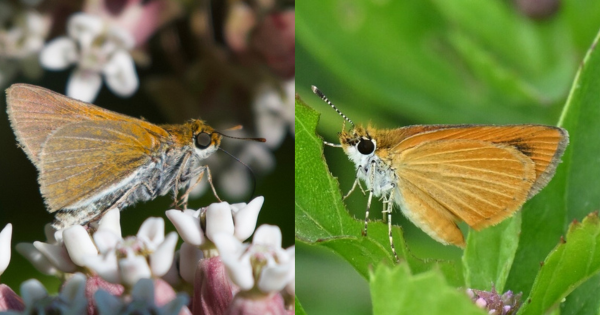
Which of the following butterflies is on Vermont’s SGCN list?
| | | | |