|
From The Executive Director
Jason Schwenkler
| | |
Welcome to the The Collective Voice, your quarterly update from the North State Planning and Development Collective at Chico State.
Last week, 3,700 students (including 450 graduate students) participated in Chico State's 136th Commencement--a time for celebration and reflection for students, their families, faculty and staff. It's during these times I'm reminded why the collaborative work our teams engage in across the North State is so important. These 3,700 students, full of innovative ideas and fresh perspective, will enter into the workforce, stepping onto foundations that were put down before they arrived. Our ongoing work to create a strong, viable place for future generations to thrive is part of that foundation.
In this edition, you'll get a look into our 2024-2025 Annual Report, "Stronger, Together." The report offers a great snapshot of regional and statewide impacts made during the year through our work in natural resources, economic development, GIS, tribal engagement and more. You'll also find an update on California Jobs First efforts in the North State Region, as well as our newest report, "North State Connected," which gives a comprehensive look at the broadband workforce landscape, and offers solutions to gaps in training. I'm also pleased to share that we will be able to continue our work in restoring critical salmon habitat along the Sacramento River, thanks to recent Wildlife Conservation Board funding. You can learn more below and in the article published in Chico State Today.
We look forward to continuing to support Chico State faculty, staff and the region on solutions to some of the North State's most pressing issues. If you have a project idea, or would just like to connect, don't hesitate to reach out. I'd love to hear from you.
Until then, take care-
Jason
Jason Schwenkler jschwenkler@csuchico.edu
Executive Director, North State Planning and Development Collective California State University, Chico
www.nspdc.csuchico.edu
| |
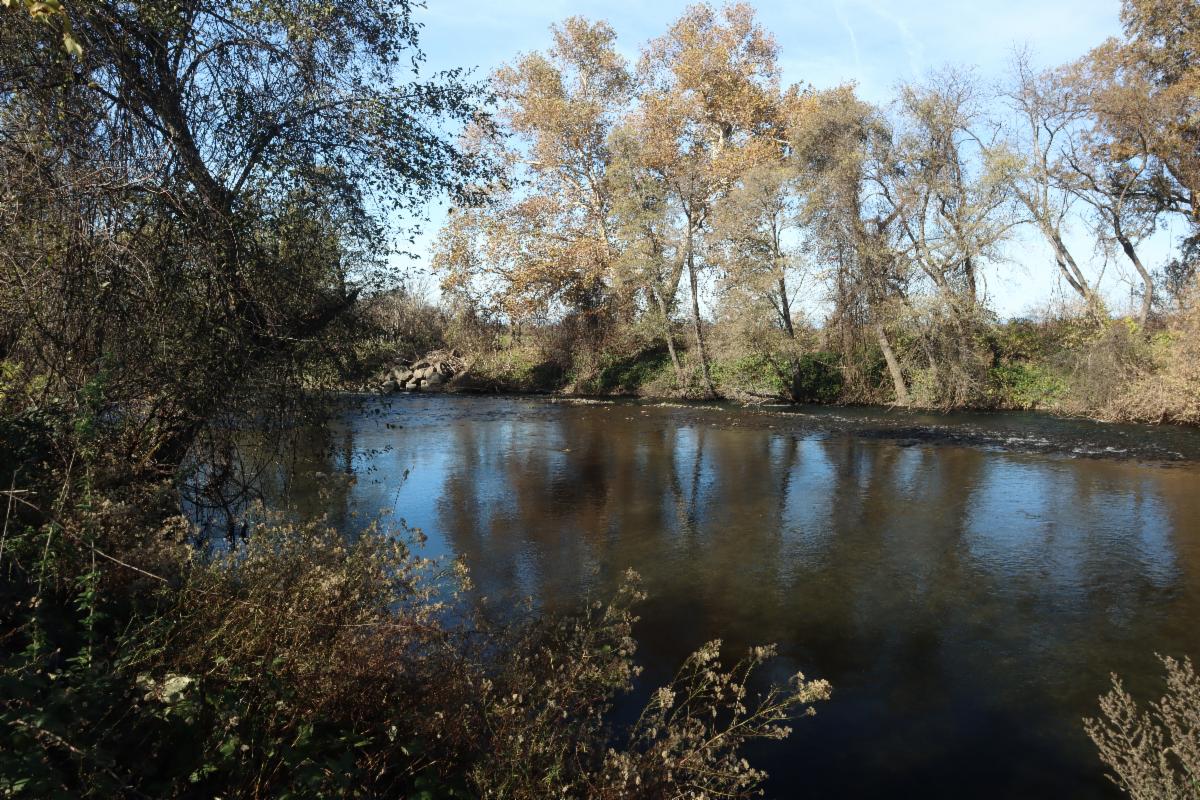
North State Secures $1.85 Million to Restore Critical Salmon Habitat on Battle Creek
Major habitat gains for juvenile salmonids on Battle Creek, one of the Sacramento River’s largest tributaries, is underway thanks to a recent award to the Collective. The funding is part of $59, 642, 096 in grants from the Wildlife Conservation Board (WCB) to protect biodiversity, restore important wildlife habitats and improve public access to nature. 27 projects from across 18 California counties received awards.
The project will address threats to juvenile salmonids by such as habitat fragmentation, floodplain disconnection, and diminished nutrient sources for juvenile salmonids rearing on lower Battle Creek. Restoration activities include creation of a perennial side channel and removal of approximately 1,700 feet of abandoned levee to increase floodplain connectivity and provide salmonid rearing and spawning habitat.
“Our ecosystem restoration and research projects across the North State are made possible through partnerships with organizations like the Wildlife Conservation Board. We extend our sincere thanks to the WCB, and their support for projects that work to ensure the survival of our salmon,” said Jason Schwenkler, Executive Director of the Collective.
Read more in Chico State Today.
| |
California Jobs First-
North State Region Snapshot from the Collective
As co-conveners of the California Jobs First Initiative for the North State region, along with Sierra Institute for Community and Environment, we're pleased to report that progress on the Initiative remains strong across the region. The following snapshot offers a glimpse into key efforts:
Impact Analysis Underway
California Jobs First Catalyst projects continue to gain momentum across the North State Region. To better understand how these 22 projects are strengthening the regional economy, the Collective has launched a comprehensive economic impact analysis. The Collective will quantify how these investments support direct employment, stimulate supply chain activity, generate household spending, and contribute to broader economic outcomes over the life of the program. Metrics will include jobs supported, labor income, business activity, value added, and tax revenue. This analysis will provide credible, data-driven evidence to demonstrate to the State that strategic investment in rural regions produces measurable economic returns, strengthens local industries, and creates lasting regional impact.
Community Workshops and Meetings
Our fellow California Jobs First Co-Conveners, Sierra Institute, launched a second round of community workshops across all 10 counties and Tribal lands. These small, locally focused gatherings, typically 15–20 participants, create space for meaningful conversation about each community’s unique experiences and needs. Insights from the first round of meetings in 2024 helped shape the North State Regional Plans, and this next phase will continue to build on that foundation.
Regional Meeting
A virtual, public meeting for the California Jobs First North State Region will be held on May 27th. Join us for an update on Catalyst Projects and opportunities to offer feedback. Registration is required, attendance is free. Register now by clicking here.
Tribal Economic Development Initiative Launching
Through the North State’s California Jobs First framework and in collaboration with CSU, Chico’s Office of Tribal Relations, a Tribal-centered regional economic development initiative will launch this month. This effort will bring together Tribes and Tribal-serving organizations through in-person and virtual convenings across the region. The goal is to elevate Tribal priorities, strengthen regional collaboration, build capacity, and position Tribal-led and Tribal-serving initiatives for funding, impact, and long-term growth across the North State.
Implementation Projects Snapshot:
The Collective led the North State-Redwood Coast Ag-Tech Alliance as a part of the larger UCANR statewide Ag-Tech Alliance to pitch at the Regional Investment Initiative in summer 2025. The Collective represented a cohort of 5 projects with 2 awarded Round I Implementation Funds.
The first project, led by the Siskiyou Economic Development Council, is the Siskiyou Mobile Irrigation Lab Implementation Project which combines workforce development with on-the-ground technology support. The project will hire and train local technicians to provide free,
in-field irrigation evaluations for producers across Siskiyou County, helping improve efficiency, reduce water and energy use, and extend the life of aging systems. By expanding access to modern agricultural tools and expertise, the project supports producers while creating quality local jobs.
The Hopland Implementation Project will introduce and test virtual fencing technology on local sheep and cattle herds to explore its potential for improving rangeland management. In partnership with UC Cooperative Extension, the project will develop a training curriculum to help producers understand the costs, benefits, and real-world applications of this technology. Over the grant period, the team will host six workshops for ranchers, land managers, and aspiring producers, creating opportunities for hands-on learning and feedback.
| |
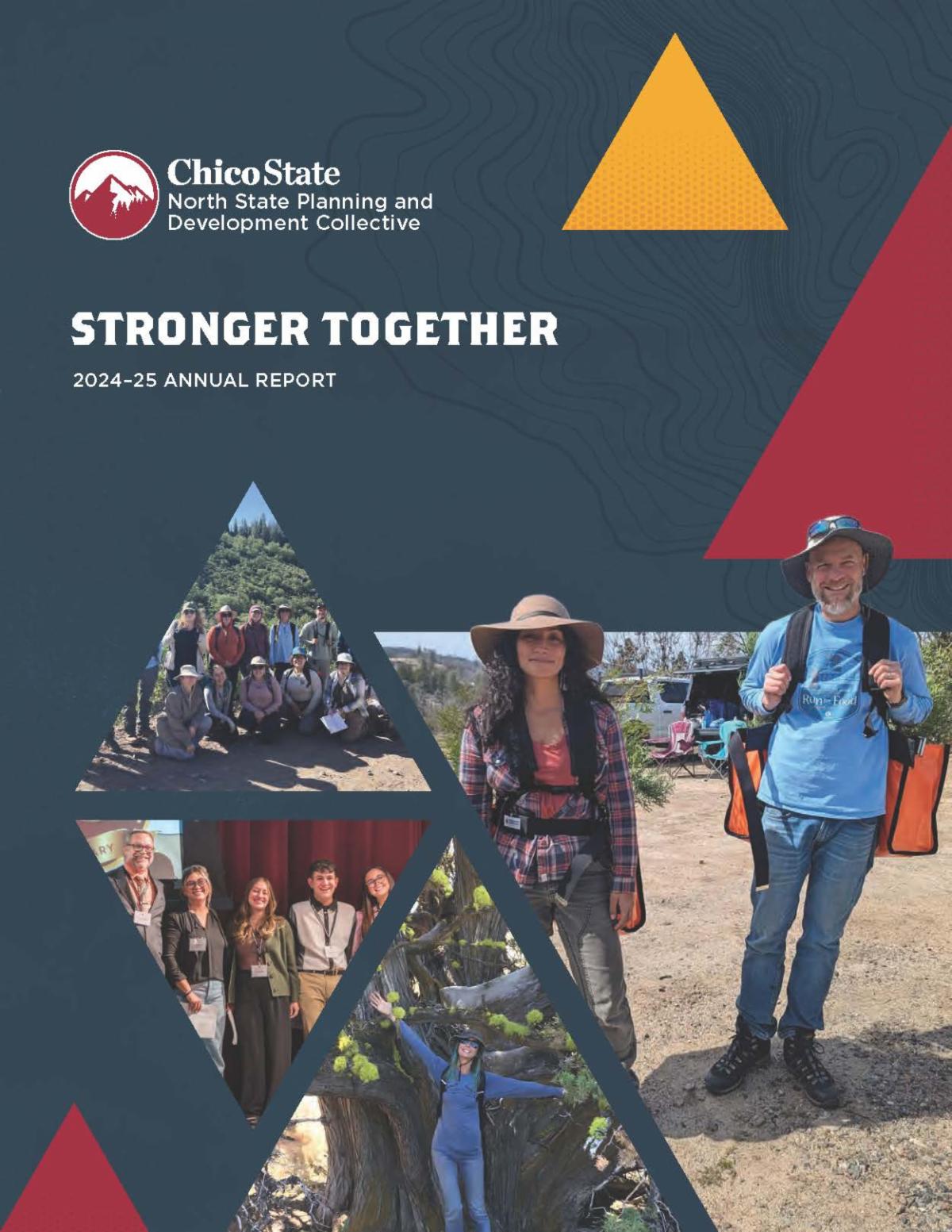
Annual Report Highlights Collaboration, Impacts Across North State Region
The Collective's work across the Chico State service region and beyond wouldn't be possible without our valued partners. Simply put, we are "Stronger Together." Learn more about our impacts in our 2024-2025 Annual Report.
| | | |
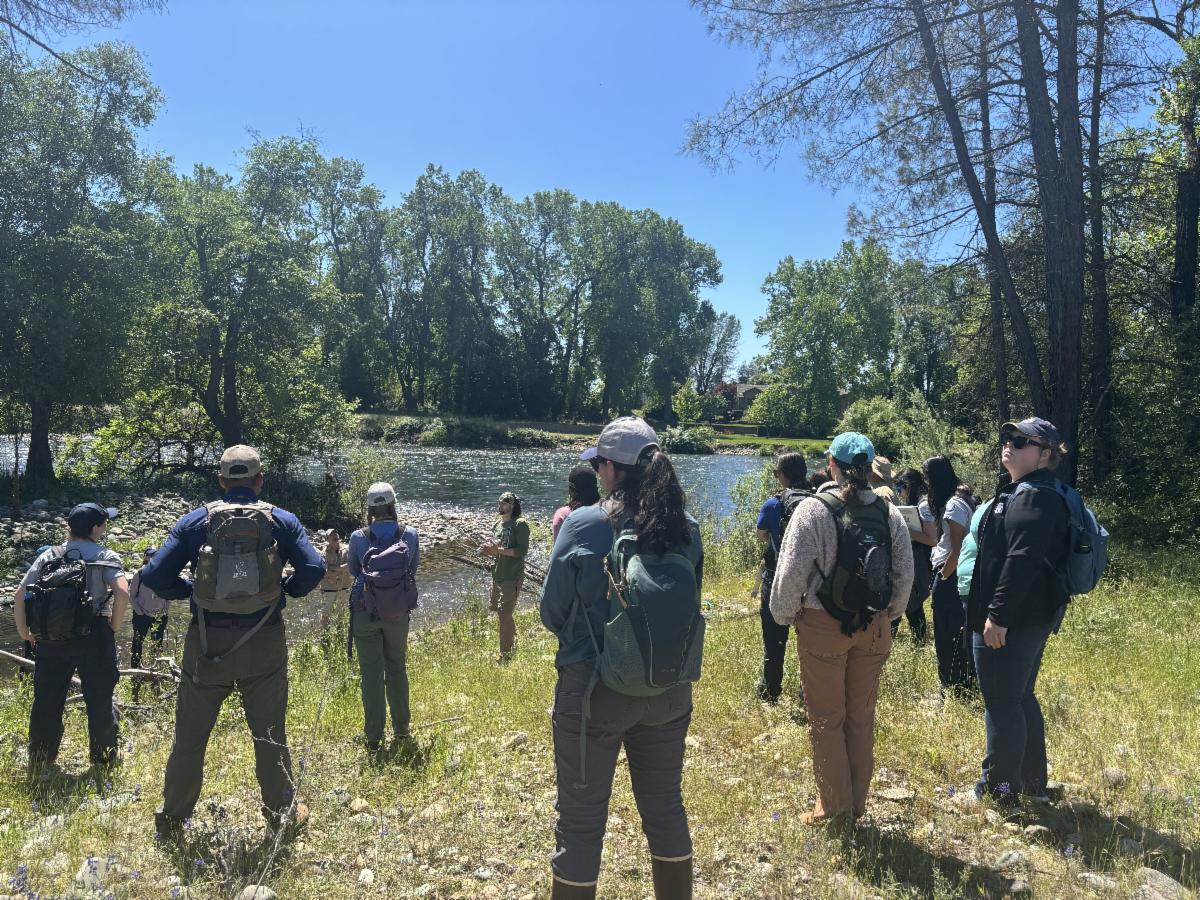
Side Channel Restoration Projects Highlighted at Salmonid Restoration Federation Conference
On April 28, 2026, the Collective's Salmonid Restoration Team hosted one of the featured field tours for the 43rd Annual Salmonid Restoration Conference organized by the Salmonid Restoration Federation. The tour brought together restoration practitioners, fisheries biologists, Tribal representatives, agency staff, watershed scientists, and conservation leaders from across California and the Pacific Northwest.
Launching from Bonnyview Boat Ramp, attendees were transported down the Sacramento River through a partnership between the Collective, the Sacramento River Salmon Association, and Dave Jacobs Professional Guide Service to view active floodplain and side channel restoration sites supporting ESA (Endangered Species Act) listed winter run Chinook salmon, threatened Central Valley spring run Chinook salmon, and Central Valley steelhead. Tour stops at Shea Island and Kapusta Island highlighted large scale restoration efforts that the Collective helped fund, permit, and construct alongside numerous state, federal, Tribal, and local partners. Key collaborators included the Yurok Tribe, the United States Bureau of Reclamation, the California Department of Water Resources, and the United States Fish and Wildlife Service. The restoration sites reconnect juvenile salmon to productive, low velocity rearing habitat that provides food resources, flood refuge, and critical conditions needed to improve survival of threatened and endangered salmonids throughout the Sacramento River system.
"Conference attendees repeatedly described the tour as one of the highlights of the week because it allowed participants to see large scale restoration projects actively functioning on the landscape rather than only hearing about them in presentations. Participants directly observed how side channel reconnection increases shallow water habitat, improves floodplain connectivity, creates refuge from high river velocities, and supports the complex habitats juvenile salmon need to grow and survive before migrating downstream," said Shyla Black, GIS Assistant for the Collective.
Both restoration sites are functioning as intended and continue to show strong biological response. Adult salmon redds have been documented annually since construction and juvenile salmonids continue utilizing the restored habitats throughout the year. These projects represent long term investments in rebuilding critical habitat for threatened and endangered salmonids within the Sacramento River system and are designed to provide meaningful population level benefits over time.
"A major reason the tour ran so smoothly was the support and coordination provided by Dave Jacobs Professional Guide Service and the local guide network that safely transported attendees throughout the day. Their river knowledge and ability to efficiently move large groups on the water helped make the tour one of the standout events of the conference. We appreciate Dave and his team for helping showcase Sacramento River restoration work to fisheries professionals from across the region," said Chad Praetorius, Biologist for the Collective.
The Collective team looks forward to continuing educational tours and outreach opportunities that connect professionals, students, Tribal partners, and the public directly to restoration work occurring throughout Northern California.
"By bringing people onto the river to experience these projects firsthand, the Collective continues building support for science-based restoration efforts helping shape the future of salmon recovery in California, " said Praetorius.
For more information about Collective--led river tours, please contact Rebekah Casey, Project Manager at rlcasey@csuchico.edu.
| | |
From Concept to Action: Students and Local Tribes Practice Land Stewardship
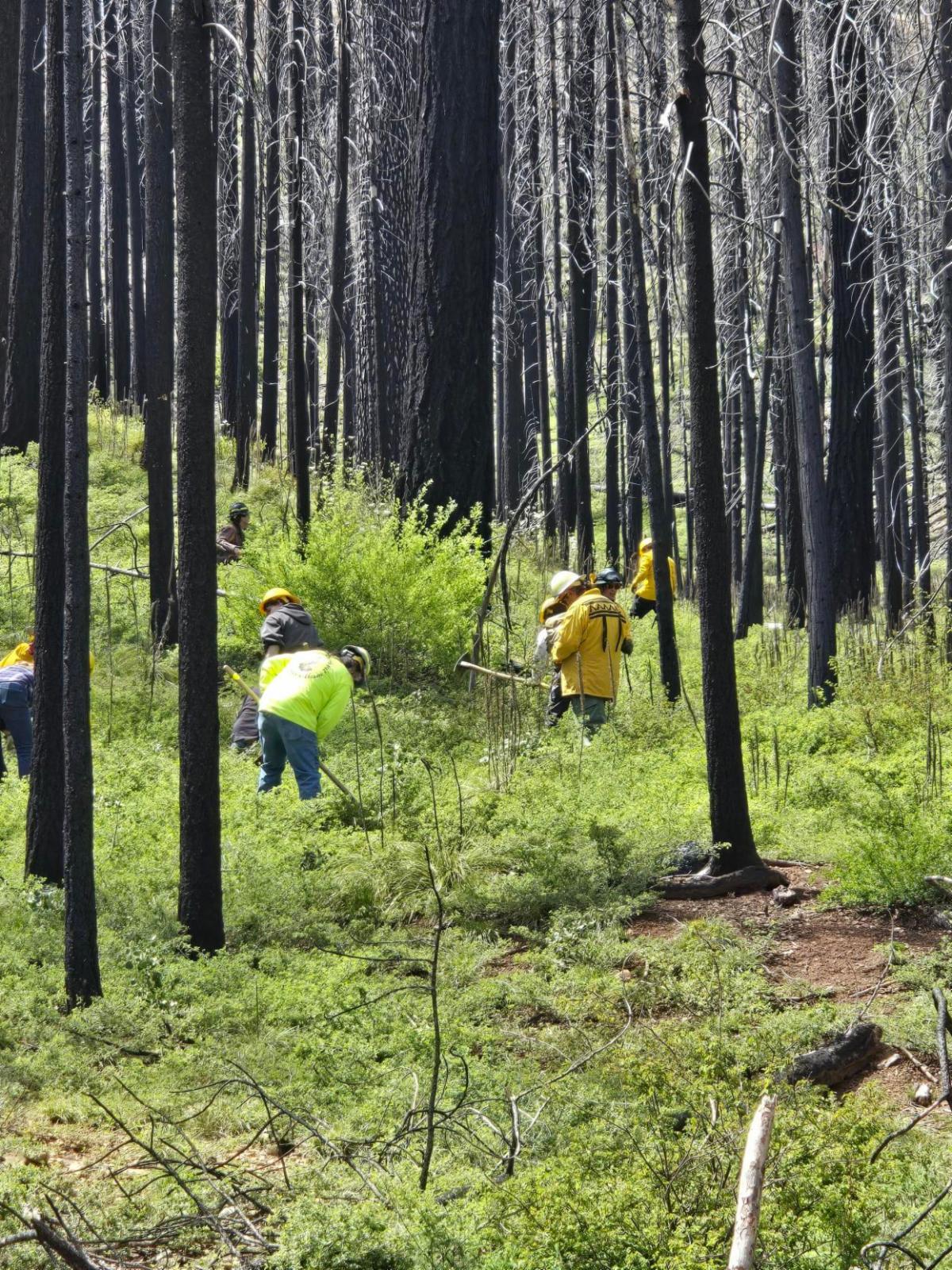
Staff from the Collective took part in a student field day in Plumas County last month, part of a Sierra Nevada Conservancy-funded Local Capacity Building project. The field day was the culminating grant objective, where students from Feather River College came together with local tribal members to put into action land stewardship concepts they learned from curriculum developed by the Collective with community college partners. Students helped manage native plants and got to learn about traditional braiding using native Bear Grass, and took part in the cultural tending of beargrass—learning how to remove dead or dying leaves, clear debris, and gather materials that were then used at the braiding station. For more information about the project, contact Hayley Stone, Assistant Director, at hmstone@csuchico.edu
| |
Save the Date!
2027 Economic Forecast Conference
Thursday, January 14, 2027
Bell Memorial Union, California State University, Chico
Sponsorships are available-contact Alice Patterson at ampatterson@csuchico.edu for information.
| | |
Broadband Workforce Findings for North State Released in New Report
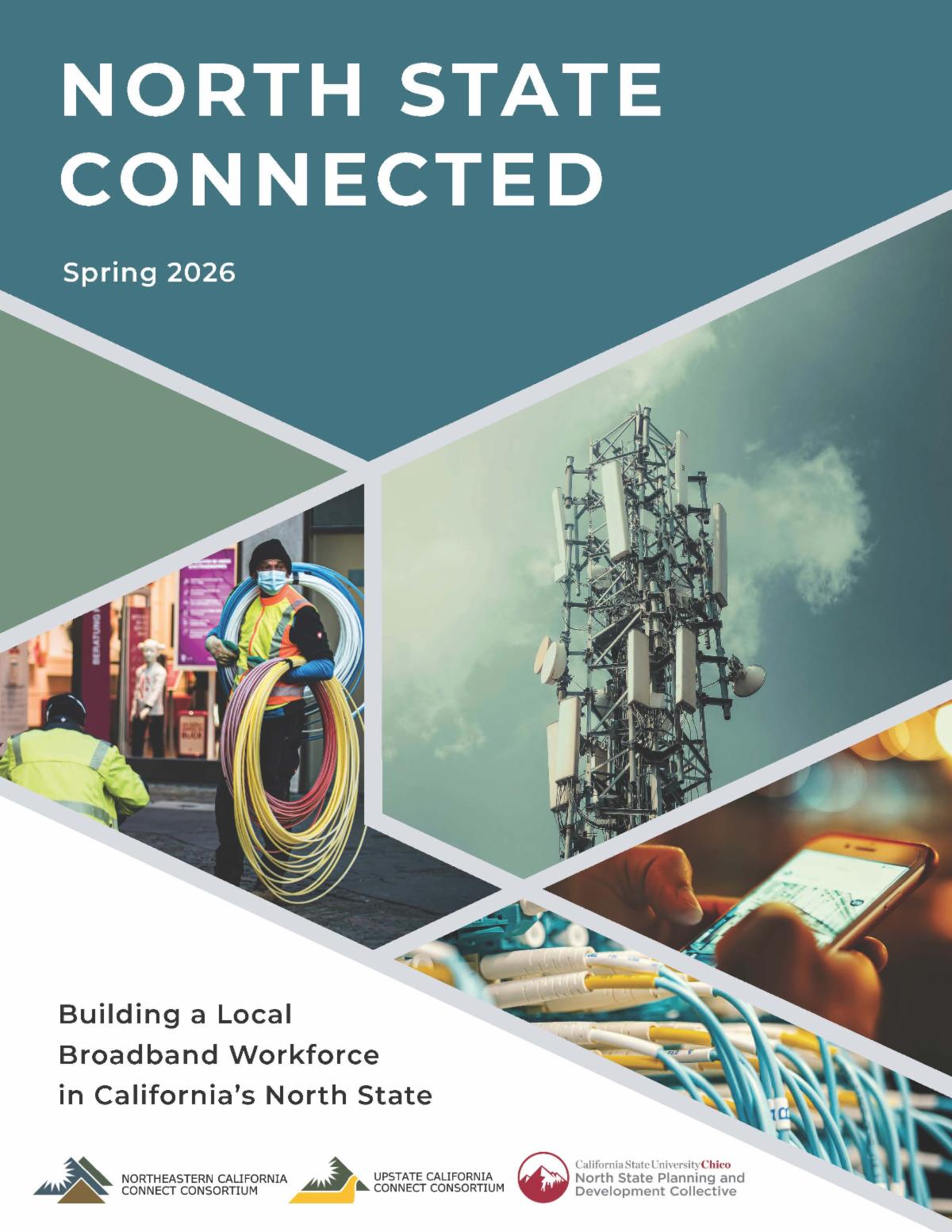
From availability of existing training opportunities to broadband workforce demands and more, the recently released North State Connected report offers a comprehensive evaluation of the North State broadband workforce. Funded by the California Public Utilities Commission (CPUC) and developed by the Northeastern and Upstate California Connect Broadband Consortia, the report offers actionable solutions to address skills gaps and create a stronger workforce. Read the full report here.
Consortia Team Takes Part in Annual CPUC Public Workshop
The California Public Utilities Commission, as part of its implementation of Assembly Bill (AB) 1665, holds annual public workshops to facilitate collaboration among regional consortia, stakeholders, local governments, existing facility-based broadband providers, and consumers regarding cost-effective strategies to reach unserved areas. Hayley Stone, Assistant Director for the Collective and Lily McGlothern, Project Manager, attended the most recent public workshop, held April 22, 2026 in San Francisco.
"These public workshops give us the opportunity to connect with other stakeholders in the region and stay on the cutting-edge of policy and strategy as it relates to North State broadband," said Stone.
Future workshop information can be found on the CPUC website.
| | |
Digital Literacy Classes Address Skills Gap
Across North State
The Collective is pleased to continue its partnership on a series of digital literacy classes which launched in March of this year, designed to build confidence and give users the tools they need to succeed in the digital world. For more details, see below. To view available dates and register, click here.
| | |
Save the Date! 7th Annual Virtual Broadband Summit
Thursday, August 6, 2026
9am to 11am Online
Registration opens in June!
For additional information about the event, including sponsorship, contact Outreach Coordinator Sabrina Oregel at saoregel@csuchico.edu
Hosted by the Northeastern and Upstate California Connect Broadband Consortia
Sponsored in part by Spectrum
| | | | |