HELLO!
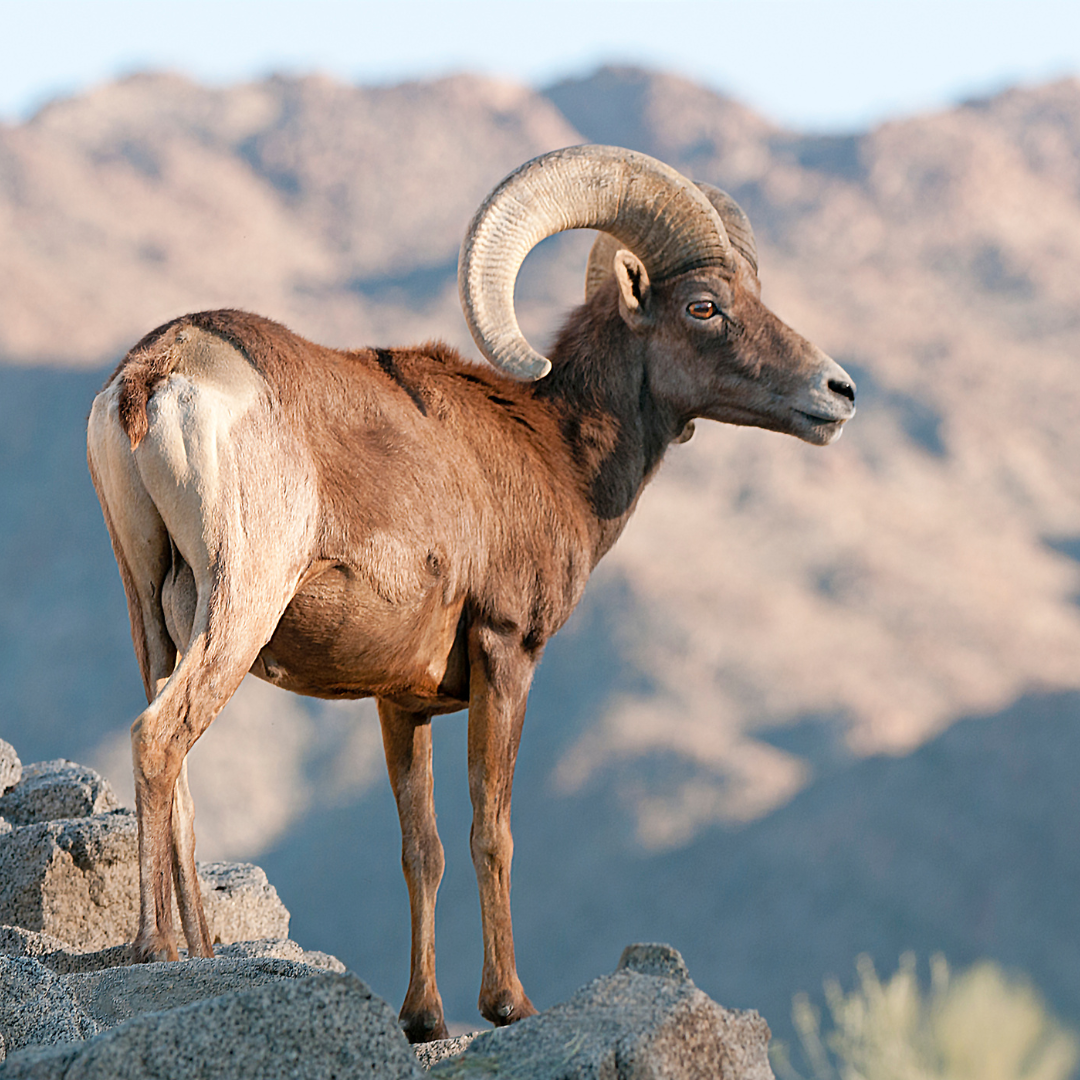
Rafting down the Black Canyon at Lake Mead or hiking an iconic mountain range rimming the Las Vegas valley is an opportunity to engage in the friendly, fascinating competition of spotting Desert Bighorn Sheep. It may take craning your neck to find the precipitously high rock that the muscular, cloven-hooved Bighorn gracefully balances on. It may also require a committed sense of focus because crypto colorization helps a Bighorn sheep's sandy-colored coat and iconic "curl" headdress blend into its natural surroundings.
Yet, while coats the color of the earth allow Desert Bighorn Sheep to fade into the landscape, they are at the forefront of the Southern Paiute's (Nuwuvi also known as Nuwu) story. The Nuwu, the first people of Southern Nevada, call the Bighorn "Nah’gah," and revere the animal for surrendering its life for the Nuwu's survival when food and water were scarce. The Nah'gah is honored as both a protector of the Nuwu and a source of their power and energy. They view their health and that of the Nah'gah as intertwined.
If you are looking for a sure way to spot Desert Bighorn Sheep, visit Hemenway Valley Park in Boulder City where they gather to water and graze throughout the morning and late afternoon hours. Or visit the Desert National Wildlife Refuge, the largest intact habitat for the Bighorn Sheep in the Mojave Desert. Tips on where to see Bighorn at the refuge are available online or at the Corn Creek Visitor Center.
The Desert Bighorn, once feared of becoming extinct, can also be found on USPS Endangered Species stamps. The stamps honor the 50th anniversary of The Endangered Species Act. The colorful photos of featured species are sourced from Joe Sartore's National Geographic Photo Ark project, which aims to reverently photograph all living species.
Learn more about the Nuwu story here from UNLV.
|