|
Issue XXII - December 9th, 2025
Winter Issue
| | |
Dear Members, families, and friends,
With snow falling, the familiar smell of seasonal treats, and the holiday season in full swing, we invite you to read the winter issue of The Connection Newsletter. We know that this time of year can be hectic, so we have provided you as many resources as possible to support you in this season. In this edition, you will find information on upcoming local seasonal events, the Southern Tier Connect Quality Management Committee (QMC), support for sensory needs during the holidays, and more!
We hope you find this edition of The Connection informative and helpful.
From everyone at Southern Tier Connect, we wish you a wonderful holiday season and a warm winter!
Sincerely,
Jess and Carey
| |
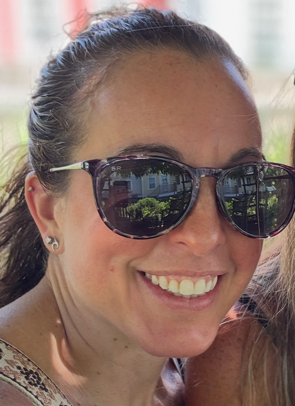
Jessica Colon
Executive Director
| |  |
Carey Peters
Director of Care Management
& Compliance
| | | |
Comprehensive Care Management:
Kat's Journey to Funding Silas's Wheelchair Ramp
| | Kat Ingersoll (left), Silas (right) | | |
Silas is “the brightest light you can be around,” according to his mom, Kristen D’Avolio. He is a kind-hearted boy who is always the first to offer help. He loves video games and superheroes, and spending time with his family. As Silas has grown, it has become a challenge for his mom to lift him and his wheelchair into the house daily. Silas walks with assistance at home and uses his wheelchair inside and outside the home for greater independence. For years, Kristen had tried to receive funding to install a wheelchair ramp for their home. When Kat Ingersoll became part of Silas’s care team, she knew providing a wheelchair ramp would be crucial to supporting his independence.
Kat, a care coordination manager (CCM) at Southern Tier Connect (STC), has always had a passion for providing support for people with intellectual and developmental disabilities (I/DD). Prior to working with STC, she worked in care management and self-directed services (SDS), always excited to learn about new opportunities to help the people she supports. When Kat began supporting Silas, Kristen had already explored many avenues to fund a wheelchair ramp. Kat knew that this project would take time. After all of the challenges Kristen had faced, she explains, “it was never a question of if the need was there, but of who would fund it.”.
The ramp would not only allow Silas to move independently in and out of his home, but it would also protect Kristen’s health. For six years, she lifted Silas and his wheelchair daily, sometimes multiple times a day. As she explains, “First my back started getting really bad and eventually my knees gave out.” As Silas grew, that pain only increased. Kristen knew that long-term, she could not continue lifting him daily
Kat jumped into action to find a way to receive the funding. It had already taken about a year prior to Kat joining the process. She knew it was important to move the project along as quickly as possible. After coordinating with physical therapists, doctors, and everyone in Silas’s care team, Kat had all the information needed to receive funding for this project through the Office for People with Developmental Disabilities (OPWDD). The culmination of years of work, denials, and setbacks finally led to what had long been a dream: a ramp for Silas!
Now, Silas has a sturdy ramp perfectly suited for his needs. He can enter and exit his home independently. Kristen’s gratitude to Kat’s hard work is evident: “She made it so much easier—a weight was lifted off my shoulders. Being a parent of a child with disabilities, you don’t always know the path forward. Kat paved the way and answered all of my questions.” The years of paperwork and challenges finally felt worth it as Kristen and Silas watched the contractors build the ramp. Kristen sent as many pictures as she could to Kat, showing what they had accomplished. The best part, as Kristen describes it, “Silas even got to watch it being built! He would smile so big, knowing what was happening for him.”
Kat’s passion for this work drives her, even when it takes years to see her efforts realized. For Kat, it’s all about education, “I always make sure everyone I work with knows what’s available to them, but I’m also honest. Sometimes it does take a long time to receive the services someone needs, but I am there with them every step of the way.” Kat and Silas’s story reminds us of the power of patience and a supportive community.
| | |
Have a story you wish to share?
Do you have something you would like to share with us? A story, rights, or disability-related news item you've heard. Is there something you'd like to see in the upcoming newsletters? Connect with us at the link below or send an email to info@southerntierconnect.org!
| | |
Ready for an adventure? Dive into our Website Scavenger Hunt and uncover the hidden gems waiting across every page! As you explore, you will discover powerful tools, helpful resources, and insider tips designed to help you get the most out of what we have to offer. Each clue brings you closer to mastering our site—and maybe even closer to winning a special prize. So bring your curiosity, sharpen your detective skills, and start your hunt today!
How it works:
-
Click the button below to find the appropriate scavenger hunt—staff, member, or provider/friend of STC on the STC website.
- Navigate the website to find the answers.
- Submit your answers using the button below (also found on the scavenger hunt flyer). If all of your answers are correct, you will be entered in a drawing for a $50 gift card!
Submit your answers until December 17th!
A winner in each category (member, provider, staff) will be announced through email on December 22nd.
| | Supporting Sensory Needs During the Holiday Season |
| Enhancing Quality of Life Through Understanding and Support | | |
The holiday season is a time filled with excitement, celebration, and connection, but for people with intellectual and developmental disabilities (I/DD), it can also bring sensory challenges. Bright lights, loud gatherings, new routines, and unfamiliar environments can quickly become overwhelming. As care coordination managers (CCMs), family members, and service providers, understanding and supporting sensory needs during this time can make all the difference in helping someone enjoy the season with comfort and joy.
Understanding Sensory Sensitivities
People with I/DD often experience sensory input more intensely than others. This may mean certain sights, sounds, textures, or smells can be overstimulating or, for some, not stimulating enough. The result can be stress, discomfort, or changes in behavior. Recognizing these reactions as communication is key to providing support.
Practical Ways to Support Sensory Regulation
Plan Ahead
Before attending events or gatherings, talk with the member (and their support team) about what to expect. Visual schedules, photos, or social stories can help reduce anxiety by previewing what’s coming next.
Maintain Routines When Possible
The holidays can disrupt daily structure, which may be unsettling. Try to keep familiar routines especially around sleep, meals, and downtime, consistent whenever possible.
Create a “Quiet Space”
Identify a calm area at home or at events where the member can go to decompress. This might include noise-canceling headphones, soft lighting, or comforting sensory tools like fidgets or weighted blankets.
Offer Choices
Empower members to make choices about participation. For example, they might help decorate one small area instead of an entire room or join a gathering for a short time rather than the full event.
Be Mindful of Triggers
Flashing lights, strong scents, and loud music are common during the holidays. Consider sensory-friendly alternatives such as static lights, unscented candles, or lower-volume background music.
Collaborate and Communicate
Care Managers can work with families and providers to identify what has helped in the past. Including these supports in Life Plans ensures they’re recognized and implemented throughout the season.
Embracing Inclusion and Joy
The goal isn’t to avoid holiday experiences but to adapt them so everyone can participate meaningfully. Sensory-friendly celebrations promote inclusion, respect, and understanding, values that lie at the heart of the Southern Tier Connect’s mission.
This season let’s remember that everyone experiences the world differently. By listening, planning, and supporting sensory needs, we can help make the holidays a time of joy, connection, and belonging for all.
| | STC Quality Management Committee |
| |
At STC, it is important to use that you receive the best care available to you. We improve our organization through reporting, data analysis, and oversight. The Quality Management Committee (QMC) is one tool STC uses to ensure our support is the best in the region.
Per the Office for People With Developmental Disabilities (OPWDD) Policy Manual, every Care Coordination Organization (CCO) has a group called the Quality Management Committee, or QMC. STC's Quality Management Committee is a multi-disciplinary team overseen by the Population Health Coordinator, and comprised of STC staff, staff from collaborating provider agencies, and family advocates.
The QMC meets quarterly to review STC's Quality Management Plan and plays an important role in helping the agency make informed decisions, address concerns, and support continuous improvement.
Read more by clicking the button below to learn about what the committee does and why it is crucial to STCs' goals and care. If you have any questions about STC's Quality Management Plan or the Quality Management Committee, reach out to Emily Jackson at jacksone@southerntierconnect.org.
| | What is RHIO and Why Does it Matter? | | |
In today’s healthcare landscape, sharing accurate and timely information is essential—especially for STC members who often receive services from multiple providers. One of the most important tools supporting this flow of information is a Regional Health Information Organization, or RHIO.
A RHIO is a secure, collaborative network that allows healthcare providers to share patient health information electronically. In New York State, RHIOs operate under the Statewide Health Information Network for New York (SHIN-NY). They connect hospitals, clinics, care coordination managers, behavioral health providers, laboratories, and other healthcare entities so each member of an individual’s care team has access to the same up-to-date information.
Why RHIOs Matter for Care Coordination
Coordinated care is not just helpful—it’s essential. Many people receive services from multiple agencies, specialists, and support programs. RHIO participation strengthens this coordination in several important ways:
-
Real-time information sharing: Care managers can view key health events—such as emergency room visits, hospital admissions, or medication changes—as they occur, allowing them to follow up quickly and support the person’s needs.
-
More complete care planning: Access to clinical histories, lab results, and provider notes helps care managers develop more accurate and personalized Life Plans.
-
Improved safety and continuity: Providers can see a person’s current diagnoses, allergies, and medications, reducing the risk of errors and ensuring smoother transitions between care settings.
-
Better communication among providers: Everyone involved in supporting a member can work from the same information, improving collaboration and reducing repeated tests or assessments.
The Bottom Line
RHIOs play a crucial role in strengthening care coordination. By connecting providers and care managers through secure, real-time health information exchange, RHIOs help ensure that our members receive more informed, efficient, and person-centered care.
| | From tree lightings to holiday markets, and more! Get in the festive spirit this season with local events. Find the area closest to you below. In each region, you will find lists of local holiday events this season. | | You can also visit STC's events calendar to find local events throughout the year! | | |
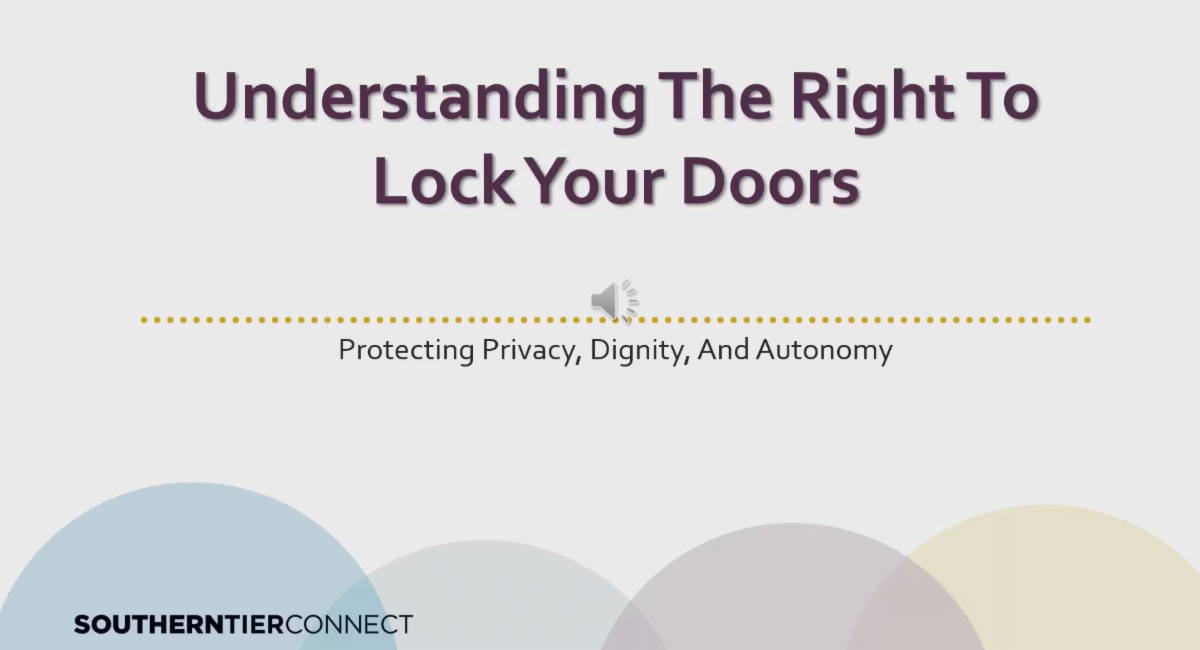
Understanding Your Right to Lock Your Door
You can protect your privacy, dignity, and autonomy.
Watch the latest video below or click the button to access all of the videos in the series.
| | We are looking for someone like you to share your voice for our Your Rights in 10 series. If you are interested in reading for an episode in this series, please email us at: info@southerntierconnect.org. | | |
Family Support Services by Racker Webinar
OPWDD’s Family Support Services (FSS) provide programs and supports to families to help keep their loved ones with developmental disabilities safe and living at home. There are a wide variety of Family Support Services available to assist you with caring for your loved one at home including advocacy, after school programs, financial reimbursement, parent and sibling support groups, recreation/camp funding, respite, specialized equipment and home modifications. Racker will discuss this program further along with eligibility and application requirements.
| | | We hope you enjoyed this edition of The Connection e-newsletter. Did you know that you can now read all of our past newsletters archived on our website? Please be aware that we are currently updating our archive. Stay tuned for more! | | Know someone who might want to join our mailing list? Click here or forward them this email and tell them to sign up! | | | | |