👋 Good morning—
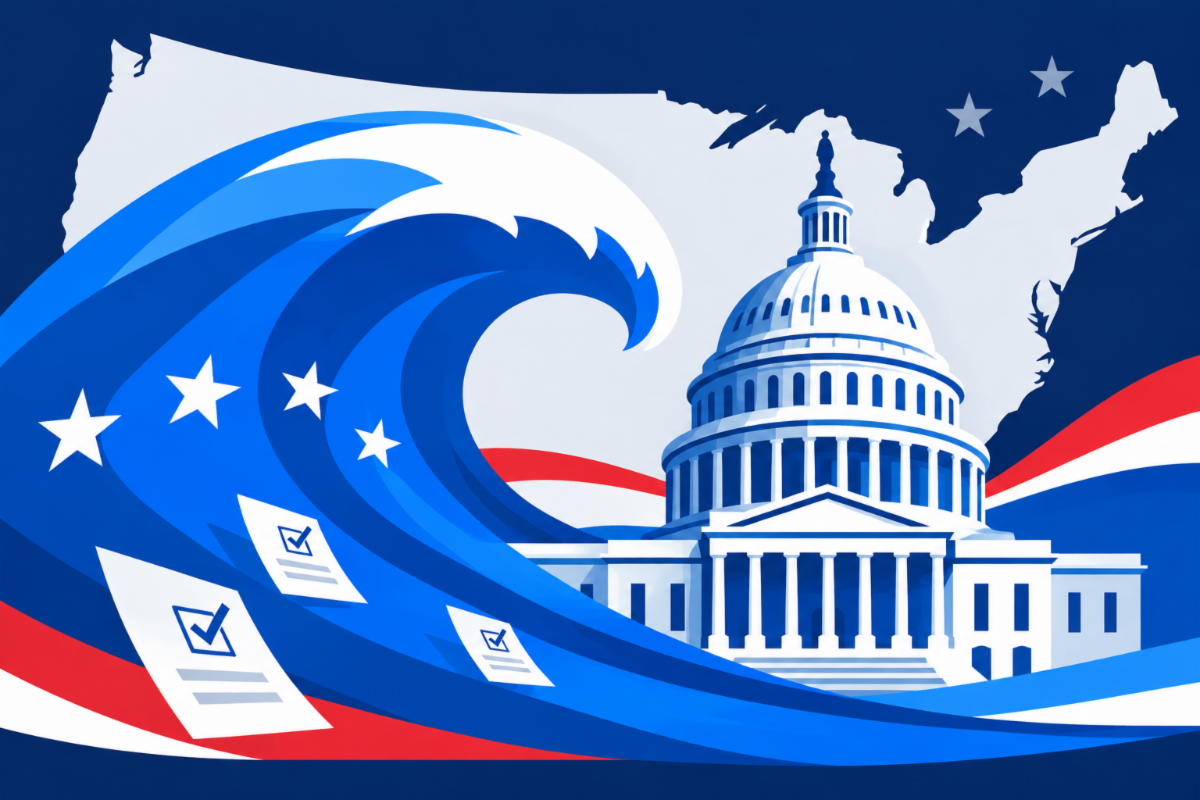
Election Day delivered a national wave, some significant movement here in Illinois, and plenty for the engineering industry to watch as we head toward 2027.
Nationally, Democrats flipped control of Congress and made gains in governors’ races and state legislatures, setting up a new period of divided government in Washington. In Illinois, Democrats swept the statewide races and expanded their already-large majorities in the General Assembly.
We break down what changed, which races mattered most and what it could mean for infrastructure, permitting reform and the policy agenda ahead.
Also in this issue: the latest ACEC Research Institute Engineering Business Sentiment report. The takeaway is encouraging — firms continue to report strong backlogs, hiring expectations and confidence in their own businesses, even as uncertainty about the broader economy remains.
Let’s get into it.
| | Democrats Seize Control of Congress in National Wave | |
Voters delivered a dramatic shift in political power, handing Democrats control of the U.S. House and Senate while moving several governorships and state legislative chambers from red to blue.
The big picture: Democrats have won at least 237 House seats, comfortably exceeding the 218 needed for control, with additional races still uncalled. Hakeem Jeffries is expected to become the first Black speaker of the House when the new Congress convenes in January.
In the Senate: Democrats flipped seven Republican-held seats—Kansas, Iowa, Texas, Ohio, Maine, North Carolina and South Carolina. Contests in Alaska and Mississippi remain too close to call.The results rank among the largest Senate swings against a president’s party in recent history and give Democrats control of both congressional chambers.
Zoom in: The geographic reach of the victories is notable:
- Kansas elected its first Democratic senator since 1932.
- Texas elected its first Democratic senator since 1988.
- Democrats captured Senate seats in seven states President Trump carried in 2024.
- Seventeen senators are being replaced, with the average age of their successors falling from 70 to 55.
Beyond Washington: Democrats also flipped five governorships—Georgia, Iowa, Nevada, Ohio and Texas—and made their largest state-government gains since 2010. They captured legislative chambers in several states, including both chambers in Wisconsin and the Texas House for the first time in more than two decades.
Why it matters to engineering: The new Congress will bring different committee chairs, legislative priorities and approaches to federal spending. ACEC will be working with the incoming leadership on the issues most important to engineering firms, including:
- Long-term surface transportation reauthorization
- Continued infrastructure investment
- Permitting reform
- Qualifications-based selection
- Energy and data-center infrastructure
- Tax and workforce policies affecting engineering firms
Yes, but: Divided government is not going away. President Trump will remain in the White House, requiring congressional Democrats and the administration to find common ground if major legislation is going to advance.
What’s next: Congress still has a lame-duck session before the new majorities take office. That creates a limited opportunity to complete bipartisan priorities—including surface transportation reauthorization, infrastructure funding and permitting reform—before committee leadership and the congressional agenda change in January.
The bottom line: The players and balance of power are changing, but ACEC Illinois’ approach is not. We will continue working with leaders of both parties to advance infrastructure investment and policies that support the engineering industry.
| | 🗳️ Democratic Wave Expands Party’s Control in Illinois | | |
Illinois Democrats swept the statewide races and are expected to expand their already-large supermajorities in both chambers of the General Assembly.
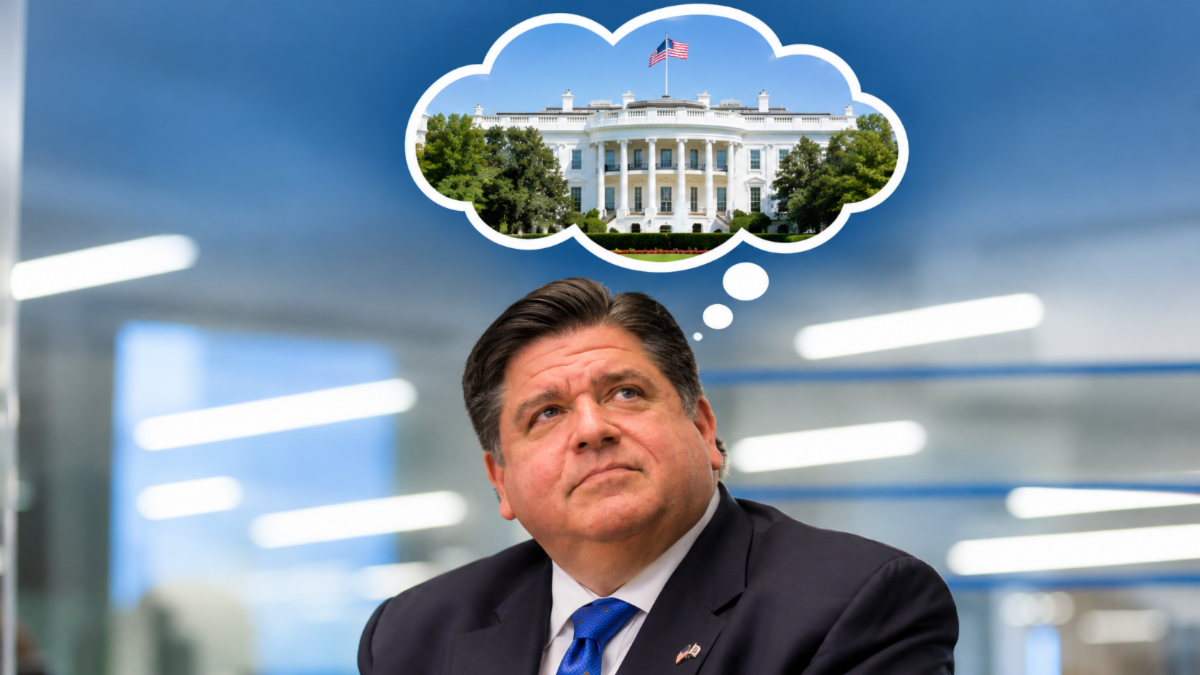
The big picture: Gov. JB Pritzker won a third term with approximately 60% of the vote, defeating Darren Bailey by roughly 23 points—nearly doubling his 2022 margin. Pritzker becomes the first Illinois Democrat elected to three terms as governor, strengthening his position as a potential 2028 presidential candidate.
At the top of the ticket: Juliana Stratton defeated Don Tracy by approximately 23 points to succeed retiring U.S. Sen. Dick Durbin. She will join Sen. Tammy Duckworth, making Illinois the first state represented simultaneously by two women of color in the Senate.
Democrats also retained every statewide constitutional office, while the state’s congressional delegation remains unchanged at 14 Democrats and three Republicans.
In the Illinois Senate: Democrats flipped five Republican-held seats:
- Benjamin McAdams defeated Sen. Seth Lewis in the 24th District.
- Rep. Nabeela Syed defeated Sen. Darby Hills in the 26th.
- Karen Battaglia defeated Sen. Craig Wilcox in the 32nd.
- Michele Clark won the open 33rd District held by retiring Sen. Don DeWitte.
- Marsia Geldert-Murphey defeated Sen. Erica Harriss in the 56th.
If the current results hold, Democrats will expand their Senate majority from 40–19 to 45–14.
A special note: ACEC Illinois is especially happy to congratulate Marsia Geldert-Murphey on her victory. As a member of the GBA team and the ACEC community, Marsia understands our industry and the important role engineering firms play across Illinois. ACEC Illinois was proud to support her campaign, and we look forward to working with her in the Senate.
In the Illinois House: Democrats flipped six Republican-held seats:
- Erica Bray-Parker won the open 47th District previously represented by retiring Rep. Amy Grant.
- Amanda Zahorak defeated Rep. Jennifer Sanalitro in the 48th.
- Maria Peterson defeated Rep. Martin McLaughlin in the 52nd.
- Ricky Rivard defeated Rep. Dan Ugaste in the 65th.
- Mary Catherine Roberson defeated Rep. Brandun Schweizer in the 104th.
- George McClellan defeated Rep. Kevin Schmidt in the 114th.
The six pickups expand the Democratic House majority from 78–40 to 84–34. Republicans did not flip any Democratic-held seats in either chamber.
Why it matters: Democrats were already well above the three-fifths supermajority thresholds of 71 House votes and 36 Senate votes. Their larger margins will give them even more flexibility on legislation, spending and potential veto overrides.
Still watching: When lawmakers return to Springfield for veto session, the Democratic and Republican caucuses in both chambers will meet to elect their leadership teams for the next General Assembly.
What’s next: The General Assembly returns for veto session in two weeks, with data-center reform and a potential Bears stadium agreement among the issues that could be considered.
The bottom line: Illinois was already a Democratic-controlled state. Tuesday’s election did not change who is in charge—but it significantly strengthened their hand.
| | 📋 Pritzker Gives New Congress a “Day One” Agenda | | |
Fresh off winning a third term, Gov. JB Pritzker released a 200-item federal policy agenda for the new Democratic-controlled Congress.
What’s new: The 75-page “Fighting for Illinois” plan covers infrastructure, energy, health care, education, immigration, artificial intelligence and the economy.
Zoom in: Engineering-related priorities include funding the Brandon Road project, protecting federal transportation grants, creating a lead-service-line replacement program, restoring funding for Illinois carbon-management projects and reauthorizing federal cybersecurity grants.
Yes, but: President Trump will remain in office and can veto legislation passed by Congress. Pritzker believes the election results could create an opening for compromise on portions of the agenda.
The political backdrop: Released one day after Pritzker’s decisive reelection, the plan also raises his national profile as he considers a potential 2028 presidential campaign.
Review Pritzker’s “Fighting for Illinois” agenda
| |
🏗️ Engineering Industry Generates $718 Billion in Economic Activity, Supports 5.8 Million Jobs
| | |
America's engineering industry continues to be a major driver of economic growth, even as the broader construction market slows.
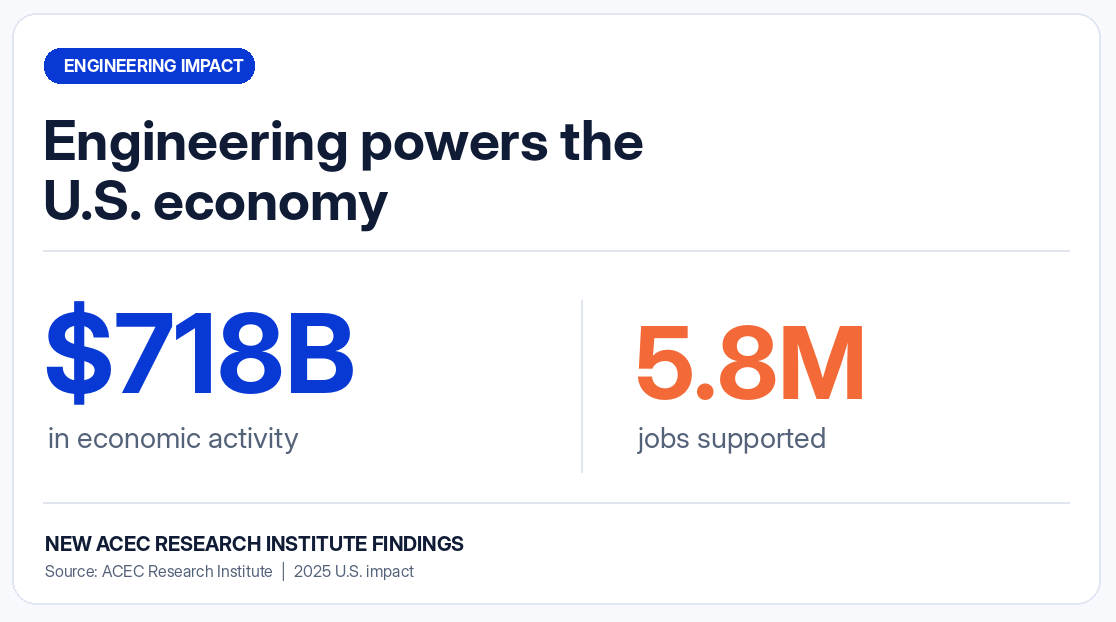
What's new: A new report from the ACEC Research Institute finds that engineering and design services supported $717.7 billion in U.S. economic activity in 2025, a 4.7% increase over the previous year.
By the numbers:
- 💰 $479.8 billion in direct industry revenue.
- 👷 5.8 million jobs supported nationwide, including 1.72 million directly employed in engineering and design.
- 📈 $119,500 in average annual industry wages.
- 🏛️ $144.6 billion generated in federal, state and local tax revenues.
Why it matters: Demand for engineering services is accelerating, fueled by investments in infrastructure, energy, water systems and AI-driven data centers.
The big picture: The Institute projects industry revenue will surpass $500 billion in 2026, growing 5.6%, even as overall U.S. construction spending is expected to decline 1.3%.
What's next: Data center construction spending is projected to more than double, reaching $108.6 billion by 2030. Those investments will also drive demand for power generation, transmission, water infrastructure and transportation improvements.
The bottom line: Engineering isn't just benefiting from economic growth. Our industry is helping drive it, creating jobs and delivering the infrastructure needed to support the next generation of economic investment.
Read the full ACEC Research Institute findings
| | 🏗️ Rebuild Illinois Is Paying Off in Metro East | | |
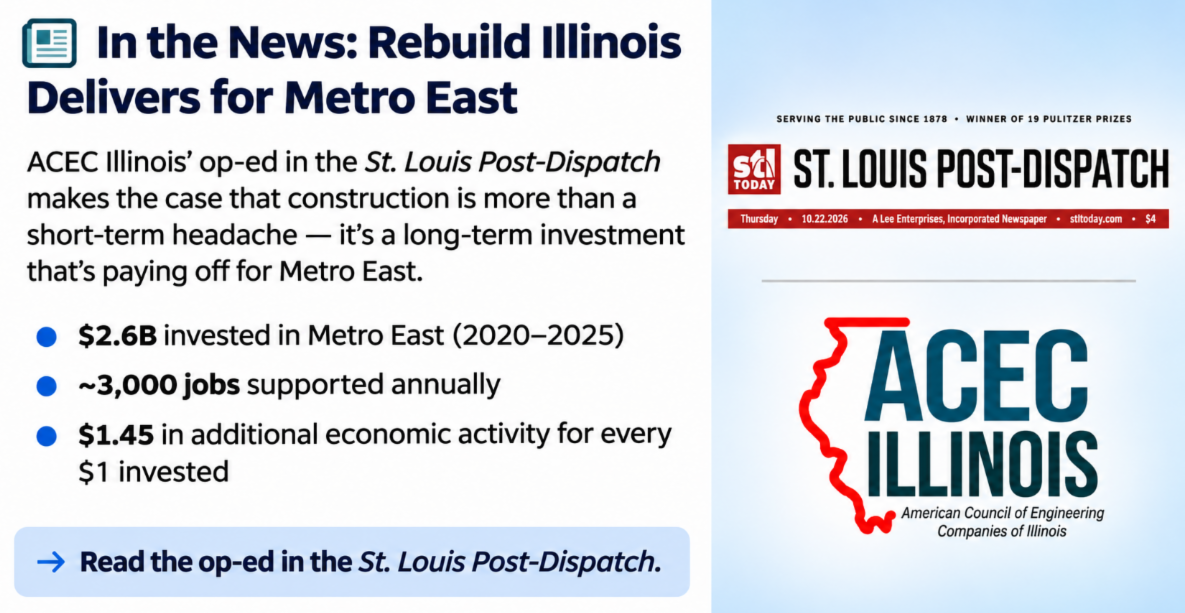
A new ACEC Illinois op-ed in the St. Louis Post-Dispatch makes the case that infrastructure investment keeps working long after the construction crews leave.
By the numbers: Rebuild Illinois has invested $2.6 billion in Metro East since 2020, supporting nearly 3,000 jobs annually, generating about $7.3 million in additional local tax revenue, and producing $1.45 in additional economic activity for every $1 invested.
Why it matters: The benefits extend beyond the work zone — supporting suppliers, local businesses, workers and future private investment.
🔗 Go deeper: Read the full op-ed in the St. Louis Post-Dispatch.
| | | | |
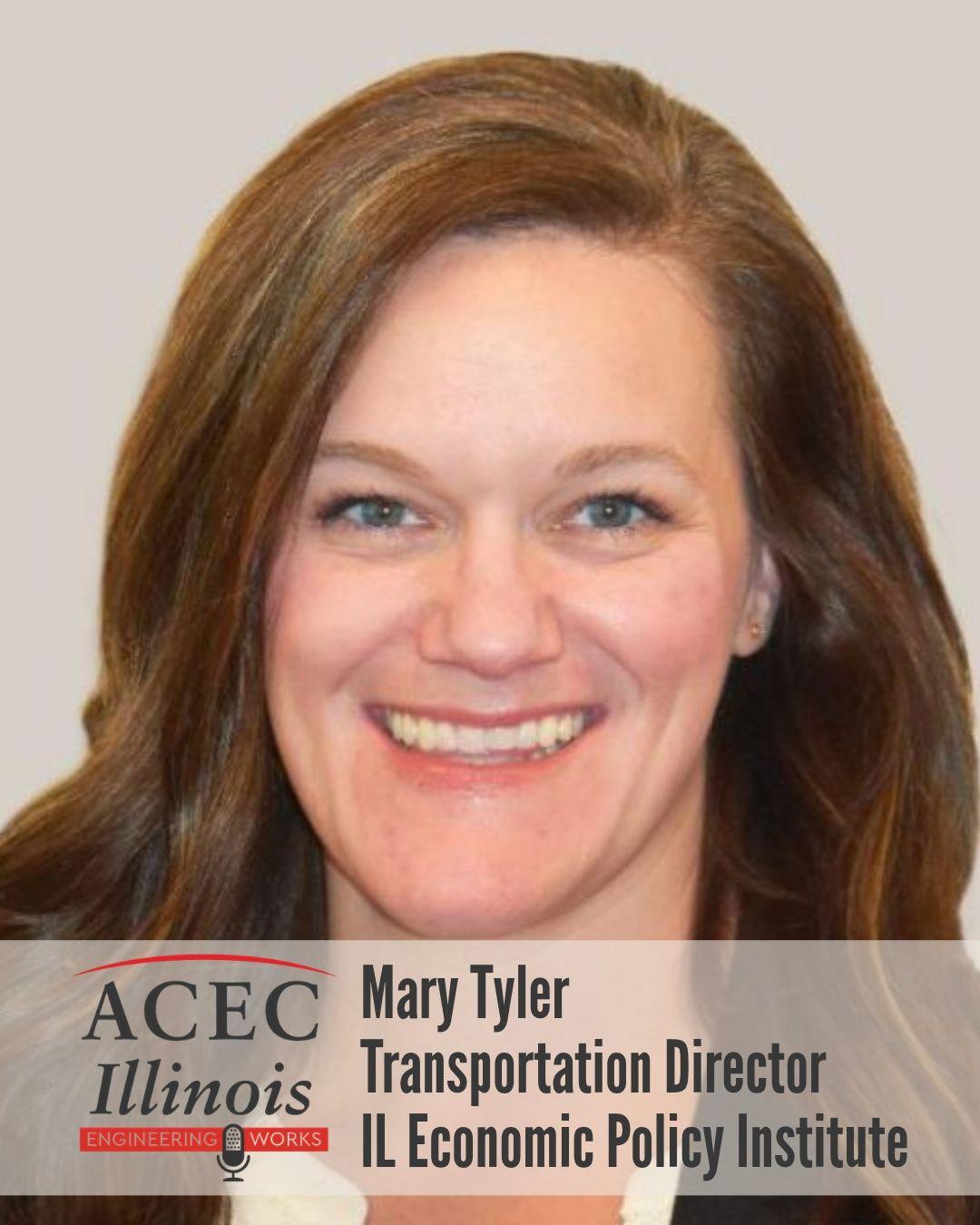
In this episode of Engineering Works, Mary Tyler, Transportation Director for the Illinois Economic Policy Institute, discusses the findings of an independent study commissioned by ACEC Illinois examining the statewide economic impact of Rebuild Illinois six years after its passage.
The conversation explores how infrastructure investment supports jobs, generates economic activity and benefits communities across Illinois. Tyler also examines the challenges ahead, including remaining infrastructure needs and the effects of fuel efficiency and electric-vehicle adoption on transportation funding.
| | MOT Seminar Planning & Feedback Survey | | |
We are beginning to plan an upcoming IDOT MOT Seminar and would appreciate your input! Please take a few minutes to complete this brief survey and share your thoughts, suggestions, and topics of interest.
Your feedback will help us develop a seminar that is informative, relevant, and valuable to our members. Thank you for taking the time to participate and help us make this a successful event!
| | |
ACEC Illinois invites you to join us for a luncheon on November 12 in Springfield, IL.
This luncheon will feature an update and Q&A with Lora Rensing, IDOT Director of Highways.
This is a great opportunity to hear from Director Rensing, gain insights into IDOT’s priorities and initiatives, and connect with fellow ACEC Illinois members. We look forward to welcoming you for an informative and engaging discussion!
| | |
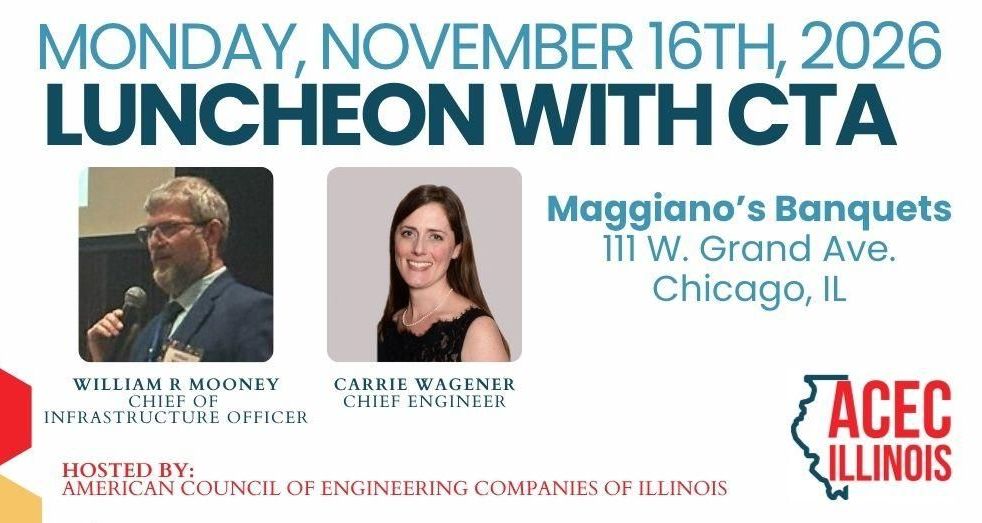
ACEC Illinois invites you to join us for a luncheon featuring William R. Mooney, Chief Infrastructure Officer, and Carrie Wagener, Chief Engineer, with the Chicago Transit Authority.
This luncheon will provide an opportunity to hear about CTA’s infrastructure priorities, engineering initiatives, and upcoming projects while connecting with fellow ACEC Illinois members. We look forward to welcoming you for an informative discussion and valuable networking!
| | |
ACEC Career Center
Find Your Next Hiring Match
The American Council of Engineering Companies (ACEC) Career Center helps you connect with qualified candidates who align with your firm’s needs and long-term goals. Showcase your job openings and simplify the hiring process of growing your firm! As an added benefit, you can post internship opportunities at no cost—helping you reach emerging talent early.
Get started here.
| | |
SUBMIT UPDATES & ARTICLES:
Please submit firm update & news articles by the 20th of each month to: bethany@acecil.org Articles and updates will be included in the membership newsletter, posted on our website, and shared through our social media feeds.
| | | | |