|
Friends: While California burns and trump dismantles the Federal Government and threatens to invade Denmark and Panama, not to mention annexing Canada, I retreated from the news and spent the month exploring the unique human gift of creativity.
Here's what I read in January:
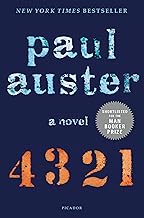
- 4 3 2 1, Paul Auster
- Maigret in New York, Georges Simenon
- The Unfastening: Poems, Wesley McNair
- Journal of a Solitude, May Sarton
- How to Sharpen Pencils, David Rees
- Acorn, Yoko Ono
- Finding a Likeness: How I Got Somewhat Better at Art, Nicholson Baker
- All That Happiness Is, Adam Gopnik
- How to Be An Artist, Jerry Saltz
- Words for Images: A Gallery of Poems, ed John Hollander
- Ground/work, ed. Molly Epstein and Abigail Ross Goodman
- The Art of Dying: Writings 2019-2022, Peter Schjeldahl
- The Creative Act: A Way of Being, Rick Rubin
- Sophie Calle, intro Clement Cheroux
- Grapefruit: A Book of Instructions and Drawings, Yono Oko
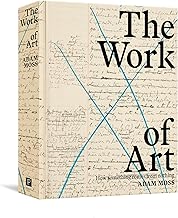
- The Work of Art, Alan Moss
- What the Living Do: Poems, Marie Howe
Before diving into a summary of the month's reading, I want to point out two new features on the BookMarks website. First, there is now a tab which provides access to the last two years of monthly updates. If you want to read reviews of books from past months, instead of scrolling through old emails, you can now go to www.EpsteinReads.com and click on Monthly Updates. In addition, after an absence of nearly a year, The Poetry Tree on the Charles has returned. Though saddened by the web site crash that resulted in the loss of 10 years of archived poems, I'm excited about the new site that will feature photos of the poets and a search function so you can find poems both by poet or by first line. You can access the Poetry Tree either through the BookMarks web site or via www.PoetryTreeontheCharles.com.
One more suggestion: This month's books provide an unusual number of interesting and beautiful covers, an art form that the New York Times Book Review now honors with their annual 10 Best Book covers. Please take a moment and go to www.EpsteinReads.com to enjoy the beauty of the cover art on this month's books.
Now on to the reading, and the theme of Creativity. The two highlighted books epitomize the creative process for me, one harnessing it in writing a novel and one that takes a deep dive into the understanding the concept .
Paul Auster's "4 3 2 1" is one of the most remarkable novels I've read. After an opening chapter in which he introduces us to the the cast of characters, provides their family history, and sets the stage for the coming action, he embarks on not one, not two, but four separate stories of the life of Archie Ferguson. Each of these stories is a different version of Archie's life, and each version has its own label/heading. Chapters 1.1,2.1,3.1, all the way to 7.1 take us through one version of Archie's life while Chapters 1.2, 2.2, 3.2....7.2 provide us another version. The various versions got all tangled up in my mind since Auster presents all four versions in each section, e.g. 3.1, 3.2, 3.3 and 3.4 as consecutive chapters. The only way I could keep the stories straight was to keep detailed notes to recall which Archie I was reading about. This unique structure was all in service to Auster's primary theme, the contingency of life and how one's choices, one's experiences, and the random conditions of one's world determine who we are, what we do, and when we die. The 800 densely worded (there's almost no dialogue) pages are worth the effort.
The second book with its wonderful punny title, "The Work of Art" was, like Auster's book, one which kept me thoroughly fascinated and thinking about getting back to it whenever I was otherwise engaged. Adam Moss had been the editor of 'New York' magazine and the 'New York Times Magazine' before retiring and taking up oil painting. In both his work and his painting, he was deeply curious about the creative act, how does "something come from nothing"? To attempt to answer that question, Moss interviewed 43 creative people from established visual artists like Amy Sillman and Barbara Kruger, to Pulitzer and Nobel Prize winning writers like George Saunders, Louise Gluck, and Suzan-Lori Parks. Casting a wide net in creative endeavors, he also interviewed a fashion designer (Marc Jacobs), a cruciverbalist (crossword puzzler, Will Shortz), the author of the cookbook Salt, Fat, Acid, Heat (Samin Nosrat), a bunch of musicians and music producers, and a performance artist who wrote and performed a 24 hour show about America's music (Taylor Mac). Each of those 43 conversations was engrossing and interesting. At the conclusion of the project, Moss wrote the following in an Afterword: "Art has a before and an after. The before is the training—the acquisition of skills, the assumption of habits. The after is the practical activity of putting finger to key, palm to clay, and going to town….But there is also an in-between. It’s the mysterious part. The art—the magic—was the space in the middle, the hole in the doughnut, what happened when they got the before and after right….Artists don’t own imagination. What they do seem to have is an unusual ability to cross over—to get entrance to that inarticulable place, and then to capture what they can make use of…and turning what they are grasping at, inchoately, into something they can act on….It starts with seeing, but the difference lies in the recognition and receptivity….The really successful artist seems able to not just get the accident going properly but also, more important, know how to harness the result….Artists have certain traits, both inborn and nurtured and that flexibility of movement between their inner and outer selves is key.”
Moss's observations are about as close as I got to understanding the creative process that was manifest in the next nine books. I had a much more ambitious reading goal for the month, but 'time is short, and the books are long' so I didn't manage to get to a number of books including one by a favorite author, Geoff Dyer ("The Ongoing Moment" about photography), a biography of Man Ray, Sebastian Smee's book about rivalries between famous artists, and a slew of others. I did, however, read three wonderful books about specific art works or exhibits.
Peter Schjeldahl was the art critic for 'The New Yorker' for 24 years. The title of "The Art of Dying" is taken from Schjeldahl's eponymous essay published in TNY when it appeared that his struggle with lung cancer was coming to an end. Instead, new immunotherapy gave him a remission and three more years to write the brilliant reviews of museum exhibitions, gallery shows, and books included in this volume. Writing about the greats of the past (Matisse, Picasso, Cezanne, Goya) as well as stars of the 20th C art scene (Mondrian, Morandi, Guston, Richter, Judd, Albers), he was also open to new forms and artists from the Whitney Biennial to gallery shows. Through all of these reviews, his ironic humor and creative phrase-making made reading what could have been dry stuff, engaging and interesting. Here’s Schjeldahl writing on Joseph Albers’ colorful squares: “Naming the colors that Albers used is a non-starter, even with an allowance for the physiological fact that all of our color perceptions are hopelessly subjective and indescribable–an evolutionary primitive function of our brains. (Tell me what red is. Take your time. I’ll wait.)” Or this sentence while discussing a favorite book of mine, “The Sleeve Should be Illegal”, a series of essays about works at the Frick: “What is at issue, after all, is only art, a holiday of the spirit on the crowded calendar of life lived.” And then there’s this wonderful observation in his review of paintings and drawings by the contemporary artist Walter Price at the Greene Naftali gallery: “The forms of his eloquently colorful art, which mingles imagery of banal manufactured objects with evocations of fire and water, can seem at once to fly apart and somehow to precipitate ineffable harmonies. They qualify as decorative in the way the climbing of a Himalayan peak might be deemed recreational.” That’s exceptionally good writing!
A second book that connects the reader to specific works of art is "Words for Images", edited by the late Yale professor and poet, John Hollander. Conceived as a part of Yale's 300th anniversary celebration which featured the theme of Creativity, Hollander invited 20 Yale graduates who were accomplished poets, to choose one item in the Yale Art Gallery's spectacular collection and write a poem inspired by that work. There is a history of poetry about art objects referred to as ekfrastic poetry dating back to the ancient Greeks, and several of the poems in this book are written directly about an art object in that vain. Many more of them, however, are inspired by a painting, sculpture, or textile. My favorite is Hollander's poem about the Edward Hopper painting that graces the cover of this beautiful volume.
A third book that explores specific artworks is "Ground/work", the catalog from an outdoor sculpture exhibition at the Clark Institute in Williamstown, Massachusetts. Opening in 2020 despite the complications of the COVID pandemic, the work of six women artists arrayed across the Clark's 400 acres of pastures and woods provided an art experience for hundreds of visitors at a time when museums were locked down and being indoors with crowds was laden with fear and risk. The catalog features scholarly essays and beautiful color photographs of the six works and their siting in all four seasons at the Clark. The book with its heavy white covers featuring a view of several of the works in relief and its color photographs on the ends of the pages is itself a work of art. (Conflict of interest confession: one of the two curators of this show and a contributor of an erudite essay in the catalog is my younger daughter.)
In addition to these three very different books describing the art of others, I read three books written or curated by two artists who are leading practitioners of conceptual art. Yoko Ono has been a major innovative presence in conceptual art, music and performance since the 1960's, and at 91 years of age, she continues to be productive and creative. A visit to an exhibition of her work at the Tate Modern last year led to my reading two of her books, "Acorn" from 2013 and "Grapefruit" from 1964. Both of them provide the reader with detailed instructions for carrying out a set of actions which comprise the concept of the artwork. One instruction from "Grapefruit" should serve to give you a sense of the work: “Imagine one thousand suns in the/sky at the same time./Let them shine for one hour./Then, let them gradually melt/into the sky./Make one tunafish sandwich and eat.” If you’re scratching your head, join the group. Lawrence Weiner (1942-2021), the dean of conceptual artists, wrote a famous declaration that put forward the central tenet of conceptual art. He wrote that the idea of an art project had equal value with the execution or realization of the work. Ono embodies this principle in both of these thought-provoking and somewhat startling books.
The work of another conceptual artist, Sophe Calle is presented in an eponymous volume featuring photographs from a number of her works. Calle, like Ono, conceived of some strange and weird art works, and actually carried many of them out. From photographing friends and strangers who she had invited to sleep in her bed to photographing a detective who her mother had hired to follow Calle around Paris, these projects are either profound statements about life or just plain goofy. The book has a fine introduction to Calle's work by the photography curator at MOMA as well as excellent photos from some of her projects.
To conclude my reading about creativity and art, I enjoyed three books that explore the practical elements necessary for Adam Moss's third component of creativity, i.e. actually putting brush to canvas or musical notes on paper.
To my embarrassment, I had never heard of Rick Rubin, the founder of Def Jam records, co-president of Columbia records, winner of many Grammys for music production, and the man credited with much of today's modern music scene. In "The Creative Act: A Way of Being", Rubin's first book, he makes the argument that every one of us is creative if we just open ourselves to ideas ('seeds'), experimentation, and imperfection. Though reading at times like a spiritual self-help book, I enjoyed the aphorisms and the good advice. The book's cover was on the NYT"s list of Best Book Covers in 2023.
Jerry Saltz has been the art critic for 'New York' magazine for 18 years, and in "How To Be An Artist" he provides a set of 63 'rules' to help artists actually get something done. In language that is clever, often funny, and totally practical, Saltz also takes a whack at defining art itself. He writes that "art is a craft-based tool for the study of the consciousness; a visual language; a means of expression that conveys the most primal emotions; a survival strategy in which the creative process is inexplicable, inspired, crystallizing." He goes on to summarize art in the final sentence of the introduction: “Art is just a container that you pour yourself into.” This is another book with a great cover.
Finally, there is "Finding a Likeness" by Nicholson Baker, an accomplished writer whose essays I have long enjoyed. The author describes the process by which he added a new creative skill to his repertoire---drawing. Using Pinterest and YouTube videos, Baker gradually develops his drawing skills. The book was too repetitive for me and could have benefited from some tighter editing, but it made for some pleasant time leafing through Baker's increasingly life-like depictions of people.
In addition to these 9 books about creativity and art, I read six other books, chosen rather randomly from my shelves and the Cambridge Public Library. "Maigret in New York", the 27th book in Georges Simenon's series featuring the imposing, dour Chief Inspector of Paris's Flying Squad, was not one of his best. Its plot is a real stretch, and it is situated in NYC, not Paris. Not recommended. Similarly, I wouldn't suggest May Sarton's "Journal of a Solitude". I've always been fascinated by the idea of solitude, as opposed to loneliness, but Sarton seems to have failed to make the distinction. The book was a real downer. Skip it.(N.B. Just before sending this off into the ether, I read a 'reappraisal' of Sarton's book in the January 26th NYT Book Review in which Sadie Stein revisited "Journal of Solitude" and loved it. As my grandmother used to say, "That's why there's chocolate and vanilla".)
On the other hand, I loved Adam Gopnik's slim volume "All That Happiness Is" featuring his usual gleaming prose and an important topic--the loss of community in today's America. Given the results of the last election, the book is timely and worth reading. Also worth reading is Wesley McNair's book of poetry, "The Unfastening". I discovered McNair in leafing through a reissue of Donald Hall's 1992 book "Their Ancient Glittering Eyes". McNair, a Maine poet, had been a friend of Hall's, and McNair wrote the introduction to this new edition of Hall's book. His poetry is somber but beautiful as he writes about aging, poverty, and loss, all located in rural New England.
And if you're looking for some light-hearted moments after reading McNair and Gopnik's warnings and Sarton's depressing memoir, go to David Rees's "How to Sharpen Pencils" . Rees is clever, funny, and has his tongue so far in his cheek that it nearly pokes the reader. Mocking the self-help, do-it-yourself genre, Rees describes a number of techniques for sharpening that humble writing instrument, from the carving knife to the electric pencil sharpener. He devotes an entire chapter to identifying homes that may have this electric travesty, how to sneak in, and how to destroy the offending machine with a hammer. It's laugh out loud with great photos, but practical as well. I even managed to buy a two holed, hand held sharpener which he featured and which now graces my desk. (Confession: I have not yet thrown out my two electric pencil sharpeners, but don't tell Rees.)
And in conclusion, the Poetry Tree on the Charles has re-emerged thanks to the hard work of my web-master (mistress, person?) located in Ogden, Utah. The new site is accessible through www.EpsteinReads.com and www.PoetryTreeontheCharles.com or by clicking on any of the following poems. Four of the poems are by Marie Howe from her volume "What the Living Do". I didn't know Howe's work until I read the interview Adam Moss did with her in "Work of Art". Her poetry is often tough reading in which she recalls a childhood dominated by sexual predation by her father and an adulthood that brought the deaths of her brother and two close friends, but I found these poems to be hauntingly beautiful. Brightening up the atmosphere is a poem by Ogden Nash, and favorite examples of 'the best words in the best order' are provided by Neruda and Merwin.
- What the Living Do, Marie Howe
- Hurry, Marie Howe
- The Copper Beach, Marie Howe
- Singularity, Marie Howe
- So that's Who I Remind me Of, Ogden Nash
- Unity, Pablo Neruda
- The New Song, by W. S. Merwin
In conclusion, here are some words of wisdom from two of my favorite writers:
"How much of beauty----of color as well as form---on which our eyes daily rest goes unperceived by us". Henry David Thoreau
"Everyday is all we have." Joan Didion
|