|
This is From the Archives, where we present something from our extensive collection of archival photos, records and all manner of materials dating back to when the church was First Methodist Episcopal, to First Methodist, to Church of the Savior, to St. Paul's to Crossroads.
We recently featured a picture of the church which gave us a unique glimpse into a time when the carillon was not yet installed, and its console was not yet an established part of the front of our sanctuary.
This week, let's look at the back of our sanctuary and consider our Wesley Trumpet. The Wesley Trumpet is the set of organ pipes in the back of our sanctuary in front of the Antiphonal division of the organ. This Antiphonal division was original to the organ in 1950, as they must have believed that the congregation would need support for singing from that end. But those copper pipes that make up the Wesley Trumpet, on the outside pointed skyward, which everyone is now very familiar with, were not part of the original organ. They were added much later, in 1979.
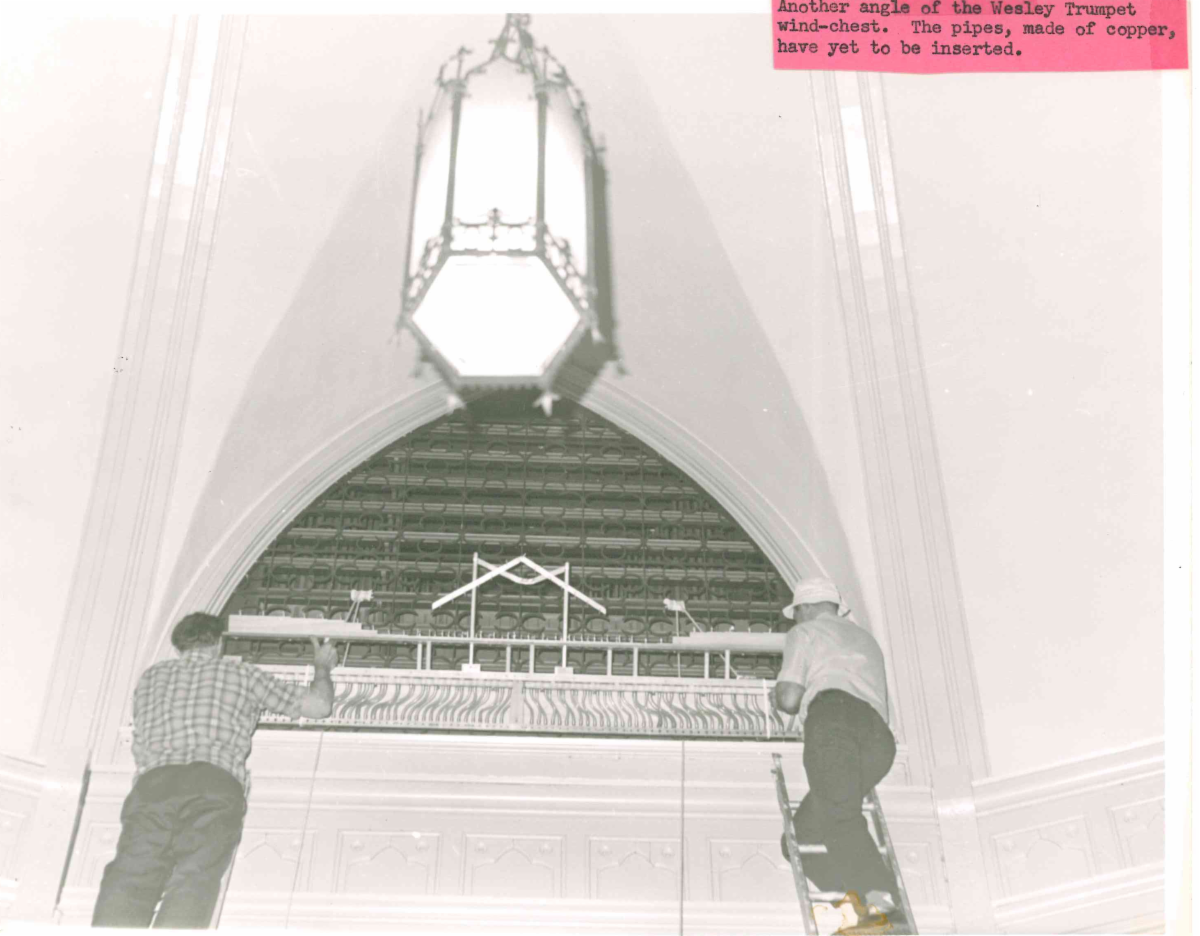
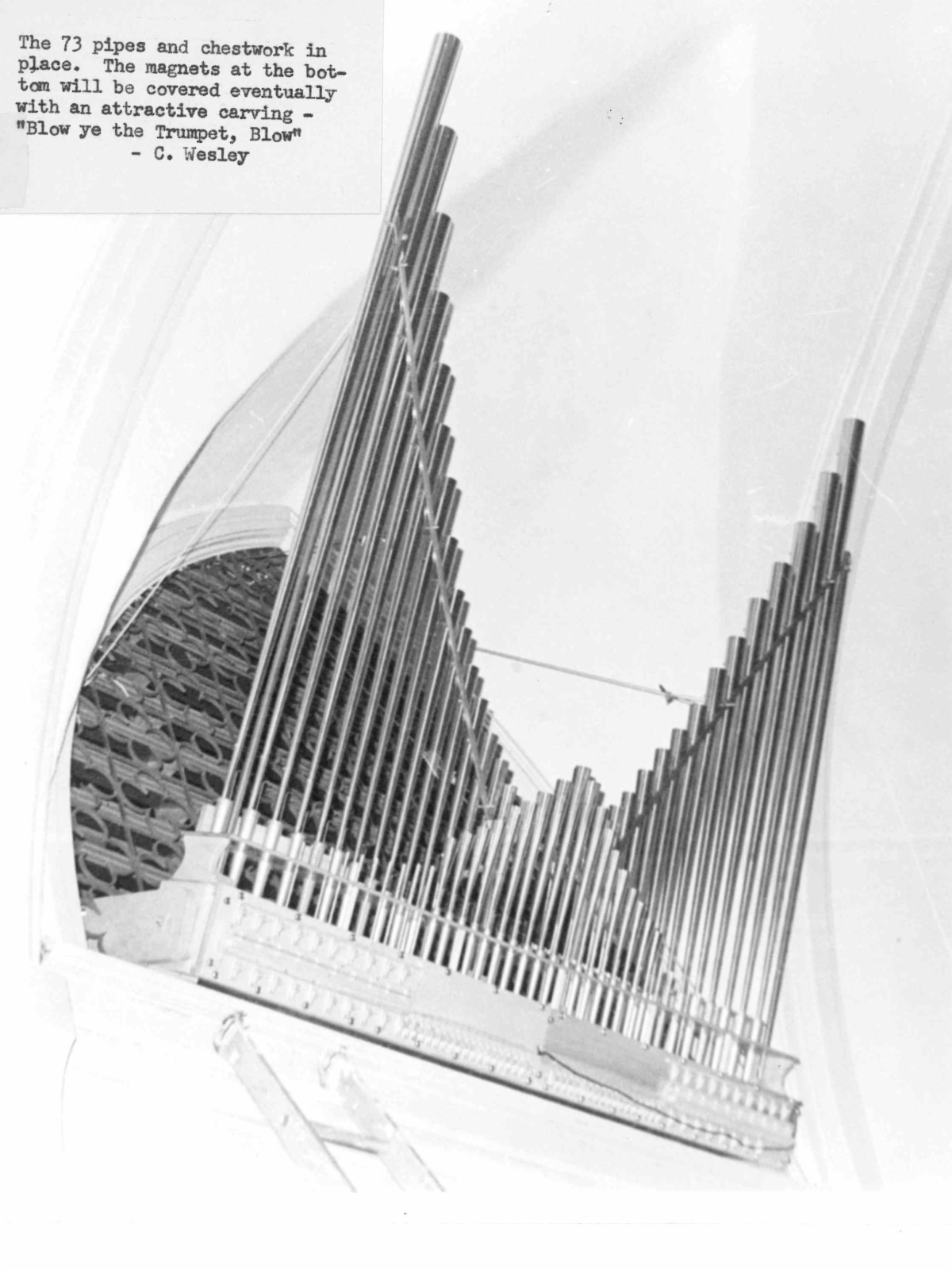
Which brings us to today's entry, photos of the original back of the sanctuary without the trumpet pipes, and then the installation of those pipes using a very advanced system of...ropes and ladders.
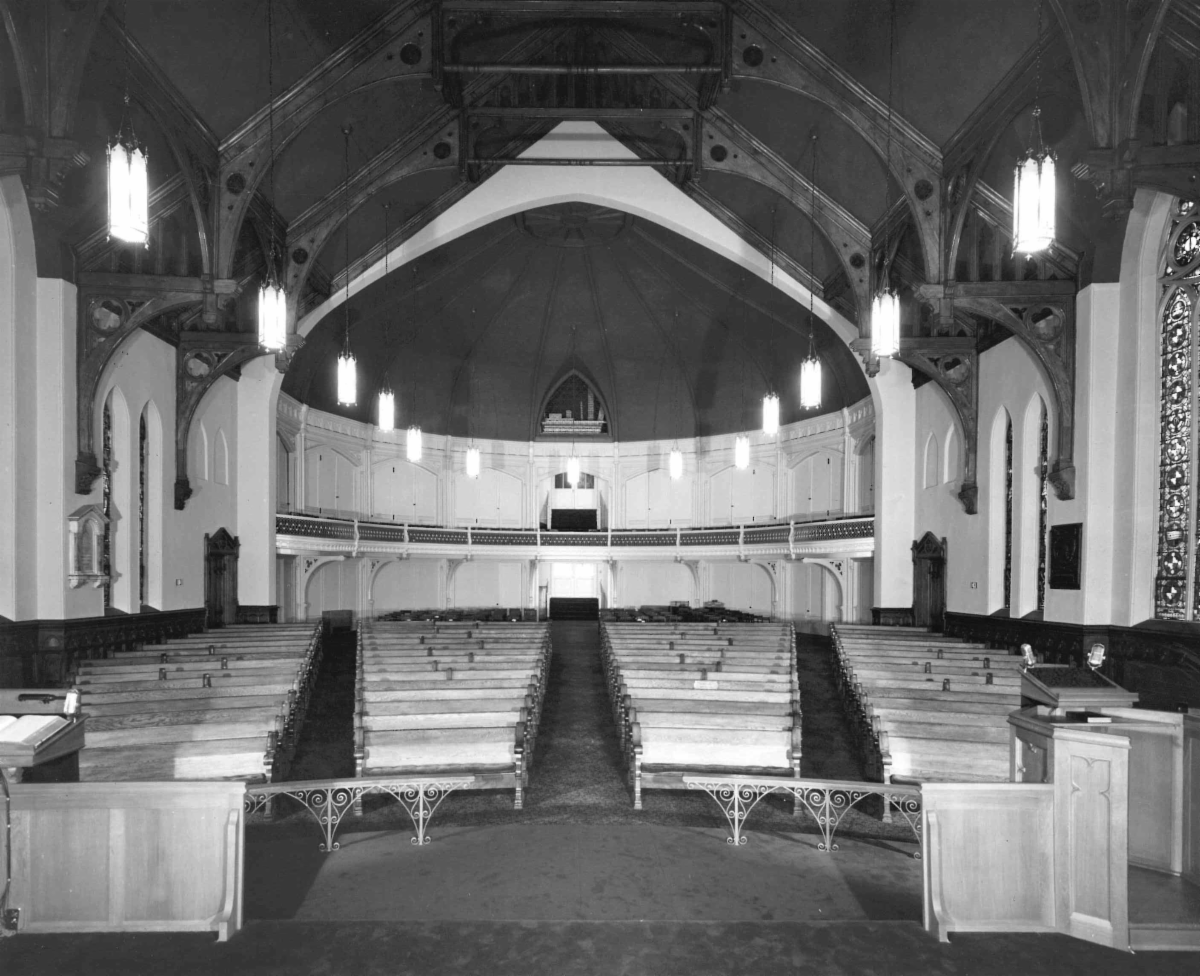
The first photo is from sometime between 1965 and 1975, and shows what the rear of the sanctuary looked like at that time. Notice the darker ceiling which is very striking. Also note that, in previous (and rare) photos of this angle of the room, we can see that those balcony doors for what were Sunday School rooms all had glass panels in them. By the time this photo was taken, those glass panels were gone, and perhaps these were all new doors altogether (doors which are still there today).
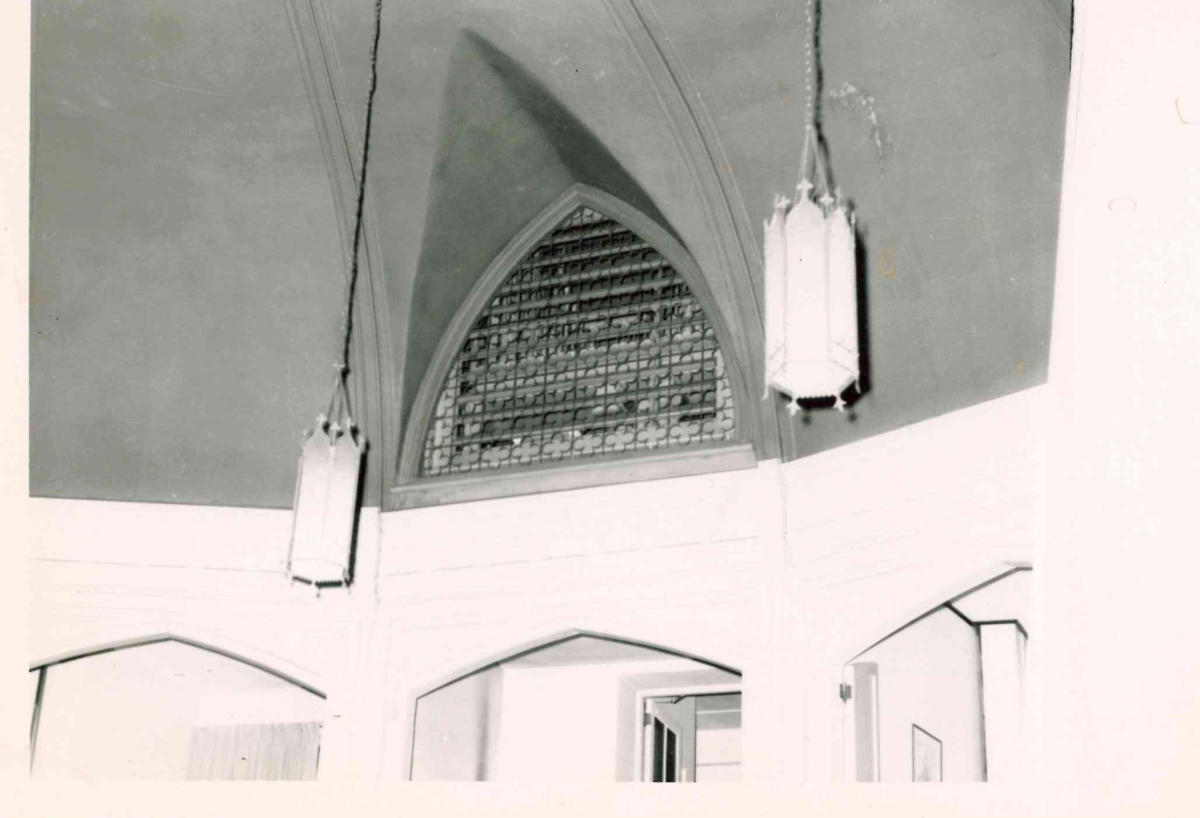
But for our purposes, notice the plain, unadorned Antiphonal division of the organ just sitting there, a quite literal hole in the wall. Just like with the 'missing' carillon console, the people who worshipped in this room in this layout for decades simply didn't know that there was something 'missing' back there - a set of very loud and bright and beautiful organ pipes covering that otherwise rather pedestrian hole in the wall.
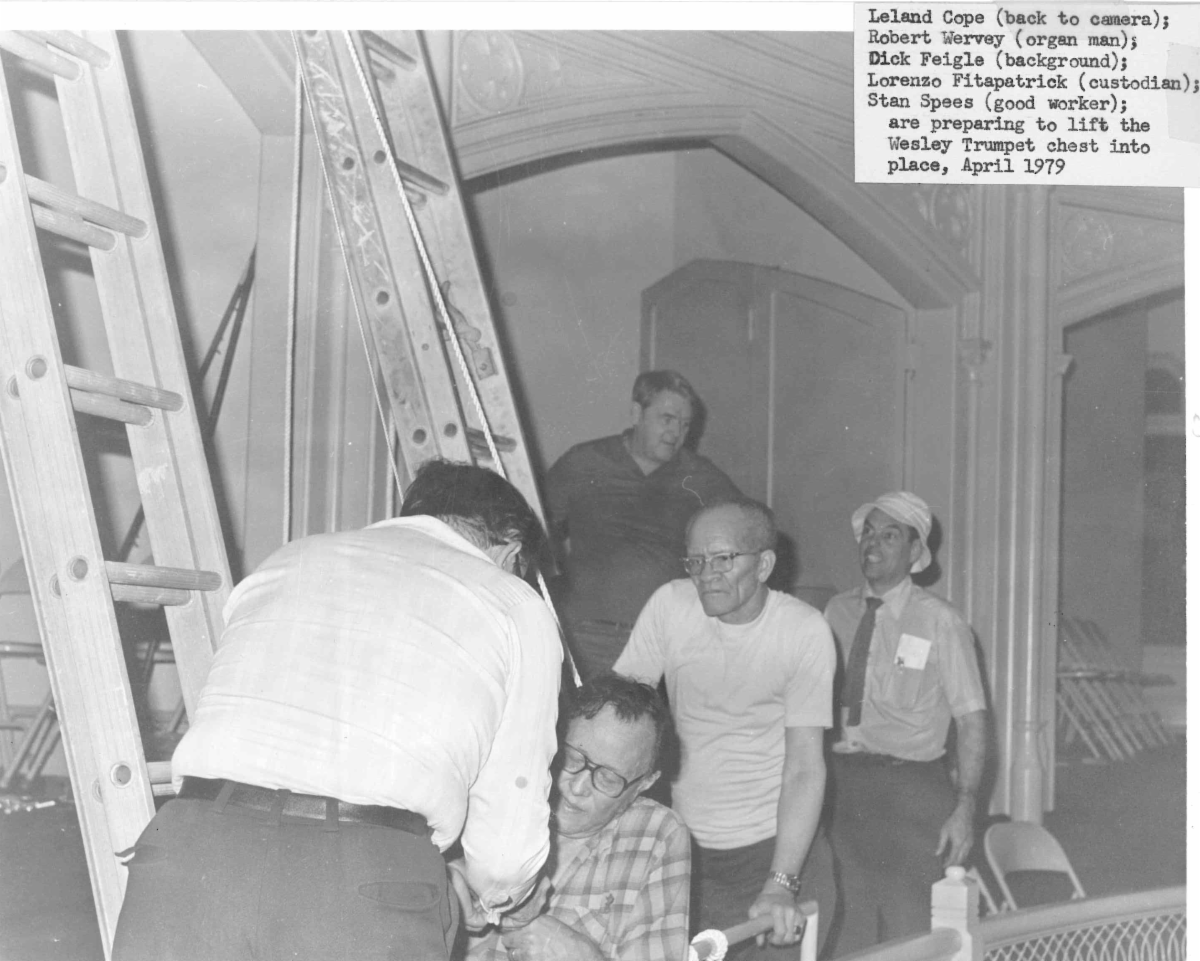
The next photos are from April of 1979, when the then organ curator, J Robert Wervey, who tuned, maintained and improved our organ for several decades, got together with Bob Morrison and several venerable church members and just hoisted those pipes and their associated air mechanism up into place with a couple of ladders and some rope.
These photos are all captioned by typewriter (presumably) by Virginia Gingrich, so be sure and read those captions to get all the names of the people in the photos (and Virginia's editorial thoughts about who was and perhaps who wasn't a good worker).
All of these photos are taken by a church member named Charles Beard.
Photo 1: Taken sometime between 1965-75. The entire rear of the sanctuary with a different color scheme than we are used to today. And also, no Wesley Trumpet.
Photo 2: A close-up of the original, unadorned Antiphonal division of the Aeolian-Skinner organ. While the Aeolian-Skinner organ company was credited by many with building the gold standard of American pipe organs back then, they were never known for any kind of interesting or artistic casework for their organs. So here, and in our Chancel, the pipes are just covered by a kind of screen.
Photo 3: April 1979, the crew of people hoisting the new pipes up into place. Be sure and read the caption to get all the names.
Photo 4: The wind and speaking mechanism in place before the pipes were installed.
Photo 5: The pipes in place, but the inner workings still uncovered. Each and every one of those pipes had to be handed individually up the ladder to someone who had to stand there and put them in - in the correct spot in the layout. And then of course each pipe had to be hand voiced and tuned (the process by which the pipes are physically manipulated to make them sound the way they do and sound on pitch). To this day, climbing up a ladder (what looks like one of the very same ladders in these photos) in this very precarious and frankly dangerous balcony location is the only way to tune and maintain these pipes.
(Click to open the images in new windows.)
|