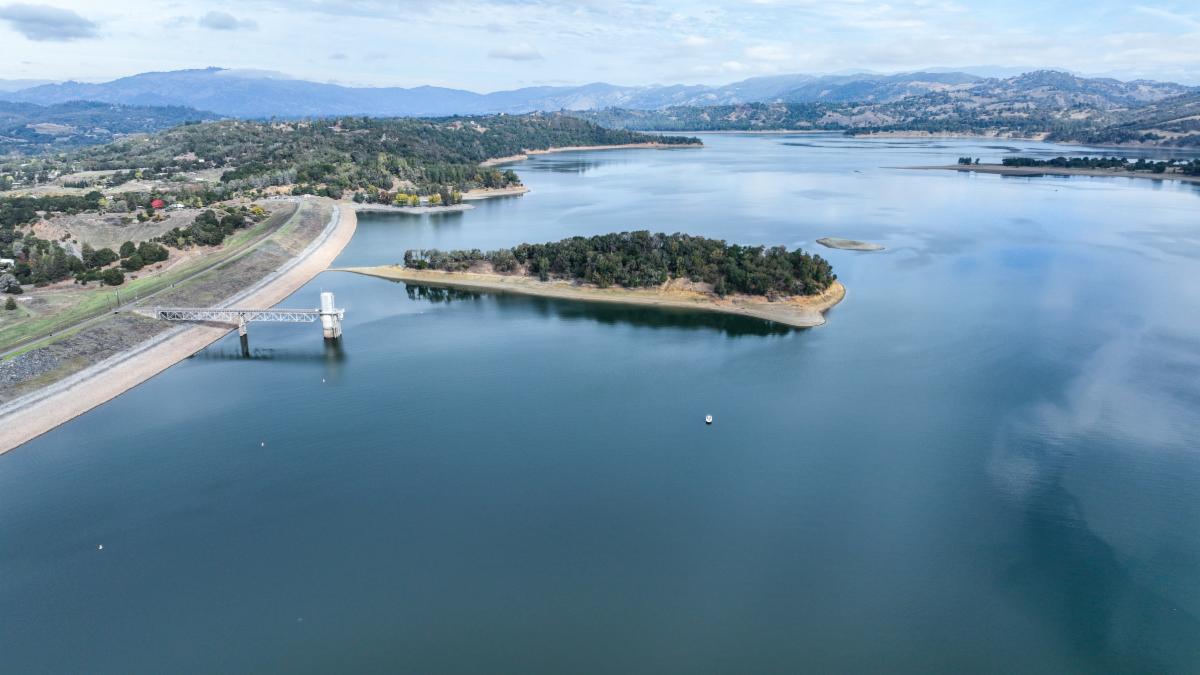
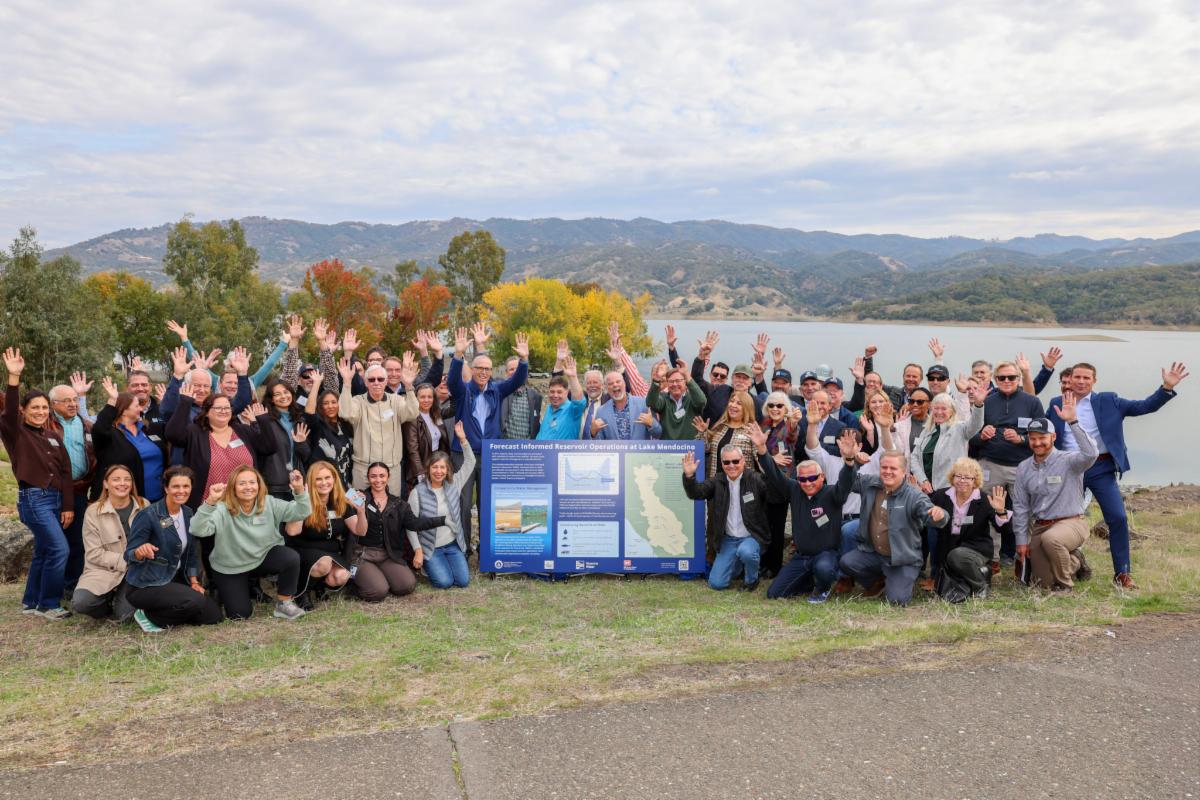
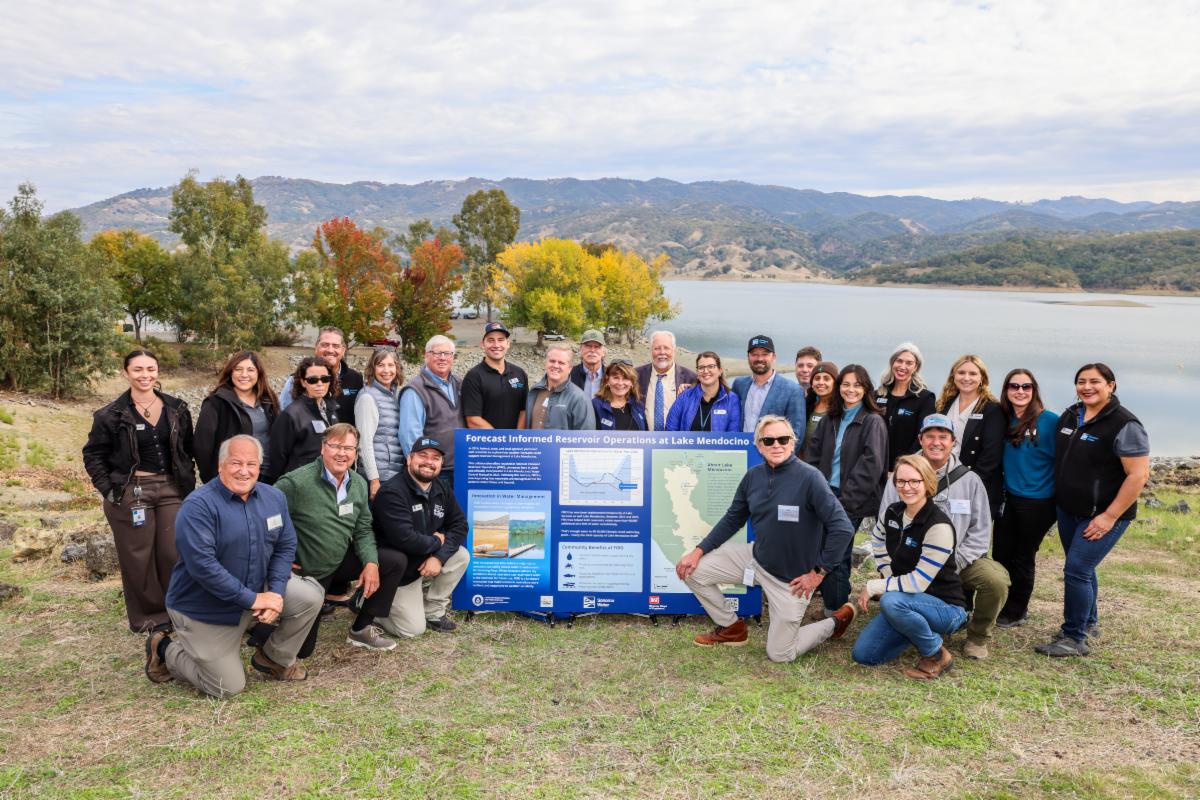
Lake Mendocino and the Coyote Valley Dam | | Oct. 22 group photo in front of Lake Mendocino | | |
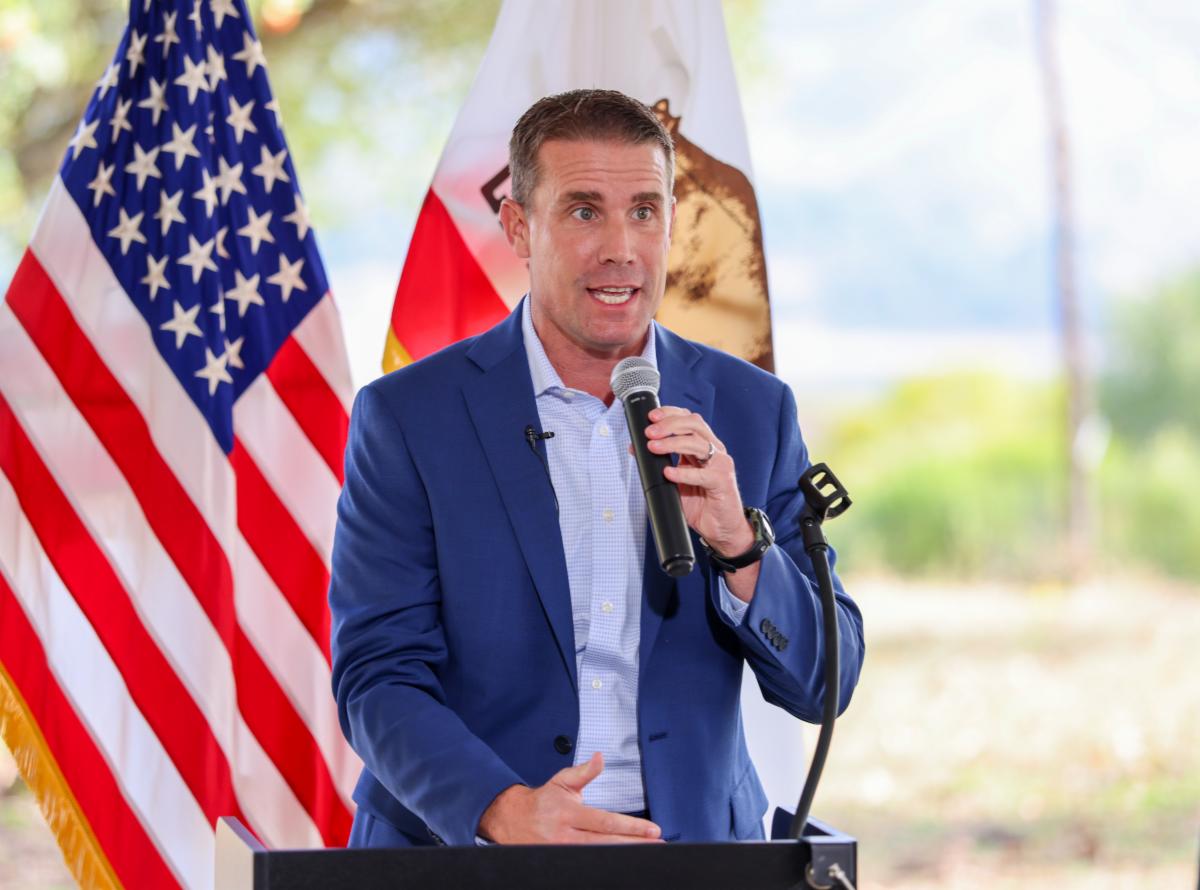
Leaders from the U.S. Army Corps of Engineers (USACE), Sonoma County Water Agency (Sonoma Water), UC San Diego’s Scripps Institution of Oceanography Center of Western Weather and Water Extremes (CW3E) and California Department of Water Resources (DWR) entered a new era in reservoir operations on Wed., Oct. 22 in a ceremony commemorating updates to the water control manual for Coyote Valley Dam and Lake Mendocino.
The revised manual redefines the operating rules around flood control schedules for the first time in the dam’s 66-year history by incorporating the principles of modern-day forecast-informed reservoir operations, or FIRO, to enhance the facility’s dual mission of flood risk management and water supply security.
Sonoma Water is the local cost-sharing partner for Lake Mendocino and determines the amount of water released from the reservoir when levels are in the water supply pools. The lake depends on annual rainfall as well as diversions from the Potter Valley Project to fill. Lake Mendocino is a key drinking water source for approximately 650,000 people in Mendocino, Sonoma and Marin counties. Releases from the lake are essential for meeting minimum instream flow requirements in the Russian River and providing critical habitat for threatened Chinook salmon and steelhead trout.
“Updating the water control manual to include FIRO is a historic step for the watershed,” said Lynda Hopkins, chair of the Sonoma Water Board of Directors and Sonoma County Board of Supervisors. “Since FIRO viability studies began at Lake Mendocino, these innovative techniques have saved water equivalent to a second Lake Mendocino without pouring a single ounce of concrete, providing critical reliability to water users downstream.”
Read more….
| |
|
Photos, top to bottom:
Mike McGuire, Senate President Pro Tempore, State of California
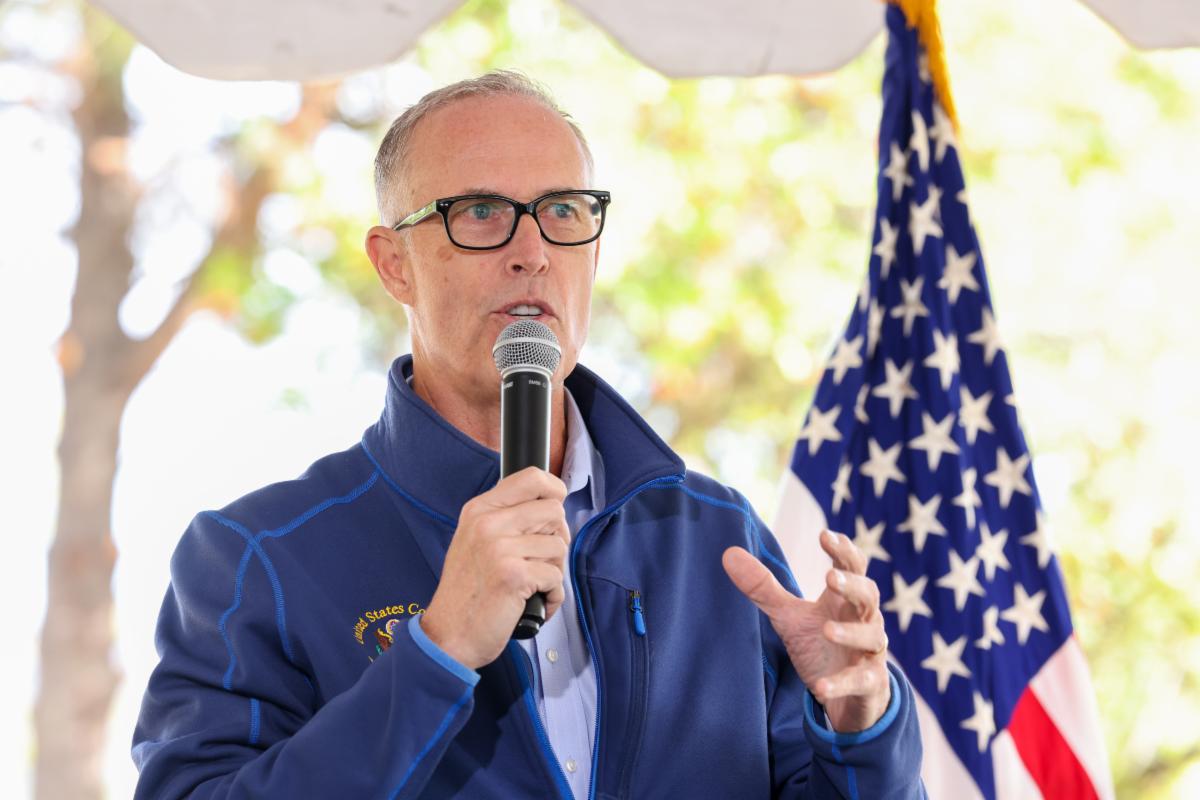
Jared Huffman, Representative, 2nd Congressional District of California, U.S. House of Representatives
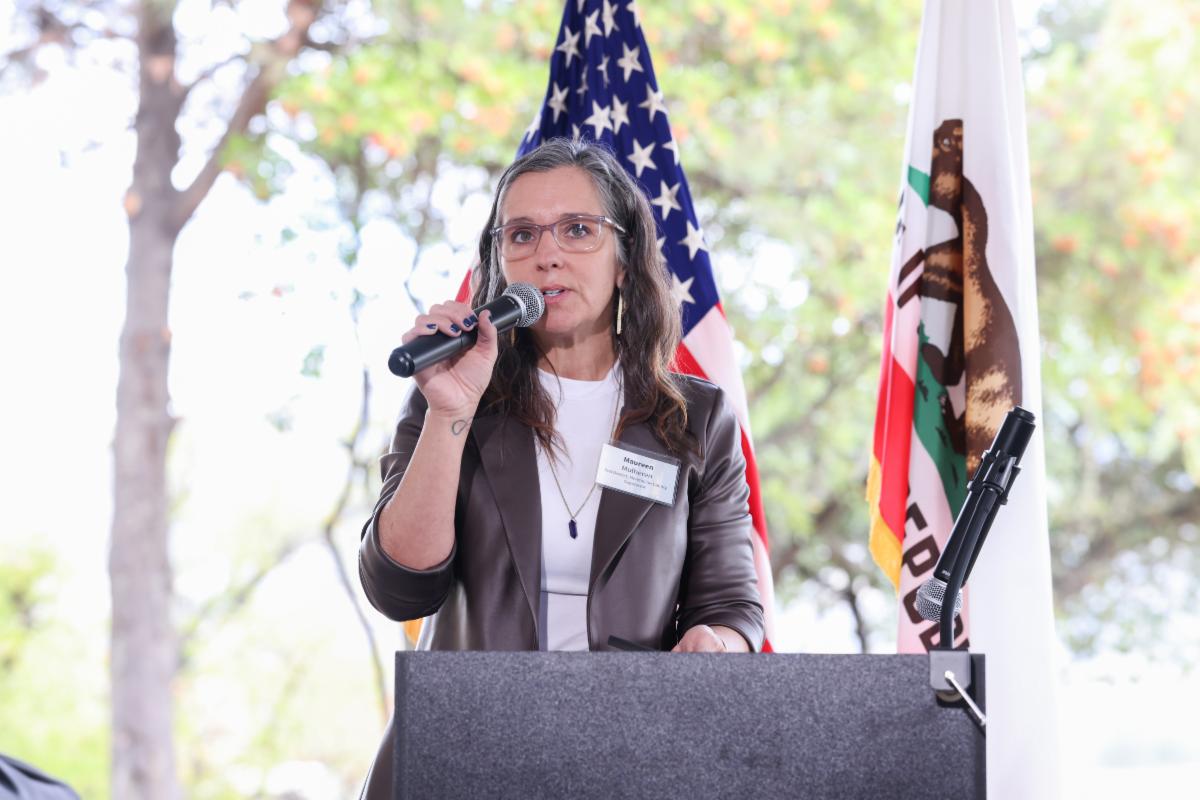
Maureen Mulheren, Supervisor, 2nd District, County of Mendocino and Commissioner, Inland Water & Power Commission of Mendocino County
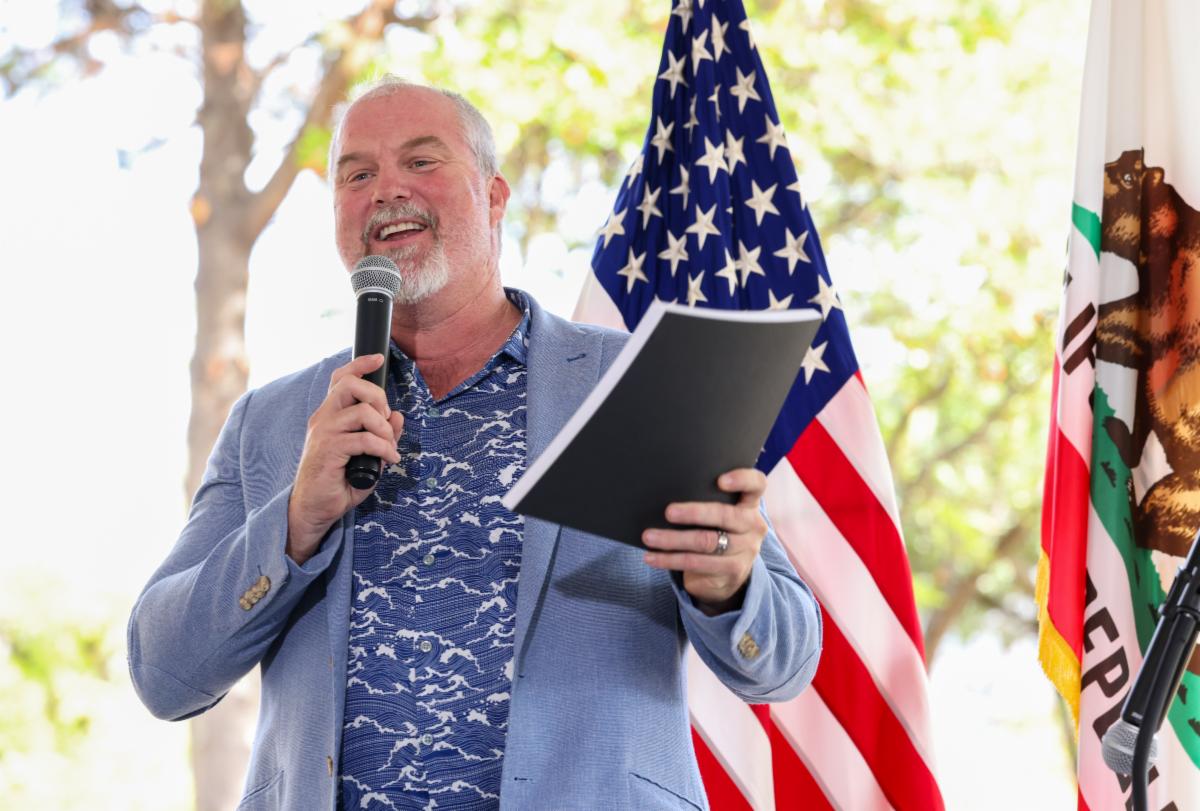
James Gore, Director, Eel-Russian Project Authority, Director, Sonoma Water and 4th Dist. Supervisor, County of Sonoma
Sonoma Water employees gather to celebrate this milestone
| | |
After a long, dry summer, those first raindrops feel like a celebration — nature’s way of saying, “Time to grow!” Fall rain isn’t just refreshing; it is the perfect opportunity to make your yard more resilient and water-wise.
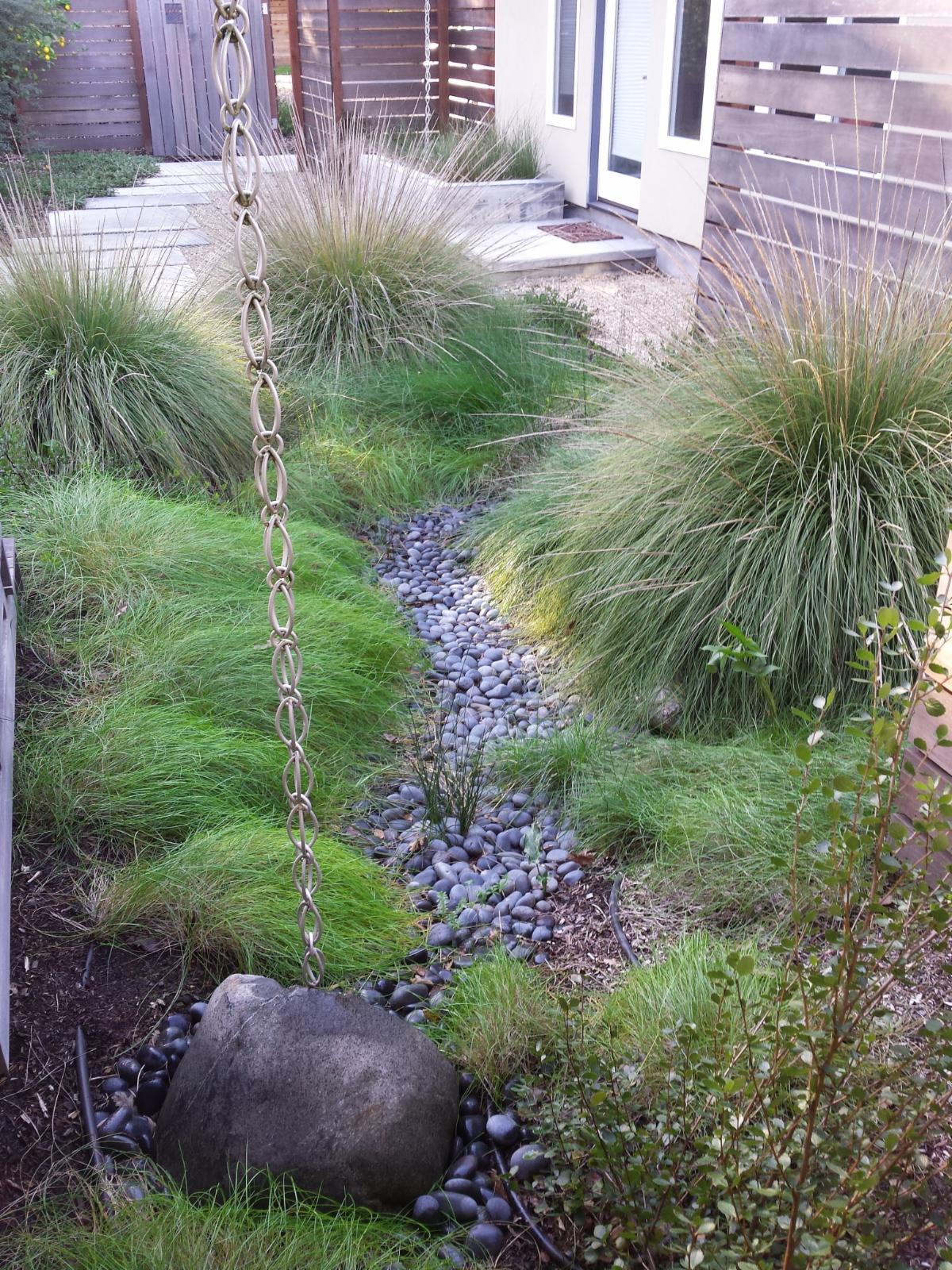
Raindrops are arriving just in time for native plants to get their start — native plants are perfect for our local climate, love seasonal rainfall, and thrive with minimal fuss once established. Planting natives now allows their roots to stretch deep while the soil is moist and temperatures are cool, setting them up for success next summer.
And while you’re at it — don’t let all that glorious rainwater run off! Capture it in rain barrels, route your downspouts into garden beds, or create gentle swales that let water soak into the soil instead of rushing down the street. Every drop you keep on-site helps recharge the ground, nourishes your plants, and lightens the load on storm drains.
So, pull on your rain boots, grab a shovel, and turn those puddles into purpose. With a little planning, you can turn every storm into a sustainable win for your landscape.
Need some inspiration? Check out our Water Smart Plant Picker and photos from the Eco-Friendly Garden Tour.
| | |
The Climate Action Challenge, a collaboration with Sonoma Clean Power, helps students understand the link between energy generation and climate change. The program encourages energy-efficient habits that reduce greenhouse gas emissions and collectively reduce the carbon footprint of Sonoma County residents. Students who have participated in the Climate Action Challenge say they feel more hopeful about climate change solutions after completing the lesson.
Learn more about climate change and water in this video, created by Caroline Huang, former Sonoma Water intern (and 2022 High School Video Contest winner!).
| | Mentoring program introduces students to careers in water | | | | For the first time, Sonoma Water is participating in the Magnolia Project’s high school mentoring program. One student from Elsie Allen High School will be selected to shadow a Water Education Program Specialist for a week this November. This unique program will give the student a behind-the-scenes look at daily responsibilities in the water industry, while also helping them build professional skills and explore potential career paths. | | |
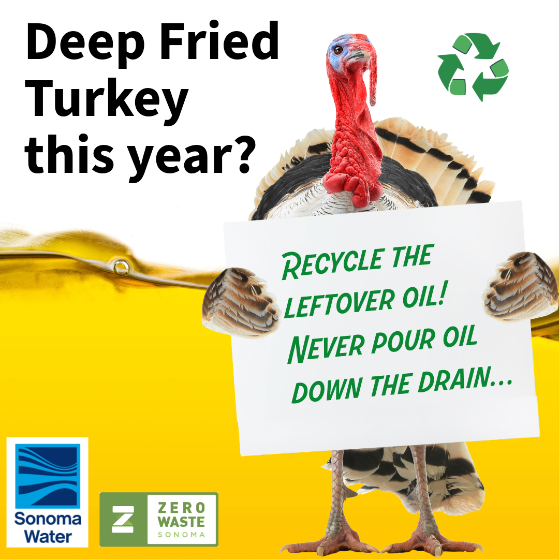
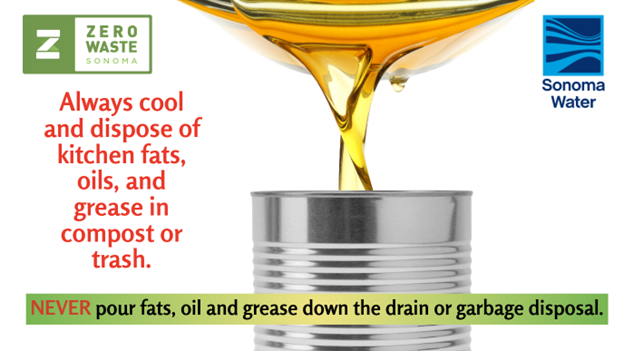
Thanksgiving is a great time for cooking and sharing rich, delicious food! Remember that pouring fats, oils, and grease (FOG) down sinks can ruin your home's plumbing system and have negative impacts on municipal sewer systems and private septic systems. Don’t dump that FOG down your sink!
What can you do instead? For residual grease and oil on plates and pans, please remember to wipe them down with a paper towel before washing up. The greasy paper towels, napkins, and food scraps can then be placed into the green bin or compost pile.
| | | If the amount of oil is too much to be wiped up with a paper towel, but it is less than 2 cups, allow the oil to cool before discarding it into your garbage. The oil can be placed into a rigid, screw-top container, or out of any container to allow the rest of the garbage to soak it up. Please make sure your garbage with the oil is properly bagged to avoid a mess. If you have more than 2 cups of oil, such as from a deep fryer, transfer to a sturdy container and transport to a FOG recycling location near you. | | |
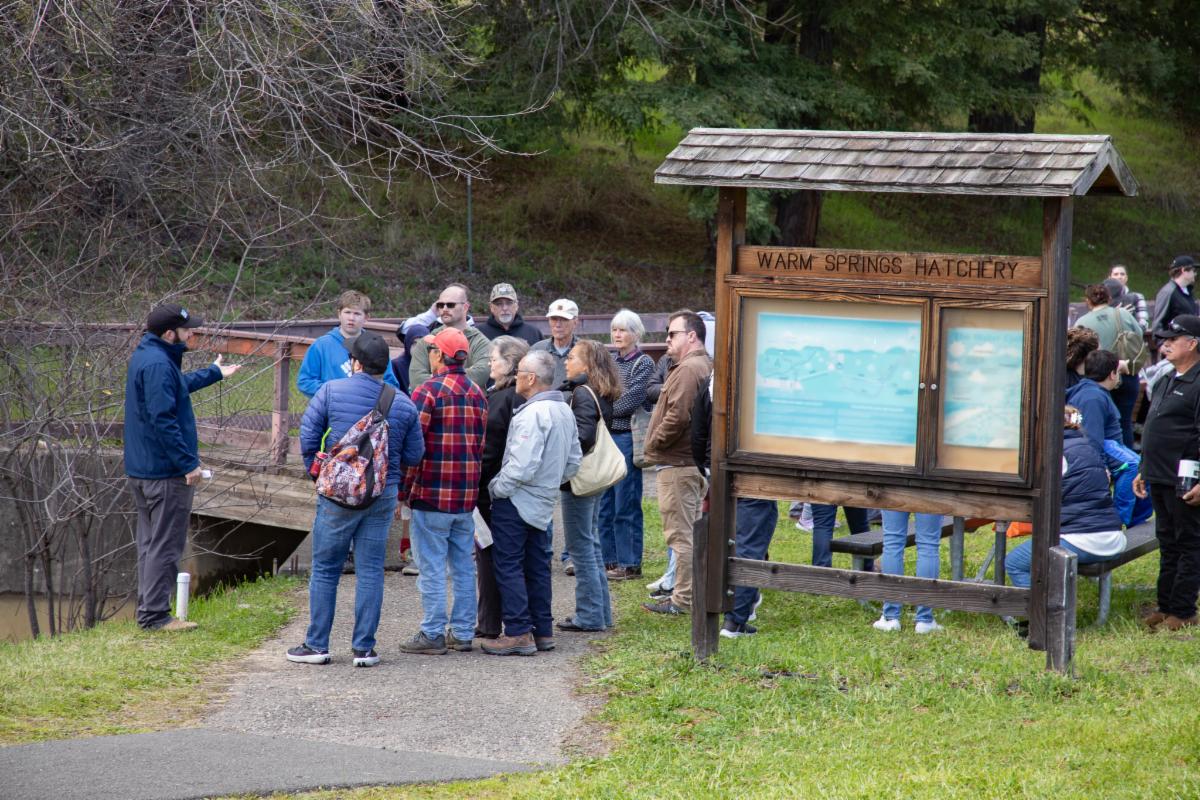
Sonoma Water and the U.S. Army Corps of Engineers are pleased to announce free public tours at Lake Sonoma starting this fall.
When: Every Monday (and some Saturday dates starting in 2026!)
Time: 10:30 – 11:15 a.m.
Where: Milt Brandt Visitor Center at Lake Sonoma, 3227 Stewarts Point-Skaggs Springs Road, Geyserville
Join us to explore the history of Lake Sonoma and Warm Springs Dam, learn how water supply and infrastructure are managed, and discover the important partnership between Sonoma Water and USACE. Tours also highlight recreational opportunities at the lake and efforts to protect salmon and steelhead populations. Tours are offered on Mondays, reservations are not required. Free.
| | |
| |
Current Water Year (Oct. 1, 2025 - Sept. 30, 2026) Rainfall Totals
Ukiah:
o Average (1894-2025 water years): 2.86”
o Current Water Year: 3.26” which is 114.1% of average
o Seven-day rainfall total: 0.82”
Santa Rosa:
o Average (1950-2025 water years): 2.69"
o Current Water Year: 3.22” which is 119.6% of average
o Seven-day rainfall total: 1.22”
| | | | Usually when solids form, atoms get closer together to form something denser. This is why most solids sink in water. But water molecules form rings when water freezes, and all that space makes ice less dense than liquid water. This is why it floats. You can see this on Earth with sea ice, or frozen sea water. Satellites track sea ice near the poles to gain clues on how the planet may be changing. | |
Upcoming Meetings
No meetings scheduled at this time.
Visit eelrussianauthority.org/meetings for more information.
The Sonoma Water Board normally holds its regular meetings on Tuesdays, beginning at 9:00 a.m. and will be facilitated virtually through Zoom and at Board of Supervisors Chambers (BSC) 575 Administration Drive 102A.
December 9 BSC/Virtual
December 12 BSC/Virtual Special Closed Session
December 16 BSC/Virtual
Board Agendas:
View upcoming Agenda items
| | |
Employment Opportunities at Sonoma Water
| |
|
Subscribe to The Current: news and events from Sonoma Water
Receive our monthly email newsletter
Sign up
Want email updates on special topics?
Russian River Estuary
Receive e-mail notifications when the Russian River Estuary opens or closes.
Sign up
Sonoma County Groundwater Sustainability Agencies
Receive Quarterly Newsletter and announcements via email regarding local groundwater management
Sign Up
| | | | |