Lake Sonoma, November 2026 | |
In this issue
- Sonoma Water is preparing for El Niño
- Prepare your home for rain and flood
- What is Inflow and Inflitration, and how to prevent it
- Rainy season is here! Turn off your irrigation
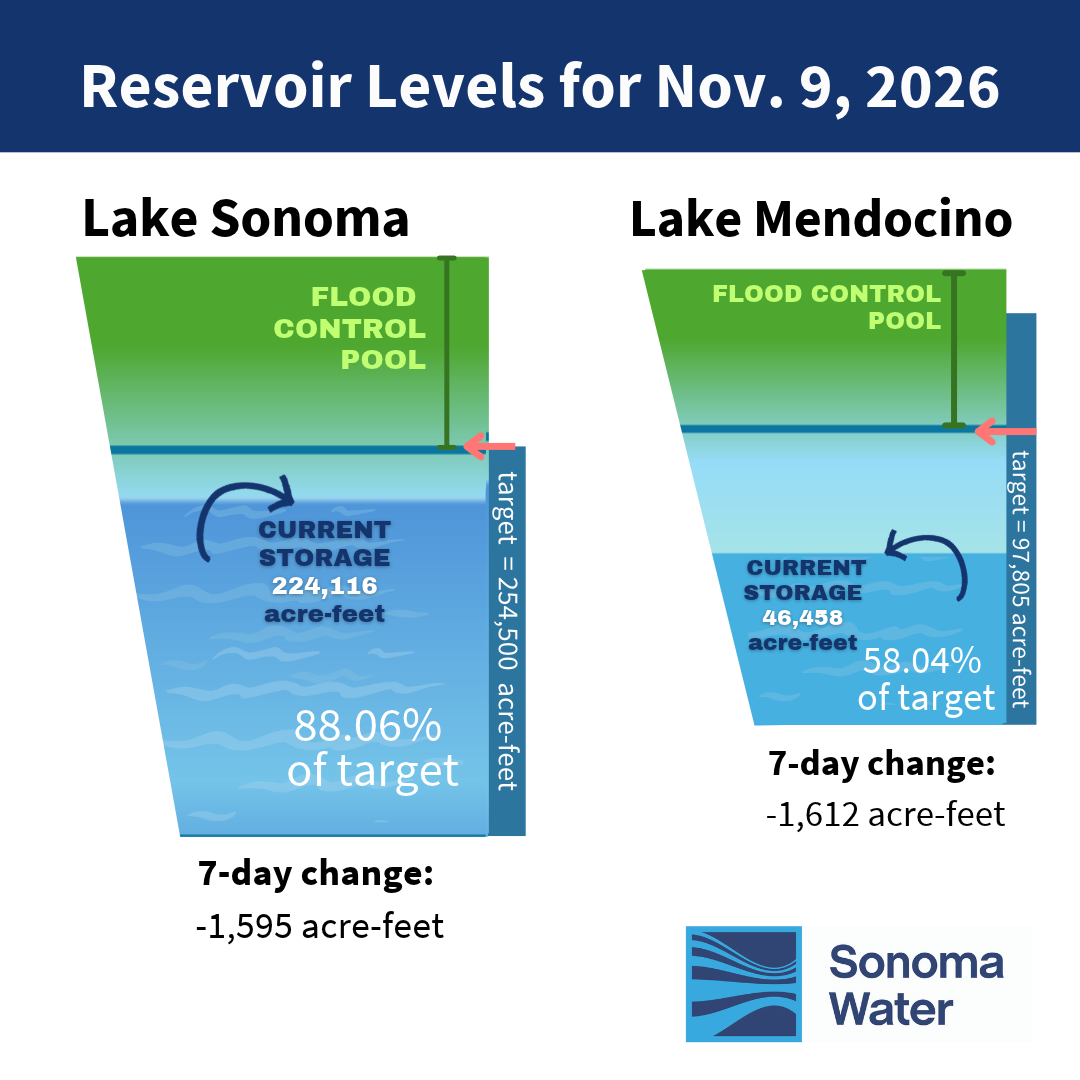
- Reservoir levels
- Rainfall totals
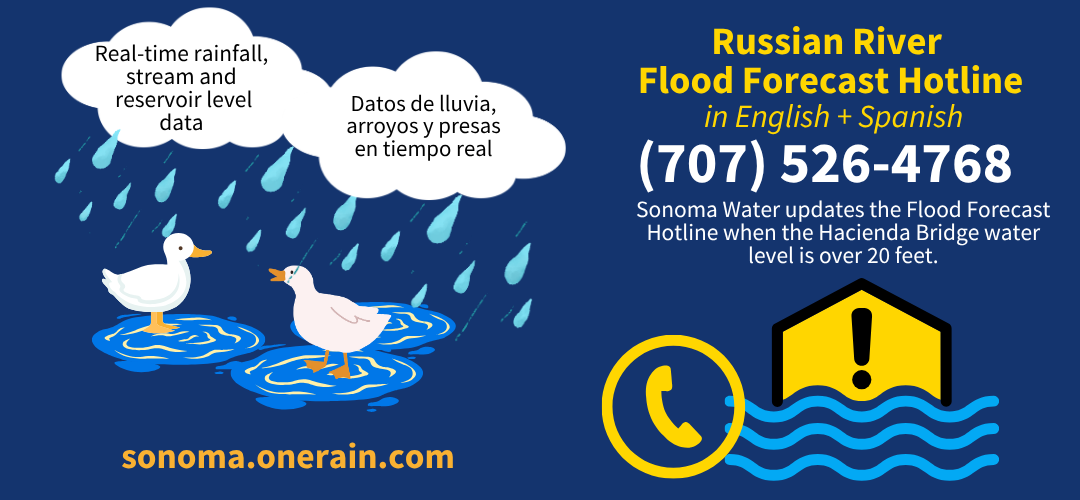
- Russian River Flood Forecast Hotline & One Rain graphic
- What is a Kelvin Wave?
- Recording; Temporary Urgency Change Petitions Webinar
- New Invasive Mussel Decontamination Service Coming to Lake Sonoma
- Thanksgiving kitchen reminder
- Meetings
- Employment Opportunities
| | Sonoma Water is preparing for El Niño | |
Across our agency, Sonoma Water is preparing for the possibility of a wet winter. This includes maintaining flood channels, continuous maintenance of infrastructure and monitoring of conditions in our watershed, and coordinating efforts with county departments, local municipalities and regional partners.
Protecting Essential Water and Wastewater Services
Winter storms may affect facilities, equipment, access routes, and the systems necessary to maintain essential water and wastewater services. Sonoma Water conducts thorough assessments of potential vulnerabilities and plans for operational challenges, including flooding, equipment failures and access disruptions. These efforts help identify measures to minimize service interruptions and ensure readiness to respond should impacts occur.
New information hub
To make this seasonal information easy to access, our website now has a page dedicated to El Niño. Sonoma Water will use this preparedness page to communicate agency-specific readiness activities, significant progress and relevant seasonal updates as the 2026–2027 wet season progresses.
| Prepare your home for rain and flood | | |
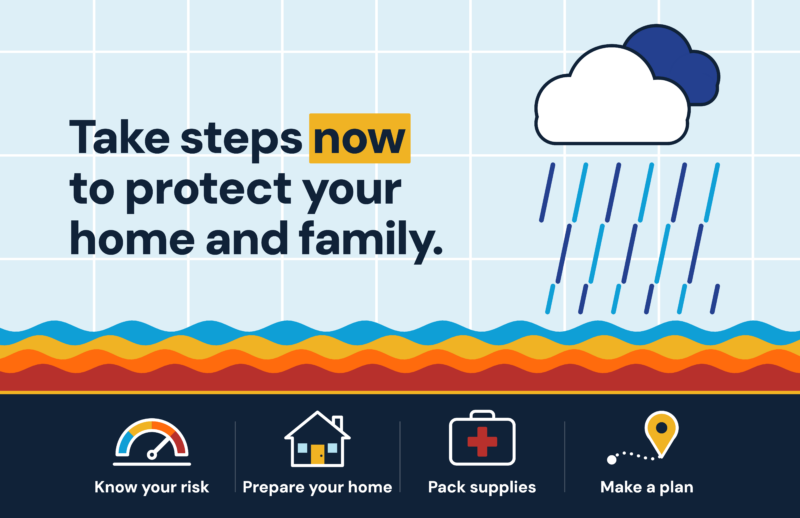
Flooding is one of California's most common and potentially damaging natural hazards. Flooding can happen in many different ways, including from heavy rainfall, overflowing rivers and streams, stormwater runoff, coastal flooding, flash floods and debris flows. You do not have to live near a river or in a designated flood zone to experience flooding. Knowing your risk before a storm gives you more time to prepare and respond.
Here are some practical things you can do to prepare your home and property:
- Keep gutters and drainage areas clear of leaves and debris.
- Secure outdoor furniture, equipment and other loose objects.
- If your property is prone to flooding, consider keeping sandbags and other appropriate flood-fighting materials available.
- Know how to safely shut off water, gas and electricity to your home if necessary.
Flood insurance matters
- Standard homeowners or renters insurance generally does not cover damage caused by flooding. Talk with your insurance provider about whether flood insurance is appropriate for your property.
- If you are considering flood insurance, don't wait until a storm is approaching. Policies can have waiting periods.
For more information on how to prepare for local winter weather emergencies and find local resources: socoemergency.org/emergency/winter-storms
| | What Is Inflow and Infiltration, and how to prevent it | |
When it rains, extra water can sometimes find its way into the sanitary sewer system, a problem known as inflow and infiltration (I&I).
-
Inflow occurs when rainwater or other surface water enters sewer pipes through sources such as manholes, downspouts, area drains, or sump pumps that are improperly connected to sewer drains.
-
Infiltration occurs when groundwater seeps into the sewer system through cracks or damaged sections of underground pipes.
This "clear water" does not need treatment, but once it enters the sewer system it becomes part of the wastewater stream. During heavy storms, excessive I&I can overwhelm sewer pipes and treatment facilities, increasing the risk of sewer backups into homes and businesses and overflows into local waterways. It also increases wastewater treatment costs by adding large volumes of unnecessary water that must be transported, treated, and processed.
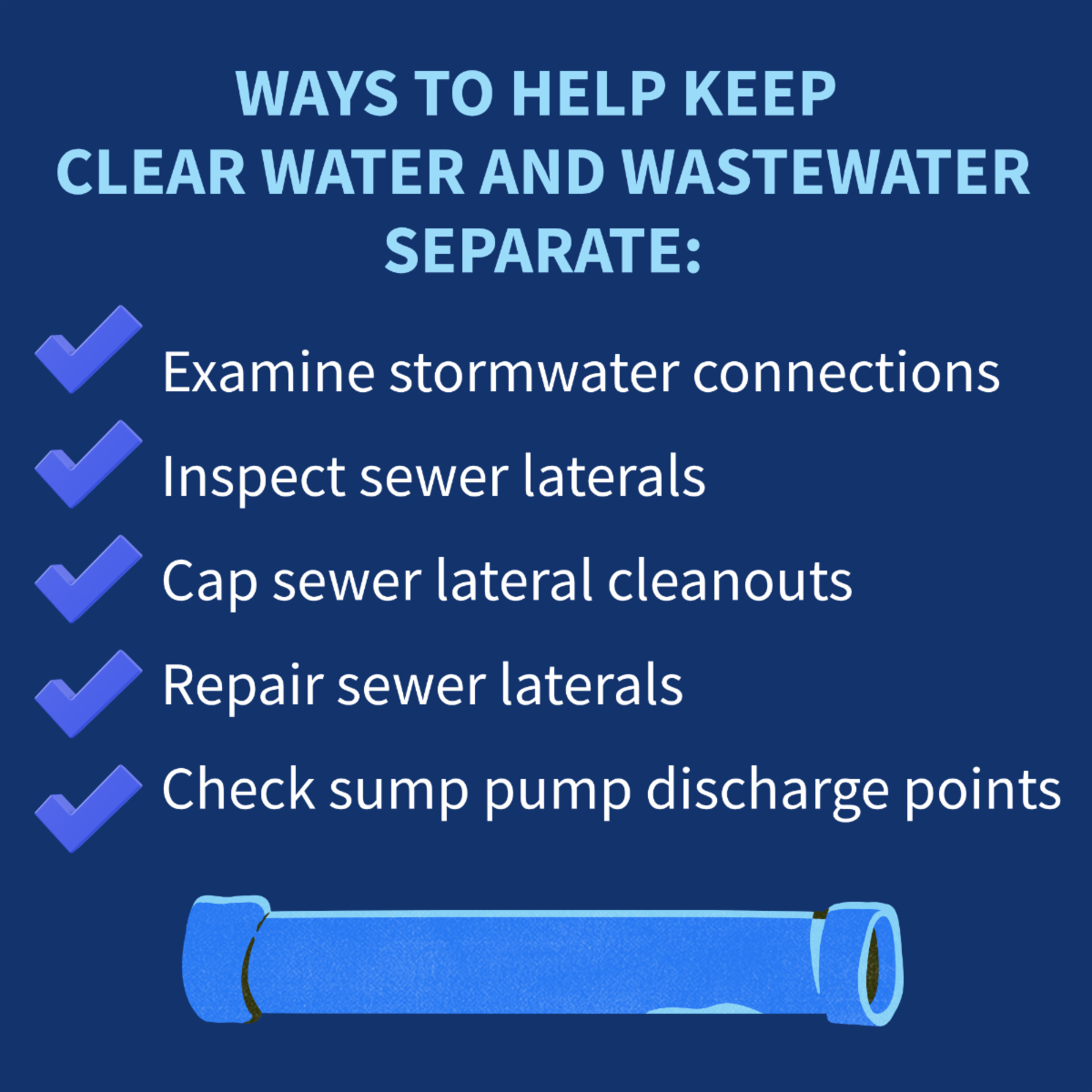
Residents can help reduce I&I by inspecting private sewer laterals for cracks or leaks, ensuring sewer cleanouts are properly capped, and making sure sump pumps and rain gutters drain away from the sanitary sewer system. Taking these simple steps helps protect public health, preserve system capacity, reduce treatment costs, and keep local waterways clean.
| | Rainy season is here! Turn off your irrigation | | |
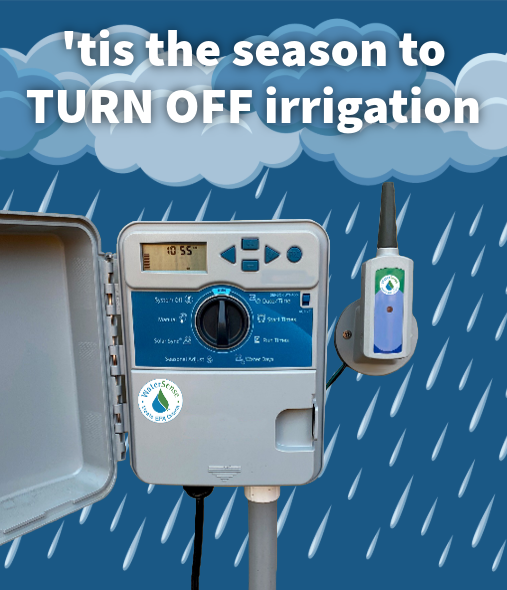
As rainy weather returns, turn OFF your irrigation system to avoid unnecessary watering. Most lawns and landscapes require little to no supplemental watering during the winter months, and leaving irrigation systems running can waste water and increase utility costs. Turning off your irrigation system is one of the easiest ways to conserve water while giving your landscape exactly what it needs during the rainy season.
Winter is also one of the best times to plant California native plants. Cooler temperatures and seasonal rainfall help young plants establish strong root systems with little supplemental water. By the time warmer weather arrives, these deeper roots are better equipped to withstand dry conditions and thrive with less irrigation. Native plants are naturally adapted to our Mediterranean climate, making them a beautiful, low-water addition to any landscape while providing important habitat for local birds, bees, and other pollinators.
Stay connected
Subscribe to the Sonoma-Marin Saving Water Partnership’s E-News for seasonal tips, rebate opportunities and local water conservation updates
savingwaterpartnership.org/news-events/monthly-e-news-signup
Find rebates
Find rebates on water efficient fixtures and equipment.
savingwaterpartnership.org/rebates
| | |
|
Current rainfall conditions (October 1, 2026 - November 8, 2026)
Ukiah:
- Average (1894-2025 water years): 2.65”
- Current Water Year: 0.25” which is 9.4% of average
- 7-day rainfall total 11/2/26– 11/8/26): 0.12”
Santa Rosa:
- Average (1950-2025 water years): 2.55”
- Current Water Year: 0.72” which is 28.2% of average
- 7-day rainfall total 11/2/26– 11/8/26): 0.38”
| | |
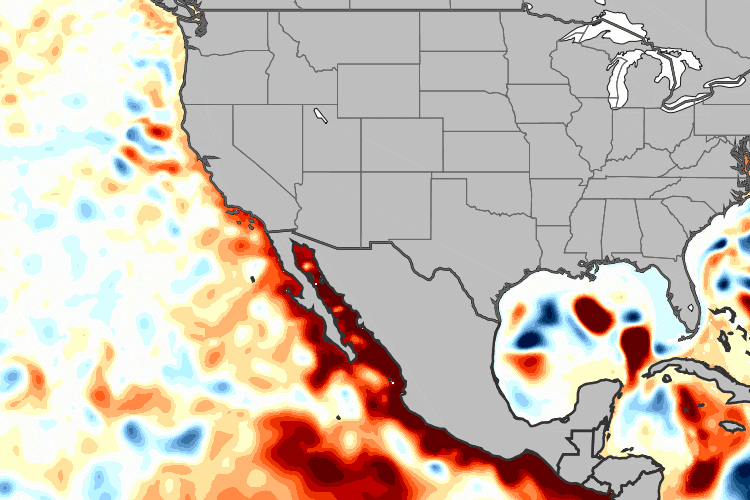
Kelvin waves are slow-moving, relatively flat, warm water waves that form along the equator and stretch thousands of miles across the Pacific Ocean and travel west to east in response to the weakening of the trade winds, as a result of El Niño. Kelvin waves move slowly — at about five to ten miles per hour — and can take about two to three months to cross the Pacific Ocean before reaching the South American coast. Due to their wide and flat structure, they do not break on shore like other waves.
Kelvin waves can make surface water temperatures warmer than normal as they push down the cooler waters of the thermocline. These waves also temporarily raise sea level, by about 6 to 12 inches or more, due to the larger volume of warm water occupying more space than the colder water.
According to the National Ocean Service, El Niño-driven Kelvin waves are currently impacting the California coast, moving north towards Oregon and Washington. More Kelvin waves are likely to occur throughout the fall and winter during El Niño.
These large-scale oceanic waves raise water levels and temperatures along the coast, increasing the risk of flooding and other coastal hazards. Wind, waves, and storms can worsen these potential impacts.
Source: https://oceanservice.noaa.gov/facts/kelvin-waves.html
| |
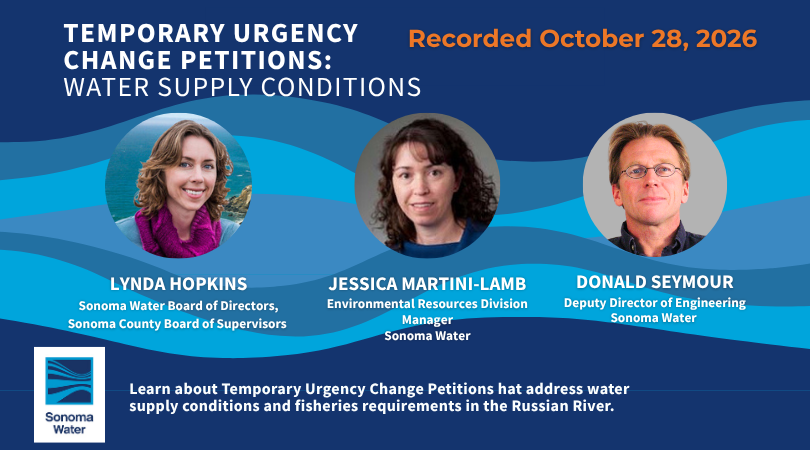
On Oct. 28, Sonoma Water hosted a webinar about Temporary Urgency Change Petitions, water supply conditions and fisheries requirements featuring the following speakers:
- Lynda Hopkins, Sonoma Water Board of Directors, Sonoma County Board of Supervisors
-
Jessica Martini-Lamb, Environmental Resources Division Manager, Sonoma Water
-
Donald Seymour, Deputy Director of Engineering, Sonoma Water.
A recording of the webinar which includes the community Q & A is now available on our website at www.sonomawater.org/tucp and our YouTube channel.
| |
New Invasive Mussel Decontamination Service Coming to Lake Sonoma | |
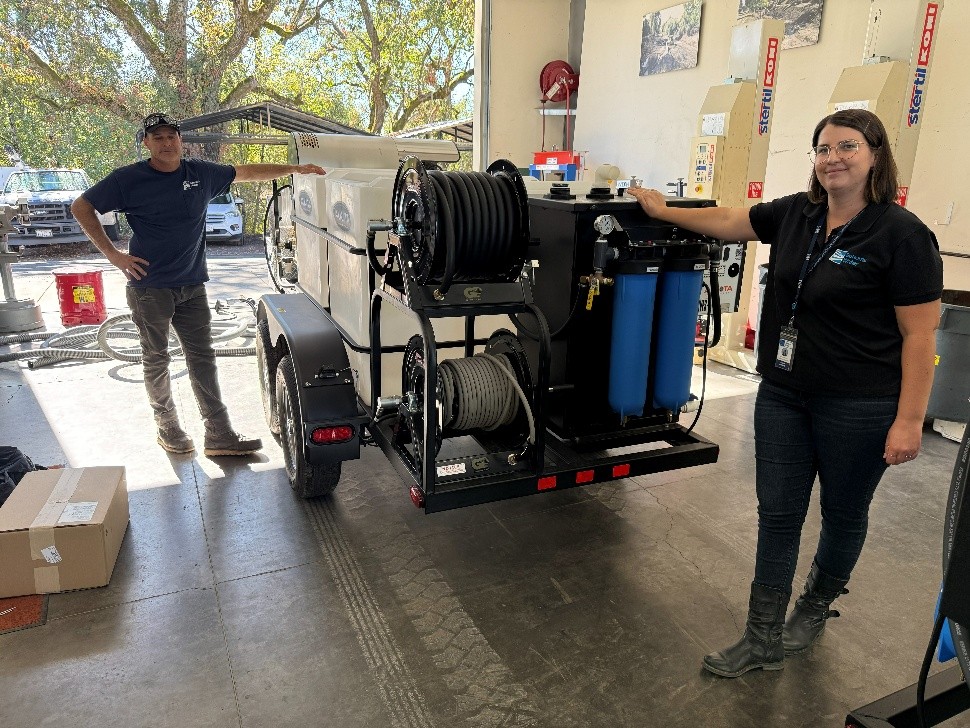
Sonoma Water is expanding its invasive mussel prevention efforts with the addition of specialized decontamination equipment for Lake Sonoma. Beginning in spring 2027, boaters whose watercraft are found to have invasive mussels during the inspection process will have access to on-site decontamination services.
The new system uses high-pressure heated water to eliminate mussels on contact while safely capturing and containing all wastewater generated during the process. The captured water is then treated through a multi-stage filtration system that filters particles as small as 20 microns, removing any remaining debris or mussel larvae. Once filtered, the water can be safely reused for future decontaminations.
This new capability will strengthen Lake Sonoma's invasive species prevention program and help protect local waterways from the spread of quagga and zebra mussels.
| | | |
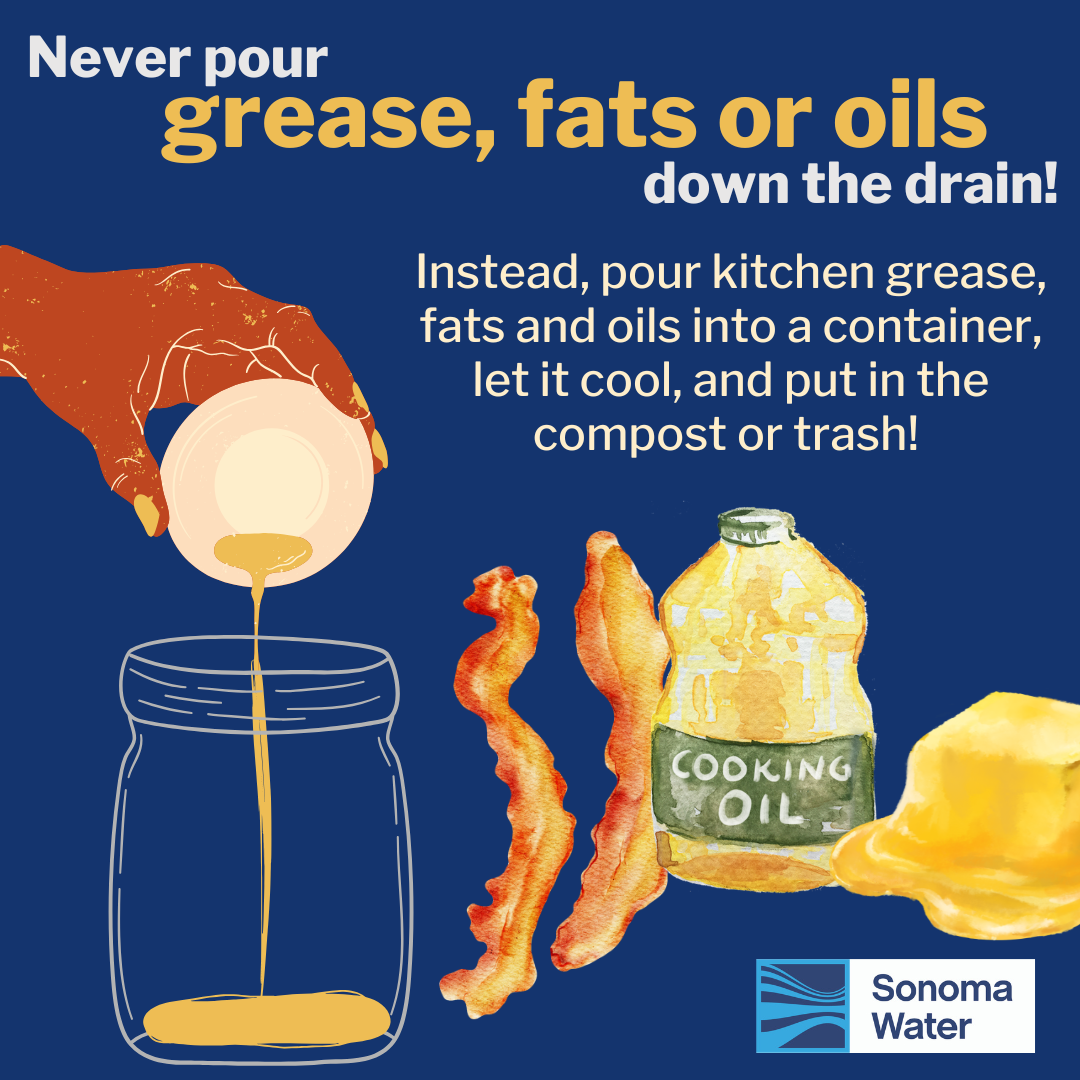
Thanksgiving kitchen reminder | As you prepare your Thanksgiving feast, remember that kitchen grease, fats and oils should never be poured down the drain, which can cause major blockages in plumbing and sewer pipes. Instead, dispose of small amounts in the compost or green bin or cool, pour in a can or jar and trash it. | |
Upcoming Meetings
Visit eelrussianauthority.org/meetings for more information.
The Sonoma Water Board normally holds its regular meetings on Tuesdays, beginning at 9:00 a.m. and will be facilitated virtually through Zoom and at Board of Supervisors Chambers (BSC) 575 Administration Drive 102 unless otherwise noted below.
Nov. 17 Virtual/BSC
Nov. 20 Virtual/BSC special closed session
Dec. 8 Virtual/BSC
Dec, 15 Virtual/BSC
Dec. 18 Virtual/BSC special closed session
Board Agendas:
View upcoming Agenda items
| |
Subscribe to The Current: news and events from Sonoma Water
Receive our monthly email newsletter
Sign up
Want email updates on special topics?
Russian River Estuary
Receive e-mail notifications when the Russian River Estuary opens or closes.
Sign up
Sonoma County Groundwater Sustainability Agencies
Receive Quarterly Newsletter and announcements via email regarding local groundwater management
Sign Up
| | | | |