The DDA Connection

February 4, 2026

Deputy Secretary’s Corner: Moving Forward—Together


I’m truly grateful for our partnership and for everyone who continues to show up—legislators, individuals with lived experience, families, providers, and advocates—because you care deeply about strengthening services for people with intellectual and developmental disabilities in Maryland.


Right now, we are in an important moment.


At the Developmental Disabilities Administration (DDA), we are focused on three connected ideas: transformation, alignment, and partnership. These priorities reflect the Moore-Miller Administration’s vision for state government—to build systems that are more responsive, more sustainable and accountable, more outcome-driven, and more centered on people’s real lives.


The time is now. 


Transformation is already underway at DDA. Over the past year, DDA has taken meaningful steps to modernize its program structure and service delivery system, strengthen accountability, and sharpen our focus on equity, access, and long-term sustainability. The Governor’s budget reinforces this direction—investing in a system that preserves the future, works more effectively, better aligns with federal requirements, and delivers supports in ways that are more consistent, transparent, and person-centered.


But transformation is not about narrowing options or turning away from people who need us most. And it is not something we do alone.


Partnership is at the heart of this work. DDA remains firmly committed to its full menu of services and to working alongside its community partners to make sure those services continue to meet the wide range of needs across our community. That includes an ongoing commitment to our values centered around self-determination, medically complex individuals, to both service delivery models (Community Provider-Managed and Self-Direction)—and to family members who choose to serve as paid caregivers. We know there is no single model that works for everyone; both models are complementary in nature, and our system must remain flexible enough to support people where they are and where they want to go.


That is why alignment and collaboration matter so much. One of the most important things we did this year was create space for deeper partnership and more honest conversation—especially through expanded community engagement and the work of the Maryland Intellectual and Developmental Disabilities Sustainability and Equity Committee, or MIDSEC.

MIDSEC brought together people with lived experience, families, providers, and system partners to engage in thoughtful, candid conversations about what is working, what is not, and what it will take to build a stronger and more sustainable system. These discussions were grounded in real-world experience and provided valuable feedback for our consideration. We heard directly about the challenges of navigating complex systems, the need for clearer and more consistent communication, and the importance of services that are more accessible and flexible, more person-centered, and more responsive to people’s changing needs over time.


Those voices matter. And they are shaping how DDA transforms, aligns policies, funding decisions, and priorities moving forward—consistent with the Governor’s focus on responsibility, sustainability, and results that make a real difference in people’s daily lives.


And this work is continuing.


In the months ahead, DDA will host additional community engagement opportunities that build on what we’ve already heard. These sessions are about learning from the community—and staying connected as we make decisions that affect real people every day. They are about keeping the feedback loop open, honest, and meaningful.


Because real transformation happens by actively listening. It happens when participants, families, providers, advocates, and community partners are pulling in the same direction. And it lasts when partnership is something we practice—not just something we say.

We know the challenges are real. But so is the commitment behind the Moore-Miller Administration’s priorities and this year’s budget—to move Maryland’s system forward in a way that is responsible, accessible, sustainable, and grounded in people’s real needs.

We look forward to continuing to build, align, and transform a system that supports people to live full lives in their communities—and to doing that work side-by-side with the community partners who make this system possible.


As we close, I want to come back to our shared theme of transformation, alignment, and partnership—because this work is not theoretical. It is happening now. We are already holding to our commitment to engage meaningfully with our community partners, and in the weeks ahead, DDA leadership will continue to be out in communities across the state—listening, learning, and staying connected.

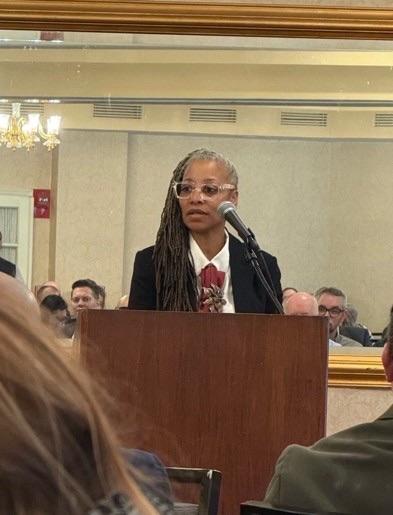
A recent example of what real partnership looks like is DDA’s invitation to speak at the MACS Legislative Breakfast on January 20th. This invitation reflects the trust, collaboration, and shared commitment that exist between DDA and our advocacy partners. I am deeply grateful to MACS for creating space for meaningful dialogue with legislators and community stakeholders. Opportunities like this are not symbolic—they are essential to how we stay connected, aligned, and accountable to the people we serve.


This is an important moment for DDA. Transformation is underway. Alignment with the Moore-Miller Administration’s priorities is strengthening accountability and sustainability. And partnership—real, ongoing partnership—is guiding how we move forward. We look forward to continuing this work side-by-side with our community partners as we transform, align, and strengthen Maryland’s system of supports—now and into the future.

Marlana R. Hutchinson, Deputy Secretary

Developmental Disabilities Administration

Federal Programs Update

Updated Guidance and Policies 


DDA continues to update guidance and policies to align with the October 2025 waiver consolidation. Updated guidance is available on the DDA website, and updated policies can be accessed through the online policy system, PolicyStat. These updates ensure that DDA guidance and policies remain consistent, current, and aligned with federal and state requirements.


What’s new:

  • References to Family Supports and Community Supports Medicaid waiver programs have been removed.
  • Existing services are now aligned with the approved Community Pathways Medicaid waiver program.
  • Service definitions were updated to reflect the new waiver language.
  • Staff training requirements and documentation were updated to match the Community Pathways Waiver.
  • Related service manuals and attachments were updated and linked to the policies.


Guidance Updates


Policy Updates

  • Assistive Technology Services 
  • Community Living Enhanced Supports
  • Environmental Assessment and Modifications
  • Housing Supports Services
  • Meaningful Day Services
  • Person-Centered Planning
  • Residential Services
  • Shared Living


  • Behavior Supports Services 
  • Competitive Integrated Employment
  • Family and Peer Mentoring Supports
  • Live-In Caregiver Supports
  • Meaningful Day Services Training
  • Personal Supports Services
  • Residential Services: Use of Dedicated Supports During Meaningful Day Hours
  • Supported Living
  • Community Living Group Home Services
  • Employment Support Services and Conflict of Interest 
  • Family Caregiver Training and Empowerment Services
  • Medical Day Care
  • Participant Education Training and Advocacy
  • Remote Supports Services
  • Respite Care Services


If you have questions, please contact your Coordinator of Community Services (CCS) or your Regional Office for assistance.

Cross Systems Innovations Updates

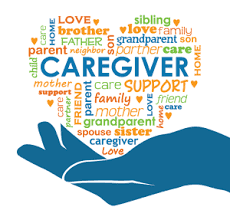
Celebrate Your Caregiving Journey with DDA

DDA wants to honor the incredible caregivers who support children, adults, and older adults receiving DDA services. We’re inviting caregivers to share their stories through our newsletter and social media.


We welcome all caregivers — those supporting children, youth, and adults, including those aging — whether receiving services through the Community Provider-Managed or Self-Directed Services model, and whether support is provided in the person’s home or in a community provider-managed setting.


If you’re interested in sharing your experience, please contact Mary Anne Kane Breschi at mary.kane-breschi@maryland.gov.

Individualized Positive Behavior Support 

Training Series Reminder


Join us for an engaging eight-part training series on Individualized Positive Behavior Support (PBS). Designed for participants looking to learn something new and for those with a foundational understanding of Positive Behavior Support, this series goes beyond the basics without requiring expert-level knowledge. 


This online training series is free and is ideal for those ready to strengthen their knowledge and skills in functional behavioral assessment and behavior support planning. Across eight half-day sessions, participants will explore the full assessment cycle, including plan development, implementation, and follow-up. Each interactive session builds on the last, combining expert instruction with hands-on activities and action planning to ensure that practical strategies can be applied immediately. Sessions support person-centered and trauma-informed approaches.


Dates, Times, and Topics


Eight-Session training series with each session running from 9:30 a.m. to 12:00 noon (with a 15-minute break midway through).


  • Day 1 - November 20, 2025
  • Positive Behavior Support: How Individualized Supports Relate to Organizational Structure 
  • Day 2 - December 18, 2025
  • Principles of Behavior: Assumptions of Behavior and the ABCs
  • Day 3 - January 15, 2026
  • Function of Behavior and Function-Based Thinking 
  • Day 4 - February 12, 2026
  • Critical Components of the Assessment Process: Strategies and Tools
  • Day 5 - March 12, 2026
  • Behavior Support Planning, Part 1
  • Day 6 - April 9, 2026
  • Behavior Support Planning, Part 2
  • Day 7 - May 14, 2026
  • Monitoring Support Plans: Data Collection and Graphing
  • Day 8 - June 11, 2026
  • Planning for Generalization and Fading


Who Should Attend


This training is designed for professionals, providers of Behavior Support Services, teams, and families who support adults and children with complex needs across various settings, including provider organizations, homes, mental health services, and schools. 


Registration


These events are free, but registration is required to attend. Registration will close after 150 people have signed up to ensure a good learning experience for everyone. All verified attendees will receive a certificate of attendance upon completion of the training series. CEUs are not offered for this training series.

Training Days and Expectations


This training series is designed so that each session builds on the one before. To get the most out of it, we encourage participants to attend all sessions. Each session also provides valuable stand-alone content, so you can join even if you can’t participate in every session.


For questions about this training series, please contact Terrence Proctor, Statewide Coordinator of Behavioral Supports, at Terrence.Proctor1@Maryland.gov.

New Resource Corner!

The Association for Successful Parenting Interactive Resource Guide 


The Association for Successful Parenting (TASP), a non-profit dedicated to supporting parents with intellectual disabilities and their families, has created an interactive resource guide. The Roadmap outlines paths for parents with intellectual and developmental disabilities and the professionals who support them. It includes resources on subjects such as parenting and family support, communication and relationships, health and safety, legal rights and advocacy, and training/professional development. The complete Roadmap with both paths can be found at the following link: https://achancetoparent.net/resources/ 


The Link Center Launches a New Website:

Advancing Systems of Care for People with Co-occurring Conditions


The Link Center, guided by a steering committee of people with lived experience, has launched a new website! The purpose is to improve access to coordinated, effective supports for children and adults with intellectual and developmental disabilities, brain injuries, and other cognitive disabilities who also experience mental health conditions.   


The Link Center is a project led by the National Association of State Directors of Developmental Disabilities Services, in partnership with the National Association of State Mental Health Program Directors, the National Association of State Head Injury Administrators, and the National Association for Dual Diagnosis.  


The website offers resources, training materials, and other information to better support people with dual diagnoses. www.thelinkcenter.org 

Operations Update

Regional Provider Meetings

We are excited to announce that our DDA Quarterly Regional Provider Meetings will continue in 2026. We sincerely appreciate providers who share valuable feedback and information. Your input is crucial in shaping the topics that DDA will cover at the regional meetings.


By clicking your region’s registration button below you will automatically be registered for your region’s annual series of meetings.  You only have to register once and you will be registered for the entire year.


CMRO - 4/15/26, 7/15/26, 10/7/26    REGISTER HERE


ESRO - 4/16/26, 7/16/26, 10/15/26  REGISTER HERE


SMRO - 4/14/26, 7/14/26, 10/13/26   REGISTER HERE


WMRO - 4/9/26, 7/9/26, 10/8/26      REGISTER HERE


Upcoming Events

February 17 & 19 - 2 Day RN/CMDN Nurse Orientation

February 12 - Individualized Positive Behavioral Supports

February 17 - Monthly CCS Meeting

February 19 -Waiver Advisory Council


Our Vision: 

To connect Marylanders with intellectual and developmental disabilities to services that help empower them so they can live the lives they want to live in communities they choose. 


Our Mission: 

To provide a high-quality and sustainable healthcare system that is equitable and accessible to all.

DDA Headquarters

201 W. Preston Street, 4th Floor

Baltimore, MD 21201

Phone: (410)767-5600

Fax: (410)767-5850

Toll Free: 1(844)253-8694


Have feedback about our communication? Take our survey!

Subscribe to our mailing list!