|
The Delegation Trap
Walk the floor of almost any mid-sized industrial company and you'll find the same bottleneck: the owner still approving quotes under $5,000, still fielding complaint calls, still the last signature on schedule changes. Ask why, and you'll hear "It's faster if I do it" or "I haven't found the right person yet."
Both answers are usually wrong. It isn't faster — it's a hidden tax that shows up as missed deadlines, a leadership team that waits to be told what to do, and an owner who can't take a real vacation. The "right person" problem is rarely about talent. It's that the leader never built the conditions, or the system, that make delegation possible.
This is one of the most common — and most misdiagnosed — issues in privately held industrial businesses. Leaders think they have a people problem. Usually they have a delegation design problem.
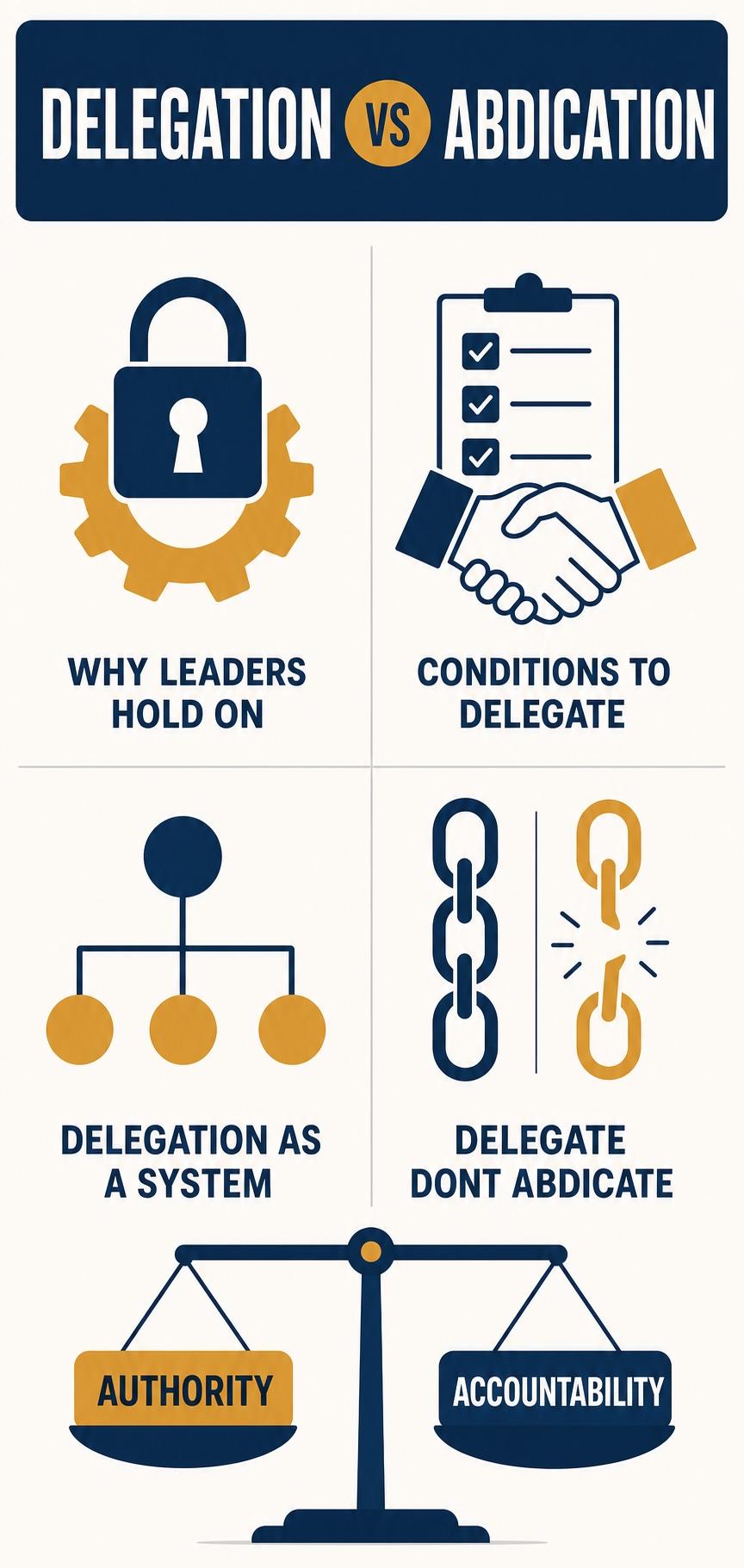
Why Leaders Hold On Too Long
The real reasons delegation stalls rarely involve the direct report's competence:
-
Loss of control. Delegating means accepting outcomes that might differ from what the leader would choose. For owners who built the business by hand, that feels like risk, not relief.
-
Identity tied to being needed. Delegating well means becoming less necessary day-to-day — which can feel threatening even when it's exactly what the business needs.
-
"It'll get done better, faster, my way." Often true short-term. Almost always false long-term, since it caps capacity at the owner's personal bandwidth.
-
No time to teach because there's no time to spare. Leaders stay too busy doing the work to build the system that would free them from it indefinitely.
None of these are character flaws. They're default behaviors in the absence of a deliberate system. The fix isn't willpower — it's structure.
Conditions Required to Delegate to People
Delegation usually fails not because the task was wrong, but because the person or the setup wasn't ready. Four conditions need to be in place first.
-
Demonstrated competence, not potential. Match authority to proven ability today, not the ability you hope someone grows into. Start with smaller, bounded decisions and expand scope as judgment is demonstrated.
-
Clarity on outcome, not just task. "Handle customer complaints" isn't delegation. It's a vague transfer of anxiety. Define what result matters: response time, resolution rate, escalation triggers. People can't own an outcome they were never shown.
-
Authority that matches the responsibility. If a supervisor owns on-time delivery but can't approve overtime without your sign-off, you've delegated the blame, not the outcome. Authority and accountability move together.
- A stated level of autonomy, not an assumed one.
Level 1 - Do exactly what I have instructed
Level 2 - Research and report back
Level 3 - Research and recommend for my approval
Level 4 - Decide and act, then inform me
Level 5 - Full autonomy - update only on exceptions
Most delegation failures are a mismatch here: the leader assumed Level 2 while the employee assumed Level 4. State the level out loud for every significant handoff.
When these conditions are missing, delegation isn't unsafe because the person is unqualified. It's unsafe because the leader hasn't made it safe.
What Effective Delegation Looks Like as a System
Delegation that depends on the leader's memory or availability isn't a system. It breaks the moment the leader is stretched thin, exactly when it's needed most. A real system has four components.
-
A decision-rights map, not a mental list. Use RACI (Responsible, Accountable, Consulted, Informed) for recurring decisions — pricing exceptions, hiring, capital purchases, customer credits. Only one person is Accountable per category. On paper, decision rights survive turnover and growth.
-
Thresholds that make small decisions self-executing. Most owner bottlenecks are small, repeated decisions, not big or rare ones. A documented authority framework ("supervisors approve up to $2,500 in freight; plant manager up to $15,000; above that, ownership") removes routine approvals from your desk without losing control of what matters.
-
A review cadence on the calendar, not triggered by problems. Effective delegation is a tether, not a switch — attached to the outcome, detached from the process. If you can't name the metrics your plant manager tracks this week, or have no recurring meeting with them, you've likely abdicated that function.
-
Leading indicators, not just outcome reporting. Waiting for the month-end P&L to discover a failure is the most expensive way to learn. Agree in advance on two or three early-warning signals — scrap rate, on-time delivery, complaint volume. So problems surface as a conversation, not a crisis.
Together, this lets delegation scale with the company, survive the owner's absence, and build a bench of leaders who've been genuinely developed.
Don't Mistake Abdication for Delegation
Frustrated by being the bottleneck, owners often overcorrect: hand off a function entirely, stop asking questions, and call their own disengagement "delegation." It's abdication — and it's more dangerous than holding on too tight.
The hallmarks of effective delegation include a clear and measurable outcome defined upfront; authority matches responsibility; scheduled check-ins with leading indicators; accountability owned by the leader; and building of capable successors.
The hallmarks of abdications are vague task with unspecified result; responsibility exceeds authority; no follow-up until something breaks; leader blames subordinate; and leader dependency increases.
The uncomfortable truth: you can delegate the task, the decision, and the authority to act. You cannot delegate accountability. As owner, you still answer for the outcome — whether it's a quality failure, a compliance lapse, or a fraud that went undetected because no one was watching.
This matters most in industrial settings, where abdicated functions tend to surface as safety incidents, warranty claims, or compliance exposure — failures that show up not in a skipped check-in, but in a lawsuit six months later. The owner who "doesn't want to be bothered with the details" of quality or safety isn't saving time. They're accumulating risk silently until it becomes visible at the worst moment.
The Practical Starting Point
Don't fix delegation everywhere at once. Start narrow:
-
Pick one function you keep getting pulled back into — the recurring headache is the best diagnostic.
-
Be honest about the person's demonstrated level today, not their potential, and state the matching autonomy level out loud.
-
Write down the outcome, the authority, and the review cadence — three lines beats a verbal handoff.
-
Put the check-in on the calendar before handing off the work, not after something goes wrong.
-
Track one or two leading indicators so problems surface in a Tuesday conversation, not a Friday crisis.
Delegation done well is a more disciplined form of control, not its opposite. It requires more structure than doing it yourself, not less. It's the only path from an owner-dependent operation to a business that can scale, attract better talent, and eventually sell for what it's worth without the owner in every decision. Abdication offers the same short-term relief with far more downside.
Question for You to Ponder
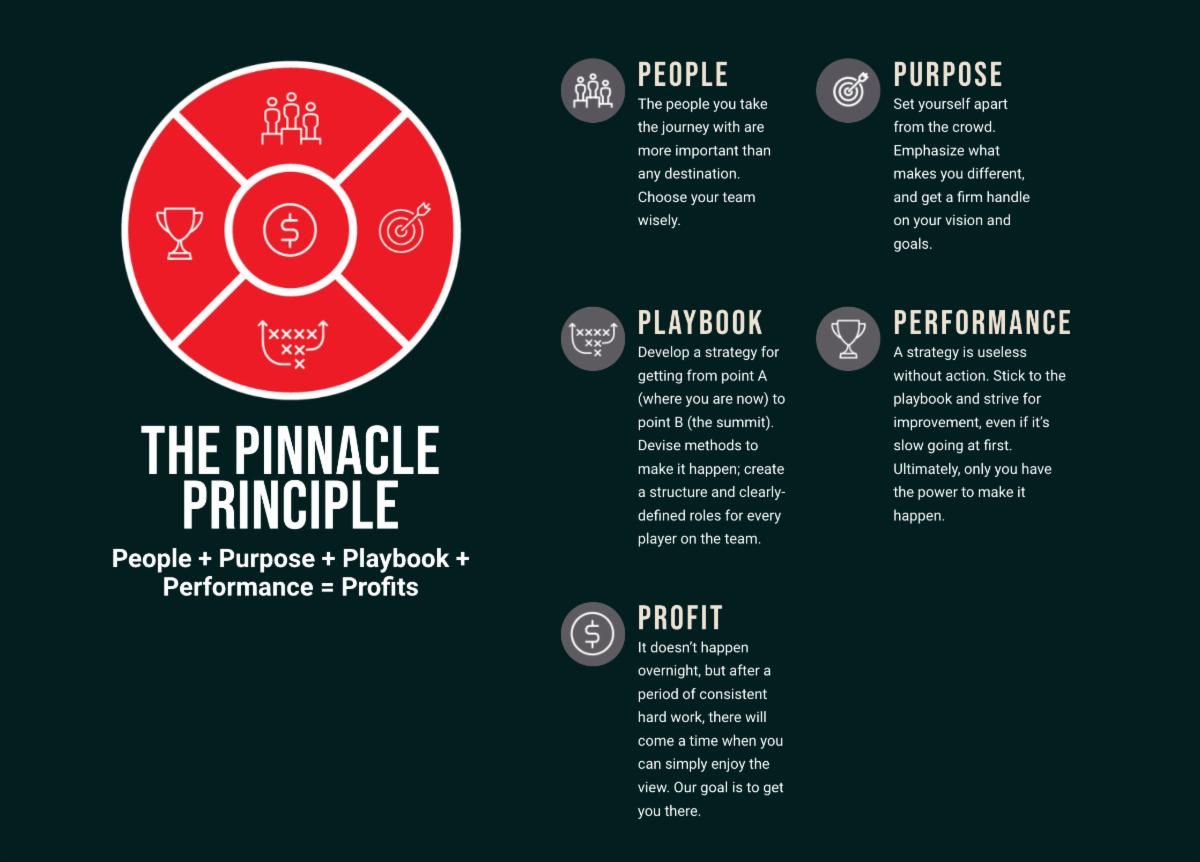
Are you ready to lead your business to its Pinnacle?
Outcome (if you act)
More valuable company, higher profit, and a better quality of life.
Call to Action
-
Ask me for a copy of the Path to Pinnacle
- Schedule a Meeting with Me
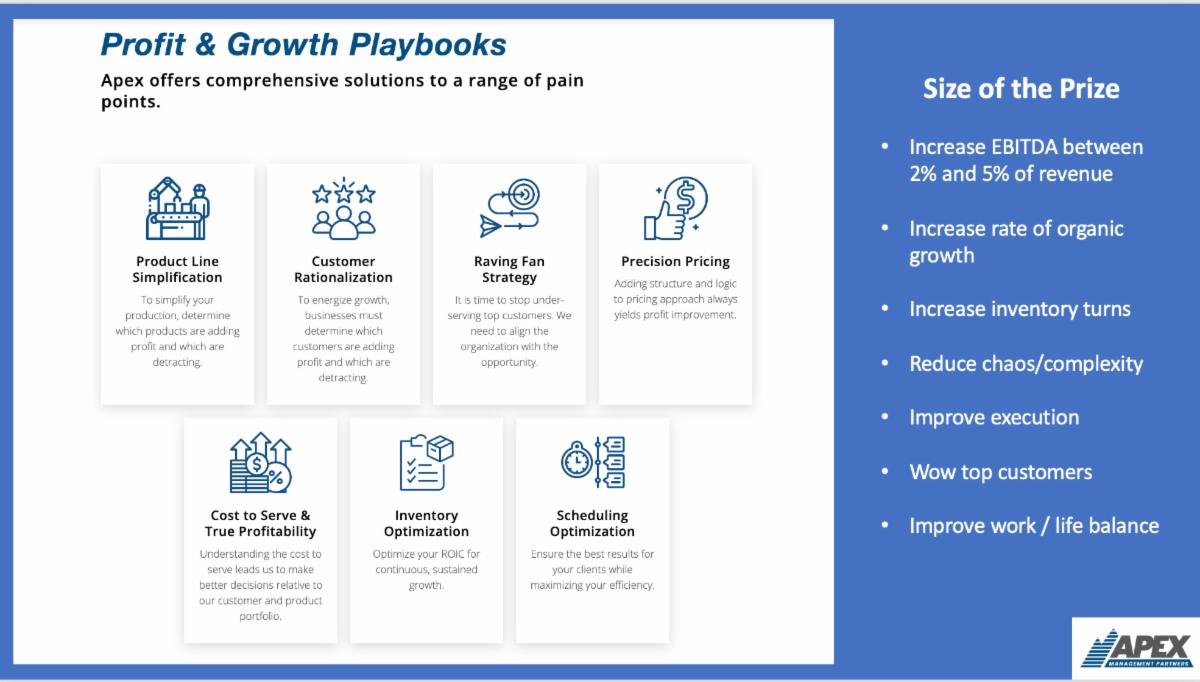
Our Mission: Accelerate Profitable Growth and Improve Execution
|