|
THE DOG DAYS OF SUMMER HAVE CERTAINLY SET IN!
AUGUST 2025 / VOLUME #220
| | Compliments of Damon's Droneography | |
AUGUST HORTICULTURAL
AND GARDEN TIPS
Now that Summer is in full swing, the list of gardening and landscaping TO DO's grows even more. Some of them (Vegetables, Fruit & Nut, Flowers, Lawn & Turf, Trees & Shrubs, and General Landscape) are highlighted in this month's tips. So, to learn about what can/should be done in AUGUST, click on GARDEN TIPS.
| |
WHAT WE DO:
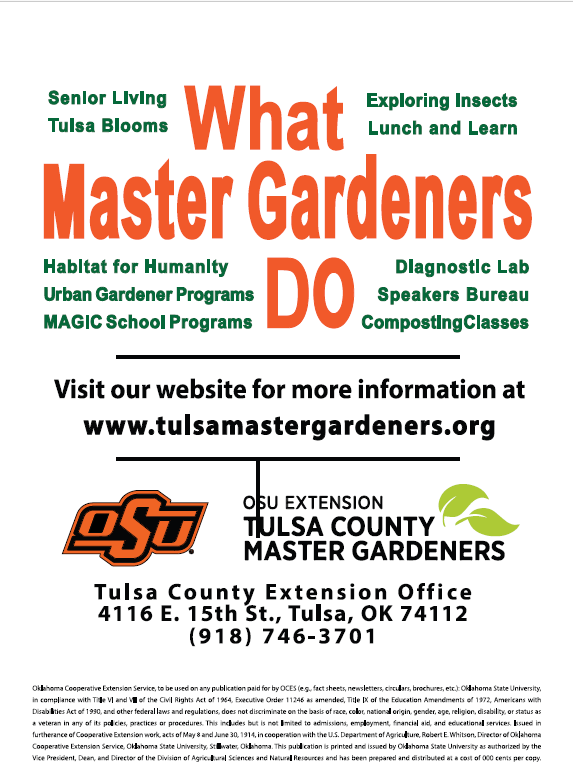
Since 1983, the Tulsa Master Gardeners have been serving the public by offering research-based horticultural information to residents of Tulsa and surrounding areas. We work with all age groups from having educational fun in the Tulsa Public School classrooms teaching K-5th graders the benefits of insects to teaching adolescents some life skills at the Tulsa Boys Home to holding Urban Gardener classes for adults to bringing joy through horticultural crafts to our seniors in assisted living centers – and so much more!
HOW IT WORKS:
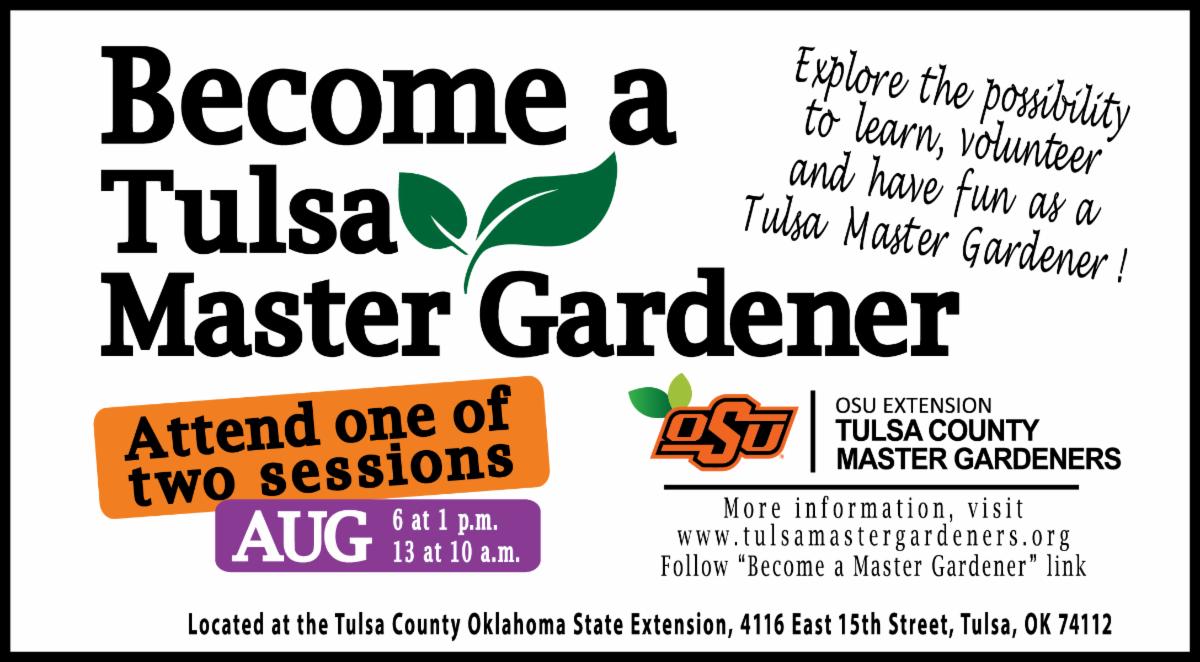
Each year a new set of about 40 adults attend weekly classes from early September to mid-December. Held at the Tulsa County Extension Office on 15th street, these “students” learn about various aspects of OSU researched-based horticultural information from accredited OSU Stillwater professors. The application process starts with applying online at tulsamastergardeners.org (scroll down and click on “Become A Master Gardener” for details), then attending one of two orientation sessions offered (as noted below), followed by a short interview process. If you are one of the lucky ones chosen, classes then begin on Wednesdays immediately following Labor Day. Come join the fun!
A LITTLE HISTORY:
The Tulsa Master Gardener Program has been active and thriving for over three decades and is currently considered one of the top five Master Gardener County programs in the entire nation. This is due to the size of our Foundation members as well as the number, diversity, and activity level of our various community outreach programs. We are a 501(c)(3) organization and, as such, receive no city, state or federal funding. Instead, the Tulsa's Master Gardener programs are self-funded by its own fundraisers (i.e. the spring plant sale), from member contributions, and from public donations.
If you wish to make a tax-deductible donation to our wonderful organization, you may go online at tulsamastergardeners.org and click on the link “Support Tulsa MG” at the top. We would be so appreciative!
| |
If you are interested in knowing how to become a Tulsa County Master Gardener, click on tulsamastergardeners.org to register and receive an e-mail reminder of the upcoming informational meetings.
Then, be sure to mark your calendar for upcoming one-hour information sessions as follows (you only need to attend one):
This Wednesday, August 6th @ 1 p.m.
OR
Next Wednesday, August 13th @ 10 a.m.
Held at the Tulsa County OSU Extension Office
4116 East 15th Street, Tulsa
For a sneak peek of the fun, check out the video:
"What I Like About Being A
Tulsa Master Gardener"
| |
The Compost Connection
From Green Country Master Composters
| |
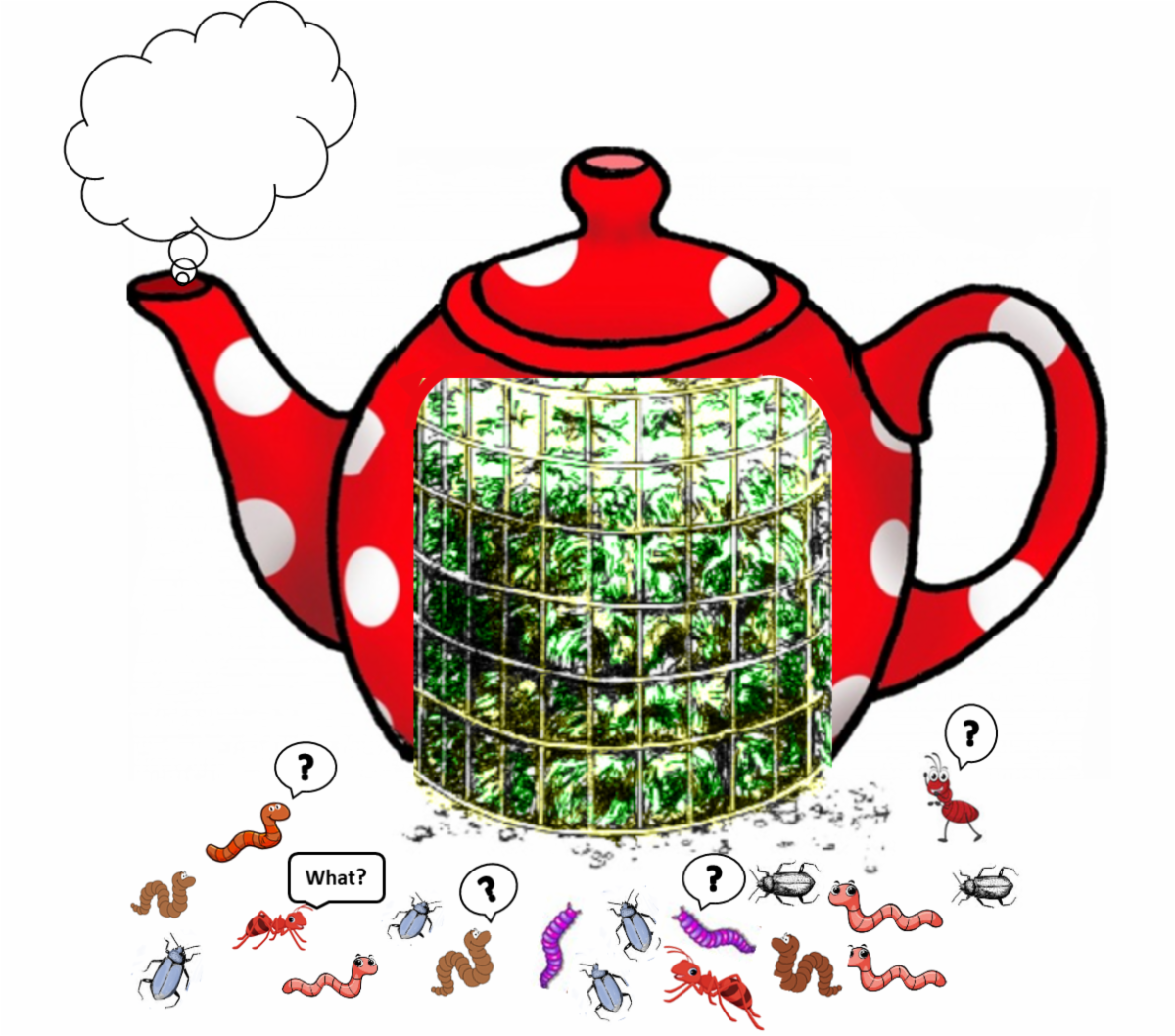
This month’s article looks at the renewed interest in compost tea. Never heard of compost tea? Well, you have come to the right place.
According to The Old Farmer’s Almanac, “Compost tea is a liquid produced by extracting beneficial microorganisms (microbes), bacteria, fungi, protozoa, nematodes, and micro arthropods from compost using a brewing process.” Basically, it is a natural, liquid fertilizer that replenishes the soil, which seems to make compost tea a topic worth investigating.
If that is not enough to interest you, then you can read any number of articles (some written by individuals who are selling compost tea equipment or ingredients) offering visions of a miracle liquid that can:
- Enhance crop fertility
- Ensure lush foliage, abundant flowers, and thick green turf
- Produce delicious fruit and vegetables
- Prevent plant diseases
- Eliminate the need for chemical fertilizers and pesticides.
If this sounds interesting, you can buy pre-made teas (tea bags you can use to brew your own, brewing equipment, and measured ingredients). Or, you can just make your own.
Before you begin on your journey, consider that all the hype may not be true and compost tea is not a panacea for your garden. Compost tea is only as good as its ingredients and the method used to brew it. Pathogens and nutrient imbalances can be a problem, but we'll explore that next month in Part 2.
The currently recommended brewing method, Actively Aerated Compost Tea (AACT), uses fully decomposed hot compost as well as an aeration system. While there are any number of recipes that can be used successfully, a simple DIY recipe is provided below as an example:
Materials needed:
- Clean five-gallon plastic bucket
- One gallon of finished compost
- Water-permeable bag (such as an old pillowcase or fine mesh bag)
- Twine
- 1 cup organic, unsulfured molasses
- De-chlorinated water (such as rainwater, or tap water that has been standing for 24 hours to allow the chlorine to evaporate)
- Aquarium pump and tubing
Directions:
1. Place compost into the water permeable bag and close the bag with twine.
2. Fill the bucket with water, leaving 1 to 2 inches of space on the top.
3. Add molasses to the bucket and stir well.
4. Place compost filled bag into the bucket.
5. Place the aquarium tubing in the bucket and plug in the pump.
7. Allow the pump to run for 24-48 hours. The tea is ready when it has a sweet, earthy smell and a bubble-covered surface.
8. Remove the compost bag when the tea is done brewing. Compost can then be added to the garden soil.
9. Unplug the pump, remove the tubing
10. Pour tea into a watering can or pump sprayer and apply to lawn, at the base of your plants or directly onto the leaves.
Recommendations:
- Use only high quality organic compost free from fertilizers, herbicides, and pesticides.
- Keep tea out of the sunlight as UV rays may damage the microbial population in the liquid.
- Apply early in the morning or in the evening.
- Keep liquid as close to room temperature as possible.
- Use within 4 hours of process completion.
- Thoroughly clean and disinfect all parts of the brewing apparatus.
==============================
Next month’s article will provide some background information and explore the question: “to tea or not to tea”. Until then, learn more about this subject by checking out the following articles:
-
Soil Foodweb Institute; Compost Tea Information
-
ATTRA Sustainable Agriculture; Notes on Compost Teas: A supplement to the ATTRA Publication “Compost Teas for Plant Disease Control”
-
Eco Farming Daily; Compost Tea: A Remedy For What Injures Your Crops
-
The Old Farmer’s Almanac; How To Make Compost Tea “Compost Tea Basics”
| |
Heat & Humidity:
A Summer Survival Guide for Gardeners and Their Gardens
Summertime in Oklahoma is no walk in the park - especially for gardeners. Between battling weeds, insects, and stubborn plant diseases, we are also fighting to stay safe in oppressive heat and humidity. But while we're sweatin' it out, our plants are feeling stress too.
What Is the Heat Index and Why It Matters
The heat index combines air temperature and humidity to represent how hot it feels. High humidity prevents sweat from evaporating, thus leading to dehydration, heat exhaustion, and even heat stroke. Just as our bodies struggle, plants can also suffer under excessive moisture and heat.
Know the Warnings Before You Garden
Heat Advisory: Heat index ≥ 100°F and temps above 75°F overnight. Stay hydrated and garden in cooler hours.
Heat Watch: Prolonged extreme heat expected in the coming days. Plan gardening sessions carefully and monitor forecasts.
Excessive Heat Warning: Heat index ≥ 105°F within 12 hours - very dangerous. Avoid gardening; stay indoors and keep cool.
How Humidity Affects Your Plants
Humidity can be a friend or foe depending on the conditions. While it sometimes aids in plant hydration during heatwaves, it also fosters fungal and bacterial diseases. So, watch for these symptoms:
-
Leaf Spotting: Brown or yellow patches may signal excess moisture.
-
Mold & Mildew: Fuzzy growth on leaves or soil indicates poor air circulation.
-
Stunted Growth: Humidity can block nutrient uptake.
-
Wilting Despite Wet Soil: Signals root stress.
-
Root Rot: Caused by soggy conditions. Check for foul smells near roots.
Protecting You and Your Garden
For You:
-
Drink water frequently - ideally before you're thirsty
- Avoid gardening between 4–6 PM (the hottest hours)
- Wear light-colored, breathable clothes
- Take breaks in the shade or indoors
- Monitor your body and do NOT ignore early symptoms of heat stress
For Your Plants:
- Improve airflow to reduce humidity buildup
- Adjust watering if soil stays wet too long
- Customize care based on each plant’s tolerance
- Remember: healthy gardeners make better plant parents!
Don’t let the Dog Days drag you down - strategic gardening and smart self-care go hand-in-hand!
| INTERESTED IN PLANTS THAT ACTUALLY PREFER TO BE NEGLECTED? | |
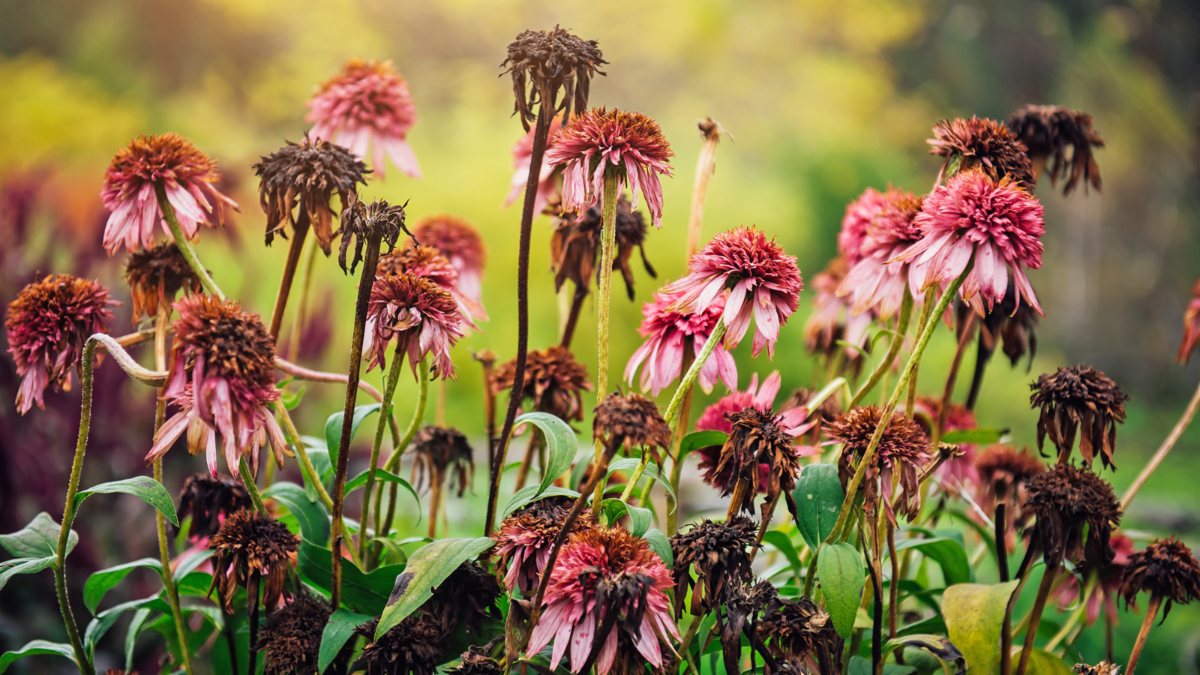
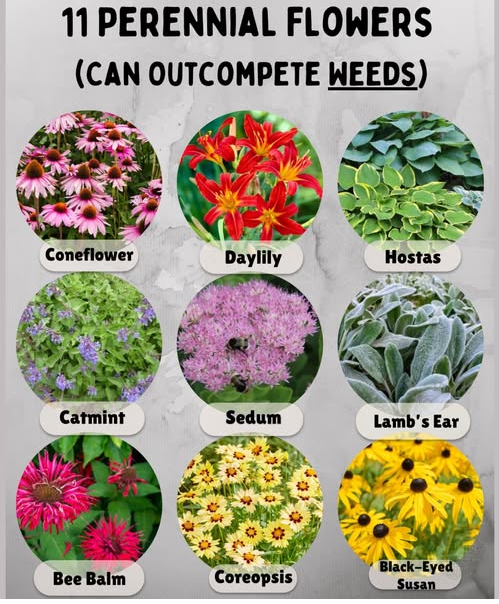
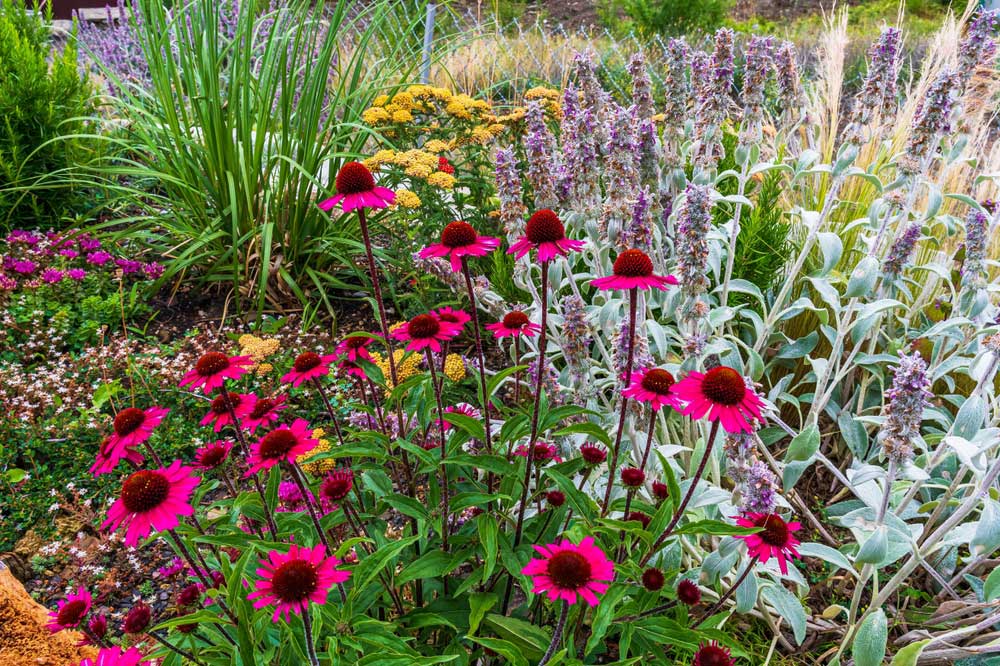
Love to garden? Hate to kill plants? Prefer to not replant each year? What if there were plants that actually like, even prefer, to be ignored and left alone? And, are perennials so they come back for even more neglect next year. Well, this is your lucky day . . . there are. And the cool thing is you probably either already have some of these or know about them.
So, to learn about a dozen flowering perennials that thrive in sun and prefer neglect (some shown above, some not), click on NEGLECTED PLANTS.
COMPLIMENTS OF GARDEN LOVERS CLUB
| 15 PERENNIALS THAT WILL BLOOM MULTIPLE TIMES A YEAR | |
15 PERENNIALS
COMPLIMENTS OF GARDEN LOVERS CLUB
| |
COMMON LANDSCAPE PESTS
IN OKLAHOMA
| |
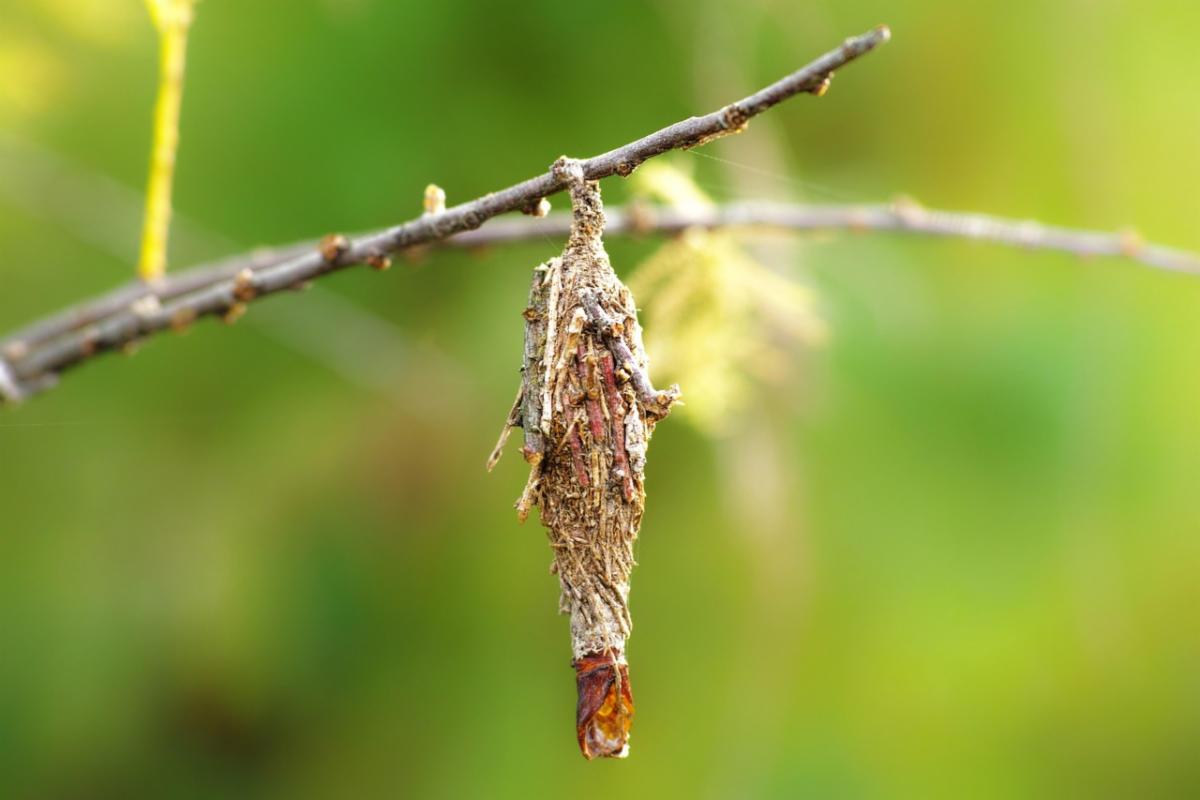
Oklahoma landscapes are home to a variety of insect pests that can damage turf, trees, and ornamental plants. Seven common offenders - armyworms, bagworms, cutworms, webworms, emerald ash borer, red spider mites, and lace bugs - all can cause significant harm if left unchecked.
Understanding their life cycles, host plants, symptoms, and management is key to maintaining healthy landscapes. Click on PESKY PESTS to get that full understanding.
| EXPLORING TYPES OF GARDENS: SO MANY OPTIONS! | |
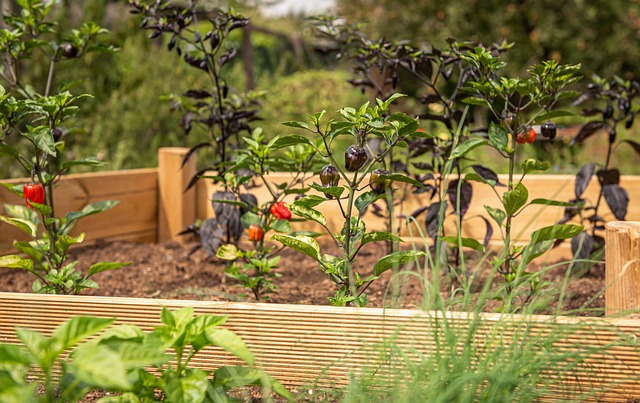
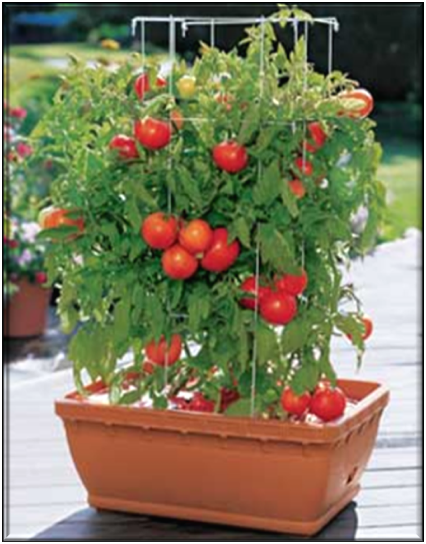
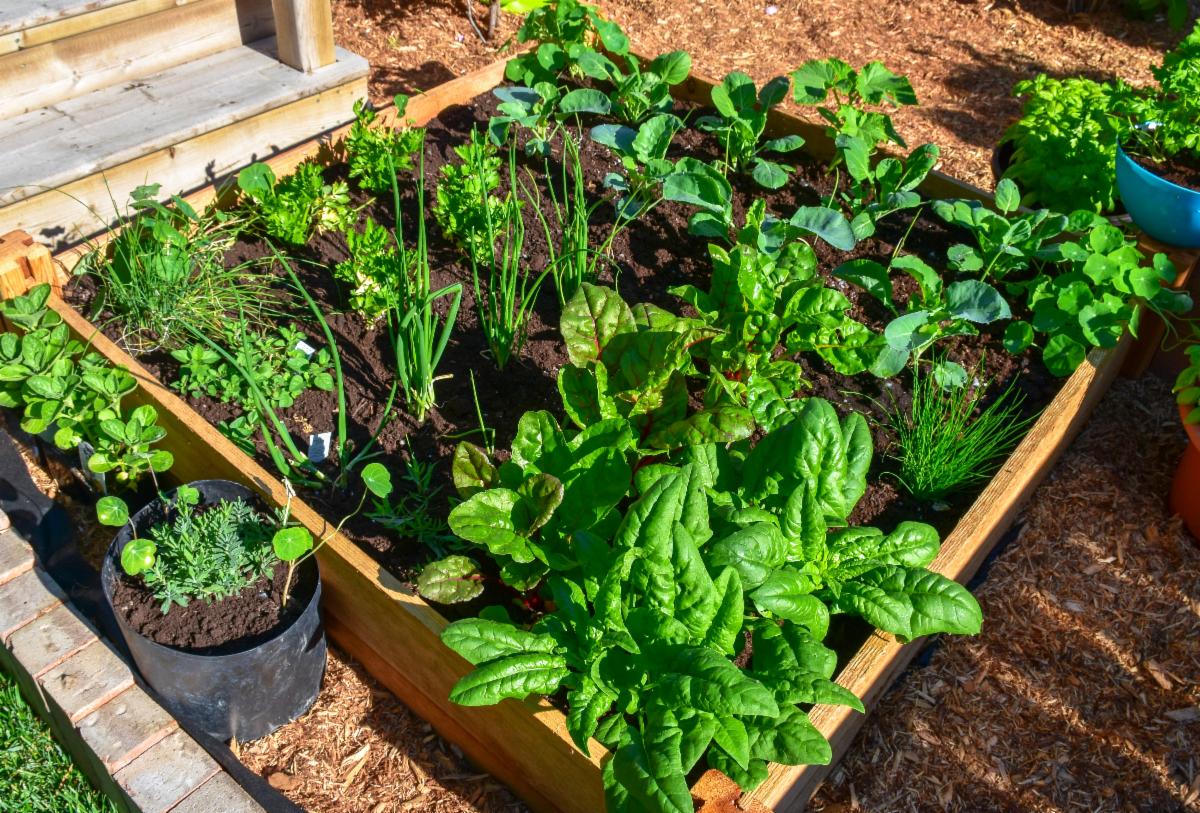
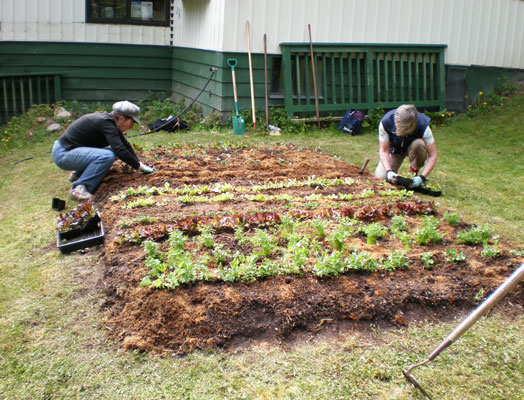
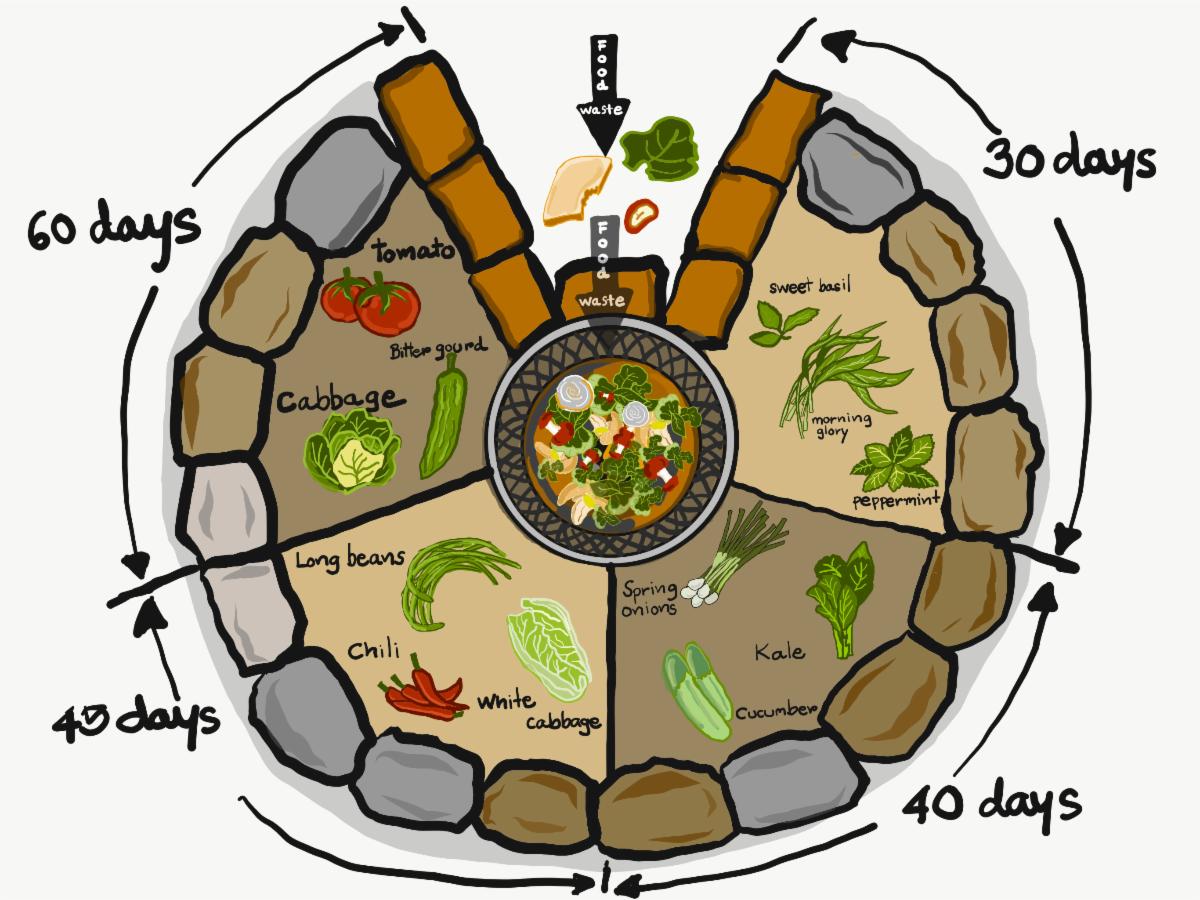
Oklahoma gardeners have diverse options when it comes to choosing a garden style that suits their space, soil, and sustainability goals. Five popular methods - raised bed, container, square foot, hugelkultur, and keyhole gardening - each offer unique benefits and considerations.
Understanding their design, pros, and cons helps gardeners make informed decisions. Click on GARDEN OPTIONS to become better informed.
| |
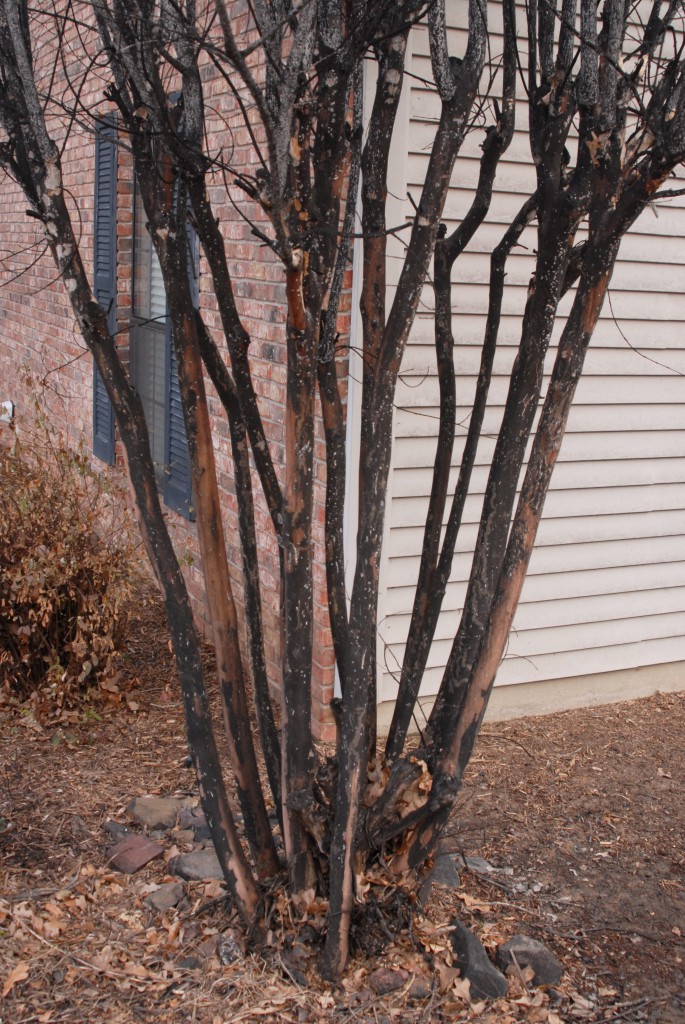
Crape myrtle trees, with their vibrant blooms and graceful appearance, are cherished additions to any garden or landscape. However, the threat of Crape Myrtle Bark Scale (CMBS) looms over these beautiful trees, potentially causing significant damage if left unaddressed.
To properly equip ourselves with the knowledge and techniques to identify and manage CMBS effectively, click on CMBS. It's that easy!
| CREATING A BEAUTIFUL BUTTERFLY GARDEN | |
Creating a butterfly garden is a rewarding endeavor that transforms a simple yard into a dynamic ecosystem. Oklahoma is home to a wide variety of butterfly species, each with its own unique needs.
By understanding the specific requirements of these beautiful insects and the local environment, you can design a thriving haven that will be a joy to watch for years to come. Click on BUTTERFLY GARDEN to learn how to create a great one.
| |
GOOD BEETLES VS
BAD BEETLES
| |
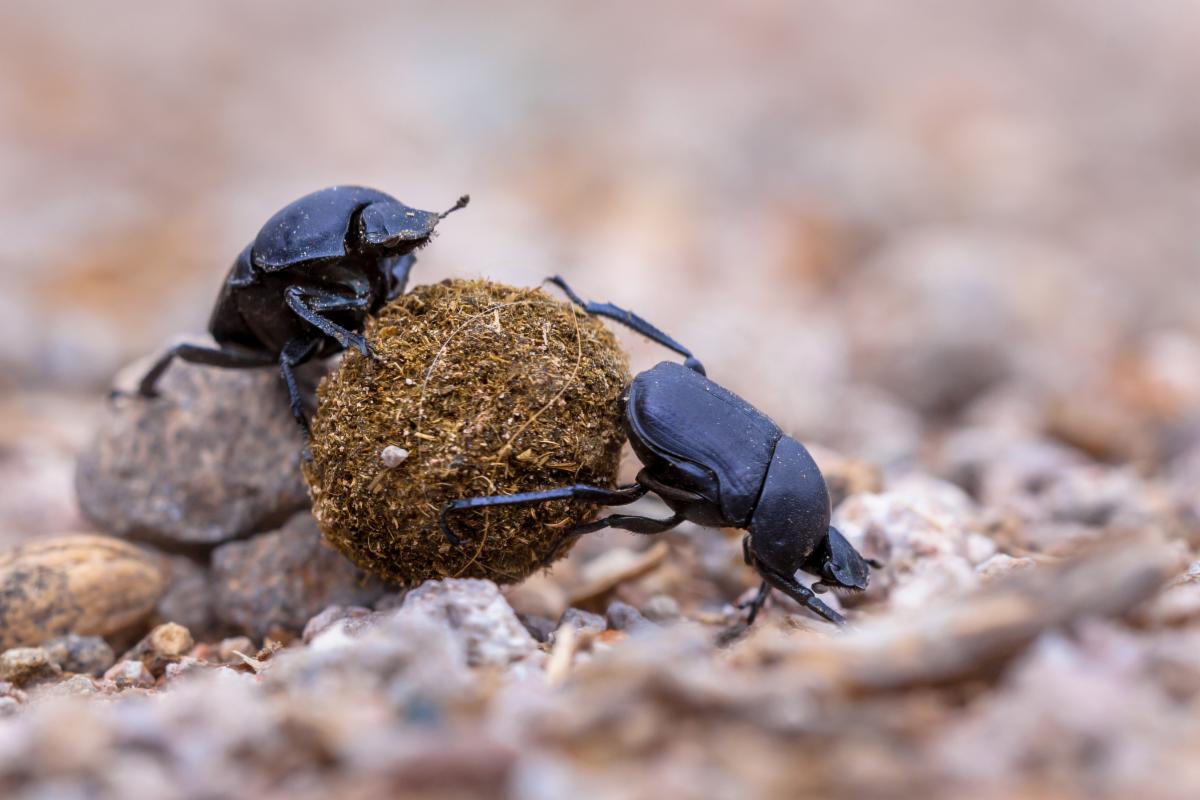
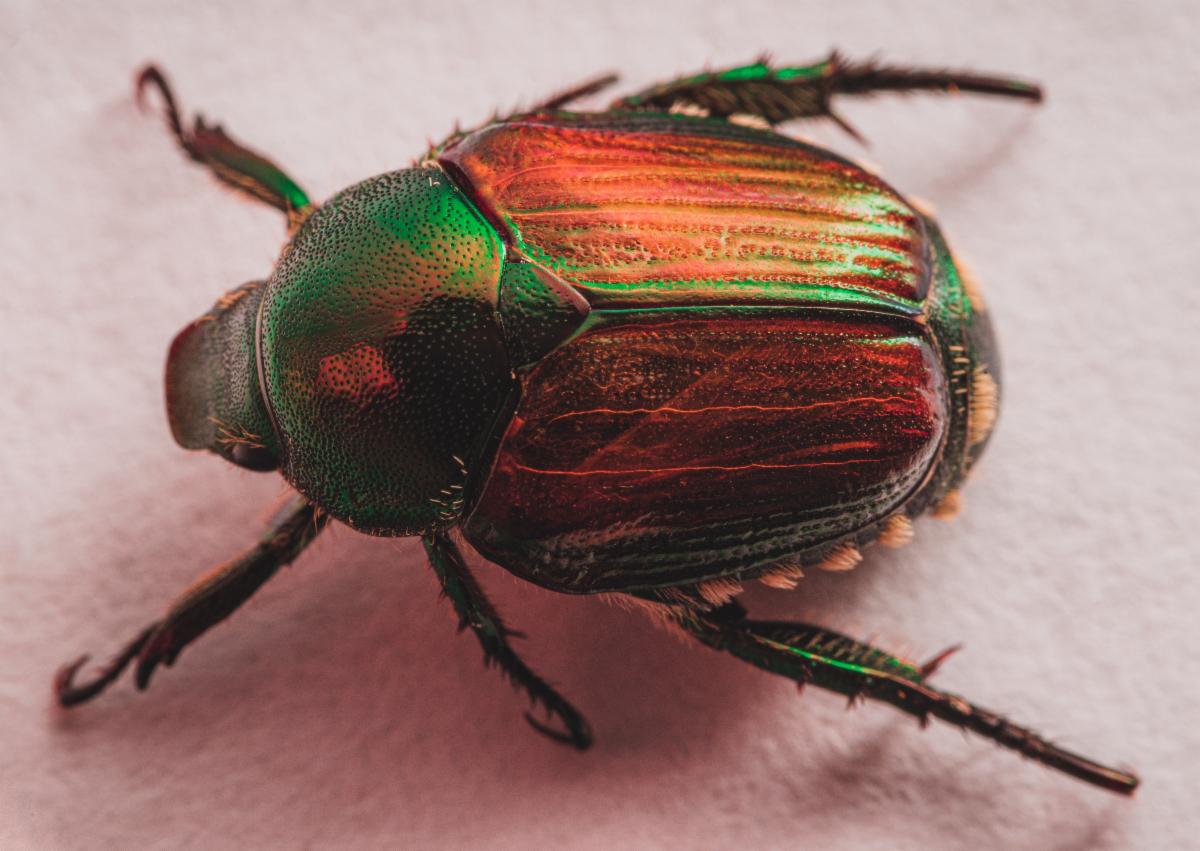
Beetles (order Coleoptera) make up one of the most diverse insect groups in Oklahoma. Some species - like dung beetles - provide critical ecological benefits, while others, such as blister beetles or flea beetles, can cause harm to livestock or crops.
Understanding which are “good” and which are “bad” helps gardeners, ranchers, and land stewards make informed decisions. Click on BEETLES to find out some info about a few of each.
| TICKS, CHIGGERS, MOSQUITOES! | |
Let’s face it - nothing ruins a good day outside like getting attacked by tiny, biting bugs. Ticks, chiggers, and mosquitoes are some of the biggest party crashers in the yard, on a hike, or at the park. Aside from making you itch, some of these pests carry diseases.
Luckily, there are plenty of straightforward ways to keep them in check and help you enjoy the outdoors with peace of mind. Click on T,C,& M to get the low down
| XERISCAPE: MORE ATTRACTIVE THAN YOU MIGHT THINK | |
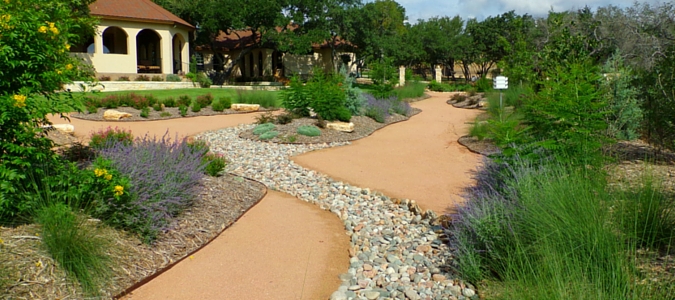
With all the rain we've had this year it’s hard to remember that Northeastern Oklahoma is usually a lot drier in the summertime. Now that the monsoons have passed it’s a good time to take a look at water thrifty Xeriscape gardening.
Xeriscape is NOT a yard just filled with yucca, rocks, gravel, and cactus. Xeriscape IS a colorful and attractive way to have a beautiful landscape that requires less water and less work.
Such water-wise landscapes are designed to work with periods of natural rainfall and be hardy enough to withstand long periods of drought.
Click on XERISCAPE to learn about the 7 basic principles of xeriscaping.
| SPEAKING OF XERISCAPE: CONSIDER GAILLARDIA | |
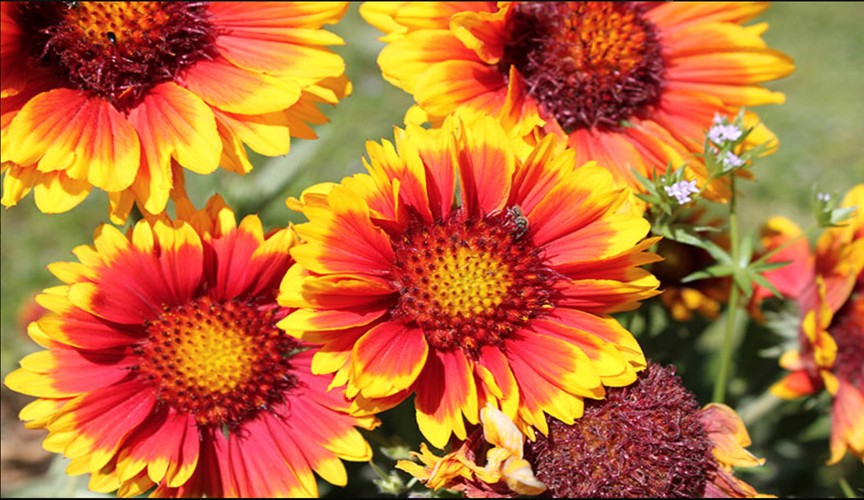
Indian Blanket (or Blanket Flower) became Oklahoma’s Official State Wildflower in May, 1986. It is a great addition to your pollinator garden that will attract butterflies and bees. AND, it is also a good choice for xeriscaping.
To learn about some historical information about this plant dating back to the Aztecs as well as how it grows and re-seeds itself (did someone say "perennial"?), click on GAILLARDIA.
| |
DIVIDING PERENNIALS:
WAIT . . . IT'S ALMOST TIME
| |
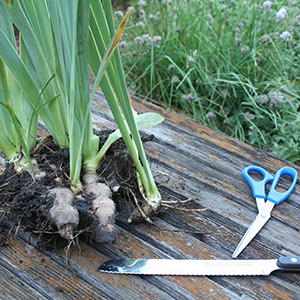
Late summer to early fall marks a quiet shift in the garden - the frenzied burst of spring growth settles, the vibrant bloom of midsummer fades, and cooler days begin to whisper through the leaves.
For gardeners, this time window is not just a seasonal transition, but a golden opportunity to rejuvenate the backbone of the landscape - perennials. If your hostas are crowding their neighbors or your daylilies have stopped blooming as boldly, it may be time to divide and conquer. Click on DIVIDING to find out why, when, and how to divide plus post-division care tips in order to have a vibrant-blooming garden year after year.
| |
DID YOU KNOW?
Since 1983, the Tulsa Master Gardeners have been serving the public by offering research-based horticultural information to residents of Tulsa and the surrounding area. The Tulsa Master Gardener Foundation is a 501 (c) (3) organization. As such, it receives no city, state or federal funding for its Tulsa community outreach programs. In fact, the Tulsa's Master Gardener programs are self-funded by its own fundraisers, from member donations, and from public donations.
The two main annual Tulsa Master Gardener fundraisers are its Spring Plant Sale in April and the Garden Tour that is usually the first weekend in June. And, one of the most important income sources that sometimes gets overlooked are the personal and corporate donations. These are so important in helping us to meet our financial obligations and we want you to know they are very much appreciated.
MG Endowment Fund
The Tulsa Master Gardeners have been around for over three decades and we plan to be around for many more decades. Furthermore, we are considered one of the top five Master Gardener County programs in the entire nation. We are because of the size of our Foundation membership, the number, diversity and activity level of our various community outreach programs, and our overall financial strength!
So, we are pleased to announce, in partnership with the Tulsa Community Foundation, the Master Gardener Foundation has established an Endowment Fund to ensure our long-term financial strength. Our plans are to build this fund for many years before making any withdrawals from it. Please consider us as you make your annual gift giving as well as longer-term estate planning decisions. Remember, all donations are fully tax deductible!
If you wish to make a tax-deductible donation to help fund the long-term success of the Tulsa Master Gardener program, click on
TULSA MASTER GARDENER ENDOWMENT FUND.
If you wish to make a tax-deductible donation to help fund the Tulsa Master Gardener program's annual expenses, click on
TULSA MASTER GARDENER FUND.
We thank ALL of you for having been such faithful contributors both in the past and in advance for your future consideration and participation! So proud to be a part of the Tulsa area - such a giving community!
| |
=====================================================Oklahoma State University, in compliance with Title VI and VII of the Civil Rights Act of 1964, Executive Order 11246 as amended, Title IX of the Education Amendments of 1972, Americans with Disabilities Act of 1990, and other federal laws and regulations, does not discriminate on the basis of race, color, national origin, gender, age, religion, disability, or status as a veteran in any of its policies, practices or procedures. This includes but is not limited to admissions, employment, financial aid, and educational services.
=====================================================
You can get answers to all of your gardening questions at:
TULSA MASTER GARDENERS
4116 East 15th Street Tulsa, OK 74112
918-746-3701
mg@tulsamastergardeners.org
| | | | |