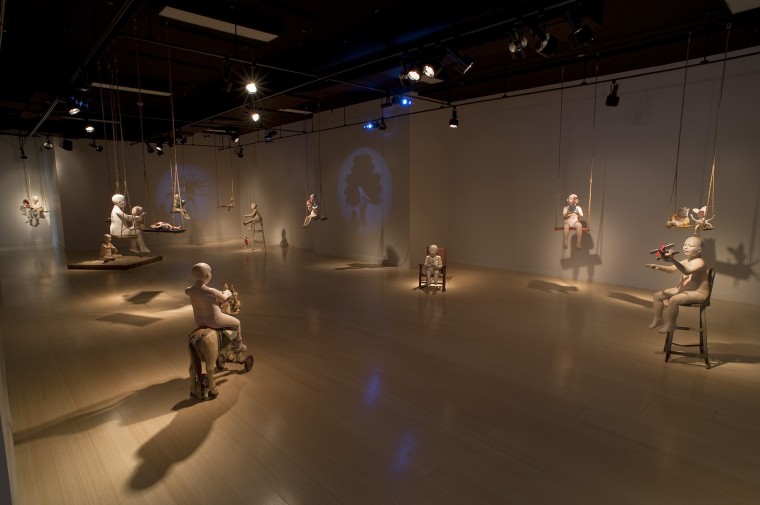
Practice tip: the double-bind, gate or trap?
Double-binds arise from the internal contradictions present in any system. Repeated exposure to double-binds usually results in either serious mental disturbance or surrender of agency and compliance with the demands of the system, a conditioned known as learned helplessness. The only way to respond to a double-bind is not to accept it or the system that presents it. The particulars, however, depend on the situation you are in when you encounter the double-bind.
Such situations are quite common. They arise in a number of contexts including spiritual practice, internal reactive patterns, cultural differences, organizations, dysfunctional families, and political systems. In this month's practice tip, I explore how they are used in spiritual practice, how they arise in regular life, and how not to fall into the Kafka trap but use them as a gate to freedom.
Pointing out Instruction
Let’s begin with spiritual practice. Here a double-bind is used to break your connection with the system of conceptual perceptions and emotional reactivity, a system that is full of internal contradictions. A classic example is the Zen koan about Bodhidharma.
Why did Bodhidharma come from the West?
If you say anything, I’ll hit you. If you don’t say anything, I’ll hit you.
What do you say?
“Why did Bodhidharma come from the West?“ is Zen code for “What is the point of Buddhist practice?”
When the teacher asks, “What is the point of Buddhist practice?” he or she is pointing right at mind nature, a knowing that is not mediated by conceptual thinking.
Initially, you almost always go to a conceptual answer. Before you can say anything, the teacher says, “If you say anything, I’ll hit you.”
“Okay,” you think, “I won’t say anything.”
But the teacher is ahead of you, “If you don’t say anything, I”ll hit you.”
What do you do? You are damned if you open your mouth and damned if you don’t. The teacher has presented two conflicting demands that cannot be resolved in or by the conceptual mind system.
If you are the student, at this point, your mind just stops. The koan paralyzes the conceptual mind. You cannot think. However, the conflicting demands have opened a gap. There is a knowing in that gap, a knowing that does not depend on the conceptual mind. Your challenge is to step out of the conceptual mind and respond from that non-conceptual knowing.
Mahamudra and Dzogchen have similar pointing-out instructions. They are usually expressed more philosophically, but the intent and the method are similar.
If you are not able to respond from non-conceptual knowing, you may experience a momentary stopping or paralysis of the conceptual mind system and then a feeling of being torn in two. A fleeting moment of panic arises, and then you start to flail in that panic as you struggle to find a conceptual resolution. When you can’t, you may collapse in frustration and confusion, or you may harden into anger and resentment.
Through practice, that is by building skills and capabilities and meeting the stopping of the conceptual mind over and over again, your relationship with conceptual thinking and the conceptual mind changes. Its hold on you weakens until, if only for a moment, it drops away. You are then able to step into the gap and respond to the teacher directly. In that moment, your mind and the teacher’s mind meet--exactly what the teacher was aiming for in presenting the koan to you.
Power
This is a power method whose aim is to elicit a moment of seeing. Like any power teaching method, it has its dangers. As the teacher, if your intention is other than helping the student, if you do not see the student clearly, or if your execution of the pointing-out instruction is imprecise, this method easily devolves into a mind game, a power trip, or a way for you to impose your will on the student. If you, as the student, are unable or unwilling to meet the challenge again and again and let the practice work on you, it goes nowhere. You may give up your own agency and become susceptible to letting the teacher impose his or her will.
Emotional Reactions
You may also encounter double-binds that arise from the operation of reactive patterns internally. Such double-binds arise from the automatic operation of emotional mechanisms. These mechanisms function to freeze you in confusion, in order to prevent the emotional core of a reactive pattern from being experienced. These emotional double-binds act much like the thorns in the briar hedge that surrounded Sleeping Beauty. In the fairy tale, the hedge prevents anyone from being able to find her or wake her from her sleep.
As a practitioner, your challenge is not to resolve the conflict but to disengage from the operation of those reactive patterns. To disengage is difficult. You have to have a high enough level of energy in attention to be able to experience the operation of the conflicting reactive patterns without being consumed by them or suppressing them. In the process, you will probably experience the emotional core of either or both of the patterns, an experience that often feels like you are dying. In a certain sense, you are. You are dying to the worlds that the patterns generate.
Regular Life
As is often the case with mystical tools, when they are used in regular life, they operate in the opposite way. A system, or person in a system, will put you in a double-bind to perpetuate the system. By provoking conflicting internal demands, the double-bind erodes your own agency and makes you susceptible to manipulation and control.
Organizations
When I was working as a business consultant, I would frequently experience conflicting demands from a client. As a consultant, I was outside the corporate system and could see its operation more clearly. For the client to see it, however, was another matter. It was often a challenge to find a way for him or her to separate from the corporate system enough to see and be able to do what needed to be done.
Cultural Differences
I also encountered double-binds in my relationship with my teacher. Here, the double-bind was usually generated by differences between our cultures. What was expected in Tibetan culture conflicted with my Western upbringing. Because it was unlikely that my teacher was going to step out of his culture, I took the approach of holding both sides of the double-bind in attention and using the tension between them to generate a higher level of energy. That higher level of energy enabled me to see the core issue from which the two sides of the double-bind arose. That often led to a constructive way forward. Again, the underlying principle is to separate from the system that generates the double-bind.
The same principle applies to double-binds that are generated by family dysfunctions, or any ideology, political system, or organization.
A double-bind cannot be resolved at the level at which it is presented to you. To attempt to do so will result in you losing touch with your own agency and becoming an instrument of the system.
What to do
Recognize that you are in a double-bind.
Here it is helpful to recall the progression of experiences that I described with respect to the Zen koan:
- Do you go into a kind of shock and are unable to think? This is primarily a cognitive experience, but it may have emotional and physical components.
- Do you feel you are being pulled or pushed in two directions at the same time, of being torn in two? For me, this is primarily a physical experience. I feel it in my body, and I have trained myself to pay close attention to what is happening when that feeling arises.
- Do you experience a panic, a nameless fear, accompanied by not knowing what to do? Here, you are losing touch with your own agency.
- Do you struggle to find a resolution to seemingly conflicting demands?
Any one of these is a sign that you may be in a double-bind. If they all arise, then you are very likely in a double-bind.
Name the conflicting demands.
This is primarily a cognitive process, but your emotional and physical reactions can be helpful.
Hold the conflicting demands in a field of attention.
Do not make any effort to resolve them. Simply hold them in attention. Ideally, the field includes your body, everything you experience through your senses, and your emotional reactions. This step raises the level of energy in your attention. It's good to practice doing this anyway, but in a difficult situation, do this to the best of your ability.
Open to your body.
When you do this, you are using that higher level of attention to ground in your body. Feel where your feet are on the ground, for instance. When you are grounded in your body, you are better able to stand in the face of fear and other emotional reactions and not be consumed by them or have to suppress them.
Feel the pain.
When you stand in the tension of the conflicting demands and open to your body, you may feel pain—emotional, physical, or both. The pain is from the past, not the present. It is about your relationship with systems that have placed you in double-binds. The pain hurts, but it does not and cannot harm you.
The pain is your friend.
It keeps you in touch with your own agency. It prevents you from succumbing to the numbness and confusion that leaves you susceptible to being controlled or manipulated, whether by internal patterns or external systems.
Stay in the pain until knowing or seeing arises.
This is not a cognitive process. The knowing or seeing does not come from analysis, inference, or reason. The knowing or seeing comes from somewhere else. You may find
this mindfulness practice helpful at this stage. You may feel a shift in your body. The knowing is often accompanied by a sense of relief or relaxation, despite the pain. One aspect of the knowing is that you see that the irreconcilable demands have nothing to do with you. They are manifestations of a system, whether the system is your internal patterns, or the operation of a dysfunctional family system, an organization, etc.
Stand in the knowing.
When you stand in that knowing, the process of separation from the system begins. You see the system for what it is, a system of beliefs and patterns that seeks to use you to perpetuate itself, no matter what the cost to you.
Serve what is true.
What you do at this point will depend on your particular circumstances. You now see, and your relationship with the system that presented the double-bind has changed. Anger may arise, but that is usually the residue of your own reactive patterns. Let it be, without acting on it or suppressing it.
Freedom
When you really stand in that knowing, you will probably feel a bit of sadness, a bit of understanding, a bit of relief, and a bit of joy, in short, the four immeasurables. And you will probably feel a little lighter and a little clearer, too. Congratulations! You have avoided the trap and found a gate to freedom.