|
Every Hoosier knows the nickname. But very few know its story. Ask ten people where the word “Hoosier” came from, and you’ll get ten different answers—some funny, some far-fetched, some downright ridiculous. But buried beneath the tall tales and folklore is a real historical figure whose name may genuinely lie at the root of Indiana’s identity.
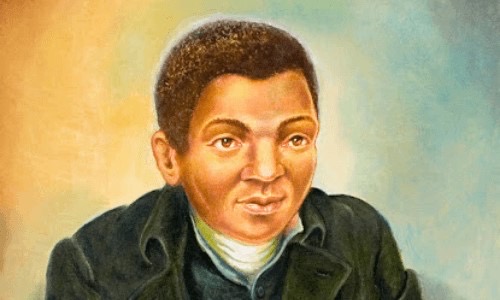
His name was Harry Hosier—better known in early America as “Black Harry.”
And in his day, he was one of the most famous preachers in the young nation.
⸻
A VOICE BORN OF BONDAGE
Harry Hosier was born around 1750, enslaved somewhere in the South. His early years are almost completely lost to history—no family records, no letters, no diary. But sometime before the American Revolution, he encountered the young, fast-growing Methodist movement. There, amid fiery sermons and heartfelt hymns, Harry experienced a deep personal conversion.
Although illiterate, he possessed a stunning memory. He learned Scripture by hearing it read aloud, then recalled entire chapters with perfect accuracy. His recitations weren’t stiff or wooden—they were alive. They moved people. They made them weep.
That gift would change his life and the lives of thousands of others.
⸻
AMERICA'S GREATEST BLACK ORATOR
Harry’s world shifted when he met Francis Asbury, the English-born traveling preacher who would become the founding bishop of American Methodism. Harry began as Asbury’s driver, assistant, and traveling companion. But Asbury quickly realized this was no ordinary helper. Harry could preach.
And not just preach—he could electrify a crowd.
Soon Harry was standing before audiences of black and white Americans alike, preaching in fields, chapels, barns, and city meetinghouses. Listeners described his voice as musical, his delivery unforgettable. One famous early American physician even said Harry was the greatest orator in the nation, allowing for his lack of formal education. Methodist bishops agreed. Crowds gathered just to hear him.
Remember: this was the era of the American Revolution, a time filled with powerful speakers. Yet a formerly enslaved man—unable to read—was winning their admiration. That’s how extraordinary he was.
⸻
A NAME THAT TRAVELED WEST
Harry Hosier traveled thousands of miles, preaching up and down the East Coast. His sermons reached the poor, the working class, the frontier migrants, the people who packed their belongings and headed west into the Ohio River Valley—into the wilderness that would become Indiana.
Those settlers took their faith, their traditions, and their stories with them. They also took something else: names.
Harry’s last name appeared in many spellings in the 1700s—Hosier, Hoshur, Hossier, and yes, Hoosier. All were pronounced essentially the same way: HOO-zhur. As the man's memory faded, the label likely stuck to the kind of people who admired him—plainspoken, rural, hardy frontier folk.
Over time, the nickname shifted from describing Harry’s followers to describing frontier settlers… then to telling the people of an entire state.
⸻
THE HOOSIER BEHIND THE HOOSIERS
Is it proven beyond doubt? No. History rarely gives us absolute certainty. But compared to the ear-biting jokes and tall tales, the Harry Hosier theory has something those stories lack: a real person, with a real name, who embodied the spirit Indiana eventually celebrated—humble, hardworking, passionate, and resilient.
If the name “Hoosier” is linked to Harry Hosier, then Indiana’s identity is tied not to a fight, a joke, or a river roustabout—but to a man who rose from slavery to become one of the most powerful preachers of his generation.
And that is a story worth remembering.
|