|
I started community organizing because one day, as a community college student, I showed up to my bus stop, only to find that the bus service had been cut. This service was my lifeline. It set me on a path that I’m eternally grateful for. To this day, public transit continues to be one of my favorite community spaces.
As we adopt and integrate enhanced mobility options (electric scooters, bike share, rideshare, etc.) into our networks, we mustn’t overlook the tried-and-true mode of public transit. Public transit is central to meeting California’s ambitious climate, economic development, and equity goals. Public transit infrastructure is a public good without which work, school, grocery stores, and healthcare facilities are out of reach for many Californians.
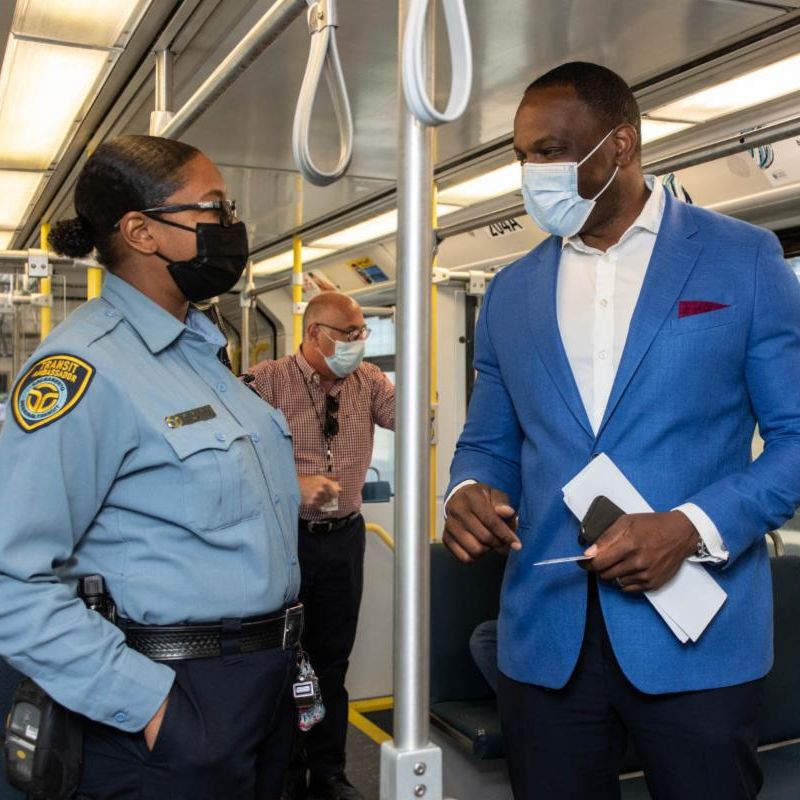
Pictured: California State Transportation Agency (CalSTA) Secretary, Toks Omishakin, speaking to a Transit Ambassador on a Sacramento Regional Transit light rail car in November 2022.
Nailah Pope-Harden
Deputy Director, Director’s Office of Equity & Tribal Affairs
| |
| | Research to Practice Transit Symposium - from October 28-30, 2025, the symposium will take place online while streamed on YouTube. The symposium provides a platform where transit experts share insights on how evidence-based research is being or can be, used to make the most of these opportunities in a dynamic environment. Learn more and register here! | | | |
| |
NAAC Meeting in November- The Native American Advisory Committee will meet statewide virtually on November 05, 2025.
| | | | |
On the Road with Caltrans:
Department Highlights
| | D4: Planning for Transit Priority & Access | |
District 4 is pleased to launch the first District Transit Plan of its kind in the state – the Caltrans Bay Area Transit Plan (Plan). The Plan aims to improve transit on the State Transportation Network (STN) in District 4. It includes a toolbox; goals and performance measures; analysis of existing conditions, and a list of strategies and actions.
In addition, on September 11, 2025, District 4 released the Draft Transit Needs Assessment. Visit the interactive map to see locations along the STN where increased investments in transit access and transit priority facilities could be most impactful. More importantly, if you live, work or play in the Bay Area, take the survey to share your feedback.
To learn more visit CaltransBayAreaTransitPlan.org
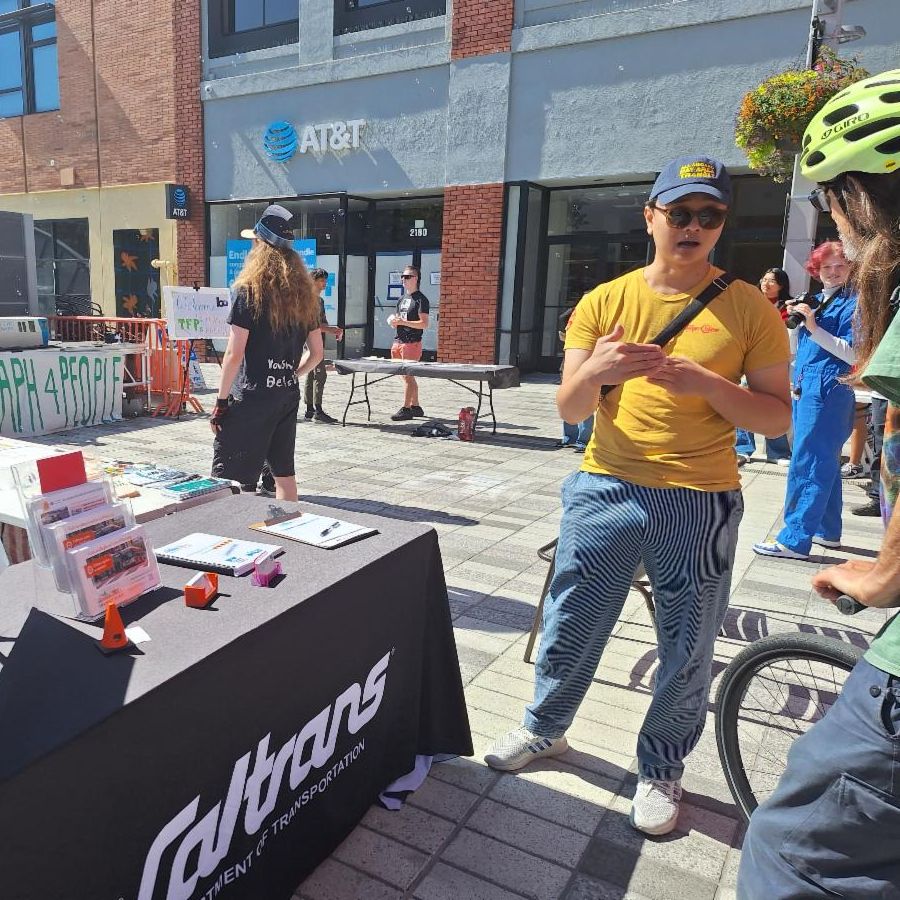
Pictured: Caltrans staff conversing with community members during a community engagement event in D5.
| | California Integrated Travel Project (Cal-ITP) | |
The California Integrated Travel Project (Cal-ITP) is a statewide solution to make travel simpler and cost-effective for everyone. Supported by the California State Transportation Agency (CalSTA) and Caltrans through a grant from the California Transit and Intercity Rail Capital Program (TIRCP), Cal-ITP works to align payment infrastructure with a 21st-century retail experience. You can explore different Cal-ITP initiatives on their website! One great service offered by the programs is related to transit rider benefits. You can electronically verify your identity (skipping the hassle of paperwork) and, if you qualify, receive discounts from your local transit provider instantly.
At Caltrans, we are considering tradeoffs for program design of mobility wallets to inform decision-making across the state. A mobility wallet is an electronic payment account that provides subsidized access to public and private shared mobility services to incentivize sustainable transportation choices. Caltrans developed this Mobility Wallet Implementation Guide intended to be used as a reference for transportation agencies planning and scoping a mobility wallet project in California.
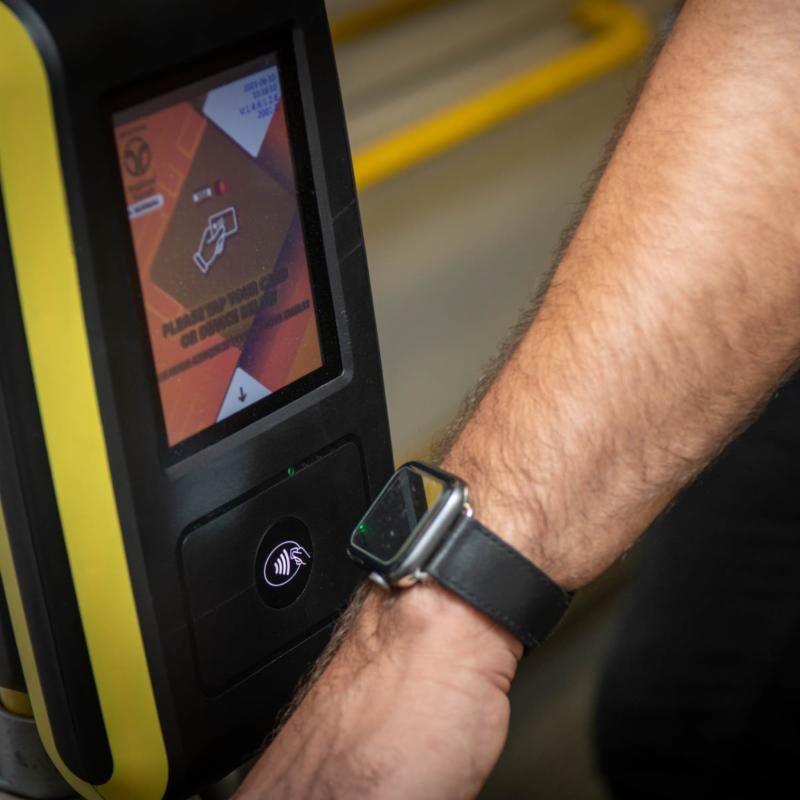
Pictured: A Caltrans staff member boarding a light rail train in Sacramento in November 2022 and paying with contactless payment.
| | Meet our Advisory Committees: Member Spotlight | | Equity Advisory Committee (EAC) | | |
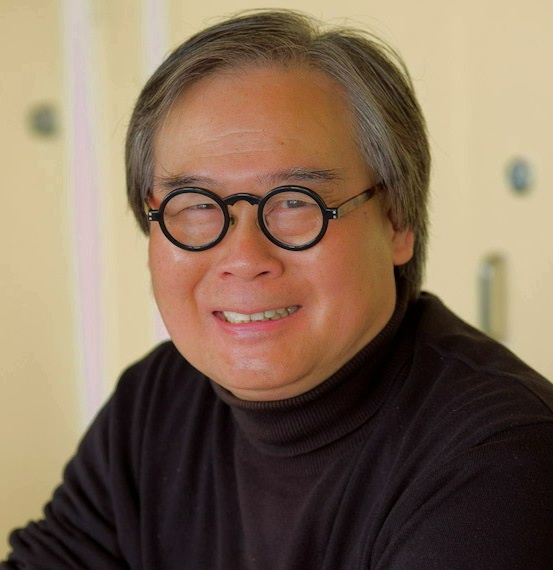
Howard Wong
Retired/Advocate
📍Caltrans District 4
| | Howard Wong is a retired architect, neighborhood and transit advocate, and a native of North Beach in San Francisco (SF). It’s safe to say he grew up public transit. As an architect, his work included accessibility projects and masterplans, transportation projects at SFO International Airport and with the SF Municipal Transportation Agency. Howard is an active advocate serving on boards of A Better Chinatown Tomorrow, Chinese Historical Society of America, IFPTE Local 21, Port’s Southern Advisory Group, SaveMuni, SF Heritage, SF Tomorrow, Sierra Club, SPUR, Telegraph Hill Dwellers, and Transbay Joint Powers Authority CAC. He further advocates for seniors and marginalized communities in his role on the Metropolitan Transportation Commission Policy Advisory Council and as a founding board member of NEXT Village SF since 2008. | | |
“By 2040, 22% of Californians will be 65% or older (9 million people), over 30% in San Francisco. Similarly, marginalized communities will have growing proportional mobility needs"
“It seems obvious that Bay Area equity and accessibility issues are intertwined with overall California planning and programming especially regarding strategic funding of projects that make bigger impacts, for which I have some experience in achieving.”
| Pictured: A headshot of EAC Member, Howard Wong. | | Tune into what our team is reading and listening to this month! | | |
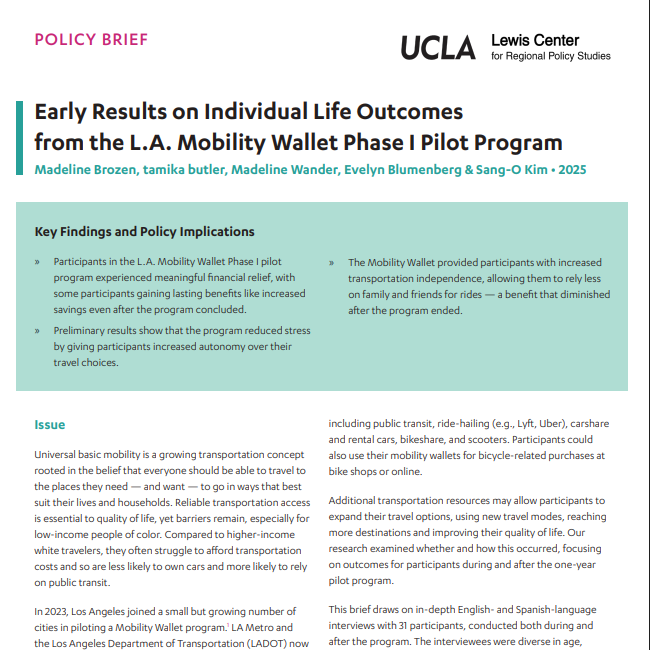
Assistant Deputy Director, Alexis Lantz, encourages people to read this study from the University of California Los Angeles’ Institute of Transportation Studies titled, “Evaluation of a Large Scale Universal Basic Mobility Wallet in South Los Angeles”. She shares, “Access to transit is tied to the affordability of a ride. This program studies two mobility assistance programs in Los Angeles - the Mobility Wallet pilot and Metro’s Low-Income Fare is Easy (LIFE). Although, mobility wallets are a relatively new approach to addressing financial access barriers to transit and other mobility options, we should pay close attention to methodology and results in hopes of improvement.”
| | | |
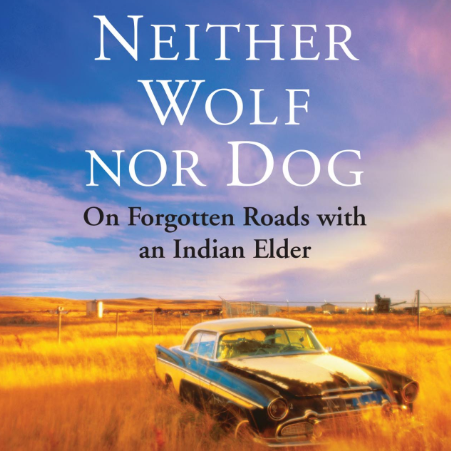
Tribal Policy Manager, Janiece Rustin, recently read, "Neither Wolf nor Dog" by Kent Nerburn. She shares, “It is a profound journey into life, history, and truth telling through the voice of an elder named Dan. Much of the story unfolds on the Lakota reservation lands in South Dakota and Minnesota as Dan, the elder, Grover, his friend, take Nerburn for a drive through the Great Plains where genocides and broken promises still breath in the present. Elder Dan's 'little talks' touched my core, reminding me of the power of shared humanity and the value of honoring what is sacred. This book should be essential reading for high school students and government workers to cultivate empathy, humility, and cultural awareness.”
| | | | | |