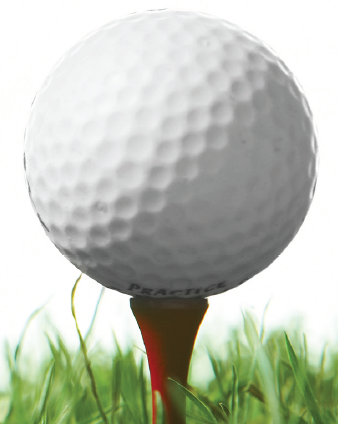
Studies have shown that you can experience driver-induced hearing loss if the noise level generated by your golf club thwacking your ball exceeds 116 dBA3. This is mostly in reference to thin-faced titanium drivers, going back to an origin
study in 20094 that profiled a 55-year-old man who developed tinnitus and hearing loss in his right ear, golfing three days a week, for 18-months.
Damaging your hearing is not ideal, of course, but the decibel-swing danger is directly woven into how you play the game of golf, as well. Your hearing needs to be in check to pay close attention to the sound made when the clubhead
comes into contact with the ball, so that you can control your shot better, in terms of distance and accuracy.
Hearing the tone produced by the club striking the ball can help the golfer judge how well the ball was hit, and allow them to make any necessary
adjustments for the next swing. Changes in tone and volume indicate a different swing of the club; by paying close attention to both the feel of the club making contact with the ball, and the sound produced, golfers will naturally play a better game over time.
Regular hearing evaluations by a qualified audiologist are a good idea for avid golfers. The earlier hearing loss is detected, the more options you have for treatment and the better your odds for success.
3Zhao, F., Bardsley, B. (2014). Real-ear acoustical characteristics of impulse sound generated by golf drivers and the estimated risk to hearing: a cross-sectional study. https://www.ncbi.nlm.nih.gov/pmc/articles/PMC3902203/
4Buchanan, M. A. (2009). Is Golf Bad for Your Hearing? https://www.bmj.com/content/337/bmj.a2835