ISSUE 102 June 2026

Extending Knowledge Changing Lives

Growing Together:

Food, Family and Friends


For many kids, summer is filled with activities, including biking, sports, dance, theater and music. Gardening and cooking are fun activities that help promote health, along with valuable lifelong skills. 

Julie Garden-Robinson, Ph.D., R.D., L.R.D., Food and Nutrition Specialist

EAT

Kitchens are Learning Labs


  • Build math skills when you are measuring and increasing or decreasing recipe amounts. What’s half of 1/3 cup? How about doubling a recipe with 2 1/3 cups of something?


  • Strengthen reading and language skills when reading multistep recipes and learning to whisk, fold and mince ingredients.
    
  • Explore science through cooking, baking and food preservation. Why does bread rise? Why should you wash your hands before and during preparation?
    
  • Practice fine motor skills when chopping and dicing. Remember that kid-friendly knives are available.
    
  • Build teamwork and cooperation as you work together to create a meal.
    
  • Learn about nutrition and new flavors. Children who help prepare (and grow) foods are more likely to eat them.


See the food preparation and recipe sections of the NDSU Extension website at www.ag.ndsu.edu/food for many ideas. Some Extension offices offer summer cooking schools.

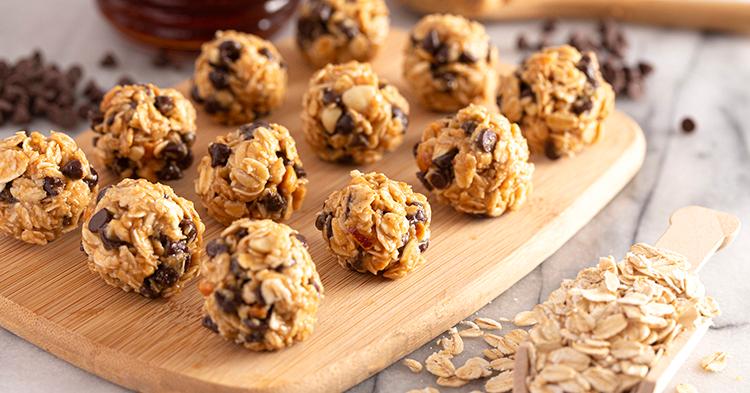
Active playing burns a lot of energy. Here’s a tasty snack that kids can make. It can be adjusted for children with peanut allergies. See www.ag.ndsu.edu/food for more recipes.


Energy Bites


1 1/2 cups oats (old-fashioned or quick)

1/2 cup unsweetened coconut flakes

1/4 cup chia seeds

1/4 cup mini chocolate chips (or dried cranberries)

1/2 cup creamy peanut butter (or substitute another nut butter)

1/3 cup honey

1 teaspoon vanilla extract


Stir all ingredients together in a medium-sized bowl. Cover a cookie sheet with foil, parchment paper or waxed paper. Drop by tablespoonful (or a cookie scoop) onto the cookie sheet. Refrigerate for 1 hour, then roll in balls (because the mixture might be sticky). Store in an air-tight container in the refrigerator.


Makes 25 servings (1 energy bite each). Each serving has 90 calories, 4.5 grams (g) fat, 2 g protein, 10 g carbohydrate, 2 g fiber and 20 milligrams sodium. 

Connect


Families, Food and Fun


Take the fun and learning outdoors. Be sure to slather on the sunscreen, and reapply if running through a garden hose. 


  • Try a nature walk to see buds on plants and trees. Can you name the type of plant before they form flowers?
    
  • Take a family walk to a nearby park or playground. Count the number of people walking dogs and try to identify the breed. People often like to talk about their pets, so that’s a good way to connect with neighbors.
    
  • Make an obstacle course with hula hoops or rope to walk or run around in your yard. Be aware of the children’s ages and abilities.


June is Dairy Month.


Ice cream is a physics experiment, where the freezing temperature of the ice is lowered by adding salt, allowing the liquid milk to become a creamy frozen treat.


Ice Cream in a Bag

  • Begin with a 1-quart plastic bag with a top that zips closed.
  • Add ½ cup of whole milk or half and half.
  • Add 1 tablespoon granulated sugar
  • Add ½ teaspoon of vanilla extract.
  • Seal the bag tightly.
  • In a 1-gallon bag, place 4- 6 cups of ice, ¼ cup coarse salt or rock salt.
  • Put the sealed bag in the larger bag and seal it.
  • Since the outer bag is very cold, wrap it in a bath towel.
  • Shake for 10 minutes or until the ice cream becomes solid.
  • Wipe the outer bag to remove any salt
  • Transfer the ice cream to a bowl and top with your favorite toppings such as fruit.


Savor Planting!

No room for a garden? Try gardening in containers or raised beds. Many plants do well in large pots on a patio or balcony as long as you water them regularly.


  • You can also sign up to be a helper at a community garden that offers “shares” of the harvest. Learn about gardening at www.ag.ndsu.edu/fieldtofork

This project is supported by the Health Resources and Services Administration (HRSA) of the U.S. Department of Health and Human Services (HHS) grant, Maternal and Child Health Services. This information or content and conclusions are those of the author and should not be construed as the official position or policy of, nor should any endorsements be inferred by HRSA, HHS or the U.S. Government.


NDSU Extension does not endorse commercial products or companies even though reference may be made to tradenames, trademarks or service names.


North Dakota State University is an equal opportunity educator and employer. This work is supported by the U.S. Department of Agriculture’s National Institute of Food and Agriculture. Persons with disabilities who require alternative means of communication for program information (e.g., Braille, large print, audiotape, American Sign Language, etc.) should contact NDSU Extension at 701-231-1865.