Saturday August 8th

at 11:00 AM

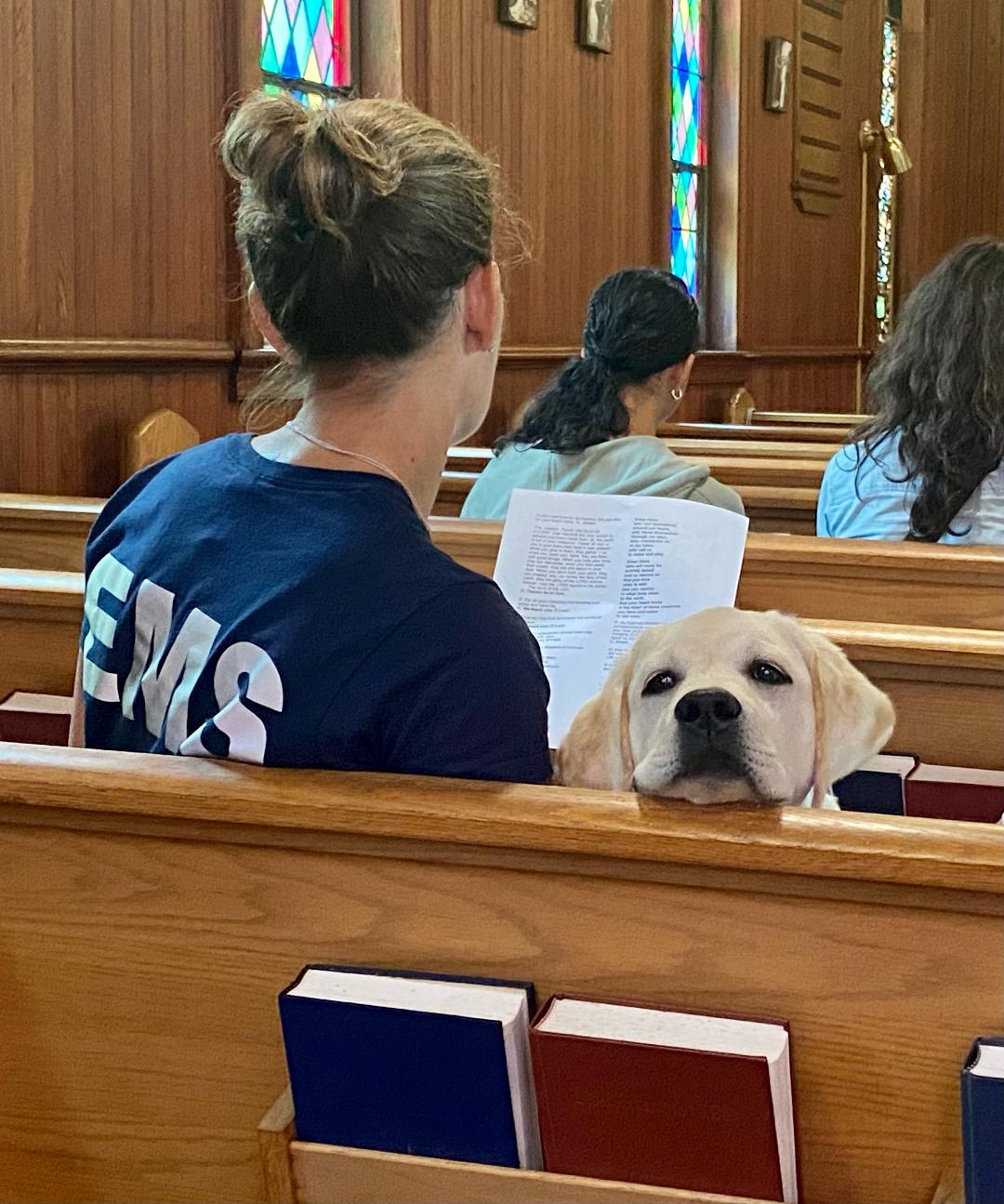
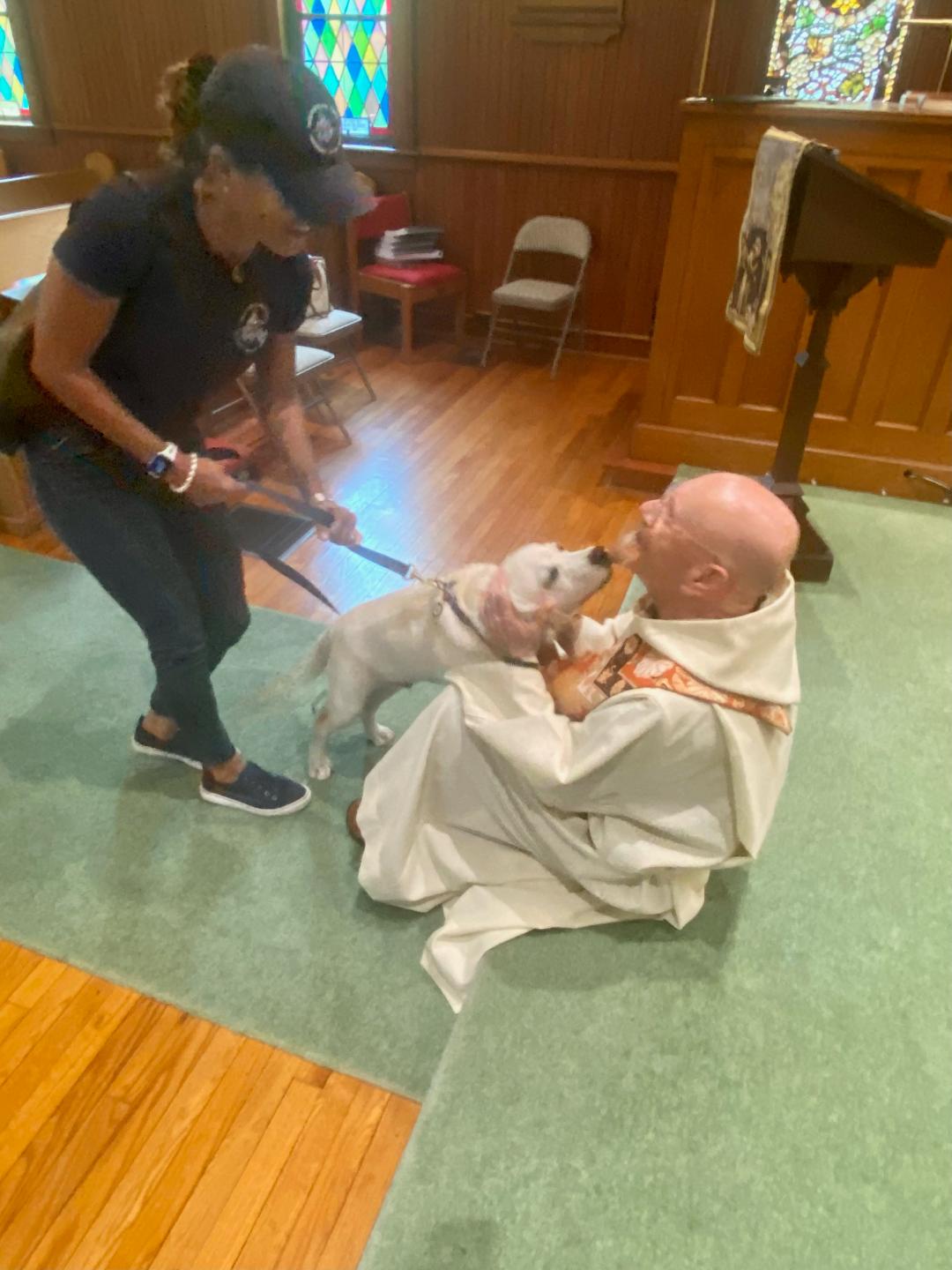
Will be our annual Blessing of Animals

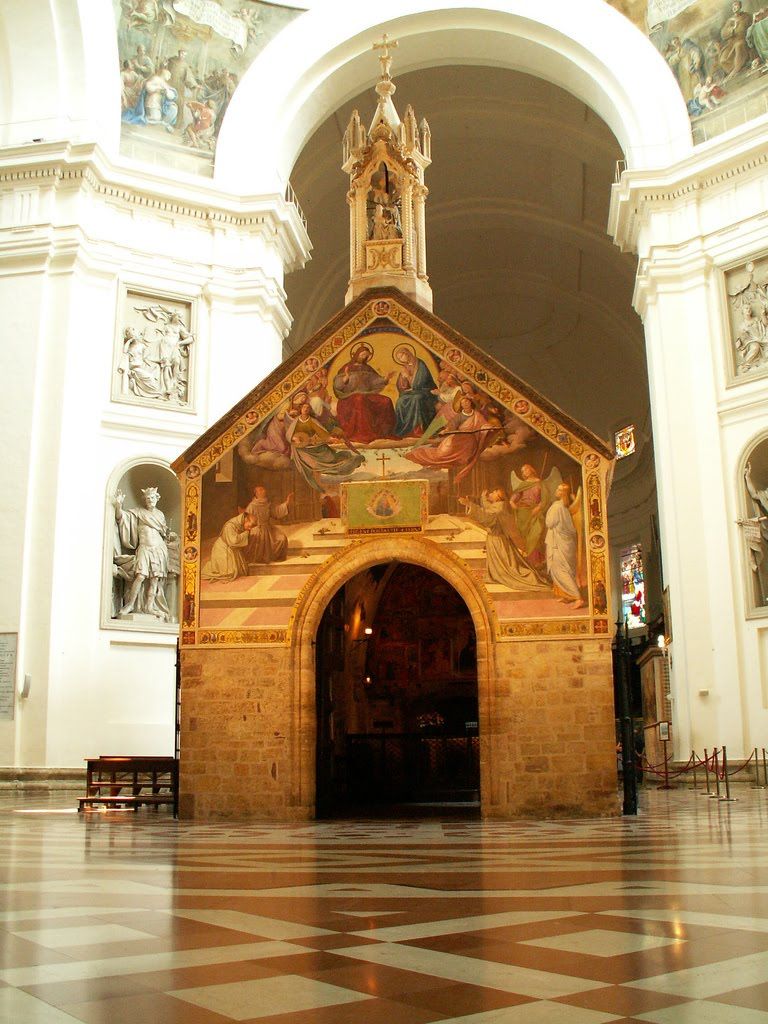
The original St. Mary of the Angels in Assisi, now surrounded/protected by a large Basilica.

The Portiuncula: A Little Place with a Big Story


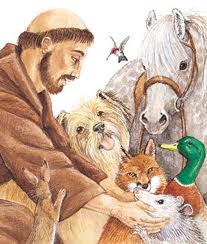
Most of our Episcopal Churches celebrate the blessing of animals on or about the Feast of St. Francis of Assisi, October 4th, (Now the concluding day of the new Season of Creation on the Church's Calendar). However, when I came to Shelter Island and saw the little attendance on a Sunday off-season, I thought it would be a good idea to move it "in-season" when there were more people and pets. Luckily, there is a Franciscan Feast Day in the summer, this Sunday's date, August 2. It is the Feast of the Church of St. Mary of the Angels, otherwise known as the Little Portion. A Fitting start to the month of our parish Feast Day, St. Mary the Virgin, on August 15th.


The Portiuncula (Italian for “little portion”) is the small chapel of St. Mary of the Angels just below Assisi, Italy. One of the little ruined churches Francis rebuilt with his own hands, it was the place where St. Francis of Assisi first gathered his first followers around 1208, and it became the spiritual heart of the Franciscan movement. Francis loved this tiny, abandoned church because it was humble, poor, and open to all—a perfect symbol of the Gospel life he wanted to live.


On August 2, 1216, tradition holds that Francis received a vision from Christ and the Virgin Mary granting a “Pardon of Assisi” (the Portiuncula Indulgence): anyone who visited the chapel, confessed, and received Communion would receive a full remission of sins. This was a radical gift of mercy, and it’s why the Feast of the Portiuncula is still celebrated on August 2.


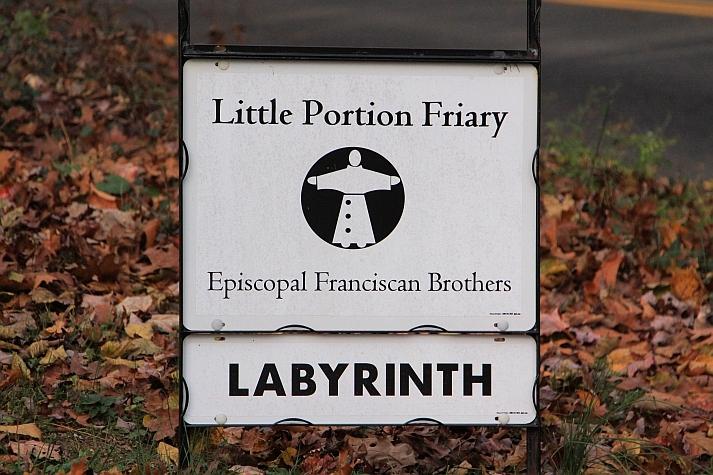
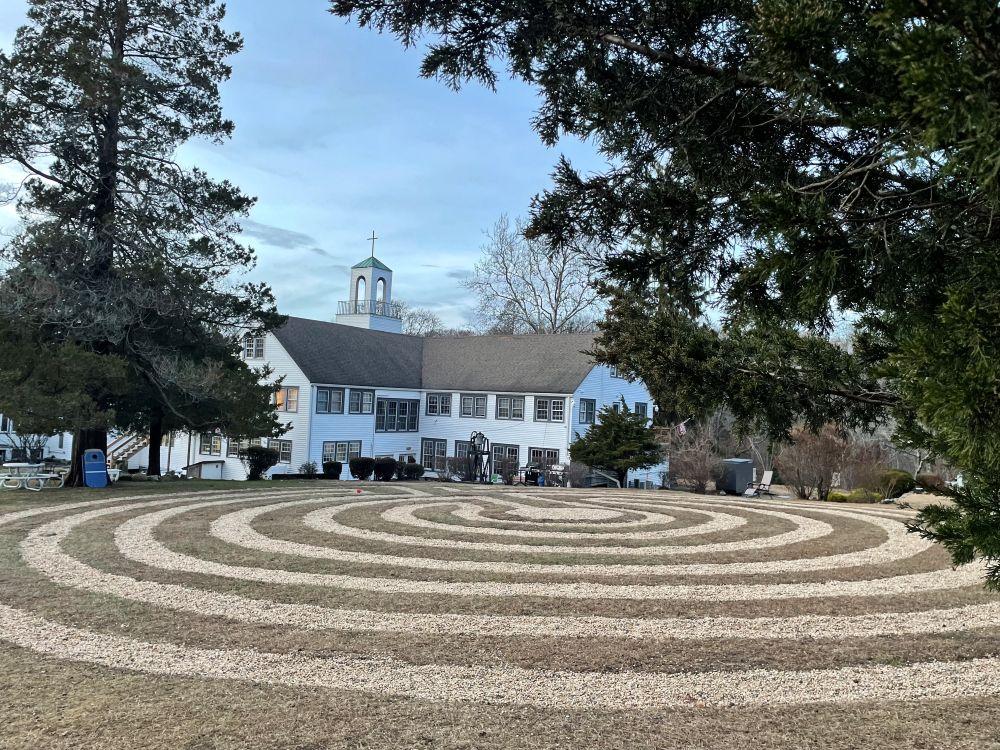
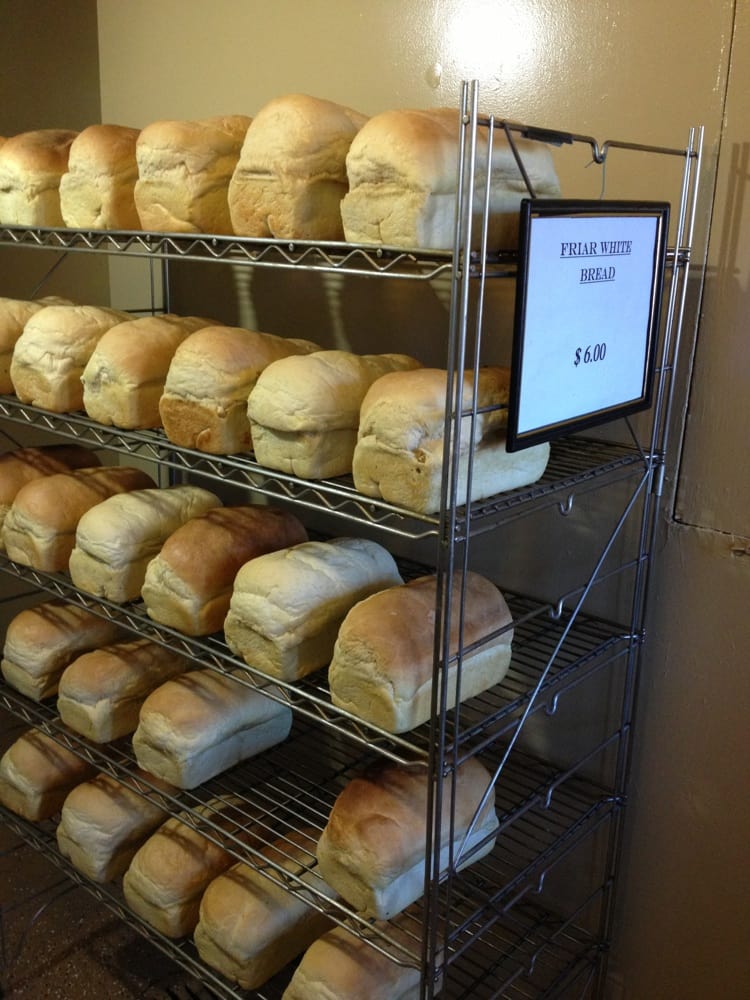
The Portiuncula reminds us that God’s grace often comes through the smallest, most overlooked places—just like the “Little Portion” that gave its name to the beloved Little Portion Friary in Mount Sinai, Long Island. For 80 years that friary was a place of prayer, hospitality, and—as many remember—the aroma of fresh bread from its famous bakery. I taught weekly classes there for a number of years while I lived in Mineola, with my office at the Cathedral. After the friars left, the site now serves as a residential program for troubled young men, continuing the Franciscan mission of mercy in a new way.


Whether in Assisi or on Long Island, the “little portion” is always a place where God’s pardon and presence are offered freely.


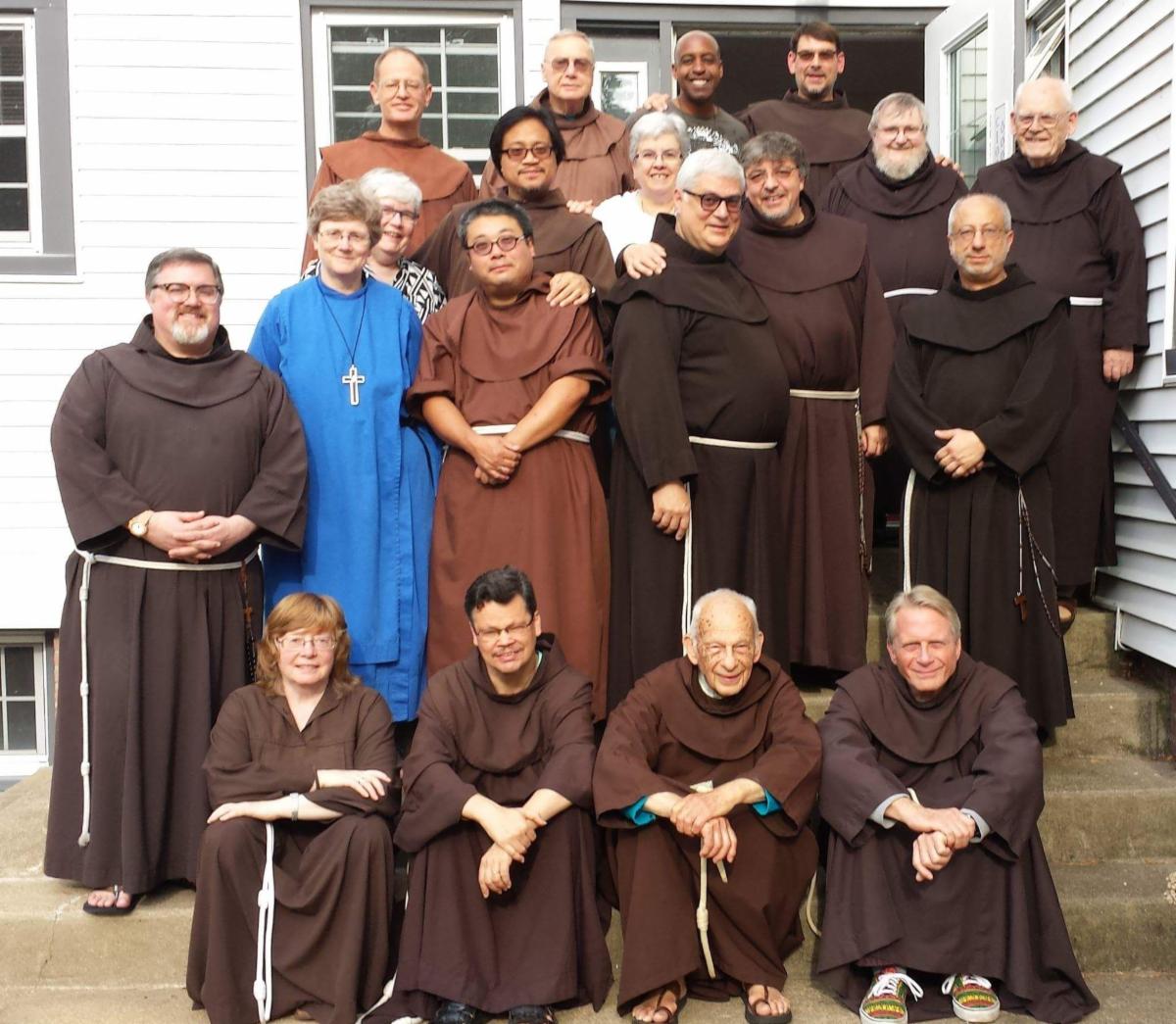
The Episcopal Friars and Sisters at Mount Sinai


The Collect

Let your continual mercy, O Lord, cleanse and defend your Church; and, because it cannot continue in safety without your help, protect and govern it always by your goodness; through Jesus Christ our Lord, who lives and reigns with you and the Holy Spirit, one God,


Old Testament Isaiah 55:1-5

Thus says the Lord:

"Ho, everyone who thirsts,

come to the waters;

and you that have no money,

come, buy and eat!

Come, buy wine and milk

without money and without price.

Why do you spend your money for that which is not bread,

and your labor for that which does not satisfy?

Listen carefully to me, and eat what is good,

and delight yourselves in rich food.

Incline your ear, and come to me;

listen, so that you may live.

I will make with you an everlasting covenant,

my steadfast, sure love for David.

See, I made him a witness to the peoples,

a leader and commander for the peoples.

See, you shall call nations that you do not know,

and nations that do not know you shall run to you,

because of the LORD your God, the Holy One of Israel,

for he has glorified you."


The Response Psalm 145: 8-9, 15-22


8 The Lord is gracious and full of compassion, *

slow to anger and of great kindness.

9 The Lord is loving to everyone *

and his compassion is over all his works.

15 The Lord upholds all those who fall; *

he lifts up those who are bowed down.

16 The eyes of all wait upon you, O Lord, *

and you give them their food in due season.

17 You open wide your hand *

and satisfy the needs of every living creature.

18 The Lord is righteous in all his ways *

and loving in all his works.

19 The Lord is near to those who call upon him, *

to all who call upon him faithfully.

20 He fulfills the desire of those who fear him; *

he hears their cry and helps them.

21 The Lord preserves all those who love him, *

but he destroys all the wicked.

22 My mouth shall speak the praise of the Lord; *

let all flesh bless his holy Name for ever and ever.


The Epistle   Romans 9:1-5

I am speaking the truth in Christ-- I am not lying; my conscience confirms it by the Holy Spirit-- I have great sorrow and unceasing anguish in my heart. For I could wish that I myself were accursed and cut off from Christ for the sake of my own people, my kindred according to the flesh. They are Israelites, and to them belong the adoption, the glory, the covenants, the giving of the law, the worship, and the promises; to them belong the patriarchs, and from them, according to the flesh, comes the Messiah, who is over all, God blessed forever. Amen.


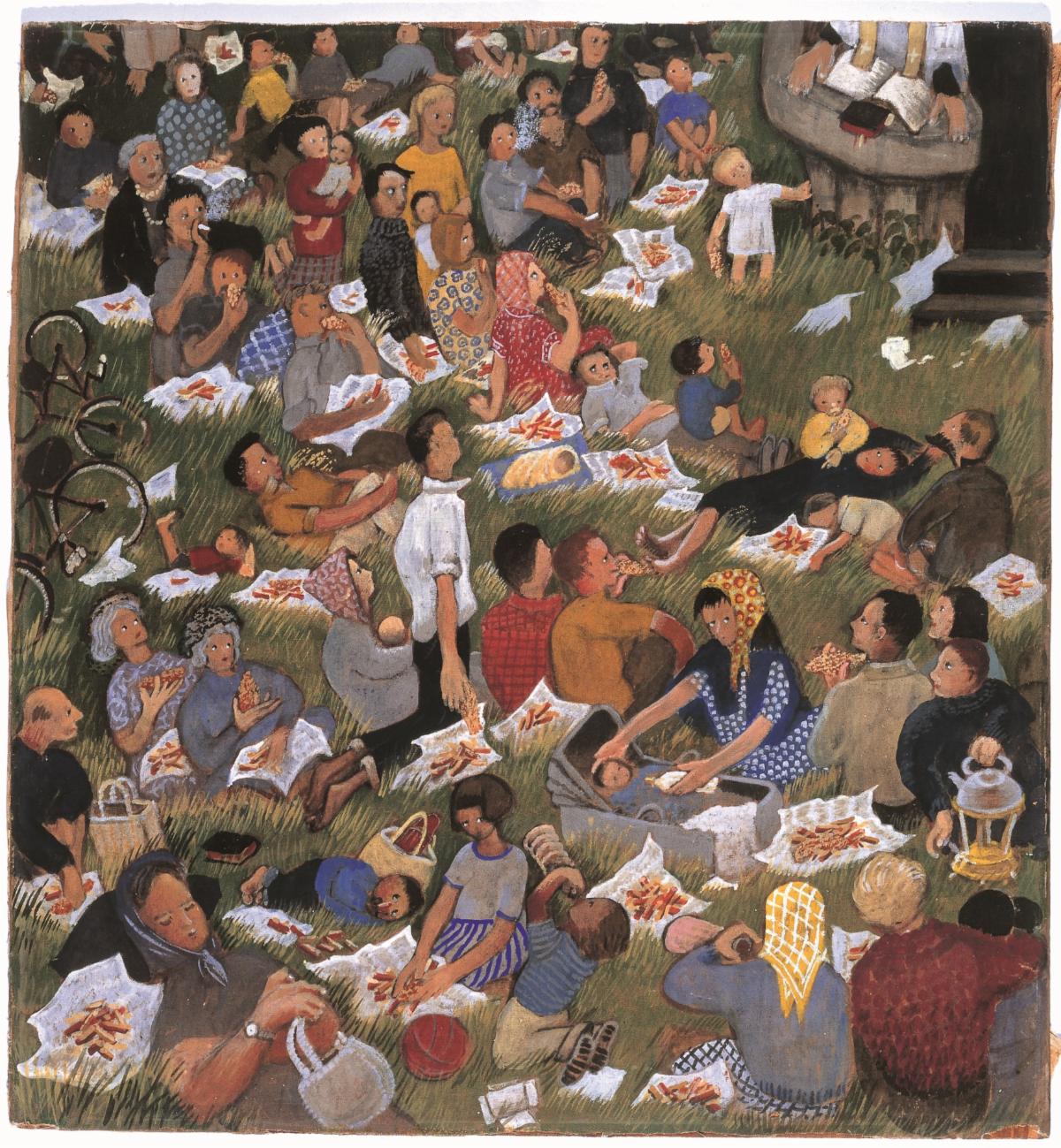
Feeding the Five Thousand Eulalia Clarke


Rev'd up For Sunday Lectionary Discussion


Fr. Plant's Gospel Study


The Gospel Matthew 14:13-21


Jesus withdrew in a boat to a deserted place by himself. But when the crowds heard it, they followed him on foot from the towns. When he went ashore, he saw a great crowd; and he had compassion for them and cured their sick. When it was evening, the disciples came to him and said, “This is a deserted place, and the hour is now late; send the crowds away so that they may go into the villages and buy food for themselves.” Jesus said to them, “They need not go away; you give them something to eat.” They replied, “We have nothing here but five loaves and two fish.” And he said, “Bring them here to me.” Then he ordered the crowds to sit down on the grass. Taking the five loaves and the two fish, he looked up to heaven, and blessed and broke the loaves, and gave them to the disciples, and the disciples gave them to the crowds. And all ate and were filled; and they took up what was left over of the broken pieces, twelve baskets full. And those who ate were about five thousand men, besides women and children.

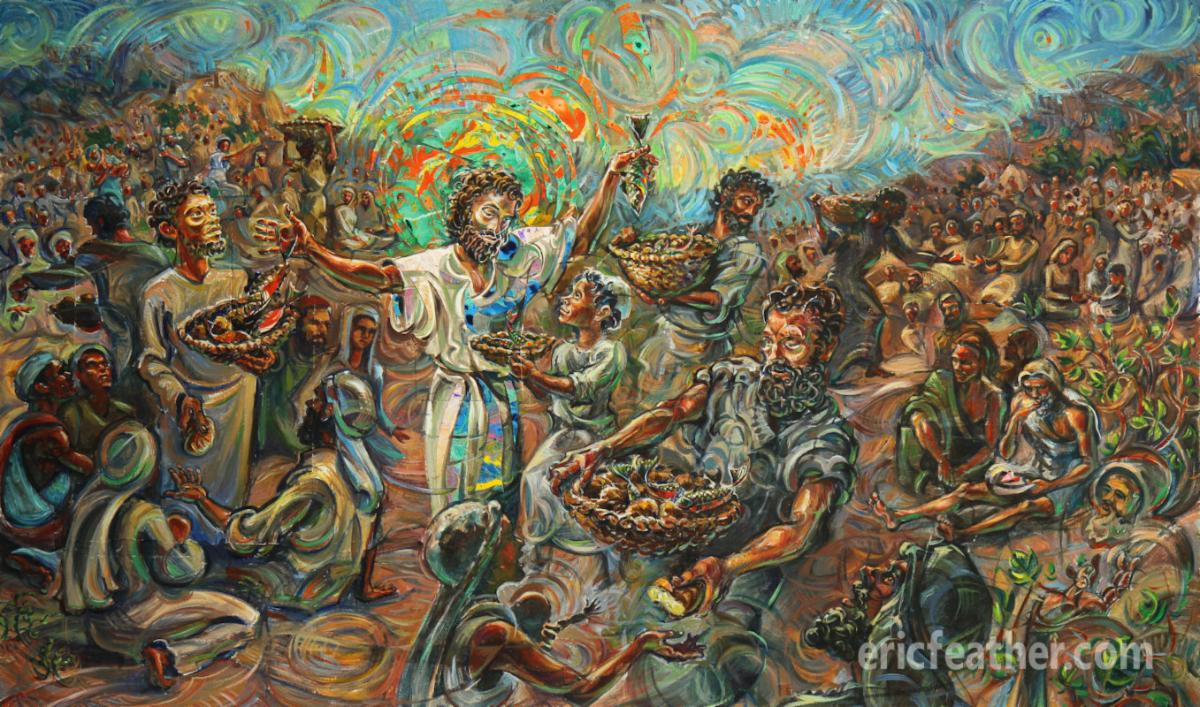
Feeding the 5000 Eric Feather


Retreat Thoughts on the Gospel by Episcopal Priest Suzanne Guthrie


  Reflections for this week’s Eucharistic reading from St. Augustine on the Word as food:


Are you asking me what the Word of God is?

   If I wanted to tell you what the word of man is, I can’t explain it, I get tired, I get stuck, I give up; I can’t even explain the power of a human word. 

   Look here, before I say to you what I want to say to you, the word is already in my heart.  It hasn’t yet been spoken by me, and it’s with me.  Then it’s spoken by me, and it reaches you, and it doesn’t depart from me.

   You’re all intending to hear a word from me; I’m feeding your minds when I speak.  If I were bringing you food for your stomachs, you would divide it up among yourselves, and it wouldn’t all get to each of you; but you would divide up what I set before you into the more portions, the more of you there were; and the greater the number of those receiving it, the less each would get.

Now, though, I’ve brought food along for your minds: I say, “Accept it, take it, eat it.”  You’ve accepted it, eaten it, and not divided it up.  Whatever I speak, it’s all there for all of you, and all there for each of you. 

   There you are, that’s how its impossible to explain satisfactorly the enormous power a human word has, and you ask me what the Word of God is?  The Word of God is feeding all those millions of angels.  It’s their minds being fed, their minds being filled.  It fills the angels, fills the world, fills the virgin’s womb; it isn’t spaced out there, it isn’t squeezed tight here.

   What is the Word of God?  Let him tell us himself, the only begotten, the only Son, let him tell us himself what the Word of God is.  He puts it very briefly, but what he says is something tremendous:  I and the Father are one (John 10:30).

    I don’t want you to count the words; weigh them.  More words won’t help to explain the one Word.

 -Augustine of Hippo 354-430 

 Sermon 237, The Works of Augustine: A Translation for the 21st Century, John E. Rotelle, author,  Edmond Hill, translator, 1993


We Are That Which We Receive


Dear Brethren, that which you see on the Lord’s table is bread and wine. But when a word is added, that bread and wine become the body and blood of the Word. Because the Lord, ‘who in the beginning was the Word, and the Word was with God, and the Word was God’ – because that same Lord, in His mercy, did not despise that which He had created to His own image, ‘the Word was made flesh and dwelt among us.’ As you know, that word assumed human nature by assuming a human soul and a human body, and thus became man without ceasing to be God. In this way, He suffered for us, and He has left us His body and blood in this sacrament. He has even made us His body, for we have become the body of Christ. Through His mercy, therefore, we are that which we receive.


Augustine

Sermon 6, Selected Sermons


There feeding the angels, here on earth a hungry child; there unfailing Bread with perfect powers, here, along with speechless children, needing the nourishment of milk; there doing good, here suffering evil; there never dying, here rising after death and bestowing eternal life on mortals.  God became one of us so that we might become God. 


-Augustine

 The Fathers of the Church, 1959, quoted from A Eucharist Sourcebook, LTP


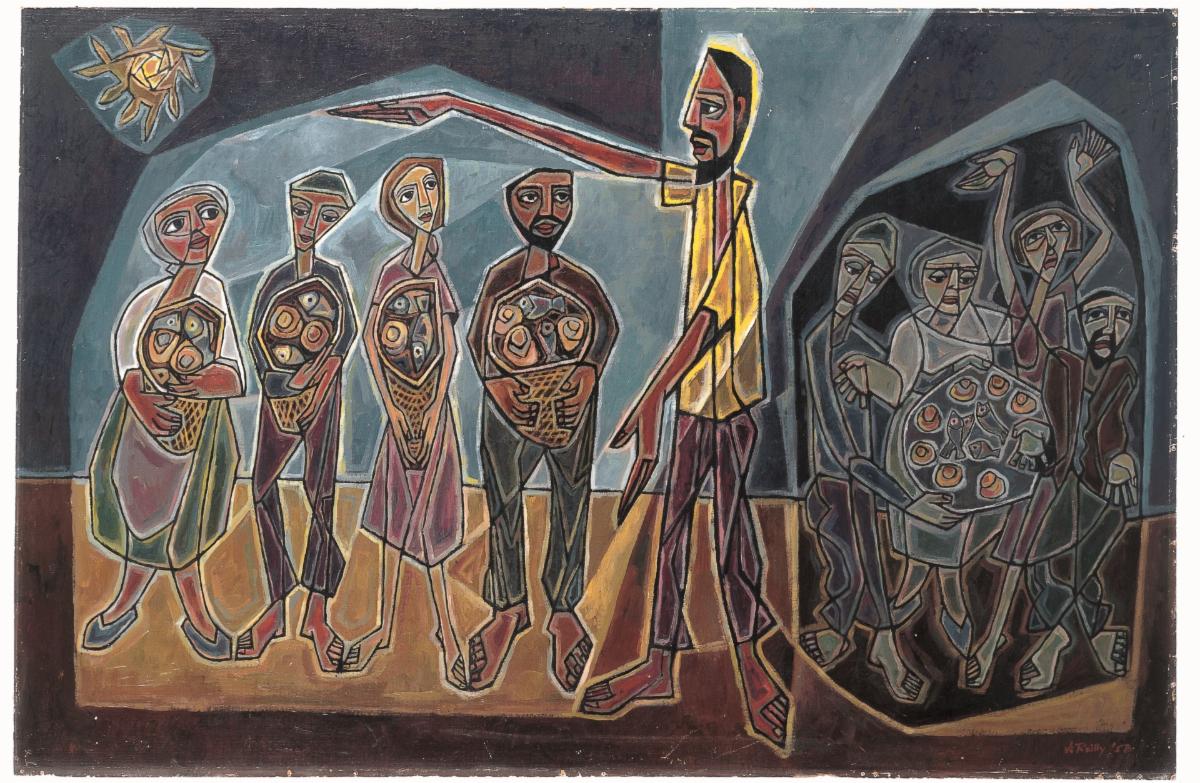
Loaves and Fishes James Reilly

P.O Box 1660, 26 St. Mary's Road , Shelter Island, NY 11964
(631) 749-0770
stmarys11964@optonline.net
Facebook