|
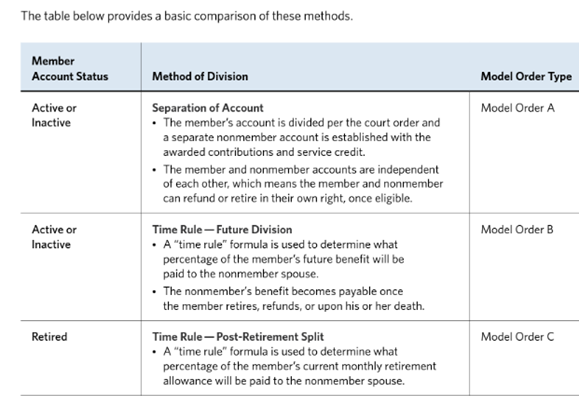
I have seen two big mistakes regarding Time Rule settlements AFTER retirement. If you divorce after you retire, CalPERS divides your pension according to the community property Time Rule, and your pension is split based on the percentage of time you were married during your career. If you were married your entire career, your pension is split into two equal parts and into two separate CalPERS accounts.
1) Once retired, if you later remarry, a new spouse is entitled to health benefits while you are alive. Without some type of monthly payment from CalPERS, they are no longer eligible for health benefits if you pass first.
CalPERS has a small section of the Government Code stating, “you must be awarded 100% of your pension in a divorce settlement to name a new beneficiary.” If you have something under 100%, you cannot name a new beneficiary for your share. Each party can maintain a community property right in the other spouse’s share even after a split. Even after death, the entire pension can go to the longest-living person. So much for the phrase, “until death do you part.”
So, if you predecease your ex-spouse, they receive your portion of your pension if you divorce after retirement. Unfortunately, you cannot name a new beneficiary even for your partial share in the future. I learned of this law while helping a spouse as a Family Liaison.
This mistake might be avoided if you have other assets you accumulated during your marriage, such as a house, property, savings, or investments equal to half the value of your pension. You can use all or part of these assets to settle the community property amount in the divorce rather than separate your pension into two parts. The settlement itself may spell out different terms.
Unit 8, through our Lobbyist Aaron Read, has found a sponsor for our bill to change this unfair law. See AB 1246 by Nguyen, Stephanie. Public Employees’ Retirement System optional settlements: This bill would extend the ability of a retiree to change their designated beneficiary to include naming a new spouse following a retiree’s divorce and subsequent remarriage. The bill would allow a retiree’s new spouse to receive the retiree’s post-divorce retirement settlement benefits.
2) Unless you were married at least one year before retirement and continuously, your spouse is NOT entitled to the State paid Survivor Continuance portion of your pension. This valuable benefit, equal to 50% of your unmodified pension amount, is lost if you predecease your spouse.
This benefit is lost to a new spouse if you divorce and remarry after retirement. Your new spouse is only eligible for the beneficiary portion of your pension should you predecease them if you were awarded your full pension. That amount is subject to recalculation, especially if you and your new spouse have a larger age difference.
The Time Rule settlement can be avoided if you have other assets equal to the value of your ex-spouse portion of your pension. This is usually done by transferring another large community property asset, such as a home, equal to the ex-spouse’s portion of the pension.
Try to work things out and utilize many of the EAP or Support Service benefits available if you are working before you make a costly mistake you did not anticipate. CalPERS will give you an estimate of the new benefit available to your new spouse, when retirees discover the survivor portion is no longer available.
CalPERS has 4 publications you should review before initiating a divorce. Please note, none of these publications nor this article should be considered legal advice.
You can download or order printed copies of these from the CalPERS forms from their publication forms and publications page at www.calpers.ca.gov/page/forms-publications. You can also call CalPERS to order these by mail at 1-888 225-7377 or 1-888 CAL-PERS.
Helpful links:
Community Property (PUB 38A) (PDF)
Community Property - Model Domestic Relations Orders (PUB 38B) (PDF)
Community Property Retirement Allowance Estimate Request (myCalPERS 1068) (PDF)
Facts About Community Property (PDF)
|