|
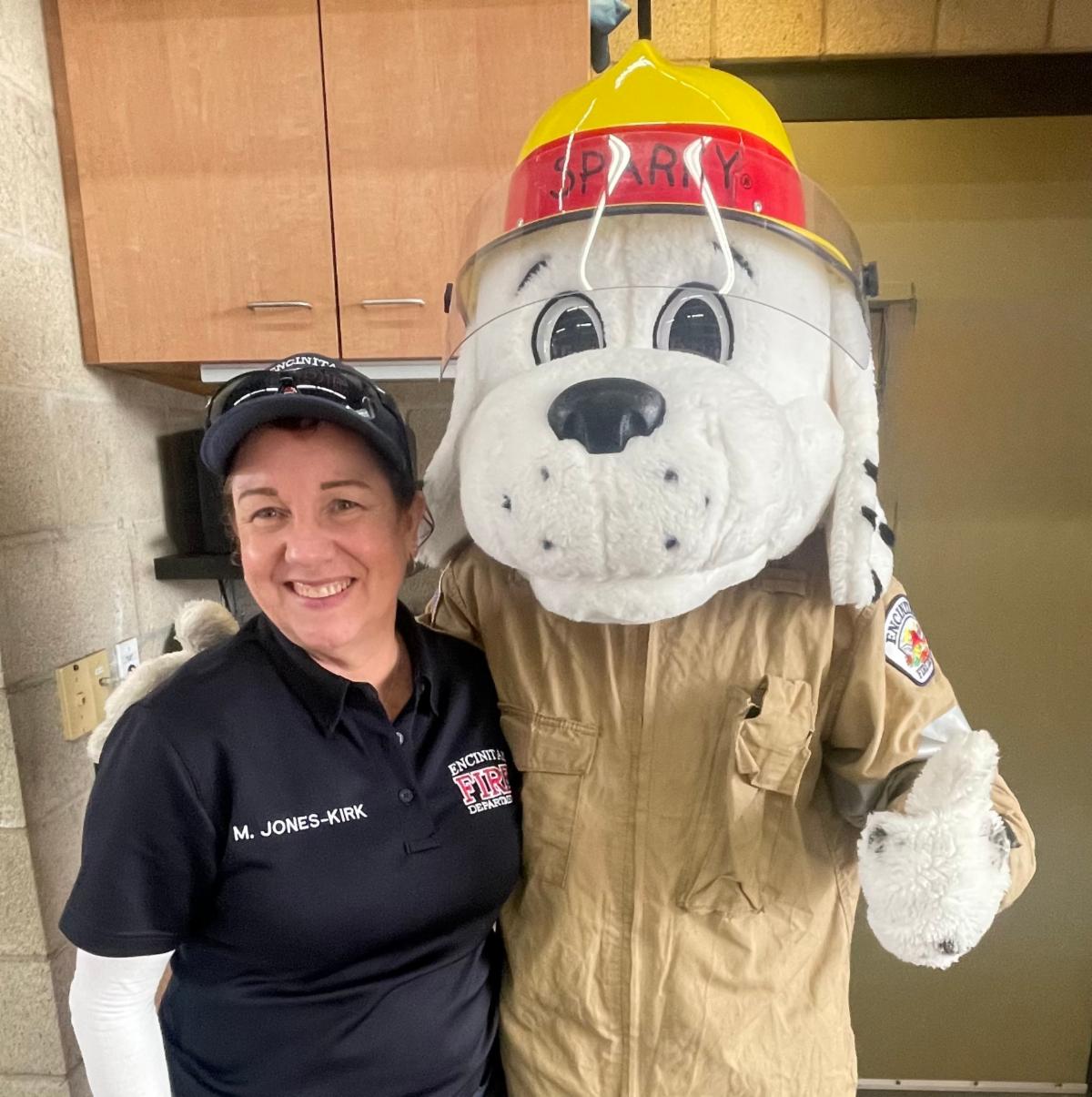
A Conversation with Marie Jones-Kirk, Encinitas Emergency Manager
On the afternoon of June 12, my phone rang. On the other end was Marie Jones-Kirk, the Encinitas emergency manager. “There’s a fire near Olivenhain,” she said, “and I just wanted you know that we’re watching it. There’s no need for alarm or evacuation at this point, but I wanted to tell you in case anyone from the community contacts you, so you can update them.”
The Watch Duty alert on my phone had just gone off several times, but because multiple alerts over previous days were for fires far from Olivenhain, I had ignored the ones that day. Silly me. The Claro Fire, as it was named, was near the border of Carlsbad and San Marcos—close enough that some Olivenhain residents were able to watch it from their yards. Fortunately, firefighters from those cities, as well as Encinitas, quickly got it under control, so it was stopped at 45 acres.
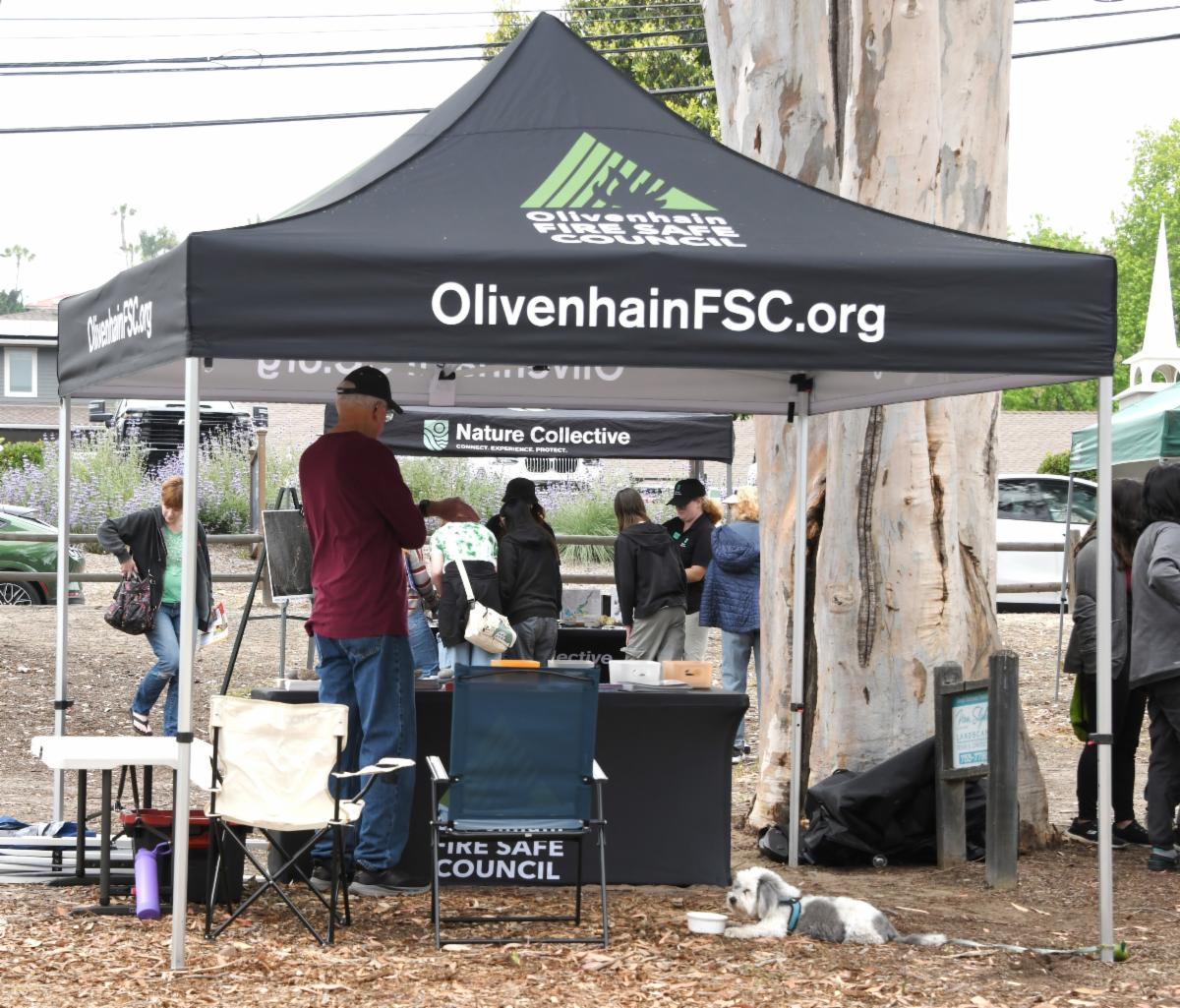
But the exchange with Marie exemplified the key role she has been playing with Olivenhain and indeed the city since she became emergency manager two years ago. Not only is she in charge of ensuring that the city is prepared for an array of emergencies—fires, floods, earthquakes, tsunamis and pandemics, for example. But in the wake of the Palisades and Eaton fires, there was a groundswell of concern in Olivenhain about preparedness. So last March, at the urging of the Olivenhain Fire Safe Council, and in partnership with the fire department, sheriff’s department and San Diego Humane Society, she coordinated a comprehensive presentation for residents of Olivenhain on wildfire prevention and preparedness. She and Chief Gordon have since adapted it and presented it multiple times throughout the city.
Since Marie is OFSC’s primary liaison with the fire department, she and I sat down for an interview, and I gained some important insights into her job.
—Sarah
What is the job of an emergency manager?
The role of an emergency manager, in the simplest of forms, is to plan for, work to prevent, and respond to all hazards that can impact a city and community.
This includes managing the readiness of the city’s emergency operations center (EOC), training employees in emergency preparedness and how to serve in the EOC. It also includes ensuring proper supply levels to support the city in response to an emergency, whether a flood or tsunami, fire or earthquake, and to update emergency plans to guide how the city responds to larger-scale emergencies. In addition, I work with residents and community groups to provide education and guidance for emergency preparedness.
The role of an emergency manager is quite dynamic, and the items I mentioned only highlight a few of the areas of responsibility. I have to be flexible and adaptable to the ever-changing needs of the city and recognize that a disaster can strike at any time of the day or at night, so I have to be ready to respond when needed.
How did you come to enter the field?
I’ve been doing emergency management in one form or another for 20 years. In 2003, I was working with an organization in southeast San Diego County, and within a week the Cedar Fire started. I provided response and recovery efforts during that fire and learned a lot about working with the county and other nonprofit organizations in meeting the needs of people in the backcountry areas of the county.
In 2007, during the Witch Creek Fire, I was the administrator of two state-licensed residential care homes, and one of homes was evacuated in the middle of the night. I learned a lot about planning and response and recovery. I had to evacuate eight residents and employees at 2 am on October 22.
And I had the opportunity to serve my own community of Carlsbad during the Poinsettia Fire in May 2014. I reached out to the city of Carlsbad asking how I could help, and I ended up leading a recovery project, helping people living in a few of the low-income housing complexes impacted in the area.
The opportunity ultimately led to a full-time position with the city and taking on a role in its emergency operations center. That experience was a stepping stone to serving as the city’s emergency manager, responding to the COVID-19 pandemic, wildland fires, a marine oil spill, tsunami warning, flooding, severe winter and many other activities. Although my entire career hasn’t been in emergency management, my professional and personal experience has led me to the path of serving a community at its most vulnerable time.
What made you come to Encinitas?
I was aware of its desire to develop a dedicated emergency management position and saw a chance to serve a city made up five unique communities with geographical landscapes ranging from coastal to rural, residential, commercial, open space and canyon areas. I liked the chance to build upon what the city had done around emergency management and develop a program that serves the entire city. I am proud to work under the leadership of Chief Gordon and to work alongside my city team members and community members who are so invested in their town.
What are your goals for strengthening Encinitas’s preparedness and responses to emergencies?
My overarching goal is to continue to develop and maintain an emergency management practice that supports the city and its communities to mitigate, prepare for, prevent, respond to and recover from any hazard that could impact Encinitas.
In the coming year a few of my goals are to host the Encinitas Community Emergency Response Team (CERT) Academy starting in February; work with city employees to be ready for the County of San Diego’s full-scale exercise in April; work to update existing emergency plans to meet the changing needs of the city; and continue to enhance the city’s readiness through employee training, proper emergency supply management and public education.
What do you wish everyone in Olivenhain, and by extension, Encinitas, would do to prepare for emergencies?
My experience is that when an emergency strikes, if people are not prepared, fear will take over. So for Olivenhain residents and other Encinitas community members, I would like them to start by developing a plan of what they and their family will do when an emergency happens. To name a few items: Where will you meet family members or friends? Who is your out-of-area “check-in” contact? How will you evacuate your home? Workplace? School? Place of worship? What route (and several alternates) will you use to evacuate your neighborhood? Do you have transportation? Do you have plans in place to evacuate your pets?
If there is an emergency in your community and you are directed by law enforcement or receive an emergency notification to evacuate, don’t wait to evacuate—leave! If you know there’s a fire in Harmony Grove, you don’t have to wait for it to get to Olivenhain to get ready to leave. You can evacuate before you receive a notification.
Create an emergency go bag for every member of your family so you can leave at a moment's notice. Some items to consider for the bag are important documents, prescription medications, a change of clothes, water and non-perishable food, as well as supplies for your pets.
Register for emergency notifications at Alert San Diego to receive a phone call, text and/or email when there is an emergency that is impacting your neighborhood.
And finally, download Genasys Protect, a free app that delivers location-based emergency alerts directly to your mobile device. With Genasys Protect, you can receive real-time updates, evacuation details, and interactive maps to help you understand what’s happening around you. The application allows you to identify what zone you live in or what zone your workplace or your children’s school is located in. It makes also includes road closures and where a temporary evacuation point is set up based on a zone.
Disasters never strike at a perfect time, so make sure you, your family, your neighbors and community are ready to respond.
What are your favorite parts of your job?
You will hear me say this often: I think I have the best job in the city. I get to work across the city to learn about the amazing work my team members do and how emergency management can support their vital roles while preparing for, responding to and recovering from an emergency.
And I especially love working with community members to learn from them and provide emergency preparedness education and support. As the city’s emergency manager, I have a vested interest in the safety and well-being of my team members and the community. I want people to know I’m a resource.
|