|
1. This has been quite a week. As we mentioned in our first issue this month, tonight is February's full moon, the Snow Moon. I encourage you to take a moment and soak in its beauty. 2024 is a Leap Year and next Thursday the 29th we get an extra day, Leap Day. We look at why this is and how it is observed around the world.
2. As you know, I'm a fan of nature, and I love the Natural History Museum in New York, but there's another great Natural History Museum right across the ocean in London. They will be hosting an exhibit near to our hearts at The Flock, the brilliant and bizarre history of birds.
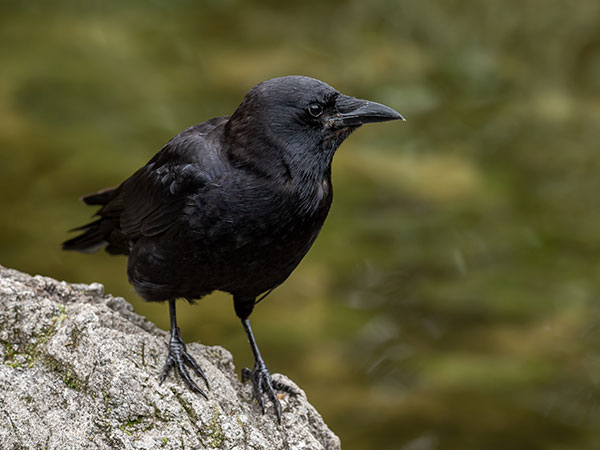
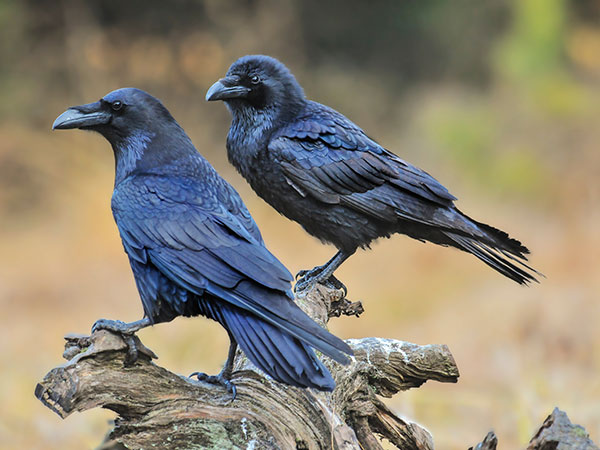
3. I look at a raven and I look at a crow and I'm not sure which is which. We’ll help you with the clues to tell them apart, but it might be easier to just listen to them.
4. I started thinking about Swiss spas because I recently had a visit with some of my husband’s relatives and it made me think of my wonderful mother-in law, Elisabeth Kasser, who once treated me to a Swiss spa.
5. Closer to home, I wanted to point out the excellent W.A. Franke Honors College within the University of Arzona and its creative take on education.
6. Also at the University of Arizona, the College of Sciences host a series of public lectures at Centennial Hall each spring. The last one in the current series is next Wednesday, the 28th.There's still time to RSVP. If you want to catch up on any that you've missed, each lecture is available through the UAZScience YouTube channel.
7. The University of Arizona now has a new Athletic Director, Desireé Reed-Francois, the first female AD in the school's history. She brings a record of success in the SEC and I'm excited to see her impact here.
8. In The Next Gen we're trying to keep up with Zoe Crimmel in her first season playing tennis for Alcom State in Mississippi.
9. I'm a big fan of dance and I was happy to attend the Eller School of Dance Scholarship Benefit to see Misty Copeland perform last week. Dancing in the Streets Arizona is bringing up the next generation of superstars transforming lives through the power of dance.
10. In the Local Spotlight I wanted to give a shout out to someone who's hard work and dedication to fairness I admire, Sarah Smallhouse and Make Elections Fair Arizona is making a push to get enough signatures to move their ballot initiative forward. I know she's going to make it.
11. In Wellness we look at the phenomena of Blue Zones, geographic areas around the world where people are healthier and live longer, and what traits they have in common.
12. In the Pet's Corner we meet Kona, a tennis, pickleball, and paddleboarding aficionado.
| |
Now, to this week's Flock. | |
1. LEAP YEAR: Leap Day Traditions
| |
Leap Day is coming up next Thursday, February 29th. The Flock would like to wish a happy birthday to all our leaplings, those born on Leap Day, who only get to celebrate their birthday on its actual date every four years. Leap Day was first introduced by Julius Caesar and its current observance goes back to the 16th century. | |
5 Things You May Not Know About Leap Day
The extra day tacked on to every fourth year is a subtle admission that even something as regular and simple as a calendar can be more complicated than we think.
| |
|
Nearly every four years, we add an extra day to the calendar in the form of February 29, also known as Leap Day. Put simply, these additional 24 hours are built into the calendar to ensure that it stays in line with the Earth’s movement around the sun.
While the modern calendar contains 365 days, the actual time it takes for Earth to orbit its star is slightly longer—roughly 365.2421 days. The difference might seem negligible, but over decades and centuries that missing quarter of a day per year can add up. To ensure consistency with the true astronomical year, it is necessary to periodically add in an extra day to make up the lost time and get the calendar back in synch with the heavens.
| |
8 Leap Year Traditions and Superstitions From Around the World
Including decorating birch trees with ribbons in Germany
| |
|
For the first time in four years, anyone born on 29th February – sometimes known as 'leaplings' – gets to celebrate their true birthday, given that 2024 is a leap year. On this extra leap day, there are certain customs that have stood the test of time, as well as some more quirky superstitions.
In some cultures, leap years represent opportunity. Elsewhere, leap days, months (and in some cases whole years) are considered bad luck and avoidance tactics are deployed to try and reverse any ill fortune.
United Kingdom
Women can propose to men on a leap day
Ireland
Turning down a leap day proposal could be costly
Scotland
Don't forget the dress code for a leap day marriage proposal
Denmark
Have the gloves ready if a proposal is refused
Germany
Decorate a birch tree with ribbons to show love
France
Read the La Bougie du Sapeur newspaper
Taiwan
Cook pigs' trotters to bring the elderly good fortune
Greece
Avoid getting married or divorced in a leap year
| |
2. MUSEUMS: Natural History Museum | London
| |
If you happen to be in London this year, I recommend a visiting the Natural History Museum. Beginning at the end of May, the museum will be hosting a major exhibit on one of our favorite subjects at The Flock, birds. | |
Birds: Brilliant and Bizarre
24 May 2024 - 5 January 2025
| |
|
Birds have been around for millions of years and live on every single continent on Earth, but our feathered friends still hold many secrets.
Delve deep into one of the world's biggest bird collections and uncover the epic story of these incredible creatures in our brand-new exhibition.
Opening this May half-term, Birds: Brilliant and Bizarre explores the world of birds like never before. From surviving the mass extinction that wiped out all the other dinosaurs to their remarkable evolution into more than 11,000 species.
With more than 120 specimens on display, journey through their evolution, discover the secrets of their success and explore their current struggle to survive in a changing world.
| |
How to Tell a Raven From a Crow | |
From: Audubon, By: BirdNote, October 22, 2012 | |
|
You’re outside, enjoying a sunny day when a shadow at your feet causes you to look up. A large, black bird flies over and lands in a nearby tree. You wonder: is that a crow or a raven?
These two species, Common Ravens and American Crows, overlap widely throughout North America, and they look quite similar. But with a bit of practice, you can tell them apart.
| |
You probably know that ravens are larger, the size of a Red-tailed Hawk. Ravens often travel in pairs, while crows are seen in larger groups. Also, watch the bird’s tail as it flies overhead. The crow’s tail feathers are basically the same length, so when the bird spreads its tail, it opens like a fan. Ravens, however, have longer middle feathers in their tails, so their tail appears wedge-shaped when open. | |
In the September 15th issue of The Flock we looked at destinations to recharge your spirit in the American west. We included the Avalanche Ranch in Redstone Colorado, Civana Wellness Resort & Spa in Carefree, Arizona, and the Golden Door in San Marcos, California. This week, we're going to Europe and looking at resorts & spas in Switzerland | |
The Best Contemporary Spa Resorts in Switzerland | |
From: Forbes, By: Nel-Olivia Waga, August 29, 2019 | |
|
There is no place like Switzerland for relaxation, outdoor sports and healing getaways. The quality of the fresh air and the astonishing number of healthy spring water sources draw visitors every year to soak up its Alpine magic.
If you are a lover of wellness, exquisite forest views and high-end hospitality, these luxurious Swiss spa resorts know how to pamper:
| |
5. STUDENT'S CORNER: UArizona's W.A. Franke Honors College
| |
Together, We Are Franke Honors Wildcats
The Franke Honors College is transforming what's possible in Honors education through innovative programming, access to experiential learning opportunities, and a supportive, inclusive community.
| |
|
Grounded in the resources of a globally ranked research university, the W.A. Franke Honors College provides the opportunity to take small classes with the University of Arizona’s top educators, engage in research and creative expression with the University’s top researchers, designers, and artists, experience the world through study abroad, and create lifelong friends through shared experiences.
Seek ways of thinking, connect with others, create experiences and knowledge, evolve and grow as humans, and celebrate that growth. Don't wait to make an impact. The world needs you now.
| |
Bachelor of Creative Intelligence and Innovation at Franke Honors | |
6. UNIVERSITY OF ARIZONA: College of Science Lecture Series
| |
Since 2006, the University of Arizona has run a series of public lectures featuring educators and researchers from inside the College on a wide range if science topics open to the greater Tucson community. There is still time to attend the last lecture of the Spring 2024 series on February 28th. Past lectures are available through the UAZScience You Tube channel. | |
February 28, 2024 | Jeff Pyun | |
From Fossil Fuels Refining to Sustainable Plastics: A Surprising New Chemistry Twist | | |
|
Will we ever change the way we make plastics? While plastics are ubiquitous in every day life, nearly a century has past with the same processes and materials, which are now accumulating and polluting the world around us. In this talk, Dr. Pyun will discuss his recent invention utilizing alternative waste feed stocks from the petroleum refining industry to create a transformative new class of advanced plastics. This process was invented at the University of Arizona and has quickly changed the way companies and academics think about plastic production. Click here for a livestream of the talk. | |
6. UNIVERSITY OF ARIZONA: New Athletic Director
| |
University of Arizona Makes School History with Appointment of New Athletic Director | |
|
The University of Arizona has appointed a new athletic director, who will be the first woman to serve as a full-time AD in school history. The university will officially introduce Desireé Reed-Francois as the Director of Athletics on Tuesday, a role she’s expected to begin on March 3.
“We are absolutely thrilled to welcome Desireé to the University of Arizona family, and we could not be more excited about the leadership experience and outstanding credentials she brings,” said UofA President Robert C. Robbins. “Respected nationally for her commitment to student-athletes, Desireé has a history of success everywhere she’s served and is exactly the right person we need to modernize our athletics operations and usher in an ongoing culture of success in all aspects of Athletics. This is a tremendous win for our university and I cannot wait for her to get started.”
The move comes nearly a month after UA announced it would be moving on from Dave Heeke. Reed-Francois will come to Tucson from the University of Missouri, where she has held the same position since 2021. She was the first woman to serve as an athletic director at a public institution in the SEC.
| |
8. THE NEXT GEN: Keeping Up with Zoe Crimmel
| |
The Flock's favorite rising star in the Tennis world, Zoe Crimmel, has posted the 39th weekly update to her Blog, "Where in the World is Zoe". In this week’s installment Zoe shares her thoughts on strength and gives us an update on the Alcom State’s trip to Montgomery, Alabama to face Bethune College and Florida A&M in two days of tennis matches. Alcom's results were mixed, but most importantly, Zoe played well and was happy with her own performance. | |
Where in the World is Zoe - Week 39 | |
Going into our second month here in college and going strong. Come read the weekly recap with matches and school and learn a little more about what is to come. . . | |
9. PERFORMING ARTS: Dancing in the Streets, Arizona
| |
Dancing in the Streets Arizona | |
|
Dancing in the Streets Arizona (DITSAZ) is both a well-appointed ballet studio and a laboratory for success. DITSAZ was founded in 2008 by husband and wife team Soleste Lupu and Joseph Rodgers, who met in ballet school in Tucson, and with a modest sum of money received in celebration of their wedding. The DITSAZ studio is located in South Tucson, a one-square mile city surrounded by the City of Tucson that maintains a strong cultural heritage, but struggles with high crime rates and poverty. The mission of DITSAZ is to use the power of dance to transform lives using the excitement and discipline of ballet to guide children in developing positive life skills; and to break down cultural barriers and enrich the community’s artistic experience.
Dancing In The Streets AZ is a ballet organization dedicated to fostering creativity, cultural exchange, and community engagement through dance. Our mission is to promote and celebrate the transformative power of dance, providing accessible opportunities for artistic expression, education, and performance.
At the core of our organization’s work is the belief that dance has the ability to inspire, connect, and empower individuals and communities. We strive to create a vibrant and inclusive cultural environment where people from diverse backgrounds can come together to experience the joy and richness of dance.
| |
Dancing in the Streets Arizona | |
10. LOCAL SPOTLIGHT: Make Elections Fair Arizona
| |
Arizona's presidential preference election where Arizona citizen's will get to weigh in on who their choice is for a presidential nominee is coming up in less than a month. Unfortunately, this choice is only offered to registered Democrats and Republicans. Voters registered to a third party, or as Independents are excluded from the presidential preference election. Make Elections Fair Arizona chaired by friend of The Flock, Sarah Smallhouse, is working to change this and is currently in a push to collect signatures for a ballot initiative that would make Arizona's election process more inclusive. Follow this link for information on where and when you can sign the petition to help get the Make Elections Fair Arizona initiative on next November's ballot. | |
How does Arizona vote for presidential nominees? Your questions answered. | |
From: Arizona Mirror, By: Jen Fifield, February 16, 2024 | |
|
Arizona voters will begin voting Feb. 21 for their choice of presidential nominee for the November ballot.
Counties will begin sending ballots out to Democrats and Republicans on the state’s early voting list and early in-person voting will begin for the presidential preference election.
This March 19 election, which political parties use to select their presidential candidates, is separate from the state’s primary election for all other federal, state and local candidates, which will happen on July 30.
Here are answers to some common questions about the election.
Q: Are there any proposals to change how the presidential preference and primary elections are run?
A: Yes. A group called Make Elections Fair Arizona is gathering signatures for a ballot initiative that would change the rules for voters in both elections.
For the presidential preference election, the initiative would open the election to all voters, even if they aren’t registered with a political party, allowing them to choose the ballot they would like to vote on.
For the primary election, the initiative would create an open primary system. This would place all candidates of various parties on one nonpartisan primary ballot, allowing voters to select their top candidate from a list of all candidates, no matter their political party. The top two to five candidates would move on to the general election in a method decided by the Legislature prior to the election. If the Legislature chooses to send more than two candidates to the general election, the state would need to adopt a ranked-choice voting system to determine the winner.
The group has until July 3 to collect signatures to secure a spot on the ballot in November.
| |
A Flock reader from across the International Dateline, Professor of Geosciences Dr. G.S Burr at National Taiwan University used the "Share Stories & Photos" link at the bottom of this newsletter to suggest that we cover the phenomena of "Blue Zones" in our Wellness section. "Blue Zones" are geographic areas around the world with lower-than-average rates of chronic diseases and higher than average life expectancy. While "Blue Zones" are geographically and ethnically diverse, there are lifestyle and dietary factors that are common between them. | |
Why People in "Blue Zones" Live Longer Than the Rest of the World
“Blue Zones” are geographic areas with lower rates of chronic diseases and a longer life expectancy. Diet, fasting, and exercise are factors associated with Blue Zones. Italy, Greece, Japan, Costa Rica, and the US have a Blue Zone.
| |
From: Healthline, By: Ruairi Robertson, PH.D., September 29, 2023 | |
|
Chronic diseases are becoming more and more common in old age. While genetics somewhat determine your lifespan and susceptibility to these diseases, your lifestyle probably has a greater impact.
A few places in the world are called “Blue Zones.” The term refers to geographic areas in which people have low rates of chronic disease and live longer than anywhere else.
This article describes the common lifestyle features of people in Blue Zones, including why they live longer.
“Blue Zone” is a non-scientific term given to geographic regions that are home to some of the world’s oldest people.
It was first used by the author Dan Buettner, who was studying areas of the world in which people live exceptionally long lives.
They are called Blue Zones because when Buettner and his colleagues were searching for these areas, they drew blue circles around them on a map.
In his book called The Blue Zones, Buettner described five known Blue Zones:
-
Icaria (Greece): Icaria is an island in Greece where people eat a Mediterranean diet rich in olive oil, red wine and homegrown vegetables.
-
Ogliastra, Sardinia (Italy): The Ogliastra region of Sardinia is home to some of the oldest men in the world. They live in mountainous regions where they typically work on farms and drink lots of red wine.
-
Okinawa (Japan): Okinawa is home to the world’s oldest women, who eat a lot of soy-based foods and practice tai chi, a meditative form of exercise.
-
Nicoya Peninsula (Costa Rica): The Nicoyan diet is based around beans and corn tortillas. The people of this area regularly perform physical jobs into old age and have a sense of life purpose known as “plan de vida.”
-
The Seventh-day Adventists in Loma Linda, California (USA): The Seventh-day Adventists are a very religious group of people. They’re strict vegetarians and live in tight-knit communities.
| |
This week’s pet is Kona. Kona is a tennis, pickleball, and paddleboarding aficionado. | |
Watching TV on the couch. | |
|
These Flock regulars are always here for you:
In Coming weeks, we'll be hearing more from our roving reporter William George.
| |
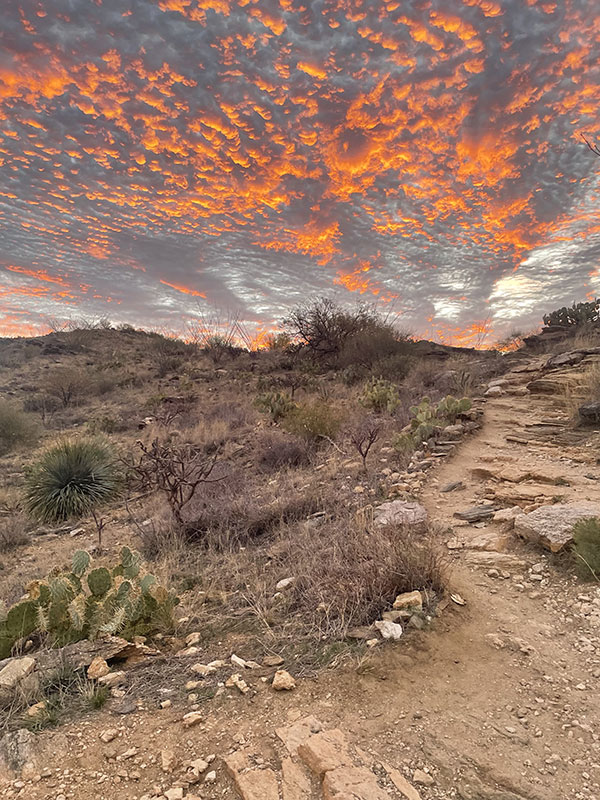
photo: Sabino Canyon Sunrise - Raquel Abreu | |
Don't Be Shy: Share Your Stories! | |
I'm looking forward to sharing more of your personal stories - oral, written, or otherwise, as we enter our second year. I'd so love to present them to The Flock, hit a mailbox below to share your story. | |
Subscriptions & Idea Submissions | |
|
Feel free to forward this email to a friend. If this was forwarded to you and you would like to receive your very own Flock Newsletter, you can sign up here. If you have any questions or suggestions for future Flock resources, don't hesitate to contact me.
Your fan and friend,
Beth
| | |
The information and materials contained or referenced in this newsletter are for informational purposes only and not intended to be a substitute for professional medical advice, diagnosis, or treatment. Always consult a physician or other qualified medical professional with any questions you may have regarding a medical condition or treatment and before beginning a new health care regimen. Do not disregard professional medical advice or delay seeking medical advice or care based on anything contained in this newsletter. | | | | |