|
1. I recently learned that the renowned gospel singer Mahalia Jackson had encouraged Dr. Martin Luther King Jr. to eschew his prepared speech and to speak only from his heart without notes. In honor of Black History Month, I wanted to post about Mahalia Jackson this week.
2. Valentine's Day is this Wednesday. In this week’s issue I share some of the ways it is celebrated internationally.
3. In our history of the Middle East we cover the Persian Empire and their clashes with the Greeks.
4. In The Heavens we look at the phases of the moon and how they might affect mood and health. My dear Hindi friend, Bindu, reminded me of this just yesterday.
5. In Performing Arts, I wanted to promote the upcoming UA School of Dance Scholarship Benefit performance coming up next Friday. Get your tickets while you still can. This show is sure to sell out.
6. In Reaching High, I want to belatedly congratulate the first all-black climbing team to summit Mount Everest. My apologies for missing this one when it happened.
7. In the Educator's Corner we have some Black History Month movie suggestions.
8. Serena Williams is retired and recently had her second daughter. In this week's Flock we take a peek at what Serena's mom workout.
9. We have some sad news from the Reid Park Zoo. The Grevy's zebra foal born on Christmas has passed away after accidentally running into a zoo enclosure. Our thoughts go out to the zoo employees who care for these animals.
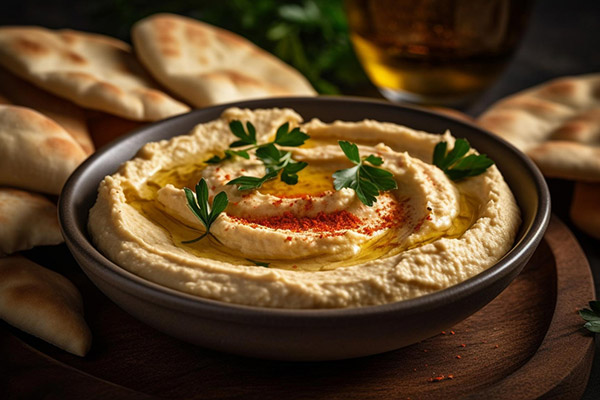
10. In Wellness we look at the nutritional value of field peas and we have included a simple hummus recipe.
11. Coming soon, when she returns from her amazing adventure, we will be visiting with Neelam Sethi and learning about her collection of vintage Indian saris.
| |
Now, to this week's Flock. | |
1. BLACK HISTORY MONTH: Mahalia Jackson
| |
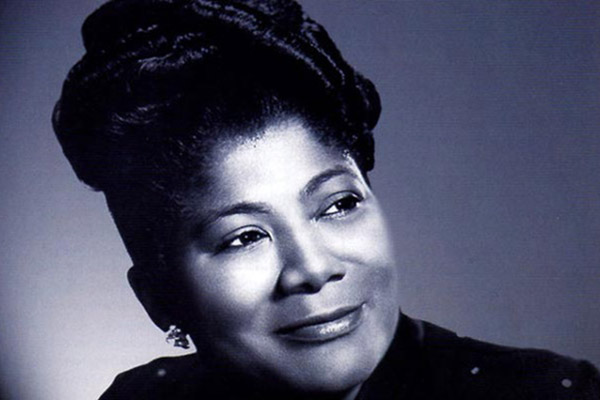
Mahalia Jackson was a civil rights leader and one of the most revered gospel singers of the 20th century. During the March on Washington on August 28, 1963, she performed from the steps of the Lincoln Memorial before Dr. Martin Luther King Jr. gave his famous "I Have a Dream" Speech. As I mentioned in our Martin Luther King Jr. Day post, a friend of mine and Flock reader, Peter Siris, had a chance encounter that day where Dr. King told him that he was considering deviating from his prepared speech. Shortly before Dr. King was to speak, Mahalia encouraged him to give his improvised speech calling out, "Tell them about the dream, Martin." | |
Mahalia Jackson
20th-century recording artist Mahalia Jackson, known as the Queen of Gospel, is revered as one of the greatest musical figures in U.S. history
| |
Mahalia Jackson started singing as a child at Mount Moriah Baptist Church and went on to become one of the most revered gospel figures in the United States. Her recording of “Move On Up a Little Higher” was a major hit and she subsequently became an international figure for music lovers from a variety of backgrounds. She worked with artists like Duke Ellington and Thomas A. Dorsey and also sang at the 1963 March on Washington at the request of Dr. Martin Luther King Jr. | |
How I Got Over | Mahalia Jackson at MLK's Civil Rights Campaign
(Washington, 1963) | |
2. HOLIDAYS: Valentine's Day Around the World
| |
Valentine's Day is coming up this Wednesday, February 14th. The holiday is celebrated in different ways around the world. Often with some type of symbolic gift or gesture. In most countries it is a celebration for lovers, in some it is a day to celebrate all friendships. I chose to celebrate the day by expressing my love for my hubby Mike and our wonderful children Violet and Mikey G. | |
6 Valentine's Day Traditions Around the World | |
|
Across the United States and around the world, February 14 marks a day of celebration of St. Valentine.
The legend of St. Valentine is shrouded in mystery. The Catholic Church recognizes at least three saints named Valentine or Valentinus, all of whom were martyred. One legend says Valentine was a priest who served during the third century in Rome. When Emperor Claudius II decided single men made better soldiers than those with families, he outlawed marriage. Valentine continued to perform marriages in secret, causing Claudius to order he be put to death. Other stories suggest Valentine was killed for attempting to help Christians escape Roman prisons.
It is also told that Valentine sent the first Valentine’s Day greeting. Yet another legend says Valentine fell in love while imprisoned, perhaps with the jailor’s daughter who visited him. Before his death, he is said to have written her a letter and signed it “From your Valentine.”
Regardless of its origins, Valentine’s Day is celebrated around the world. While February 14 marks a day of candy, flowers, greeting cards, and romantic dinners around the United States, other parts of the world have their own unique ways to celebrate St. Valentine.
| |
3. WORLD HISTORY: The Early History of the Middle East
| |
|
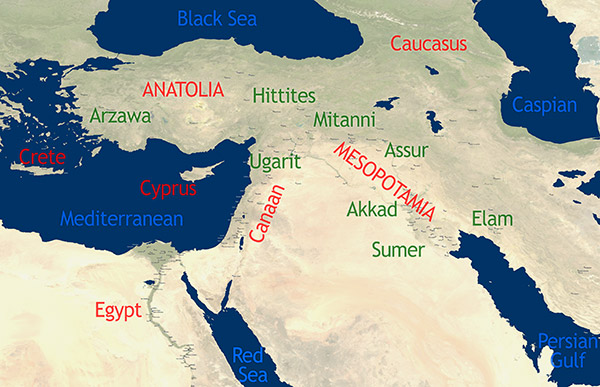
In previous installments of our Middle East History, we have covered the following civilizations:
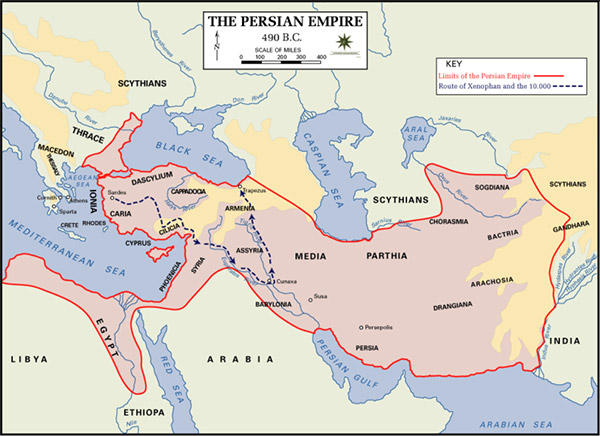
This week we are looking at the Persian Empire.
| |
The first Persian Empire took control of the Middle East after the fall of the Babylonian Empire. It is also called the Achaemenid Empire. | | |
|
|
Cyrus the Great
The empire was founded by Cyrus the Great. Cyrus first conquered the Median Empire in 550 BC and then went on to conquer the Lydians and the Babylonians. Under later kings, the empire would grow to where it ruled Mesopotamia, Egypt, Israel, and Turkey. Its borders would eventually stretch over 3,000 miles from east to west making it the largest empire on Earth at the time.
Different Cultures
Under Cyrus the Great, the Persians allowed the peoples they conquered to continue their lives and cultures. They could keep their customs and religion as long as they paid their taxes and obeyed the Persian rulers. This was different from how earlier conquerors such as the Assyrians had ruled.
| |
|
Fighting the Greeks
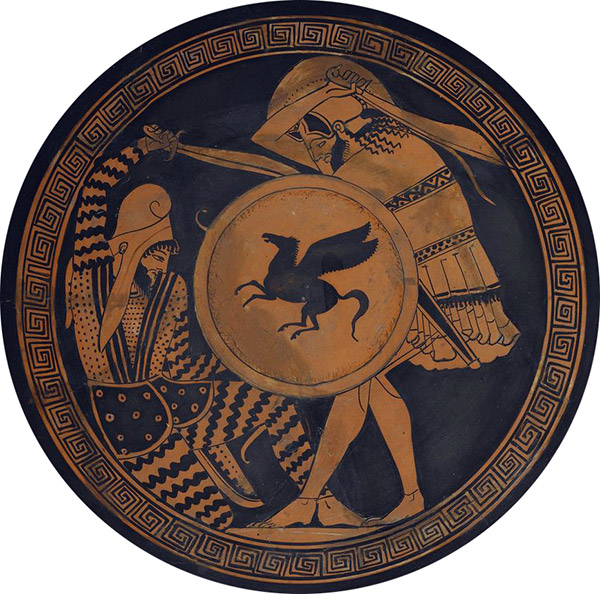
Under King Darius the Persians wanted to conquer the Greeks who he felt were causing rebellions within his empire. In 490 BC Darius attacked Greece. He captured some Greek city-states, but when he attempted to take the city of Athens, he was soundly defeated by the Athenians at the Battle of Marathon.
| |
In 480 BC Darius' son, Xerxes I, attempted to finish what his father started and conquer all of Greece. He amassed a great army of hundreds of thousands of warriors. This was one of the largest armies assembled during ancient times. He initially won the Battle of Thermopylae against a much smaller army from Sparta. However, the Greek fleet defeated his navy at the Battle of Salamis and he was eventually forced to retreat. | |
|
Fall of the Persian Empire
The Persian Empire was conquered by the Greeks led by Alexander the Great. Starting in the year 334 BC, Alexander the Great conquered the Persian Empire from Egypt all the way to the borders of India.
| |
4. THE HEAVENS: Phases of the Moon
| |
Lunar Phases and Eclipses | |
|
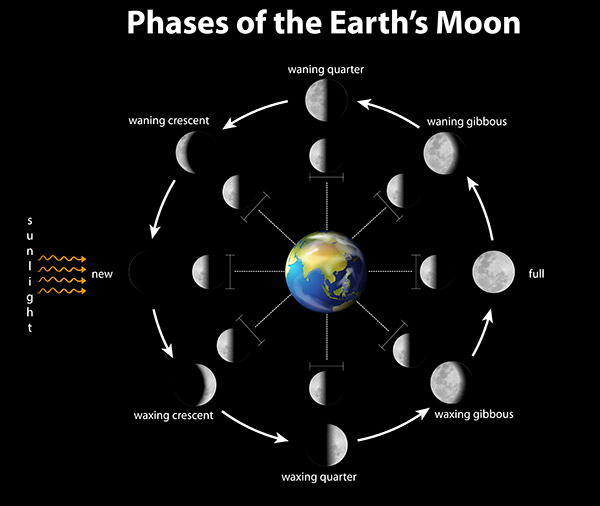
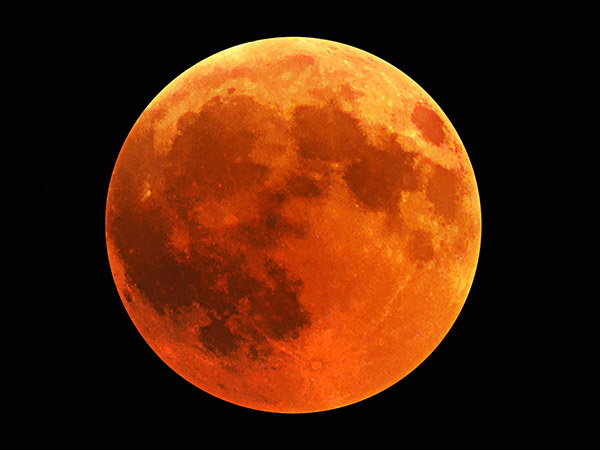
We always see the same side of the Moon, because as Earth's natural satellite revolves around our planet, the Moon rotates, causing the same side to always face us. And yet, the Moon looks a little different every night. Sometimes the entire face glows brightly. Sometimes we only see a thin crescent. Other times the Moon seems to disappear entirely. Why does the Moon's appearance change?
The moonlight we see on Earth is sunlight reflected off the Moon's grayish-white surface. The amount of Moon we see illuminated changes over the month — lunar phases — because the Moon orbits Earth and Earth orbits the Sun. Everything is moving.
What Are Lunar Phases?
Our Moon doesn't shine, it reflects sunlight. Just as it does in the daytime on Earth, sunlight illuminates the Moon's surface too. That is, the Moon has a day side and also a night side. And as the Moon orbits Earth each month, we do not have a continuous view of the entire side of the Moon that's facing the Sun. Most of the time, our view of the Moon looks toward part of the sunlit side and part of the dark side at the same time.
| |
Can the Moon affect our health?
From sleep and menstrual cycles to full moons and 'lunacy', discover the history and science behind the Moon's supposed effect on humans
| |
|
Sleep trouble. Violent behaviour. Mental health. Menstrual cycles. All these and more have at one time or another been associated with the Moon.
Why have people believed that there is a connection between the Moon and human health? And what, if any, is the scientific basis for it?
How the Moon affects humans – a history
Belief in the Moon’s influence on human sickness and health is ancient and widespread, from early folklore and medicine through to contemporary accounts of full moons and a rise in violent crime.
One of the oldest objects in the 2019 The Moon exhibition at the National Maritime Museum was a Mesopotamian tablet from 172 BCE. The tablet describes how to ward off the evil effects of a lunar eclipse, which were believed to threaten the life of the king.
In ancient Greece and Rome by contrast, girls were given crescent-shaped amulets on their birthday to protect them from evil spirits. Women also wore them to improve fertility and for protection during childbirth.
By the 16th century, tracking the Moon's position had become an "essential part" of medicine according to Louise Devoy, Curator of Royal Observatory Greenwich.
| |
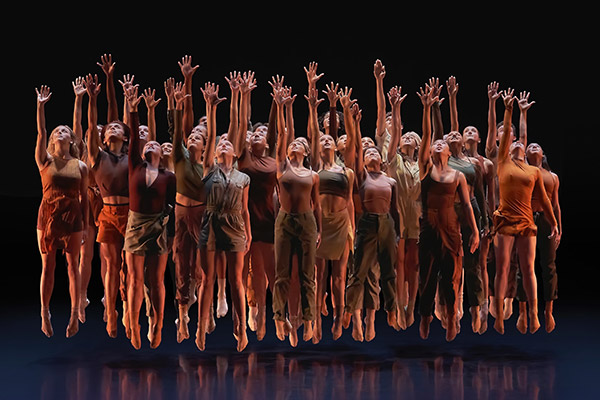
The University of Arizona's School of Dance will be holding their Scholarship Benefit next Friday, February 16th. I'm a big fan and I can't recommend this event enough! School of Dance Director Duane Cyrus has been in The Flock Spotlight before. UA student dancer Diego Gonzales has been in The Flock's Artist's Corner as well. In August of 2022, I was happy to help arrange a Wellness Field Day at the Reid Park Zoo with Diego and fellow UA dancers Tyson and Destin leading a dance class for the zoo's staff. | |
School of Dance Scholorship Benefit 2024
Friday, February 16, 2024
| |
Join the University of Arizona School of Dance for the one-night-only Scholarship Benefit! Experience a night of breathtaking performances, including the Hubbard Street Dance Chicago, Maurice Chestnut, Ballet Tucson, and UA School of Dance Ensemble, hosted by Duane Cyrus and Christopher Compton, with special guest Misty Copeland. Help us raise $100k for dance scholarships by becoming a patron, with various levels of support and exclusive perks. Your contribution makes a difference in supporting our talented dance majors. Don't miss this unforgettable evening! | |
Misty Copeland is a Principal Dancer with American Ballet Theatre, the first Black woman to be promoted to the position in the company's 75-year history in 2015. She has performed some of the most iconic classical ballet roles, including Odette/Odile in Swan Lake; Juliet in Romeo & Juliet; Giselle; Manon; Coppélia; Kitri in Don Quixote; and Firebird, to name a few. Misty, who is a New York Times Bestselling Author of several books, has been featured in several publications, including the cover of Time Magazine for the Time 100, as well as the covers of ESSENCE, Self, ELLE South Africa, Oxygen, and Women’s Health. She has also appeared on CBS' 60 Minutes, CBS Sunday Morning, ABC's Good Morning America, NBC's The Today Show, Tamron, and The Kelly Clarkson Show. | |
Newark, New Jersey native Maurice Chestnut began dancing at the age of five, under the direction of Mr. Alfred Gallman. He became a professional dancer at the age of nine as an original member of the New Jersey Tap Ensemble under the direction of Ms. Deborah Mitchell. As one of tap's brightest young stars, he was featured on The Sally Jesse Raphael Show in the "My Kid's A Star" segment, where he proudly proclaimed that he loved to dance and would keep doing it "until I die". He was a gold medalist in the NAACP Act-So competition and was crowned "Top Dog Performer" at The Apollo Theater. At the age of fourteen, the Newark Star-Ledger’s arts reviewers named Maurice, "one of the twenty New Jersey faces to watch for in the new millennium." In 2003, Maurice was recruited by tap master Savion Glover, to join the national touring company of the Tony Award-winning Bring In ‘Da Noise, Bring In ‘Da Funk. Maurice received critical favor in that role. He has continued to work with Savion as a member of his Improvography and Bare Soundz tours, as well as performing in productions such as Classical Savion, Tappin’ Into Monk, Invitation To The Dancer, and on ABC-TV’s Dancing With The Stars. Off-Broadway credits include Shades of Harlem, The Wiz, Bubbling Brown Sugar directed by George Faison at Atlanta’s Fox Theater, and Can I Hit That and in 2011, He was one of the performers in the movie "Happy Feet 2". | |
6. REACHING HIGH: An Everest First
| |
I'm not sure how I missed this when it happened, but I wanted to make sure to include it here during Black History Month, because this was a feat of mountaineering history itself. | |
First All-Black Climbing Team to Reach the Summit of Mount Everest Celebrates 'Historic Moment' | |
|
The first group of all-Black summiteers to attempt to scale Mount Everest have made history!
Full Circle Everest, the team of Black climbers who set out to conquer Mount Everest, completed the treacherous adventure up the world's highest peak after more than 36 days on Thursday, they confirmed on social media.
"I am deeply honored to report that seven members of the Full Circle Everest team reached the summit on May 12," team leader Phil Henderson wrote in a statement. "While a few members, including myself, did not summit, all members of the climb and Sherpa teams have safely returned to Base Camp where we will celebrate this historic moment!"
The summiting team included Manoah Ainuu of Bozeman, Montana; Kenyan climber James Kagambi; Rosemary Saal of Seattle; Desmond "Dom" Mullins of New York City; Abby Dione of Fort Lauderdale, Florida; Eddie Taylor of Boulder, Colorado; and Thomas Moore of Denver.
| |
7. EDUCATOR'S CORNER: Black History Movies
| |
10 Black History Movies for Kids to Watch Right Now | |
From: The Manual, By: Joe Allen, February 17, 2022 | |
|
Black History Month is an important recognition of the ways that Black culture has shaped American history. Many parents want to address this history with their children, but may struggle with exactly how to broach such a delicate, painful topic without introducing anything too adult. There are certainly plenty of ways to handle the topic with children, but one of the best is to show them a movie.
The movies on this list are all age-appropriate for children, and some of them are explicitly historical. Others are a little bit less directly related to Black history in America, but have valuable lessons for how to get young children thinking about race in their everyday lives. Whether it’s explicitly historical or not, each one of these movies has plenty to offer this Black History Month.
| |
The Princess and the Frog Official Internet Trailer | |
8. ATHLETES: Serena Williams
| |
Wow! What one new mom does! Serena Williams sets the bar for moms and athletes. | |
Serena Williams Shares Weight Training Workout: ‘Back into the Swing of Things’ | |
|
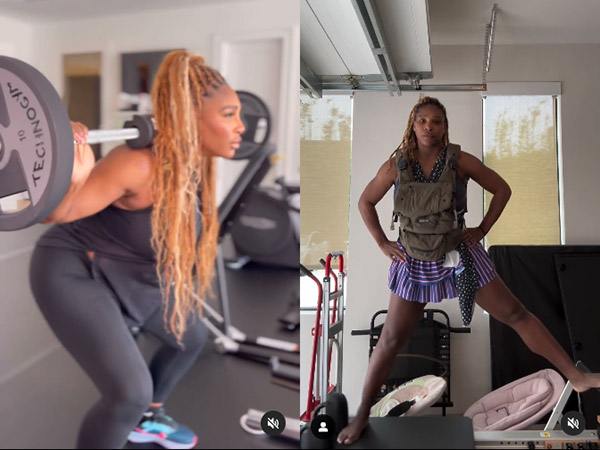
Serena Williams is getting into a groove in the gym.
Since welcoming her second baby in August, Williams, 42, has been easing back into working out — and documenting the process for her 17 million Instagram followers.
The retired tennis star's latest video features her executing barbell squats at a lighter weight than usual.
“Alright, I'm getting back into the swing of things,” the 23-time Grand Slam champion said in her Jan. 26 Instagram Reel, soundtracked by “My Name Is” from hip-hop artist Don. “This is not my usual weight, but it'll do until I get back to where I need to be.”
| |
9. ZOOS: A Sad Day at Reid Park Zoo
| |
We had some very sad news this week from the Reid Park Zoo. The Grevy's zebra foal, Tikiti Maji, was unfortunately killed instantly while colliding with an enclosure fence. | |
Zebra foal dies in accident at Tucson's Reid Park Zoo | |
From: Tucson.com, By: Erika Wurst, February 7, 2024 | |
|
A Grevy’s zebra foal born on Christmas Day at Tucson’s Reid Park Zoo died Tuesday in an accident, officials say.
The foal named Tikiti Maji, which means “watermelon” in Swahili, smashed into wood-paneled fencing in its enclosure while it ran alongside its mother, a news release from the zoo Wednesday said.
The foal’s mother, Anna, apparently became startled by a gust of wind and abruptly moved to a different portion of the enclosure. She stopped near the fencing but the foal smashed into it.
”Veterinary staff responded immediately but the foal died instantly due to an injury to her neck,” the release said.
The zoo participates in Grevy’s Zebra Species Survival plan to protect depletion of the wild population, said Chelo Grubb, of the Reid Park Zoological Society.
| |
A Guide To The Different Types Of Field Peas | |
|
Field peas are the South's most varied legume, but many cooks never venture past black-eyed peas and might not realize there are other choices. We should, however. Although black-eyed peas are good, they are the Red Delicious apples of the field pea universe: the most well-known and widespread but a bit generic and not necessarily the tastiest or most interesting.
Crowder. Zipper. Lady. Discover a world of fresh and flavorful field peas this season.
So what are field peas? They are technically beans and have little in common with green English peas. Field peas are cowpeas, so named because they were grown as a rotational crop in the fields instead of in kitchen gardens. Dozens of different types—what we now call heirloom selections—were grown in Southern communities that valued them for their flavor and ability to flourish in local conditions. Families and neighbors often saved the seeds and passed them down through the generations. We still have heirloom types in the South with charming, descriptive names such as Whippoorwill, Dimpled Brown Crowder, Turkey Craw, Washday, Red Ripper, and Old Timer.
| |
What are the health benefits of peas? | |
|
There are many types of peas, each with its own nutritional value. However, generally speaking, peas are a good source of plant protein. Health benefits include protecting against heart disease and improving gut health.
Peas have been a key ingredient in cooking and food preparation for thousands of years. They are nutritious, versatile, and healthy. Common types include green peas, snow peas, and black-eyed peas.
As well as being a good source of protein, peas may be beneficial for heart and gut health, and they are a good blood sugar stabilizer.
| |
|
Easy Hummus
- Drain a can of chickpeas and whizz them up in a food processor with 1 tablespoon of tahini, 2 tablespoons of olive oil, 4 tablespoons of water, and a couple of garlic cloves.
- Add 1 teaspoon of ground paprika or cumin for flavor. A bit of lemon juice is also a great way to enhance the taste. Serve with raw sugar snap peas as crudités.
| |
11. COMING SOON: Neelam Sethi and her Saris
| |
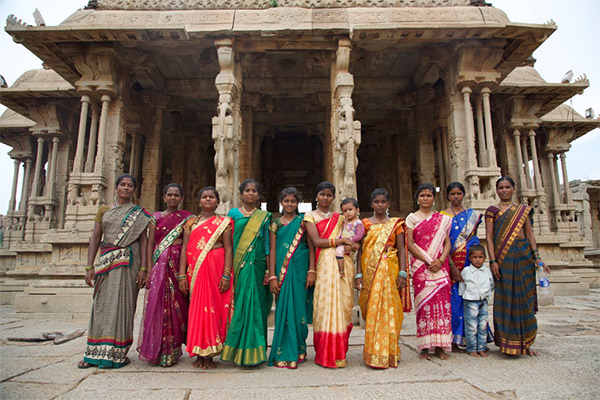
I just got it in my ear that Neelam and her husband Gulshan are about to embark on a voyage, so we'll pick up visiting her and highlighting her collection of vintage Indian saris for a future issue. To hold you over, I'm reposting the following article on saris from the November 2022 Flock archives. | |
9 Facts You May Not Know About The Sari | |
|
Malika Verma Kashyap explores the lesser-known side of the iconic garment
The sari (often spelled ‘saree’), is a garment traditionally worn in India, Sri Lanka, Pakistan, Bangladesh and Nepal. It can be an heirloom passed down through generations, or a purely functional garment worn every day. It’s seen on streets and runways, and has influenced fashion designers across the world. Much loved and yet often misunderstood, here are nine facts you might not know about the sari, as seen from India.
| |
How are you doing on your resolutions? I've been a little shaky on mine, so I'm getting back on that horse and recommitting to them. | |
|
These Flock regulars are always here for you:
In Coming weeks, we'll be hearing more from our roving reporter William George.
| |
Don't Be Shy: Share Your Stories! | |
I'm looking forward to sharing more of your personal stories - oral, written, or otherwise, as we enter our second year. I'd so love to present them to The Flock, hit a mailbox below to share your story. | |
Subscriptions & Idea Submissions | |
|
Feel free to forward this email to a friend. If this was forwarded to you and you would like to receive your very own Flock Newsletter, you can sign up here. If you have any questions or suggestions for future Flock resources, don't hesitate to contact me.
Your fan and friend,
Beth
| | |
The information and materials contained or referenced in this newsletter are for informational purposes only and not intended to be a substitute for professional medical advice, diagnosis, or treatment. Always consult a physician or other qualified medical professional with any questions you may have regarding a medical condition or treatment and before beginning a new health care regimen. Do not disregard professional medical advice or delay seeking medical advice or care based on anything contained in this newsletter. | | | | |