REACHING HIGH: Staying in the Southern Hemisphere | |
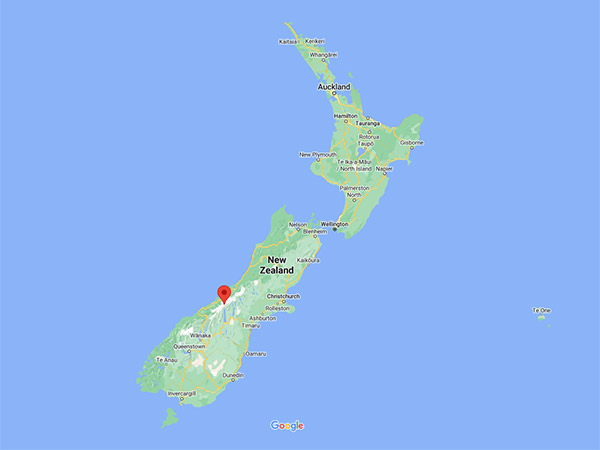
This week I choose to take us to New Zealand, another country though small with high and notoriously risky peaks. Mount Cook being the highest and most challenging. Crevasses are often hidden under snow cover and deep snow squalls. It is especially sad thinking about this daunting ascent, our dear friend, fellow triathlete, and high-altitude mountain guide Chip Salon journeyed out one day for a solo ascent. Sadly, he did not return, presumably haven been swallowed up by a crevasse. | |
|
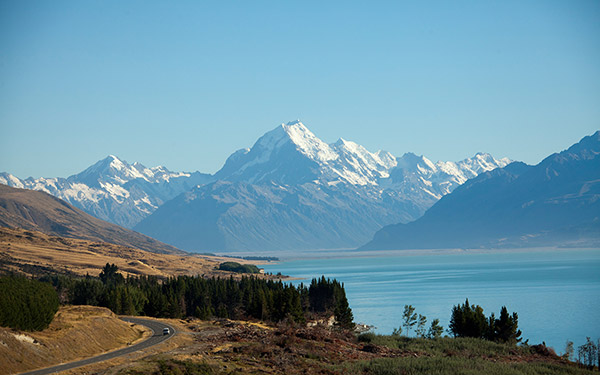
Aoranki Mount Cook, New Zealand
Mt Cook, the tallest mountain in New Zealand, helped Sir Edmund Hillary to develop his climbing skills in preparation for the conquest of Everest.
| |
|
Aoraki Mount Cook National Park is home of the highest mountains and the longest glaciers. It is alpine in the purest sense - with skyscraping peaks, glaciers and permanent snow fields, all set under a star-studded sky.
According to Ngāi Tahu legend, Aoraki and his three brothers were the sons of Rakinui, the Sky Father. While on a sea voyage, their canoe overturned on a reef. When the brothers climbed on top of their canoe, the freezing south wind turned them to stone. The canoe became the South Island (Te Waka o Aoraki); Aoraki and his brothers became the peaks of the Southern Alps.
| |
|
Mountaineers regard the area to be the best climbing region in Australasia, while less skilled adventurers find plenty of satisfaction with the mountain walks that lead to alpine tarns, herb fields and spectacular glacier views. Encounters with cheeky kea (mountain parrots) are part of the fun.
At 27 kilometers in length, the mighty Tasman Glacier is a powerful piece of landscaping equipment. While it slowly carves the valley sides, it provides a landing place for small ski planes and helicopters. Surreal, milky lakes are a feature of the park - suspended, glacier-ground rock sediment makes the water opaque.
| |
WELLNESS: Plant Based Dietician | |
The elder of my good friend Lisa Martin's two girls, Charlotte, a trained dietitian, has made a difference in the lives of many who wish to eat a clean, fresh, and healthy natural diet. | |
The Ultimate Healthy Trader Joe's Shopping List (Updated for 2022!) With 90 Dietitian-Approved Food Items | |
Trader Joe’s is THE mecca for healthy, affordable food products, which is why dietitians (like me) love it. However, finding them while navigating the narrow aisles and sifting through millions of food products can be a bit overwhelming. But not any longer, with this ultimate healthy Trader Joe’s shopping list (updated for 2022) at your fingertips! | |
|
Healthy Trader Joe's Shopping List
Call me crazy, but I’d choose shopping at Trader Joe’s over DSW any day of the week. I feel like a kid in a candy store when I’m walking down the aisles of Trader Joe’s. You really can’t beat their low prices and wide variety of can’t-find-anywhere-else food items (hello, cauliflower gnocchi).
I took five, hour-and-a-half-long shopping trips to put together this healthy Trader Joe’s shopping list. Did I get stares (more like glares) as I took pictures of every single food item in this post. Yes. Did I care? Also, yes. But still, I carried on for you, my friend.
| |
KID'S CORNER: The Hula Hoop | |
FYI, did you know that people have been hula hooping since 3000 BCE? Ancient Egyptian, Greek, and Roman kids all enjoyed playing with this simple, but enduring toy. | |
Uncovering the History of the Hula Hoop | |
|
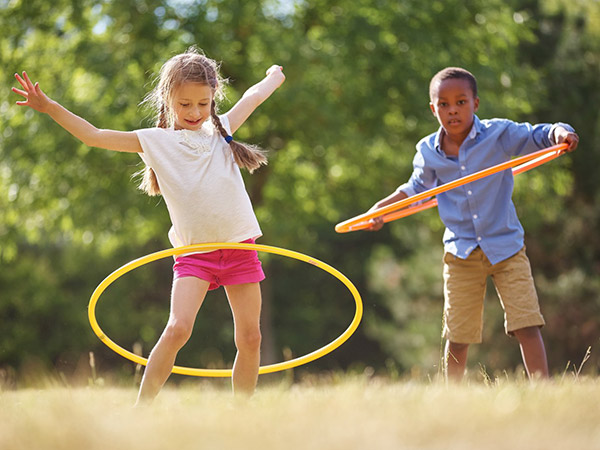
To me, part of being a mom is enjoying my kid’s toys as much as they do. My natural inquisitiveness leads me to wonder where a lot of these toys come from. And recently I looked at the Hula Hoop. Conventional lore holds that the hula hoop was first made by the Wham-O Toy Company. That’s only partially true: Wham-O was the first company to mass market their brightly colored plastic Hula Hoop in the United States.
So if the guys at Wham-O didn’t invent the hula hoop, where did it come from?
Actually, from many places. As far back as 3000 BCE Egyptians were curving reeds and rattan into circles. These hooped circles were swung around the waist, pushed along the ground by a stick or thrown in the air. In Greece grapevine hoops were used not just for toys but as exercise equipment for those not strong enough to handle a harder workout - or for those who were a bit too snug in their toga. Later, both Greek and Roman children played with hoops made from strips of scrap metal.
| |
BIG KID'S CORNER: The Hula Hoop Works for Adults Too | |
|
The Fun Fitness Benefits of Doing a Hula Hoop Workout
The hula hoop is more than just a toy — it's also a super fun exercise tool. Here's how (and why) to start adding a hula hoop workout into your fitness routine.
| |
From: Shape, By: Gabriella Kassel, May 12, 2021 | |
|
It's likely that the last time you swirled a hula hoop around your hips was on the middle school playground or your backyard when you were like 8 years old. Basically, for most folks, the hula hoop screams #TBT, #90skid, and #nostalgicAF.
But much like the varsity jackets and chunky sneakers of the 90s, the hula hoop is making a comeback — and it's reinventing itself as a sassy piece of fitness equipment. Yes, really! Below, fitness experts explain why everyone should be hula-hooping their hearts out, as well as tips for how to hula hoop for fitness (and fun!).
| |
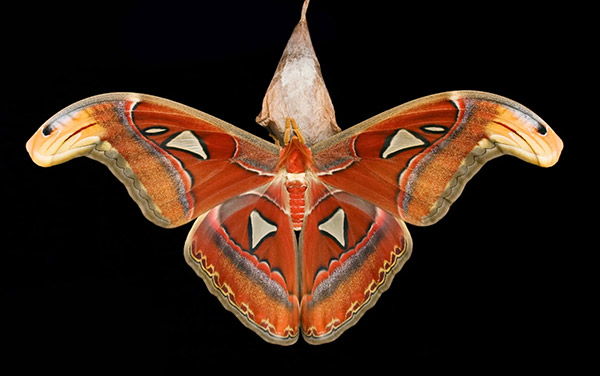
This week we've chosen to feature the Atlas Moth, which has recently appeared in the continental US for the first time. Look for more moth reports in future issues. | |
|
One of the world's largest moths detected for the first time in U.S., officials say
The moth, with a wingspan of 10 inches, was spotted in Washington state.
| |
From: NBC News, By: By Elisha Fieldstadt, August 18, 2022 | |
|
A moth with a wingspan of 10 inches has been found in the U.S. for the first time, according to the Washington State Department of Agriculture, which is asking residents to report further sightings.
The atlas moth — considered one of the world's largest moths — was first reported to the state agency by a University of Washington professor last month. It was seen in Bellevue, a large suburb of Seattle.
The moth was sent to the U.S. Agriculture Department, which identified it as an atlas moth. It is believed to be the first detection of the moth in the U.S.
| |
PHILANTHROPY: World Central Kitchen | |
My friend Lizette Corro, who I'm now traveling with, suggested you all might be interested in learning more about the World Central Kitchen. It’s quite a kitchen and it serves the hungry and distressed worldwide. When there's a crisis, you can expect the World Central Kitchen to be among the first to arrive with help. | |
|
WCK is first to the frontlines, providing meals in response to humanitarian, climate, and community crises. We build resilient food systems with locally led solutions.
World Central Kitchen started with a simple idea at home with my wife Patricia: when people are hungry, send in cooks. Not tomorrow, today.
| |
|
Everyone knows that food is central to life and family all over the world. What we learned very quickly was that food is even more essential in a crisis.
It all began in 2010 after a huge earthquake devastated Haiti. Cooking alongside displaced Haitians in a camp, I found myself getting schooled in how to cook black beans the way they wanted: mashed and sieved into a creamy sauce.
You see, food relief is not just a meal that keeps hunger away. It’s a plate of hope. It tells you in your darkest hour that someone, somewhere, cares about you.
| |
|
This is the real meaning of comfort food. It’s why we make the effort to cook in a crisis.
We don’t just deliver raw ingredients and expect people to fend for themselves. And we don’t just dump free food into a disaster zone: we source and hire locally wherever we can, to jump-start economic recovery through food.
After a disaster, food is the fastest way to rebuild our sense of community. We can put people back to work preparing it, and we can put lives back together by fighting hunger.
Cooking and eating together is what makes us human.
| |
CULTURE: National Museum of Mongolia | |
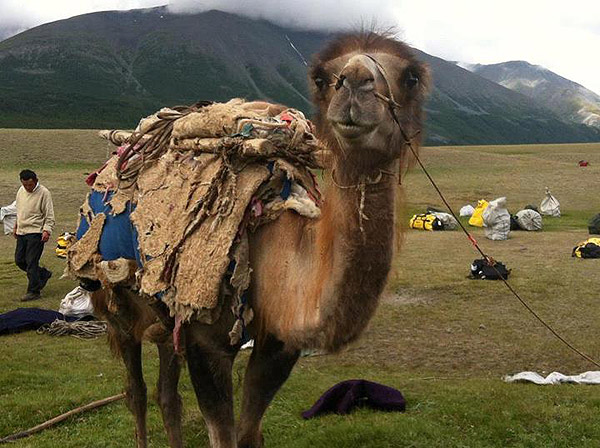
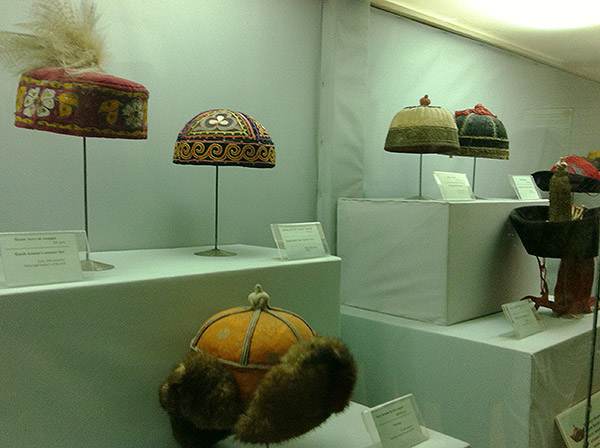
One of the most amazing museums in the world is the National Museum of Mongolia in Ulaanbaatar, Mongolia. Visiting this museum was a momentous day for me. I'm still in awe of the exhibits that I saw there. I was particularly struck by the attention to detail in the costumes and jeweler. The pictures below are from my visit. The camel was my personal porter and carried my bags. | |
National Museum of Mongolia | |
|
History
A brief history of the National Museum of Mongolia, Mongolia’s first museum was opened to the public in 1924. The collections started at that time were for a national museum, whose building no longer exists. In the socialist period, all collections of historical, ethnographical, natural history and paleontological were housed in the building of the State Central Museum, which was built in 1956. Between the late 1980s and early 1990s, Mongolia began to transform toward democratic policies and an open-market economy and as a result of those changes, the management of museums was redeveloped and some earlier museums were reopened.
| |
In 1991, the National Museum of Mongolian History was established by merging the collections of two museums: the State Central Museum and Museum of Revolution. In 2008, the National Museum of Mongolian History was elevated in status to a national museum hence our current name. The present building of the National Museum of Mongolia was built in 1971, when it was constructed as the Museum of Revolution. A significant responsibility for preserving Mongolian cultural heritage lies with NMM. On display are historical, ethnographical and cultural objects ranging from Mongolia’s ancient past, dating back to around 800 000 years ago, to the end of the 20th century, allowing the public cultural and educational opportunities to experience first-hand how Mongolians lived in historical times. | |
|
“More smiling, less worrying. More compassion, less judgment.
More blessed, less stressed. More love, less hate.”
Roy T. Bennett
| |
SUBSCRIPTIONS & PAST ISSUES | |
If you have friends that would like to subscribe to The Flock, or if a good friend forwarded this to you and you would like to subscribe, you can do so at the link below. | |
If you have questions related to autoimmunity or other health concerns, and you want my fingers to do the walking for you, don't hesitate to contact me by email or private text at 520-808-3699. | | |
|
Feel free to forward this email to a friend. If this was forwarded to you and you would like to receive your very own Flock Newsletter, you can sign up here. If you have any questions or suggestions for future flock resources, don't hesitate to contact me.
Your fan and friend,
Beth
| | |
The information and materials contained or referenced in this newsletter are for informational purposes only and not intended to be a substitute for professional medical advice, diagnosis, or treatment. Always consult a physician or other qualified medical professional with any questions you may have regarding a medical condition or treatment and before beginning a new health care regimen. Do not disregard professional medical advice or delay seeking medical advice or care based on anything contained in this newsletter. | | | | | |