REMINDER: YOUR SUBMISSIONS ARE ENCOURAGED | | |
1. Bindu's Corner: Bindo helps us start 2026 with two new quotes for your consideration.
2. National Bird Day: I couldn't call this newsletter the Flock if I forgot to mention National Bird Day.
3. Libraries: I have an infographic of eleven historic libraries around the world that you can still visit today.
4. Real Estate: Flipping houses is not as simple and profitable as it seems on cable TV. The Wall Street Journal recently examined the real economics of house-flipping.
5. Reaching High: In the early 1980s, climbers in the Canadian Rockies pioneered the sport of ice climbing frozen waterfalls.
6. Trekking: I have a follow-up on Karl Bushby's 27-year trek around the world. This time, we get the story of his epic expedition from his mother, who waits for his return home this coming September.
7. Artificial Intelligence: I first want to provide a comprehensive overview of AI frameworks and libraries from DataCamp that should prove useful to students planning to enter the tech job market.
8. Flock Families: I have an update from long-time Flock friends, the Shroff-Hargis family, with highlights from 2025.
| | Now, to this week's Flock. | | |
I hope you will pick and choose, and enjoy your reads.
Please feel free to share the Flock.
| |
1. Bindu's Corner: Thoughts for the New Year
| | Thank you, Bindu, for these words of advice to contemplate as we start the new year. | | |
Knowledge decides what to say.
Skill decides how to say.
Attitude decides how much to say.
Wisdom decides whether to say or not.
Say wise words.
| |
2. National Bird Day, January 5, 2026
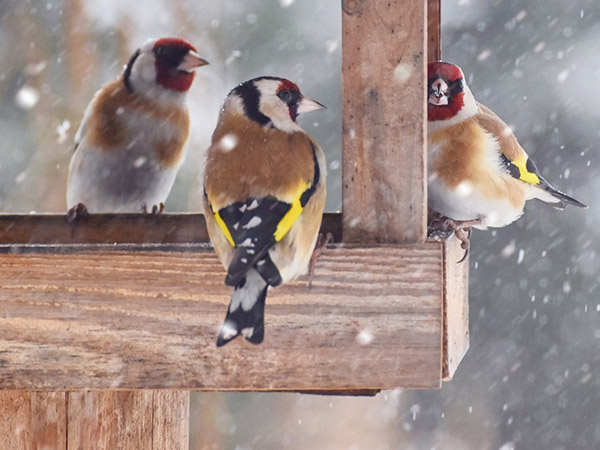
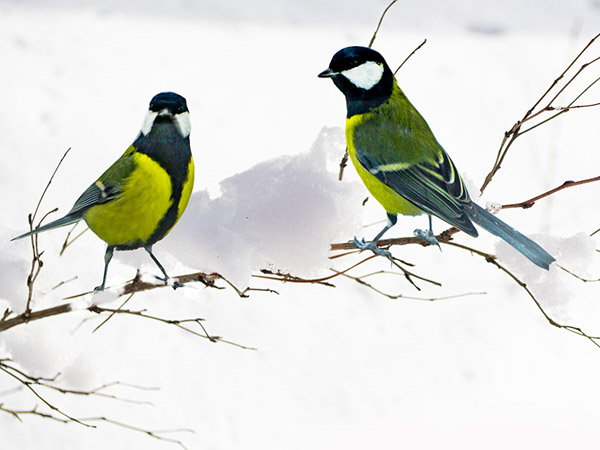
| | This coming Monday, January 5th, is National Bird Day. Here are some ways that you can help our avian friends through the winter and celebrate the day. | | 5 Ways to Celebrate National Bird Day | | |
National Bird Day, celebrated each year on January 5th, is the opportune moment to reflect on the wonders of our feathered friends and acknowledge the challenges they face in our rapidly changing world.
From the vibrant cardinals in your backyard to the pigeons gracefully navigating city parks, birds captivate us with their presence. Unfortunately, many birds are endangered or protected primarily due to habitat loss. Recognizing this, the Avian Welfare Coalition established National Bird Day in 2002 to shed light on the challenges birds face and inspire positive change in our relationship with them.
This National Bird Day, let's explore 5 meaningful ways to celebrate:
-
Create a Backyard Sanctuary: Add birdhouses and birdbaths to attract a diverse range of birds. Follow the WBFI guidelines to create a backyard sanctuary that welcomes our feathered friends!
-
Read a Bird Book: Explore birding books, birder memoirs, or a field guide can enhance your understanding of birds and their roles in our lives.
-
Feed the Birds: Share the bounty with our feathered friends. Seed cakes, Nyjer®, suet, Black Oil Sunflower, safflower seeds, and peanuts are small examples of food that you can put out. These resources are especially crucial in colder climates where supplemental food can contribute to birds’ survival.
-
Keep Cats Indoors: Owned and unowned cats that roam outdoors kill 2.4 billion birds a year in North America. This is a huge problem, but you can make an impact by keeping your cats indoors and working with shelters to control stray cat populations.
-
Admire the Birds: Join the ranks of birdwatchers and discover a fulfilling hobby that connects you to the delicate balance of our world. Participate in citizen science efforts such as eBird or connect with your local Audubon society for other birder events.
| |
3. Libraries: Historic Public Libraries
| | It is so convenient now to just reach for your phone or laptop when you want to research something. The online experience pales in comparisson to that of an actual library. Great libraries carry a weight of presence and purpose much like that of a grand museum or hallowed sanctuary. These libraries below represent some of the great centers of knowledge from history and are all still open and accessible today. | | 11 Public Libraries Invaluable to World History | | From: Oldest.org, By: Pratik Patil, March 18, 2025 | |
Libraries around the world have long been revered as temples of human knowledge. They’ve been a part of monasteries, royal palaces, museums, universities and even hospitals. Some boast an incredibly romantic past while others, like the Library of Alexandria, were destroyed in war or purposely purged when rulers were replaced and governments fell. Many of these libraries have survived the trials of history and are home to some of the rarest collections that document cultures through the ages.
You don’t need to be a history buff or bibliophile to appreciate these incredible tributes to human knowledge. In fact, libraries around the world are also known for their incredible architecture and stunning beauty
| Libraries are still alive and well across the world, and while you may not be able to check out books at each of these locations, you can still visit their incredible learning halls and discover their stories. | |
4. Real Estate: Flipping Houses
| | For the past two decades, cable TV has aired numerous popular programs selling the dream of flipping homes for a quick, handsome profit, leading to a house-flipping boom in America. My husband, Michael, recommended this article from The Wall Street Journal that illustrates the true economics of house flipping and the challenges flippers face in today's markets, as the popularity of flipping houses for quick money wanes. | |
Why It’s a Tough Time for House-Flippers
It seems like a pretty easy way to get rich quick. But for every success story, there are many tales of flips gone bad.
| | |
You buy a house for $365,000. The interior reeks from top to bottom. It is infested with rodents. The whole place in a state of disrepair.
So how is it possible to sell it a few months later for a nearly $100,000 profit?
This is the economics of house-flipping, the tantalizing, get-rich-quick strategy that lures so many into real estate. The house above was the project of Paul Myers and Tanice Myers, who have flipped 500 single-family homes in Washington, Idaho and Indiana. With that seemingly hopeless house, they sunk about $135,000 and eight weeks into cleaning and renovation. The couple ended up selling it for $599,000.
For every success story, though, there are plenty of those with not-so-happy endings. Yes, you can make a killing. But also, lots could go wrong: Repairs can take longer than you predicted. The house has bigger, hidden problems that you missed. You misjudged the market, or it simply turned sour while you were renovating.
We’re in one of those tricky times now. Despite Fed interest-rate cuts, mortgage rates are still high. The national average on a 30-year fixed-rate mortgage is 6.28%, according to Bankrate. At the same time, the specialty lenders that house-flippers often use are getting choosier. Meanwhile, housing inventory is low, and costs are rising for material, labor and home insurance.
Heightening the problems, “there is increasing competition from institutional and foreign buyers, and it’s becoming harder to find good deals,” says Anthony Youngs, a real-estate consultant and house flipper in Marietta, Ga., who helps investors find properties to flip.
| |
5. Reaching High: Ice Climbing
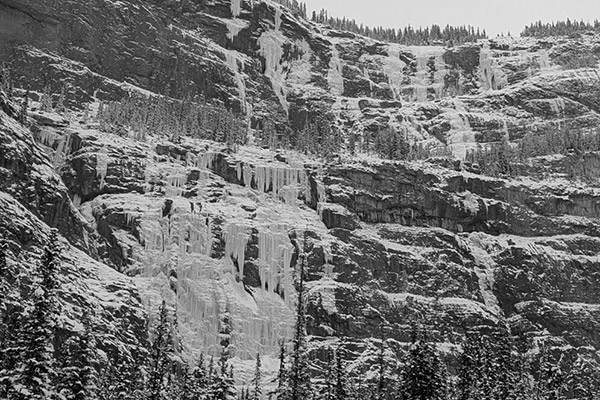
| | Gripped Magazine recently published this first-person account from the early days of ice climbing by Canadian climber, the late Marv Dean. Initially written in 1982 as an English class assignment. The essay paints a vivid and honest picture of a climbing discipline in its infancy. If you are a climber, please click through and read the full article. I promise you will enjoy it. | |
This 1982 Story Offers a Rare Look at Early Canadian Ice Climbing
An essay by the late Marv Dean about an adventurous February day in the Canadian Rockies at a time before ice climbing became a mainstream sport
| | From: Gripped Magazine, December 26, 2025 | This story was sent to us by Natalie Dean, who shared that her late husband, Marv Dean, wrote this essay about ice climbing in 1982 alongside now-legendary climber Jeff Marshall. The typewritten piece was originally created for an English 1110 class taught by Leila Sujar. Natalie also included several photographs, along with Marv’s climbing notes. Together, they offer a rare glimpse into the world of Canadian Rockies ice climbing more than 40 years ago. | |
Ice Dancing by Marv Dean
It is 5 a.m. on an iron cold January morning in Calgary. The weak winter sun will not appear for hours, but three sleepy figures are slowly loading packs into a grimy Ford window-van. The van’s exhaust hangs suspended in an unnaturally perfect billow. Sounds are amplified by the icy air, exaggerating the squeak of leather boots on frost-hardened snow and the harsh slam of a storm door. When the loading is completed the van grinds down the driveway, passes along unsalted back streets and bumps onto the Trans-Canada Highway, heading west away from the coming dawn.
The three passengers ride in total silence, one driving, two curled sleepily into nests of rucksacks and down-filled clothing. All three are climbers, more specifically, a rarefied new breed called ice climbers and their passion is the newest and perhaps the most beautiful of all the high-risk sports. By first light the climbers, Matt Groll, 23, Jeff Marshall, 21, and Marvin Dean, 20, are 110 miles up the Banff-Jasper Highway. Their destination is the Weeping Wall, a 600-foot vertical cliff hung with sheets of lacy wedding-cake icicles that is bisected by a road map of firm pale blue ice. They will climb this centre blue ribbon using special crampons attached to their boots like cat’s claws and razor-sharp axes with drooped picks that, if used properly, lodge in the ice like nails driven into oak.
Each climber this day will carry $975 of gear to facilitate the long climb up the frozen waterfall, but even with the sophisticated equipment, distances that usually take seconds to cover will stretch into hours. For ice climbing is definitely not a spectator sport; nor do its devotees climb because it is beautiful or good fun. They do it because it is difficult – very difficult.
| |
6. Trekking: Karl Bushby Update
| | Back in November, I posted the story of Karl Bushby, who is expected to complete his 27-year walk around the world this coming September. This week, I have an interview with his mother, who has waited patiently for his return to their family home in Hull, England, having seen her son only three times since 1998. | | Mum's 27-year wait for global explorer to come home | | From: BBC, By: Kevin Shoesmith, December 29, 2025 | | |
Twenty-seven years ago, Karl Bushby left Hull to walk 36,000 miles (58,000km) around the world. In September 2026, the former paratrooper hopes to return to his home city where his mother, who he describes as his number one fan, will be waiting.
"I'll be here," says Angela Bushby, 75, scanning the room, which holds precious memories.
"I won't be at the Channel Tunnel. I'll be here, in Hull, waiting for him to walk through that gate, and once I've given him a hug I'll tell him, '...and what time do you call this, Karl?'"
Angela's son, Karl, left Chile in South America on 1 November 1998, with the aim of walking home, without using any transport; an expedition he thought would take 12 years.
Geopolitics, war and difficulty securing visas has stunted progress, but now, about to enter Austria, Karl and his family back home are preparing for the homecoming.
| |
7. Artificial Intelligence: AI Frameworks and Libraries
| | Artificial Intelligence (AI) is becoming an important tool in more and more industries, and an essenntial skill for young professionals entering the tech job market. This week, I have a comprehensive overview of AI frameworks and libraries friom DataCamp. |
The Top 16 AI Frameworks and Libraries: A Beginner's Guide
Explore the best AI frameworks and libraries and their basics in this ultimate guide for junior data practitioners starting their professional careers.
| From: DataCamp, September 29, 2023 | |
Artificial Intelligence has become essential for software development in today’s rapidly evolving tech landscape. It enables applications to perform tasks that were once considered the exclusive domain of humans, such as understanding and generating human language, recognizing patterns in data, and making intelligent decisions. From chatbots and recommendation systems to image recognition and natural language processing, AI is transforming how we build software.
As a junior data practitioner with a solid technical foundation, you might wonder how to harness AI’s power effectively. That's why this guide will explore why and how to choose AI frameworks, what frameworks and libraries you should explore, and many other essentials.
Why Choose an AI Framework?
These days, developers rely on corresponding frameworks and libraries more and more to save money, time, and resources while creating AI-driven software. Let’s consider what AI frameworks and libraries are — a collection of pre-built tools and resources that simplify the process of building applications on the basis of Artificial Intelligence. These frameworks provide a foundation for implementing machine learning and deep learning algorithms, making it easier to develop intelligent software.
Now, let’s discover more about why AI frameworks are used for boosting software development flow.
They are cost-effective for IT companies
AI frameworks provide businesses with a cost-effective way to develop custom software applications. By eliminating the need for manual coding and allowing developers to use pre-built components, frameworks can significantly help businesses reduce their development costs. Using frameworks also allows businesses to quickly build sophisticated applications tailored to their specific needs. By leveraging AI and ML power, companies can develop more efficient software solutions than traditional software development methods.
They facilitate app development flow
When selecting frameworks, it's important to consider their ability to streamline the development process. These frameworks come with pre-implemented algorithms, data handling utilities, and optimization techniques, which enable developers to focus on solving the specific problem at hand rather than getting caught up in the technicalities of AI implementation.
They are a time-saving opportunity
AI frameworks are a tremendous timesaver for modern software development because they simplify creating, testing, and deploying applications. They also provide a complete development environment with debugging tools, testing harnesses, and data visualization capabilities. This speeds up the development process as developers can act quickly without having to manually compile and debug each section of their code. Additionally, AI frameworks offer a wide variety of pre-built models.
These are the most common reasons for implementing AI in business from the very steps of software development for enterprises. Now, let’s consider the key factors when choosing an Artificial Intelligence framework for an IT project.
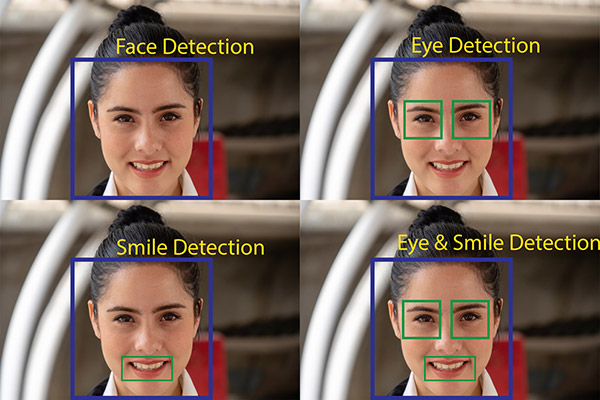
| AI technology has become so advanced in the field of image and video creation that creators with a modest investment in software and equipment can produce strikingly realistic photos and videos, sometimes malicious in nature and at other times simply aimed at generating social media traffic with content that is too good to be true. | Determine Credibility (Evaluating) Deepfakes | |
What are deepfakes?
Deepfakes are phony audio or videos manipulated by Artificial Intelligence (AI) technology. It isn't just photoshop or face swapping-- deepfakes are used to make individuals appear as though they are doing or saying something they never did.
| How to spot deepfakes and AI-generated images | |
Spotting Deepfakes
Identifying deepfakes can be challenging without the assistance of emerging technologies. When watching a video that seems suspicious, follow this advice from MIT Media Lab:
- Pay attention to the face. High-end DeepFake manipulations are almost always facial transformations.
- Pay attention to the cheeks and forehead. Does the skin appear too smooth or too wrinkly? Is the agedness of the skin similar to the agedness of the hair and eyes? DeepFakes are often incongruent on some dimensions.
- Pay attention to the eyes and eyebrows. Do shadows appear in places that you would expect? DeepFakes often fail to fully represent the natural physics of a scene.
- Pay attention to the glasses. Is there any glare? Is there too much glare? Does the angle of the glare change when the person moves? Once again, DeepFakes often fail to fully represent the natural physics of lighting.
- Pay attention to the facial hair or lack thereof. Does this facial hair look real? DeepFakes might add or remove a mustache, sideburns, or beard. But, DeepFakes often fail to make facial hair transformations fully natural.
- Pay attention to facial moles. Does the mole look real?
- Pay attention to blinking. Does the person blink enough or too much?
- Pay attention to the size and color of the lips. Does the size and color match the rest of the person's face?
Try it out! Can you Detect Fakes?
Remember that even if you can't identify whether the video is a deepfake just by watching it, you can use SIFT to find out more information and determine if the video is trustworthy.
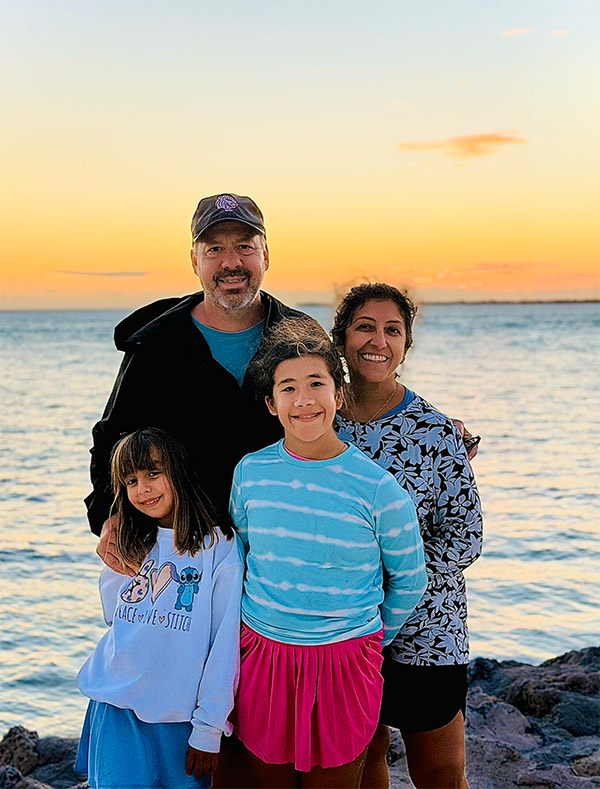
| | 8. Flock Families: 2025 Highlights from the Shroff-Hargis Family | | This time of year, everybody is still thinking of New Year's resolutions and things they need to improve in their lives. It has occurred to me that instead of concentrating on what we feel needs improvement, it might be healthier to look back at the past year and focus on what we accomplished and feel good about. I came to this revelation after reading these Shroff-Hargis family highlights from 2025. The last Time the Flock was visited by the whole Shroff-Hargis family was back in October, when they were dressed in their best to celebrate Diwali. As always, thank you so much, Divya. | | Here is our Shroff-Hargis Update: | | |
Janaki: 5th grade, played multiple parts in Finding Nemo Jr, loving being on the golf and swim teams, wants to be an art teacher - spent fall break taking amazing digital pictures of NYC, enjoys singing and piano
Nithya: 2nd grade, perfecting her tiny creative clay creations - spent fall break at Legoland for inspiration, reading chapter books voraciously at the dinner table, giving her Barbies full makeovers to be the next generation of Huntrix warriors, playing guitar/ ukulele/ piano
Divya: embracing her new decade of life by trying new opportunities - becoming the inaugural Vice Chair of Clinical Affairs for Belmont University’s Frist College of Medicine and advising HealthStream as Physician Executive
Matthew: has officially named himself as the “Solutionist” for the family - his major success of the year was Divya ending her sabbatical of home optimization - and co-launched a new venture called Nashville Property Maintenance
We wish you peace, joy, and love in 2026.
| | These Flock regulars are always here for you: | | Don't Be Shy: Share Your Stories! | | I'm looking forward to sharing more of your personal stories - oral, written, or otherwise, as we enter our third year. I'd so love to present them to The Flock, hit a mailbox below to share your story. | | Subscriptions & Idea Submissions
Reminder: Your submissions are always welcomed. | | |
Feel free to forward this email to a friend. If this was forwarded to you and you would like to receive your very own Flock Newsletter, you can sign up here. If you have any questions or suggestions for future Flock resources, don't hesitate to contact me.
Your fan and friend,
Beth
| | | The information and materials contained or referenced in this newsletter are for informational purposes only and not intended to be a substitute for professional medical advice, diagnosis, or treatment. Always consult a physician or other qualified medical professional with any questions you may have regarding a medical condition or treatment and before beginning a new health care regimen. Do not disregard professional medical advice or delay seeking medical advice or care based on anything contained in this newsletter. | | | | |