|
1. I'm starting off this week with a nod to Asian American and Pacific Islander Heritage Month and some insight into the role that green sea turtles, or "Honu" play in Polynesian and Hawaiian culture. I spent some very special years on the Big Island of Hawai'i and always felt both thrilled and blessed to spot a Honu sharing a swim with me.
2. Dr. Fox has shared a recent post from his blog with us this week. It's been a couple of months since I last posted something from Dr. Fox; I'm glad to be getting him back into the rotation.
3. May's full moon, the Flower Moon, is coming up next Thursday. I have some information from The Old Farmer's Almanac on that, as well as a couple of other celestial objects to look for while you're enjoying the moon.
4. The start of the Everest summitting season has been challenging to say the least. My heart goes out to the sherpa who passed away at camp III and to the two Mongolian climbers lost on their summit attempt earlier this month.
5. Archaeologists have used new technology to peer through dense vegetation and found a previously lost ancient civilization in the Ecuadorian Amazon.
6. In this week's Bragging Rights, I'm going to brag on and catch up with the Crimmel sisters, Zoe and Ana.
7. This week's Atrtist's Corner features Fran Bull, a painter, printmaker, sculptor, performance artist, writer, and teacher. Fran was a grade school classmate and is still a bestie friend of my husband Michael.
8. In Gardening, I have some suggestions for fast-growing perennials suitable for readers who don't live in the Southwest.
9. In the Book Corner, we have a title that includes the collected articles of acclaimed travel writer Don George.
10. In the Pet's Corner this week, we have the story of Miles, a cattle dog-border collie-lab-hound mix that no one wanted, who went from the shelter to competing in the Westminster Dog Show thanks to a little love and patience from his adoptive human mom.
| |
Now, to this week's Flock. | |
1. PACIFIC ISLANDS: Sea Turtles in Hawaiian Culture
| |
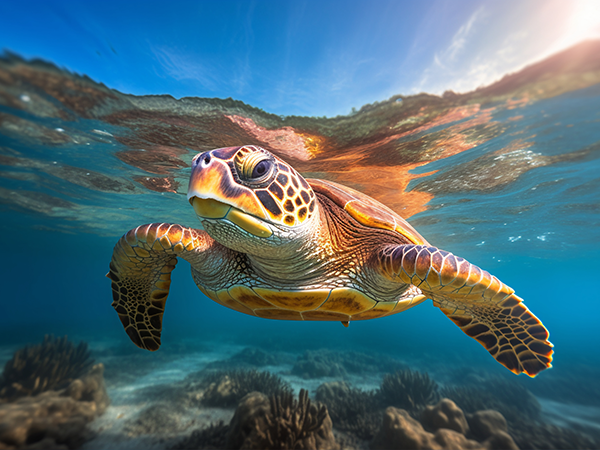
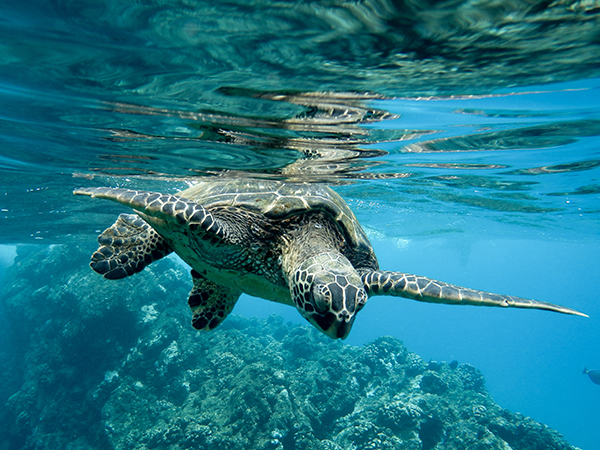
In celebration of Asian American a Pacific Islander Heritage month, I want to share some culture and tradition from Hawaii that is important to me. I lived on The Big Island of Hawai'i for many years, not far from the bed and breakfast our first item comes from. Green sea turtles, referred to as "Honu" in Hawaii, are the most common of the three native species of sea turtles in the islands. The Honu, represents longevity, strength, and resilience, and has been an important symbol to Hawaiian culture ever since the first Polynesian explorers settled on the islands. | |
The Hawaiian Honu – Symbol of Wisdom and Good Luck | |
|
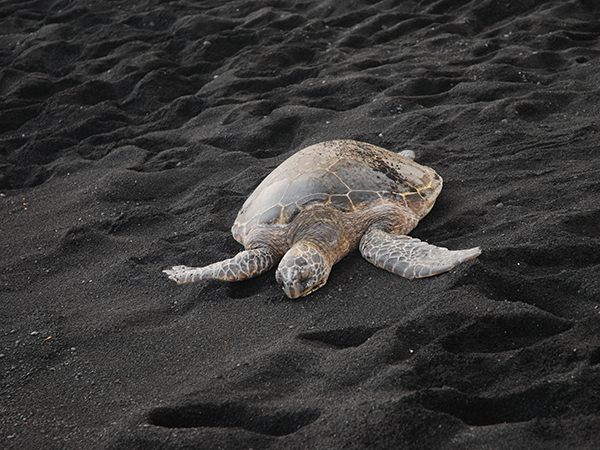
When snorkeling at Kahalu’u on the Big Island of Hawaii, or hiking the coastal trails at Kaloko–Honokohao National Historical Park north of Kona, you will likely be graced by the presence of the Hawaiian Honu, or Green Sea Turtle (Chelonia mydas). Green sea turtles are the only sea turtles known to bask or sunbathe and Hawaii is the only place in the world where green sea turtles regularly bask on shore.
Thought to live between 60 and 80 years, the Honu is a symbol of longevity, safety, and mana (spiritual energy) in Hawaiian culture and their presence brings good luck and peace. The Honu is considered a form of ‘aumakua or ancestral spirit offering lifelong protection, wisdom and guidance. Honu are depicted in ancient Hawaiian petroglyphs, artwork and mythology and represent the eternal link between man, land and sea.
| |
The Significance of Sea Turtles in Hawaiian Culture | |
|
Sea turtles have always been an integral part of Hawaiian culture. They are seen as a symbol of strength and resilience, and their presence in the ocean is believed to be a sign of good luck. But beyond being revered for their symbolic value, sea turtles also play an important role in Hawaiian ecology and economy...
The Role of Sea Turtles in Ancient Hawaiian Mythology
Sea turtles have long been a central figure in Hawaiian mythology, and their presence was believed to bring good fortune and blessings. In ancient Hawaiian culture, they were seen as symbols of strength and bravery and were thought to protect the gods of both land and sea. In Hawaiian legends, the god Ku was said to take the form of a turtle and bring protection from evil spirits. He became known as the God of War because he could turn his shell into a shield. The shell of a turtle is also significant in Polynesian culture, particularly for its association with fertility and new beginnings. Other legends tell that when the deity Kanaloa needed to be among people, they would assume the shape of an Honu. Another legend tells a story of a green turtle named Kailua who assumed the form of a young girl to protect the children of Hawaii.
| |
Kauila
Hawaiian Turtle Goddess
| |
|
Hawaiian legend, as reported by historian Mary Kawena Pukui, tells the story of a mystical sea turtle named Kauila, born on the black sandy shores of Punalu'u, in the district of Ka'u on the Big Island of Hawaii. Kauila was born the daughter of two supernatural sea turtles, the mother named Honupo'okea and the father named Honu'ea. Honupo'okea came out of the ocean to give birth to a very special egg, the color and shape similar to a piece of kauila wood. She buried her special egg in the sand to be warmed by the Hawaiian sun until ready to hatch. Before returning to the sea, Honupo'okea and Honu'ea used their flippers to dig deep into the earth forming a fresh water pond near their precious nest.
After a time, Honupo'okea returned to the black sandy beach to wait for her special egg to hatch. Soon the egg cracked open and a beautiful baby turtle emerged - dark and glossy, like kauila wood. Mother and daughter made their way to the fresh water pond to live until Kauila was old enough to be on her own.
Kauila made Punalu'u her home and would often rest at the bottom of the fresh water pond. The air bubbles from her breath would rise to the top of the pond delighting the children of Ka'u. Kauila loved all children and would sometime change herself into a little girl so that she could play with and watch over the children on the black sandy shores. The people of Ka'u cherish Kauila for her fresh water pond that gave them drinking water and for ensuring the safety of their children.
| |
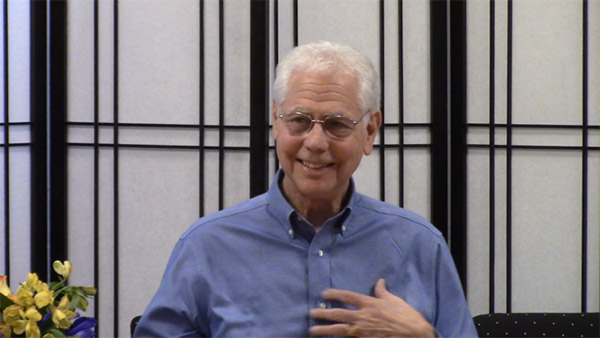
2. Hayward M. Fox, Ph. D.: New From Dr. Fox's Blog
| |
It's been a little while since we've checked in with Dr. Fox. Here's a recent post from Dr. Fox's blog. | |
3. THE HEAVENS: The Flower Moon
| |
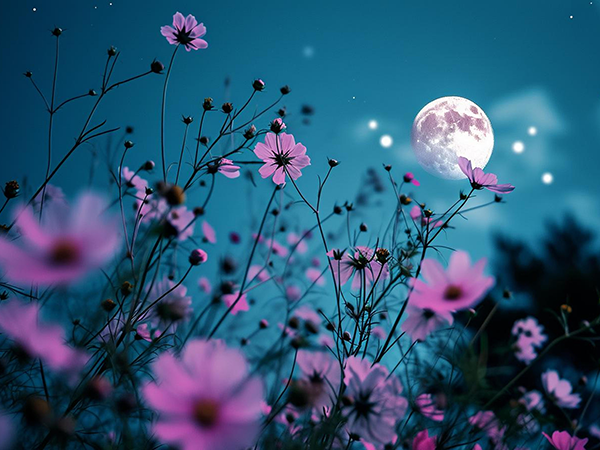
May's full moon, the Flower Moon is coming up next Thursday the 23rd. If you look up to see the moon waxing toward full on the night of Monday May 20th, you will notice the star Spica, the brightest star in the constellation Virgo, sitting just off the top right quadrant of the moon. On the evening of May 24th you can witness the star Antares, of the constellation Scorpius, emerge from behind the moon (a lunar occultation), also in the top right quadrant of the moon. | |
Watch the Full Flower Moon Bloom! | |
|
May’s Flower Moon name should be no surprise; flowers spring forth across North America in abundance this month!
- “Flower Moon” has been attributed to Algonquin peoples, as confirmed by Christina Ruddy of The Algonquin Way Cultural Centre in Pikwakanagan, Ontario.
- May’s Moon was also referred to as the “Month of Flowers” by Jonathan Carver in his 1798 publication, Travels Through the Interior Parts of North America: 1766, 1767, 1768 (pp. 250-252), as a likely Dakota name. Carver stayed with the Naudowessie (Dakota) over a period of time; his expedition covered the Great Lakes region, including the Wisconsin and Minnesota areas.
- Henry David Thoreau sparked the Native American Moon names as well, referencing the Flower Moon and Carver when he wrote about Native Americans.
| |
4. REACHING HIGH: A Challenging Season on Everest
| |
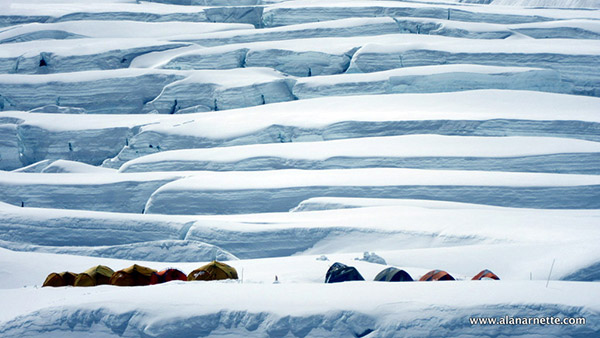
This year’s opening days of the Everest summiting season have been challenging. My prayers go out to the family of Lakpa Tenji Sherpa, who passed away at camp III earlier this month, and to the two Mongolian climbers who are now missing and presumed deceased after their push for the summit in severe weather conditions. | |
Everest 2024: First 8000er Death | |
|
We have the first death on an 8000-meter peak of the season; a Sherpa with Seven Summits Trek died while descending from Makalu’s summit. Teams are getting in position for Nepal side summits while more teams enter Tibet for Everest. Remember that both Cho Oyu and Shishapangma are closed to foreigners for climbing this spring.
First reported by Everest Chronicle, Lakpa Tenji Sherpa, 54, passed away at Camp III after saying he didn’t feel well. His fellow Sherpas were helping him descend. He was from Mahakulung in the Solukhumbu district.
| |
The two deceased Mongolian climbers. Photo: The Everest Chronicle | |
Two Mongolian Climbers Missing on Everest | |
From: Explorersweb, By: Angela Benavides, May 14, 2024 | |
Once again, climbers are going missing above 8,000m on Everest in the middle of summit waves. Two Mongolian climbers disappeared after leaving Camp 4 for the summit. They were climbing without supplementary oxygen or sherpa support.
Usukhjargal Tsedendamba and Prevsuren Lkhagvajav last made radio contact with Base Camp as they left Camp 4 at 7:30 pm on Sunday. They planned to reach the summit the following morning but never contacted Base Camp again.
The climbers, outfitted by 8K Expeditions, had hired only Base Camp services and some bottles of O2 that they did not intend to use.
“They were confident about their skill and strength, they told us that they were professional climbers and needed no sherpa support,” 8K Expeditions CEO Lakpa Sherpa told The Everest Chronicle. “We even offered them our guides for free, but they turned down the request.”
| |
5. ARCHAEOLOGY: Amazon Discovery
| |
Scientists found evidence of 6,000 mounds thought to be the basis for ancient homes | |
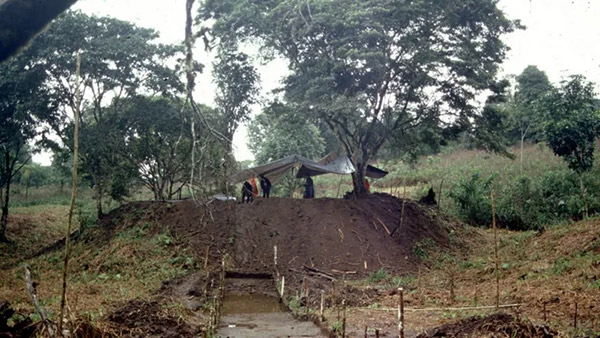
Archaeologist conducting aerial surveys using LiDAR radar, which can see through the dense forest canopy have discovered a vast and ancient city in the Ecuadorian Amazon rainforest. | |
Huge Ancient Lost City Found in the Amazon | From: BBC, BY: Georgina Rannard, January 11, 2024 | |
|
A huge ancient city has been found in the Amazon, hidden for thousands of years by lush vegetation.
The discovery changes what we know about the history of people living in the Amazon.
The houses and plazas in the Upano area in eastern Ecuador were connected by an astounding network of roads and canals.
The area lies in the shadow of a volcano that created rich local soils but also may have led to the destruction of the society.
While we knew about cities in the highlands of South America, like Machu Picchu in Peru, it was believed that people only lived nomadically or in tiny settlements in the Amazon.
"This is older than any other site we know in the Amazon. We have a Eurocentric view of civilisation, but this shows we have to change our idea about what is culture and civilisation," says Prof Stephen Rostain, director of investigation at the National Centre for Scientific Research in France, who led the research.
| |
6. BRAGGING RIGHTS: Catching Up with Zoe and Ana Crimmel
| |
Where in the World is Zoe? | |
|
This week, I want to brag a little bit about two sisters I have known since they were young entrepreneurs in Aspen Colorado. When I first met them, they were two gradeschool girls had their own pet sitting/training business that they started up and ran while not in school, or helping their family manage one of the best municipal tennis programs in Colorado at Aspen Tennis.
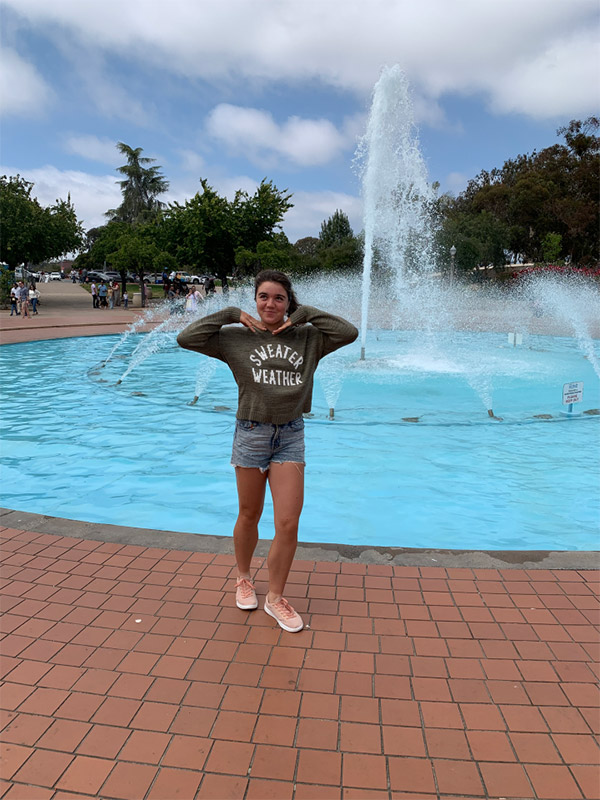
Over the past year, I've followed Zoe' collegiate and budding professional tennis career here at The Flock. Occasionally, I've shared a peek into her weekly blog, Where in the World is Zoe, now in its 51st week! I always enjoy reading Zoe's thoughts as she navigates her path through life and look forward to each week's insights.
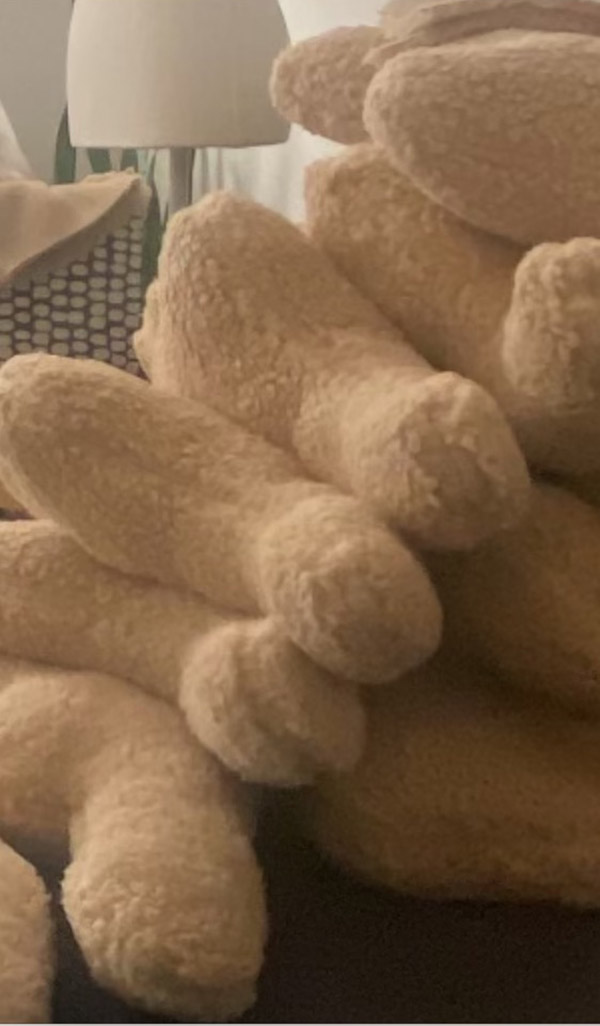
Zoe's sister Ana, a 4.5 GPA student in high school, is navigating her own collegiate path now. Ana practices tennis every day; it runs in the family. She's taking a full load of AP courses and is president of her school's Japanese honor society. Ever the entrepreneur, Ana has somehow carved out time to make stuffed toys and sell them at school events. This summer she will help her mom run the Aspen city youth and adult tennis programs.
| |
A pile from Ana's stuffed animal production line. | |
7. ARTIST'S CORNER: Fran Bull
| |
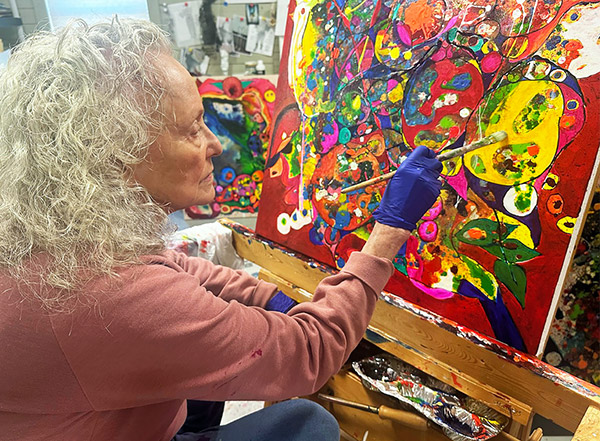
Fran Bull at Work in Studio in Brandon, Vermont, 2024. Photograph by Robert Black | |
Vermont artist Fran Bull has had a long and prolific artistic career mastering a wide range of media and genres, and continues to produce new works and expand her pallet. Fran was a grade school classmate of my husband Michael, and they continue to be lifelong friends. | |
Award-winning sculptor, painter and printmaker Fran Bull, has been exhibiting her work worldwide for over 30 years. Her art is included in numerous museum and university collections, ranging from the Museum of Modern Art in New York to the Guilin Museum in China. She makes her art in Brandon, Vermont, and Barcelona, Spain. | |
Fran Bull, Zodiac, 2024, acrylic on canvas | |
|
“Making art is my way of life, one I have pursued since childhood. Through art I am able to express my thoughts, concerns, visions and all that I am. I can indulge in the joys of drawing, painting, print making and sculpting, turning these activities towards the deepest and most serious ends as visual expressions. In an almost shamanic sense, I use the prima materia of my life as a resource for my art.”
– Fran Bull
| |
Mitchell • Giddings Fine Arts: Fran Bull | |
8. GARDENING: Fast-Growing Perennials
| |
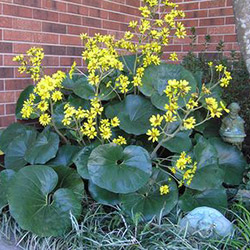
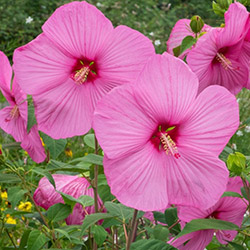
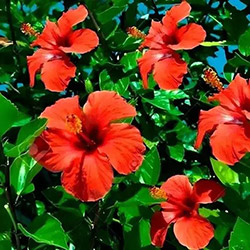
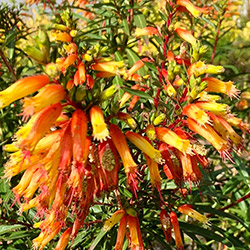
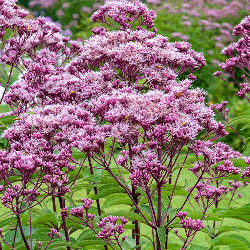
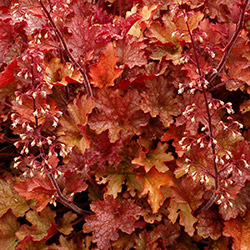
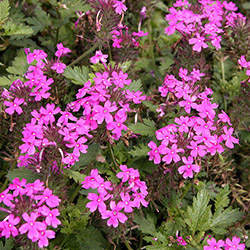
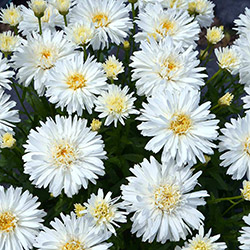
Not all of my readers live in the Southwest, so I wanted to include this article on fast-growing perennials that are more suitable for your gardens in the Northeast, Northwest and Midwest. | |
8 Fast-Growing Perennials To Plant In Your Garden | |
Gardening is a labor of love, but waiting for plants to grow and flourish can test anyone’s patience. If you’re eager to see results quickly, consider adding fast-growing perennials to your garden. In this article, we’ll explore eight stunning perennials that are known for their rapid growth and beautiful blooms. | |
9. BOOK CORNER: The Way of Wanderlust
| |
One of the things that many of us Flockers share is a love of travel and exploration. Don George has been the travel editor at the San Francisco Examiner, the San Francisco Chronicle, and Lonely Planet. He has had his writing published by National Geographic, the BBC, and Salon. The Way of Wanderlust: The Best Travel Writing of Don George is the first collection of his writing to be assembled into one volume. | |
The Way of Wanderlust:
The Best Travel Writing of Don George
By Don George
| |
As a professional travel writer and editor for the past 40 years, Don George has been paid to explore the world. Through the decades, his articles have been published in magazines, newspapers, and websites around the globe and have won more awards than almost any other travel writer alive, yet his pieces have never been collected into one volume. The Way of Wanderlust: The Best Travel Writing of Don George fills this void with a moving and inspiring collection of tales and reflections from one of America's most acclaimed and beloved travel writers. | |
10. PET'S CORNER: Miles' Comeback
| |
|
Miles, a seven-ish-year-old mixed-breed dog from Erie is competing in the
Westminster Dog Show's agility competition.
photo: Katie Carr
| |
Miles was a dog nobody wanted, now he's competing at Westminster. | |
This shelter mutt from Erie was returned numerous times. Now, he’s competing at the Westminster Dog Show | |
|
When you think of the dogs who compete in the Westminster Kennel Club Dog Show, you don’t usually think of mutts who were returned to the shelter numerous times before finding their forever home. But unlike Westminster’s main competition, the dog show’s agility competition isn’t about bloodlines and poise. It’s about speed, smarts, and the ability to navigate tricky obstacles.
Miles, a seven-ish-year-old cattle dog-border collie-lab-hound mix, has all those qualities and more, according to his owner, Chrstine Longnecker, a horseback riding instructor and animal communications specialist from Erie.
| |
Please share your photos, stories and thoughts. I'd love to present them in The Flock. | |
|
These Flock regulars are always here for you:
In coming weeks: we'll be sharing more investigative articles from our roving reporter William George, original writing from Flock favorite Dino DeConcini, and an update on the Marolt brothers' coming expedition to Argentina.
| |
Don't Be Shy: Share Your Stories! | |
I'm looking forward to sharing more of your personal stories - oral, written, or otherwise, as we enter our third year. I'd so love to present them to The Flock, hit a mailbox below to share your story. | |
Subscriptions & Idea Submissions | |
|
Feel free to forward this email to a friend. If this was forwarded to you and you would like to receive your very own Flock Newsletter, you can sign up here. If you have any questions or suggestions for future Flock resources, don't hesitate to contact me.
Your fan and friend,
Beth
| | |
The information and materials contained or referenced in this newsletter are for informational purposes only and not intended to be a substitute for professional medical advice, diagnosis, or treatment. Always consult a physician or other qualified medical professional with any questions you may have regarding a medical condition or treatment and before beginning a new health care regimen. Do not disregard professional medical advice or delay seeking medical advice or care based on anything contained in this newsletter. | | | | |