REMINDER: YOUR SUBMISSIONS ARE ENCOURAGED | | |
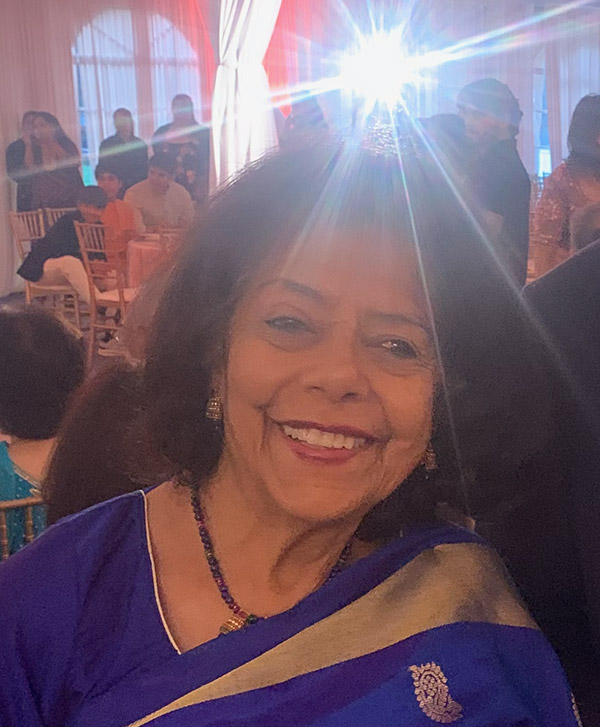
1. Bindu's Corner: We have a new collection of quotes to help inspire your perspective for the year ahead.
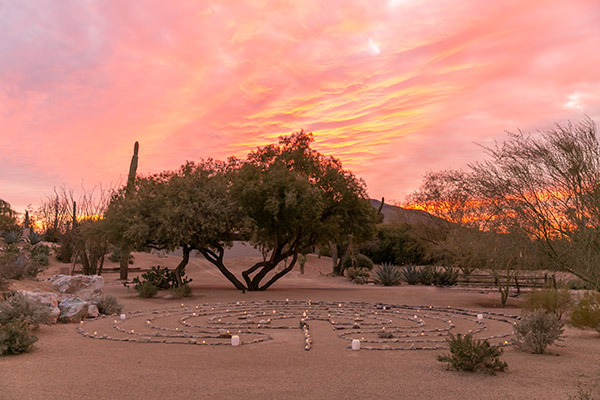
2. Travel: One of Arizona's greatest resort spas, Civana, just outside of Phoenix in Carefree, AZ, was selected by The New York Times as one of the best destinations for a Dry January retreat.
3. Holidays: Close to 1.5 billion people in India and another 35 million members of the Indian diaspora around the world will be celebrating the Indian mid-winter harvest festival, Makar Sankranti, next Wednesday, January 14th.
4. Reaching High: Gurkha veteran and double amputee, Hari Budha Magar has one peak left, Antarctica's Mount Vinson, to complete The Seven Summits.
5. Writer's Corner: A Senior Editor from Writer's Digest shares his favorite opening lines in poetry.
6. In Memoriam: Eva Schloss, Auschwitz survivor, half-sister of Anne Frank, and dedicated Holocaust educator, passed away January 5th.
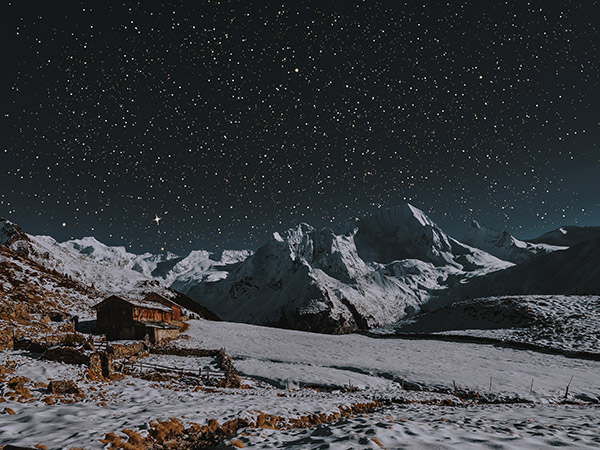
7. The Heavens: This weekend is your best chance to spot Jupiter since it's the brightest it will be all year.
8. Wellness: I just got the latest issue of Sensitive & Specific: The Testing Newsletter in my inbox. It's a fantastic issue full of medical breakthroughs.
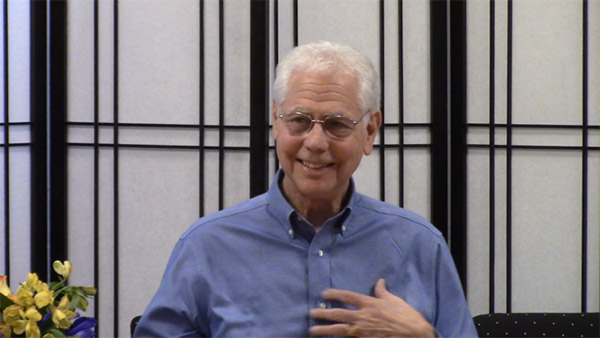
9. Hayward M. Fox, Ph. D.: I have a new pearl of wisdom from Dr. Fox's blog this week.
10. Bonus Video: A Larcenous Raccoon goes on a Bender
| | |
I hope you will pick and choose, and enjoy your reads.
Please feel free to share the Flock.
| | Now, to this week's Flock. | |
1. Bindu's Corner: Quotes for a New Year
| | This week, Bindu has curated a collection of quotes to help you start the new year. Thank you, Bindu. | | |
“The winds of God's grace are always blowing, it is for us to raise our sails.”
— Sri Ramakrishna
“Stand up , be bold , be strong! Know that you are the creator of your own destiny .”
— Swami Vivekananda
“What the new year brings to you will depend a great deal on what you bring to the new year.”
— Vern McLellan
“The new year stands before us, like a chapter in a book, waiting to be written.”
— Melody Beattie
“The future depends on what you do today.”
— Mahatma Gandhi
| |
2. Travel: Dry January at Civana
| | The New York Times recently featured six resort destinations to visit for Dry January, a wellness challenge where people abstain from alcohol for the first month of the year. In their list, they included a favorite resort of mine, Civana in Carefree, Arizona. I have featured Civana as a travel destination in the Flock before; it's a great place to escape cold winters and explore North America's most biologically diverse desert. |
6 Winter Destinations for a Spirited, but Dry, January
Evening pickleball, glacial ice plunges and mocktails galore are just some of the ways hotels are wooing travelers for Dry January.
| From: The New York Times, By: Amy Thomas, January 5, 2026 | |
A relatively new decision has become part of the travel calculus: to drink or not to drink.
According to a recent Gallup poll, 54 percent of Americans say they consume alcohol, down from 64 percent 10 years ago. That is the lowest level since Gallup began tracking alcohol consumption in 1939.
The decision to abstain is an even more pronounced one at the start of the year, thanks to Dry January, a movement in which participants give up drinking for the month. The popular sobriety challenge started over a decade ago in Britain and has picked up steam in the United States in recent years.
| |
Civana, a wellness resort that sits on 20 acres of Arizona’s Sonoran desert, has 144 rooms and suites with calming neutrals, earthy art and ceramics, and private patios and balconies. Beyond its elegant environment is an emphasis on balance and well-being. Recently, that has also come to encompass which drinks are served.
In January, Civana is introducing a mocktail version of its “Mindful Mixology” class. In the hourlong workshop ($59 per guest), a mixologist guides guests on practical techniques they can replicate at home with ingredients like fresh juices, herbs and nonalcoholic spirits.
Handcrafted zero-proof cocktails, along with alcohol-free wines and beers, are also offered at a regular “Happiness Hour.” Chrissy Skaggs, the resort’s director of food and beverage, noted that interest in the drinks has continued to rise.
| |
3. Holidays: Makar Sankranti
| | |
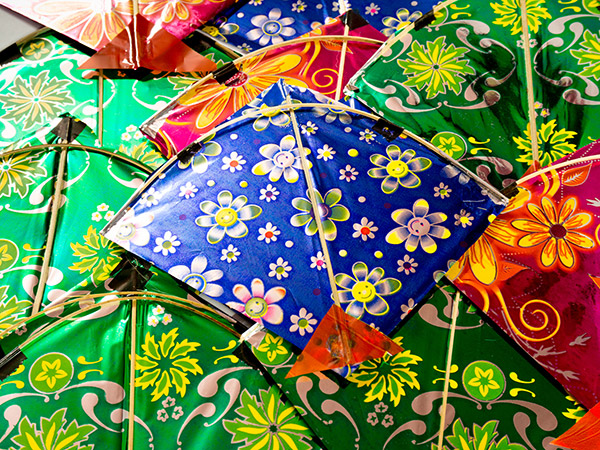
Makar Sankranti, the Indian harvest festival, is celebrated as the sun begins moving north after the solstice, marking the shift from spiritual darkness to light. The festival is celebrated across India in different ways, including kite festivals, acts of charity, outdoor fires, family and community bonding, and feasts featuring regional crops and sweets that celebrate the bounty of the harvest.
“As the sun begins its upward climb, may your spirits soar high like the vibrant kites in the sky. Shubh Makar Sankranti!”
| | Makar Sankranti: Meaning, History, Significance And How India Celebrates | | |
What is Makar Sankranti
At its heart, Makar Sankranti is a major Hindu festival with astronomical significance, making it one of the few Indian festivals that is observed on a fixed date (usually January 14th). Most traditional Hindu dates shift according to the Panchang’s lunar months; however, Sankranti is anchored to the solar transition known as Uttarayan. In its literal sense, ‘Sankranti’ describes the solar migration across the boundary between two different zodiac signs. There are 12 Sankrantis throughout the year, but ‘Makar Sankranti’ is the most important one. This day marks the moment the Sun enters the zodiac sign of Makara (Capricorn). It is significant for representing the post-solstice period, where the sun’s celestial path starts drifting back toward the north.
Uttarayan: The Dawn of Auspiciousness
The six-month period preceding Makar Sankranti is known as Dakshinayan (the Sun’s southward journey), which is traditionally considered a period of night for the Gods and is less auspicious for certain ceremonies. The start of Uttarayan is, therefore, considered extremely sacred and auspicious for new beginnings, charity (daan), and spiritual pursuits. This is why you will find people taking dips in holy rivers like the Ganga, Yamuna, and Godavari on this day.
| | |
Cultural Traditions and Rituals of Makar Sankranti
The Makar Sankranti festival marks a pivotal shift from the spiritual darkness of winter to the light, embodying spiritual renewal and gratitude for the harvest. This transition is central to the importance of Makar Sankranti.
The most sacred ritual involves bathing in holy rivers, particularly the Ganga, Yamuna, or Godavari. Millions take a dip, as it is believed that a purifying bath on this day cleanses one of past sins, a fundamental reason why Makar Sankranti is celebrated. Following the holy dip, the tradition of Daan (charity) is paramount. Devotees perform acts of selfless giving, distributing essentials like blankets, grains, and til-gud to the needy. Wearing new clothes and decorating homes also signify purity and a fresh start for the new agricultural cycle.
Culturally, the Makar Sankranti celebration is incomplete without the exhilarating tradition of kite flying. This Makar Sankranti kite festival, especially prominent in Gujarat, is not merely a sport but a symbolic welcome to the brighter days. The ritual of standing outdoors to fly kites exposes the body to the sun’s beneficial rays, believed to clear winter-related ailments.
Overall, the vibrant regional variations and deep-rooted Makar Sankranti traditions foster immense family and community bonding. The universal sharing of sweets, coupled with the auspicious timing of the sun’s journey, transforms the day into a beautiful one that sees communal harmony and good Sankranti wishes for the year ahead.
| |
4. Reaching High: Double Amputee Climbs the Seven Summits
| | Hari Budha Magar is a former Gurkha soldier (a Nepali division with a 200-year tradition of serving in the British Army). He had both of his legs amputated above the knee after being injured by an explosion while serving in Afghanistan. I posted about him in the Flock thirteen years later, when, using specially designed prosthetic legs, he became the first double above-the-knee amputee to reach the top of Mount Everest. Today, he has summited six out of the seven highest summits from each continent as he prepares for the final summit, Antarctica's Mount Vinson. Hari Budha Magar shows amazing perseverance at overcoming the obstacles life places in our path. | | Amputee prepares for final peak of epic challenge | | From: BBC, By: Stuart Maisner and Claudis Sermbezis, November 23, 2025 | | |
A former Gurkha who became the first double above-the-knee amputee to climb Everest is closing in on a mammoth challenge to scale the highest peak in each of the seven continents.
Gurkha veteran Hari Budha Magar, from Canterbury in Kent, is preparing to climb Mount Vinson, Antarctica's highest mountain.
He has so far scaled six of the seven summits, including Kilimanjaro in Tanzania and Mount Elbrus in Russia.
Mr Magar said: "I'm excited but a bit nervous."
He added: "I hope that this climb inspires other people to climb their own mountains and reach for their own dreams.
"It shows people with disabilities can do things."
The adventurer and disability campaigner was serving with the British Army in Afghanistan in 2010 when he lost both legs in an IED (improvised explosive device) blast.
He said: "I suffered PTSD after I lost my legs.
"But I'm still very, very proud to have served the United Kingdom."
He added: "I crawl all the way up and down all the mountains with my limbs and my prosthetic legs."
| |
5. Writer's Corner: Best Opening Lines
| | Writer's Digest is a great resource for anyone interested in writing They provide insight and guidance from editors and acomplished authors across literary genres. Here, a Senior Editor lists his favcvorite opening poetry lines, and his thoughts on what makes an opening line great. | | Best Opening Poetry Lines | | |
While the first line of a poem isn’t the most important for the whole poem to work, it can often guide whether a reader keeps reading through to the end. Senior Editor Robert Lee Brewer shares his favorite first lines.
Everyone has their personal list of best opening poetry lines—or at least, everyone should have their list of favorite opening lines. While the first line of a poem isn't the most important for the whole poem to work, it can often guide whether a reader keeps reading through to the end.
Here are some of the best opening poetry lines according to me:
“Let us go then, you and I,” from T.S. Eliot's The Love Song of J. Alfred Prufrock
“I saw the best minds of my generation destroyed by madness, starving hysterical naked,” from Allen Ginsberg's Howl
“Because I could not stop for Death,” from Emily Dickinson's Because I could not stop for Death
“I celebrate myself, and sing myself,” from Walt Whitman's Song of Myself
“I have gone out, a possessed witch,” from Anne Sexton's Her Kind
“He came home. Said nothing.” from Wislawa Szymborska's Going Home (translated from Polish)
| | |
There are so many other amazing opening lines, but these are the first ones that spring to my mind. Upon further reflection, I see that 5 of the 6 are written in first person. Does this mean that all great opening lines in poetry use the pronoun I?
Of course not! If anything, it probably says something about myself—or American poetry in general, since those five are all famous American poets. Regardless, it's interesting to make a list and then figure out why those lines are so compelling to us as readers. As poets, we can then try to duplicate (without plagiarizing) that opening line success.
What makes for a great opening line?
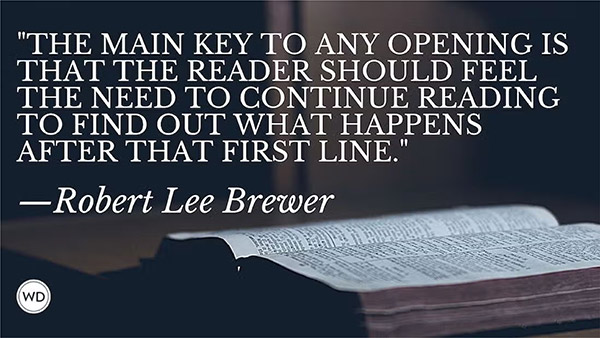
As with fiction or nonfiction, a great opening line in poetry should be compelling, urgent, and/or unusual. The main key to any opening is that the reader should feel the need to continue reading to find out what happens after that first line.
I speak from experience that some books of poetry have been purchased or not purchased based on the opening line of a random poem. So it's not just the art of poetry that's at stake in that opening line, but the commercial value of poetry as well.
Fair or not, the opening lines of poems carry the weight of the world on their shoulders. Of course, a great poem should continue to build momentum and provide a satisfying conclusion. That is, if the first line is the best line, a reader will leave the poem feeling unfulfilled—or even cheated!
| |
6. In Memoriam: Eva Schloss
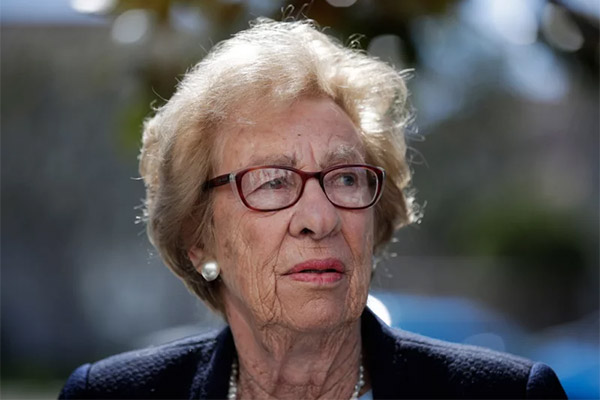
| | This past Monday, the world lost one of the dwindling number of people to witness the horrors of the Holocaust firsthand, Eva Schloss, half-sister of Anne Frank. A woman who took the atrocities she survived at the Auschwitz concentration camp during Hitler's reign and turned them around as a force for good, dedicating her life as a Holocaust educator and advocate for peace and understanding between peoples. | | Holocaust survivor Eva Schloss, the stepsister of Anne Frank, dies at 96 | | From: NPR, BY: The Associated Press, January 5, 2026 | | |
LONDON — Auschwitz survivor Eva Schloss, the stepsister of teenage diarist Anne Frank and a tireless educator about the horrors of the Holocaust, has died. She was 96.
The Anne Frank Trust UK, of which Schloss was honorary president, said she died Saturday in London, where she lived.
Britain's King Charles III said he was "privileged and proud" to have known Schloss, who co-founded the charitable trust to help young people challenge prejudice.
"The horrors that she endured as a young woman are impossible to comprehend and yet she devoted the rest of her life to overcoming hatred and prejudice, promoting kindness, courage, understanding and resilience through her tireless work for the Anne Frank Trust UK and for Holocaust education across the world," the king said.
Born Eva Geiringer in Vienna in 1929, Schloss fled with her family to Amsterdam after Nazi Germany annexed Austria. She became friends with another Jewish girl of the same age, Anne Frank, whose diary would become one of the most famous chronicles of the Holocaust.
Like the Franks, Eva's family spent two years in hiding to avoid capture after the Nazis occupied the Netherlands. They were eventually betrayed, arrested and sent to the Auschwitz death camp.
Schloss and her mother Fritzi survived until the camp was liberated by Soviet troops in 1945. Her father Erich and brother Heinz died in Auschwitz.
After the war, Eva moved to Britain, married German Jewish refugee Zvi Schloss and settled in London.
In 1953, her mother married Frank's father, Otto, the only member of his immediate family to survive. Anne Frank died of typhus in the Bergen-Belsen concentration camp at the age of 15, months before the end of the war.
Schloss did not speak publicly about her experiences for decades, later saying that wartime trauma had made her withdrawn and unable to connect with others.
"I was silent for years, first because I wasn't allowed to speak. Then I repressed it. I was angry with the world," she told The Associated Press in 2004.
| | “We must never forget the terrible consequences of treating people as 'other,'" Schloss said in 2024. "We need to respect everybody's races and religions. We need to live together with our differences. The only way to achieve this is through education, and the younger we start the better.” | |
7. The Heavens: Look for Jupiter this Weekend
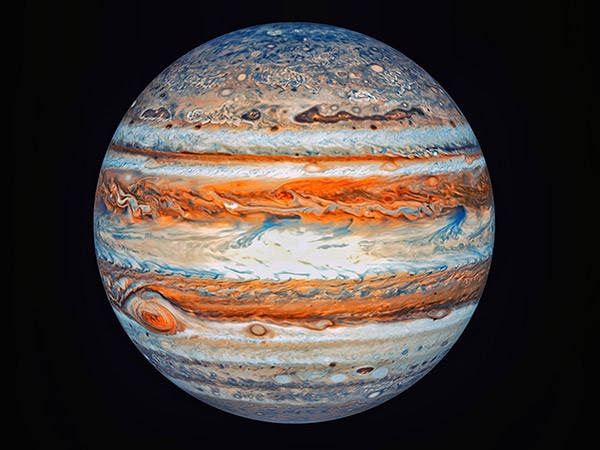
| | If you missed spotting the full Wolf Moon passing Jupiter last weekend because of clouds or the moon's brightness, this weekend is your chance to get a clear view of Jupiter with the naked eye, and even see its moons with binoculars or a small telescope. Jupiter will be the brightest it is all year, making it easy to spot on a clear night. | | Big and Bright, Jupiter Beckons in January | | |
Jupiter’s having a special moment! Don’t miss the giant planet at its best when it reaches opposition this week.
Jupiter has been teasing us for months. Thanks to its high-seated position in Gemini, it's been on the observing menu since last November. Shining brighter than any of the nighttime stars, the gas giant is irresistible. Given a clear night, I feel compelled to point my telescope at it. Like an old-fashioned department store, the biggest planet has it all — storms, spots, belts, colorful clouds, and the enchanting perambulations of its four brightest moons.
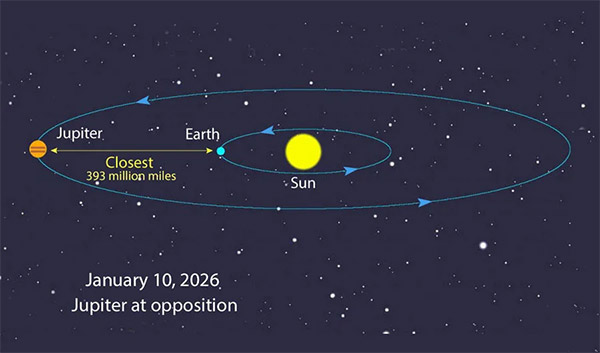
| | Although Jupiter reaches opposition on January 10th, closest approach to Earth occurs the night before due to the planets' elliptical orbits. The beaming behemoth will be just 633 million kilometers (393 million miles) away and gleaming at magnitude –2.7 with an apparent diameter of 46.6″ — big enough to see the planet's disk in tripod-mounted 10× binoculars. All four Galilean moons — Io, Europa, Ganymede, and Callisto — are visible in the same instrument provided you observe them at or near their greatest elongations from the planet. Good nights to spy the quartet fully spread out and thus easiest to resolve are January 12 (6 p.m. to 8 p.m. EST), January 15–16 (9 p.m. to 4 a.m.), January 22–23 (10 p.m. to 4 a.m.), and January 29–30 (11 p.m. to 4 a.m.). | | What's Up: January 2026 Skywatching Tips from NASA | |
8. Wellness: Sensitive & Specific Newsletter
| | The latest issue of Sensitive & Specific: The Testing Newsletter just came out. This issue features advancements in wearable medical devices, Alzheimer's and hepatitis C testing, an electronic nose that can detect particular mold species, and the detection of impending seizures. I'm including just one highlight here, but you'll want to be sure to click through and read this whole issue, or better yetget each new issue in your inbox by following this link to subscribe. | | Has this wearable solved wearables' data problem? | | |
The blessing of wearable devices is also their curse: They can gather a LOT of data.
Gathering a ton of data can be great, because you may need it to see clinically relevant trends. In other situations you need to gather data for a long time before the event you're waiting for happens. But all that data also presents problems. How do you transmit it all? How do you keep the device charged? (Sending a lot of data takes a lot of energy.) And what do you do with the data once it's been sent?
A new wearable device addresses all of these issues. The tool is intended to detect subtle changes in movement that indicate frailty in older people. It's a soft mesh sleeve worn around the lower thigh, equipped with motion sensors — and, crucially, with machine-learning software.
The device not only gathers movement data, it analyzes that data as well. It transmits only the results of that analysis, not the raw data. That reduces transmission by 99%. The results can be transmitted by Bluetooth to a smart device, so there's no need for access to high-speed internet. And it can be charged wirelessly.
COMMENTARY: The study that validated this device is very small, involving only 12 patients. But as a proof of concept for wearables in general it has potentially large ramifications. If this technique can be extrapolated to other wearable devices, it could be game-changing.
| |
9. Hayward M. Fox, Ph. D.: From Dr. Fox's Blog
| | Below is the first post from Dr. Fox's blog for 2026. I am so grateful to be allowed to share Dr. Fox's wisdom with my readers and wish him the best for 2026. Please visit Dr. Fox's website at the Institute of Personal and Transpersonal Knowledge and explore his past blog posts, guided meditations, and study guides. | |
10. Bonus Video: A Larcenous Raccoon goes on a Bender
| | Presented without comment.
Have a happy and healthy Dry January! | | Drunk raccoon found passed out in liquor store bathroom | | These Flock regulars are always here for you: | | Don't Be Shy: Share Your Stories! | | I'm looking forward to sharing more of your personal stories - oral, written, or otherwise, as we enter our third year. I'd so love to present them to The Flock, hit a mailbox below to share your story. | | Subscriptions & Idea Submissions
Reminder: Your submissions are always welcomed. | | |
Feel free to forward this email to a friend. If this was forwarded to you and you would like to receive your very own Flock Newsletter, you can sign up here. If you have any questions or suggestions for future Flock resources, don't hesitate to contact me.
Your fan and friend,
Beth
| | | The information and materials contained or referenced in this newsletter are for informational purposes only and not intended to be a substitute for professional medical advice, diagnosis, or treatment. Always consult a physician or other qualified medical professional with any questions you may have regarding a medical condition or treatment and before beginning a new health care regimen. Do not disregard professional medical advice or delay seeking medical advice or care based on anything contained in this newsletter. | | | | |