REMINDER: YOUR SUBMISSIONS ARE ENCOURAGED | | |
1. Bindu's Corner: This week, we have a quote from Swami Ranganathananda in which he explains how a person can have an inner connection to divinity and spirituality without necessarily being affiliated with a particular religion.
2. Flock Friends: This week, I want to share Tanya Joy Wellness with the Flock. Tanya is a long-time friend, and I'm so proud of her achievements and the success of her Southern California skin care and integrative wellness clinic.
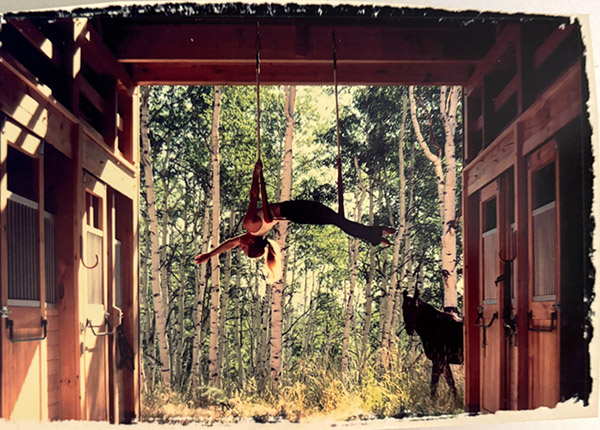
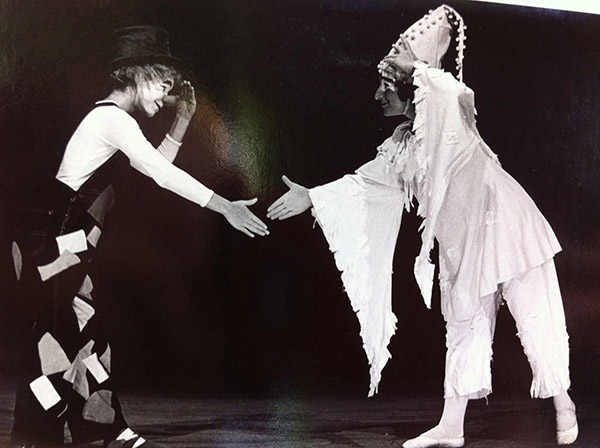
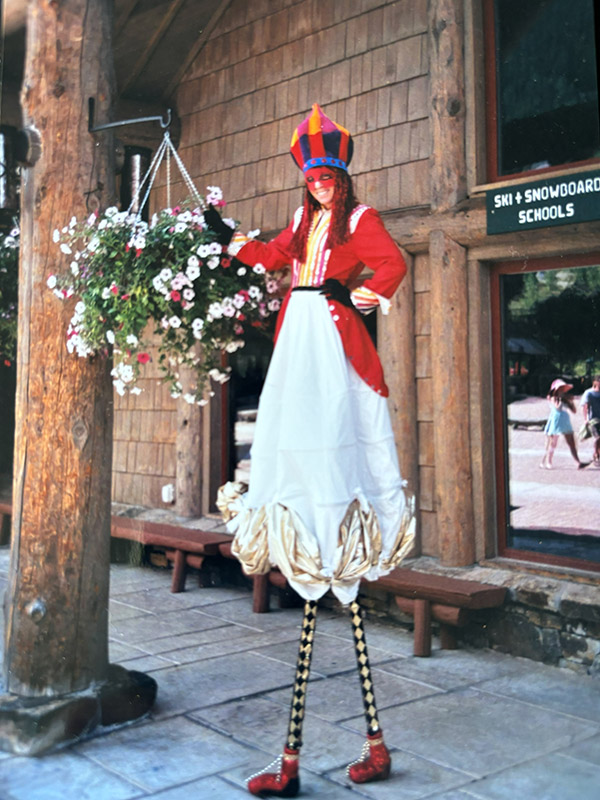
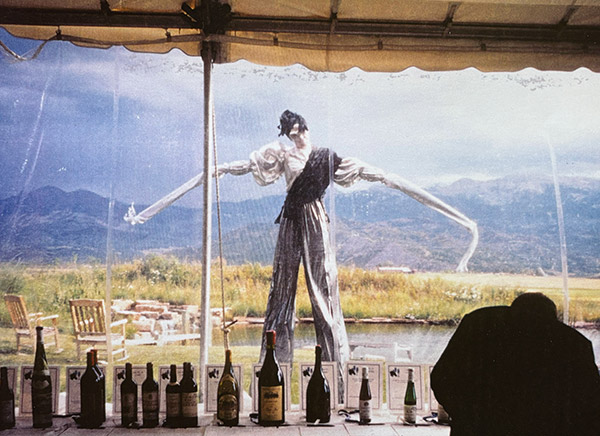
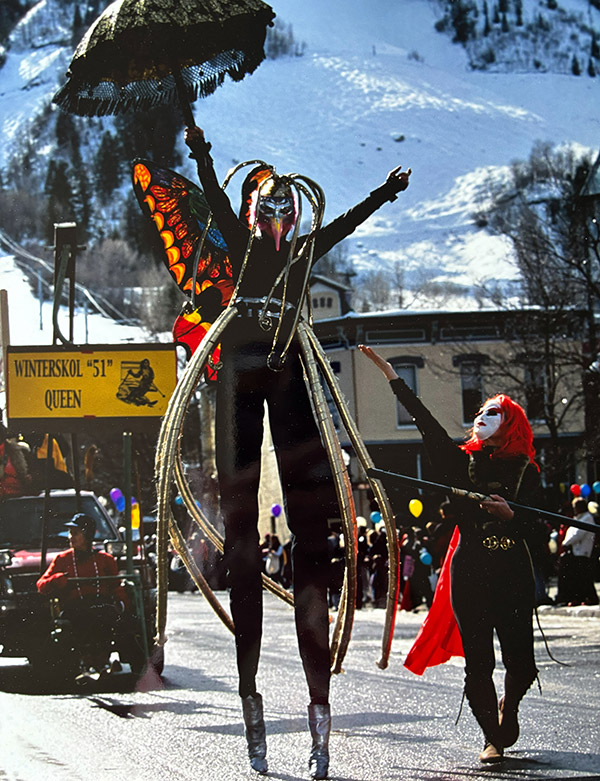
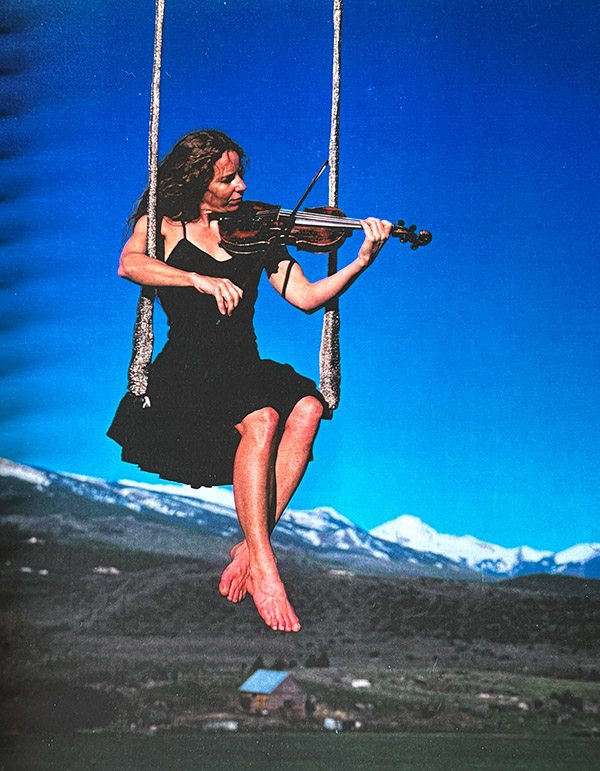
3. Flock Spotlight: As promised in last week's coming attractions,I'm putting the Flock spotlight on a new friend in Aspen. She's a caregiver, trapeze artist/instructor, stilt walker, clown, and simply amazing.
4. Climate: Much of the world is experiencing extreme heat, drought, and wildfires this summer, compounded by human-driven climate change and an El Niño cycle atop unusually warm ocean temperatures.
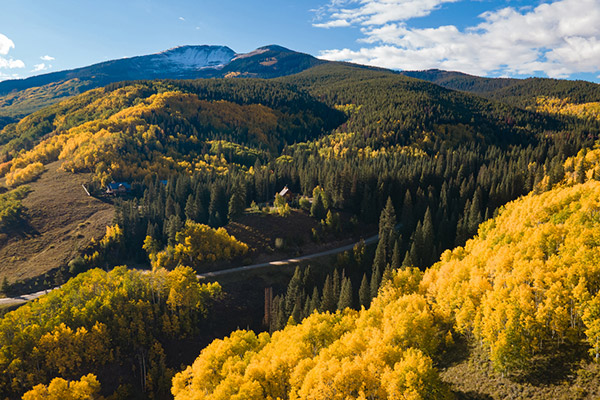
5. WIldfires: New research has shown that Aspens are more resistant to wildfires than conifers, and strategically planted Aspen groves may make effective firebreaks.
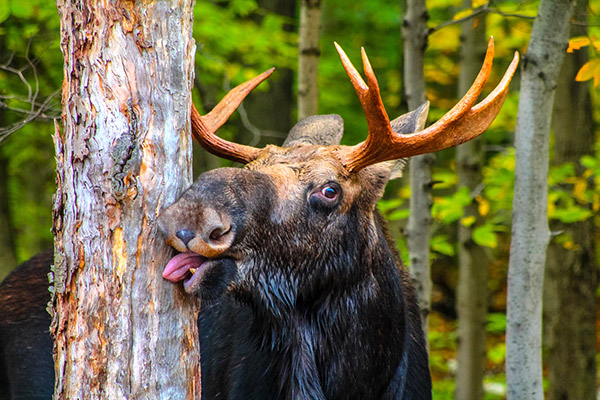
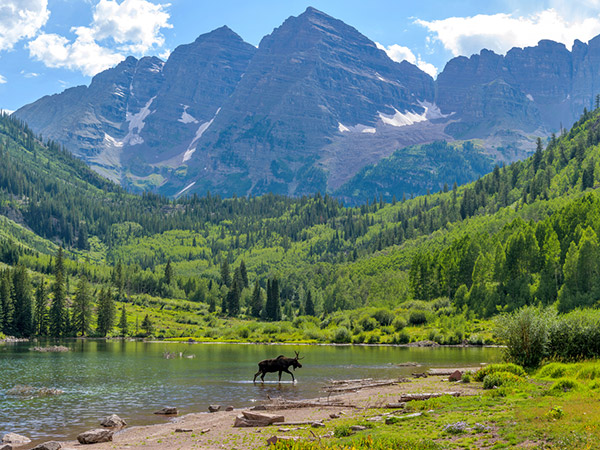
6. Nature: Moose are the largest member of the deer family and the second-largest terrestrial animal in North America, following the bison. They are not immune to the effects of a warming climate, as populations are on the decline across North America.
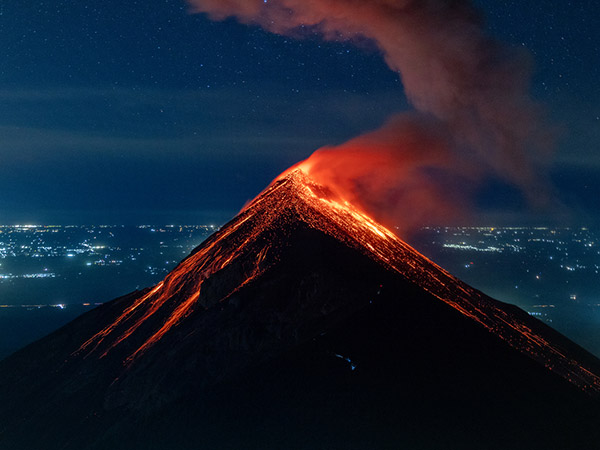
7. Volcanoes: Guatemala's Volcán de Fuego has erupted again. This time, it caused hundreds of people in nearby towns to evacuate.
8. Book Corner: I have a very special book this week, the first children's book from good friend and Flock reader, Gloria Itman Blum.
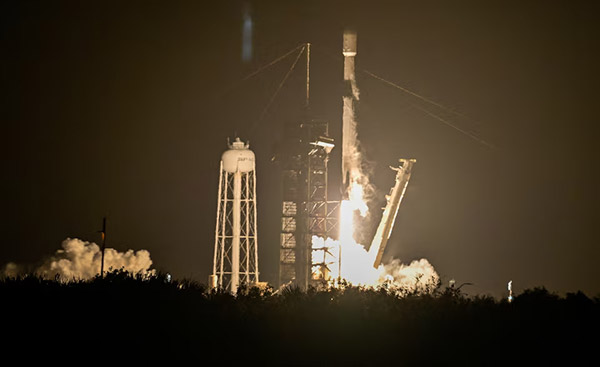
9. The Heavens: The upper stage of a Space-X Falcon-9 Rocket that has been drifting in space since its launch in January of 2025 crashed into the moon's surface this week.
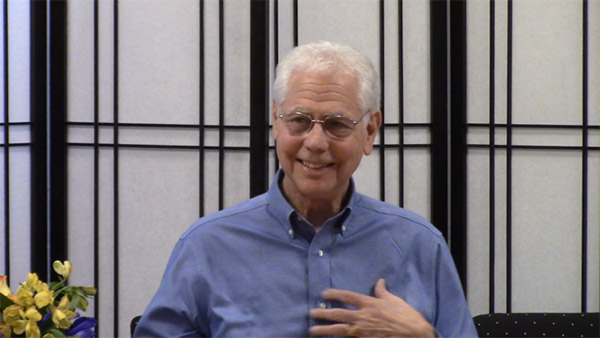
10. Hayward M. Fox, Ph.D.: I haven't included one of Dr. Fox's guided meditations in a while, so I've selected one of my favorites to share this week.
| | Now, to this week's Flock. | | 1. Bindu's Corner: Spirituality and Religion | | Swami Ranganathananda was a Hindu swami and the 13th president of the Ramakrishna Math and Mission from 1998 until his passing at age 96 in 2005. Below is an excerpt from his masterwork, the three-volume Universal Message of the Bhagavad Gita, published between July of 2000 and December of 2001, in which he explains the verse and teachings of the Bhagavad Gita and his views on their relation to Western philosophers and scientists. | | Spirituality and Religion | | |
We say in India, therefore, “I don't believe in a God sitting in the sky, creating the world; I am an atheist.” We never condemn such people because he or she may be spiritual, though may not be religious.
He or she may not believe in a particular idea of God, but may have high character, have compassion, may be doing service to people. These show that he or she is aware of the presence of the Divine within, behind the tiny ego. That is spirituality.
Whenever you go one step beyond this ego, you are one step nearer to the Lord. That is spirituality. So, a life of service and dedication is spirituality.
Therefore, none is beyond the domain of spirituality. One can easily go beyond the do's and don'ts of religion, and be on the road to spirituality. So, Swami Vivekananda said in this context, “I do not call anyone a Hindu who is not spiritual.” You may not be religious, but you must be spiritual; that is the nature of this growth and development.
— Swami Ranganathananda , Universal Message of the Bhagavad Gita
| |
2. Flock Friends: Tanya Joy
| | I have been friends with Tanya Joy for a long time. Before Tanya started her career as an integrative wellness Coach, she became a member of our family as a nanny and mentor to my two children. She helped them develop into successful adults, one an artist and the other an entrepreneur. Her positive guidance and wisdom were invaluable to their development. Since that time, Tanya's own entrepreneurial spirit has blossomed, and she now leads her own wellness clinic, Tanya Joy Wellness, with expertise in skin care and in providing integrative health services combining nutrition, physical development, and energetic clearing, all with the Aloha spirit. Tanya is the best of the best. | | |
Skincare
To help clients achieve more confidence in their appearance and well being. My Philosophy has always been to honor each and every person as a valued and important member of the community. I strive to impart the belief that true beauty comes from within and radiates through the skins first impression.
Energetic Clearing
Our subtle body is that which we can not see but can most definitely feel. When the energy in our body is not balanced, or not in homeostasis, we often feel symptoms that can affect our overall health. Everything is connected and by clearing energetic blocks or imbalances, often we unknowingly correct other blocks.
Integrative Health
Tanya Joy offers at-home lab tests that can help identify the root cause of many health challenges you may have. With this information Tanya can then provide protocols that focus on correcting the underlying imbalance or with detoxing what is not serving you.
| | 3. Flock Spotlight: Kimothy Cross | | I meet the most interesting people in Aspen. Recently, I was heading out for a concert with my friend Muffin, and she suggested that we invite her friend Kimothy to join us. Kimothy is currently a professional caregiver in Aspen. When I got to talking with her and learned a little about her story, she proved to be quite an interesting person, and I knew I wanted her in the Flock, so I asked her to send some photos that I could share. She's a fellow world traveler who grew up in a circus family performing with her twin sister Tory and their mother Amel. Amel, a professional circus clown, also ran her own school training circus performers. From a young age, Kimothy trained in gymnastics, mime, pantomime, and clowning. She eventually moved on to the aerial art of trapeze and has worked with touring companies like Ringling Bros., Barnum & Bailey Circus, and Circus Brazil Jack. Back here in Aspen, she has performed and taught trapeze and stilt walking, often towering over the crowd at Aspen events and festivals on a pair of stilts. This is just part one, I'm planning on more post on kimothy's interesting life in future Flock issues. | | Kimothy's sister Tory performing pantomime with their mother in Mexico | Kimothy, her twin sister Tory, and their mom Amel with Trolle Jr. of Sweden's Circus Brazil Jack. | Kimothy and her sister Tory performing their famous mirror act. | | On stilts in downtown Aspen | At the Aspen Food and Wine Classic. | | Performing at the Wintersköl Celebration | | Kimothy is a woman of many talents | | 4. Climate: Extreme Heat, Wildfires, and Drought | | This summer has been unusually hot just about anywhere you are in the world. In the American Southwest, we are experiencing near-record highs during the day, and the nights are not cooling as much as they normally do. Europe is getting a double hit with drought and wildfires compounding the high temperatures. | | What’s Behind the Heat Wave Scorching Huge Parts of the World | | A combination of El Niño, unusually hot ocean waters, and jet stream changes is sending temperatures soaring in the US, Europe, and Asia. | | From: Wired, By: Molly Taft, July 31, 2026 | | |
Summer heat is about to go from bad to worse, as multiple regions around the world face another round of record-breaking temperatures.
The heat will be fueled by unusually hot ocean waters and El Niño as well as changes to the jet stream that lock high temperatures in place—and man-made climate change, of course.
Western Europe endured its hottest June on record and record-breaking wildfires in July. Now, it’s facing another round of blistering temperatures. On Tuesday, French president Emanuel Macron said the one-two punch of high heat and intense wildfires are creating a dangerous situation, which he called “the toughest since the Second World War.” Hundreds of heat records are falling across other parts of Europe, from Spain to Germany.
The western US is also bracing for high heat from the California coast to the Rockies this weekend. Temperatures in Phoenix are expected to reach up to 115 degrees Fahrenheit (46 degrees Celsius), while Salt Lake City could see a record-breaking high of 106 Fahrenheit. Montana is also under an extreme heat watch, with parts of the state expected to see temperatures as high as 110 Fahrenheit. The hot and dry conditions have the potential to supercharge some of the fires already burning across that state.
“All of these interior Western cities will be at our near record temperatures for early August, which is saying something—it's a pretty hot time of the year to begin with, so it's a fairly high bar,” says Daniel Swain, a climate scientist at the University of California Agriculture and Natural Resources. Overnight temperatures in some of these places are forecast to be unusually high. In Phoenix, “temperatures won’t drop much below 100 degrees,” Swain says. “That’s extremely, extremely hot, even for a place that is infamous for being very hot.” (The city tied the record for its highest low temperature last Thursday, with temperatures bottoming out at 97 degrees Fahrenheit.)
Parts of Asia are also dealing with searing heat, including South Korea and Japan. In short, large swaths of the weather map have been painted red.
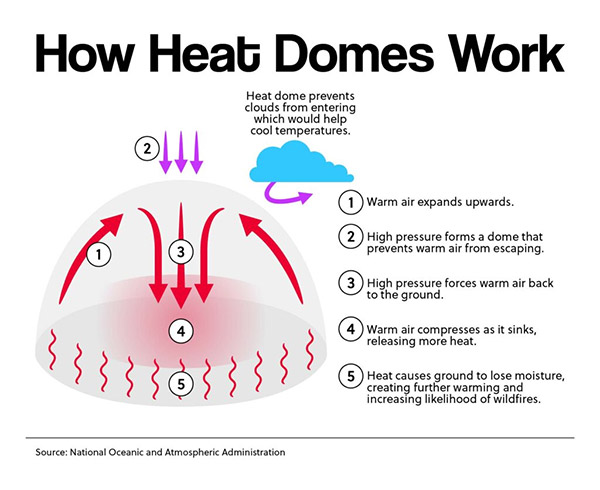
The sweltering temperatures are being driven in part by a series of heat domes, or areas of high pressure that lock in sunny skies and warmth. The reason so many areas of high pressure are locked in place is due to the shape of the jet stream. The band of air that blows from west to east around the northern hemisphere “creates and steers most of the weather we experience,” says Jennifer Francis, a senior scientist at the Woodwell Climate Research Center.
| | |
When the jet stream becomes wavy, that can allow tropical air to push northward and get locked in place over areas that are usually more temperate. In Europe’s case, the jet stream is bringing extra heat from abnormally warm ocean waters around the continent.
“The seas all around Europe are running a fever,” Francis says. “These feverish ocean temperatures are directly linked to the extra heat-trapping carbon pollution we've been dumping into the atmosphere for decades. About 90 percent of that trapped heat goes into the ocean, and we're feeling the consequences this summer.” Francis also points out that the oceans around Japan and China are also unusually warm, helping to fuel the heat waves there.
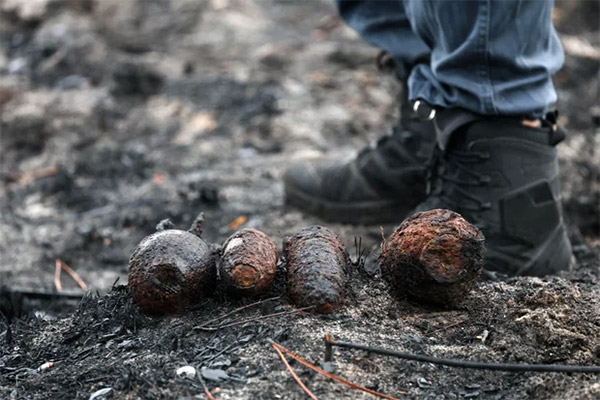
| | Shells from World War II in Le Porge, France, on Aug. 3, 2026, after the discovery of projectiles in the town. | | World War II explosives emerge and detonate in wildfire-ravaged village in France: “Sound of war” | | |
World War II explosives emerge and detonate in wildfire-ravaged village in France: "Sound of war"
From: CBS News, August 4, 2026
A huge forest fire near Bordeaux in southwestern France has revealed World War II shells in the village of Le Porge, where all residents returned to their homes on Monday after days of demining operations.
Around 400 shells and pieces of ammunition have been recovered in the area where over 180 homes were destroyed by flames, according to local authorities.
During the fire, blasts were heard, initially mistaken for exploding gas cylinders, but they may have been these shells, according to fire commander Thomas Mimiague.
According to BBC News, more than 100 explosions were heard on the second night of the fire, and Mayor Martial Zaninetti told French news outlet France Info the blasts were similar to “the sound of war.”
“There were ammunition depots buried in land within our municipality, but we didn't know it, and they exploded,” Zaninetti told France Info.
Zaninetti said there was "even one that went through a house."
The munitions, both German and French, consist mainly of mortar shells, along with some high-explosive anti-tank shells.
“We don't really know why they're there; we think they were just abandoned,” Mimiague said.
Numerous fires have broken out in France since the start of the summer, particularly in the Bordeaux region, where the most serious blaze since 1949 has now been brought under control after burning more than 99,000 acres in about 10 days, without reaching the major wine estates of the region.
| | Europe's heat wave fuels drought, wildfires and fears about energy supplies | | From NPR, By: Robbie Griffiths, August 4, 2026 | | |
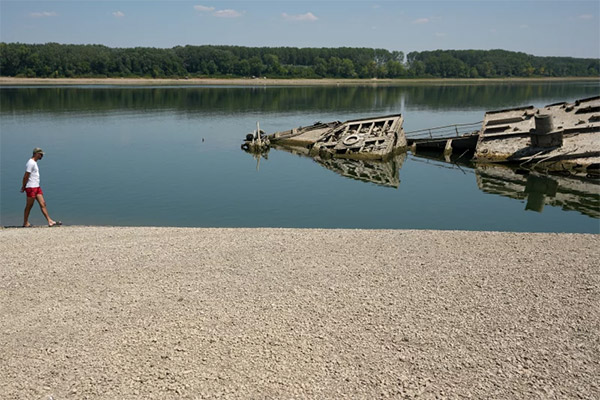
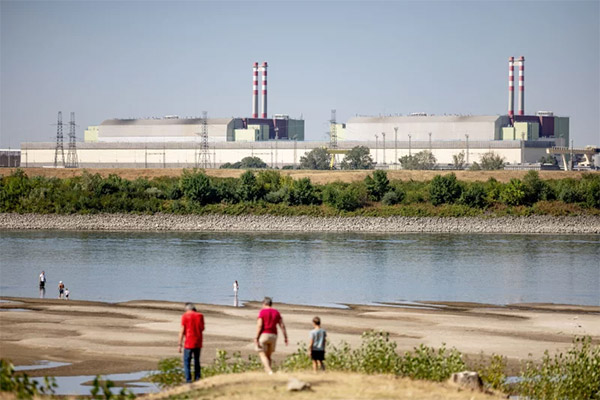
As Europe endures a relentless heat wave, the Danube's historic lows are disrupting nuclear power operations and revealing the far-reaching impacts of the continent's climate crisis.
Hungary came close to a forced shutdown of its only nuclear power plant overnight, Prime Minister Péter Magyar said on Tuesday morning, as low water levels in the Danube river threaten the country's energy supply.
| A view of Hungary's Paks Nuclear Power Plant from the Danube embankment in Dunaszentbenedek on July 31, 2026. Record-low water levels on the Danube, driven by extreme heat and drought, have threatened the plant's cooling system and highlighted Europe's worsening climate crisis.sider inserting phrases like "for a limited time only" or "only 7 remaining!" | “Around 1:30 a.m. we were a few millimeters away from completely shutting down the Paks Power Plant, but then the water level stopped falling and by morning it had risen 1.5 centimeters. The last turbine is currently operating safely,” Magyar said. | Record low water levels across Europe reveal mammoth skeletons and forgotten shipwrecks | |
5. Wildfires: Aspen Groves May Slow Wildfires
| | A Canadian researcher studying data from past wildfires has found that groves of aspens demonstrated greater resistance to spreading wildfires than other types of trees, leading her to conclude that planting a large stand as a buffer around other trees can slow fire progression. | | Aspen trees provide a natural buffer against wildfires, even as fire season intensifies, study shows | | Buffers made of aspen trees could help protect communities from worsening wildfires. | | |
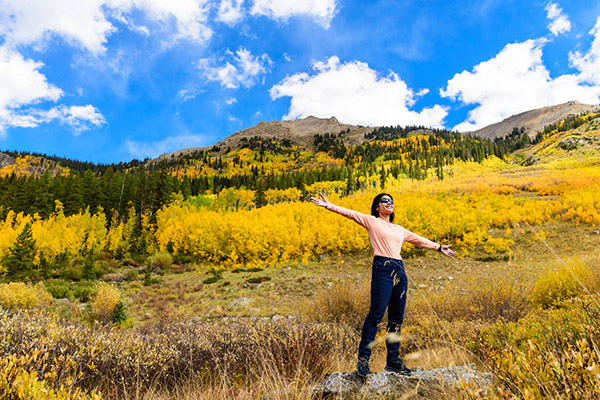
Aspen trees could provide a natural buffer against wildfires, as new research shows that areas of forest where these trees dominate burn less intensely than those made of conifers.
The findings suggest that planting more of the right kinds of trees, such as trembling aspen (Populus tremuloides, also known as quaking aspen), could be an effective strategy for protecting communities as devastating wildfires become more common and intense in a warming world, researchers reported June 15 in the journal Forest Ecology and Management.
Individual aspen trees burn easily because of their thin bark, but large "stands" — contiguous communities of trees that are uniform in species, age and structure — of them are more resistant to fire than stands of conifers and can act like a firebreak.
| | |
The reasons for aspen stands' resilience are not certain. However, researchers think it likely stems from a combination of factors, including the high moisture content in the aspens' leaves and the undergrowth, the trees' lack of highly flammable resin, and the leaves' height, which makes it harder for fire to spread to the canopy and leap from tree to tree.
Flavie Pelletier, who conducted the research as part of her doctorate at McGill University in Montreal, wanted to see whether aspen stands have been able to maintain their fire-resistant properties as climate change makes fire seasons more intense and destructive.
She combined new maps of dominant tree species in forests across Canada with satellite maps of wildfires from three recent years, including 2023, which was the country's most destructive wildfire season ever recorded. She noted which tree species tended to be inside the fire zone and which were more common at the edges. She found that aspen trees were more than twice as common at the perimeters of fires than inside them, while conifers like spruce and pine were equally present in both locations.
Having more aspen trees in a particular area also decreased the amount of forest that burned each day during a fire, so it also appears to help slow the spread of the fire. Notably, the trees still resisted fire spread even in the spring, before their leaves had fully sprouted.
| | Moose are found across the northern regions of North America from Alaska, across Canada and West coast to east Coast along the northern tier states in the US. They prefer colder climates and forested areas with ample wetlands to feed on leaves, bark, and water plants. They are best observed from a distance, females with calves are very protective and will charge if they feel threatened. Males can be unpredictable and aggressive during mating season. | | |
Description
Moose are the largest members of the deer family, standing six feet (1.8 meters) tall from hoof to shoulder, and weighing in at more than 1,000 pounds (450 kilograms). Each of their light to dark brown hairs is hollow, and the air trapped inside provides insulation. A flap of skin called a dewlap hangs from the throat. Males are distinguished from females by their antlers, which grow up to six feet across.
Diet
Moose are herbivores. The word “moose” is an Algonquin term meaning “eater of twigs.” Moose are so tall that they have difficulty bending down to eat grasses, so they prefer to feed on leaves, bark, and twigs from trees and shrubs. Their favorite foods come from native willow, aspen, and balsam fir trees. They also munch on aquatic plants from streams and ponds.
Conservation
Massive and majestic, moose are a cherished wildlife icon of North America. Moose often roam through residential areas looking for food, and motorists occasionally collide with them. Hunting and habitat degradation are major threats to moose, but now climate change has caused moose populations in Minnesota to fall dramatically.
Moose are being hurt by overheating, disease, and tick infestation—all tied to warming temperatures. Moose are in jeopardy across the United States, from New Hampshire, Vermont, and Maine; to Minnesota and Michigan; and even Montana.
Overheating: Heat affects moose directly. These big mammals require cool climates to thrive, and summer heat stress leads to dropping weights, a fall in pregnancy rates, and increased vulnerability to disease. When it gets too warm, moose typically seek shelter rather than foraging for nutritious foods needed to keep them healthy. Many New Hampshire cows have been under the weight necessary to successfully bear calves the last few years and are producing fewer calves than they did a decade ago. Many biologists are concerned that they will have a difficult time adapting to climatic variability.
Too Many Ticks: Warmer winters have also caused spikes in the tick populations, further devastating the moose population. Ticks leave moose weakened from blood loss, and many die of anemia. Ticks also leave moose more vulnerable to exposure in the winter after their attempt to rub off the ticks leaves them with hairless patches. The New Hampshire moose population has plummeted by more than 40 percent in the last decade from more than 7,500 moose to just 4,000 today, and biologists attribute some of this decline to increasing parasite loads influenced by shorter winters caused by climate change.
Five fun Facts
1. Male moose grow a set of antlers each year during the spring and summer. By fall, antlers can span six feet from tip to tip.
2. Though females lack antlers, they aggressively protect their babies with powerful kicks that can break bones or even kill predators.
3. Moose are browsers, feeding on the leaves and twigs of trees and shrubs, primarily willow, birch, and poplar.
4. Moose are excellent swimmers, able to hold their breath underwater for 30 seconds.
5. Despite their large size, moose can run at over 35 miles per hour.
| | 7. Volcanoes: Volcán de Fuego Erupts Again | | Last month I posted a video of the spectacular and beautiful eruption of the Volcán de Fuego in Guatemala. That eruption posed little risk to the communities around the volcano; this week's eruption was more of a threat to the area, causing evacuations and raining ash on the surrounding area. | | Guatemala volcano remains dangerous amid days-long eruption, authorities say | | From: CNN, By: Merlin Delcid& Michael Rios, August 5, 2026 | | |
The days-long eruption of Guatemala’s Fuego volcano, which has forced the evacuation of hundreds of people from nearby towns, is reducing in intensity but still remains dangerous, authorities said Wednesday.
Even though volcanic activity is showing a “progressive reduction,” accumulated material at the top of the volcano is still collapsing, which could generate more pyroclastic flows, Guatemala’s disaster agency Conred said. Forecasted rain could also cause lahars, the technical term for fast-moving mudflows, the agency added.
The Fuego volcano, about 50 kilometers (31 miles) southwest of the capital Guatemala City, has been spewing lava and plumes of ash since Monday. It has prompted the evacuation of at least 1,699 people, say officials, as pyroclastic flows roll down the volcano’s surrounding ravines.
Ash has spread up to 120 kilometers away, exceeding heights of 5,000 meters (3 miles) above sea level, according to Edwin Rojas, director of the National Institute of Seismology, Volcanology, Meteorology and Hydrology.
| | Families flee after volcano erupts in Guatemala | |
8. Book Corner: Tūtū's Secret
| | A very dear friend of mine, Gloria Itman Blum, recently published her first children's book, titled Tūtū's Secret, which she's put her heart and years of experience as an educator, spiritual advisor, and child advocate into. You will find the book in the children's section, but having read it, I can say that youth is not a requirement; it is a refreshing, soul-serving read for anyone. Gloria was kind enough to send me a signed copy with a note and nod to the Flock that I cherish. If Gloria's name sounds familiar to regular Flock readers, that is because she and her husband Barry were kind enough to share two of her audio plays, the NATF Silver Prize-winning “The Trial of Sarah”, and “Ma's Last Request” with us two years ago. | | By Gloria Itman Blum
Illusrtrated By Yuko Green | | Lani learns from her grandmother, Tūtū, the secret of healing others through love. Worried that Tūtū would soon leave her, Lani stays by Tūtū’s side and listens to her stories until Tūtū passes away. One day, when Lani encounters a girl who had hurt her knee, she feels encouraged to help her after hearing Tūtū's voice. Lani wonders how she can still feel her grandmother's presence even though she’s gone. Tūtū’s secret is that there is nothing to fear, as love is the way to comfort and heal. Although Tūtū is no longer with Lani, Tūtū’s love will always be there to protect her. | |
9. The Heavens: Space-X Rocket Crashes into the Moon
| | The unpowered upper stage of a Space-X Falcon-9 Rocket launched 18 months ago crashed into the lunar surface this week. The impact was not un expected and was observed from several observatories. | Defunct SpaceX rocket crashes into the moon, kicks up dust | | From: Reuters, By: Joey Roulette, August 4, 2026 | | |
A SpaceX rocket piece floating in space since last year smashed into the moon at high speed early Wednesday morning, joining the ranks of meteoroids, wayward spacecraft and other pieces of space junk that have bombarded the lunar surface for ages, astronomers confirmed.
The school-bus-size object is the second stage of a SpaceX Falcon 9 rocket that had launched a lunar lander from Firefly Aerospace toward the moon in January 2025. Its predicted collision with the moon became a spectacle for astronomers and space enthusiasts eager to watch how it would unfold.
Weighing 4 metric tons (4,000 kg), the rocket body slammed into the moon around 2:35 a.m. ET (0635 GMT), travelling at 5,400 miles per hour (8,690 kph). None of the few spacecraft orbiting the moon were positioned to capture close-up images of the impact.
But at the Paranal Observatory in Chile, the European Southern Observatory's Very Large Telescope detected glimmers of light associated with the impact.
"We can confirm that the telescope detected spectral lines of sodium and lithium gas in the impact plume lasting for 5-10 minutes after impact," an ESO spokesperson told Reuters.
The impact occurred near the moon's terminator line, or the boundary of its shadow between the sunlit side and its far side. Similar to past objects that have hit the moon, the rocket stage kicked up a plume of lunar dust that was briefly illuminated by sunlight, but difficult to spot with the naked eye from Earth.
| | A composite of satellite images shows the surface of the moon before (left), October 1, 2015, and after the crash (right) of the second stage of a SpaceX Falcon 9 rocket, which was launched from Firefly Aerospace towards the moon in January 2025, August 5, 2026. | | |
As a reminder, I'm repeating this post on next week's solar eclipse with an updated link to NASA's solar eclipse guide. Be sure to click through and scroll down the page for a chart for the best time to view the partial or full eclipse by location next Wednesday.
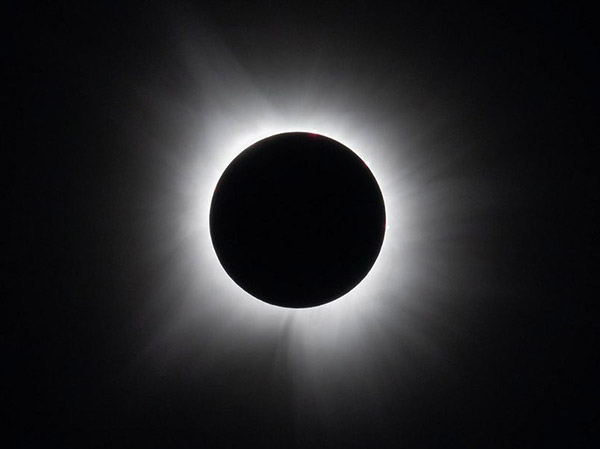
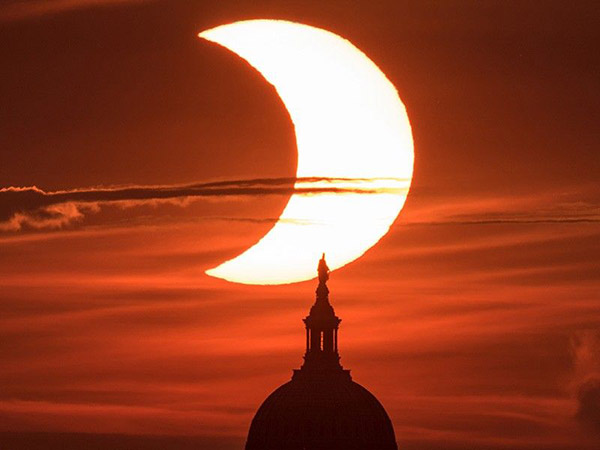
The next solar eclipse is coming up on Wednesday, August 12th. Parts of Greenland, Iceland, and Spain will see a full solar eclipse. Most of Europe, western Russia, and west Africa will see a partial eclipse. In North America, a partial solar eclipse will also be visible along the Canadian-US border and in the eastern US from New England south to North Carolina. Even if you are viewing a partial solar eclipse, it is still very important to wear certified eclipse glasses or use a pinhole projector to avoid serious vision damage while observing the eclipse. Later that evening, one of the most active meteor showers of the year, the Perseids, will start to peak with up to 100 meteors per hour.
| | |
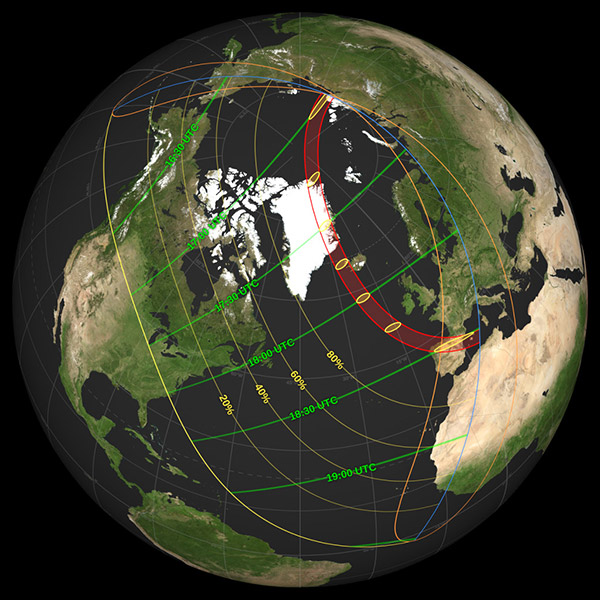
On Aug. 12, 2026, a total solar eclipse will sweep across Greenland, Iceland, northern Russia, the Atlantic Ocean, Spain, and a small corner of Portugal.
Many other places in the Northern Hemisphere will experience a partial solar eclipse that day, including parts of the northern U.S. (from Alaska to North Carolina), most of Canada, much of Europe, and northwestern Africa.
| | |
For many along the western part of the eclipse path (in mainland Europe and Africa), the Sun will set while it's still partially eclipsed, creating an opportunity to see a sunset eclipse.
NASA will stream the eclipse live starting at 1:15 p.m. EDT on Aug. 12:
https://www.nasa.gov/live
Eclipse Map
This map shows where a solar eclipse will be visible on Aug. 12, 2026.
The red band that crosses Greenland, Iceland, and Spain shows where a total solar eclipse can be seen. Yellow curves across the map show where a partial eclipse will be visible, and percentages indicate the maximum area of the Sun covered by the Moon during the eclipse along those lines.
| | Credits: NASA's Scientific Visualization Studio | |
10. Hayward M. Fox, Ph.D.: Guided Meditations
| | I'd like to recommend one of Dr. Fox's guided meditations. Please visit Dr. Fox's Institute for Personal and Transpersonal Knowledge and try one of his guided meditations. I recommend his Clear Mind, Calm Body Meditation this week. | | Clear Mind, Calm Body Meditation | | These Flock regulars are always here for you: | | Don't Be Shy: Share Your Stories! | | I'm looking forward to sharing more of your personal stories - oral, written, or otherwise, as we enter our third year. I'd so love to present them to The Flock, hit a mailbox below to share your story. | | Subscriptions & Idea Submissions
Reminder: Your submissions are always welcomed. | | |
Feel free to forward this email to a friend. If this was forwarded to you and you would like to receive your very own Flock Newsletter, you can sign up here. If you have any questions or suggestions for future Flock resources, don't hesitate to contact me.
Your fan and friend,
Beth
| | | The information and materials contained or referenced in this newsletter are for informational purposes only and not intended to be a substitute for professional medical advice, diagnosis, or treatment. Always consult a physician or other qualified medical professional with any questions you may have regarding a medical condition or treatment and before beginning a new health care regimen. Do not disregard professional medical advice or delay seeking medical advice or care based on anything contained in this newsletter. | | | | |