REMINDER: YOUR SUBMISSIONS ARE ENCOURAGED | | |
1. Bindu's Corner: Bindu brings us a thought on compassion and the human condition.
2. Travel: Supai Village and Havasu Falls on the Havasupai Tribal Lands at the western edge of the Grand Canyon are a unique experience for the avid trekker.
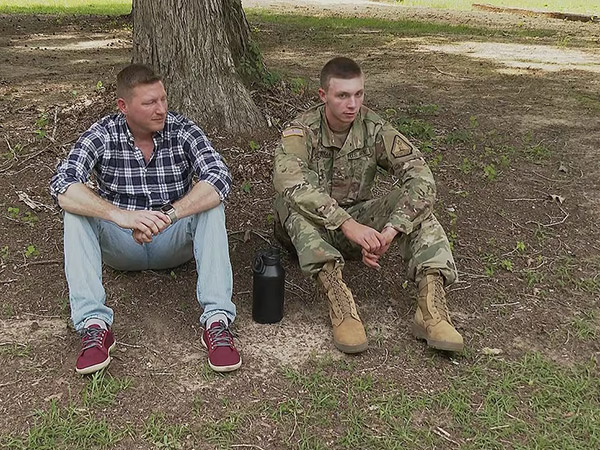
3. Student's Corner: A young super achiever in Louisiana accomplished a remarkable feat last week, graduating from both High School and college one day apart.
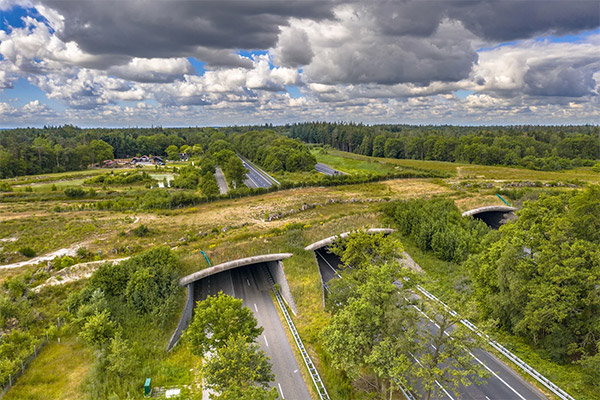
4. Wildlife: I have two stories of simple infrastructure improvements to help wildlife avoid roadways to access wild spaces, creating a safer environment for people and wildlife alike.
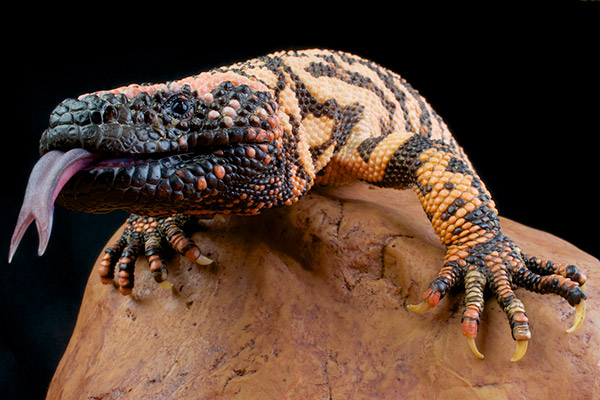
6. Medicine: Some popular modern medications have been developed by studying venomous animals, including the Southwest's own Gila monster.
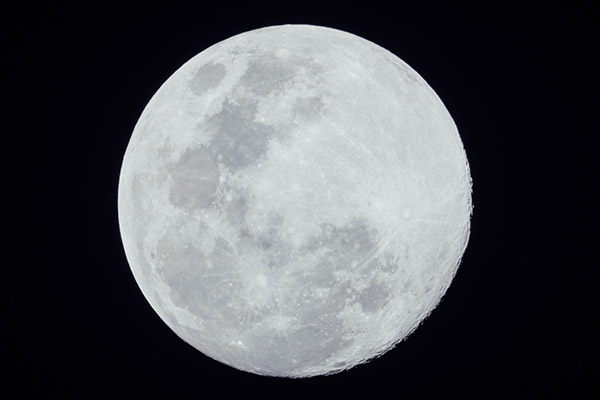
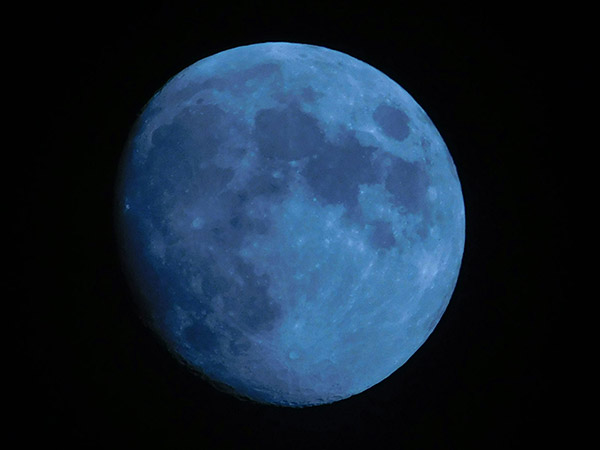
7. The Heavens: May's second full moon, known as a Blue Moon, will appear Saturday night, May 31st. It will also be a micromoon, appearing slightly smaller and dimmer than a regular full moon because the moon will be at apogee, the farthest point in its orbit around the Earth.
8. Hayward M. Fox, Ph.D.: This week, I have another video featuring Dr. Fox from the Institute of Personal and Transpersonal Knowledge.
| | Now, to this week's Flock. | | 1. Bindu's Corner: Compassion | | Thank you, Bindu, for this week's morning aphorism. | |
2. Travel: Supai Village & Havasupai Falls
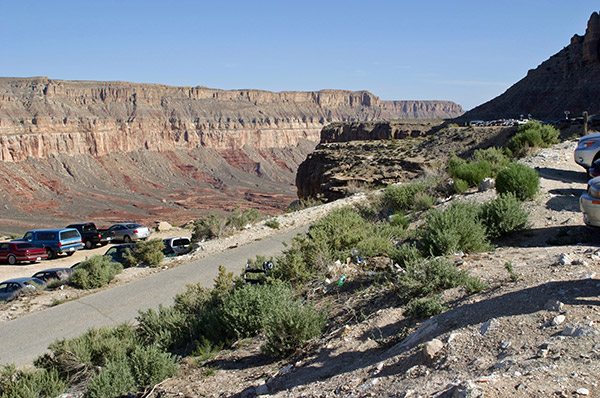
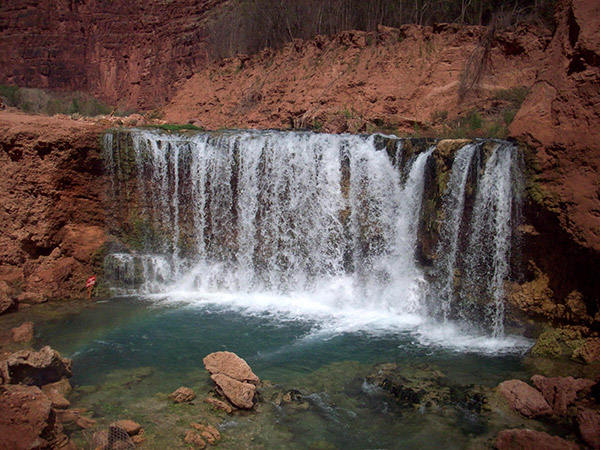
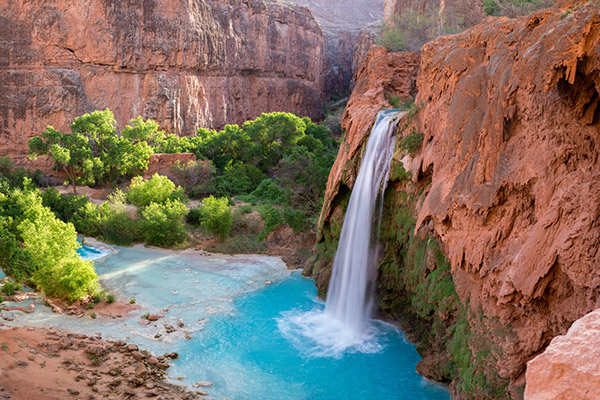
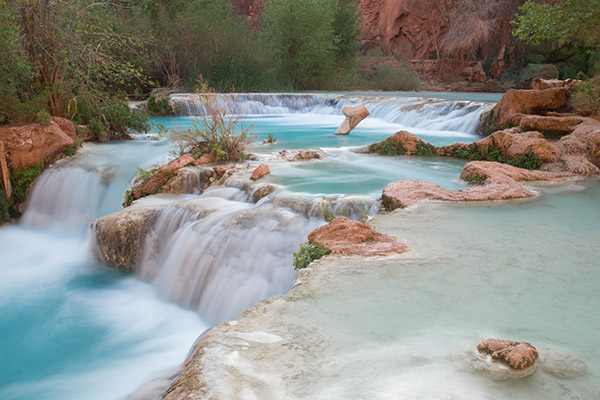
| | View from the Hualapai Hilltop trailhead | | I have made the trip down to Supai Village with friends a couple of times, and each time I've gone there, the beauty and majesty of the environment have blown me away. The 8-mile hike starts on the rim of the Grand Canyon at the Hualapai Hilltop parking area, 60 miles north of historic Route 66. It drops 1,800 feet in the first two miles, eventually joining the calcium-carbonate rich blue-green waters of Havasu Creek. After reaching Supai Village and freshening up at the general store, it's another two miles following the creek to the campground and a series of majestic waterfalls. | | Supai, Arizona, USA
The Havasupai Tribe
People of the Blue Green Water
| |
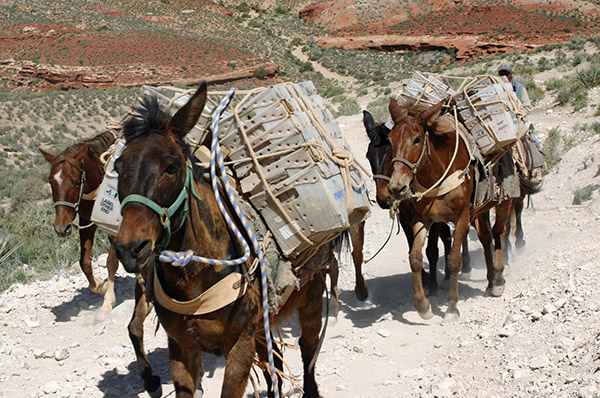
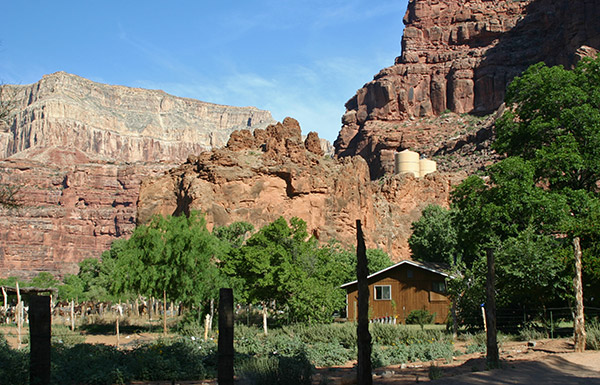
For over 1,000 years the remote village of Supai, Arizona, located eight miles hike below the rim of the Grand Canyon, has been home to the Havasu Baaja, People of the Blue Green Waters, or as they are known today, the Havasupai Tribe. Just above the village, a hidden limestone aquifer gushes forth the life sustaining blue green waters that have nourished the fields of corn, squash and beans which have allowed the Havasu Baaja to thrive living in the harsh desert landscape deep in the Grand Canyon for centuries. This remoteness creates many obstacles for residents and visitors alike. The United States Postal Service office in Supai transports all mail in and out of the canyon by mule train. Everything must make the 8 mile trek in and out of the village either by foot, on horseback.
The Havasupai tribe's reservation is at the end of Route 18 off historic Route 66. It consists of 188,077 acres of canyon land and broken plateaus abutting the western edge of the Grand Canyons South Rim. The reservation was established in 1880 and substantially enlarged in 1975. The tribe is known for it's location, traditional cultural life and beautiful arts and crafts.
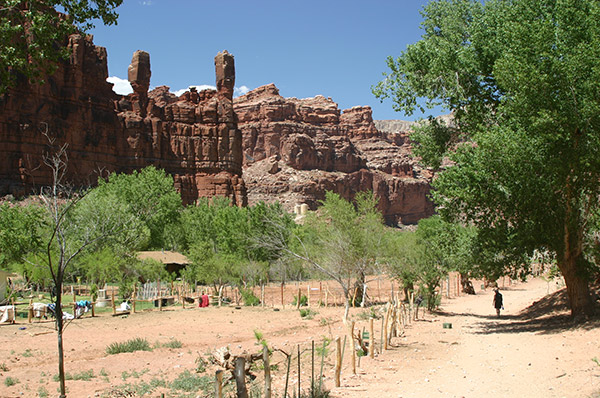
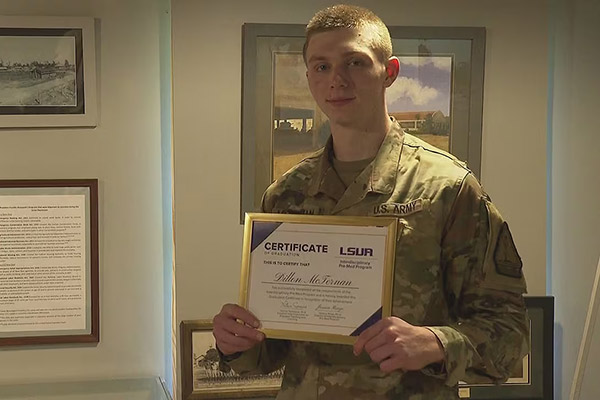
| | Mules from Supai carrying U.S. Mail containers. | | On the trail into Supai from Hualapai Hilltop, the first signs of the village are extensive paddocks for horses, mules, and cattle, and the Wigleeva, the sacred rock formations looking over the village. | | One of the new waterfalls created by the August 2008 flood in Havasupai. These falls are named Rock Falls and are located just below the trail between Supai and the former Navajo Falls. | | The high minneral concentration in the water creates a vivid blue-green color and forms the natural travertine dams that occur in various places near the falls | | 3. Student Corner: Student Graduates from High School and College One Day Apart | | I was impressed when this story crossed my feed. As students across the country celebrated their college graduations last week, one young man in Louisiana marked the end of his scholastic journey, graduating from both High School and college just one day apart. | | Student graduates high school and college one day apart | | |
A Louisiana student is celebrating two major milestones after graduating from high school and college just one day apart.
Dillon McTernan Jr. started taking high school classes while still in middle school. And he began college courses as a freshman in high school.
“It was probably one of the most rewarding experiences that I’ve had,” Dillon McTernan Jr. said. “It was a lot of work. I had to sacrifice some time, friends and some of that stuff.”
Early emancipation
The road to graduation wasn’t always easy. At just 16, Dillon McTernan Jr. became emancipated after his father, Dillon McTernan Sr., was deployed with the Louisiana Army National Guard.
“That’s a really hard decision and it didn’t come lightly. I think any parent would understand that statement, but I knew the capabilities of my son,” Dillon McTernan Sr. said.
The decision allowed Dillon McTernan Jr. to stay living at Camp Beauregard in Pineville, the community he grew up in.
Dual graduations
Dillon McTernan Jr. first walked the stage at Louisiana State University of Alexandria, earning a degree in pre-med biology.
Then, just 24 hours later, he graduated from Tioga High School.
| | Dillon McTernan, Sr. and Dillon McTernan, Jr. | |
For his father, the moment carried even more emotion.
“When he crossed over the stage, it was actually my dad’s birthday, who passed away, so it was this culmination of just thinking of my father and what I had to go through. Now seeing my son, it was just a very intense and beautiful moment,” Dillon McTernan Sr. said.
| | 4. Wildlife:Conservation Infrastructure | |
4. Wildlife:Conservation Infrastructure
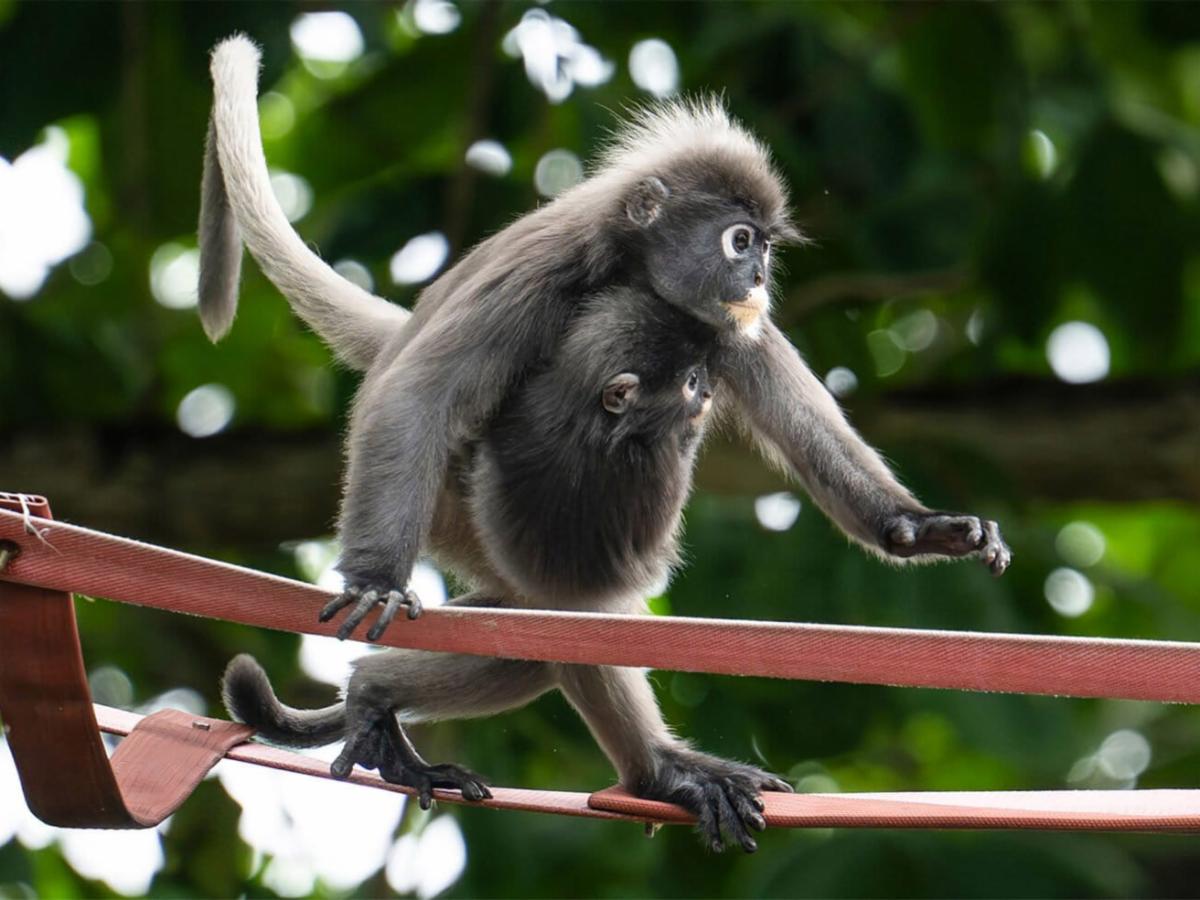
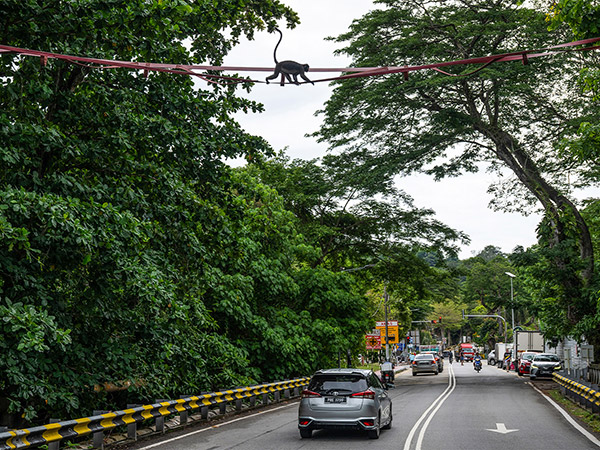
| | Citizens in the Malaysian community of Tanjung Bungah, working with the government, devised a simple and clever plan to help endangered langur monkeys safely cross a dangerous thoroughfare to exit neighborhoods and access the nearby forest, benefiting both the langurs and residents. | | In Malaysia, a bridge helps endangered langurs and humans coexist | | From: Mongoabay, By: Philip Jacobsonj & isabelle Leong, May 20, 2026 | | |
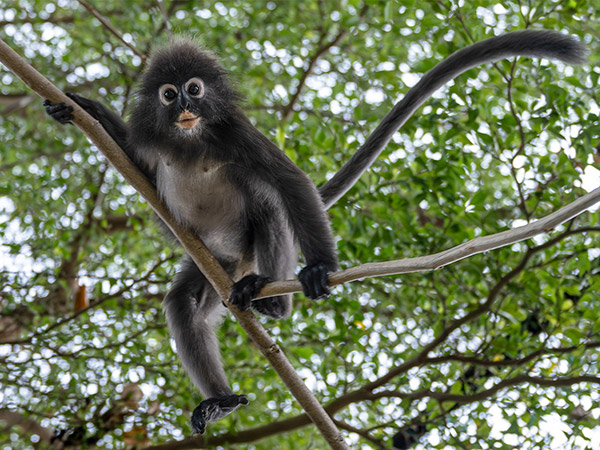
Tanjung Bungah, Malaysia — The 50-year-old mango tree growing through Tan Soo Siah’s second-story terrace is a favorite stopping place for the family of endangered monkeys that has taken up residence in a small park near his home in Malaysia’s Penang state.
“Since everybody chases them away, I try to let them have a rest here,” says Tan, 64, who likes to watch the dusky langurs (Trachypithecus obscurus) from his bedroom window, peeking up at them playing in the foliage.
Not everyone in Taman Concord, a residential community home mostly to retirees like Tan, is as taken with the langurs as he is. Around three years ago, the monkeys were inciting complaints from seniors who were fed up with langurs leaping across their houses, damaging their rooftops and denuding their gardens.
Perhilitan, Malaysia’s wildlife agency, was summoned. The agency’s typical methods for dealing with “conflict” animals include installing deterrents, trapping and relocation, and, as a last resort, culling.
This time, Perhilitan called the Langur Project Penang (LPP), a social enterprise founded by Malaysian primatologist Yap Jo Leen.
Yap’s team of citizen scientists spent months diagnosing the problem, tracking the monkeys’ movements and interviewing local residents. The group ultimately built a canopy bridge made from old fire hoses to help the langurs safely cross a busy road and expand their range, relieving pressure on Taman Concord.
Today, Tan and his neighbors are learning to live with the langurs, who regularly use the bridge, known as Numi’s Crossing, named for a young langur that met his end after repeatedly falling from slippery power lines during LPP’s fieldwork.
| | |
Support from locals has been key to the success of the project, says Nadine Ruppert, vice president of the Malaysian Primatological Society, who advised Yap on her Ph.D.
“She has this little army of citizen scientists who are very invested in the project,” Ruppert says. “I think that’s really beautiful and really the essence of successful conservation projects: to have a long-term impact, you have to have the people feel happy and involved in it.”
Tan says he doesn’t get to eat very many of his mangoes these days. But for him, the langurs are the real treat.
| | “When we go to another country, you have to pay to see the wildlife,” he says on his terrace, with a view of steel cranes rising over concrete and green hills in the distance. “I’m so lucky they’re here.” | | Wildlife crossings are becoming more common on US highways to help animals safely move through the countryside, protecting both drivers and animals from dangerous collisions. | | Wildlife Crossings Save Lives, Cut Costs, and Protect Animals | | |
Overview
Wildlife collisions on U.S. roads are more than a nuisance—they’re a serious safety, economic, and ecological hazard. When roads sever the natural corridors that deer, elk, moose, and other migratory species rely on to move safely between habitat areas in search of food, mates, and shelter, it forces animals and drivers into dangerous conflict and cuts wildlife off from critical territory.
Wildlife crossing structures—such as overpasses, underpasses, and fencing—that provide safe passage for migrating animals across busy roads can reduce wildlife-vehicle crashes by more than 90%. his infrastructure not only prevents deaths, injuries, property damage, and medical costs but also reconnects important habitat that has been fragmented by roadways. Research has found that one wildlife crossing can prevent about 1,400 accidents over a 70-year lifespan, which translates into billions of dollars in savings.
nsider inserting phrases like "for a limited time only" or "only 7 remaining!"
| | Utah trail cameras show vital impact of wildlife crossings | |
5. Surfing: Surfers Share the Waves
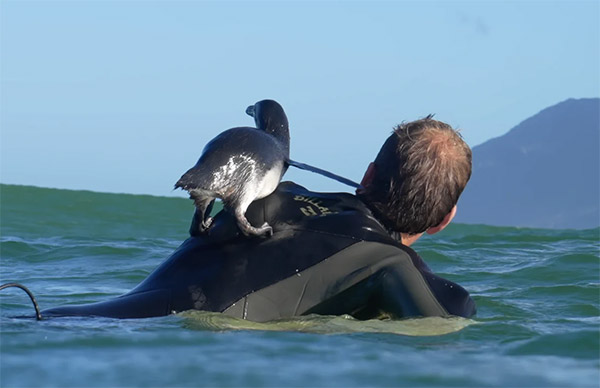
| | I love a good surfing video. Here are three videos of surfers sharing the waves with a penguin, seals, and orcas. | | Surfing with a Penguin | Surf's Up for Real | | Surfing with Orcas in the Deadly Bering Sea | | Surfers vs. Orcas: Did They See That?! | |
6. Medicine: Medicines from Venom
| | Several modern medications including the popular diabetes and weight loss drug Ozempic have been development by scientists who study the properties and chemical make up of the venom of toxic animals like vipers and the Southwest's Gila monster. | | Ozempic Literally Came From a Monster – And It's Not Alone | | |
The toxic bite of a Gila monster can kill a human, but a specific ingredient in the cocktail of the lizard's venom is the reason we have glucagon-like peptide (GLP-1) agonists like Ozempic and Wegovy.
At the end of the 20th century, endocrinologist Daniel Drucker was looking for a hormone similar enough to the human gut's GLP-1, which would have similar appetite-suppressing and blood sugar-regulating qualities, without being broken down by the human body so quickly.
Drucker had read about the work of endocrinologist John Eng, gastroenterologist Jean-Pierre Raufman and biochemist John Pisano, who had sequenced the proteins in Gila monster (Heloderma suspectum) venom and found two that looked like human GLP-1.
Drucker and his team from the University of Toronto acquired a Gila monster from the Utah Zoo's breeding program to dissect for further research. This work confirmed that the lizard species' unique genes produce a protein, Exendin-4, that fit the bill, mimicking GLP-1 while hanging round in the human body for far longer.
A synthetic version was created in the years after, but it took until 2005 for this GLP-1 agonist to become an FDA-approved treatment for type 2 diabetes. It's now also become a popular treatment for obesity, with further potential applications on the horizon
This isn't the only time we've relied on the chemical arsenal of toxic animals. Life-saving drugs have emerged from the crucible of the natural world many times throughout history.
| | |
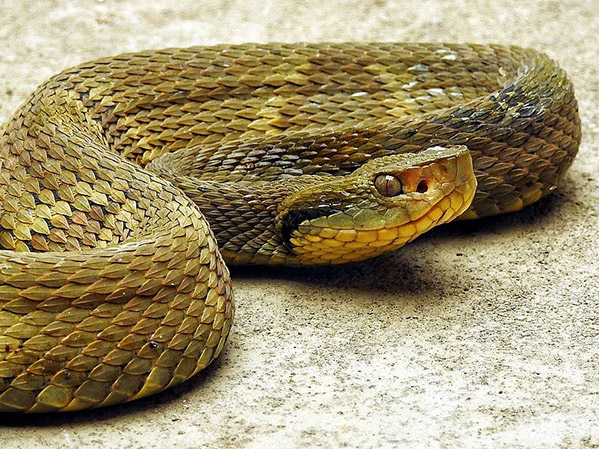
One of the top-selling drugs worldwide originates, ironically, from a snake's venom – but it's far from 'snake oil'. Lisinopril reduces the chemicals that constrict blood flow, which is why it's prescribed for high blood pressure, congestive heart failure, and to heart attack survivors.
But the maker of its natural form, the Brazilian viper (Bothrops jararaca), evolved to produce enzyme inhibitors that help venom spread smoothly through the doomed body of its prey.
| | 7. The Heavens: May's Blue Moon | | May started with the Flower Moon on the evening of May 1st. May's second full moon, known as a Blue Moon, will mark the end of the month on Saturday night, May 31st. An extra full moon in either a month, season, or astrological sign is called a Blue Moon. The phrase "Blue Moon" has entered the English lexicon to mean something unusual or unlikely. | | The History and Origin of the Term “Blue Moon” | | |
The phrase “Blue Moon” has surprisingly deep roots. One of the earliest known written references appears in a 1528 religious pamphlet by Greenwich friars William Roy and Jerome Barlow, written during the Protestant Reformation. In it, common people were satirically described as being expected to believe anything their clergy told them — even that the Moon was blue. The expression was meant to convey something obviously absurd.
The term is also sometimes attributed to William Shakespeare, who wrote between 1585 and 1613 and used similar language to describe impossibilities.
One linguistic theory connects “Blue Moon” to the Old English word belewe, meaning “to betray.” Under this interpretation, the extra full Moon “betrayed” the normal expectation of one full Moon per month — a reading that many lunar calendar researchers find compelling.
The modern definition most people know today — the second full Moon in a calendar month — actually stems from a well-documented misinterpretation. Writer James Hugh Pruett, in the March 1946 issue of Sky & Telescope, incorrectly described the definition used by the Maine Farmers’ Almanac (unrelated to Farmers’ Almanac). Researcher Phillip Hiscock later uncovered this error and published his findings in the March 1999 issue of Sky & Telescope. According to the original almanac, the true definition was seasonal, not monthly.
| | The Three Types of Blue Moons | | |
1. Monthly Blue Moon
The most widely recognized definition today: when two full Moons occur within a single calendar month, the second is called a Blue Moon. This happens approximately every 33 months on average. Though popular, this definition is historically considered a misinterpretation.
2. Seasonal Blue Moon
The older and arguably more traditional definition: when a single astronomical season (spring, summer, fall, or winter) contains four full Moons instead of the usual three, the third full Moon is called a Blue Moon. This is the definition found in the original almanac tradition.
3. Astrological Blue Moon
A lesser-known type: when two full Moons occur while the Sun is in the same zodiac sign, the second is considered an Astrological Blue Moon. For example, both the June 21 and July 21, 2024 full Moons peaked while the Sun was in Cancer, making the July full Moon an astrological Blue Moon.
| | Can the Moon Actually Turn Blue? | | |
Yes — rarely. Following major volcanic eruptions or large-scale wildfires, dust and ash particles roughly one micron in diameter can be propelled high into the atmosphere. These particles scatter red and yellow wavelengths of light, giving the Moon a faint blue or lavender hue.
Notable examples include the 1883 eruption of Krakatoa in Indonesia and the 1980 eruption of Mount St. Helens in Washington State — both of which produced visibly blue-tinted Moons. This optical effect is temporary and depends entirely on atmospheric conditions, not the Moon itself.
| |
8. Hayward M. Fox, Ph.D.: A Video from Dr. Fox
| | Below is another video from the Institute of Personal and Transpersonal Knowledge video collection. Please watch and enjoy. You may also like to visit Dr. Fox's YouTube channel for more videos, and don't forget to like and subscribe. | | In love the other disappears | | These Flock regulars are always here for you: | | Don't Be Shy: Share Your Stories! | | I'm looking forward to sharing more of your personal stories - oral, written, or otherwise, as we enter our third year. I'd so love to present them to The Flock, hit a mailbox below to share your story. | | Subscriptions & Idea Submissions
Reminder: Your submissions are always welcomed. | | |
Feel free to forward this email to a friend. If this was forwarded to you and you would like to receive your very own Flock Newsletter, you can sign up here. If you have any questions or suggestions for future Flock resources, don't hesitate to contact me.
Your fan and friend,
Beth
| | | The information and materials contained or referenced in this newsletter are for informational purposes only and not intended to be a substitute for professional medical advice, diagnosis, or treatment. Always consult a physician or other qualified medical professional with any questions you may have regarding a medical condition or treatment and before beginning a new health care regimen. Do not disregard professional medical advice or delay seeking medical advice or care based on anything contained in this newsletter. | | | | |