REACHING DRY: Thar Desert | |
The Thar Desert located along India's border with Pakistan is barren and arid, but it also has the highest populations density of any desert in the world. This desert also supports a rich biodiversity of large mammals, and over 100 species of birds. | |
Native Animals of the Thar Desert | |
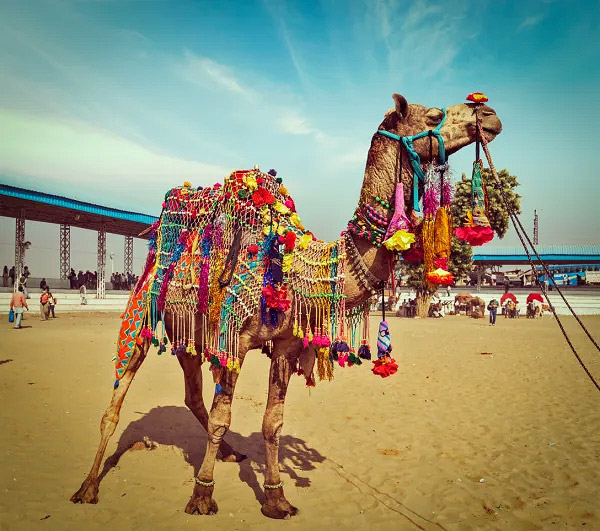
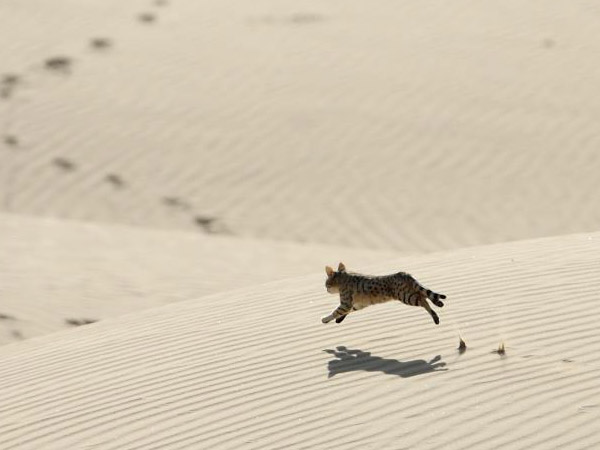
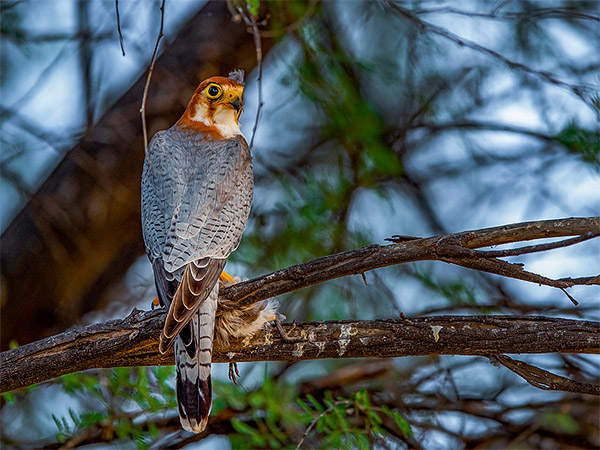
The Thar Desert, the pride of Rajasthan, is also called an ocean of sand. The Thar or Great Indian Desert has an unmatched variety of fauna; while its climatic and geographical conditions are harsh, various desert animals and plants have adapted to live in them with ease. Some of the native species of the Thar Desert include the desert scorpion, the red fox, the mongoose, the chinkara, the falcon, the blackbuck, the Indian Bustard and the wild cat; of course, when it comes to desert animals, the camel - the ship of the desert - cannot be far behind either. | |
|
Desert National Park
In order to protect the fauna and flora of the Thar Desert. It is the largest Protected Area of Rajasthan spread over Jaisalmer.
| |
The Thar Desert in north-western India is a unique and the only habitat of its type in the Indian subcontinent. The Aravalli hills mark the eastern-most boundary limit of the Thar desert while the western limit is defined by the fertile plains of the Indus. The Great Rann of Kutch forms a sharp boundary in the south while its northern limits are formed by the riparian sub-Himalayan plains. Situated near the town of Jaisalmer, Desert national park is among the largest of its kind in the country, encompassing an area of 3162 sq kms. The park covers a huge area extending from Jaisalmer/Barmer all the way to the India-Pakistan border. | |
Hunters of the Thar: Raptors in Desert National Park | |
|
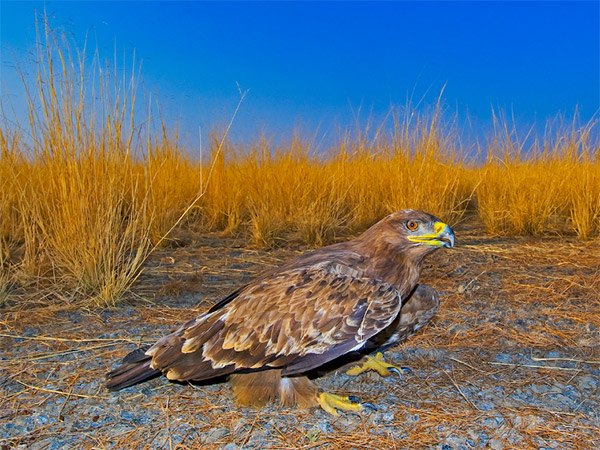
Beyond Jaisalmer in Rajasthan, only the most resilient raptors survive the surreal desert landscape
In the peak of summer, day temperatures in the Desert National Park near Jaisalmer in Rajasthan hover around 45 degrees Celsius. Sand dunes shimmer in the heat, lizards burrow into the cool underground, and antelopes like the chinkara seek shelter in the shade of khejri and acacia trees. The vastness of this sanctuary is matched by the expanse of the skies —endless and deceptively empty.
| |
|
Birding in Thar’s Desert National Park
For birders, the Desert National Park presents plenty of unusual sightings—bimaculated larks and cream-coloured coursers—alongside soul-stirring imagery.
| |
On a cold and windy January morning, as the sun hid behind a curtain of fog, we scanned the vast grassland expanses inside Desert National Park, part of Thar in Jaisalmer. A flock of sparrows perched on a nearby Ziziphus plant, unsure of whether to set out foraging in the cold. A gaggle of short-toed larks flew overhead, chirping along. No other bird was in sight. Just then, Aradin, our driver and field assistant, pointed eastward. A big bird took off... | |
|
Jainism
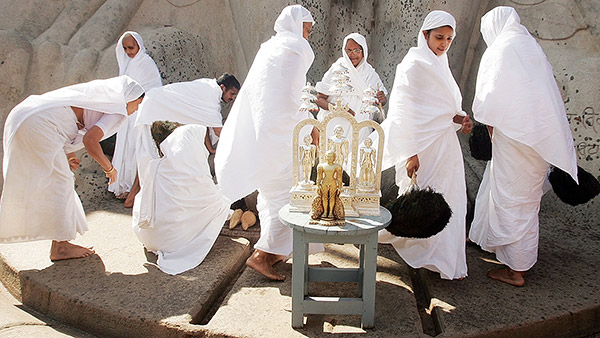
Jainism is one of the three ancient religions of India, with a value system that puts nonviolence above all else.
| |
Jainism is one of the three most ancient religions of India, with roots that go back to at least the mid-first century B.C.E. Today, it is still an integral part of Indian culture. Jainism teaches that the path to enlightenment is through nonviolence and reducing harm to living things (including plants and animals) as much as possible. In addition to nonviolence, Jainism has four additional vows that guide believers: always speak the truth, do not steal, show sexual restraint (with celibacy as an ideal), and do not become attached to worldly things. | |
6 Facts About Jains in India | |
The spiritual goal of Jainism is to become liberated from the endless cycle of rebirth and to achieve an all-knowing state called moksha. This can be attained by living a nonviolent life, or ahimsa, with as little negative impact on other life forms as possible. | |
From: Jain Culture, By: Bessie Craig, October 3, 2018 | |
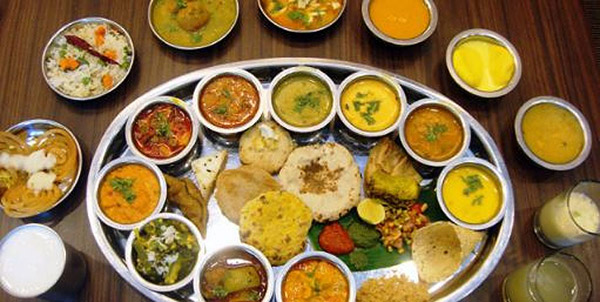
Jainism is a pacifist religion based on the premise that all living things should live in peace and harmony because they are interconnected. If you have a soul, you are part of an eternal cycle of reincarnation as you seek to liberate that soul. It should come as no surprise that the Jains have an extremely strict diet. Some believe it is the strictest diet followed in India today, where the majority of Jains continue to live and practice. | |
WELLNESS: Coriander, Cumin, Hing | |
alexxx1981 / Getty Images | |
|
What Is Coriander?
A Guide to Buying, Cooking, and Storing Coriander
| |
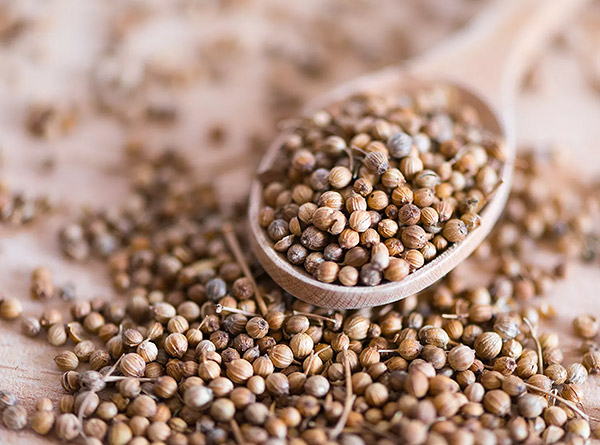
As a spice, the lemony and floral flavor of coriander finds its way into the many Asian, Latin, and Indian dishes, as well as European cuisine. While the leaves of the coriander plant are an herb known as cilantro or Chinese parsley, the round seeds are used to make coriander spice. This spice is found in the Indian spice mixture garam masala, which is used in many savory dishes. | |
The Spruce/Madhumita Sathishkumar | |
|
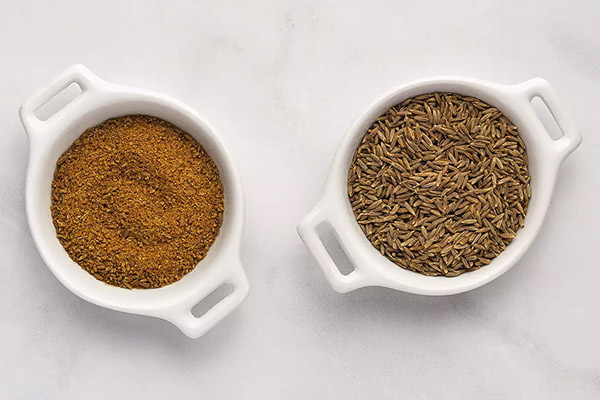
What Is Cumin?
A Guide to Buying, Cooking With, and Storing Cumin
| |
Cumin is a spice made from the dried seed of a plant known as Cuminum cyminum, which is a member of the parsley family. Cumin is one of the most popular spices and is commonly used in Latin American, Middle Eastern, North African, and Indian cuisines, among many others. It is available both as whole seeds as well as in ground form. | |
Steven Mark Needham/Getty Images | |
|
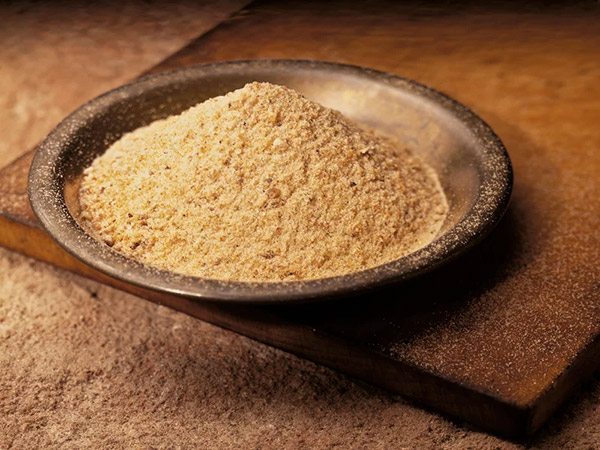
What Is Hing (Asafetida)?
A Guide to Buying and Cooking With Hing (Asafetida)
| |
You may have heard the word hing or heeng floating around with regard to Indian food. These are Hindi names for what is known as asafetida in English. It's a spice that is integral in Indian cuisine, giving authentic dishes that distinct flavor that the country's food is so well-known for and boosting the flavor of other spices. | |
RECIPE: Jain Vegan Cooking | |
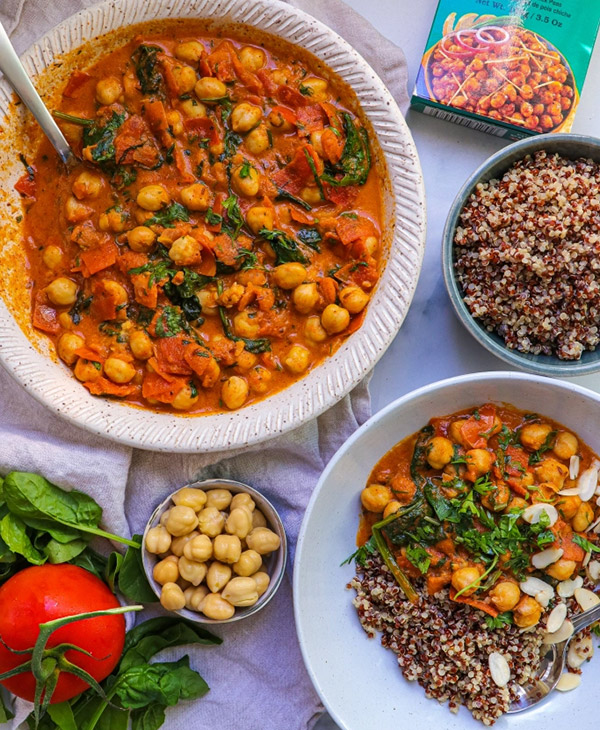
With the hundreds of different spices and various regional cuisines, Indian cooking can seem intimidating. But I’m telling you that actually, it can be so simple, quick, and nutritious! And to prove it, this recipe uses only TEN INGREDIENTS and can be made in just about 15 minutes! And as always, it is JAIN and VEGAN! How is that for a quick, lazy weeknight dinner? | |
KID'S CORNER: Games of India | |
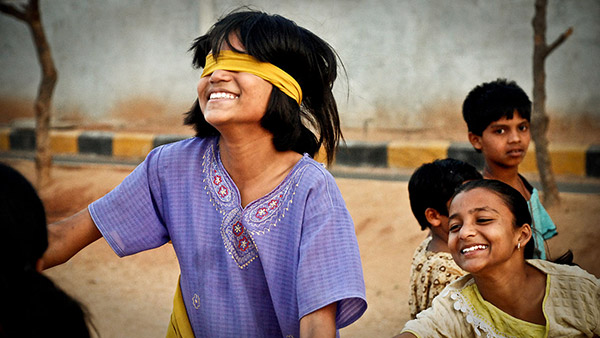
For a deeper dive, let's take a look at the traditional children's games of India. The roots of many games from "Marco Polo" to "Hide and Seek' that those we grew up playing in the States can be found here. | |
Top 10 Traditional Games of India that Defined Childhood for Generations | |
We quite often lament when we see our kids glued to the TV or phone. Especially during the pandemic when taking them outdoors seems highly impossible. And thus, as we watch a generation of children find entertainment in gadgets and technology, we cannot help wondering and remembering the games of yesteryears. Those were the traditional games that took up a large stock of our time after school. They kept us on our feet, quite literally, running around on quiet streets or terraces. They helped us learn about teamwork and deep friendships. And of course, about a childhood that has shaped our lives forever. | |
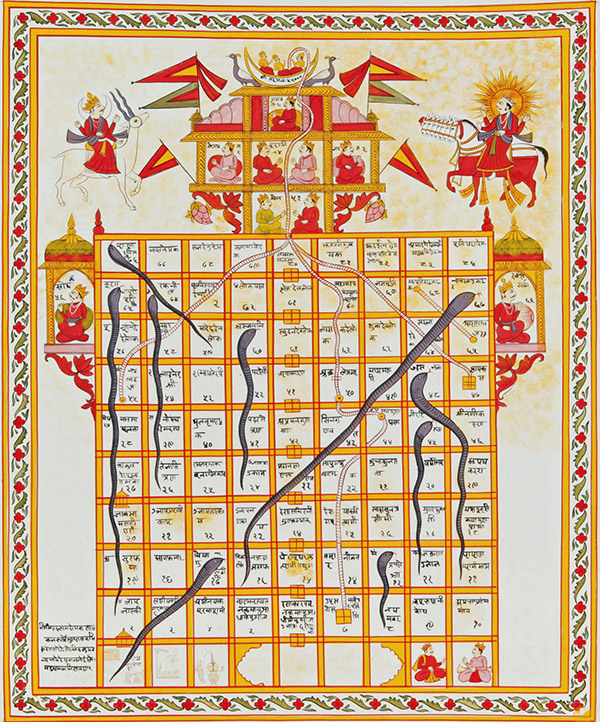
We've previously looked at hopscotch, marbles, and parcheesi, all popular games that have origins in India. This week we're looking at another popular game from India - Snakes and Ladders. | |
Snakes and ladders is a board game for two or more players regarded today as a worldwide classic. The game originated in ancient India as Moksha Patam, and was brought to the UK in the 1890s. It is played on a game board with numbered, gridded squares. A number of "ladders" and "snakes" are pictured on the board, each connecting two specific board squares. The object of the game is to navigate one's game piece, according to die rolls, from the start (bottom square) to the finish (top square), helped by climbing ladders but hindered by falling down snakes. | |
balouriarajesh via Pixabay | |
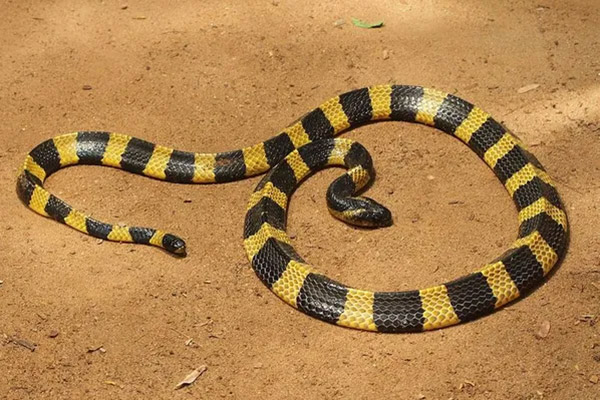
The 7 Most Deadly Snakes in India: The Bad & The Venomous | |
With over 270 species of snakes in India it could be possible that you might unfortunately bump into one. So, to make sure you stay safe on your travels we’re going to be revealing the 7 most dangerous snakes in India so if you do see one, you’ll know what it is and what to do. | |
ATHLETE SPOTLIGHT: Fauja Singh | |
|
A centenarian who continues to run
The incredible story of Fauja Singh
| |
|
Is there a cut-off age when it makes no sense to start something? The question arises given that our society tends to associate old age with disability.
Yet it would be counterproductive to put up such barriers. Fauja Singh has been showing this since the early 2000s. The man who turns 111 on April 1, 2022, decided to take up running ... at age 85. He is the only centenarian to set the world mark for a marathon.
| |
ATHLETE SPOTLIGHT: New York City Marathon | |
This past Sunday was 52nd running of the NYC Marathon. The Flock would like to give a shout out to all who participated, and a special nod to the Kenyan runners; men's division winner Evans Chebet, women's division winner Sharon Lokedi, running her first NYC marathon, and women's runner up Lonoh Chemtai Salpeter, running for Israel. | |
|
With Patience and Grit, Sharon Lokedi Wins Women’s Race at the 2022 NYC Marathon
Making her debut, the University of Kansas graduate outruns the veterans.
| |
Sharon Lokedi of Kenya, making her marathon debut in New York, raced like a veteran. She showed patience and grit, and it paid off with a narrow victory over two of the prerace favorites. Lokedi, 28, was one of nine women in the lead pack up First Avenue. But when Gotytom Gebreslase of Ethiopia, the reigning world champion, made a strong move at about 16 and a half miles, Lokedi didn’t bite. | |
ATHLETE SPOTLIGHT: Gulshan | |
We have our very own outdoorsman Gulshan who's training to complete a pilgrimage in March. We'll keep the Flock posted on his progress | |
We missed this one, but there was a total lunar eclipse Tuesday morning that resulted in a blood moon. This was the second blood moon this year, but it will be the last one until 2025. | |
You know I was recently asked how the Flock became the Flock Newsletter. I created the Flock to keep in touch and share the things that interest me with my friends old and new, from home and abroad. It’s my way of paying back the friendships and love I’ve received. | |
Woman Gives Toys to a Wild Magpie — and He Invites His Friends Over to Play | |
PET CORNER: A Cousin to My Babies | |
Little Lover Boy Davie is available, if anyone is interested. He's going to start leash training, and has vaccinations except rabies. He's getting 1st bortetella in next couple days, so that's a savings. Breed, American Eskimo Dog, miniature, adult at 14 to 17 pounds. Intelligent, energetic, tireless, very affectionate. Show quality confirmation. | |
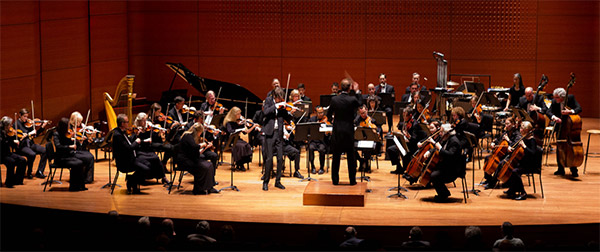
PERFORMING ARTS: Young Concert Artists Reminder | |
Just another reminder that the Young Concert Artists final auditions are coming up on November 13. Put it on your calendar and don't forget that you can stream it live! | |
|
Young Concert Artists
Announces 44 Semi-Finalists!
Join Us for the Final Auditions!
| |
SUBSCRIPTIONS & PAST ISSUES | |
If you have questions related to autoimmunity or other health concerns, and you want my fingers to do the walking for you, don't hesitate to contact me by email or private text at 520-808-3699. | | |
|
Feel free to forward this email to a friend. If this was forwarded to you and you would like to receive your very own Flock Newsletter, you can sign up here. If you have any questions or suggestions for future flock resources, don't hesitate to contact me.
Your fan and friend,
Beth
| | |
The information and materials contained or referenced in this newsletter are for informational purposes only and not intended to be a substitute for professional medical advice, diagnosis, or treatment. Always consult a physician or other qualified medical professional with any questions you may have regarding a medical condition or treatment and before beginning a new health care regimen. Do not disregard professional medical advice or delay seeking medical advice or care based on anything contained in this newsletter. | | | | | |