REMINDER: YOUR SUBMISSIONS ARE ENCOURAGED | | |
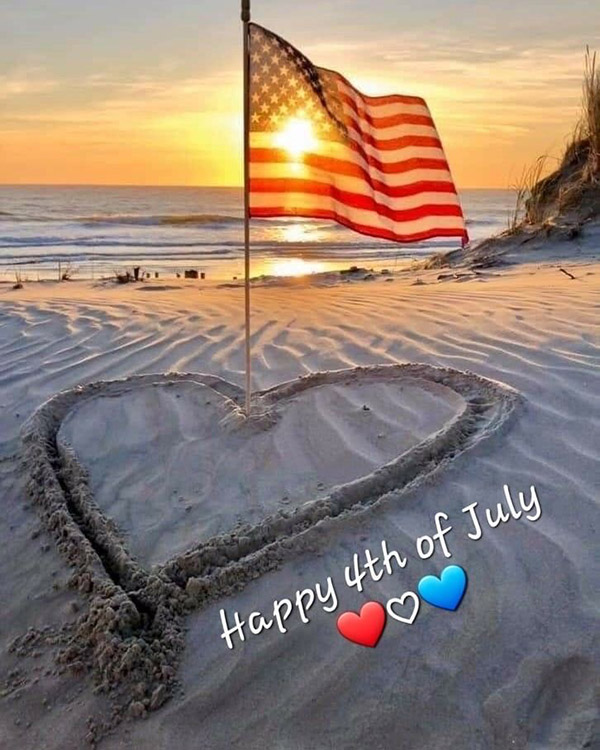
1. Bragging Rights: This week, I'm using my prerogative as publisher and opening with a quick brag about the wonderful 4th of July I shared with my family yesterday.
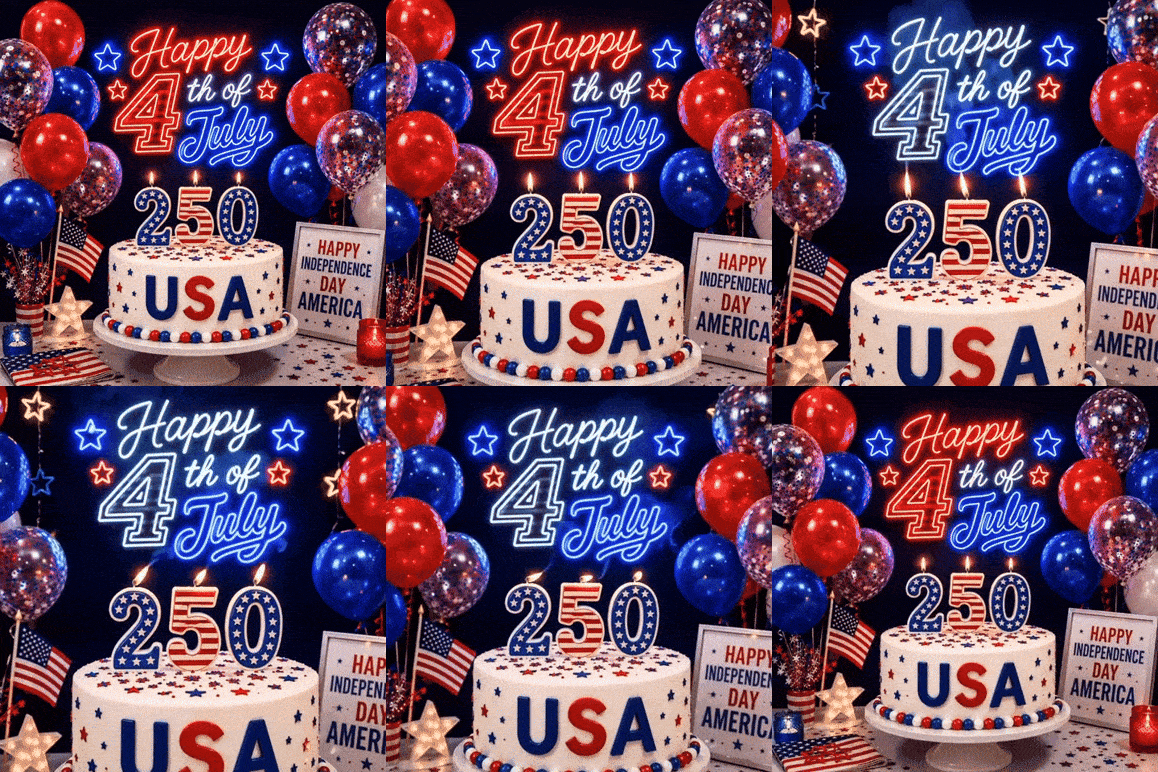
2. America's 250th Anniversary: America 250, a congressionally chartered nonprofit, is hosting nationwide America's Block Party events to celebrate the nation's Semiquincentennial and partnering with Giving Tuesday to create a new annual charity drive, Giving 4th.
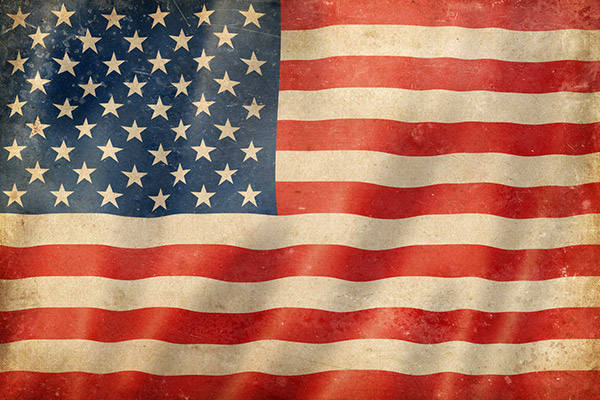
3. American Flag Timeline: To celebrate the Stars and Stripes on the country's 250th anniversary, I have a history of the American flag with details of historic events.
4. Bindu's Corner: I usually lead with Bindu's Corner, but I thought the focus of the quotes she compiled for us this week, joy, made a fitting coda to the 250th anniversary celebrations across the nation yesterday.
5. Hayward M. Fox, Ph.D.: I have a new post with pithy advice from Dr. Fox's blog.
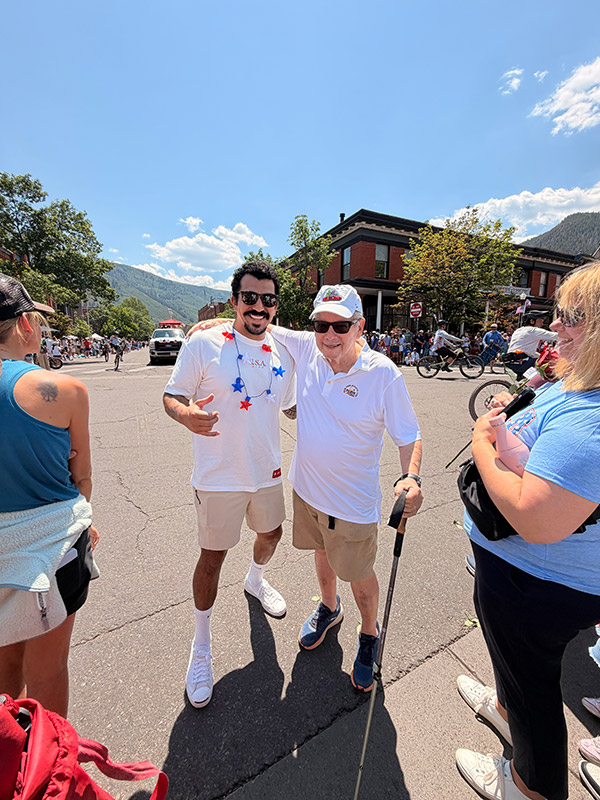
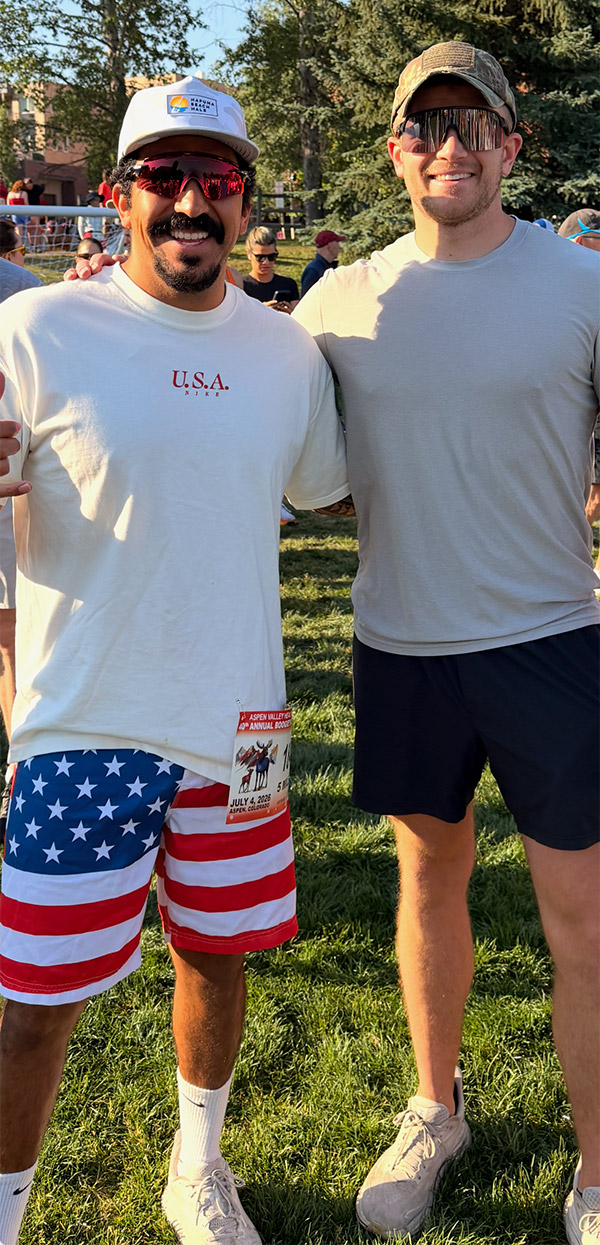
| | Now, to this week's Flock. | | 1. Bragging Rights: My 4th with Friends & Family | | The 4th of July marks America's birthday, but it is more than that. On the 4th, we gather our families together and unite to express our love for our extended family, the United States of America. I had such a wonderful time with my family at the parade in Aspen yesterday that I wanted to send these images out through the Flock today. | | My husband Michael and our son Mikey celebrating the 250th birthday of the country we love so much. Michael immigrated to america with his family and, through hard work and dedication, has lived the American Dream. The next gen, Mikey, is nipping at his heels. | | Two dudes celebrating America: my son Mikey and a good family friend, ultra runner Jared Laski. | |
2. America's 250th Anniversary: July 4th, 2026
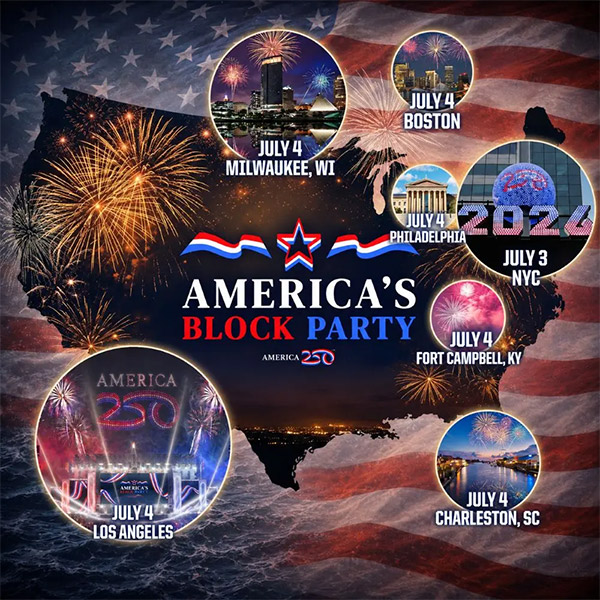
| | America 250, the official commission established by Congress to lead the country's Semiquincentennial commemorations, hosted a series of July 4th celebrations across the US yesterday. billed as America's Block Party, with marquee events in Los Angeles on Saturday and New York both Saturday an today. If you were able to attend any of these events, please share your experience using the submissions links at the top and bottom of this newsletter, and I will include them in a future issue. | | |
This weekend, on July 4, 2026, our nation commemorates and celebrates the 250th anniversary of the signing of the Declaration of Independence. The journey toward this historic milestone is an opportunity to pause and reflect on our nation’s past, honor the contributions of all Americans, and look ahead toward the future we want to create for the next generation and beyond.
America250 invites everyone to take part in this national commemoration — through local events, shared experiences, and opportunities to reflect on the country’s past and future.
| | |
Join the Celebration!
The biggest 4th of July in American history starts with you! America’s Block Party is uniting communities nationwide on July 3 and 4 for live music, local celebration, and something new: a call to give back. This year, we’re launching Giving 4th — a movement to transform Independence Day into the largest single day of charitable giving in U.S. history.
America’s Block Party Lineup
| | | | |
New York, New York
– America's Block Party in the Sky
July 4-5, 2026
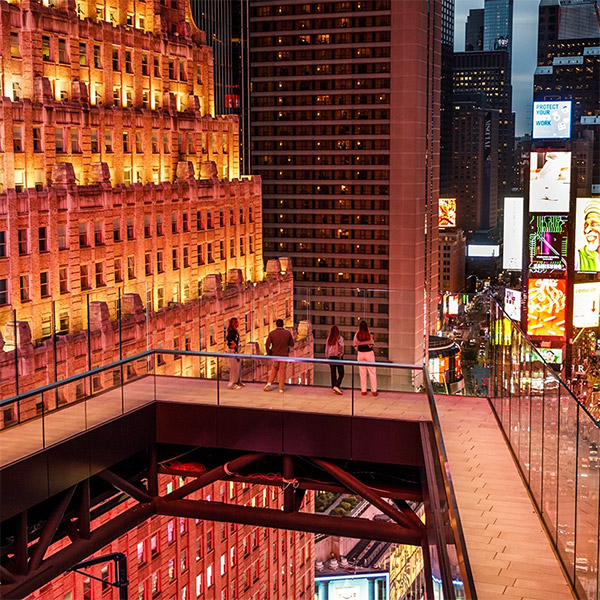
America250 will bring the once-in-a-generation Independence Day to the 19th floor Times Square Skywalk, a 360-degree wraparound viewing deck, offering a unique river-to-river vantage point of the Crossroads of the World, Manhattan street grid, and city skyline. Visitors can read the Declaration of Independence transcribed on the glass wall of the Skywalk, reflect on its meaning, and capture one-of-a-kind photo moments with the founding document’s words set against the Times Square streetscapes. Visitors will also have the opportunity to write their own message of giving and reflection on a piece of confetti that will be released in Times Square during this year’s New Year’s Eve celebration.
LEARN MORE »
| | | | |
Los Angeles
– Benefit Show at the LA Memorial Coliseum
July 4, 2026
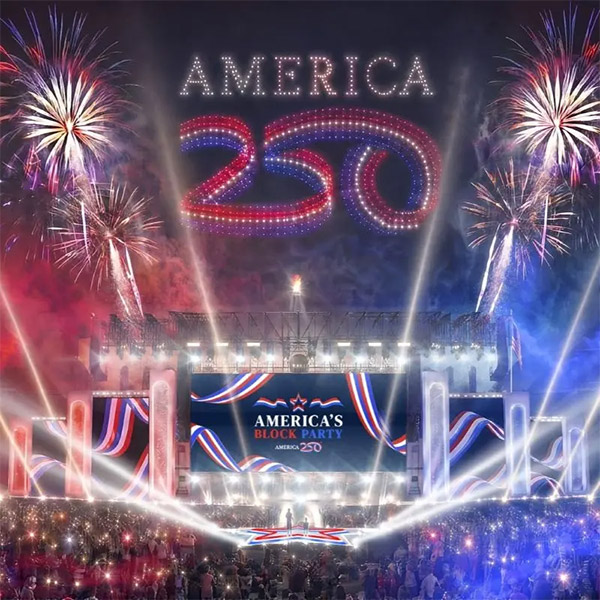
Celebrate America’s 250th anniversary in Los Angeles with Chris Stapleton, The Smashing Pumpkins, Maren Morris, and Anthony Ramos, with special guest Chaka Khan, during “America’s Block Party benefiting Giving 4th,” hosted by Queen Latifah — live at the Los Angeles Memorial Coliseum.
LEARN MORE »
| | | | |
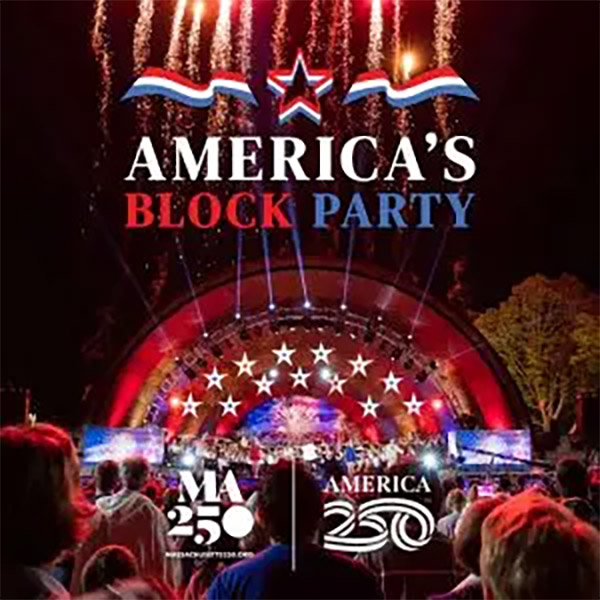
Boston, Massachusettes
– MA - 250
A free and open to the public July 4 concert returns to the Hatch Shell on the Charles River Esplanade with notable headlining talent and patriotic performances including the National Anthem performed by the Boston Children’s Chorus and Tanglewood Festival Chorus with the Boston Pops, and a tribute to America Waves, followed by fireworks over the Charles River.
LEARN MORE »
| | | | |
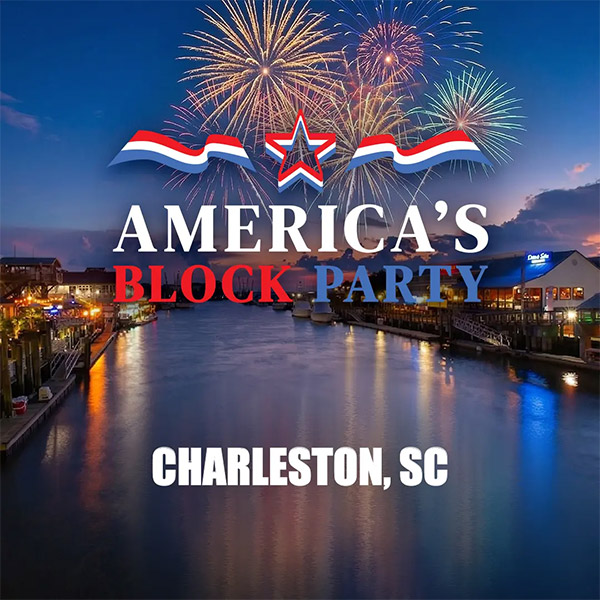
Charleston, South Carolina
– Indepence Day Celebration in Waterfront Park
Charleston played a crucial role in the American Revolution and in advancing the nation’s founding ideals. Hosted by SC250, the Independence Day celebration on the waterfront will feature a peninsula-wide fireworks display, the largest in the Southeast.
LEARN MORE »
| | | | |
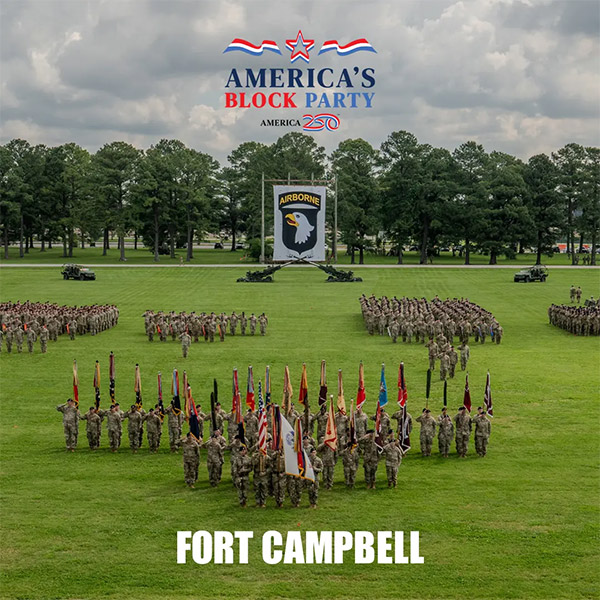
Fort Campbell, Kentucky
– Fort Campbell Festival
The home of the 101st Airborne Division (Air Assault), will host a July 4 festival for military families and the public, featuring The Legend of Charlie Daniels Tribute Concert with special guests Aaron Tippin, The Frontmen, Eric Lee Beddingfield, and the 101st Airborne Division Band. Expected to draw more than 100,000 attendees…
| | | | |
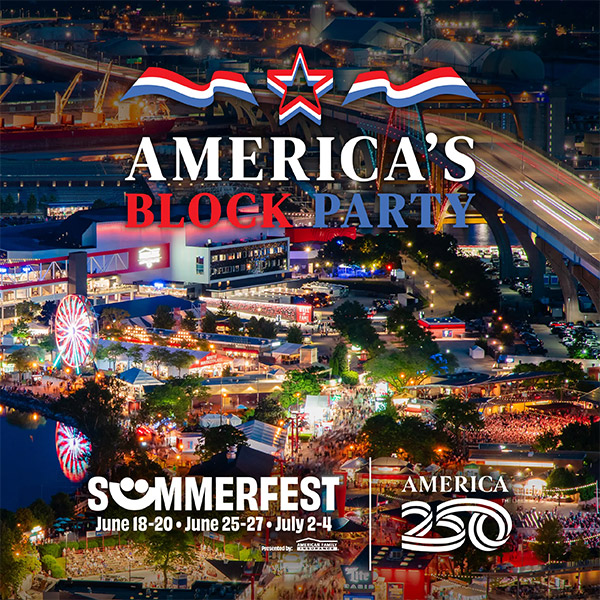
Milwaukee, Wisconsin
– America's Block Party at Summerfest presented by American Family Insurance
Set along Lake Michigan, Summerfest will serve as an official America250 Block Party location, welcoming fans from across the country for its July 4 celebration presented by Harley-Davidson. The event will feature a full day of live music, including performances by Jelly Roll, Sam Barber, The Temper Trap, BoDeans, Soul Asylum, Joywave, Jonah Kagen, and more.
TICKET INFO »
| | | | |
Philadelphia, Pennsylvania
– One Philly: Unity Concert for America
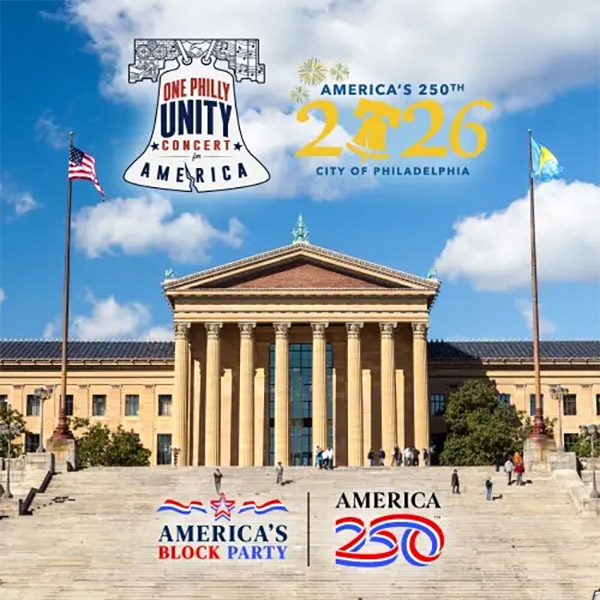
The One Philly: Unity Concert for America will unite music fans from across the country for a multi-genre, multi-generational celebration of American music, democracy, culture, and community. Hosted by Wanda Sykes and featuring star-studded performances from headliners including Christina Aguilera, Will Smith, DJ Jazzy Jeff, Jill Scott, Meek Mill and The Roots, Seal, Jordan Davis, State Property, Kathy Sledge, Infinity Song, and more special guests, the six-hour live concert will take place on the Benjamin Franklin Parkway, culminating with a fireworks finale over the Philadelphia Museum of Art.
| | Give Back with Giving 4th | | |
Giving 4th invites Americans to celebrate the nation’s 250th birthday by donating to a charity of their choice on July 4. Built in partnership with Giving Tuesday, Giving 4th is designed to create a new mid-year giving tradition — one that turns Independence Day into a day of generosity and lasting impact.
LEARN MORE »
| | 3. American Flag Timeline: Historical Highlights | | The American flag is a forward-looking, dynamic symbol that has evolved with the nation's growth in its first quarter-millennium. | | The History and Evolution of the American Flag | | The flag of the United States is not one design but a living document, officially changed 27 times as the nation grew. Each version tells you the size of the country that flew it. Here is how the Stars and Stripes evolved, from a hasty wartime banner to the longest-serving flag in American history. | | |
Before the stars: the Grand Union Flag
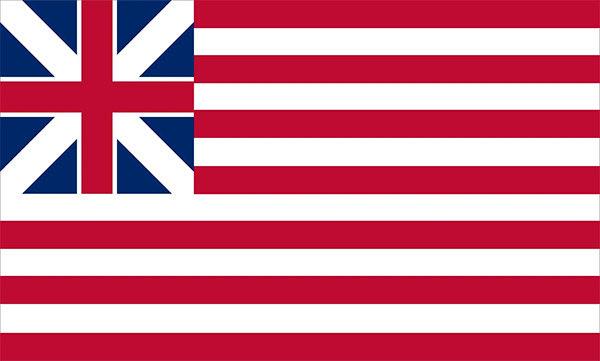
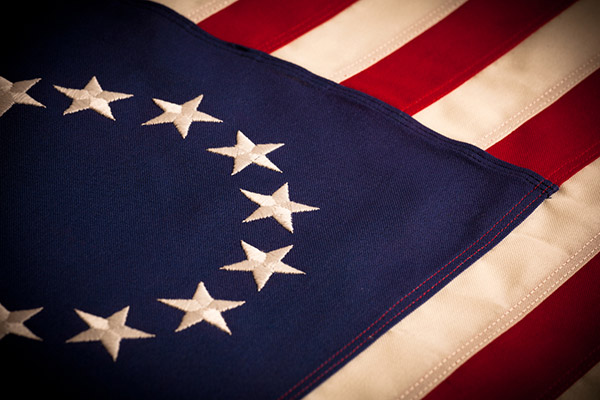
The first flag to represent the united colonies was not the Stars and Stripes at all. The Continental Colors, often called the Grand Union Flag, flew from late 1775. It carried the thirteen red and white stripes we still know, but in place of stars its canton held the British Union flag. It captured the colonies' position at the time: united in resistance, not yet declaring full separation.
Independence made that canton untenable. A new nation needed a banner with no other country inside it.
| | |
1777: a new constellation
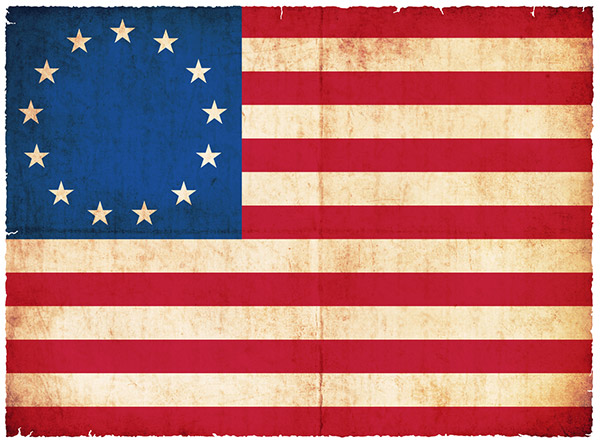
On June 14, 1777, the Continental Congress passed the Flag Resolution: "Resolved, That the flag of the United States be thirteen stripes, alternate red and white; that the union be thirteen stars, white in a blue field, representing a new constellation."
That single sentence is the entire founding document of the American flag, and it is remarkable for what it leaves out. It says nothing about how the stars should be arranged, how many points they should have, or what proportions the flag should take. Early flagmakers improvised: stars in rows, stars in a circle, stars scattered like the night sky. The date of the resolution is why we celebrate Flag Day on June 14.
1795: fifteen stars, fifteen stripes
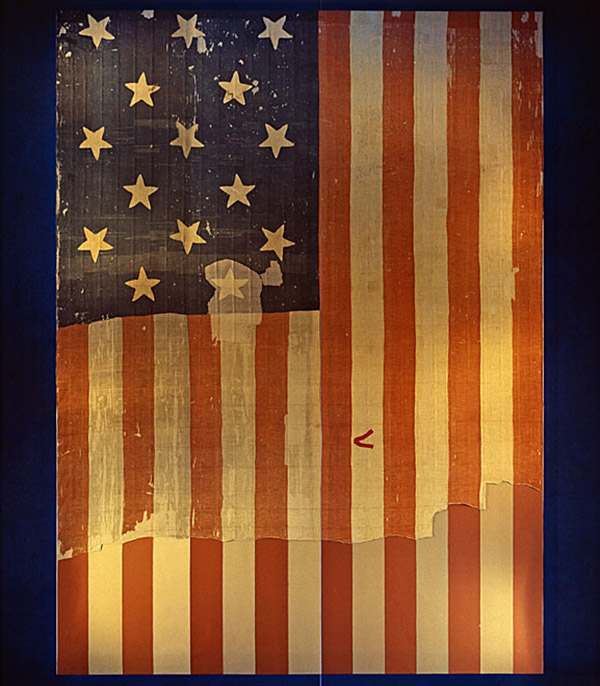
When Vermont and Kentucky joined the union, Congress updated the flag the only way that seemed fair: a star and a stripe for each new state. The 1795 flag carried fifteen of each, and it is the single most famous version of the flag ever made. It was a 15-star, 15-stripe garrison flag that flew over Fort McHenry in September 1814 and moved Francis Scott Key to write "The Star-Spangled Banner."
But the arithmetic had a problem. The nation kept growing, and a flag that added a stripe per state would eventually look like pinstripes.
1818: the rule that saved the stripes
The Flag Act of 1818 settled the design logic that still governs the flag today, returning the stripes permanently to thirteen in honor of the original colonies, and adding one star for each new state. New stars are added on the Fourth of July following a state's admission. From then on, the stripes told the story of the founding and the stars told the story of the growth.
Thirteen stripes for where the country began. One star for every state it became.
Through the nineteenth century the star field changed constantly as the map filled in, and there was still no official arrangement. It took an executive order by President Taft in 1912 to standardize the flag's proportions and the orderly rows of stars for the 48-star flag, which then served through two world wars and 47 years, the record at the time.
1959 and 1960: the last two stars
Alaska's statehood brought a 49-star flag on July 4, 1959. It lasted exactly one year, the shortest-serving star count of the modern era, because Hawaii was right behind. On July 4, 1960, the 50-star flag was raised for the first time.
Its design has a story of its own: a 17-year-old Ohio student named Robert Heft sewed a 50-star flag for a class project in 1958, betting that Alaska and Hawaii would both join the union. His teacher gave him a B minus. Two years later his arrangement was flying over the Capitol.
| | |
The longest-serving flag in American history
The 50-star flag has now flown for more than six decades, far longer than any earlier version. Every previous design was a snapshot of a growing country; this one has become the fixed image of America for most living memory, carried to the Moon, planted at the poles, folded into thirteen ceremonial triangles at military funerals, and raised over every statehouse each morning.
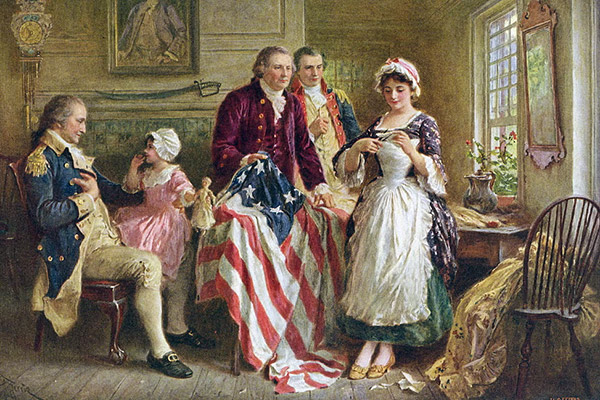
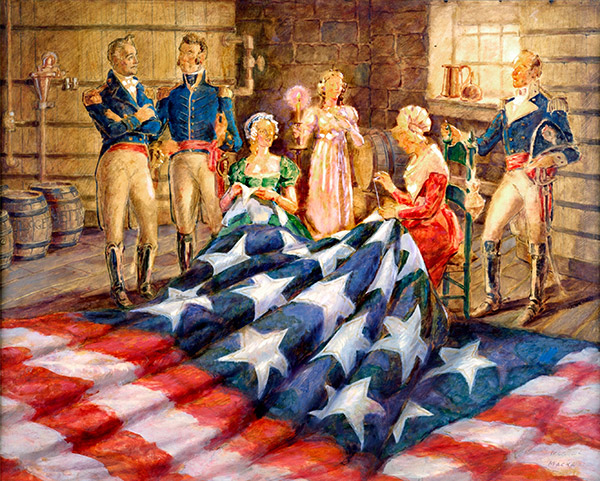
| | The legend of Betsy Ross does not actually purport that she designed the first official U.S. flag, only that she sewed it under instructions from George Washington. While there is no concrete proof of this, her involvement can't be ruled out either. Historians do believe they know who designed the first Stars and Stripes. | | Betsy Ross Probably Didn’t Design the First American Flag. Meet the Man Historians Say Did | | Ross did run an upholstery shop, but evidence suggests Francis Hopkinson created the stars and stripes. | | From: Biography, By: Tyler Piccotti, June 18, 2026 | |
With America250 celebrations ramping up ahead of the Fourth of July, stars and stripes are totally back in style. But who actually designed the American flag pattern in the first place?
Famed seamstress Betsy Ross receives much of the, well, glory for creating “Old Glory.” However, many experts believe the person actually responsible for designing the first version of the flag was a founding father named Francis Hopkinson.
| | Hopkinson, who signed the Declaration of Independence in 1776 and served as a delegate in the Continental Congress, was a lawyer, poet, satirist, musician, and an artist. He designed seals for the U.S. Treasury and the state of New Jersey, as well as U.S. currency predating the dollar bill. And there’s evidence that he was the creator of the American flag—not Ross, as her descendants and many history books have suggested. | | The Star-Spangled Banner as it hung at the Smithsonian National Museum of American History from 1964 to 1999. | |
The Star-Spangled Banner, or the Great Garrison Flag, was the garrison flag that flew over Fort McHenry in Baltimore Harbor during the naval portion of the Battle of Baltimore during the War of 1812. It is on exhibit at the National Museum of American History, Smithsonian Institution. Seeing the flag flying over Fort McHenry on the morning of September 14, 1814, after the battle ended, Francis Scott Key was inspired to write the poem "Defence of Fort M'Henry". These words were written by Key and set to the tune of "To Anacreon in Heaven", a popular song at the time, by John Stafford Smith. In 1931, the song became the national anthem of the United States.
More broadly, a garrison flag is a U.S. Army term for an extra-large national flag that is flown on Sundays, holidays, and special occasions. The U.S. Navy term is "holiday colors".
With fifteen stripes, the Star-Spangled Banner remains the only official American flag to bear more than thirteen stripes.
History
In Baltimore's preparation for an expected attack on the city, Fort McHenry was made ready to defend the city's harbor. When Major George Armistead, the fort's commander, expressed the desire for a very large flag to fly over the fort, General John S. Stricker and Commodore Joshua Barney placed an order for two oversized American flags. The larger of the two flags would be the Great Garrison Flag, the largest battle flag ever flown at the time. The smaller of the two flags would be the Storm Flag, to be more durable and less prone to fouling in inclement weather.
| |
The flag was sewn by prominent Baltimorean flagmaker Mary Young Pickersgill under a government commission in 1813 at a cost of $405.90 (equivalent to $6,771 in 2025). Armistead specified "a flag so large that the British would have no difficulty seeing it from a distance".
Pickersgill made the flag with assistance from her daughter, two nieces, and an African American indentured servant, Grace Wisher.
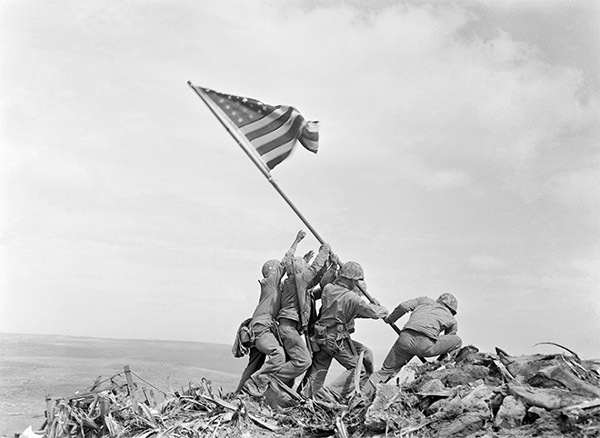
| The iconic Associated Press photograph by Joe Rosenthal of Soldiers raising the U.S. flag atop Mt. Suribachi after a fierce battle to take control of Iwo Jima inspired the Marine Corps War Memorial in Arlington, Virginia. | In 1945, US forces bounded forward in the Central Pacific as combat reached ever bloodier crescendos. | |
U.S. Marines invaded Iwo Jima, a strategic air base located between the Mariana Islands and Japan, on February 19, 1945, after months of naval and air bombardment. Planners expected a brief campaign. But for over five weeks, Japanese forces mounted a fierce defense, turning the small volcanic island into a death trap for invading marines…
Celebration erupted when the first marine patrol reached the summit of Mount Suribachi on February 23, 1945, and raised a small American flag. A short while later, another detachment returned to the peak to replace the flag with a second, larger one. Associated Press photographer Joe Rosenthal captured the moment on film. Although the second flag raising was hardly noticed on Iwo Jima, Rosenthal's dramatic photograph appeared on the front pages of newspapers around the country. It became one of the iconic images of World War Il and one of the most reproduced photographs in history.
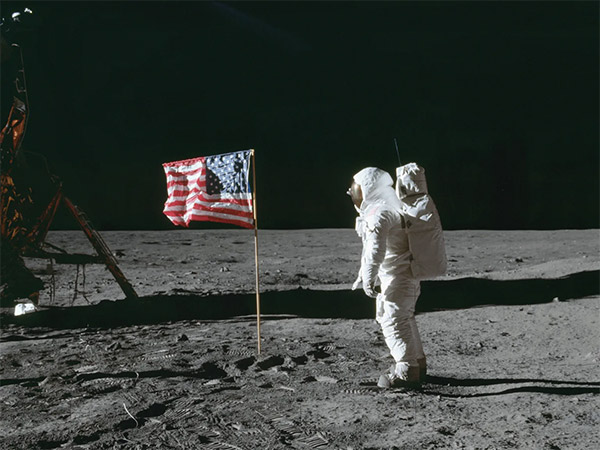
| On July 20th, 1969, astronauts Neil Armstrong and Buzz Aldrin planted the first American flag on the Moon during their historic moonwalk. Subsequent missions would place five more flags on the Moon between 1969 and 1972. | Apollo 11 astronauts plant flag on the moon on July 20, 1969. | | Here are some thoughts on joy from spiritual leaders, an American trailblazer, and the combined wisdom of an ancient culture. I think joy nicely sums up how most Americans felt celebrating the country's 250th birthday yesterday. | | |
Practice japam and meditation once in the morning and once in the evening for at least two years. You will find great joy; spiritual emotions will arise; a new vision will open up.
—Swami Brahmananda
Spirit is never sombre. Weeping with the afflicted does not help. It may create a point of contact, but it does not bring a remedy. Joy is the antidote for sorrow.
—Swami Paramananda
Even if you put all the pleasures of the entire world together in one great heap, they say that the ultimate bliss that each individual soul is destined to attain, even one little portion of that bliss, far outweighs the total pleasure that this world is capable of giving.
—Chidananda
It is fun to keep focused on the vision of our perfection. It’s fun to deal in Reality instead of playing games. And it’s fun to see people’s light and not their lampshades.
—Ruth Hanna
One Joy scatters a hundred griefs.
—Chinese Proverb
| |
5. Hayward M. Fox, Ph.D.: from Dr. Fox's Blog
| | Today's post from Dr. Fox is short and sweet.. Give it some thought and be sure to visit Dr. Fox's site at the Institute of Personal and Transpersonal Knowledge for more insightful perspectives. | | Today's closing photo was shared with us by Flock friend and Big Island artist Christal Nylin. | | These Flock regulars are always here for you: | | Don't Be Shy: Share Your Stories! | | I'm looking forward to sharing more of your personal stories - oral, written, or otherwise, as we enter our third year. I'd so love to present them to The Flock, hit a mailbox below to share your story. | | Subscriptions & Idea Submissions
Reminder: Your submissions are always welcomed. | | |
Feel free to forward this email to a friend. If this was forwarded to you and you would like to receive your very own Flock Newsletter, you can sign up here. If you have any questions or suggestions for future Flock resources, don't hesitate to contact me.
Your fan and friend,
Beth
| | | The information and materials contained or referenced in this newsletter are for informational purposes only and not intended to be a substitute for professional medical advice, diagnosis, or treatment. Always consult a physician or other qualified medical professional with any questions you may have regarding a medical condition or treatment and before beginning a new health care regimen. Do not disregard professional medical advice or delay seeking medical advice or care based on anything contained in this newsletter. | | | | |