REMINDER: YOUR SUBMISSIONS ARE ENCOURAGED | | |
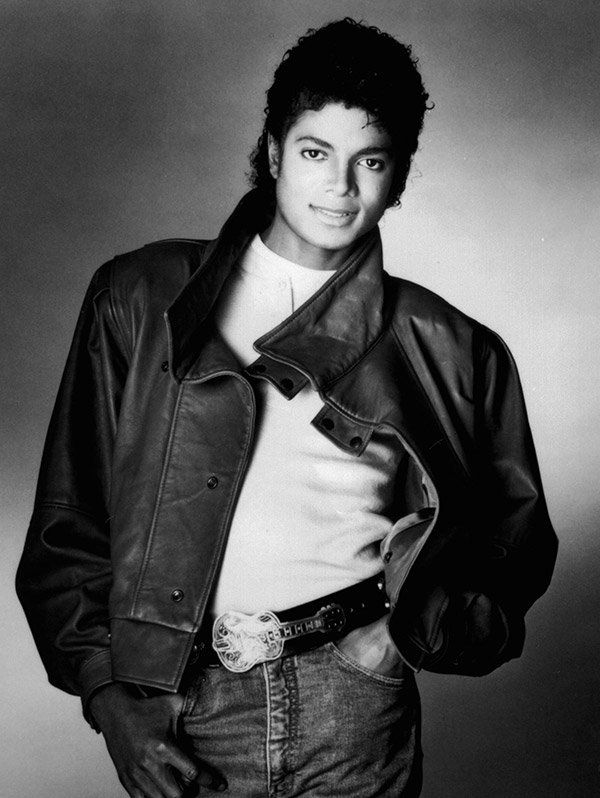
1. Performing Arts: Michael Jackson's song Thriller made this week's Billboard Hot 100's top 10, making him the first musician to chart in the top 10 in six consecutive decades.
2. Bragging Rights: This week, I have the pleasure of bragging again about my talented daughter, Violet, who's one of the featured visual artists at this weekend's Dusk Music Festival in downtown Tucson.
3. World News: The US and Hungary have reached an agreement under which the US will provide a "financial shield" to help protect Hungary's financial system from external threats and maintain stability.
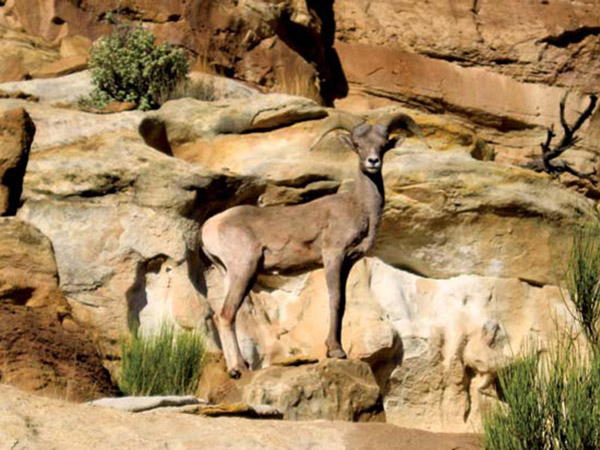
4. Nature: In 2013, Arizona Game & Fish initiated a program to repopulate the Santa Catalina Mountains bighorn sheep herd, which had declined as Tucson's population expanded. I recently came across a trail cam video that shows this program has at least had some success.
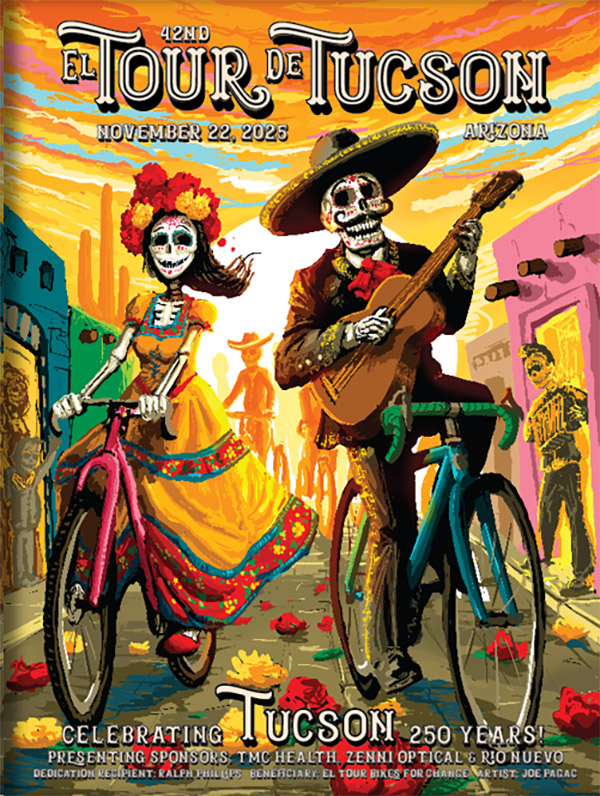
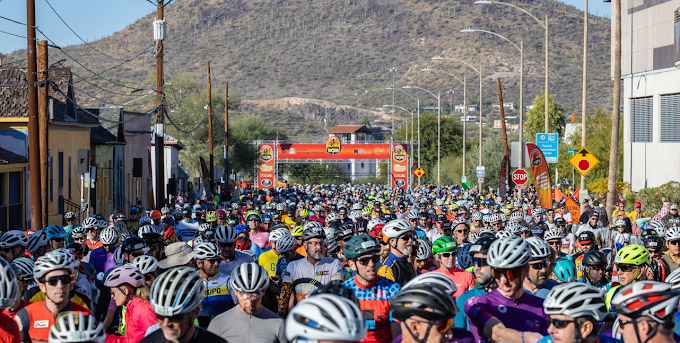
5. Cycling: Next Saturday is the 42nd edition of El Tour de Tucson. I hope some of you can participate in this fantastic cycling event.
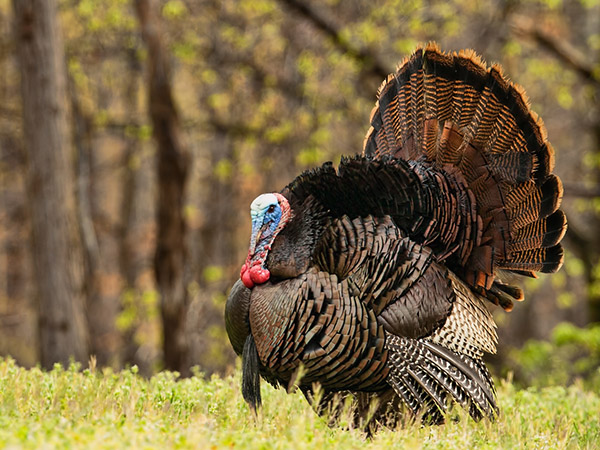
6. Birds: I have two posts of turkey trivia in preparation for Thanksgiving.
7. Around Town: The Cathedral Concert Series is bringing the Balourdet Quartet to the St. Augustine Cathedral next Wednesday, November 19th, for a free performance.
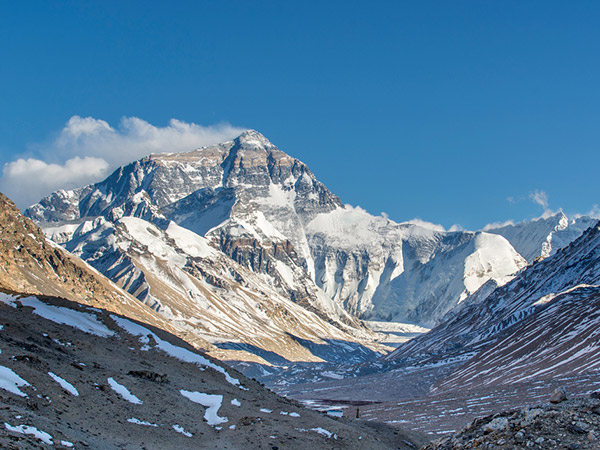
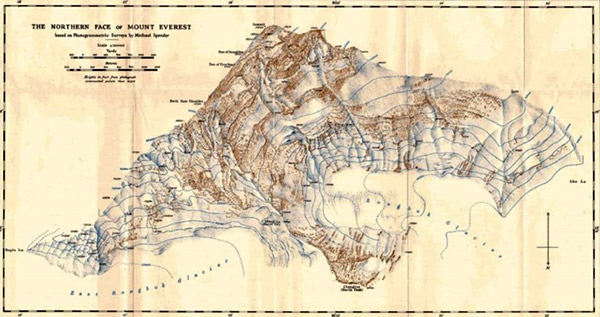
8. Reaching High: British surveyor Michael Spender created the first accurate maps of Mount Everest's North Face in 1935 using a combination of aerial photos and ground measurements.
9. Dr. Hayward M. Fox, Ph.D.: I have the latest post from Dr. Fox's blog this week.
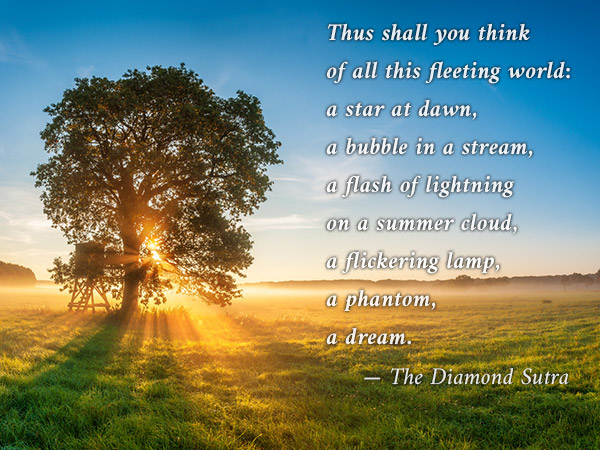
10. Bindu's Corner: This week we have a verse from the Diamond Sutra.
| | |
I hope you will pick and choose, and enjoy your reads.
Please feel free to share the Flock.
| | Now, to this week's Flock. | |
1. Performing Arts: Michael Jackson
| | Michael Jackson's 1982 zombie-themed hit Thriller has gained popularity as a favorite Halloween tune, helping to push it back up the charts this year. This achievement made him the first musician to chart in the top ten in six consecutive decades. I think you could even argue seven consecutive decades, while his first top 10 hit as a solo artist was in 1971, the song I Want You Back with Michael singing the lead as a member of The Jackson Five made Billboard's top 10 in 1969. | | Michael Jackson Becomes First Artist With Top 10 Hits in Six Decades as ‘Thriller’ Re-Enters Hot 100 | | From: Variety, By: Thania Garcia, November 10, 2025 | | |
Michael Jackson is back in the Billboard Hot 100 top 10 as “Thriller” lifts to No. 10 following the 2025 Halloween season.
The posthumous milestone cements Jackson’s musical legacy: the 1982 classic amassed 14 million streams and a radio airplay audience of 9.3 million, according to Luminate. Rising from No. 32, (its highest peak was No. 4 in 1982) “Thriller” makes Jackson the first artist ever to achieve top 10 hits in six different decades: the 1970s, ’80s, ’90s, 2000s, ’10s and now the ’20s. In doing so, he surpasses Andy Williams, who, until his death in 2012, held top 10 placements across five decades.
| | Michael Jackson - Thriller (Official Video - Shortened Version) | | Jackson first entered the Hot 100 top 10 as a solo artist in November 1971 with “Got to Be There.” Over his career, he has amassed 30 top 10 hits, including 13 No. 1s. Until this week, his last top 10 appearance was posthumously as a feature on Drake’s “Don’t Matter to Me” in 2018. | | The Jackson 5 "I Want You Back" on The Ed Sullivan Show December 14, 1969 | |
2. Bragging Rights: My Daughter Violet
| | The Arizona Daily Star featured a photo of my daughter, Violet, and the immersive installation she created for this year's Dusk Music Festival as the center spread for the Cover Story of their Weekend supplement, Caliente. The Dusk Music Festival is an annual, multi-day event held in downtown Tucson, combining live indie-pop music performances, Electronic Dance Music, raves, regional culinary offerings, and visual art exhibitions by local artists, all within an immersive weekend of sights, sounds, and food. Learn more about Dusk and rave culture from my experience of attending the festival last year. | | |
November 15th – 16th, 2025
Jácome Plaza | Downton Tucson, AZ
| |
3. World News: Hungary & U.S. Make Security Deal
| | As my husband is of Hungarian descent, he's happy to see the US pledging its support in ensuring stability in Hungary. | |
Hungarian leader Orban says he secured ‘financial shield’ from Trump
Trump promises to defend Hungary’s finances amid Orban-EU tensions and to sign $600m gas deal, says Hungarian leader.
| | |
Hungary has struck a deal for what Prime Minister Viktor Orban called a “financial shield” to safeguard its economy from potential attacks following talks with US President Donald Trump.
Orban, a longtime ally of Trump and one of Europe’s most outspoken nationalist leaders, met the US president at the White House on Friday to seek relief from sanctions on Russian oil and gas. Following the meeting, he announced that Hungary had secured a one-year exemption from those measures.
“I have also made an agreement with the US president on a financial shield,” Orban said in a video posted by the Hungarian outlet index.hu on Sunday. “Should there be any external attacks against Hungary or its financial system, the Americans gave their word that in such a case, they would defend Hungary’s financial stability.”
| |
4. Nature: Santa Catalina Bighorn Sheep
| | The Santa Catalina Mountains that border the north side of Tucson were once home to a large herd of bighorn sheep. Over the years, as Tucson grew, the herd of bighorns dwindled, finally disappearing entirely in the 1990s. In 2013, Arizona Game & Fish began an ambitious program to restore the Catalina's bighorn herd by transplanting bighorns from another part of the state. I was curious about how the repopulation program was progressing and did some online research when I came across a recently posted trail cam video that shows the program has had some success. It's great to see bighorns back in the Santa Catalinas where they belong. | | The Bighorn Sheep of the Santa Catalina Mountains | | |
The Tohono O’odham who are native to southern Arizona looked at the mountain chain lying to the north of what is now Tucson and thought that it resembled one of the green toads that shared the Sonoran Desert with them.\
They called the sierra Babad Do’ag (“Frog Mountain”), and if you look at the mass of volcanic rock that rises 9,157 feet (2,791 meters) above sea level like a huge island out of the desert, you might detect some resemblance, if in nothing else than the mountains’ rumpled skin.
The Jesuit explorer Eusebio Francisco Kino is believed to have bestowed the name Sierra Santa Catarina in April 1697, and by the 1880s, the people of Tucson were calling the range the Santa Catalina Mountains. All the while, O’odham, Spanish, Mexican, and Anglo people entered the jagged sierra, whose ancient, much-metamorphosed volcanic core is laced with streamlined canyons that nourish animal and plant life.
Pusch Ridge, on the western edge of the range, rises above one such canyon. Historically, it was long home to a population of bighorn sheep, as well as numerous deer. For that reason, and by virtue of its comparative ease of access, hunters often climbed the ridge to bag game, whose population remained relatively steady until the 1970s.
It was during that decade, a time of double-digit growth, that things began to change for the worse, at least from a bighorn’s point of view. Housing developments began to climb the ridge, busy roads girded the mountains on all sides, and metropolitan Tucson’s population began its rise from the 250,000 of 1975 to the million-plus of today.
Sensitive to the presence of humans, the bighorn population, probably never numbering more than a hundred or so individuals, began to decline, steadily and inexorably. Finally, toward the end of the 1980s, travelers into the western edge of the mountains realized that the bighorns had disappeared. Apart from a few scattered skulls near watering holes, it was as if they had never been there in the first place.
Fast-forward to 2013. Well-meaning game officials, federal and state, had for some time been discussing the possibility of reintroducing bighorn sheep into the mountains. Now, on November 18, a small herd, captured in the western desert, was released into the mountains: 24 ewes, six rams, one lamb. According to Arizona Game & Fish officials, that herd represented the first phase of an injection, so to speak, of bighorns intended to bring the population in the Santa Catalinas back to about 100 individuals.
…For the time being, the remaining sheep have begun to relocate themselves from the lower canyons of the mountains, places full of dense vegetation that affords predators ample places to hide, and up to higher, bare slopes that offer a better lookout for trouble.
| | Bighorn sheep over the city | |
5. Cycling: El Tour de Tucson
| | The 42nd edition of the El Tour de Tucson will take place next Saturday, November 22nd, bringing together nearly 10,000 cyclists from around the world to ride through Tucson and its surrounding Sonoran Desert. This year's race features 1-mile and 3-mile fun rides perfect for young children, a metric half-century (50 kilometers/32 miles), a metric century (100 kilometers/62 miles, my favorite), and the century (102 miles/162 kilometers). | | El Tour de Tucson returns for 42nd annual celebration of cycling, health and community | | From: KGUN 9 News, November 14, 2025 | |
El Tour de Tucson returns Saturday, Nov. 22, marking the 42nd year that the city has hosted one of the Southwest’s largest road-cycling events. All activities — from packet pickup to the finish lines — are centered at the Tucson Convention Center, with a three-day Zenni Expo & Fiesta kicking off Thursday, Nov. 20.
The Expo opens at noon on Thursday and runs through the weekend in downtown Tucson. Organizers say it will feature more than 100 exhibitor booths offering activities, giveaways and merchandise, with headline bands performing each day on the Stewart Title Main Stage. Packet pickup will coincide with the Expo beginning Thursday.
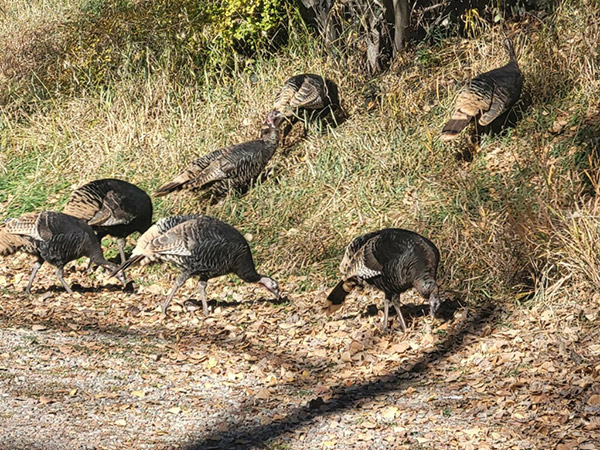
| | Organizers expect nearly 10,000 cyclists and almost 1,000 walkers and runners to participate, with momentum that could push cycling entries toward 11,000. “For the five months we have trended to have record-breaking participation in El Tour, which could get us close to 11,000 cyclists,” said TJ Juskiewicz, El Tour’s executive director. “It shows Tucson is a cycling city and continues its popularity to others outside the area and region. In fact, 40 percent of our cyclists come from outside of Tucson. We have a cyclist for every state in the United States registered and cyclists from more than 20 countries.” | | Last week, I shared a photo of wild turkeys from a friend and Flock Reader Margaret Durney, and it sparked some discussion around the Flock on what to call a group of turkeys. The following article helped clarify that. | | What Do You Call a Group of Turkeys? From 'Gangs' to 'Rafts | | |
Terminology for Groups of Turkeys
Is it a flock, a gaggle, a rafter, a gang or a brood of turkeys? Well, the answer is, that all of the above are correct, but each term is used in slightly different contexts. We’ll be looking at each one below, so read on to learn more.
General Term
When talking about a gathering of turkeys, both in the wild and on a turkey farm or homestead, it’s fine to simply call them a flock.
Specific Terms
Historically, groups of domesticated turkeys were known as rafters. This term is not in common usage today, although it is still used among turkey farmers. It’s unclear exactly when this term originated, one theory is that the name comes from a turkey’s habit of roosting up high overnight, in the rafters or eaves of a barn, or in the wild in the branches of a tree.
Another name for a gathering of turkeys is a ‘gang’, or less commonly a ‘mob’. This refers to the noisy and sometimes intimidating behavior when large groups of young and older male turkeys assemble.
Occasionally a group of noisy turkeys may also be called a ‘gaggle’, calling out the loud, gobbling sounds that are characteristic of a large gathering of turkeys (and geese!).
In the wild, mixed groups of turkeys are sometimes also known as ‘runs’, while groups that consist solely of adult males (known as ‘toms’) might be referred to as ‘posses’.
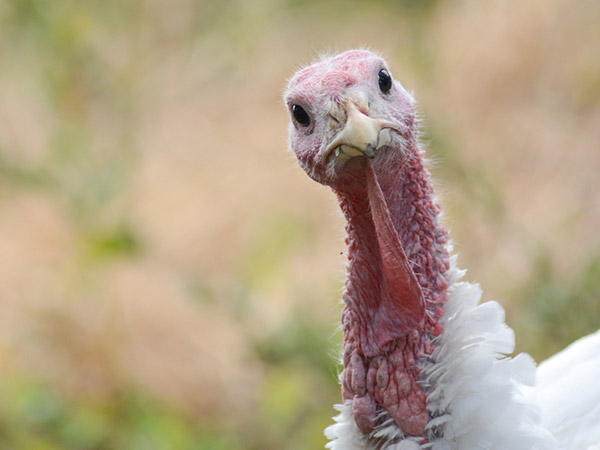
| | Here's some more turkey trivia that may come in handy around the supper table on Thanksgiving. | | 25 Fun Thanksgiving Facts You'll Want to Tell Everyone You Know | | From: House Beautiful, November 3, 2023 | |
• The first Turkey Trot dates back to the 1890s.
Buffalo, New York, was the first city to host a Turkey Trot on Thanksgiving morning in 1896. Only six runners participated in the race that year, running on stretches of dirt road for roughly five miles.
• Female turkeys don't gobble.
Only male turkeys make the well-known "gobble, gobble" sound that has come to be associated with the holiday. In fact, male turkeys are even known as "gobblers." Females make other noises, such as purring and cackling.
• Benjamin Franklin wanted the turkey to be the national bird.
In a letter to his daughter, Benjamin Franklin wrote, "For my own part I wish the Bald Eagle had not been chosen the Representative of our Country...For the Truth the Turkey is in Comparison a much more respectable Bird." Although Franklin didn't get his wish, his letter did inspire a song in the Tony-winning musical 1776, about the drafting of the Declaration of Independence.
• Butterball has had a Turkey Talk-Line for nearly 40 years.
If you find yourself with a million questions about cooking your turkey and Google is too overwhelming, reach for the phone because the Butterball Turkey Talk-Line is real and there to help you. Open to U.S. and Canadian homes every November and December, the unique hotline, which first opened in 1981, is also available to take questions via online chat and email. Plus, there are Spanish-speaking experts! Each year, Butterball experts answer more than 100,000 questions for thousands of households.
• The turkey bird is actually linked to the country of Turkey.
If you've ever wondered which came first, the bird or the egg country, we have a definitive answer: The turkey bird got its name from the country due to a case of mistaken identity! During the Ottoman Empire, guinea fowl were exported from East Africa via Turkey to Europe, and Europeans started calling the birds turkey-cocks or turkey-hens due to the trade route. So when Europeans first sailed to North America and discovered birds that looked similar to guinea fowl, they called them "turkeys."
| |
7. Around Town: Cathedral Concert Series
| | The Cathedral Concert Series, led by Artistic Director Carlos Zapién, brings world-class performers to the historic St. Augustine Cathedral in Downtown Tucson. Concerts are free to attend, provided a reservation is made in advance. | |
Balourdet Quartet
Dreamscapes and Landscapes
| | |
Wednesday, November 19, 2025
Our Lady's Chapel - 6:30 PM
| | The Balourdet Quartet is acclaimed for their vibrant energy and masterful blend of technical precision and emotional depth that brings a fresh perspective to both beloved classics and modern compositions. Its unique closeness and willingness to take creative risks earned it the 2024 Avery Fisher Career Grant, as well as Chamber Music America’s 2024 Cleveland Quartet Award. With more than 70 concerts per season, recent highlights include the Balourdet’s debuts at Carnegie and Wigmore Halls, and new string quartets by composers Karim Al-Zand, Paul Novak, and Nicky Sohn through grants from Chamber Music America (2021) and the Barlow Foundation (2023). They have recently been named the first ever Quartet-in-Residence at the Seattle Chamber Music Society and have recently completed residencies at Indiana University and the New England Conservatory’s Professional String Quartet Program. | | Debussy: String Quartet in G minor | Balourdet String Quarte | |
8. Reaching High: Mapping Everest
| | ExplorersWeb has an in-depth article on British surveyor Michael Spender. Spender was a mountaineer by necessity, not by vocation. Mountaineering was another step in creating accurate maps. Spender used a combination of ground measurements and stereo aerial images taken from an open-cockpit biplane to create accurate maps of the mountain and its surrounding area. He also trained skilled mountaineers to use survey equipment, enabling them to take measurements as they climbed. | | Michael Spender, the Man Who Mapped Mount Everest | | From: ExplorersWeb, By: Kris Annapurna, November 11, 2025 | |
British surveyor Michael Spender created the first detailed photogrammetric map of Mount Everest’s North Face in 1935 using 1,200 aerial photos and ground measurements. His map guided major British Everest expeditions for North Face approaches for years…
The 1935 Everest mission
Earlier surveys of Everest existed; for example, those conducted by Canadian surveyor Major Edward Oliver Wheeler, who played a pivotal role in the 1921 British Mount Everest Reconnaissance Expedition. Wheeler’s photos aided Spender’s work, but Spender further evolved the photogrammetric technique, which uses overlapping images to give 3D images and precise measurements.
After the 1924 Everest tragedy with George Mallory and Sandy Irvine, the Mount Everest Committee demanded a new North Face map. The Royal Air Force loaned the 1935 Everest expedition two Houston-Westland biplanes, and Spender was the chief surveyor. The team included leader Eric Shipton, Bill Tilman, Edmund Wigram, Charles Warren, and porter Tenzing Norgay, who was only 21 years old at the time. The team was completed by Dan Bryant, Edwin Kempson, and 11 Sherpas. Spender had only three weeks for the preparation…
| | The new large-scale map of 1935, published by the Royal Geographic Society based on Spender’s survey. | | |
Spender’s accuracy
Persistent clouds blocked the expedition. Spender got sick on Lho La, and Sherpas carried him down, but he insisted on finishing the survey. Spender stressed that the ground control could not fail. The aerial photos were useless without it.
After the expedition, back in London, he began the data processing. He used a Wild A5 stereo-plotter and shipped negatives to Copenhagen, where an expert plotted the initial contours. Then Spender integrated the 1921 Wheeler photos, the 1933 Houston flight’s obliques, and Captain Crone’s graphical method for the heights of Makalu and Chamlang peaks.
Spender’s accuracy was notable. His contours proved remarkably consistent with later surveys. Shipton praised Spender’s work and, in his book Blank on the Map, claimed that Spender gave them a map they could trust
| |
9. Dr. Hayward M. Fox, Ph.D.
| | I want to remind everybody that Dr. Fox is always here for you online and virtually. Please enjoy this bit of wisdom fom his most recent blog post. | | This week we have a verse from the Diamond Sutra. | | These Flock regulars are always here for you: | | Don't Be Shy: Share Your Stories! | | I'm looking forward to sharing more of your personal stories - oral, written, or otherwise, as we enter our third year. I'd so love to present them to The Flock, hit a mailbox below to share your story. | | Subscriptions & Idea Submissions
Reminder: Your submissions are always welcomed. | | |
Feel free to forward this email to a friend. If this was forwarded to you and you would like to receive your very own Flock Newsletter, you can sign up here. If you have any questions or suggestions for future Flock resources, don't hesitate to contact me.
Your fan and friend,
Beth
| | | The information and materials contained or referenced in this newsletter are for informational purposes only and not intended to be a substitute for professional medical advice, diagnosis, or treatment. Always consult a physician or other qualified medical professional with any questions you may have regarding a medical condition or treatment and before beginning a new health care regimen. Do not disregard professional medical advice or delay seeking medical advice or care based on anything contained in this newsletter. | | | | |