REMINDER: YOUR SUBMISSIONS ARE ENCOURAGED | | |
1. Bindu's Corner: Swami Vivekananda shares his thoughts on viewing heaven as a realm of heightened spiritual enlightenment rather than base sensual pleasure from an 1895 address.
2. Mother's Day: Happy Mother's Day from the Flock! I have a poem by English poet Christina Rossetti and a personal essay on "A Mother's Pride" by Flock contributor, journalist Silvia Sánchez.
3. Religion: This week, I have summaries of the major milestones of the Catholic, Baptist, and Buddhist religions.
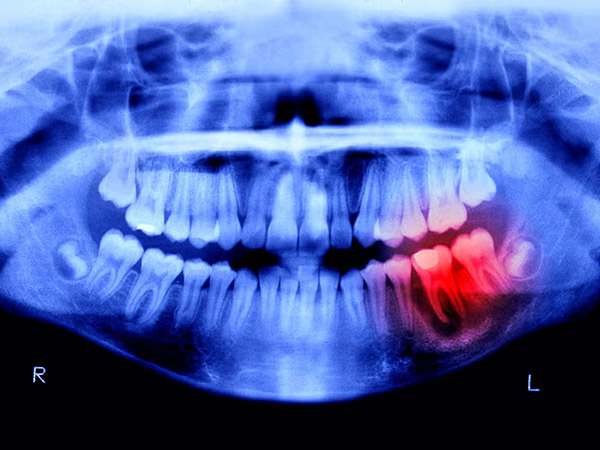
4. Medical Breakthroughs: Researchers in Japan have developed a pharmaceutical therapy that has successfully regrown teeth in mice and ferrets. Their work has moved into human testing, and they are optimistic about bringing the ability to regrow missing teeth to patients by 2030.
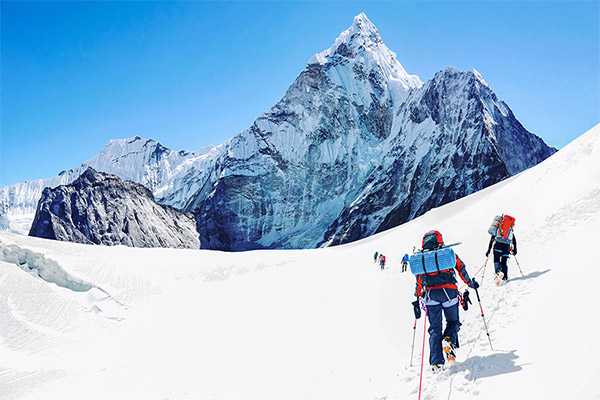
5. Reaching High: While attempting to summit the world's highest peak remains very dangerous, a recent study led by a Harvard Medical School professor has shown that, thanks to advances in equipment and technology, & methedology, it is now safer.
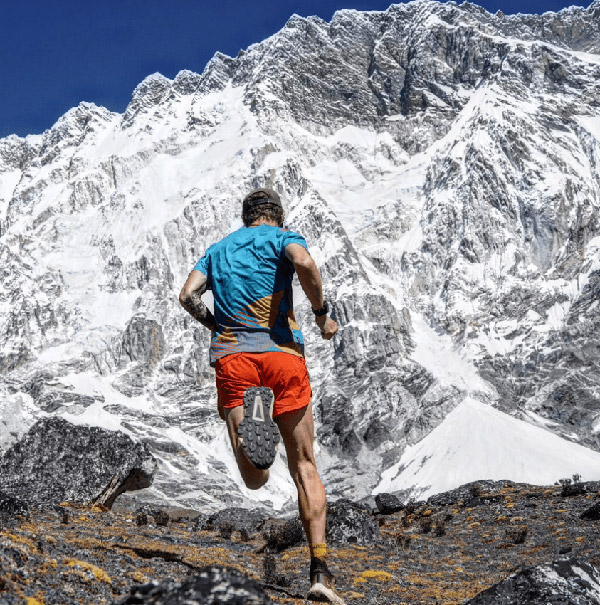
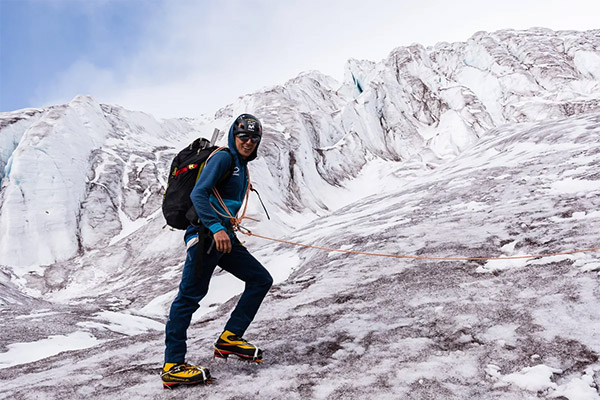
6. Endurance Athletes: I have two posts this week about extreme endurance athletes: two mountain runners planning to speed-run Mount Everest, and some advice on acting your age from Sister Madonna Buder, aka the "Iron Nun," who became the oldest woman to complete an Ironman-distance triathlon in 2012 at 82.
7.Rising Stars: Tucson has another rising tennis star: Santiago Astengo, an 11th-grader at Catalina Foothills High School.
8. The Heavens: Next week, early risers will be able to see Mars, Jupiter, and Saturn join the crescent moon in the eastern sky shortly before sunrise.
9. Nature: I have three stories about animal species starting to recover in areas where their survival was once threatened. Wolves on Isle Royale in Lake Superior, cougars in northern Minnesota, and the jaguar in southern Arizona.
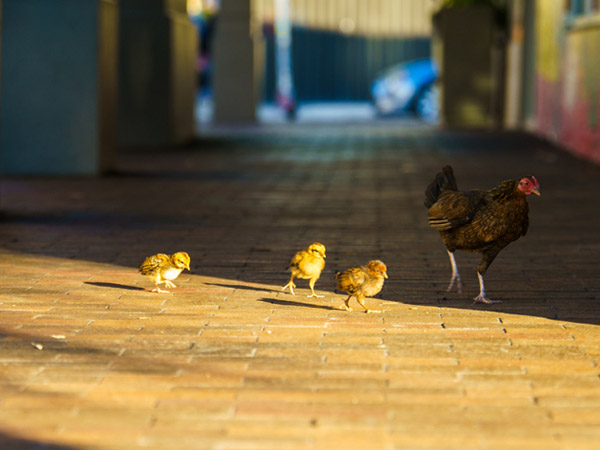
10.Pet's Corner: The Flock's favorite mouser, Fern, gets a visit from some neighborhood kids, but she can't come out right now.
| | Now, to this week's Flock. | | 1. Bindu's Corner: Swami Vivekananda on Heaven | | This quote from Swami Vivekananda comes from a 1895 address given during a series of talks to intellectual societies in New York City. | |
2. Mother's Day: May 10, 2026
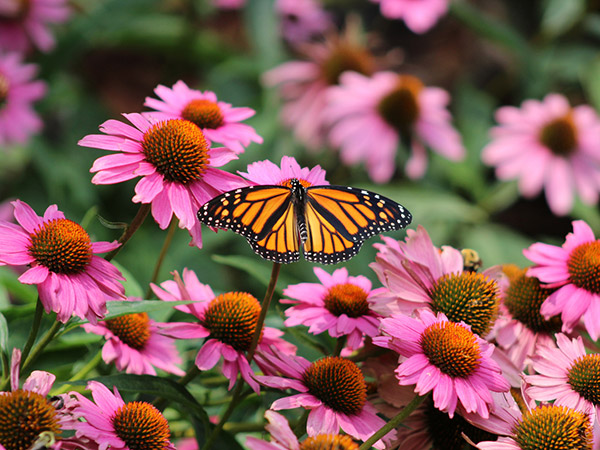
| | Just in case you weren't able to make brunch reservations for Sunday, I have some beautiful flowers and a poem for you. Happy Mother's Day! | | |
To-day's your natal day;
Sweet flowers I bring:
Mother, accept, I pray
My offering.
And may you happy live,
And long us bless;
Receiving as you give
Great happiness.
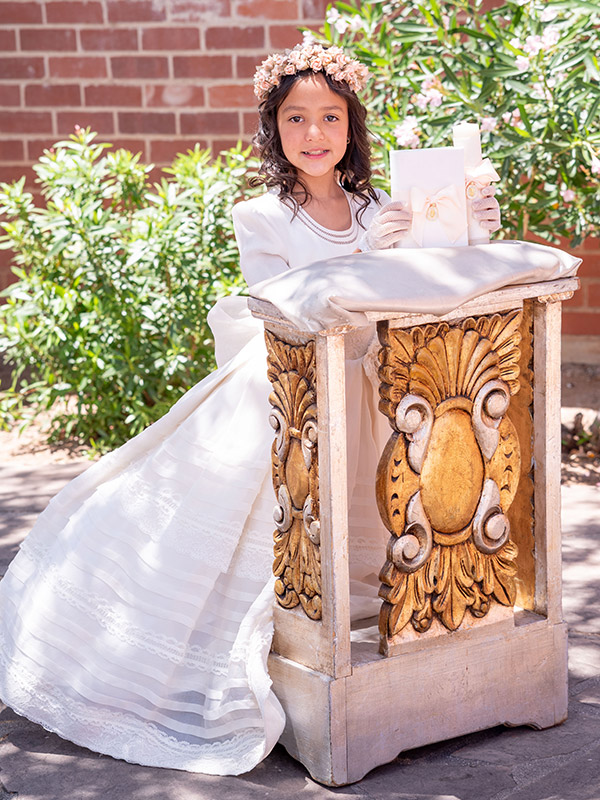
| | The Flock's newest contributor, journalist Silvia Sánchez, has penned this personal essay, A Mother's Pride, to help us celebrate motherhood on this Mother's Day weekend. | | This week was filled with beautiful moments that reminded me how quickly my children are growing and how grateful I am to be their mom. | | One of the most special moments was Renata's First Communion. Watching her reach such an important milestone with grace and excitement filled my heart with pride. It was a day surrounded by faith, family, and love. We were especially grateful to have Beth and Mike Kasser join us for this meaningful celebration, making the day even more special for our family. | | We also celebrated Regina with a joyful Hawaiian-themed birthday party — an "Aloha Party" full of laughter, fun, and bright tropical colors. Seeing Regina so happy, surrounded by friends and family, was truly unforgettable. Her smile lit up the entire celebration. | | |
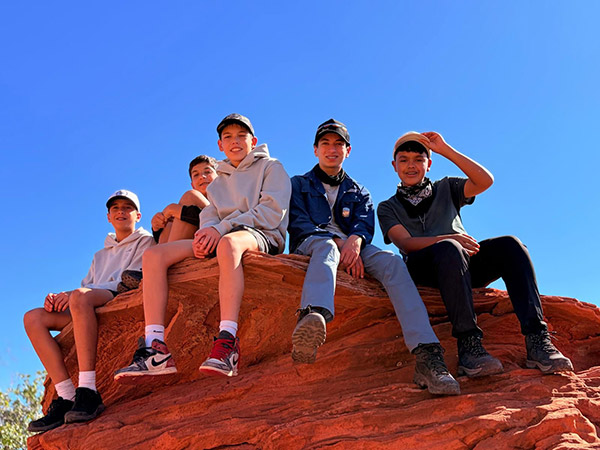
And in between the celebrations, José Roberto had the opportunity to experience the beauty of the Grand Canyon. Watching him explore, learn, and take in such an incredible place made me proud of the curious and adventurous young man he is becoming.
Motherhood is not always easy, but moments like these make every sacrifice worth it. Seeing each of my children grow into their own unique personalities fills me with endless love, gratitude, and pride.
| | 3. Religion: Understanding Religious Milestones | | I've asked Silvia to put together summaries of milestones associated with Catholicism, the Baptist Faith (representing Protestantism), and Buddhism, a Dharmic religion, and I think she's done a wonderful job. | | Understanding Religious Milestones: A Look at Catholic Sacraments | | |
Religion often plays a central role in shaping values, traditions, and a sense of community within families. In the Catholic Church, there are important spiritual milestones known as sacraments, which guide individuals through different stages of their faith journey.
The Catholic Church recognizes seven sacraments, but three of them are considered the sacraments of initiation: Baptism, First Communion (Eucharist), and Confirmation. These are especially significant during childhood and adolescence.
Baptism is typically the first sacrament a person receives, often as an infant. It symbolizes purification and the beginning of a new life in the Christian faith. Through baptism, a child is welcomed into the Church community, and godparents are usually chosen to help guide their spiritual growth.
First Communion, also known as the Eucharist, usually takes place around the age of 7 or 8. At this stage, children receive the body and blood of Christ in the form of bread and wine for the first time. It is seen as a meaningful step in understanding and participating in the faith more deeply.
Confirmation is often received during the teenage years. This sacrament represents a personal commitment to the faith. The individual confirms the promises made at baptism and is considered to be strengthened by the Holy Spirit. It is also a moment of maturity within the Church, as the person takes greater responsibility for their beliefs.
Beyond these, other sacraments include Reconciliation (Confession), Marriage, Holy Orders, and Anointing of the Sick—each marking important spiritual or life moments.
For many families, these milestones are not only religious traditions but also opportunities to come together, celebrate growth, and reflect on values that guide their lives.
| | Religious Milestones in the Baptist Faith | | |
In the Baptist tradition, faith is centered on a personal relationship with God and an individual decision to follow Jesus Christ. Unlike some other Christian denominations, Baptists do not practice sacraments as required rites for salvation, but they do observe important ordinances and spiritual milestones that mark a believer's journey.
1. Personal Conversion (Being "Saved")
A foundational milestone in Baptist belief is a personal decision to accept Jesus Christ as Lord and Savior. This is often described as being "born again" and is seen as a conscious, individual act of faith.
2. Believer's Baptism (By Immersion)
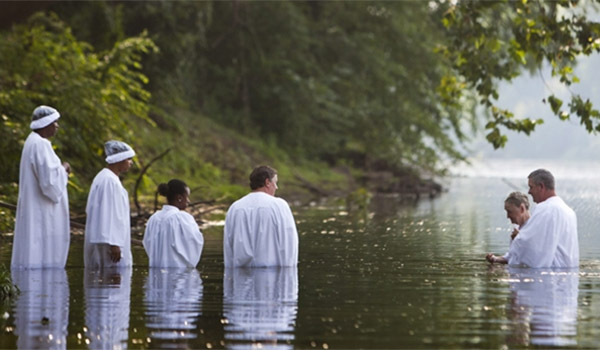
Baptism is one of the most significant milestones. Baptists practice believer's baptism, meaning a person is baptized only after making a personal profession of faith.
- It is done by full immersion in water
- It symbolizes death to sin and new life in Christ
- It is not seen as saving, but as an outward expression of inward faith
3. Church Membership
After baptism, many believers become formal members of a local Baptist church. This represents commitment to the church community, accountability, and shared worship and service.
4. Participation in the Lord's Supper (Communion)
Baptists observe communion as an ordinance in remembrance of Jesus' sacrifice.
- Typically done periodically (monthly or quarterly)
- Symbolic rather than sacramental
- Includes bread and juice representing Christ's body and blood
5. Spiritual Growth and Discipleship
Ongoing milestones include Bible study, prayer, service, and discipleship. These are seen as essential signs of spiritual maturity rather than formal rites.
6. Dedication of Children (Optional Practice)
Some Baptist churches hold child dedication ceremonies, where parents commit to raising their children in a Christian home. This is not considered baptism.
7. Baptism of Ministry Leaders (Ordination)
For those called into ministry, ordination is a formal recognition by the church of a person's calling to serve as a pastor, minister, or church leader.
| | Religious Milestones in Buddhism | | |
Unlike traditions such as Christianity, Buddhism does not follow a fixed set of sacraments. Instead, it marks spiritual growth through meaningful life and practice milestones that reflect a person's commitment to the teachings of Siddhartha Gautama (the Buddha).
1. Birth and Blessing Ceremony
In many Buddhist cultures, newborns are brought to a temple for a blessing by monks. This is not a baptism, but a way to welcome the child and wish for a life guided by wisdom and compassion.
2. Taking Refuge (The Three Jewels)
This is one of the most important milestones. A person formally commits to the Buddhist path by taking refuge in the:
Buddha (the teacher)
Dharma (the teachings)
Sangha (the community)
This marks the beginning of a conscious spiritual journey.
3. Observing the Five Precepts
Lay Buddhists often commit to ethical living by following five basic moral guidelines:
- Do not harm living beings
- Do not steal
- Do not engage in sexual misconduct
- Do not lie
- Do not use intoxicants
This step reflects personal responsibility and moral discipline.
4. Ordination (Monastic Life)
For those who choose a deeper commitment, becoming a monk or nun is a major milestone. This includes:
- Novice ordination (temporary or beginner stage)
- Full ordination (lifelong commitment)
This path is focused on meditation, study, and renouncing worldly attachments.
5. Meditation and Spiritual Development
Rather than a single ceremony, ongoing meditation practice is considered a key milestone. Progress in mindfulness, wisdom, and compassion marks spiritual growth.
6. Enlightenment (Nirvana)
The ultimate goal in Buddhism is reaching enlightenment—freedom from suffering and the cycle of rebirth. While rare, it represents the highest spiritual achievement.
7. Death and Funeral Rites
Death is seen as a transition rather than an end. Rituals focus on helping the deceased move peacefully into the next stage of existence and generating good karma.
| | 4. Medical Breakthroughs: Scientists are Close to Regrowing Teeth | | This story sounds like something out of science fiction, but I've checked multiple sources, and it is legitimate. It may soon be possible to forgo implants or dentures and grow new teeth instead. Researchers in Japan have developed a drug that suppresses the mechanism that inhibits new tooth growth. The researchers are optimistic about the availability of the new treatment in the near future. | | Humans May Be Able to Grow New Teeth Within Just 4 Years | | Scientists are on the verge of a dental miracle. | From: Popular Mechanics, By Darren Orf May 1, 2026 | | |
The average adult human body contains 206 bones—the hardened mixtures of calcium, minerals, and collagen that provide the biological scaffolding that walks us through our day. While we may not think of them much, bones are incredibly resilient. But if they do break, they have this nifty trick of regrowing themselves.
Teeth, however, are not bones. Although they’re made of some of the same stuff and are the hardest material in the human body (thanks to its protective layer of enamel), they lack the crucial ability to heal and regrow themselves. But that may not always be the case. Japanese researchers have moved forward with an experimental drug that promises to regrow human teeth. Human trials began in September 2024.
This development follows years of study around a particular antibody named Uterine sensitization–associated gene-1 (USAG-1), which has been shown to inhibit the growth of teeth in ferrets and mice. Back in 2021, scientists from the Kyoto University—who will also be involved in future human trials—discovered a monoclonal antibody (a technique usually used in fighting cancer) that disrupted the interaction between USAG-1 and molecules known as bone morphogenetic protein, or BMP.
“We knew that suppressing USAG-1 benefits tooth growth. What we did not know was whether it would be enough,” Kyoto University’s Katsu Takahashi, a co-author of the study, said in a press statement at the time. “Ferrets are diphyodont animals with similar dental patterns to humans.”
So now, scientists are seeing just how similar, because humans are undergoing a similar trial. This study focuses on 30 males between the ages of 30 and 64—each missing at least one tooth. The drug will be administered intravenously to prove its effectiveness and safety, and luckily, no side effects have been reported in previous animal studies.
| | Can We Actually Regrow Teeth? The Science Behind the Tooth Regeneration Shot | |
5. Reaching High: Everest is Getting Safer
| | Harvard associate professor Paul Firth has led a new study into high-altitude deaths after experiencing the effects of low oxygen himself on an Everest expedition in 2004. His study has shown that, while it remains an extremely dangerous endeavor, summiting Everest has become safer due to improved climbing gear, weather forecasting, communication technology, and defined routes. | | Call it his personal Everest
Experienced mountaineer, researcher fell short of summiting, but his work has helped make climbers safer
| | |
Climbing Mount Everest is getting safer, a new study shows, though the world’s highest peak remains dangerous enough that almost one in 100 who try it don’t make it home.
The work, led by Paul Firth, an experienced mountaineer and associate professor of anesthesia at Harvard Medical School and Massachusetts General Hospital, builds upon his earlier research into high-altitude deaths on the mountain since the first recorded summit attempt, George Mallory’s expedition of 1921.
Firth and colleagues want to better understand what happens to the human body at high elevations to guide efforts to make climbing safer. That initial research, published in 2009, found that cerebral edema likely played a role in many more high-altitude deaths than was previously understood.
The condition develops in regions of low oxygen like Everest’s “death zone” above 26,200 feet, or five miles up. Fluid leaks into the brain, causing headaches, extreme fatigue, coordination problems, and impaired judgment, any one of which presents a hazard in conditions where a single mistake can cost your life.
“Contrary to perceptions and media reports, things are actually safer now, but still very dangerous,” Firth said.
The current research, published in The Journal of Physiology in late April, showed that death rates during climbing expeditions fell by half between the initial period — 1921 to 2006 — and more recent years, 2007 to 2024, with the mortality rate falling from 1.4 percent to 0.7 percent.
Firth and colleagues credited a number of changes in recent years with lowering the death rate.
Most attempts today occur along known, standard routes, which feature fixed ropes. In addition, weather forecasting has improved greatly, as have communication systems, allowing much freer flow of information about what awaits higher up on the mountain.
And advances in logistics, clothing, nutrition, hydration, and oxygen delivery systems have each lowered the risk to climbers from cold, hunger, thirst, and thin air.
“The data are that fewer people are involved in falls, and fewer people are getting isolated, left behind, and dying alone,” Firth said. “We speculate that teamwork has improved and that everything being roped the whole way has helped markedly, but there are many other things that could have contributed which we weren’t able to measure.”
| |
6. Endurance Athletes: Superathletes
| | Two superathletes, Tyler Anderson and Karl Egloff, are attempting to redefine what is humanly possible in high-elevation mountaineering as they train to attempt new speed records on Mount Everest. | The superathletes who want to speed-run Mount Everest
Two of the world's most accomplished mountain runners are planning to do something most would find unthinkable—race up and down the southern face of Everest.
| From: National Geographic: By: Bill Donahue, May 1, 2026 | |
Climbing the tallest mountain on earth is such a battle—against the wind and the cold and against the snow and the thin air—that vanishingly few people even think about trying to move fast on Mount Everest. When the mountain’s meager, roughly two-week-long climbing season opens later this month, though, two super athletes will aim to dash up and down the south side—the Nepali side—in record time, in a season when the mountain may be, dangerously, more crowded than ever.
Karl Egloff and Tyler Andrews are a study in contrasts. Egloff, 45 and inclined to metaphysical meditation, is Ecuadorian-born resident of Switzerland. His father was a mountain guide; he began climbing Ecuador’s giant peaks in pre-school and later became a world-class mountain bike racer. Andrews, who’s 35, grew up in the suburbs of Boston. He was a high school band geek before becoming, in college, a talented distance runner. Now a 2:15 marathoner, he lives in Quito, Ecuador, training in the same cragged Andes that shaped Egloff. He only dedicated himself to big mountain running when the pandemic shut down road racing, but then he went big. In 2021, he emblazoned his chest with a huge tattoo of Rucu Pichincha, the Ecuadorian volcano on which he frequently trains.
Neither Egloff nor Andrews are among the 7,500 or so people who’ve stood atop Everest since Sir Edmund Hillary made the world’s first-ever trip to the top in 1956. Now, both will climb with the aid of fixed ropes but without supplemental oxygen as they try to make record time, round trip, over the mountain’s most popular route...
| | |
Except in a few flattish places, Egloff and Andrews won’t actually be running—think of them as power walking in uber adverse conditions. They won’t be racing either. The two climbers aren't likely to depart basecamp simultaneously, and if Andrews got his way he wouldn’t even be scaling the same route as Egloff. His original scheme was to climb the north side of Everest in pursuit of a record set by Killian Jornet, a Spaniard who in 2017 went up and down that face of Everest without oxygen in 26 hours. He reasoned that the north’s “longer, more gradual approach plays to my strengths. It’s more trail-running in character.” But the China-Tibet Mountaineering Association isn’t issuing permits to climb the north side this year, so we’ll soon have Ali-Frazier in the Himalayas.
Or something like that.
The two climbers have spent the past several months insisting, in stiff, gentlemanly tones, that they’re not competing. Andrews: “Karl has been a huge inspiration for me.” Egloff: “Well, we know each other. We spent time on base camp last year. He has his goals, and I have my goals.”
| | Sister Madonna Buder, known by many as the "Iron Nun," began training for triathlons at age 48 after a priest in her order, Father John, suggested she start training to bring her calmness and relaxation and to "tweak mind, body, and spirit." At 52, she competed in her first triathlon, and at 55, her first Ironman. Throughout the '90s and early 2000s, she continued entering the Ironman, sometimes finishing just minutes before the cut-off time. I remember participating in some of the same races; everyone knew who she was, and we all respected her perseverance. She had no quit and kept competing. In 2012, at the age of 82, she finished the Subaru Ironman Canada, setting a record as the oldest woman to finish an Ironman Triathlon. While no longer competing, she is still going strong as she approaches her 96th birthday this July. | | Don't Act Your Age: Sister Madonna Buder - The "Iron Nun"
Meet Sister Madonna Buder. A retirement rebel extraordinaire.
| | |
Meet Sister Madonna Buder. She is now ninety four years old but her athletic feats are nothing but astonishing. At 82, she was the oldest woman to ever finish an Ironman.
In the following video, she shares her story of how she broke boundaries by becoming a older nun who started to run marathons. She also shares some of her philosophies on life.
"Any anxiety is developed by worrying about the future of which none of us really have control. So that brings me back to the present. I will make the most of the here and now."
A wonderful retirement rebel indeed.
| | OLDEST Ironman Competitor Ever! | 87-Year-Old Iron Nun | Sister Buder also attracted the attention of Nike. They produced this ad in 2016 that featured her. If this doesn't challenge your ideas of what aging can look like, not sure what will! | | Unlimited Youth The Iron Nun Nike AD | | 7. Rising Stars: Santiago Astengo | | Congratulations from the Flock to Santiago Astengo, an 11th-grader at Catalina Foothills High School, who led the Falcons to become the Division II Arizona Varsity Tennis State Champions on Saturday! | | Santiago holds the Boys Tennis Champions trophy after the Falcons 19th State Champions Title. | |
8. The Heavens: Three Planets join the Crescent Moon
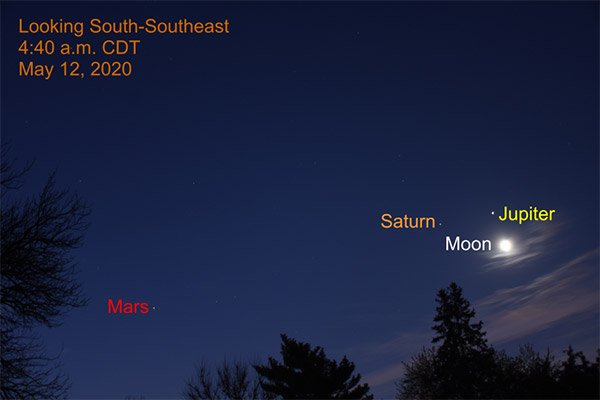
| | 2020, May 12: The moon joins the morning planets, The gibbous moon is 3.1° to the lower right of Jupiter and 6.1° to the lower right of Saturn. Mars is farther east. | This coming Wednesday through Thursday, look along the eastern horizon in the pre-dawn hours to spot Mars, Jupiter, and Saturn rising with the crescent moon. | | 2026, May 10-13: Moon–Saturn Conjunction, Crescent Moon Guides First Morning View of Saturn | | |
May 10-13, 2026: On May 13, the crescent moon appears near Saturn before sunrise. Use the moon as a guide to find the Ringed Wonder low in the eastern sky.
Saturn’s First Morning Appearance
Saturn is emerging from bright morning twilight. It appears above the east direction, about 5° in altitude, height above the horizon. It appears through Earth’s thick atmosphere and is blurred through a binocular. Find a clear horizon looking eastward to see the Ringed Wonder. The moon is a guide on May 13:
Morning Highlights
Here’s what to see one hour before sunrise.
- May 10: The moon, 45% illuminated, is over 20° above the southeast horizon, over 44° to Saturn’s upper right.
- May 11: The lunar orb, 35% illuminated, is nearly 20° above the east-southeast horizon, over 30° to Saturn’s upper right.
- May 12: With Saturn nearly 6° above the east horizon, the moon, 25% illuminated, is nearly 16° up in the east-southeast, nearly 20° to the planet’s upper right.
| | 2026, May 10-13: Each morning the moon is farther eastward as Saturn appears above eastern horizon. | |
9. Nature: Wolves and Big Cats
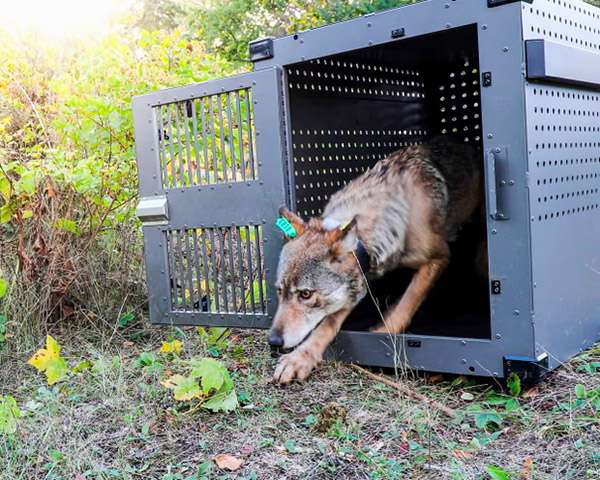
| | A four-year-old female gray wolf emerges from her cage at Isle Royale national park in Michigan in 2018. | Isle Royale in Lake Superior is one of the most remote National Parks, only accessible by seaplanes, passenger ferries, and personal watercraft. The island's wolf population migrated from Canada over lake ice in the 1940s and thrived on the island, but declined drastically in 1980 and again in 2012 due to disease, climate change, and loss of genetic diversity. In 2018, nineteen wolves from Minnesota and Canada were reintroduced by the NPS to expand the gene pool and help the island's wolf population recover. That effort has been tremendously successful, unless you're a moose. As the wolf population rebounded, the moose population has shrunk. | | Lake Superior’s wolves thriving as packs prey on moose, researchers say
2026 estimates for wolves on island highest since late 1970s but moose population declining dramatically
| | |
Wolves on a remote island in Lake Superior appear to be thriving, but they are making deep dents in the moose population that they rely on as a leading food source, according to a report released on Monday.
Isle Royale is a 134,000-acre (54,200-hectare) national park in far western Lake Superior between Grand Marais, Minnesota, and Thunder Bay, Canada. The island is a natural laboratory, offering scientists a rare opportunity to observe wolves and moose largely free from human influence.
Researchers have conducted wolf and moose population surveys on the island since 1958. The surveys had been an annual winter event when the roadless island is closed to visitors, but researchers have run into obstacles in recent years.
The pandemic in 2021 forced scientists to cancel the survey for the first time. The National Park Service ordered researchers to evacuate the island during their 2024 winter survey after weeks of unusually warm weather left the ice surrounding the island unsafe for ski-plane landings.
The 2026 estimates are the highest since the late 1970s and represent a marked improvement since the population dwindled to just two wolves a decade ago. Researchers believe inbreeding led to depressed survival rates in pups.
The island’s moose population, though, is declining dramatically. This year’s survey put the population at 524 moose, down 75% from a high of 2,000 in 2019. Wolves probably killed almost a quarter of the moose population over the last year, scientists estimated. For the first time in almost 70 years, researchers observed no moose calves during the winter survey.
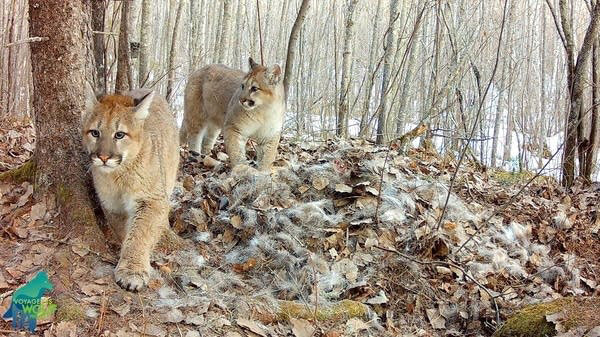
| | It looks like cougars, we call them mountain lions here in Arizona, are making a comeback in northern Minnesota, with the first litter to be documented in over 100 years recently caught on a trail camera. | | Trail Cameras Capture First Cougar Kittens in Minnesota in Over 100 Years | | |
Trail cameras captured incredibly rare footage of cougar kittens in Minnesota — the first confirmed evidence in more than a century that cougars are reproducing in the state.
In late March, remote cameras placed near Voyageurs National Park in northern Minnesota recorded a female cougar with three large kittens. The video, captured by the University of Minnesota’s Voyageurs Wolf Project, is the first documentation of a reproducing cougar population in the state in 100 years.
The trail camera footage shows the kittens up close as they feed at a site south of the park. The Voyageurs Wolf Project, which has deployed hundreds of trail cameras across northeast Minnesota for wolf research, has previously recorded lone cougars eight times since 2023. However, none of those recordings included kittens.
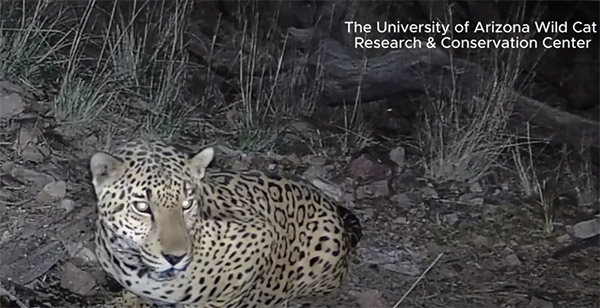
| First footage ever of a cougar with kittens in Minnesota | | It's nice to see jaguars returning to their historical territory in the mountains of southern Arizona. Given that these are the same mountains that I like to hike in, it is also nice to know that they are generally shy and avoid contact with people. | | Jaguar 'Cinco' returns to Southern Arizona in rare footage | | |
A jaguar known as "Cinco" has returned to his familiar territory in Southern Arizona, captured on camera by researchers at the University of Arizona Wild Cat Research and Conservation Center.
The footage shows Jaguar #5 walking with purpose through the area, demonstrating what scientists call "site fidelity"—the tendency of animals to return to specific locations. Researchers say this isn't a chance encounter but rather a homecoming to the jaguar's historical range.
Over the last 15 years, the research team's community scientists have documented five individual jaguars more than 240 times. The center emphasizes this represents verified records of consistent corridor use, not just isolated sightings.
Jaguars are considered an "umbrella species," meaning their presence indicates overall ecosystem health. The center's environmental DNA research is revealing remarkable biodiversity within the Sky Islands that has never been documented before in these corridors.
| | Jaguar 'Cinco' returns to Southern Arizona in rare footage | |
10. Pet's Corner: Fern has Visitors
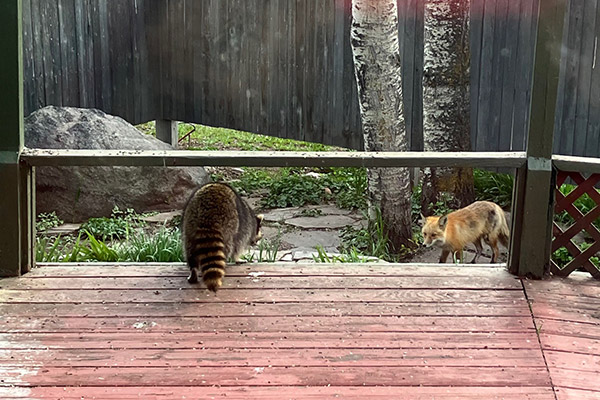
| | Fern's mom, Margaret Durney, sent us this photo of some of the neighborhood kids coming over to hang out on the porch. Sorry, kids, Fern's in for the night. | | These Flock regulars are always here for you: | | Don't Be Shy: Share Your Stories! | | I'm looking forward to sharing more of your personal stories - oral, written, or otherwise, as we enter our third year. I'd so love to present them to The Flock, hit a mailbox below to share your story. | | Subscriptions & Idea Submissions
Reminder: Your submissions are always welcomed. | | |
Feel free to forward this email to a friend. If this was forwarded to you and you would like to receive your very own Flock Newsletter, you can sign up here. If you have any questions or suggestions for future Flock resources, don't hesitate to contact me.
Your fan and friend,
Beth
| | | The information and materials contained or referenced in this newsletter are for informational purposes only and not intended to be a substitute for professional medical advice, diagnosis, or treatment. Always consult a physician or other qualified medical professional with any questions you may have regarding a medical condition or treatment and before beginning a new health care regimen. Do not disregard professional medical advice or delay seeking medical advice or care based on anything contained in this newsletter. | | | | |