REMINDER: YOUR SUBMISSIONS ARE ENCOURAGED | | |
1. Bindu's Corner: This week, Bindu has given us quotes on gratitude, a virtue we can all consciously foster.
2. Holocaust Survivors Day: Each year, the living survivors of the Holocaust are honored to celebrate their history, resilience, wisdom, and their contributions to society.
3. Wellness: I have a new post from Sensitive & Specific, The Testing Newsletter. I just got the latest issue, and it has some very important information that all women should pay attention to.
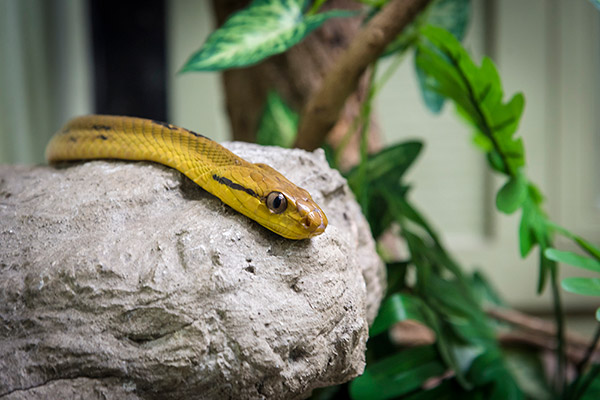
4. Travel: I have an unusual travel destination inspired by last week's post on medicines derived from venomous reptiles.
5. History: I have a brief history of the Byzantine Empire this week.
6. Art: The 10 most famous paintings, according to the editors of World Atlas.
7. The Heavens: June nights will bring a Venus-Jupiter conjunction, a lunar occultation in which the moon passes in front of Venus, the shortest night of the year at the summer solstice, and, late in the month, the Strawberry Moon.
8. Hayward M. Fox, Ph.D.: I have a new post with wisdom to contemplate from Dr. Fox's blog.
| | Now, to this week's Flock. | | 1. Bindu's Corner: Gratitude | | Feeling and expressing gratitude is a virtue worth intentionally reflecting on and fostering, not only because it is psychologically beneficial, but also because it has physical health benefits, lowering stress hormones, stimulating the production of dopamine and serotonin, improving sleep, elevating your mood, and reducing anxiety. Thank you for these thoughts on gratitude, Bindu. | | |
There are two kinds of people who are hard to find in the world: “The one who is first to do a kindness, and the one who is grateful and thankful for a kindness done.”
— The Buddha
Wise men count their blessings; fools, their problems.
— Anonymous
Gratitude is a vaccine, an antitoxin, and an antiseptic.
— John H. Jowett
Reflect upon your present blessings, of which every man has many; not on your misfortunes, of which all men have some.
— Charles Dickens
| |
2. Holocaust Survivors Day: June 4th, 2026
| | Thursday, June 4th was International Holocaust Survivors Day. Instead of focusing on the horrors of the Holocaust, the observance was created to honor the lives, resilience, and contributions to society of the living survivors of the Holocaust. The first celebration of the day took place on June 26, 2021, and was scheduled to coincide with the birthday of Polish historian and Holocaust survivor Marian Turski. Since then, the observance has been held on June 4th each year. | | Gratitude on Holocaust Survivor Day | From: The Algemeiner, By: Marcy Gringlas and Talia Kaplan, June 4, 2026 | |
Holocaust Survivor Day celebrates the resilience and enduring legacy of Holocaust survivors while honoring the approximately 196,600 survivors alive today.
More than 80 years after liberation, survivors continue to share their experiences, strengthen communities, and inspire future generations. As opportunities to hear firsthand testimony become increasingly limited, Holocaust Survivor Day reminds us of the importance of learning from survivors and ensuring their stories live on.
Too often, the Holocaust is framed only as history. We believe, at our core, that Holocaust education must always center firsthand testimony, connecting the antisemitism of the past directly to the horrifying rise we observe today. At a time of rising antisemitism, growing extremism, and deep social division, Holocaust survivors offer us critical guidance. Their experiences remind us that hatred does not begin with mass violence; it begins quietly with indifference, exclusion, and dehumanization.
These survivors endured unimaginable suffering and went on to rebuild their lives. They found purpose in creating families, communities, and institutions, proving that hatred will never win. This is why, since 2021, we continue to mark International Holocaust Survivor Day as a dedicated opportunity to honor the vibrant lives our survivors courageously built and the values they continue to instill in future generations.
| | 3. Wellness: Sensitive & Specific , The Testing Newsletter | | This issue of Sensitive & Specific, The Testing Newsletter, is a must-read for any girl from 9 to 92. I not only recommend that you follow the link to read the entire issue, but I think every woman reading this should read it twice. The information is important. | | |
Spotlight on gynecological disease
Gynecological disease has a fraught history when it comes to diagnosis (and treatment). Social stigma, squeamishness, and lack of respect for women bear most of the responsibility for the problem, and unfortunately all of those factors are very much in play today. Add to that the fact that some of these diseases - notably ovarian cancer - are just flat-out tough to diagnose until they’re very far along, and you have a track record that’s not the most successful.
In this issue we offer a roundup of some of the latest analyses, ideas, and innovations that, we hope, will make the world a better place to be a person who has ovaries, a uterus, and a cervix.
Cervical cancer
Cervical-cancer screening increases when self-collection offered
In a JAMA Network Open study we covered in February, only 20% of women eligible for cervical-cancer screening said they would prefer self-collection of test samples. However, what we say and what we do are sometimes different. A recent NEJM Catalyst study showed that, in one health system, 2.2% more women completed screening once self-collection was an option. (That 2.2% increase was statistically significant.)
Ovarian cancer
Inexpensively “Macgyvering” an ovarian-cancer diagnosis
Ovarian cancer is tough to diagnose. One of the ways you can do it is by measuring the amount of a cancer-associated gene in a sample, a technique that typically requires a spectrophotometer. That’s an expensive tool, and it’s hard to come by in low-resource settings.
A proof-of-concept study published in Oncoscience demonstrated that you can make the same measurement using a low-cost, portable device made of an LED light, an inexpensive color sensor, a sample tube, two rubber bands, and an eraser. (Seriously - look at the image from the study.)
| | Orange arrow: LED light source. Green arrow: Eraser with sample tube embedded in center, held in place with two elastic bands. Blue arrow: Color sensor. | | To learn more about how one company is transforming ovarian-cancer diagnosis, listen to this week’s On Target podcast, featuring Dawn Mattoon of Mercy Bioanalytics. | | 4. Travel: Snake Farm, Queen Saovabha Memorial Institute | | Last week's post on medicines, including diabetes and weight-loss drug Ozempic and the blood pressure medicine Lisinopril, developed using venom from toxic reptiles, piqued my curiosity about where scientists are getting their hands on toxic venom. After a little online searching, I landed on a popular tourist destination in Thailand: the Snake Farm at the Queen Saovabha Memorial Institute in Bangkok. The snake farm, founded in 1923, maintains a population of venomous snakes for venom extraction and scientific study. Tours of the facility have become a popular attraction in Bangkok, where visitors can witness venom extraction and snake handling demonstrations. | | Snake Farm, Queen Saovabha Memorial Institute | | Queen Saovabha Memorial Institute was founded in 1922 according to King Rama VI's wish for educational and humanitarian purposes. It started with a mission to produce vaccines against rabies and many other diseases. Later on, the institute also produce antivenom, anti rabies serum, as well as vaccines to cure other diseases. Moreover, the institute also works on researches regarding venomous animals and poisonous plants. Now, the mission of Queen Saovabha Memorial Institute is to educate people on rabies and venomous snakes as well. Queen Saovabha Memorial Institute produces all products according to GMP, PIC/S and WHO Regulations, which are nationally and internationally approved. Queen Saovabha Memorial Institute main missions are 1) producing vaccines and serums 2) researching and provding scientific investigation 3) providing information about rabies and other tropical diseases as well as vaccinating people against those diseases. | | Nowadays, Queen Saovabha Memorial Institute has become an attraction for individuals, students as wellas foreign tourists who are interested in snakes, since the Institute also has an academic service in order for people to have a correct understanding and to be able to apply the knowledge in their daily life. This service includes the Snake Farm Bangkok that exhibits snakes and educate visitors about snake and antivenom production in an entertaining way. Tourism Authority of Thailand (TAT) promotes this place domestically and internationally as a tourist attraction, and it even features in the National Geographic magazine as well as in educational documentaries. | |
5. History: The Byzantine Empire
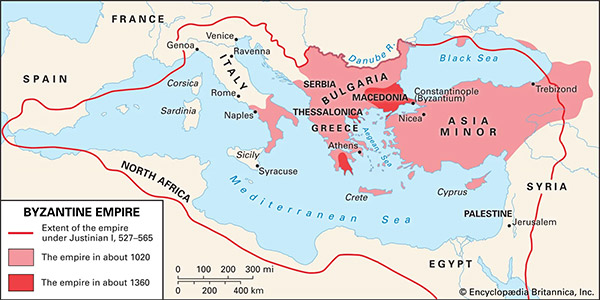
| | I have been traveling, first in Italy, where I visited Pompeii at the foot of Mt. Vesuvius, and later across the boot of Italy to Venice. From there, I crossed the Adriatic Sea to Split, Croatia. A historic seaside city that was once part of the sprawling Byzantine Empire, which ruled from Constantinople from 330 AD to 1453 AD, when Constantinople was sacked by the Ottoman Turks and renamed Istanbul. | | |
Byzantine Empire, the eastern half of the Roman Empire, which survived for a thousand years after the western half had crumbled into various feudal kingdoms and which finally fell to Ottoman Turkish onslaughts in 1453 ad when constantinople was sacked by the Ottoman Turks and renamed Istanbul.
The very name Byzantine illustrates the misconceptions to which the empire’s history has often been subject, for its inhabitants would hardly have considered the term appropriate to themselves or to their state. Theirs was, in their view, none other than the Roman Empire. Modern historians agree with them only in part. The term East Rome accurately described the political unit embracing the Eastern provinces of the old Roman Empire until 476, while there were yet two emperors.
The same term may even be used until the last half of the 6th century, as long as men continued to act and think according to patterns not unlike those prevailing in an earlier Roman Empire. During those same centuries, nonetheless, there were changes so profound in their cumulative effect that after the 7th century state and society in the East differed markedly from their earlier forms. In an effort to recognize that distinction, historians traditionally have described the medieval empire as Byzantine.
The latter term is derived from the name Byzantium, borne by a colony of ancient Greek foundation on the European side of the Bosporus, midway between the Mediterranean and the Black Sea. The city was, by virtue of its location, a natural transit point between Europe and Asia Minor (Anatolia). Refounded as the “new Rome” by the emperor Constantine I in 330, it was endowed by him with the name Constantinople, the city of Constantine.
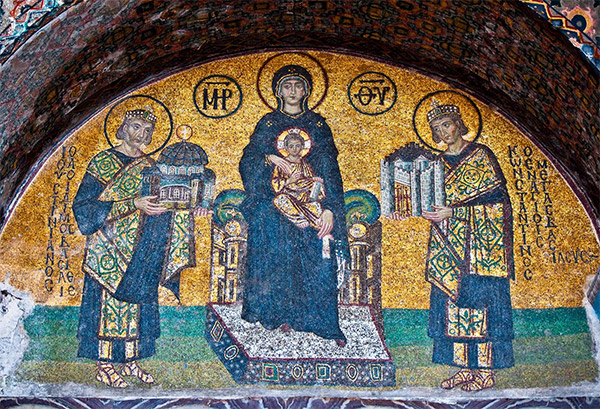
| | Hagia Sophia: mosaic The Virgin Mary holding the Christ Child (centre), Justinian (left) holding a model of the Hagia Sophia, and Constantine (right) holding a model of the city of Constantinople; mosaic from the Hagia Sophia, 9th century. | | The derivation from Byzantium is suggestive in that it emphasizes a central aspect of Byzantine civilization: the degree to which the empire’s administrative and intellectual life found a focus at Constantinople from 330 to 1453, the year of the city’s last and unsuccessful defense under the 11th (or 12th) Constantine. | | The Rise and Fall of the Byzantine Empire – 1,000 Years of Power in Seconds | |
6. Art: The 10 Most Famous Paintings
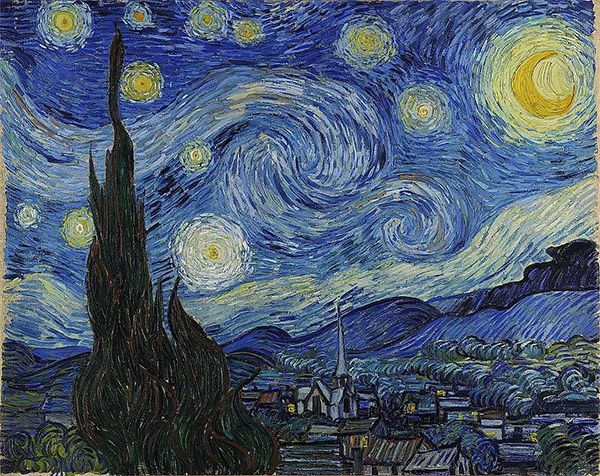
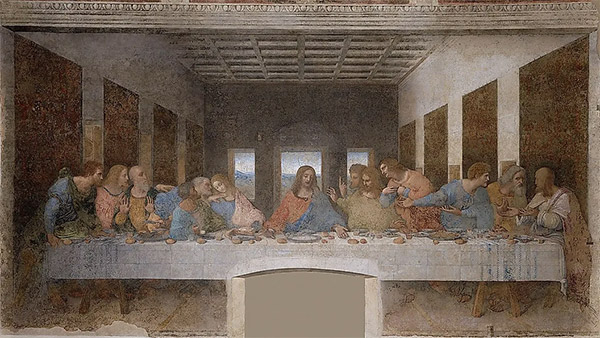
| | This list, compiled by World Atlas, includes the works they consider most famous. I'm sure my readers can think of a few absent works that should have been included. | | The 10 Most Famous Paintings In The World | | Ten paintings make almost every list of the most famous works of Western art ever produced. The list below covers them in chronological order, from Sandro Botticelli's Birth of Venus in the mid-1480s to Pablo Picasso's Guernica in 1937. Five of the ten are in continental European museums (the Uffizi in Florence, Santa Maria delle Grazie in Milan, the Louvre and Musée d'Orsay in Paris, the Rijksmuseum in Amsterdam, the Mauritshuis in The Hague, and the Reina Sofía in Madrid), one is in Norway, and two are at the Museum of Modern Art in New York. | | |
• The Birth of Venus (Uffizi Gallery, Florence)
Sandro Botticelli, mid-1480s
• The Last Supper (Santa Maria delle Grazie, Milan)
Leonardo da Vinci , 1495-1498
• Mona Lisa (Louvre, Paris)
Leonardo da Vinci , 1503-1519
• The Night Watch (Rijksmuseum, Amsterdam)
Rembrandt van Rijn, 1642
• Girl with a Pearl Earring (Mauritshuis, The Hague)
Johannes Vermeer, 1655
• Whistler's Mother (Musée d'Orsay, Paris)
James McNeill Whistler, 1871
• The Starry Night (Museum of Modern Art, New York)
Vincent van Gogh , 1889
• The Scream (National Museum, Oslo)
Edvard Munch, 1893
• The Persistence of Memory (Museum of Modern Art, New York)
Salvador Dalí, 1931
• Guernica (Museo Reina Sofía, Madrid)
Pablo Picasso, 1937
| | |
What Makes a Painting World-Famous
The ten paintings above became famous through different routes. The Mona Lisa's worldwide celebrity dates only to its 1911 theft from the Louvre by an Italian handyman, which kept the painting on front pages for two years before its recovery in 1913. Guernica's status as the defining anti-war painting of the 20th century reflects both its political circumstances and its decades-long exile from Franco's Spain. The Scream became a recognisable visual shorthand for modern anxiety partly through reproduction in popular culture. The Night Watch was famous in the Dutch Golden Age and never really lost its standing. What the ten share is technical achievement (the sfumato of the Mona Lisa, the impasto of The Starry Night, the chiaroscuro of The Night Watch), a memorable single image that survives reproduction and reuse, and a museum home that has guarded the work for at least several generations.
| | 7. The Heavens: June Skywatching | | Get out and appreciate the night sky this month, Jupiter and Venus are prominent in the early evenings as they approach each other, with Mercury joining towards the middle of the month. The Summer Triangle, a celestial formation used by navigators for centuries, will be visible all month long. | | What’s Up: June 2026
Skywatching Tips from NASA
| | From NASA, By Raquel Villanueva, June 1, 2026 | | |
Venus and Jupiter meet after sunset, the Moon passes in front of Venus, summer begins, and deep-sky treasures rise into view.
Skywatching Highlights
- June 9: Venus and Jupiter conjunction
- June 11–15: Mercury joins Venus and Jupiter after sunset
- June 17: Moon passes in front of Venus & close Moon and Venus pairing
- June 21: June solstice & start of astronomical summer
- june 29: Full moon, the Strawberry moon
- June: Summer Triangle and deep-sky observing targets rise into view
Planets gather after sunset, the Moon passes in front of Venus, summer officially begins and deep sky treasures rise into view. That's What's Up for June.
| | Early this month, look west shortly after sunset to see Venus and Jupiter. They are two of the brightest planets in our sky and around June 9th, they'll appear close together after sunset. This is called a planetary conjunction—when two planets appear near each other from our point of view on Earth, even though they're still millions of miles apart in space. | | What's Up: June 2026 Skywatching Tips from NASA | |
8. Hayward M. Fox, Ph.D.: From Dr. Fox's Blog
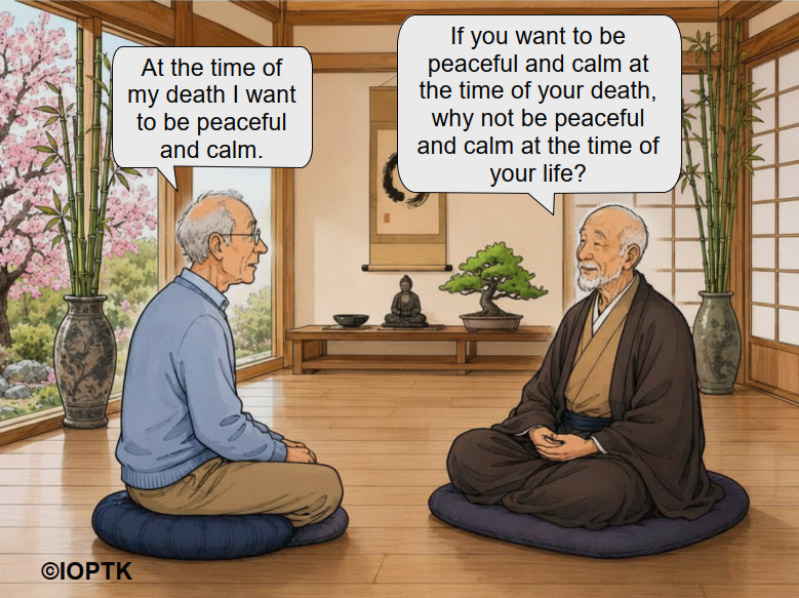
| | Today's post from Dr. Fox contains some wisdom we would all do well to apply to our lives. Give it some thought and be sure to visit Dr. Fox's site at the Institute of Personal and Transpersonal Knowledge for more insightful perspectives on finding personal peace and serenity. | | How to Translate The Flock. | | I am proud to have Flock subscribers on six of the seven continents; we're working on Antarctica, but their broadband is a little spotty. I know some readers would like to translate The Flock into their preferred language, so I've included instructions for translating emails in both Gmail and Microsoft Outlook. | |
How to Translate in Gmail
-
On Desktop: Open the email, click the More icon (three vertical dots) at the top right of the message, and select Translate message.
-
On Mobile: Tap the More button at the bottom/top of the email and select Translate.
- Google will auto-detect the language and allow you to toggle back to the original text at any time.
How to Translate in Outlook
-
In the Web App: Open the email and click the Translate button (often found in the top action bar or by clicking the three dots next to reply).
-
In the Desktop App: Click on the Message or Review tab in the top ribbon, select Translate, and choose Translate Item.
| | These Flock regulars are always here for you: | | Don't Be Shy: Share Your Stories! | | I'm looking forward to sharing more of your personal stories - oral, written, or otherwise, as we enter our third year. I'd so love to present them to The Flock, hit a mailbox below to share your story. | | Subscriptions & Idea Submissions
Reminder: Your submissions are always welcomed. | | |
Feel free to forward this email to a friend. If this was forwarded to you and you would like to receive your very own Flock Newsletter, you can sign up here. If you have any questions or suggestions for future Flock resources, don't hesitate to contact me.
Your fan and friend,
Beth
| | | The information and materials contained or referenced in this newsletter are for informational purposes only and not intended to be a substitute for professional medical advice, diagnosis, or treatment. Always consult a physician or other qualified medical professional with any questions you may have regarding a medical condition or treatment and before beginning a new health care regimen. Do not disregard professional medical advice or delay seeking medical advice or care based on anything contained in this newsletter. | | | | |