REMINDER: YOUR SUBMISSIONS ARE ENCOURAGED | | |
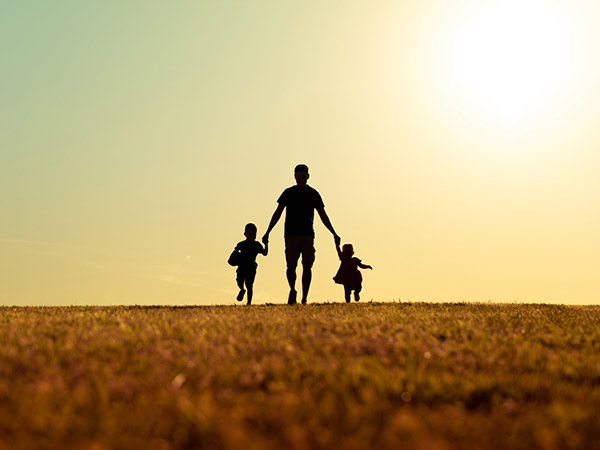
1. Father's Day is just over one week away. I am starting this week with a collection of quotes to honor all the pops, dads, and fathers out there.
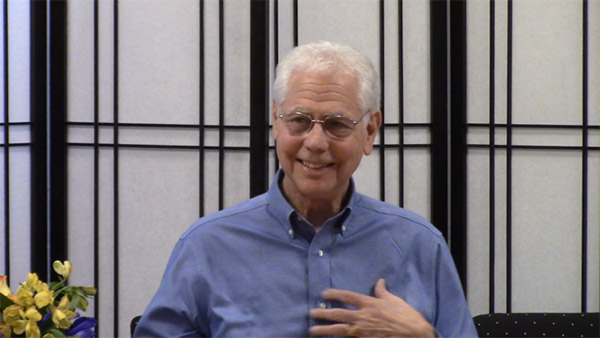
2. Dr. Hayward M. Fox is still making progress recovering from his recent accident. Dr. Fox has contributed his insight and wisdom to this newsletter ever since its earliest issues. This week, I want to ask my readers once again to send warm wishes and positive thoughts to Dr. Fox.
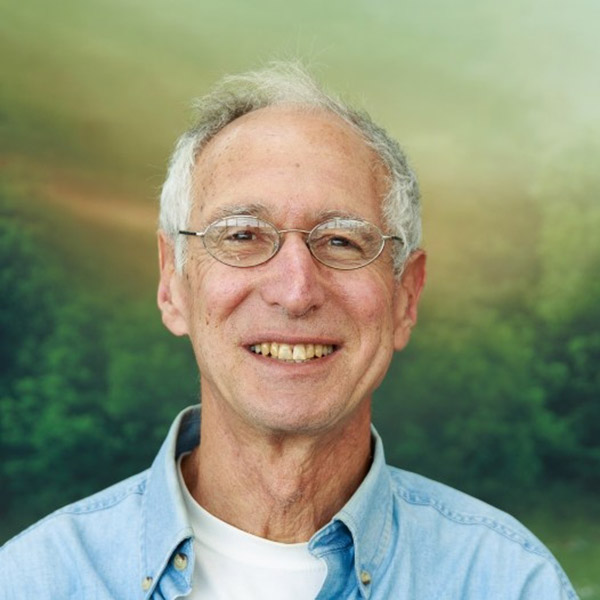
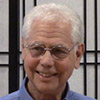
3. This week, I'm shining the Flock Spotlight on Meteorologist Howie Bluestein, whom I had the pleasure of meeting and sitting at a table with recently.
4. In Science, I have more news from MIT on a new technique using tiny carbon nanotubes to detect ovarian tumors.
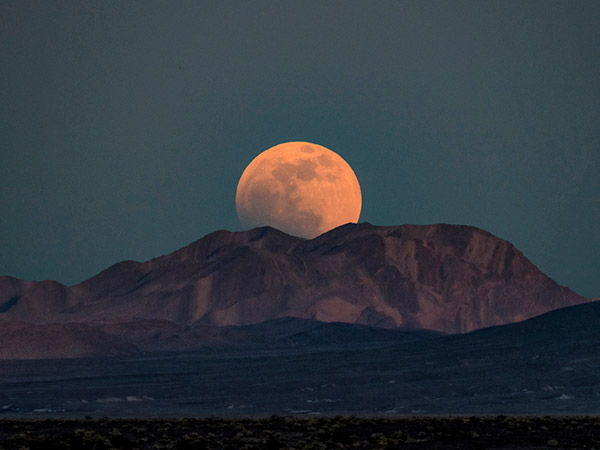
5. June's full moon, known as the Strawberry Moon, will be best seen as it rises at dusk next Tuesday, June 10th, before it reaches fullness on the 11th. The moon will appear large and low on the horizon.
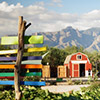
6. I have a Reader Submission this week from a Flock reader in the Washington, D.C. Metro Area who wanted to share one of their favorite spots to take a break from the urban pace of the area and escape into nature.
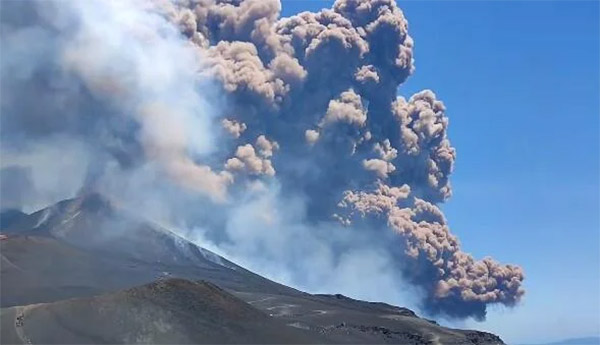
7. Mount Etna in Sicily erupted again this week, sending a plume of ash and smoke high over the island of Sicily. This eruption is the most recent of a series of eruptions that began in late 2022.
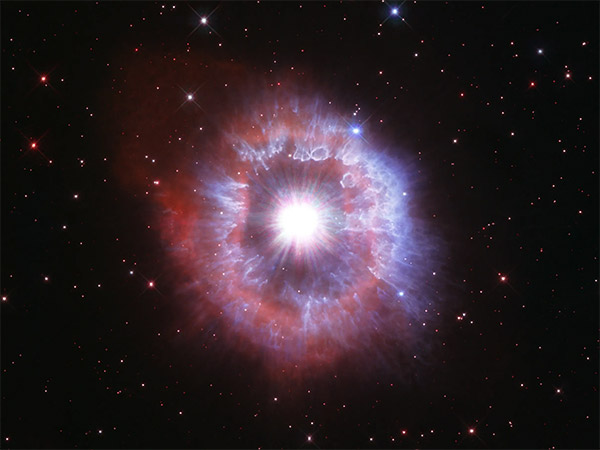
8. In The Heavens, I'm closing this week with a beautiful image of AG Carinae, one of our Milky Way neighbors, just 20,000 light years away.
| | Now, to this week's Flock. | | 1. Father's Day: Sunday, June 15, 2025 | | Father's Day is just over one week away. This year, instead of posting about the ancient history of Father's Day or the various traditions around the world, I've compiled some quotes about fathers. I will leave you with only one Father's Day gift suggestion. This Father's Day, give your dad what he really wants: some of your time, love, and respect. | | |
"A father is someone you look up to no matter how tall you grow.
– Unknown
| | |
"To a father growing old nothing is dearer than a daughter."
– Euripides
| | |
"My father didn’t tell me how to live. He lived, and let me watch him do it."
– Clarence Budington Kelland
| | |
“I believe that what we become depends on what our fathers teach us at odd moments, when they aren’t trying to teach us. We are formed by little scraps of wisdom.”
– Umberto Eco, Foucault’s Pendulum
| | |
“The heart of a father is the masterpiece of nature.”
– Antoine François Prévost, Manon Lescaut
| | |
"My father has been my teacher, my supporter and my critic, but mostly it is his example of a life well-lived and a service freely given that I most wanted to emulate."
– Princess Anne
| | |
"A father carries pictures where his money used to be."
– Steve Martin
| |
2. Dr. Hayward M. Fox Ph.D.
| | Dr. Hayward M. Fox, The Flock's go-to teacher, guide, and font of insight and wisdom, is progressing along his path to recovery from the accident he had in late April. I ask all of the Flock's readers to keep him in your thoughts and send him positive energy. Below is the newest post from his blog at the Institute of Personal and Transpersonal Knowledge. | |
3. Flock Spotlight: Meteorologist Howie Bluestein
| | I recently made an acquaintance with MIT alumnus and professor of meteorology at the University of Oklahoma, Howie Bluestein. Outside of the classroom, Howie has spent countless hours in the field chasing storms to better understand and forecast tornados. Howie was featured in the IMAX film Stormchasers and has appeared on PBS's NOVA many times. What a fascinating career. | |
Stormchasers
A day in the Life of a Stormchaser
| | |
Four-year-old Howie Bluestein's first encounter with a tornado was memorable. On June 9, 1953, a twister ripped a path of destruction through Worcester, Massachusetts, 40 miles away from his family's home in Boston. The following year, Hurricane Carol blew the shingles off the roof as the Bluesteins huddled inside the house. And later, when a young Bluestein moved to Miami Beach, Florida, storm cloud watching at the shore became a favorite pastime.
University of Oklahoma meteorology professor Howard Bluestein turned a boyhood fascination with severe weather into a career chasing tornadoes, working to shed scientific light on one of nature's most violent and unpredictable phenomenons.
Bluestein and his team of graduate student "chasers" are featured in the IMAX®/IMAXDome film Stormchasers, produced by MacGillivray Freeman Films. Stormchasers is a production of Museum Film Network and NOVA/WGBH Boston. The 38-minute film is a tale of discovery and natural wonders that will take audiences around the planet to encounter the origins of the planet's most extreme weather.
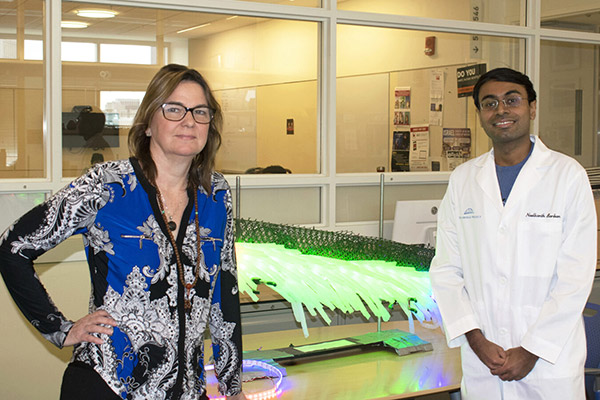
| | 4. Science: MIT's Koch Institute STAT Madness | | Angela Belcher, chair of MIT’s Department of Biological Engineering, and Neel Bardhan, postdoctoral fellow in MIT's Koch Institute, with an oversized model of carbon nanotube probes for detecting tiny ovarian tumors. | | STAT, a health and medicine-focused media outlet, periodically holds bracketed competitions for biomedical research, much like the NCAA's March Madness for basketball, to focus attention on research at academic institutions. A research team from MIT's Koch Institute advanced to the final round in the 2020 STAT Madness competition for their development of a technique that utilizes carbon nanotubes to detect ovarian cancer. | | MIT’s Koch Institute wins STAT Madness with technology to see tiny ovarian tumors | | From: STAT, By: Elizabeth Cooney, April 6, 2020 | | |
Carbon nanotubes rule.
In this year’s STAT Madness, a bracket-style competition to honor the best in recent biomedical research, each finalist exploited carbon nanotubes to tackle one of the two leading causes of death in the U.S.: heart disease and cancer.
One finalist, a team from MIT’s Koch Institute for Integrative Cancer Research, engineered a fluorescing carbon nanotubule — an “amazing” material — to better see the multitude of tiny ovarian cancer tumors deep in the body and unseen by a surgeon’s eyes. The other finalist, from the Texas Heart Institute and Rice University, created fibers from “magical” carbon nanotubes to bridge over scarred heart tissue following a heart attack to prevent deadly rhythm disturbances.
After five weeks and a record-setting 699,315 votes, we have a champion: the Koch Institute, which drew 70% of the votes in the final round.
Angela Belcher, chair of MIT’s Department of Biological Engineering, and her team tackled the daunting challenge of ovarian cancer, which owes its disappointing survival rates to late detection, usually after the initial cancer cells have spread like wildfire from the ovary to other organs and tissues throughout the abdomen.
| | What are Carbon Nanotubes? Uses, Properties and Structure | | |
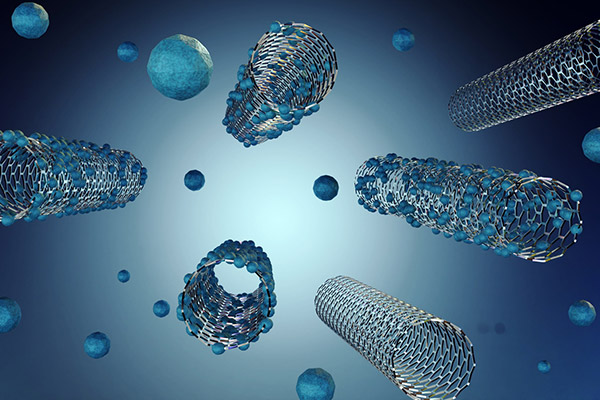
Carbon nanotubes (CNTs), also known as buckytubes, are an allotrope of carbon characterized by their hollow cylindrical structure, with walls that are only one atom thick. The carbon atoms are arranged in a hexagonal lattice, similar to graphene, and the tubes typically have a diameter of 1-3 nanometers.
CNTs have been deemed a wonder material due to their remarkable and highly unique physical and chemical properties. They have received much attention over the past decade as a promising material, particularly in the trending field of nanotechnology.
CNTs are super strong and yet highly versatile. Known for their outstanding optical, electrical, and mechanical properties, CNTs exhibit high flexibility, stability, and conductivity. They have applications across a broad range of fields including materials science, engineering, medicine, agriculture, and plant biotechnology.
The unique tube structure of CNTs shown in the video provides high strength as well as flexibility, whilst maintaining the high aspect ratio and surface area associated with graphene-based materials.
| | 5. June's Full Moon: The Strawberry Moon | | June's full moon, known as the Strawberry Moon, will appear on Tuesday evening, rising low and large over the eastern horizon. The last full moon of spring, Native Americans called it the Strawberry Moon, not because of its color, but because it coincides with the time of year when wild strawberries ripen. While the moon will not be pink, it may take on an amber hue due to its low position in the sky and the refraction of its light in the atmosphere. | | When To See June’s ‘Strawberry Moon,’ The Lowest Full Moon Since 2006 | | From: Forbes, By: Jamie Carter, June 5, 2025 | | |
The full strawberry moon — the final full moon of spring in the Northern Hemisphere — will turn full on Wednesday, June 11, 2025. However, it will be best seen at moonrise on Tuesday, June 10 as it appears in the east during dusk. It takes its name from the ripening of summer berries in North America during June. It’s also the lowest-hanging full moon not only of the year, but since 2006 because of a once-in-18.6-years occurrence called the “major lunar standstill.”
The Role of the 'Major Lunar Standstill'
This year there’s another reason why June’s full moon is the lowest of the year — the moon’s current major lunar standstill. This once-every-18.6 years period, which lasts for about a year — is caused by the tilts of the moon and Earth being at their maximum — meaning the moon rises and sets at the farthest points on its range on the horizon. In practice, the moon in June 2025 will rise farther to the southeast than at any time since 2006, stay low in the southern sky all night (about five degrees lower in the sky than the sun does on the winter solstice), and set as far to the southwest as it ever can.
| |
6. Reader Submission: Great Falls of the Potomac
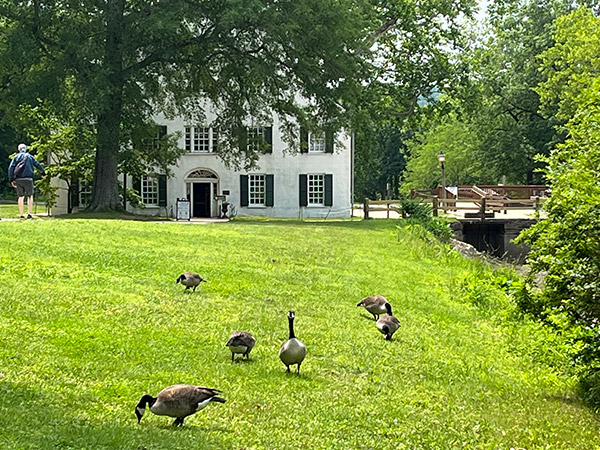
| | Great Falls Tavern Visitor Center | | A Flock reader in the Washington, D.C. Metro Area suggested that I include a post about the Great Falls of the Potomac along with a short video they took on a recent visit to the Chesapeake and Ohio Canal National Historic Park. The best place to view the Great Falls is from the observation deck on Olmsted Island, a short hike from the historic Great Falls Tavern Visitor Center approximately 14 miles north of Washington, D.C., along the C&O Canal towpath. | | Great Falls of the Potomac | | |
Many people consider the Great Falls of the Potomac to be the most spectacular natural landmark in the Washington D.C. area. Here, the Potomac River builds up speed and force as it falls over a series of steep, jagged rocks and flows through the narrow Mather Gorge.
This dramatic scene makes Great Falls Park, located just fifteen miles from the Nation's Capital, a popular site with local residents and tourists from around the world who are visiting the Washington area.
The falls consist of cascading rapids and several 20 foot waterfalls, with a total 76 foot drop in elevation over a distance of less than a mile.
The Potomac River narrows from nearly 1000 feet, just above the falls, to between 60 and 100 feet wide as it rushes through Mather Gorge, a short distance below the falls. The Great Falls of the Potomac display the steepest and most spectacular fall line rapids of any eastern river.
| | Great falls of the Potomac | | Goddess Pele took her summer trip early this year and left her home on the Big Island of Hawai'i for the Italian island of Sicily. Mount Etna began its latest eruption Tuesday, spewing a lava fountain from its Southeast Crater and a pyroclastic flow down the mountain's face. | | Italy's Mount Etna volcano erupts with a massive ash cloud and a "lava fountain" | | From: CBS News, By: Tucker Reals, June 2, 2025 | | |
Mount Etna, the rambunctious volcano on the Italian island of Sicily, grumbled back to life on Monday, spewing hot ash and lava in a pyroclastic flow, the nation's volcano monitoring body said. There were no reports of any risk to the local population, which is accustomed to Etna's frequent eruptions, or to air travel.
The volcano department, which is run by Italy's National Institute of Geophysics and Vulcanology, noted on Monday "explosions of increasing intensity" that it said were "almost continuous."
By noon local time, INGV Vulcani said in a social media post that the "explosive activity from the Southeast Crater has become a lava fountain," and infrared images posted by the group showed the flow of lava down the mountain's face.
... The only danger was in the area right around the summit of Etna, which was blocked off to tour groups on Monday as a precaution, The Associated Press quoted INGV official Stefano Branca as saying. One video posted on social media showed tourists who had been on Etna running along a path on the side of the volcano as smoke billowed in the distance behind them.
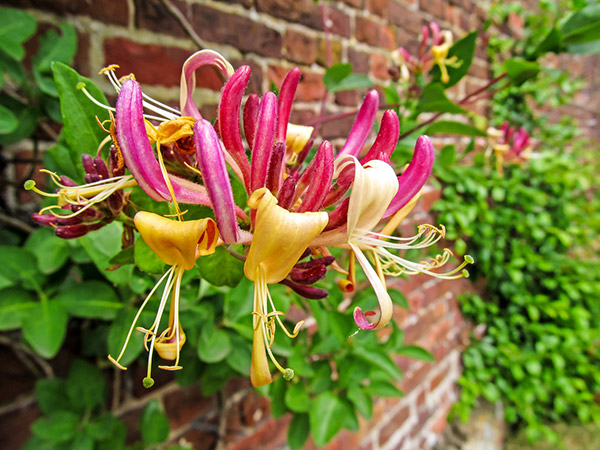
| | 8. The Heavens: AG Carinae | | Image Credit: NASA, ESA, STScI | | The beauty of our universe never fails to impress me. This is the massive star AG Carinae, surrounded by a shell of dust and gases from an ancient eruption. | | The star AG Carinae is surrounded by an expanding shell of gas and dust. The nebula is about five light-years wide, which equals the distance from here to our nearest star, Alpha Centauri. The huge structure was created from one or more giant eruptions about 10,000 years ago, when our human ancestors were just beginning to farm. The star’s outer layers were blown into space—like a boiling teapot popping off its lid. The expelled material amounts to roughly 10 times our Sun’s mass. These outbursts are typical of a rare breed of star called a luminous blue variable (LBV). These stars are among the most massive and brightest stars known and live for only a few million years. AG Carinae resides 20,000 light-years away inside our Milky Way galaxy. The star’s expected lifetime is between 5 million and 6 million years. This image was taken to celebrate the Hubble Space Telescope's 31st anniversary. | | June's flower: the Honeysuckle | | These Flock regulars are always here for you: | | Don't Be Shy: Share Your Stories! | | I'm looking forward to sharing more of your personal stories - oral, written, or otherwise, as we enter our third year. I'd so love to present them to The Flock, hit a mailbox below to share your story. | | Subscriptions & Idea Submissions
Reminder: Your submissions are always welcomed. | | |
Feel free to forward this email to a friend. If this was forwarded to you and you would like to receive your very own Flock Newsletter, you can sign up here. If you have any questions or suggestions for future Flock resources, don't hesitate to contact me.
Your fan and friend,
Beth
| | | The information and materials contained or referenced in this newsletter are for informational purposes only and not intended to be a substitute for professional medical advice, diagnosis, or treatment. Always consult a physician or other qualified medical professional with any questions you may have regarding a medical condition or treatment and before beginning a new health care regimen. Do not disregard professional medical advice or delay seeking medical advice or care based on anything contained in this newsletter. | | | | |