REMINDER: YOUR SUBMISSIONS ARE ENCOURAGED | |
|
1. This week has seen disastrous wildfires in Los Angeles County. my heart goes out to everyone who has been affected by these fires. I'm starting out this week's Flock with guides from the American Red Cross on how to prepare for natural disasters and wildfires.
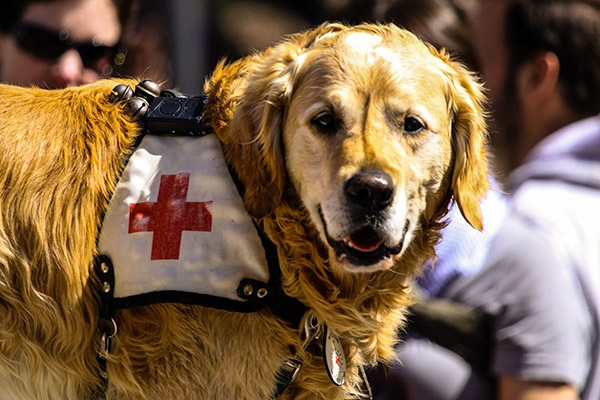
2. Next, in the Pet's Corner, I have additional information from the Red Cross on what you need to do to keep your pets safe and during a natural disaster.
3. Continuing with the California fires, World Central Kitchen is on the scene providing much needed sustenance and comfort to first responders and families impacted by the fires.
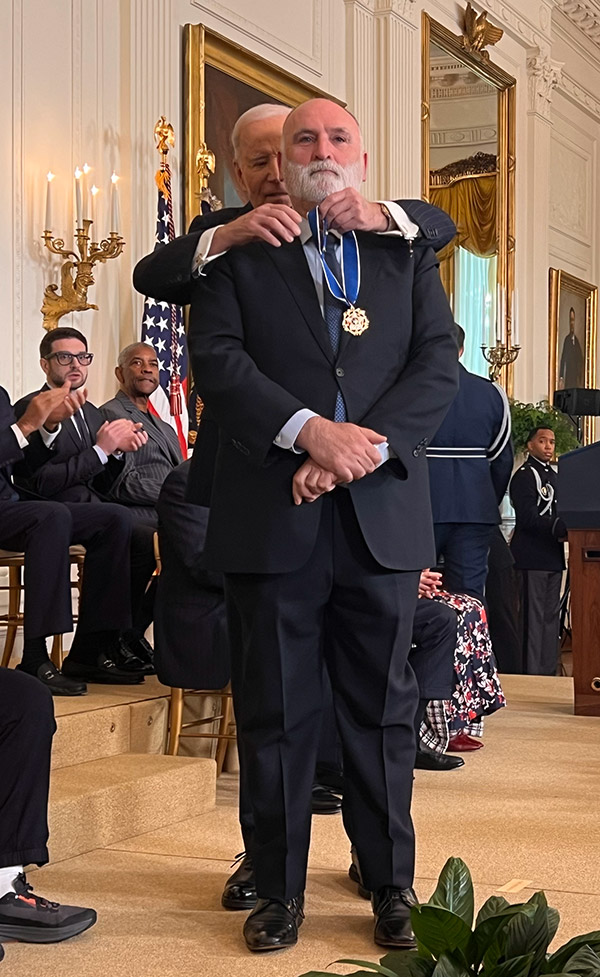
4. In Philanthropy, I want to congratulate Chef Andrés of world central kitchen for being awarded the Presidential Medal of Honor earlier this month.
5. In The Heavens, I look forward to the planetary display that will grace the night sky throughout January and this Monday night's full Wolf Moon.
6. Next, I have an article that looks at seven morning habits common to people who age more slowly than others.
7. In Wellness, I'm revisiting an important topic; foods to avoid, and foods to indulge in to prevent chronic inflammation.
| |
Now, to this week's Flock. | |
1. Natural Disasters: The Los Angeles County Wildfires | |
After the devastating Lahaina, Hawaii fire in August of 2023, I ran a series of posts on disaster preparedness covering general preparedness & severe weather, tsunamis, landslides, and earthquakes. Given the current wildfires in Los Angeles County, I want to start this week by re-posting the first post of that series with links to the American Red Cross' resources for disaster preparedness, followed by more specific guides for preparing for and surviving wildfires. | |
Disaster Preparedness from The American Red Cross | |
|
Make a Plan
Create and practice an emergency plan so your family will know what to do in a crisis.
Create Your Emergency Plan in Just 3 Steps
| | |
|
With your family or household members, discuss how to prepare and respond to the types of emergencies that are most likely to happen where you live, learn, work and play. | | |
|
Identify responsibilities for each member of your household and how you will work together as a team. | | |
|
Practice as many elements of your plan as possible. | |
Learn how to keep your family and home safe during a wildfire. | |
|
Wildfires affect everyone. They can spread fast and harm us. Wildfires are getting bigger and more dangerous. More people are living in areas at risk for wildfires, but we can take action to prepare.
Learn how to prepare your household and community.
What Should You Do Before a Wildfire Starts?
Be ready to evacuate quickly.
You may have to leave your home quickly to stay safe. Know where you will go, how you will get there, and where you will stay. Have different escape routes from your home and community. Practice these routes so everyone in your household is familiar with them. Be sure to understand how your community will respond to a wildfire.
| |
|
Gather Emergency Supplies
Gather food, water, and medicine in advance because stores and pharmacies might be closed. Organize your supplies into a Go-Kit and a Stay-at-Home Kit.
- Go-Kit: 3 days of supplies that you can easily carry with you.
- Stay-at-Home Kit: 2 weeks of supplies if you need to stay at home.
- Have a 1-month supply of medication in a child-proof container.
- Keep personal, financial, and medical records safe.
| |
|
Plan to Stay Connected
- During a wildfire, the most important information will come from your local government. Authorities will let you know when you should leave to stay safe.
- Sign up for free emergency alerts from your local government.
- Have a backup battery or a way to charge your cell phone.
- Have a battery-powered radio.
- Plan to monitor weather conditions and fires near you.
| |
|
Learn Emergency Skills
- Learn First Aid and CPR.
- Utilities may be offline. Be ready to live without power. Plan for your electrical needs, including cell phones and medical equipment.
| |
|
Understand Health Impacts
- Wildfire smoke is a mixture of air pollutants that are harmful to your health. Learn how to reduce your exposure.
| |
|
Download the Wildfire Safety Checklist
Red Cross checklists are available in multiple languages
| |
How to quickly and safely evacuate from wildfires | |
RESOURCES FOR THOSE AFFECTED BY THE L.A. FIRES | |
If you or someone you know has been affected by the L.A. wildfires, the Los Angeles Homeless Services Authority has assembled a list of resources for fire victims including information on FEMA Disaster Assistance, Emergency Shelters, Immediate Support, & Housing, Food Assistance, Mental Health, Medical Care, & Emotional Support, Animal Evacuation Centers, and Resources for Rebuilding and Recovery. | |
2. Pet's Corner: Pet Disaster Preparedness
| |
It is equally important to have a disaster preparedness plan for your pats as it is to have one for yourself. The following tips from the American Red Cross will help you develop and implement a plan to keep your pets safe during a natural disaster. | |
Pet Disaster Preparedness | |
Learn how to prepare your pets for an emergency evacuation and help them recover afterward. | |
|
In an emergency, your pets will be even more dependent on you for their safety and well-being. Your family’s disaster plans must include your furry family members too. Learn what to do to keep your beloved pets safe!
Top Tips for Keeping Your Pets Safe During a Disaster
| | |
|
If it’s not safe for you to stay in your home during an emergency, it’s not safe for them either! | | |
|
Include supplies for your pet in your emergency kit, or assemble an emergency kit for your pet. | | |
|
Make an evacuation plan for you and your pets. Many hotels and shelters do not accept animal guests, other than service animals. | |
|
Assemble an Emergency Kit for Your Pet
Keep items in an accessible place and store them in sturdy containers so that they can be carried easily.
Your kit should include:
- Sturdy leashes, harnesses and/or carriers to transport pets safely and ensure that they can’t escape.
- Food, drinking water, bowls, cat litter/pan and a manual can opener if you pet eats canned food.
- Medications and copies of medical records stored in a waterproof container.
- A first aid kit.
- Current photos of you with your pet(s) in case they get lost. Since many pets look alike, this will help to eliminate mistaken identity and confusion.
- Information on feeding schedules, medical conditions, behavior problems, and the name and number of your veterinarian in case you have to foster or board your pets.
- Pet beds and toys, if easily transportable.
| |
|
Download your Pet Safety Checklist
Checklists available in multiple languages:
| |
3. Disaster Relief: World Central Kitchen Responds
| |
Whenever there is a natural disaster, or even a man-made one, World Central Kitchen is always one of the first aid groups to arrive on the scene. The wildfires that are currently raging in Los Angeles County are no exception. WCK has set up food and water distribution sites around the area to provide sustenance and comfort to first responders and families impacted by the wildfires. | |
Chef José Andrés Is Helping Feed Firefighters During LA Fires | |
From: Remezcla: By: Lissete Lanuza Sáenz, January 9, 2025 | |
|
Wildfires have left at least five people dead, destroyed more than 2,000 structures, and placed at least 130,000 residents under evacuation orders across Los Angeles County. As the scenes of devastation spread and the fires continue to leave unprecedented damage in what is already being called one of the most expensive fires in the history of the United States, Spanish Chef José Andrés and his nonprofit, World Central Kitchen, have once again mobilized to help residents and firefighters.
The famed chef posted on social media from where he and his nonprofit were working to feed first responders who were trying to contain the fires, saying on X, formerly Twitter: “Here reporting @WCKitchen from Pacific Coast Highway by Palisades….here is a staging/refueling area for Firetrucks and for crews to get some quick rest and food and to get new orders and to go back in. Smoky with ash flying around…they hope winds will totally stop to really get the fire under control….”
He also used the hashtag #ChefsforCalifornia, and shared information about the spread of the fire and evacuation zones.
José Andrés, who famously spent months providing hot meals to Puerto Ricans following Hurricane Maria, has spoken before about how since becoming a US citizen in 2013, he feels it is his duty to step up. “I always felt like I have to give back to America what America has given me,” he told Anderson Cooper on 60 Minutes.
| |
Chef Jose Andres and World Central Kitchen feeding those in need in California | |
4. Philanthropy: Chef Andrés Receives Presidential Medal of Freedom | |
Chef Andrés with Bono at the medal ceremony. | |
Chef José Andrés along with Jane Goodall, Michael J. Fox, and Bono was one of seventeen recipients to be honored by President Joe Biden with the Presidential Medal of Freedom this month. | |
José Andrés Awarded Presidential Medal of Freedom | |
|
President Joe Biden bestowed the Presidential Medal of Freedom on world-renowned chef José Andrés, HON ’14—who among his many achievements advancing culinary and humanitarian work founded the Global Food Institute (GFI) at the George Washington University—at a ceremony Saturday afternoon at the White House.
The Presidential Medal of Freedom is the nation’s highest civilian honor, presented to individuals who have made exemplary contributions to the prosperity, values or security of the United States, world peace or other significant societal, public or private endeavors. Saturday marked the final time as president that Biden presented the award.
“Together, you leave an incredible mark on our country with insight and influence that can be felt around the globe in major cities and remote areas alike, binding us closer as people and showing us what’s possible as a nation,” Biden told the 19 recipients, expressing gratitude for their commitment to service, innovation and inspiration.
Andrés is a renowned Spanish-American culinary innovator who popularized tapas in the United States through his popular and award-winning restaurants. His nonprofit organization, World Central Kitchen, provides large-scale relief to communities affected by natural disasters and conflict around the world.
“Chefs like me feed the few, but our destiny is to feed the many,” Andrés said. “To be an army of goodness where a plate of food becomes a plate of hope…a light in dark times. Together, we can change the world through the power of food.”
| |
5. The Heavens: Planet Spotting and January's Full Wolf Moon
| |
This month is a great opportunity to see four planets in the evening sky without the need for a telescope or binoculars. Get a rundown of January's highlights from the Harvard & Smithsonian Center for Astrophysics. | |
|
What's Up for January?
Cue the planet parade, Saturn and Venus cross paths, Mars expresses its opposition, and the outlook for the Quadrantid meteors.
In January, you’ll have the opportunity to take in four bright planets in a single, sweeping view.
All month after dark, you’ll find Venus and Saturn in the southwest for the first couple of hours, while Jupiter shines brightly high overhead, and Mars rises in the east. Uranus and Neptune are there too, technically, but they don't appear as "bright planets." These multi-planet viewing opportunities aren’t super rare, but they don’t happen every year, so it’s worth checking it out.
Now, these events are sometimes called “alignments” of the planets, and while it’s true that they will appear more or less along a line across the sky, that’s what planets always do. That line is called the ecliptic, and it represents the plane of the solar system in which the planets orbit around the Sun. This is, incidentally, why we sometimes observe planets appearing to approach closely to each other on the sky, as we view them along a line while they careen around the cosmic racetrack.
| |
What's Up: January 2025 Skywatching Tips from NASA | |
January's full moon, the Wolf Moon will be visible the night of Monday, January 13th. | |
Watch for January's Full Wolf Moon! | |
|
The Wolf Moon
It’s thought that January’s full Moon came to be known as the Wolf Moon because wolves were more likely to be heard howling at this time. It was traditionally believed that wolves howled due to hunger during winter, but we know today that isn’t accurate.
Howling and other wolf vocalizations are heard in the wintertime to locate pack members, reinforce social bonds, define territory, and coordinate hunting.
| |
6. Aging: Common Morning Habits to Slow Aging | |
People who age more slowly than their friends usually adopt these 7 morning habits | |
|
Aging is inevitable, but how quickly it happens isn’t the same for everyone.
Ever wondered why some people seem to age slower than their peers? It often comes down to their morning habits.
Adopting certain rituals in the morning can have a profound impact on how gracefully we age. Those who age more slowly usually have a few common practices to kick-start their day.
In this article, I’ll share 7 morning habits of people who age slower than their mates. You might want to consider incorporating them into your own routine. But remember, it’s not about copying others; it’s about finding what works best for you.
1. Hydrate immediately
2. Practice mindful meditation
3. Prioritize a balanced breakfast
4. Regular morning exercise
5. Limit caffeine intake
6. Embrace the sunligh
7. Prioritize quality sleep
| |
7. Wellness: Fighting Inflammation
| |
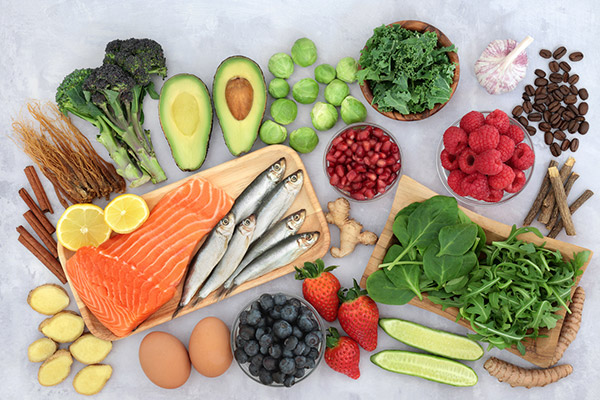
I've posted about this before, but too much sugar and overly processed food can lead to inflammation along with other health risks like heart disease, obesity, arthritis, and diabetes. Luckily it is easy to avoid these foods by eating a diet that includes fresh fruits and vegetables, fatty fish, and limiting the portion size of red meats. The best part; the formula for a delicious and healthy diet. | |
|
Chronic, systemic inflammation is a serious health concern that can be made worse — or better — with diet. Here’s what chronic inflammation is, and how what you eat can keep you safer from the chronic diseases inflammation can cause.What is inflammation?
If you’ve ever cut your finger, bruised a toe or had a throat infection, you have likely experienced at least some of the four signs of inflammation: redness, swelling, pain and heat. Acute inflammation is your body’s natural response to illness, injury or infection and usually resolves on its own.
But there is another kind of inflammation ― the kind that affects the whole body ― which is called systemic. Systemic inflammation can become chronic; it can persist for months, or even years.
| |
|
Inflammatory Foods
What causes inflammation? It can result from exposure to environmental toxins, a lingering virus, aging or chronic stress. But what you eat contributes, too.
What foods cause inflammation? Unfortunately, a lot of them. In particular, experts recommend avoiding these inflammatory foods:
- Red meat, such as steak and hamburgers
- Processed meat, such as bologna, bacon, sausage and lunchmeat
- Commercial baked goods such as snack cakes, pies, cookies and brownies
- Bread and pasta made with white flour
- Deep fried items such as French fries, fried chicken and donuts
- Foods high in added sugar, such as candy, jelly and syrup
- Sugar-sweetened beverages such as soda, bottled or canned tea drinks, and sports drinks
- Trans fats, found in margarine, microwave popcorn, refrigerated biscuits and dough, and nondairy coffee creamers
| |
|
Anti-inflammatory Foods
- Omega-3 Fatty Acids
- Vitamin C
- Polyphenols
- Gut-Healthy Foods
| |
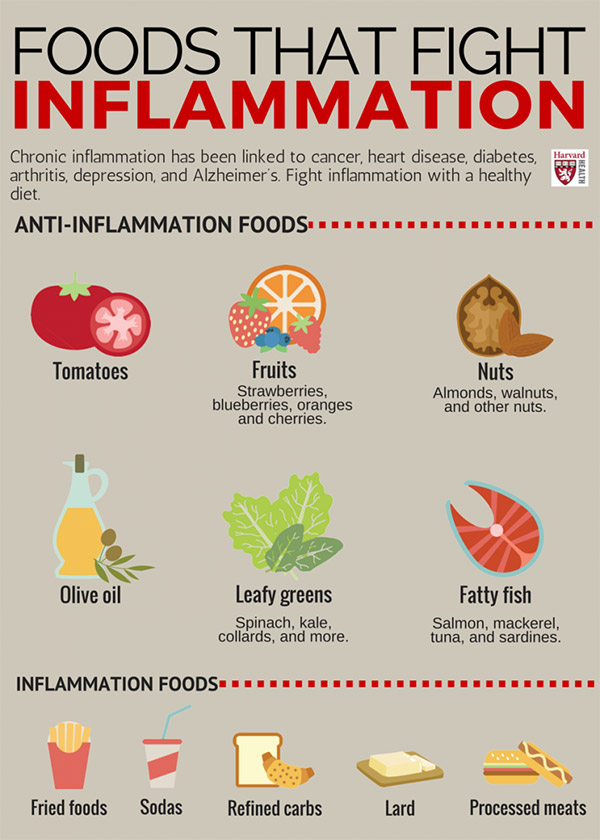
The following helpful infographic is from a Harvard Health article on anti inflammatory foods that I first ran in the March 17, 2023 issue of the Flock. | |
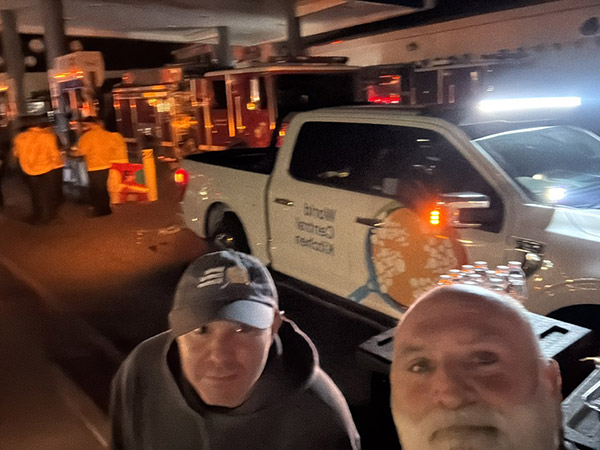
WCK team at the Palisades Chevron distribution site | |
These Flock regulars are always here for you: | |
In coming weeks: we'll be sharing more investigative articles from our roving reporter William George, original writing from Flock favorite Dino DeConcini. | |
Don't Be Shy: Share Your Stories! | |
I'm looking forward to sharing more of your personal stories - oral, written, or otherwise, as we enter our third year. I'd so love to present them to the Flock, hit a mailbox below to share your story. | |
Subscriptions & Idea Submissions
Reminder: Your submissions are always welcomed. | |
|
Feel free to forward this email to a friend. If this was forwarded to you and you would like to receive your very own Flock Newsletter, you can sign up here. If you have any questions or suggestions for future Flock resources, don't hesitate to contact me.
Your fan and friend,
Beth
| | |
The information and materials contained or referenced in this newsletter are for informational purposes only and not intended to be a substitute for professional medical advice, diagnosis, or treatment. Always consult a physician or other qualified medical professional with any questions you may have regarding a medical condition or treatment and before beginning a new health care regimen. Do not disregard professional medical advice or delay seeking medical advice or care based on anything contained in this newsletter. | | | | |