REMINDER: YOUR SUBMISSIONS ARE ENCOURAGED | | If you would like to receive a link to each new Flock by text, please send me your number by using the contact button below, and I'll add you to our text list. Be assured that your number will not be shared. | | |
1. The Jewish New Year, Rosh Hashanah, begins at sundown this coming Monday, the 22nd. I wish everybody observing the holidays a good and sweet year!
2. In this week's post for National Hispanic Heritage Month, I have an article from the National WWII Museum about an infantry company primarily composed of soldiers of Mexican American heritage from El Paso, Texas, who went on to distinguish themselves through their bravery and sacrifice.
3. I have a second installment of Polar Bears of the Arctic with some additional polar bear facts that I didn't cover in the four articles on polar bears that I posted last week.
4. In Nature, Arctic warming is contributing to the decline of Alaska's wild caribou and reindeer populations.
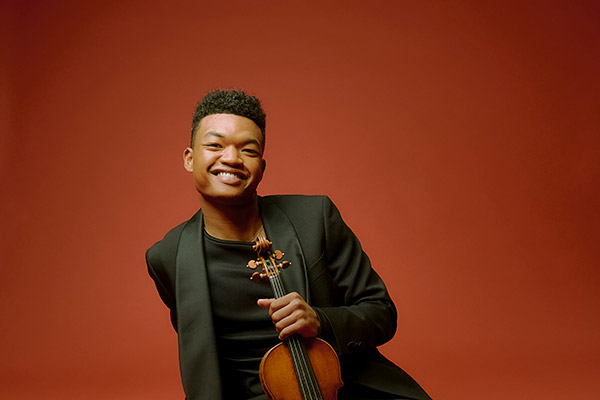
5. In Performing Arts, I'm catching up with one of the first young musicians I featured in the Flock, the violin virtuoso Randall Goosby.
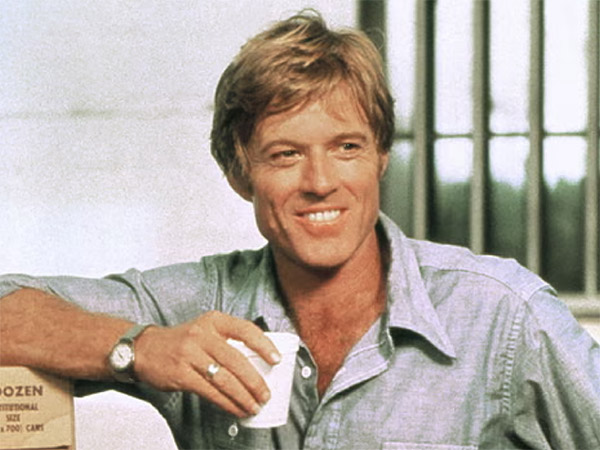
6. Sadly, I have another In Memoriam to post this week, screen legend Robert Redford passed away on Monday, September 16th, at the age of 89.
7. In Reaching High, Kokichi Akuzawa has become the oldest person to summit the highest peak in Japan, 12,388 ft tall Mt. Fuji, at the age of 102.
8. Thursday, September 18th, was the 78th birthday of the United States Air Force. "Aim High... Fly-Fight-Win", and Happy Birthday!
9. This week in Bindu's Corner, gracious Bindu has shared a spiritual reflection from an anonymous author that relates to the practice of washing oneself of sin in the Triveni Sangram, the confluence of the Ganges, Yamuna, and Saraswati Rivers, a spiritual site in Prayagraj, India.
| | I hope you will pick and choose, and read what might touch your heart, and that in a small way, I have been able to add a bit of comfort to your day. Please feel free to share the Flock… | | Now, to this week's Flock. | |
1. Rosh Hashanah, September 22 – 24, 2025
| | Rosh Hashanah, the Jewish New Year, begins this Monday, September 22nd, at Sundown. The 2-day celebration includes the lighting of candles, sounding the shofar—a hollowed-out ram's horn—and four ceremonial meals featuring fruit, honey, and other sweet foods in anticipation of a sweet year, "Shana Tova Umetuka." | |
Rosh Hashanah: The Jewish New Year
How Do We Celebrate?
| | |
Rosh Hashanah, the birthday of the universe, is a two-day holiday that is both festive and solemn. We joyously proclaim our allegiance to the King of the Universe, while humbly beseeching our Creator to grant us another year of life, a year of peace, prosperity, and goodness.
Rosh Hashanah is known as the Day of Judgment because on on this day “all inhabitants of the world pass before God like a flock of sheep” and the Heavenly Court decrees “who shall live and who shall die… who shall be impoverished and who shall be enriched; who shall fall and who shall rise.” (Rosh Hashanah liturgy). It is the beginning of the Ten Days of Repentance, also known as the Days of Awe, which culminate in Yom Kippur, the Day of Atonement. Rosh Hashanah literally means “Head of the Year” and our actions on that day set the tone for the rest of the year. We examine our deeds since last year’s holiday, make an honest accounting of our sins and misbehaviors, and pray earnestly for the strength and wisdom to do better in the new year.
| |
2. National Hispanic Heritage Month 9.15.25 – 10.15.25
| | This week, in observance of National Hispanic Heritage Month, I want to recognize the contributions Hispanic Americans made during World War II. Over 500,000 Hispanic Americans enlisted and served in the US military during the war. Along with those who served in the military, countless more joined the war effort at home, working in factories, munitions plants, and agriculture. The WWII Museum in New Orleans has posted the following article about an infantry company primarily composed of Mexican American soldiers from EL Paso, Texas, and the great price they paid in their contribution to the defeat of the Axis powers in Europe. | |
El Paso’s Pride: The Mexican American Soldiers of Company E, 141st Infantry
Company E far exceeded the simplistic expectations of “Americanization” that marked its beginning, and its men went on to prove what it meant to be truly American.
| From: The National WWII Museum, September 19, 2024 | | |
Under a darkening winter sky on January 20, 1944, the men of Company E, 141st Infantry Regiment, braced themselves for an ill-fated mission. They had orders to cross Italy’s Rapido River as part of the 36th Infantry Division’s assault on a heavily fortified German position. On the other side of the icy torrent awaited barbed wire, mines, mud, and misery—and, beyond that, two battalions of Germany’s well-entrenched 15th Panzergrenadier Division, poised to unleash a devastating barrage of artillery, mortar, and machine gun fire.
To this point, soldiers in Company E had formed a close-knit group, bonded by shared heritage and a fierce commitment to proving their worth. Most of them were first-generation Mexican Americans from El Paso, Texas, and had grown up in the same neighborhoods and attended the same schools. Theirs was a brotherhood that began long before they arrived on the battlefields of Europe, and combat only strengthened their existing bonds. Beginning with the invasion of the European mainland at Salerno, the company’s battle-hardened veterans had fought together with distinction across the rugged and unforgiving landscape of central Italy, but nothing could have prepared them for the disaster at the Rapido.
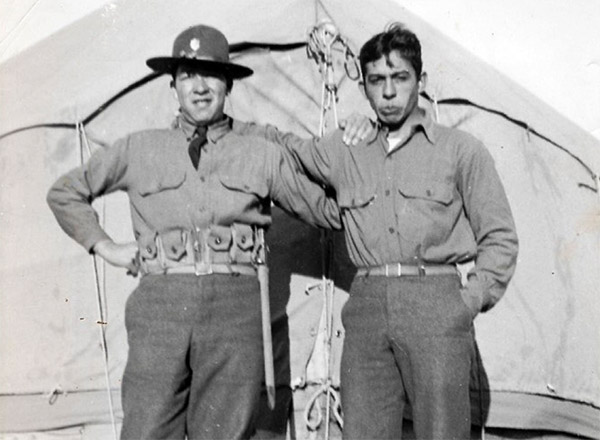
| | El Paso-born Lorenzo Macias (left) of Company E, 141st Infantry Regiment, poses with a fellow soldier. The National WWII Museum, Gift in Memory of Lorenzo Macias and Rosa Blanca Macias Van Sweringen. | | General Fred L. Walker, commander of the 36th Infantry Division, anticipated a grim outcome. He wrote that day in his diary, “We might succeed, but I do not know how we can.” Walker’s bleak assessment reflected the near-impossible task ahead, and his uncertainty was not misplaced. Within 48 hours, the assault devolved into a nightmare: over 2,000 soldiers were killed, wounded, or captured in what would later be described as one of the war’s greatest strategic blunders. | | Patriots from the Barrio | WWII IN 2 | | 3. Polar Bears of the Arctic: Part 2 | | These polar bear facts from Good Housekeeping are an addendum to the articles on the polar bear's evolution, back-and-forth hybridization with coastal brown bears, and the indigenous peoples of the Arctic's relationship with and names for the polar bear from last week's newsletter. | | Fascinating Polar Bears Facts That Will
Blow Your Mind | | |
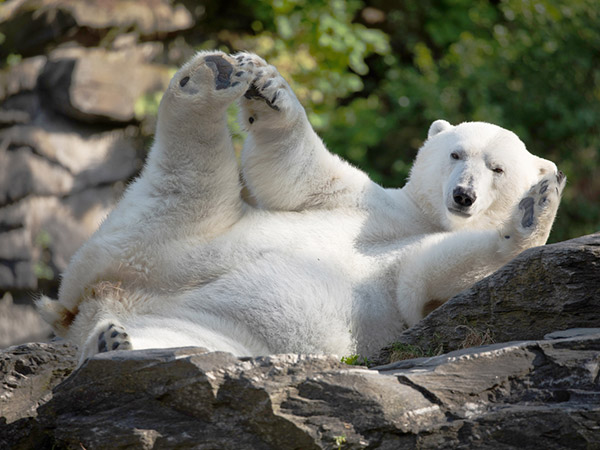
Considered a marine mammal, these sea bears play an important role in the food chain, and also hold significance in different cultures. In honor of International Polar Bear Day, we’ve rounded up stunning photos and facts about these majestic Arctic creatures.
• Polar bears aren't actually white.
According to WWF, underneath their thick fur, these animals have black skin. Their fur is translucent and hollow but when light reflects off of it, it appears white.
• A group of indigenous people refuse to say polar bear.
The Laplanders, from northern Europe, traditionally call polar bears "God's Dog" or "Old Man in the Fur Cloak." They won't say polar bear for fear of offending it.
| | |
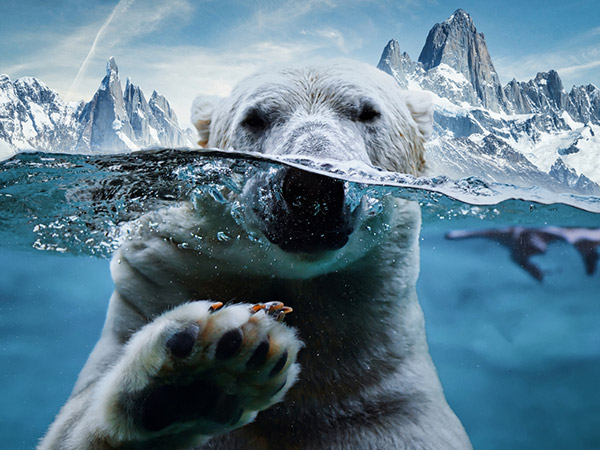
• Swimming is in their DNA.
Polar bears are excellent swimmers – staying in the water for long periods of time and reaching far distances. Their large paws help them paddle through icy waters.
• Polar bears are fast on land.
In a full on sprint, this majestic animal of the Arctic can hit 25 miles per hour. And for a male weighing 900 pounds, that's pretty impressive.
• Their sense of smell is superb.
A polar bear is always smelling for its main source of food — seals. They can smell one almost a mile away and as deep as 3 feet below compacted snow.
| | |
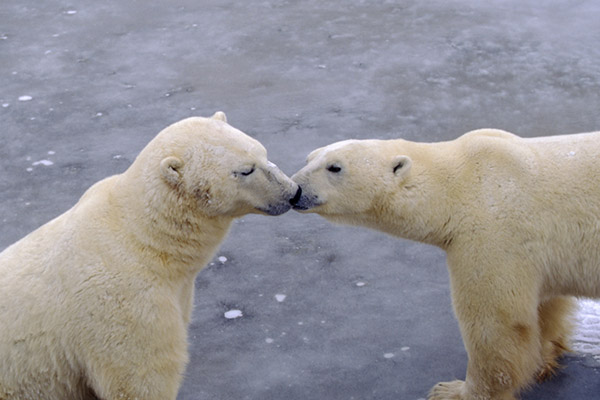
• Polar bears touch noses to share food.
If a passing bear spots a kill already being feasted on, it will approach the dominant bear and carefully touch noses to ask for permission to share.
• They roll in the snow to clean themselves.
After a meal or an adventure, polar bears get down in the snow and roll around to clean off their fur. This is important to help keep their insulation in tip-top shape.
• Polar bears can live up to 25 years in the wild.
With their tough exteriors and drive to hunt, polar bears can live a fairly long life. The oldest sea bear was named Debby. She was 42-years-old and lived in Canada.
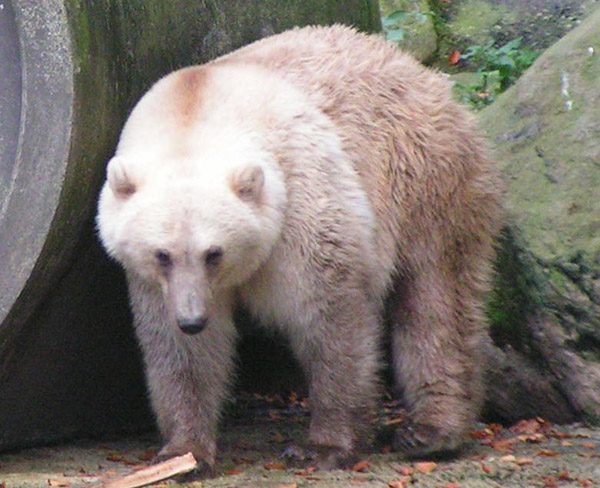
| | photo: A captive grizzly bear and polar bear hybrid in Zoo Osnabrück. | | Climate Change Never Takes A Holiday: The Phenomenon of the Pizzly Bear | | |
Climate Change and Pizzly Bears
Regrettably, climate change is rapidly altering the Arctic ecosystem, putting the polar bears’ long-term future in jeopardy. Polar bears have a highly specialized diet, consisting mainly of seals. Sea ice has long provided the bears with a seal hunting platform, and its late formation and early melt creates progressively more difficult conditions for these bears to hunt their favorite blubbery menu item. Diminished ice cover has forced them to search out other food sources including garbage left behind by humans. In their quest for food, polar bears have come into increased contact with Inuit communities, sometimes resulting in human fatalities. In addition to these confrontations, polar bears are increasingly crossing paths with grizzly bears within the expanding overlap of each species’ geographic range. Polar bears and grizzlies are not so genetically distant from each other to preclude hybridization, and in 2006 the scientific community found that the bears do breed together in the wild. Their shared progeny are known as pizzlies, or grolar bears (which name do you like better?).
Grizzly bears dominate the territory that they share with polar bears because they are better adapted to the varied climate, terrain, and available food sources. Unlike polar bears, grizzlies follow an opportunistic diet that includes plant tubers and carrion in addition to live prey. Paleontologist Larisa DeSantis of Vanderbilt University posits that the hybrid pizzlies may possess modified skulls and teeth that could plausibly allow them to adopt the indiscriminate feeding habits of the grizzly bear. However, DeSantis points out that the hybrid bears also lose some of the abilities of their parents; for example, pizzlies are not as adept at swimming as their polar bear forbears.
| | Vanderbilt researcher explains Pizzly bear hybrid species | |
4. Nature: Declining Reindeer & Caribou Populations
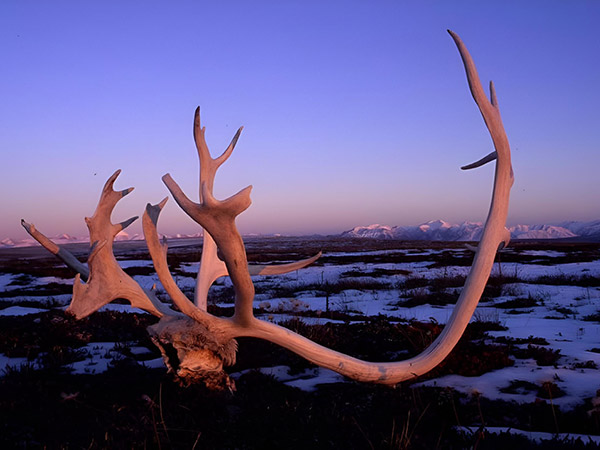
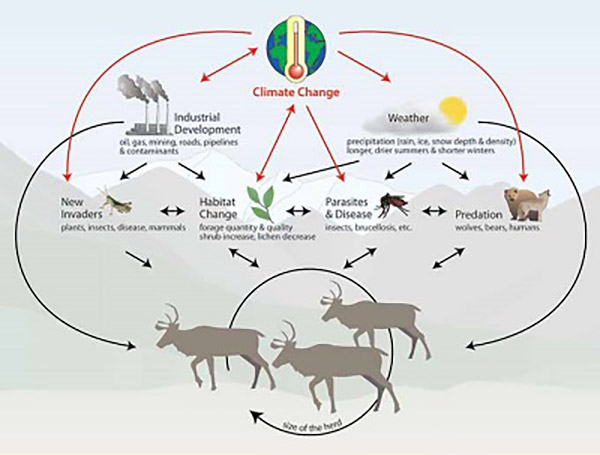
| | Arctic warming is contributing to the decline of wild caribou and reindeer populations, with their primary food source of lichen suffering from warmer and drier summers and the encroachment of invasive plants. Caribou and reindeer are susceptible to disease spread by insects and parasites previously kept at bay by colder temperatures. At the same time, apex predators have migrated north, coming into more frequent contact with the herds. | | Where Have Santa's Reindeer Gone? | | From: NEEF, By: Sarah Hubbart and Nick Bradford, November 27, 2024 | | |
You probably recognize reindeer as the animals that help Santa Claus deliver gifts on Christmas Eve. The Alaska Department of Fish and Game (ADFG) even created a species profile page for the mythical flying creature.
However, reindeer (Rangifer tarandus tarandus) are quite real and live year-round in Arctic Alaska, Canada, China, Finland, Norway, Sweden, and Russia. Most reindeer in Alaska exist on the Seward Peninsula. These animals can only be owned and herded by Native Alaskans according to federal legislation. The reindeer found in Alaska are a different subspecies than the approximately 750,000 caribou (Rangifer tarandus granti) managed by the ADFG.
How Climate Change Affects Reindeer and Caribou
Both reindeer and caribou rely on lichen as their main food source in the winter. Alaska's lichen supply is threatened as the climate changes due to warmer and drier summers, increased wildfire activity, and extreme weather events. In fact, Alaska is one of the fastest-warming regions on Earth.
As the climate warms, shrubs are expanding into the tundra, sometimes replacing lichen. As their common food supply is disappearing, reindeer and caribou are forced to compete for the shrinking supply of lichen. Warmer weather can also result in increased parasites and insects like botflies that can cause reindeer and caribou to alter their behavior. Ice that melts too early in the season can cut off migratory routes for both subspecies.
| | Some reindeer are migrating away from their traditional herds with caribou, presenting herd management challenges for Native Alaskans and the ADFG. Declines in wild caribou and reindeer populations negatively impact the ecosystems they live in because they are a key species in the local food web, serving as the primary foragers that cycle nutrients from plants back into the soil. They are also a critical food source for predators like bears and wolves. | | 5. Performing Arts: Catching Up with Randall Goosby | | Randall Goosby was one of the first young musical artists that I put the Flock spotlight on. I first had the pleasure of witnessing this violin virtuoso at a private event at the Kennedy Center and later had a chance meeting with him at the Aspen Golf & Tennis Center where his intelect and character impressed me as much as his beautiful playing. I have been following his musical career ever since. Randall has been paying it forward lately by returning to where he got his start, the Memphis Youth Symphony Program, and presenting a masterclass to aspiring musicians before performing the Tchaikovsky Viiolin Concerto to kick off the memphis symphony Orchestra's current season. | | Memphis Youth Symphon Program presents Randall Goosby Masterclass | | |
We’re thrilled to welcome violinist, and former MYSP student, Randall Goosby for a masterclass this Saturday, September 13th, from 12-1:30pm at the Beethoven Club, featuring selected MYSP students and chamber groups!
Signed exclusively to Decca Classics in 2020 at the age of 24, American violinist Randall Goosby is acclaimed for the sensitivity and intensity of his musicianship alongside his determination to make music more inclusive and accessible, as well as bringing the music of under-represented composers to light.
Highlights of Randall Goosby’s 2024/25 season include debut performances with top orchestras like the Chicago Symphony, Minnesota Orchestra, Montreal Symphony, and more. He’s also joining the London Philharmonic Orchestra on their U.S. tour!
| | 6. In Memoriam: Robert Redford: Aug 18, 1936 – Sep 16, 2025 | | Robert Redford passed away this week, leaving in his wake an impressive portfolio of performances in some of the most successful and critically acclaimed movies of the past sixty years. Not content to rest on his laurels, he founded the Sundance Institute and the Sundance Film Festival to support independent filmmakers outside of the constraints of Hollywood studios. | | Fonda, DiCaprio, Streisand and more mourn the death of Robert Redford | From: The Associated Press, September 16, 2025 | | |
Hollywood figures and fans of the movies mourned the death of Robert Redford, expressing affection and admiration for the actor, Oscar-winning director and Sundance Film Festival founder.
Actor Colman Domingo said Redford had an “everlasting impact” on movies and director Ron Howard called his Sundance Film Festival a “game changer.” “Reservation Dogs” director Sterlin Harjo said Redford empowered filmmakers. Both Hillary Clinton and Donald Trump said they admired his work.
Redford died Tuesday “at his home at Sundance in the mountains of Utah — the place he loved, surrounded by those he loved,” publicist Cindi Berger said.
The marquee of the Egyptian Theater in Park City, Utah, was changed Tuesday to read: “Applause for Bob Redford! Thank you Sundance Kid!”
| |
7. Reaching High: Centenarian Summits Mt. Fuji
| | This is a truly remarkable accomplishment; all my respect goes to Mr. Akuzawa and his family. | |
102-Year-Old Man Becomes Oldest Person to Climb Mount Fuji — with the Help of His 70-Year-Old Daughter
The man, Kokichi Akuzawa, said he woke up at 5 a.m. every morning for three months to train for the feat
| | From: People, By: Toria Sheffield, September 13, 2025 | | |
A 102-year-old man just became the oldest person to climb Mount Fuji, Japan’s highest mountain.
Kokichi Akuzawa of Maebashi, Japan, achieved the towering accomplishment on Aug. 5 with the help of his 70-year-old daughter, Motoe, his granddaughter, his granddaughter’s husband and four friends from a local mountain climbing club, per the Associated Press.
The group began the climb to the summit — which peaks at 12,388 feet — two days earlier on Aug. 3, and spent two evenings camping en route in order to allow for rest and recovery.
“I was really tempted to give up halfway through,” Akuzawa told the AP while discussing the climb, communicating with the assistance of his 75-year-old daughter, Yukik. “Reaching the summit was tough, but my friends encouraged me, and it turned out well. I managed to get through it because so many people supported me.”
He added, “I’m impressed I climbed so well… It’s better to climb while you still can.”
This ascent was Kokichi’s second record-breaking climb on the mountain: He previously climbed the mountain when he was 96, becoming the oldest person to reach the summit at that time.
| |
8. United States Air Force Turns 78
| | The Air Force is a big part of Tucson. The Davis-Monthan Air Force Base is a big part of our community. Thursday marked the 78th birthday of the Air Force, so I'd like to wish you a happy birthday and express our appreciation! | | Air Force celebrates 78 years of flying high | | |
The Air Force is celebrating 78 years of being established as an independent branch of the military.
Not to be overshadowed by the Army, Navy and Marine Corps 250th birthdays this year, Air Force bases across the country and around the world have spent the last few weeks holding performances, balls and cake-cuttings.
The Department of the Air Force was created on Sept. 18, 1947, months after the signing of the National Security Act, with the transfer of personnel from the Army Air Forces.
During World War II, the Army Air Forces swelled in size to count millions of personnel and tens of thousands of aircraft, becoming nearly autonomous in the process. When a new department for air forces was established in 1947, the nascent branch was trying to consolidate itself during a broad, national demobilization. Consolidate it did — the rest is history.
| | 9. Bindu's Corner: Spiritual Reflection | | This week in Bindu's Corner, gracious Bindu has shared a spiritual reflection that relates to the practice of washing oneself of sin in the Triveni Sangram, a site of spiritual significance in Prayagraj, India. The Triveni Sangram is the confluence of three significant rivers in India: the Ganges, representing liberation and purification; the Yamuna, representing compassion and love; and the unseen mystical subterranean Saraswati, representing wisdom and enlightenment. It is believed that bathing in the waters of the Triveni Sangram washes away one's sins and brings spiritual purification and merit. | | |
I immersed myself in the sacred Sangam and asked the Triveni waters, "Did you collect my sins?"
The river replied, "Yes."
I asked, "What will you do with them?"
Triveni River chuckled, "Am I crazy to keep them? I'll deposit them in the sea."
Curious, I approached the sea and asked, "Did you receive my sins from Triveni?"
The sea replied, "Yes."
I asked, "What will you do with them?"
Sea smiled, "Am I crazy to keep them? I'll deposit them in the clouds."
I rose to the clouds and asked, "Did you receive my sins from the sea?"
Clouds replied, "Yes."
I asked, "What will you do with them?"
Clouds whispered, "Are we crazy to keep them? We'll shower them down as rain."
I asked, "On whom?"
Clouds smiled mischievously, "On YOU, of course."
A profound realization struck me: no matter where we go, karma follows. The universe reminds us to be good and do good, for our actions will ultimately return to us.
This, my friends, is the true essence of karma.
– Anonymous
| | Bindu has also given us notice of a three-day retreat coming up in the first week of December at the Vedanta Center of Phoenix that will be conducted by former Nagral Fellow at the Harvard Divinity School and well-known speaker on Vedanta, Swami Sarvapriyananda. | | These Flock regulars are always here for you: | | Don't Be Shy: Share Your Stories! | | I'm looking forward to sharing more of your personal stories - oral, written, or otherwise, as we enter our third year. I'd so love to present them to The Flock, hit a mailbox below to share your story. | | Subscriptions & Idea Submissions
Reminder: Your submissions are always welcomed. | | |
Feel free to forward this email to a friend. If this was forwarded to you and you would like to receive your very own Flock Newsletter, you can sign up here. If you have any questions or suggestions for future Flock resources, don't hesitate to contact me.
Your fan and friend,
Beth
| | | The information and materials contained or referenced in this newsletter are for informational purposes only and not intended to be a substitute for professional medical advice, diagnosis, or treatment. Always consult a physician or other qualified medical professional with any questions you may have regarding a medical condition or treatment and before beginning a new health care regimen. Do not disregard professional medical advice or delay seeking medical advice or care based on anything contained in this newsletter. | | | | |