FOCUS OF THE MONTH
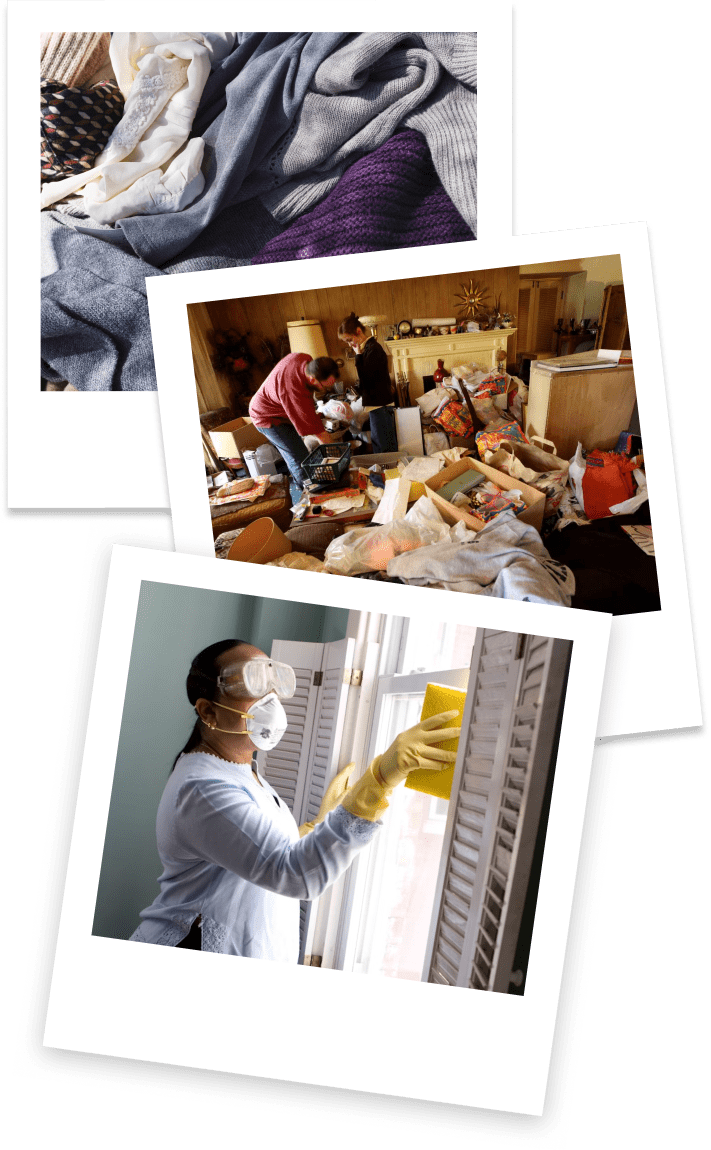
Decluttering with Compassion: A Harm Reduction Approach
Distinguishing Between Cluttering and Hoarding
Clutter is anything we don't need, want, or use that takes our time, energy or space, and destroys our serenity. Cluttering can become so substantial and severe that it compromises the safety of a living space, and it can sometimes be connected to serious disorders, such as hoarding. Hoarding Disorder is a mental health diagnosis characterized by the persistent difficulty of letting go of possessions, household items, or animals due to a strong emotional attachment or perceived need.
Why Does Cluttering Happen?
- Thought Processes (fear of loss, perfectionism, indecisiveness)
- Mental Health (anxiety, PTSD, ADHD, OCD, depression)
- Physical or Cognitive Challenges (mobility issues, dementia, learning disabilities)
- Inadequate housing design or lack of support
Decluttering Using Harm Reduction
Rather than eliminating as much clutter as possible, HFH promotes a trauma-informed focus on making homes safe, healthy, and comfortable:
- Consistency - Meet regularly in the unit.
- Prioritize Safety - Focus on the highest risks.
- Show Respect - Respect a participant's decisions and never discard items without permission.
- Specific and Achievable Care Planning - "Clear a walkway to the shower" instead of "clean the bathroom.”
- Collaborate - Participants are key contributors and encourage growing the Care Team.
- Change is Slow - Expect slow, incremental progress.
Why It Matters
Excess clutter can lead to fire hazards, disease, isolation, and eviction. Harm reduction is an effective approach for ICMS practitioners to use in helping participants achieve safer and more comfortable living spaces without shame or force.
Learn More & Take Action
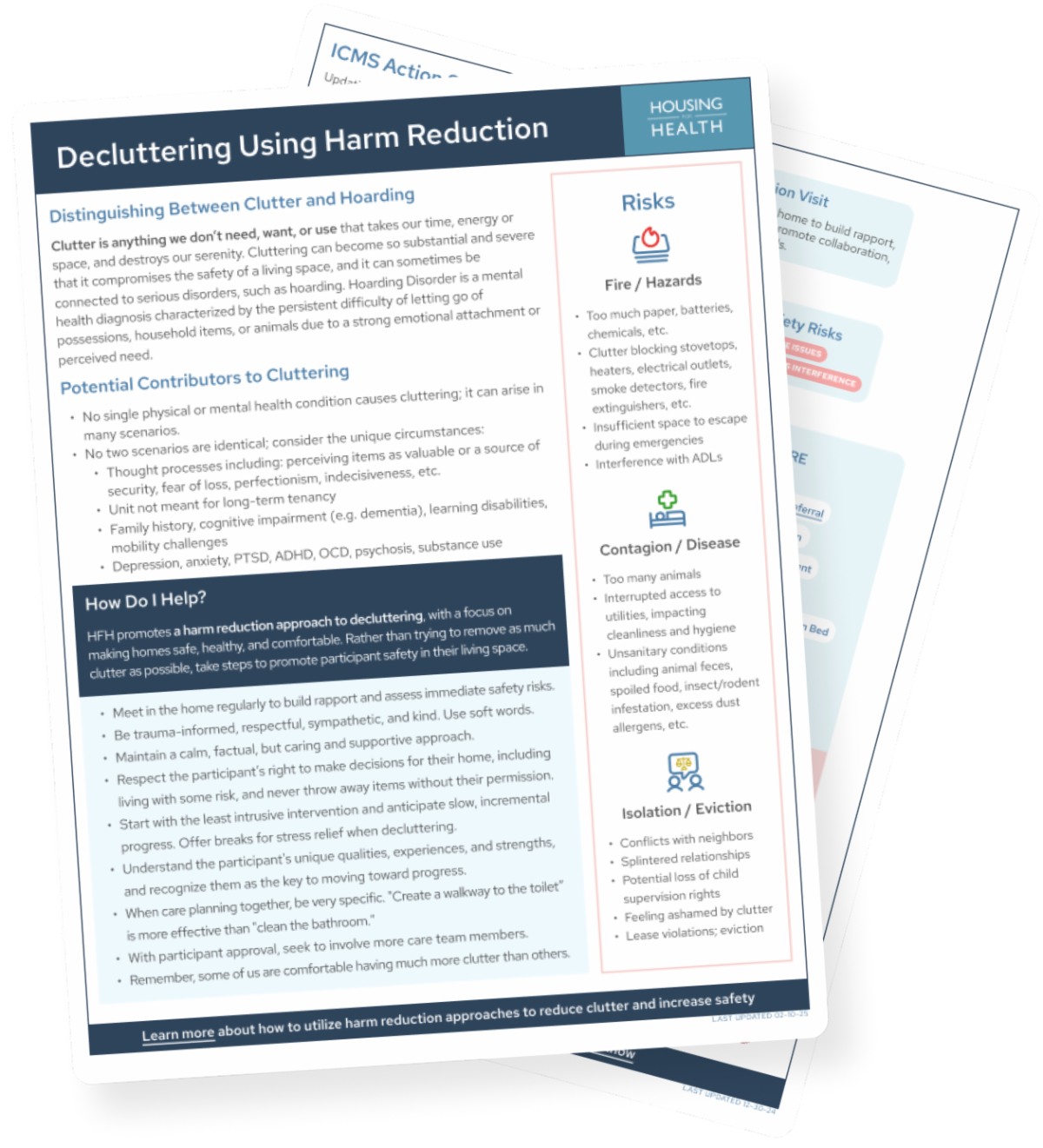
To learn more about decluttering strategies and tools, access the "Decluttering Using Harm Reduction" tip sheet and visit our Decluttering Information Center.
|