|
Dear saints,
The nations of the Haudenosaunee hold dear a value called the ‘Seventh Generation Principle’, which invites its people to ask how decisions that are made today might be of benefit for those who will follow them tomorrow. Living as we do in the heart of a bustling city, pursuing lives that can so frequently feel impossibly over-scheduled, it is all we can do most days to think about next week, let alone seven generations from now. Yet, as the church, we know how to see beyond the present day. We belong to a 2,000-year-old faith, which itself was birthed within a 4,000-year-old Judaic tradition. We are accustomed to looking back, and we know the value of history; our own particular history as a parish and the much larger story to which we belong as those incorporated into the Body of Christ.
| |
Yet, churches, much like people, can all too easily slip into short-term thinking and our capacity to see ahead of ourselves can find itself limited by the immediacy of now. Even as parishes and dioceses engage in strategic planning or other such exercises, in the 23 years I’ve spent in ordained ministry, it has been rare for that planning to raise its sights to look further out on the horizon.
In an attempt to buck that trend, as the vestry led us through the discernment process that culminated in our master plan for the block, we engaged in some long-term modeling. Here are some of the things that we learned.
| |
On one hand, there are plenty of encouraging signs of vitality. Last year, All Saints’ had a wonderful year of growth in terms of new members and average Sunday attendance. More and more people are sharing life together on this block. Similarly, year by year the generosity of this parish has grown, with a 21% growth in our pledge income occurring over a ten-year period, over double the rate of growth for the Diocese of Atlanta as a whole. We are also a much younger church than most in our denomination. While in the Episcopal Church as a whole half of the members are over 65 and only 21% are under 35, at All Saints’ only 32% are over 60, with 45% under 40 and nearly two-thirds of members under the age of 60.
| |
These are all positive trends. All Saints’ is a church that is more demographically balanced and more financially robust than most churches in our particular corner of Christendom. We should give thanks for this reality and the many ways that people enjoy the power of a life-giving and grace-filled community because of this parish. However, if we keep the Seventh Generation Principle in our minds, and look out over a longer time horizon at the wider trends of religious disaffiliation and the yearly decrease in the number of people making charitable gifts in America, we are required to ask not where All Saints’ will be five years from now, but 20 to 30 years from now.
| |
For instance, despite growth in Sunday attendance since the pandemic, over the past 25 years Sunday attendance has declined at All Saints’, much as it has across the vast majority of mainline Protestantism. Looking 25 years into the future, the demographic changes ahead of us make it clear that we have an opportunity to act now while we are in a position of parochial and financial strength, such that All Saints’ might come to the end of this century as much a vital beacon of hope in this city as we are today. We have an opening to choose change now, rather than have change forced upon us by less positive circumstances in the years to come.
|
 | | With that long-term view front of mind, our master plan plots a course for All Saints’ to be a place of vitality for decades to come, in terms of our parish community, our place in this city and our financial life. The feasibility study carried out last year by Cushman and Wakefield identified the south-west corner of the block on Spring Street and North Avenue as the most viable portion of our property for us to partner with a developer to create a significant new source of revenue over the long-term. That financial opportunity also provides us with a missional opening: to re-locate our core ministries to the ‘front’ door’ of our city block on West Peachtree, enabling us to create new ways into the life we share in community through those ministries that embody our values of inclusion, justice and love. In a century ahead of increasing secularization, promoting this sort of ‘life for others’ will be essential if we are to remain relevant to people looking to make a difference through their lives, but not necessarily looking for religion while they do it.
| Of course, with these opportunities comes change, and change invites us to embrace loss. As we continue to work with our architects Perkins and Will to determine what all of this means for the buildings on this block - old and new - and anticipate the change ahead, we might ask one another what that change will mean to us. What part of your story has played itself out in the Egleston building, or over on the cluster of buildings on our south-west corner of our block? Perhaps you remember gathering before a wedding, or a confirmation, or to commend to almighty God a loved one gone on to glory. You may have given hours of your week to neighbors in need through one of our core ministries, or you may recall with fondness previous iterations of those ministries and uses of those spaces. There is a reason why we often find ourselves resisting change: it is because we know we are saying goodbye to something of deep value and meaning to us. It doesn’t mean that change should not happen; it simply means that what we have experienced until this point is a gift we treasure. | |
Yet, as we remember, let us also imagine those who have yet to enjoy such an abundance of blessing in this place and ask how our decisions today might enable us to open new doors for them to grow and thrive here. The life of the Church is always about such things: new life out of old; the birth that comes when we know ourselves to be an Easter people. I give thanks to God that we are a church that has the courage and foresight to imagine a future beyond ourselves. What a deeply satisfying thing it is to leave a legacy to be enjoyed by others. It is the calling of the Church and a privilege we all get to share.
Peace,
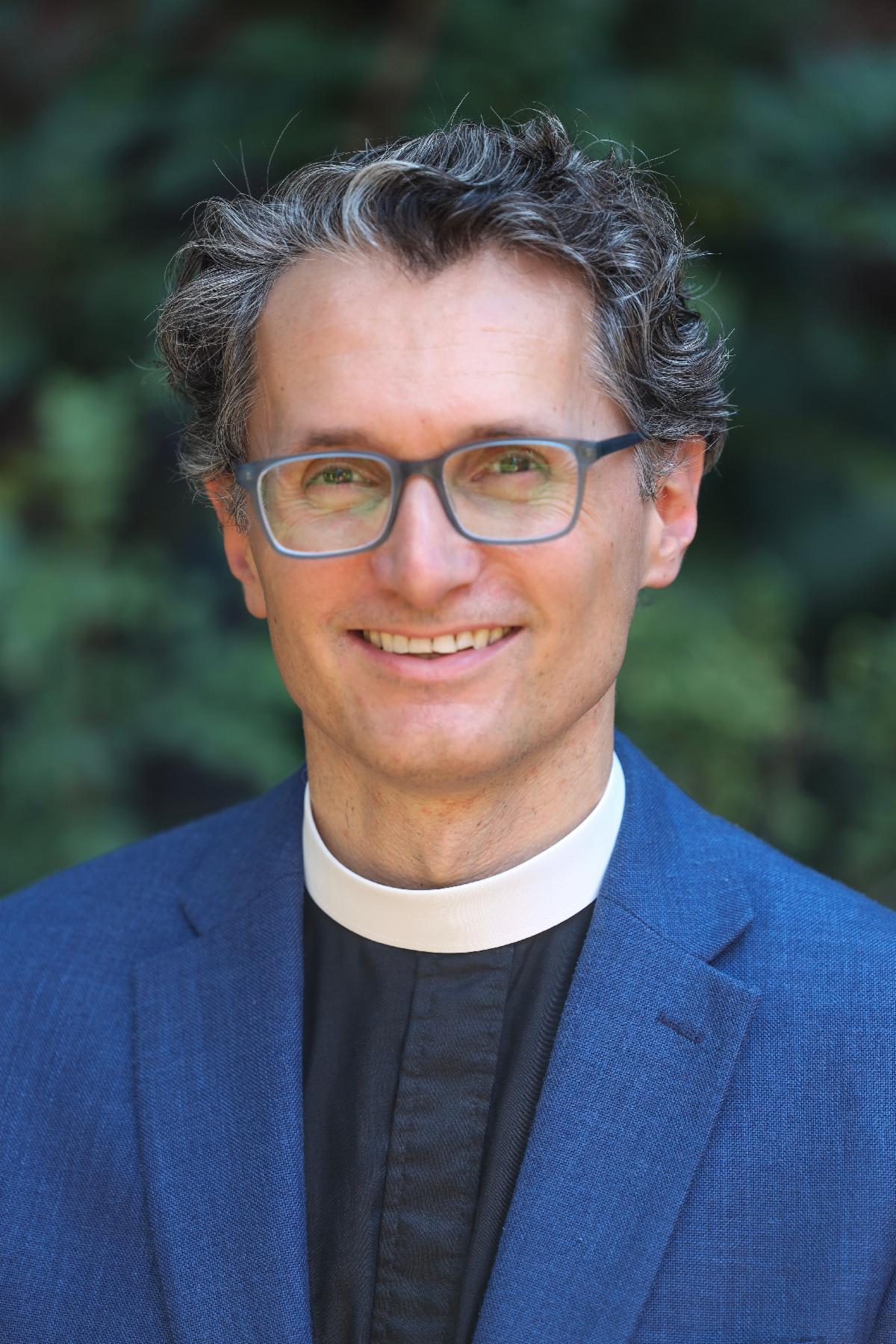
| Rev. Dr. Simon Mainwaring, Rector | | | | |