Vol VII, No 10 - October 14, 2025

FROM THE EDITOR

I got my wish. We have crunchy leaves! The color isn't in its full glory yet, but it is only a matter of days before the trees begin to flaunt their vibrant colors.


'Tis the season of pumpkin carving and costume planning (if you celebrate Halloween). My kids still refuse to do a group costume with me, which made me sad for a while, but then I realized, of course! I'm raising them to be independent thinkers. They are not going along with my ideas; they are creating their own. As my older daughter says, "kids are sponges, but they are not clay to be molded." Like so many gifted/2e kids, she is wise beyond her years.


Just as gifted/2e kids are often independent thinkers, they also tend to have unique, "spiky" profiles, with advanced gifts in some areas and challenges in others. Math could be your child's area of strength, or math could present many challenges for your child, or both! Luckily, we have an author this month who is both a parent of a gifted/2e dyscalculic child and an expert in helping students with math challenges.


In our feature article, GHF author of Discovering Dyscalculia, Laura Jackson, shares her journey of learning the best ways to support and facilitate her daughter's math education, as well as other subjects and activities that dyscalculia impacts. Laura offers support, wisdom, and a new audio guide for parents who want to learn more about helping their children who are dyscalculic or struggle with numbers and quantities.


Enjoy the season. May we all survive the sugar influx of the season and the dysregulation that will undoubtedly ensue.


Best,

Marna


P.S. Kids - the Hershey's special dark bars are mine!

Marna Walthall Wohlfeld is a mom of four, a former non-profit director and journalist, and now a doctoral student at Bridges Graduate School of Cognitive Diversity in Education. She has deschooled, unschooled, and homeschooled various kids at various stages. She loves learning about and championing kids' unique brains and learning styles. She hopes to use her graduate degree to support parents and caregivers of twice-exceptional children as they move through the journey of parenting their wonderfully complex kids. She also hopes to advocate for 2e students by creating greater understanding about the need for strength-based approaches and support for vulnerable nervous systems in education and life. Marna is a trained SENG facilitator and has completed training Levels 1 and 2 for PDA North America. She has presented at NAGC and WCGTC and has written for 2e News.

Feature 

Homeschooling a Child with Math Challenges 

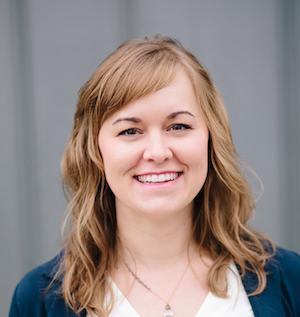
By Laura M. Jackson 


Homeschooling my daughter for math class was not something I ever planned to do as a parent. But as I witnessed my daughter struggle her way through special education math, through 4th, 5th, and into 6th grade, I finally realized that we needed to do something drastically different.


Since I couldn’t find adequate dyscalculia math resources in the US, I turned to researchers and educators in the UK who seemed to have a better grasp of the subject. With these new resources to try, I pulled my daughter from 6th-grade math class to explore math together at home. We did this for three years, from 6th to 8th grade.


During this time, we explored a new way of learning math. And most importantly, we worked to help my daughter develop a better sense of numbers and quantities. I was surprised to see firsthand all the concepts she did not grasp, math concepts I assumed everyone innately knew. I could see more clearly why math at school had been so difficult.


It was exciting to see her make new connections about numbers, experience new ways to explore quantities, and shed that anxiety and confusion that had been a part of her life for so long. During that time, we also added Science class at home. We were learning just how many school subjects dyscalculia impacted.


As we looked ahead to my daughter’s transition to high school, she wanted what she called “the high school experience.” Doing math at home with her mom was not part of the image a now 15-year-old wanted for high school. So, with new accommodations, a smaller classroom, and a flexible teacher, she enrolled in Algebra at our local high school. Then she applied her newly developed numeracy skills to the class.  


My daughter and I were both surprised as the year went on. She was hardly ever stressed about homework, received “As” on most of her exams and quizzes, and even helped struggling peers with their homework.


I did not expect this at all! I had mentally prepared for hours of helping her after school, many after-school teacher meetings, and her just barely making it through with the same anxiety and stress we had experienced in elementary school.


Even my daughter was surprised at the difference. She’d say, “Isn’t this crazy, Mom?! I’m helping a friend with math today." Or “I finished all my homework in class.” Or “I got an A on that test.”


Now, the dyscalculia and math struggles had not gone away. She was still very dyscalculic. In fact, we were uncovering more struggles with numbers and quantities in other school subjects, as well as many aspects of daily life.


But what was new was that she had a better understanding of her unique experience with numbers. She had language and new visuals for quantities to help her when things were confusing. 


She ended the year with an A in algebra. We were shocked. The following school year, she aced geometry. She became her own peer advocate, giving questionnaires to friends struggling in math to help them determine if the struggles were because of dyslexia or perhaps dyscalculia like hers. 


My daughter has commented to me many times over the past few years about how lost she would still be without those years exploring dot patterns and digging into early number sense together.


A few years ago, GHF Press published my book, which details my experience of discovering the reason behind my daughter's persistent math struggles. Discovering Dyscalculia covered many of the early questions surrounding how to identify dyscalculia, the evaluation process, and finding initial supports. That was four years ago, and since then, I have continued to discover and explore so much more about math education for students with a math learning disability.


My book includes a letter my daughter wrote to a fellow student learning in this new way. This letter may encourage your child as they embark on a similar journey of developing numeracy later in life.


It is possible to support dyscalculic students in tangible and life-changing ways. It’s also possible to teach math in a way that these students can connect with and translate to everyday life.  


This kind of intensive math learning does not make dyscalculia go away. My daughter will always experience numbers and quantity differently from most of her friends and society around her. She will always need to self-advocate and find her own solutions with tasks involving numbers and quantities, especially with time, money, dates, memory, driving, and cooking.


But we also understand dyscalculia so much better now, so we are better able to make pivots, provide adequate supports, and know when and where our daughter will need specific help. Learning this way has also done so much for her mental and emotional health, growing her confidence, self-advocacy, and acceptance of herself. 


I’m not saying it’s been easy. I have had many frustrated, exasperated, and overwhelmed moments. My daughter has too. There are highs and there are lows, just like in all of life’s complicated journeys.


It’s helpful to remember this is a process, a journey, a continued exploration. It helps us embrace the long-term reality and settle in for the adventure. 


This summer, I created a new Audio Guide to Math Education for Dyscalculia. If your child is struggling in math and you want to know which teaching strategies, books, and learning materials to use, I encourage you to get a copy of this guide. The format is a podcast so that you can listen on your phone while on the go. You can also read the full text plus links to the resources in the show notes. Learn more on my website at www.discoveringdyscalculia.com/mathguide.

Laura M. Jackson is a parent of two teens, author, and dyscalculia specialist. She is author of the book, Discovering Dyscalculia: One family’s journey with a math disability (GHF Press 2022), which details the discovery of her daughter’s giftedness and learning disability. Laura founded DiscoveringDyscalculia.com, dedicated to dyscalculia awareness, education, and support for parents, educators, and dyscalculic adults. She enjoys writing and coaching families and educators on dyscalculia and its impact on math learning and everyday life experiences.

GHF Conversations Recording

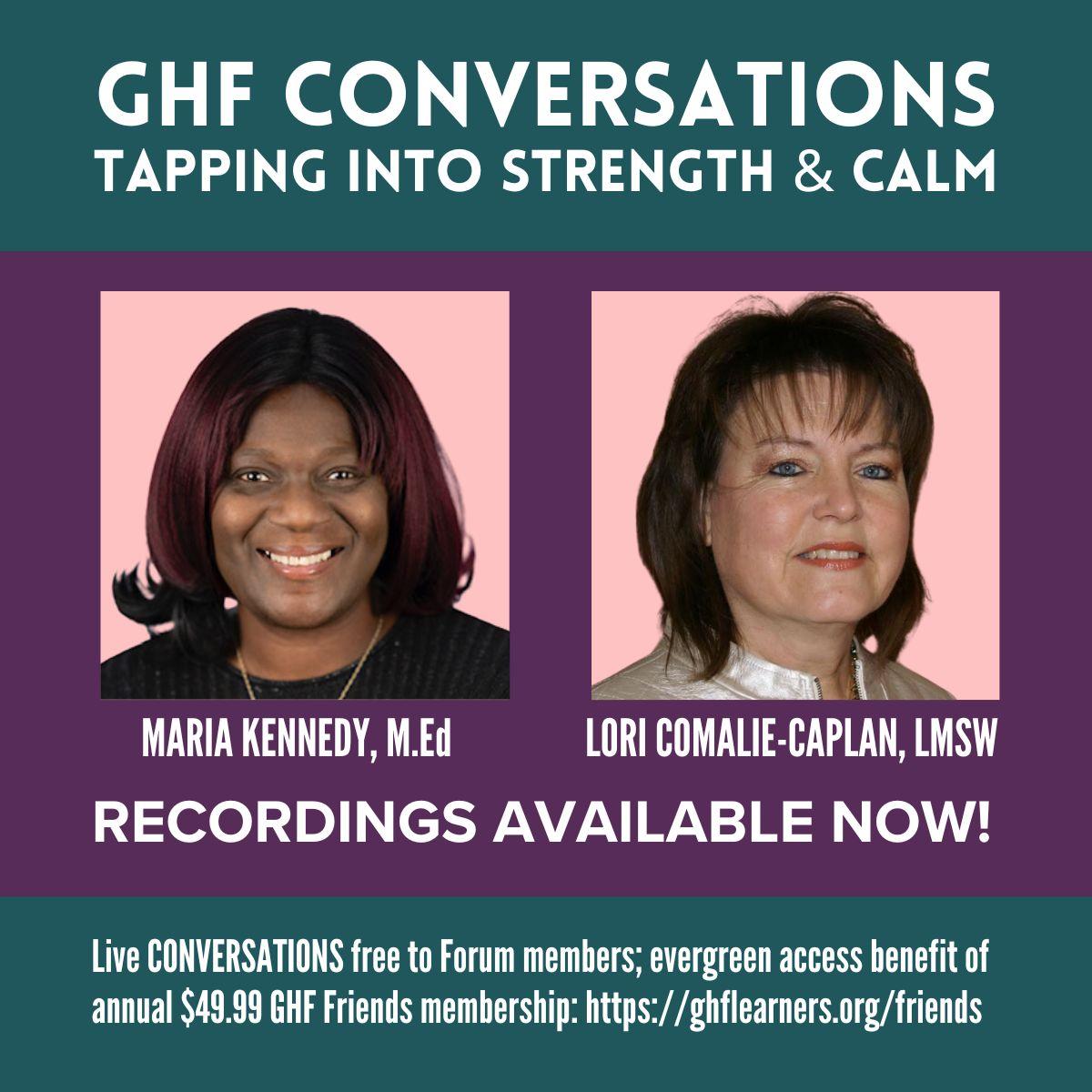
Videos are up! Did you miss September’s Conversations with the wonderful Maria Kennedy and Lori Comallie-Caplan, or want to experience them again? Full recordings of this and all of our events are one way we thank our Friends supporting members; please consider upgrading so we can continue to provide free and low-cost resources to our community: https://www.ghflearners.org/friends.


BONUS: Find Lori's huge resource download on navigating anxiety with your child, free for everyone in the GHF Forum: https://forum.ghflearners.org/.

GHF Press Featured Title

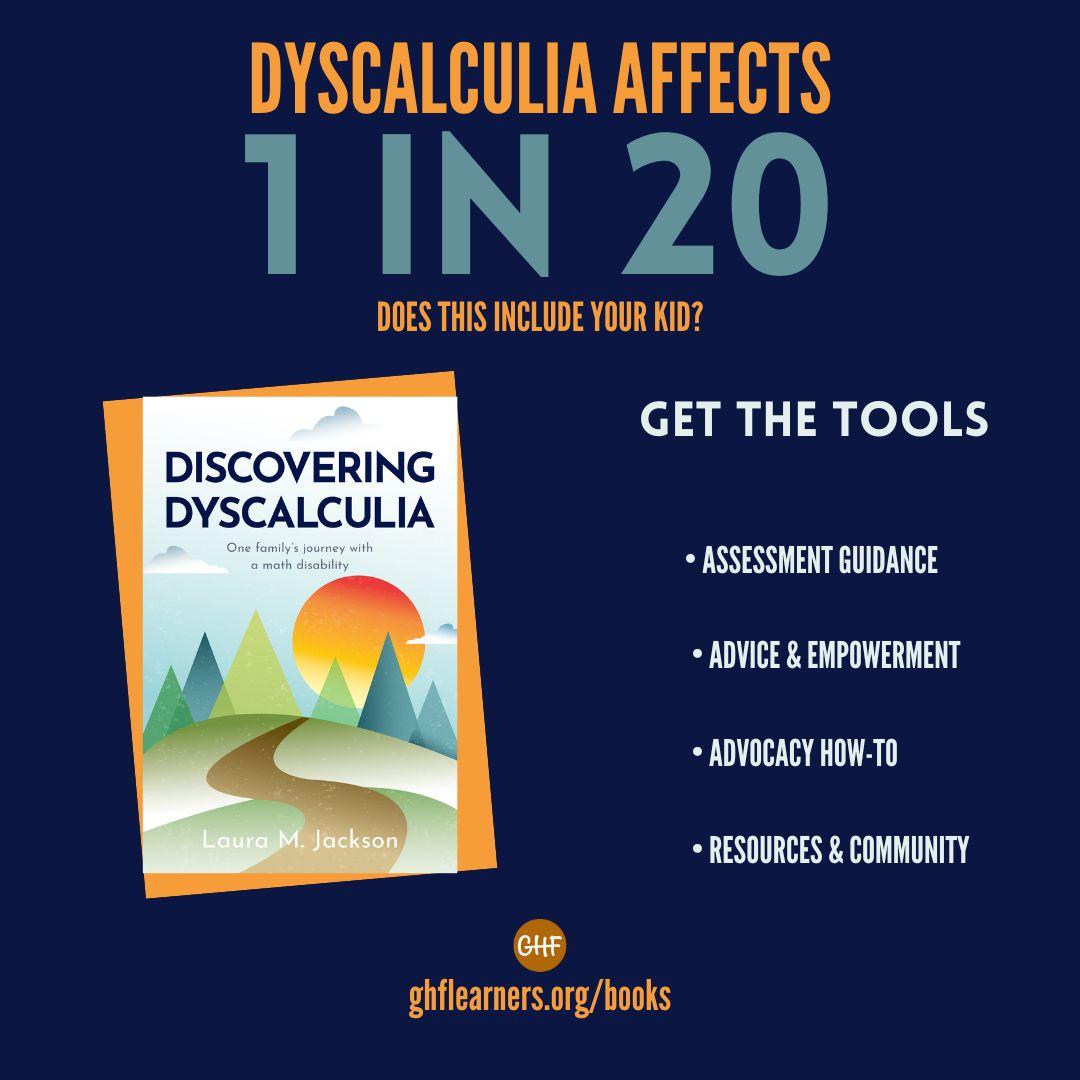
Dyscalculia impacts about 1 in every 20 children and adults, yet it is not widely recognized or understood. This math learning disability not only affects individuals in educational settings but also impacts their everyday life when it comes to handling money, telling time, measuring quantities, and performing basic calculations.


In this thoughtful and personal narrative, Laura M. Jackson writes about her child’s struggle with numbers, their shared discovery of dyscalculia, and she and her husband’s journey supporting their daughter in school and in life.


https://www.ghflearners.org/books

GHF® FORUM
A Supportive Community for Gifted Learners
Come join us in the GHF Forum, our online community where we share all of our services and resources.
FREE ACCESS to:
  • Discussion groups
  • Parenting Gifted
  • Professionals
  • Parenting 2e
  • Homeschoolers
  • Live Gifted Home Ed Conference
  • Live GHF Conversations Mini-Cons
  • Live Monthly GHF Expert Series
  • DIY Education Homeschooling Parent Course

UPGRADE to GHF Choices Membership:
  • GHF Expert Series Library
  • GHF Member Discounts
  • Forever Access to Gifted Home Ed Conference & Conversations Recordings
GHF PRESIDENT'S CLUB
 
For those of you who can give at least $500 we have created a special recognition program where you will be listed on the GHF website and in our monthly newsletter, The GHF Journey, as valued members of the community. Donations may be kept anonymous.


ABOUT GHF
MISSION
To empower every gifted family to make strategic, proactive, and intentional educational choices.
VISION
A diverse world of multi-generational families, educators, and professionals supporting each other through community, education, and creating content relating to gifted home education.
#GIFTEDHOMEED
Empowering gifted families to make strategic, proactive, and intentional educational choices.
VALUES
GHF values the uniqueness and humanity of each person in our community. We treat each other with love and kindness and particularly abhor bullying and negativity of any kind. We accept that it is our job to examine each day with a fresh perspective and continue to improve the organization to pursue our mission.
GHF is a 501c3 organization. Please consider supporting our community with your most generous gift today. For more information on our organization, please feel free to contact us. Thank you!
Facebook  Instagram  Pinterest