Vol VII, No 6 - June 17, 2025 | | |
Summertime is popsicles and pool time. Summertime is watermelon and staying up late. Summertime is running through sprinklers and riding bikes. Or is it?
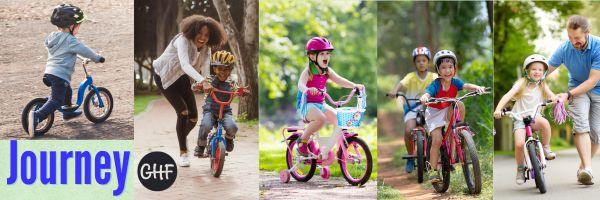
Most people understand that learning to ride a bike comes more easily for some children than others. Some kids head off on their balance bikes as toddlers or preschoolers, pushing confidently along the ground, learning rhythm and balance at ages as young as 1, 2, or 3. Other kids use training wheels for years, scared to take them off, perfectly happy to ride along with support. Some parents or caregivers spend hours practicing with their kids, holding their bikes and running alongside them, trying to provide the balance the children haven't mastered yet (while also accruing major lower back stress and trying to avoid pulling their children into jumbled heaps of scraped elbows and knees). Other children don't have access to bikes or don't live near places where it's easy to find a safe place to ride. Learning to ride, or not, is made up of a combination of the child's individual abilities, the support available to them, and their environment.
When discussing biking, people remain fairly neutral. It's hard for some, easy for others. Simple. Now, what if we talk instead about toileting, tying shoes, or mastering addition? These topics often get a different response -- such as, if a child has not mastered these by a certain chronological age, there must be something wrong with them.
Dr. Lin Lim, GHF former board member, past President of SENG (Supporting Emotional Needs of the Gifted), and author of this month's feature article, recommends throwing milestone charts out the window. Gifted / 2e kids experience asynchronous and dynamic development. Dr. Lim offers four main strategies parents can use to support their gifted / 2e kids when they find things hard that others find easy and vice versa. Read below to find out what's easier . . . flying or driving?
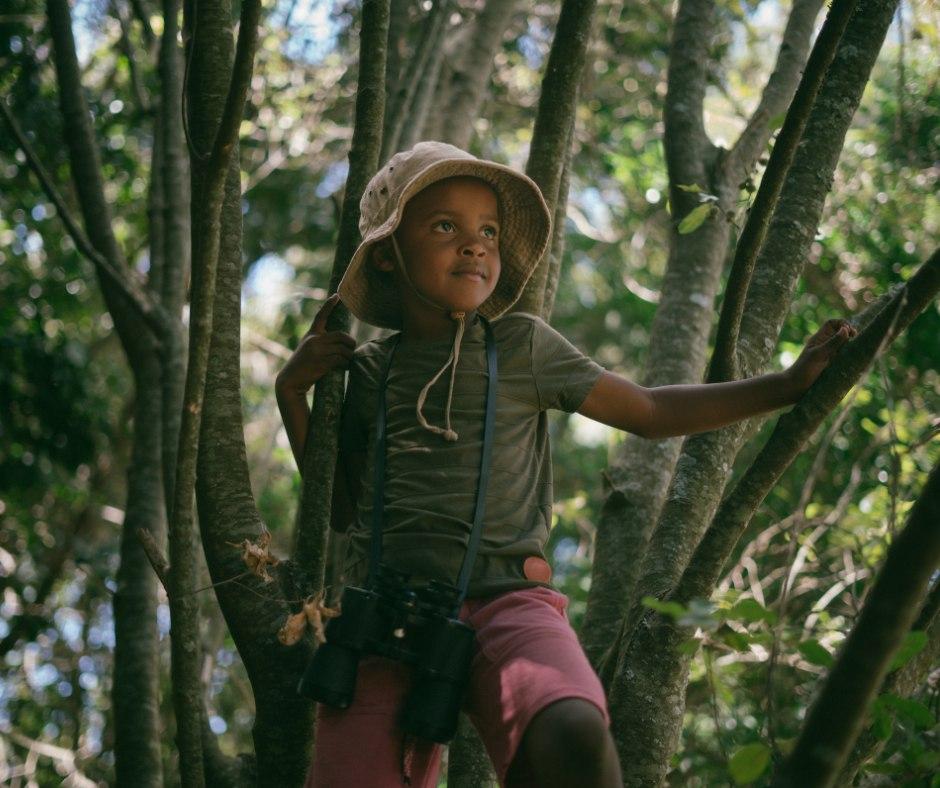
The poem in this issue, Move, also reminds me of the 'when easy is hard' concept. For many of our kids, sitting falls into the hard-to-near-impossible category. Moving, climbing, and running are not just easy, they're necessary.
For more information related to supporting gifted kids' emotional needs, check out SENG's upcoming annual conference, July 24-25 in Alexandria, VA, and online.
And for those of you who missed GHF's conference earlier this month or would like to re-watch any of the sessions, head over to the Forum to access the recordings. We had some amazing discussions about DIY homeschool and supporting our children's needs, as well as our own.
Stay cool and be careful out there if you're running alongside your kids' bikes in that awkward half-bent position trying not to trip,
Marna
| | |
Marna Walthall Wohlfeld is a mom of four, a former non-profit director and journalist, and now a doctoral student at Bridges Graduate School of Cognitive Diversity in Education. She has deschooled, unschooled, and homeschooled various kids at various stages. She loves learning about and championing kids' unique brains and learning styles. She hopes to use her graduate degree to support parents and caregivers of twice-exceptional children as they move through the journey of parenting their wonderfully complex kids. She also hopes to advocate for 2e students by creating greater understanding about the need for strength-based approaches and support for vulnerable nervous systems in education and life. Marna is a trained SENG facilitator and has completed training Levels 1 and 2 for PDA North America. She has presented at NAGC and WCGTC and has written for 2e News.
| | |
Every order supports continued research, parent empowerment, and joyful self-expression.
Shop now www.NeuroDIsMe.com
| | |
Celebrate Giftedness. Support 2e Families.
Barry Gelston, Ed.D., President Emeritus of GHF, is a longtime advocate for gifted and twice-exceptional (2e) learners. Through his research and work with families, Barry created NeuroD Is Me™—a strengths-based brand offering affirming apparel, prints, and gifts designed especially for gifted, 2e, and homeschooling communities.
Rooted in real-world experience, each product reflects the belief that gifted and twice-exceptional kids deserve to feel seen, understood, and empowered.
In partnership with GHF, NeuroD Is Me™ is proud to offer:
🌟 20% off your order with code GHFLOVE20
❤️ 5% of every purchase is donated to GHF
| |
|
What’s Easy for You Might Be Hard for Me:
Parenting Through a Dynamic Human-Centered Approach
By Lin Lim, Ph.D., MBA., MGSCC
Do you have a child who takes to playing the violin like a fish to water, and struggles to tie their shoelaces? Or a child who can solve physics problems quickly and still wrestles with single-digit multiplication-facts retrieval? Imagine a child who lies awake at night wondering how we would respond if aliens landed in our backyard, yet forgets to bring all his dishes to the kitchen sink after dinner. Or a teenager who finds flying a plane far easier—and preferable—than learning to drive a car. If any of these resonate with your experience, you’re not alone. I happen to have a teenager who is all of the above.
Parenting has been the single hardest—and most humbling—endeavor of my life. Despite its complexity, parenting is rarely treated as a scholarly field. Yet it draws on every domain of human understanding—neuroscience, psychology, sociology, leadership, education, and ethics. As parents and educators, we often find ourselves silently judging when a child struggles with something “simple” or excels in an area others find “hard.” But what’s easy for one child can be deeply hard for another. Too often, we treat development as a checklist of milestones that unfold in a predictable sequence. But human development is not linear—it’s dynamic, contextual, and deeply individual.
A dynamic, human-centered approach to parenting integrates insights from Dynamic Systems Theory (e.g., Thelen & Smith, 1994) and human-centered educational philosophy (e.g., Gill & Thomson, 2017). It views development not as a fixed trajectory but as an emergent, evolving process shaped by the interaction between a child’s inner world and their environment. We parent by first communicating with and seeking to understand our child’s subjective experiences. This means that our role as parents is to understand, seek, and co-create environments for thriving. Growth occurs when we honor our children's individuality. Instead of judging whether a task should be “hard” or “easy,” we view a child's approach to a task as a dynamic combination of individual variation, context, and relationship.
An example from my own parenting experience involved my son’s reluctance to learn how to drive, although he was already taking flying lessons and found this “easy.” When I approached the issue through a human-centered lens—inviting honest dialogue in the context of a safe, respectful relationship—I discovered that his hesitation stemmed not from a lack of ability or the act of learning to drive “hard,” but from a valid concern about unpredictable drivers on the road. This insight allowed me to focus on discussions and suggestions on how we can practice actions that allow my son to better anticipate other drivers’ actions. It also reaffirmed the core principle of this approach: we can’t parent well without honest input from our children. Their internal experiences, thoughts, and feelings are not peripheral—they are critical data points in decision-making.
To engage in dynamic human-centered parenting, we must first build and maintain a positive, safe relationship—a foundation that allows for emotional openness, mutual trust, and adaptive growth. Here are four key components:
-
Respect is not something our children earn—it’s something we offer as the foundation of our shared humanity. Acknowledging your child as a whole person means honoring their thoughts, preferences, and emotions, even when they differ from your own. By listening without judgment and avoiding dismissive responses (e.g., “You’re overreacting” or “That’s not a big deal”), we affirm their internal world as valid and worth understanding.
-
Relational Attunement occurs when a child doesn’t just hear “I love you,” but feels it through our presence and responsiveness. It means noticing emotional cues, asking questions with curiosity, and offering regulation, not correction, when our children are overwhelmed. Children thrive when they “feel felt” (Seigel, 2007). Attuned parenting requires us to regulate ourselves first so we can co-regulate with our child while building skills.
-
Trust and Reliability: Children don’t trust promises—they trust patterns. When our words and actions consistently align over time, especially during stress or disappointment, we build a secure relational foundation. Trust isn’t about being perfect; it’s about being predictably present. If you say you’ll be at pickup and get delayed, a proactive message like “I’m running late but I’m on my way” helps maintain emotional safety. Trust grows not from grand gestures but from consistent, everyday follow-through.
-
Boundaries and Mutual Accountability: When clearly communicated, family values and expectations paired with mutual accountability allow children to feel safe and respected. For instance, “In our family, we speak respectfully, even when upset,” creates structure without shame. Including children in shaping rules and consequences appropriate to their developmental level fosters collaboration and personal responsibility, not just obedience.
Parenting through a dynamic human-centered lens doesn’t offer easy answers. It requires intentionality, humility, and trust in the process. But it also offers a path to deeper connection and sustainable wellbeing* for both child and parent. When we begin including our child in figuring out gaps and, barriers to thriving, and opportunities for achieving wellbeing, we create space for what is possible, not just what is expected. Let’s move away from “why can’t they do this easy thing/task/activity yet when they can do _____ (hard thing/task/activity) so easily,” and start by including our children in honest dialogues.
* Author’s Note: Intentional use of the term “Wellbeing” to indicate a dynamic concept of wellness and our being (who we are) as tightly interwoven into a an individualized functional range of living where our resources are sufficient to meet our challenges over time (Dodge et al., 2012; Wassell & Dodge, 2015).
References
Dodge, R., Daly, A., Huyton, J., & Sanders, L. (2012).The challenge of defining wellbeing. International Journal of Wellbeing, 2(3), 222-235. doi:10.5502/ijw.v2i3.4
Gill, S., & Thomson, G. (2017). Human-Centred Education: A Practical Handbook and Guide. Routledge. https://doi.org/10.4324/9781315454214
Siegel, D (2007). The Mindful Brain: Reflection and Attunement in the Cultivation of Well-Being. W. W. Norton & Company.
Thelen, E., & Smith, L. B. (1994). A Dynamic Systems Approach to the Development of Cognition and Action. MIT Press.
| | |
Flying a plane is "easy," age 16,
(Photo credit: Caitlin Goh, 2024)
| | |
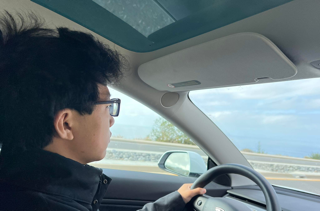
Driving a car is "hard," age 17
(Photo credit: Lin Lim, 2025)
| |
| |  | Lin Lim, Ph.D. brings a distinctive fusion of academic rigor, executive leadership, and lived experience to her work in human development, education, and cognitive diversity. She holds a Ph.D. in Human Development Psychology, with a focus on attitudes and behavior through a dynamic systems lens, and an Executive MBA with specializations in ethical leadership, technology management, and marketing. She is also a certified Marshall Goldsmith Stakeholder-Centered Coach. Lim's interdisciplinary scholarship centers on positive, strengths-based, human-centered approaches to learning, wellbeing, and flourishing across the lifespan. Her expertise lies in translating complex research into actionable practices that support individuals, families, and organizations. A published author and sought-after speaker, she contributes to diverse fields including education, parenting, early childhood development, cognitive diversity, and Asian American experiences. She believes in active volunteerism and serves in various leadership roles in gifted-related non-profits including the Past President of SENG (Supporting Emotional Needs of the Gifted), where she also authored the SENGawares framework for lifelong success. She has held faculty and leadership roles at Bridges Graduate School and is now channeling her efforts into two mission-driven initiatives: the nonprofit Quark Collaboration Institute and a stealth-mode startup at the intersection of human-centered technology and personal growth. Her work integrates theory, research, and real-world application—building bridges between disciplines, communities, and generations. Connect with her at: Linkedin.com/in/linlimgoh
| | | |
Game and Learn
Custom tutoring and summer camps all online for 2e and gifted learners. We use games and interactives to teach complex topics.
https://gameandlearnsummercamp.com/
| | |
Move
By Marna Wohlfeld
Kinesthetic learner
High energy athlete
Active listener
Creative thinker
Kids move and process in different ways
Some have to doodle
Some have to dance
Some put a fidget toy
In the pocket of their pants
Are there wrong ways and right ways?
Do we all have to be
In lock step with tradition?
Or could we learn in a tree?
When climbing grounds you
And sitting makes you crawl
How do you keep from
Beating your head against the wall?
Let the movers move
Let the seekers seek
Let the creators create
Let’s empower, not critique
Long ago they were the hunters
The ones who fed us, kept us safe
Long ago we praised their energy
Hyper focus, alert gaze
| | |
If interested and busy
They bring about the most exciting change
If challenged and mentored
They achieve beyond the normal range
Focus on the child, not the system
How can we tailor their perfect space?
Allow them to thrive,
Enable them to move with grace?
Let’s champion our differences
Let’s go to great lengths
Start saying ‘gifts’ instead of ‘disorders’
Stop looking for ‘deficits,’ and find ‘strengths’
It’s time to rewrite the rules
It’s time to challenge the norm
If we let kids move, let their minds create
They’ll take the world by storm
| | |
Parents today lead busy lives and it’s difficult to “get it all done.” Gayle and Lin have created a guide encouraging parents to strengthen their connection with their youngsters using shared reading time. This book provides a selection of carefully curated picture books that can be used by parents to address important issues with their children, such as worry, perfectionism, and managing “big feelings.” Gayle and Lin also provide expert advice to gently guide parent-child conversations using simple, science-backed methods, including ways to help your child develop empathy, self-regulation, and self-acceptance. All of this is artfully accomplished as the authors share both research-based strategies and their own parenting experiences to bring out the very best in children using a strength-based approach.
Purchase Using Picture Books to Help Little Ones Learn About Themselves here.
| | A Supportive Community for Gifted Learners | | Come join us in the GHF Forum, our online community where we share all of our services and resources. | |
FREE ACCESS to:
- Discussion groups
- Parenting Gifted
- Professionals
- Parenting 2e
- Homeschoolers
- Live Gifted Home Ed Conference
- Live GHF Conversations Mini-Cons
- Live Monthly GHF Expert Series
- DIY Education Homeschooling Parent Course
UPGRADE to GHF Choices Membership:
- GHF Expert Series Library
- GHF Member Discounts
- Forever Access to Gifted Home Ed Conference & Conversations Recordings
| | |
For those of you who can give at least $500 we have created a special recognition program where you will be listed on the GHF website and in our monthly newsletter, The GHF Journey, as valued members of the community. Donations may be kept anonymous.
- Tricia Delles, CPA
- Catherine Gruener, M.A., M.A., LCPC, LCMHC, NCC, BC-TMH, Gruener Consulting LLC
- Rosemary Guillette
- Kelly Hayes, Wonder Homeschool Center
- Dr. Melanie Hayes, Big Minds Unschool
- Jen Merrill, Laughing at Chaos
- Heidi Molbak, Seed Starter Educational Consulting
- Dan Peters, Summit Center
- Kasi and Rob Peters
- Magalie Pinney, State Street’s Do More Grant
- Deborah Reber, Tilt Parenting
- Elizabeth Ringlee, The Champion Project
- Jade Ann Rivera
- Lin Lim-Goh, The Quark Collaboration
- Debbie Steinberg-Kuntz, Bright and Quirky
| |
MISSION
To empower every gifted family to make strategic, proactive, and intentional educational choices.
VISION
A diverse world of multi-generational families, educators, and professionals supporting each other through community, education, and creating content relating to gifted home education.
#GIFTEDHOMEED
Empowering gifted families to make strategic, proactive, and intentional educational choices.
VALUES
GHF values the uniqueness and humanity of each person in our community. We treat each other with love and kindness and particularly abhor bullying and negativity of any kind. We accept that it is our job to examine each day with a fresh perspective and continue to improve the organization to pursue our mission.
| |
GHF is a 501c3 organization. Please consider supporting our community with your most generous gift today. For more information on our organization, please feel free to contact us. Thank you!
| | | | |