Vol VIII, No 10 - Oct 13, 2026 | |
| |
We are changing seasons in more ways than one. I blinked and now I have a teen with a driving permit. I still remember the car seat days and the first day in the front passenger seat and now I’m the passenger!
Gifted/2e kids grow up to be gifted/2e teens, then young adults. And… they are still our kids.
Luckily, we have Carol Malueg, Joan Larson, and Mark Larson to help us navigate these new parenting seasons. Check out their feature article this month, full of tips and resources for communicating with and supporting gifted/2e young adults.
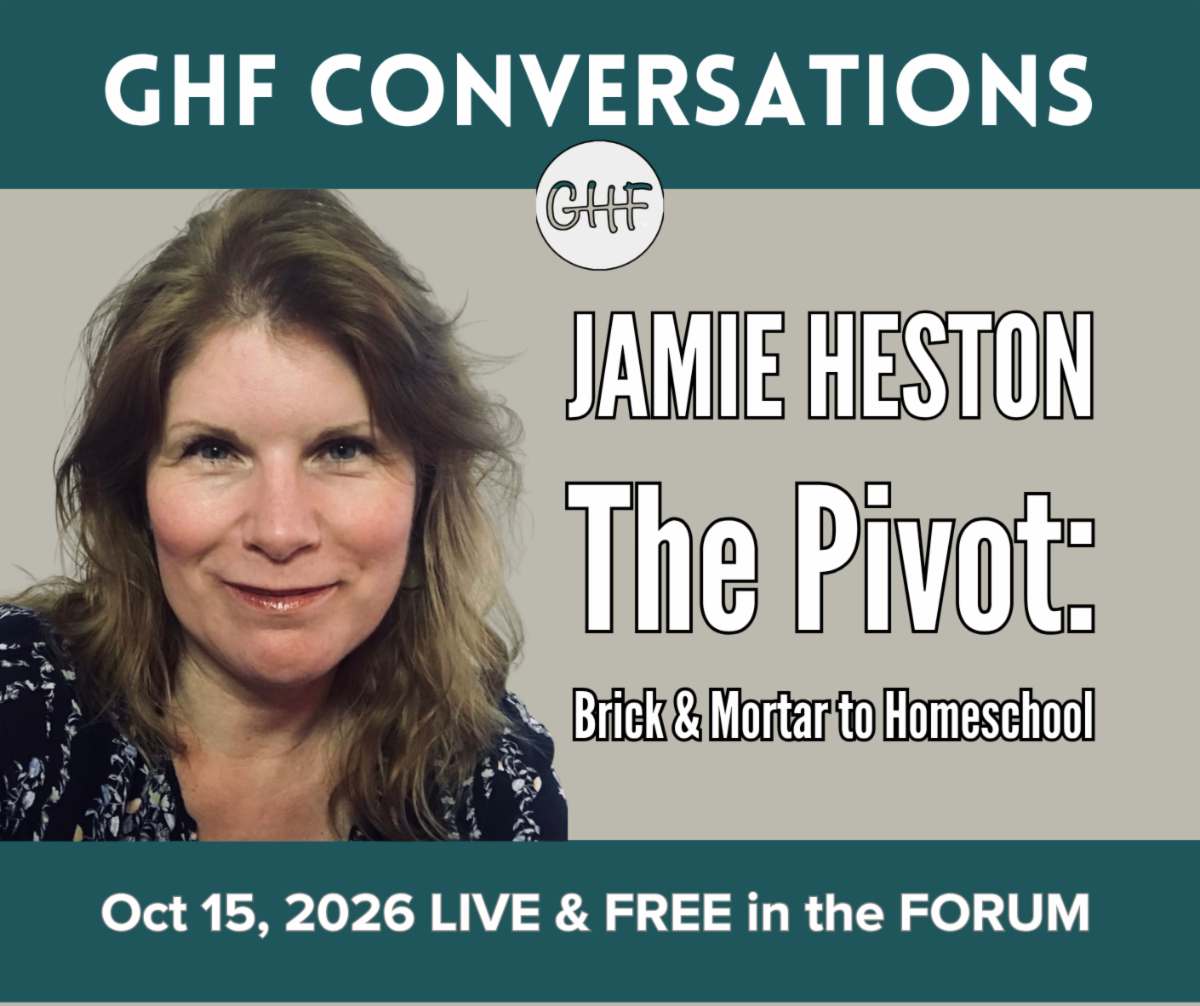
Also, please join us for our fall Conversations this Thursday, Oct. 15th at 4 p.m. PST / 7 p.m. EST. Jamie Heston will discuss pivoting from brick and mortar school to homeschool.
Enjoy the fall, y’all,
- Marna
| |
|
| |  | Marna Walthall Wohlfeld is a mom of four who recently completed her Ed.D. in Cognitive Diversity in Education through Elmbridge University (formerly Bridges Graduate School). She has deschooled, unschooled, and homeschooled various kids at various stages. She plans to use her graduate degree to support parents and caregivers of twice-exceptional children as they move through the journey of parenting their wonderfully complex kids. She also hopes to advocate for 2e students by creating greater understanding about the need for strength-based approaches and support for vulnerable nervous systems. Marna completed a one-year certificate program in Applied Educational Neuroscience through Butler University and a one-year certificate program in Twice-Exceptionality through Bridges, is a trained SENG facilitator, and has completed Levels 1 and 2 training for PDA North America. A former journalist and non-profit director, she is VP of our GHF Board, has written for 2e News, and has presented at conferences such as NAGC and WCGTC. Marna also works with the Strength-Based Assessment Lab at Elmbridge and for the BGS Foundation.
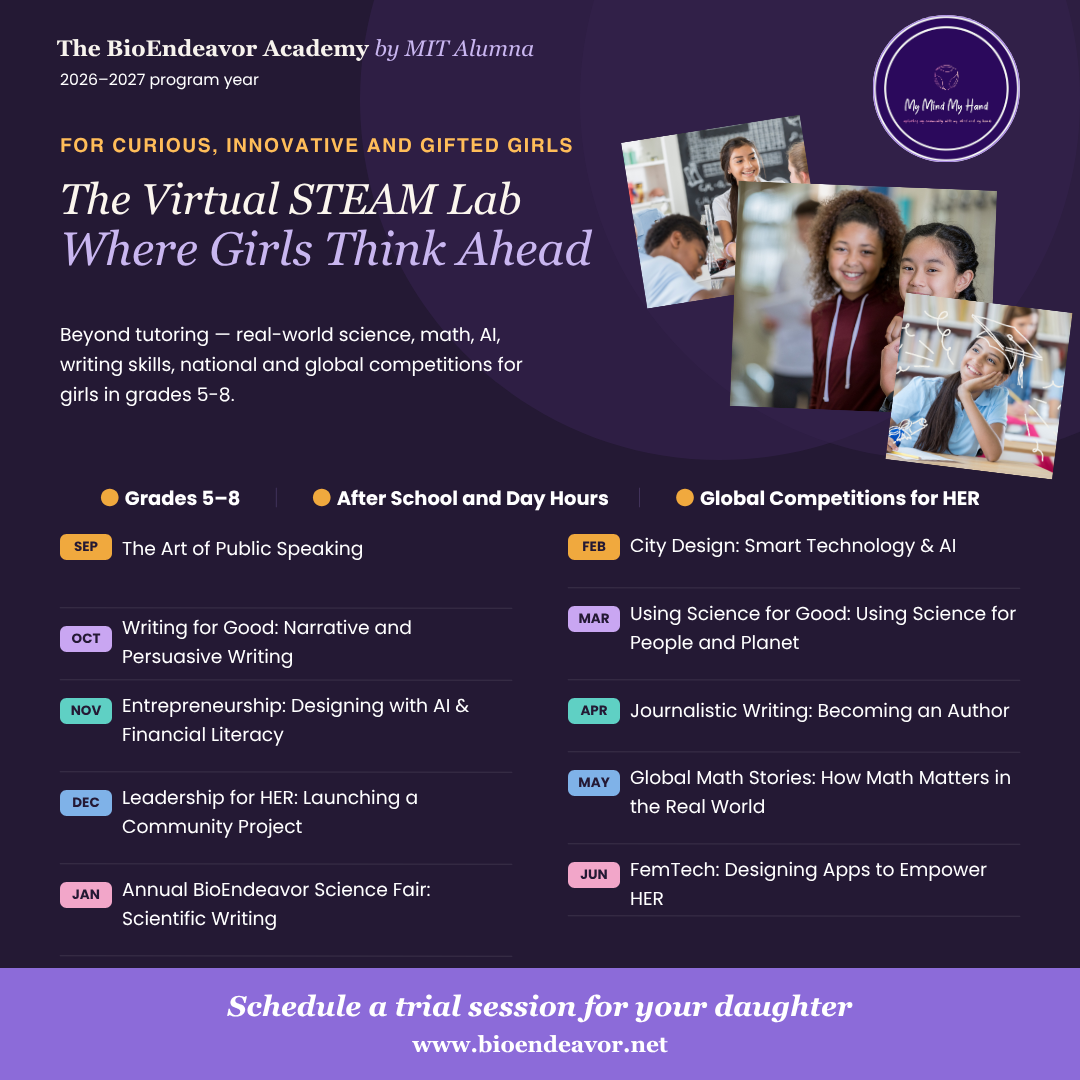
| The BioEndeavor Virtual STEAM lab will give your daughter the room to soar. Guided by an MIT alumna, gifted and homeschool girls in grades 5-8 will tackle real STEAM projects at an above-level pace: conducting science research, designing with AI, building apps, using math for real-world impact, pitching startups, and finding their voice through storytelling and public speaking. You'll watch her confidence grow alongside her skills, through project-based learning and competitions. With flexible, homeschool-friendly hours, our virtual program will fit into your schedule. Schedule a trial session and watch her light up. Email us at minna@bioendeavor.net to learn more.
Check out BioEndeavor HERE. | | |
We hope you make time for yourself to join us October 15, 4pm PT LIVE and FREE in the GHF Forum, for our 3rd Thursday Conversations, with HSC California board member and gifted homeschool veteran, Jamie Heston, who will help us unpack "The Pivot: Brick & Mortar to Homeschool."
Whether you’re on the fence, thinking you might have to bail on homeschooling when they reach high school, wondering how to juggle work, or just trying to weigh your options, we have the know-how, and love to share - always plenty of time for questions and discussion!
You can read all about Jamie and this session on our website, and then click the Join GHF Forum button to register and RSVP in the event (all free!) - see you Thursday!
Learn more
| | |
When Gifted Kids Grow Up - Communicating with Your Adult Child
By Carol Malueg MA, Joan Larson, MA and Mark Larson, PhD
Remember that precious small bundle of baby, the precocious toddler, the intensely curious kid, the fiercely independent teen? Were those the “good old days” or are these? Because now you are the parent of an actual adult human. What does that even mean? Well, it means different things for different families, but a few things are generally true:
- Your child can now make big decisions with or without your input or consent, like moving out or moving away, dating, moving in with a partner, getting married, getting tattoos, dropping out of college, going back to college, taking this job, quitting that job, having kids of their own, etc.
- Your child has the choice of whether to spend time with you, call or text you, or share any part of their lives with you, including time with grandkids. So power struggles have higher stakes now.
- Telling your adult child what to do tends to go badly unless they have specifically asked for your help. In which case, phrasing makes all the difference. Even if they are depending on you for housing or financial support, communicating as respectful adults can change a potential battle into a collaboration.
Harry S Truman famously said, “I have found the best way to give advice to your children is to find out what they want and then advise them to do it."
In the present moment with adult children, you may still be experiencing power struggles, miscommunication, and incompatible goals. Turning 18 may make your child eligible to vote, but it doesn’t make them wise. Turning 25 may come with the joking title of “Frontal Lobe Launch Party,” but even if neuroscience is certain that the brain is reasonably fully developed by age 25, it doesn’t mean your child will suddenly laugh at your dad jokes, appreciate the value of a freshly mown lawn, or have their own health insurance.
As with all things parenting, it’s up to us, the adults, to take the lead and learn new strategies for supporting our kids, even when our kids are adults. With communication, the gradual shift from telling kids how to do things to helping young adults take ownership of a simple chore may look something like this:
To a toddler – “We put our clean socks in the drawer, like this.”
To a kid – “Where do we put our clean socks? I’ll help.”
To a teen – “Would you like a hand with your laundry? Let’s do it together.”
To a young adult – “How can I help you? Would you like to show me your laundry system?”
“Communication is the key to relationships.” Dr. Jim Webb
In higher stakes instances, the acronym SETUP can help with communication:
S support
E empathy
T truth
U understanding
P persistence
Here’s an example. My [insert glowing adjectives here] adult child is living with and supporting their [insert equally derisive adjectives here] partner, and, in my opinion, they need to end things. NOW.
SUPPORT: “Your career is really taking off and your hard work and talent is admirable. You’re doing great!”
EMPATHY: “It must be difficult waiting for your next career chapter to begin when your partner is reluctant to compromise on some necessary changes.”
TRUTH: “I think a career counselor might help you and your partner move forward with some goals and improvements to your situation.”
UNDERSTANDING: “It has to be difficult to make changes in your situation, and you two have been together for a long time. And while I understand the difficulties with big changes and decisions, you need to understand that we support you.”
PERSISTENCE: “You will always be our child, and we will always support you, and we will always urge you to do the best for yourself.”
This formula can help keep a conversation on track and avoid some of the common communication traps families fall into like:
- Defensiveness. Your adult child is still your child and if they sense there is too much “attacking,” it can derail the conversation. And, recognize that there may be a different way of seeing the situation, instead of fiercely defending your version of the truth.
- Criticism. There are reasons for the situation being what it is. Listen to the explanations and try to understand their perspective. If someone feels criticized, they often shut down.
- Blame. The need for a scapegoat to explain away the issues at hand is appealing. However, blaming often escalates things and is a waste of time and energy.
- Past grievances. This is not a time to rehash old issues of previous partners or poor decisions. Rather, focus on the present and look for ways to manage, if not resolve, the conflict.
Even the process of taking a moment to plan the conversation using something like SETUP gives you and your child a breather and a chance to communicate with clearer minds.
One often used phrase from the early space age is “the future is now.” In parenting, we know that each day is a building block in the lives of our children. The raising-kids days are not smooth sailing or picture perfect. Rather, they are all about teaching our kids how to manage life with all its ups and downs. The life lessons we think they are completely ignoring are, in fact, settling in somewhere to emerge when needed. Do you ever sound just like one of your own parents? Your kids will, too. Model the communication you hope to receive– they’re paying attention.
Note:
There are plenty of books, articles, and podcasts about dealing with challenging relationships with adult children. Even more about coping with estrangement, which is incredibly painful for parents and caregivers. If you are having trouble communicating with your adult child, please see the resource list below as a jumping-off point. And here’s a hug. So sorry you’re having a tough time. Courage and strength!
Resources:
Books
- Think Again by Adam Grant
- Rules of Estrangement by Joshua Coleman, PhD
- Raising Human Beings: Creating a Collaborative Partnership with Your Child by Ross Greene
Podcasts:
- “You Learn This Too Late: This One Idea Might Change Your Entire Life” (with Dr. Shefali Tsabary) Mel Robbins Podcast
- “4 Signs of Emotionally Immature Parents & How to Heal” Mel Robbins Podcast
Join Carol and Joan for their upcoming intimate virtual groups:
Raising Gifted and Twice-Exceptional Kids
Exploring Our Own Giftedness -- A Discussion Group for Gifted and Multi-Exceptional Adults, no test score required
| | |
Carol Malueg, M.A. GCT, 2e, is the mother of 2 gifted young adults, works in the field of gifted education and support, and volunteers with several state and national organizations that support gifted kids and their families. Carol sits on the Board of Directors for the Gifted Homeschoolers Forum (GHF) and the Minnesota Council for the Gifted and Talented (MCGT). She received the MCGT Friend of the Gifted award in 2020.
Carol has trained hundreds of Supporting Emotional Needs of the Gifted (SENG) Model Parent Group Facilitators worldwide and was awarded the SENG Presidential Award for Distinguished Service in 2021. She has worked on three Javits Grant research projects focused on improving identification of and services for gifted at-risk students. Carol currently works as a Learning Coach, Educational Consultant, and Caregiver Conversations Facilitator. Her business, Gifted Roads LLC, addresses the gifted and multi-exceptional experience across the lifespan. Her first book is, The Road to Positive Advocacy for Your Gifted Child, published June, 2025 by Prufrock Press.
| | |
Mark Larson, PhD, is an education consultant and executive coach. He has worked as a school superintendent, director of teaching and learning, secondary school principal, and English teacher and coach.
Mark has guided strategic planning for educational organizations, mediated contracts and personal disputes, reviewed educational programs, lead professional development with cohorts and provided executive coaching, and delivered training and keynote speeches.
Joan Larson, M.A. has her Master of Arts in Gifted and Talented and has been a classroom teacher for ten years and a teacher of the gifted and talented for more than twenty-five years. She has numerous teaching awards and is a leader in creativity and innovation.
Both are certified Social and Emotional Needs of Gifted (SENG) Trainers and have presented at SENG national conferences. Training sessions have been held in Edina and Minnetonka, Minnesota, Las Vegas and Reno, Nevada, and online classes with parents from throughout the United States and world. Both have extensive experience in working with families and providing professional development for educators.
| | |
Dyscalculia impacts about 1 in every 20 children and adults, yet it is not widely recognized or understood. This math learning disability not only affects individuals in educational settings but also impacts their everyday life when it comes to handling money, telling time, measuring quantities, and performing basic calculations.
In this thoughtful and personal narrative, Laura M. Jackson writes about her child’s struggle with numbers, their shared discovery of dyscalculia, and she and her husband’s journey supporting their daughter in school and in life.
https://www.ghflearners.org/books
| | A Supportive Community for Gifted Learners | | Come join us in the GHF Forum, our online community where we share all of our services and resources. | | |
FREE ACCESS to:
- Live Gifted Home Ed Conference
- Live 3rd Thursday GHF Conversations
- DIY Ed Homeschooling Parent Course
- Partners Discounts & Freebies
UPGRADE to GHF Choices Membership:
- GHF Expert Series Library
- Live Professionals Discussion Group
- GHF Member Discounts
- Forever Access to Gifted Home Ed Conference & Conversations Recordings
- Pals Discounts & Freebies
| | |
For those of you who can give at least $500 we have created a special recognition program where you will be listed on the GHF website and in our monthly newsletter, The GHF Journey, as valued members of the community. Donations may be kept anonymous.
- Tricia Delles, CPA
- Catherine Gruener, M.A., M.A., LCPC, LCMHC, NCC, BC-TMH, Gruener Consulting LLC
- Rosemary Guillette
- Kelly Hayes, Wonder Homeschool Center
- Dr. Melanie Hayes, Big Minds Unschool
- Jen Merrill, Laughing at Chaos
- Heidi Molbak, Seed Starter Educational Consulting
- Dan Peters, Summit Center
- Kasi and Rob Peters
- Magalie Pinney, State Street’s Do More Grant
- Deborah Reber, Tilt Parenting
- Elizabeth Ringlee, The Champion Project
- Jade Ann Rivera
- Lin Lim-Goh, The Quark Collaboration
- Debbie Steinberg-Kuntz, Bright and Quirky
| |
MISSION
To empower every gifted family to make strategic, proactive, and intentional educational choices.
VISION
A diverse world of multi-generational families, educators, and professionals supporting each other through community, education, and creating content relating to gifted home education.
#GIFTEDHOMEED
Empowering gifted families to make strategic, proactive, and intentional educational choices.
VALUES
GHF values the uniqueness and humanity of each person in our community. We treat each other with love and kindness and particularly abhor bullying and negativity of any kind. We accept that it is our job to examine each day with a fresh perspective and continue to improve the organization to pursue our mission.
| |
GHF is a 501c3 organization. Please consider supporting our community with your most generous gift today. For more information on our organization, please feel free to contact us. Thank you!
| | | | |