|
|
|
Feature Article:
Gardening for All Ages
By: Silvia Caracciolo, Johnston County Master Gardener Volunteer
My mother was an avid gardener and a Master Gardener. From the tilled ground and greenhouse - she spent many hours in her horticultural activities growing plants for both food and beauty. As a child, I experienced the joy of gardening simply through the consumption of her delicious and bountiful harvest!
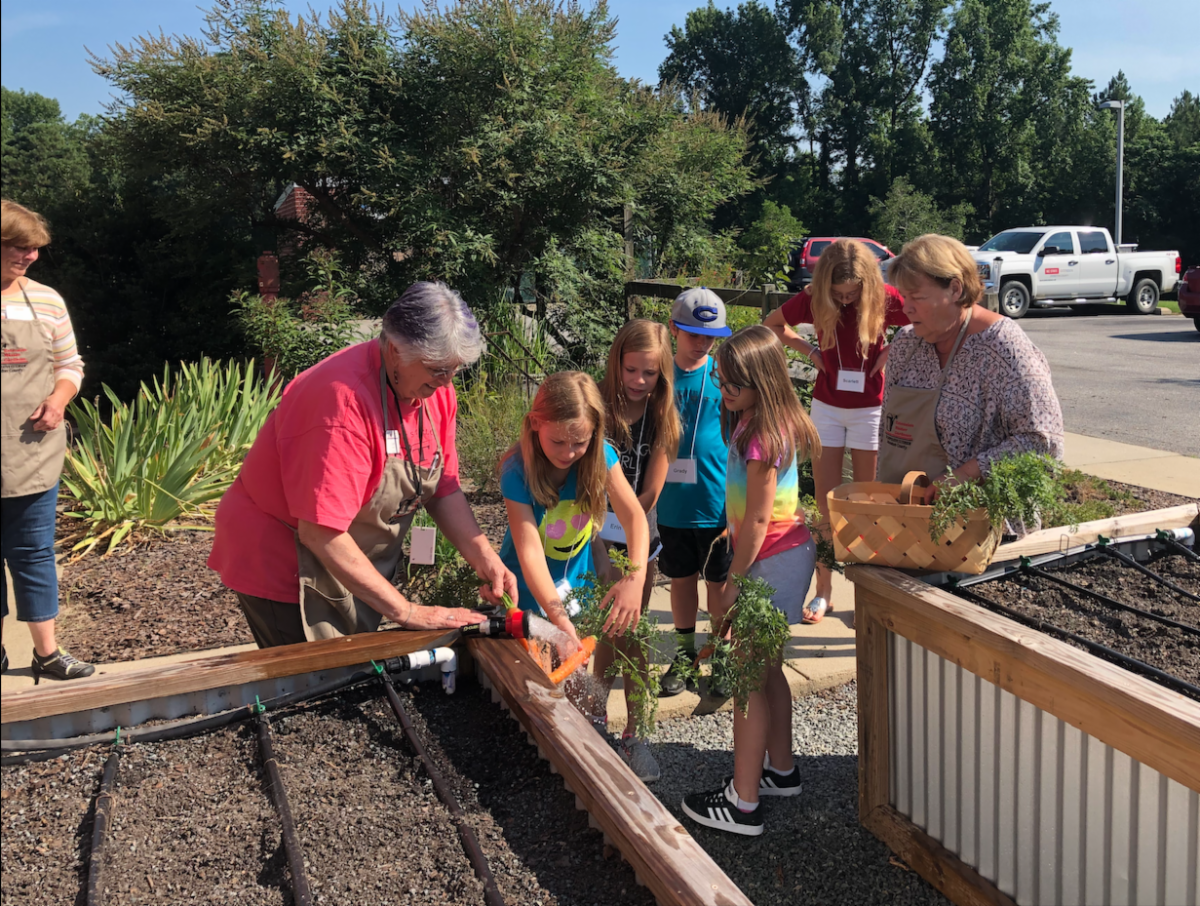
As an adult, I dabbled in gardening but in retirement with more time on my hands, I got more serious, becoming a Master Gardener myself when I moved to Johnston County from Florida. I have enjoyed many volunteer activities through the Master Gardener Program, including helping children grow their own food in school gardens and working in a community garden in Smithfield called Plant A Row for the Hungry (PAR) which benefits local food banks. Through these experiences, I became excited to focus more on growing my own vegetables and setting up a garden that I can enjoy through my golden years. Planning is a big part of any future endeavor. Knowing I will not be getting any younger, I have laid my garden out for easy accessibility. My garden has a middle aisle that I can easily take my wheelbarrow. The beds on the ground are two to three feet deep and about two feet wide. These depths, in the larger beds, allow for deeper rooted plants and the width allows for easy access from the sides. I can sit on a stool and work to my heart's content. Circular thirty-gallon pots are lined along the path providing additional space for plants. I have nine beds that stand on legs at table top height. More shallow rooted vegetables on table top beds make it easy to take care of their needs with just strolling by. Easy access simplifies the process of weeding, planting and maintaining. Having water run from the house to the garden eliminating the need to drag a hose around was a great investment. Now with water just a turn of a knob away, my plants get the water they need without so much effort. There are a multitude of watering systems you can purchase that you can set on timers if you like, however, I prefer to hand water and take this time to check on my vegetables to head off any disease or bugs. Keeping the garden to a size you can manage is important. I suggest starting out small and then add as your confidence grows. As I have gained experience and learned lessons, I have added more varieties. It may sound funny to those who don't garden vegetables, but to see the broccoli popping out with little green heads, the frilly kale leaves dancing in the wind, leeks standing as tall soldiers, collard leaves lounging on the stems - all are beautiful sights and I am completely hooked! Growing and eating something you have produced is an amazing feeling I highly recommend. If you have never grown your own vegetables, don't be afraid to get started or to ask the simplest of questions. Master Gardeners are a great resource and love helping budding gardeners.
The joy of gardening is for the young and old alike. As you grow older, reducing or restructuring your garden may be necessary, but continuing to enjoy the nourishment that the garden brings the body and the soul will help keep you both healthy and young at heart!
|
|
|
|---|
|
|
Grow Native:
Symphyotrichum oblongifolium 'Raydon's Favorite'
Aromatic Aster
By: Margy Pearl, Johnston County Master Gardener Volunteer
|
| |
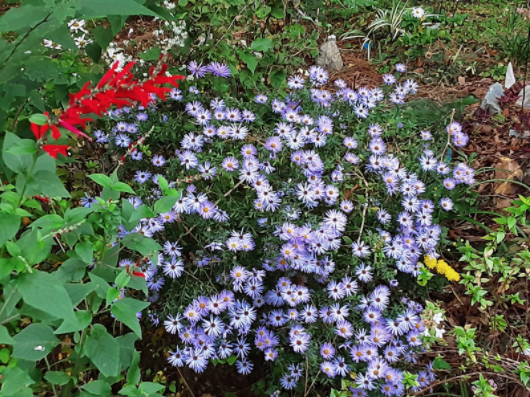
'Raydon's Favorite' Aromatic Aster, Margy's Garden
|
I had planned to write about a different plant this month and when that didn't work out, I decided to walk around my gardens for inspiration! Normally, I don't get very far because weeding, deadheading, adding supports or something else grabs my attention. This time, though, I resisted and just strolled. What I noticed was that of all my plants in bloom, the aromatic asters, particularly the variety 'Raydon's Favorite', were the largest and the most prolifically flowering! In my garden, the bluish purple, daisy-like blooms with yellow centers began opening in September. it is one of the last plants to continue flowering until a heavy frost and they even make great cut flowers to enjoy inside!
The balsam-like scent this native wildflower releases when the stems are crushed gives the aromatic aster it's common name. An excellent pollinator plant, butterflies, bees, skippers, songbirds, insects and even small animals are attracted to this hardy native. It's the host plant for the Silvery Checkerspot butterfly and for some moths. Turkeys will eat the seeds.
I have 4 aromatic asters in different soil conditions and in varying amounts of full to part sun. All are doing beautifully! Spreading by stolons, they have thrived in the more moist, clay soil areas of the yard and through drought in the sandier soil sections. They also tolerate erosion prone areas and poor, rocky, or shallow soils. As with most plants, though, they require the well-drained soil.
Aromatic aster can be used in mass plantings and as a very showy ground cover. I use supports since they can grow up to 3 inches and become heavy blooms. There are no serious insect or disease problems and it's deer and rabbit resistant.
While 'Raydon's Favorite' is a taller, bushier variety, 'October Skies' has a darker blue flower and grows up to 2 feet. 'Fanny' also grows to 2 feet tall but spreads to an 8 feet wide mound over time!
|
|
|
|
Veggie Tale:
Raised Bed - A Christmas Gift Idea
By: Edna Gaston, Johnston County Master Gardener Volunteer
|
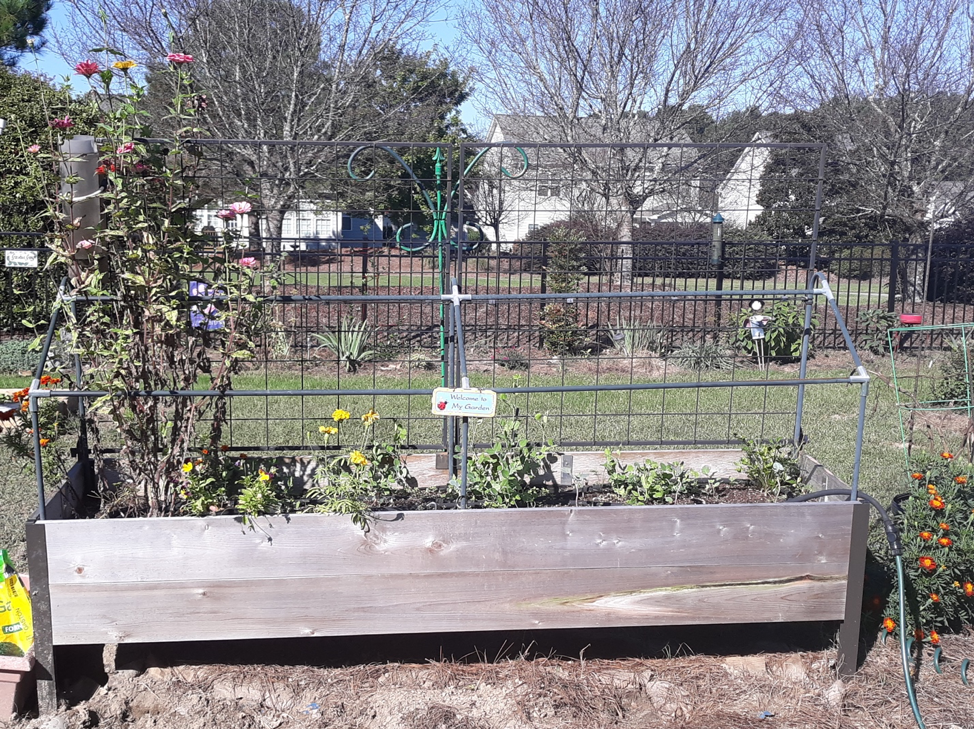
Gardening has always been an important part of my life. About 18 months ago, I moved to a new home and it was time to decide what to grow. My backyard was a blank slate, literally, as nothing was planted in this small space! Spring was approaching which meant time for vegetables. As I was pondering, one of my favorite dream books, i.e. a garden catalog, arrived. On the cover was a raised bed. BINGO! The solution to my dilemma.
As the years have passed gardening has taken its toll on my knees, so low gardening is limited. This raised bed was the perfect solution. It was ordered and arrived in many boxes. Without a lot
|
|
of difficulty, it was put together. It is 96" L x 24" W x 29"H with a planting area 10 " deep and holds 13 cubic feet of potting soil. Since it arrived in late summer, I planted onions, carrots, radishes, lettuce, and spinach.
There are great features with this raised bed. It has a metal frame that supports a micromesh insect cover which I put on immediately. Included in the package was a reinforced polyethylene greenhouse cover so I also had a cold frame and had fresh lettuce and spinach all winter! The kit came with a drip hose, but most of the time I use a hand nozzle.
This spring I set out flat and curly parsley, zinnia seeds, cucumbers, cantaloupe and "refrigerator" watermelon seeds - a nice feature is part of the frame is a trellis for climbing plants. The zinnias outdid themselves, cucumbers were very successful, one cantaloupe and nothing from the watermelon. For fall I planted peas, but think I may have been a little late. I just set out broccoli plants.
I am extremely pleased with this addition to my garden but am still learning. Despite my knees, I can't give up gardening so I must adapt. Remember, gardening is cheaper than therapy, plus you get to eat the results!
|
|
|
Quick Tip:
Frost Blankets
By: Silvia Caracciolo, Johnston County Master Gardener Volunteer
Once you snuggle down in your home by the fireplace or with a warm blanket on your legs, you sit back and relax. You are kept warmer than the air around you. Plants like to be pampered in the same way.
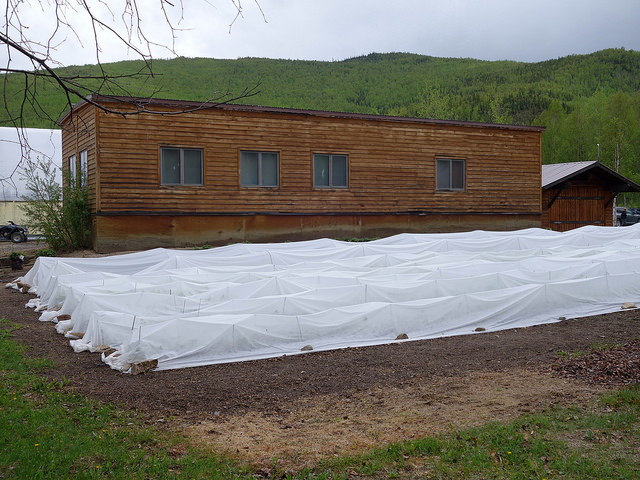
Many vegetables are grown as fall or winter crops. I have broccoli, cabbage, leaks, collards, cauliflower to name a few. Snow or frost can hamper these plants. Just like you, they like cover to hold in warmth - a frost blanket or row cover to form a warm pocket of air. These can keep plants ten degrees warmer below the cover, depending on the quality of the blanket. It also allows rain to come through keeping your plants watered. Wind can just whip across the top of the cover. Remove blankets during the day if the weather permits.
Resource:
|
|
Good or Bad?:
What is Killing My Red Maple Trees - Could It Be Gloomy Scale?
By: Brian Wootton, Johnston County Master Gardener Volunteer
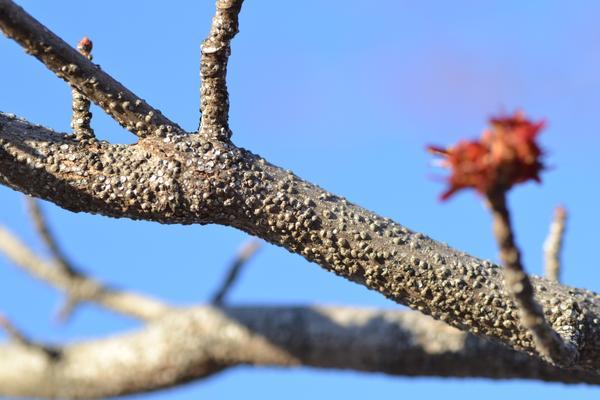
Over 90% of red maple (Acer rubrum) in urban areas in the eastern U.S. are in decline due in-part to urban warming (the heat island effect) and less impervious surfaces near tree roots, resulting in less water and nutrient uptake for trees. As a result, trees that are under stress are more prone to diseases and insect infestation. Also, lack of biodiversity of beneficial insects in urban areas leads to more diseases and insect infestations on trees. One such major insect is Gloomy Scale (Meleanaspis tenebricosus) that causes stem dieback and death to trees, especially red maple trees (Figure 1).
|
| Photo of stem dieback on red maple - Figure 1
|
First of all, what is scale?
There are two (2) general types of scale insects:
Armored scales (e.g. oystershell scale, gloomy scale, euonymus scale and pine needle scale) and soft scales (e.g., cottony camellia scale, magnolia scale and tuliptree scale). Armored scales are so named because they secrete a protective cover over their bodies.
Generally, soft scales are larger and more convex than armored scales. Many resemble miniature tortoise shells. Soft Scales usually cover themselves with wax, but they lack the detachable protective cover for which armored scales are named.
What is Gloomy Scale?
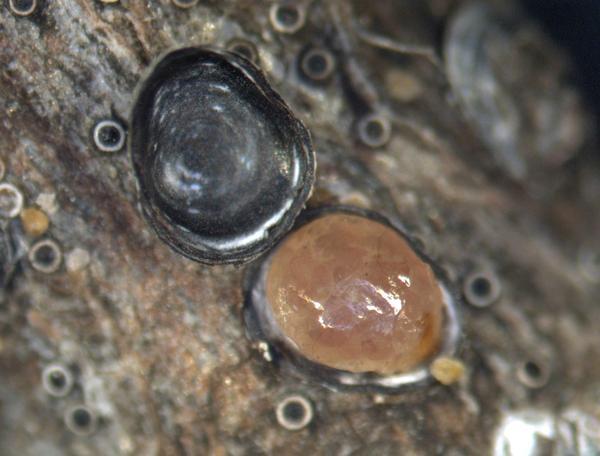
Gloomy Scale (Melanaspis tenebricosus ) is a type of armored scale that is particularly widespread and damaging scale found primarily on red, silver and Freeman maples as well as boxelders. It may also be found on other species including sweetgum, holly, and mulberry. This scale secretes a hard grey covering approximately 1/16 inches in diameter (Figure 2) that blends into the bark and often goes unnoticed until infestations become quite heavy.
|
|
 |
| |
In spring, it completes development and begins to lay eggs beneath the shell (Figure 3). Eggs hatch in late May and June and the immature (nymphs), which are commonly referred to as crawlers due to the fact that they have legs, will disperse to other portions of the plant. Once crawlers settle and begin to feed, They produce the hard waxy covering that will protect the insect and make management more difficult. These crawlers will complete development in late summer and produce a second generation.
Management of Gloomy Scale and other types of scale:
Cultural Control
Prevent gloomy scale infestations and long-term management issues by selecting correct planting sites for red maples. Trees planted near large amounts of impervious surfaces are more prone to gloomy scale infestation and subsequent damage. Impervious surfaces reduce water availability and increase soil and air temperatures. Gloomy scale becomes more abundant as tree canopy temperatures and drought stress increase. When planting red maples, be conscious of the surrounding landscape and avoid planting in areas with greater than 60% impervious surface. Research has shown that reducing plant stress by proper planting and watering can reduce susceptibility to infestation and damage by gloomy scale. Also, excessive nitrogen fertilizer may increase scale abundance by making the tree more nutritious to scales and reducing the trees natural defenses.
Biological Control
The most common parasitoid wasps known to attack gloomy scale are in the genera Signiphora, Encarsia, and Ablerus. Other natural enemies such as lacewings, lady beetles, and predacious midges may also provide supplemental control of gloomy scale populations. However, natural enemy control is minimal in urban landscapes either due to warmer temperatures, lack of alternative resources, or lack of vegetation refuges. To maximize potential biological control, provide habitat for natural enemies and reduce temperatures by increasing vegetation cover and complexity around trees.
Mechanical Control
Although there have not been any reported trials with gloomy scale, light to medium infestations of scale insects may be effectively treated with pressure wash applications. High-pressure water sprays can wash scales and scale covers off bark and reduce populations without the need for chemical controls. Make applications when trees are dormant for the winter and make sure the water pressure is not damaging tree bark.
Chemical Control
Chemical control of gloomy scale can take several years to see results and is often expensive. When trees are very heavily infested, consider costs and benefits of treatment compared to tree replacement with another species.
Foliar insecticide applications should coincide with crawler emergence for best control. This is challenging for gloomy scale because crawlers gradually emerge over 6-8 weeks. Therefore, broad-spectrum contact insecticides such as pyrethroids may not be effective and can contribute to the problem by killing natural enemies. If you decide to spray, try to avoid the use of insecticides such as orthene that will kill beneficial insects.
Horticultural oils and dormant oils kill insects by smothering them and breaking down cell membranes. Horticultural oils can also penetrate waxing scale covers. They can be applied during crawler emergence or when trees are dormant to kill overwintering adults. These may be more practical when treating trees that are smaller in size. There is additional information on horticultural oils in Horticultural Oils for Ornamental Plants.
Trunk sprays or soil drenches of systemic insecticides such as dinotefuran and acephate may provide effective, season-long control of many armored scale insects. Acetamiprid is a systemic insecticide that can be applied to foliage. Insect growth regulators such as pyriproxyfen and buprofezin can also provide effective control and are applied to foliage. See current product availability for armored scale management in the North Carolina Agricultural Chemicals Manual.
Resources/References
https://content.ces.ncsu.edu/armored-scale-identification-and-management-on-ornamental-plants
https://richmond.ces.ncsu.edu/2015/02/managing-scale-insects-in-the-landscape/
https://macon.ces.ncsu.edu/2015/07/scale-insects-3/
https://content.ces.ncsu.edu/gloomy-scale-1
https://ecoipm.org/2020/05/05/gloomy-locks-and-the-three-cities/
https://ecoipm.org/research/urban-ecology/urban-heat-and-maple-pests/ |
|
| |
|
Last Month's Feature Plant: Update
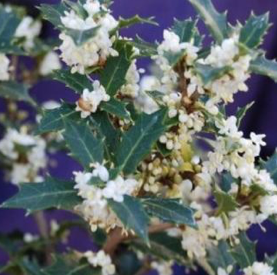
Osmanthus heterophyllus 'Kaori Hime'
"Fragrant Princess" False Holly
A New "Choice Plant" Series Introduction
(Grown and recommended by Johnston County Nurserymen)
By Marshall Warren, Johnston County Horticulture Extension Agent
In last month's Gardener's Dirt edition, it was incorrectly stated that the Osmanthus "Fragrant Princess" False Holly growth and size is slow-growing, reaching a height of 4' and 4' wide in 10 years. Tony Avent, owner of Plant Delights Nursery, sent me an email saying he has one planted in his garden which has grown to a height of 7' tall and 11' wide in 10 years. He also said he expects it to get even larger if allowed to grow without pruning. He did mention it is currently in full bloom, fragrant and is a stunning plant. So, if you are considering this plant for your garden, please consider its potential height and width and allow enough space when you plant it.
|
|
|
|
|---|
|
|
| |
|
Got Gardening Questions?
| |
Our Johnston County Extension Master Gardener Volunteers
(EMGV) can help with various horticulture questions.
or call (919) 989-5380 to speak with one of our
Master Gardener Volunteers
|
|
|
|---|
|
|
| |
|
|
FIRE ANT CONTROL -Controlling fire ants in the fall is most effective.
- For small areas with less than 4-5 mounds, individual mound treatment is recommended and less damaging to competing native ant species.
- Preserving Native Ant species is the most important Biological Control.
- For larger areas with greater than 20 mounds/acre, broadcasting bait is recommended.
- Mound Drenches: Insecticide + Water - min. 2 gal. - more effective following a rain.
- Mount Treatment: Baits - apply around, not on the mound - Apply both in spring and fall - fall application most effective - Apply when ground is dry and rain not expected within 24 hrs. Products that combine fast and slow-acting ingredients (Extinguish Plus®, Amdro® Firestrike) may work better because they provide quick suppression and have a longer duration of control.
- Organic Control Products - spinosad, D-limonene - an oil made from the extract of citrus peels.
- Cultural Control - Non-Chemical: Boiling Water - 3 gal./mound - kills mound 60% of the time, 40% relocate
- https://content.ces.ncsu.edu/fire-ants-in-turf
GENERAL IDEAS
- Clean up and throw away any diseased plant material. Do not compost! Leaving infected leaves, fruits, nuts on the ground or on the plants provides a source of inoculum for re-infection next year.
- Use shredded leaves as mulch. Fallen leaves contain lots of nutrients, but they decompose slowly. Help the process along by shredding or mowing them.
- Compost your yard waste! As you cut back your perennials in preparation for winter, return that bounty to your garden in the form of compost. Compost is nature's favorite fertilizer and soil conditioner. Recycle grass clippings, leaves, and non-diseased garden refuse.
- Put the garden to bed for the winter. Pull out all annuals that have completed their life cycle and cut back perennials.
LAWN CARE
- Fertilize fescue lawns for winter. The November fertilization (near Thanksgiving) is the most important one of the year for cool season grasses. The soil is still warm enough to permit the growth of strong roots that will enable the grass to withstand next summer's baking heat. Use a slow-release fertilizer formulated for turf, and apply according to soil test results.
- Check out the Lawn Maintenance Calendar Below
Click on each type of grass for individual maintenance calendar:
TREES, SHRUBS & ORNAMENTALS
- Fall is for planting! September through early February is an ideal time to plant deciduous trees/shrubs and perennials. Plant evergreen plants from September - November. The cool weather permits establishment of a root system before next year's hot weather. Find pictures of recommended planting techniques at: Site Preparation NCSU - Gardening - Trees
- Allow space for plants to grow to their mature size. A common mistake is placing a large or fast-growing plant where there is not enough room for its full height and spread. The error results in continuous pruning in an attempt to keep the plant to a size nature never intended it to be. Find out how large the plant can be expected to grow, and place it where it can fulfill its potential.
- It's time to move shrubs from one place to another.
- Mulch shrubs/trees, perennials & herbs after the 1st killing frost for winter protection. Apply a 3 inch deep layer. Mulch comparisons and general information: https://content.ces.ncsu.edu/extension-gardener-handbook/11-woody-ornamentals#section_heading_9717
|
|
|
|---|
|
|
|
|
Cool Connections:
Helpful Links from Johnston County Cooperative Extension
| | |
|
|
|
|---|
|
|
Announcements:
|
| |
Click Picture for Video
Click on this link for details and order form |
|
|
For more information visit:
|
|
|
|
|
|