The Gasette

Anesthesia Newsletter


September 2026

As we enter the autumn season, I would like to take a moment to highlight the exciting milestones, growth, and leadership transition taking place in our Department.


This edition features an introduction to our new Chief Operating Officer, Fay Harrison, as we welcome her to the leadership team. We also celebrate our expanding academic community by welcoming our newest cohort of residents, fellows, and other group of learners. Finally, we share the news of a fleet of state-of-the-art point-of-care ultrasound (POCUS) systems for the anesthesia teams at the QEII Health Sciences Centre's Halifax Infirmary and Victoria General sites, which reinforce our commitment to clinical excellence, innovation, and high-quality patient care.


I hope you enjoy this edition of The Gasette!


Kind regards,


Janice Chisholm, MD FRCPC

Head, Department of Anesthesia, Pain Management and Perioperative Medicine

Central Zone, Nova Scotia Health and

Dalhousie University

Professor, Dalhousie University

Chair, RCPSC Specialty Committee in Anesthesiology

President, Association of Canadian University Departments of Anesthesia (ACUDA)


Welcome Fay Harrison, Chief Operating Officer

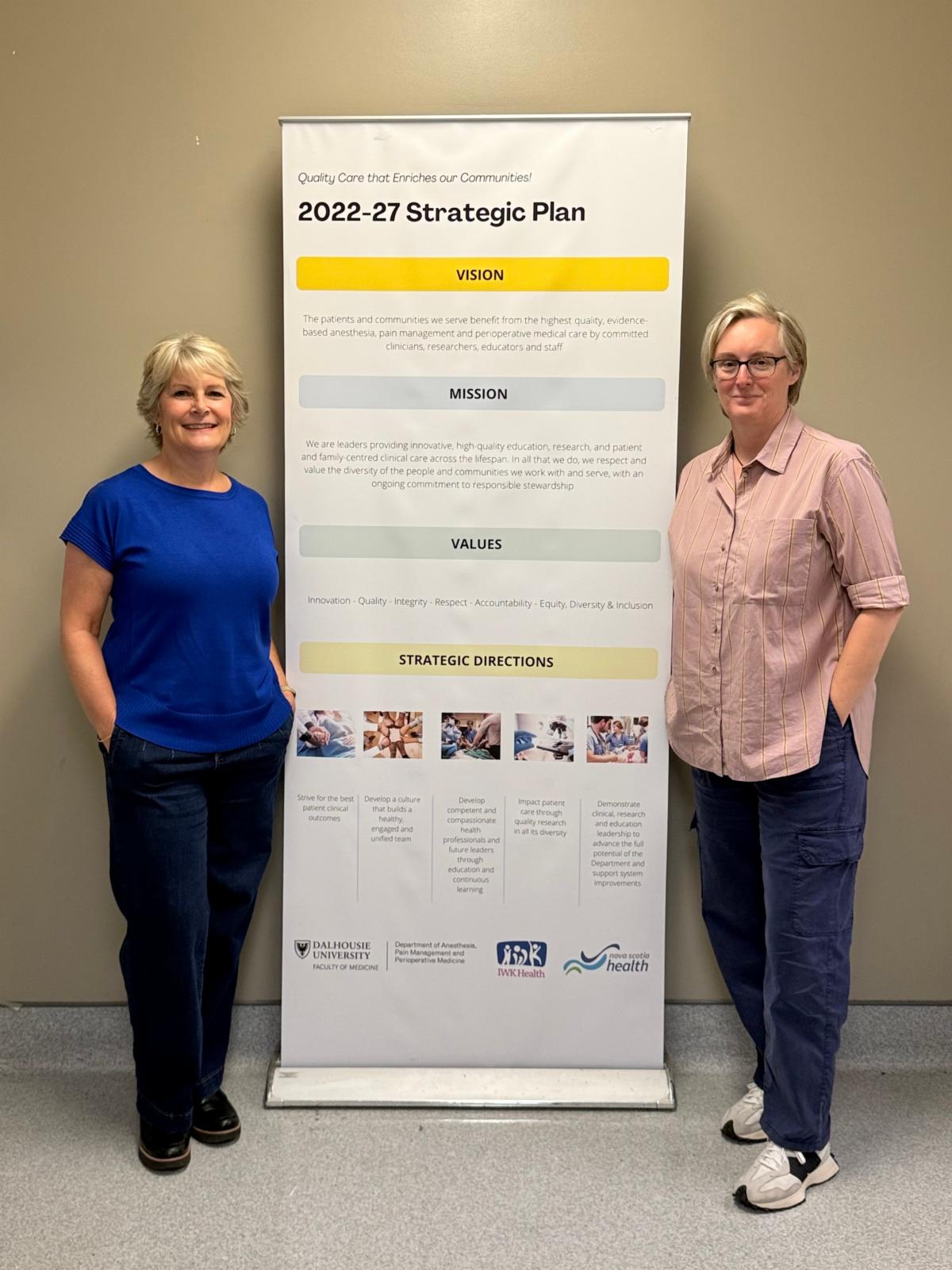
Carmelle d’Entremont (Left), Fay Harrison (Right)

The Department welcomes Fay Harrison as Chief Operating Officer of the Department of Anesthesia, Pain Management and Perioperative Medicine, effective September 2, 2026.


As Chief Operating Officer, Fay will work closely with the Department Head and Associate Head, the IWK Anesthesia Chiefs, and other Department leaders to translate clinical and academic priorities into effective and sustainable operations. Her responsibilities include strategic and operational planning, financial stewardship, governance, people and organizational development, risk management, and relationships with institutional and government partners.


Fay is an experienced research and administrative leader who most recently served as Executive Director of BrainsCAN, Western University’s $66-million Canada First Research Excellence Fund neuroscience initiative. In that role, she provided strategic and operational leadership for one of Canada’s flagship interdisciplinary research programs, working with researchers, funding agencies, and partners to strengthen the research environment and increase its societal impact. Fay received the Western University Award of Excellence in 2024.


Before joining Western University, Fay held senior research-strategy roles at The Open University in the United Kingdom, where she led the university’s submission to the 2014 Research Excellence Framework. She also brings a strong commitment to equity, diversity, and inclusion; as Chair of BrainsCAN’s Equity, Diversity and Inclusion Committee, she led initiatives to embed inclusive practices in research, governance, and organizational culture.


Thank You to Carmelle d’Entremont

The Department extends sincere thanks to Carmelle d’Entremont for her leadership and dedication over the past six years as Chief Operating Officer. We are deeply grateful for Carmelle’s many contributions and wish her the very best in retirement. 

Welcoming Our New Residents, Fellows and Learners

As we begin another academic year, the Office of Education is delighted to welcome the new residents and fellows, as well as other group of learners to the Department of Anesthesia, Pain Management & Perioperative Medicine.


This July, we welcomed seven new residents to our anesthesiology residency program, joining us from Dalhousie University, University of Ottawa, Northern Ontario School of Medicine (NOSM), McMaster University and McGill University. The cohort of Drs. Matthew Donovan, Nicole Fakhory, Andrew Harding, Liam Nicol, Vivek Patil, Holly Philpott and Michael Prudencio-Brunello represent the first group of the program's expansion PGY-1 intake from six to seven residents. This growth reflects our ongoing commitment to training highly skilled anesthesiologists and contributing to the future needs of our healthcare system.


We also welcomed two new fellows, Dr. Ainsley Decker, into the Pediatric Anesthesia program, who joins us from Newfoundland, and Dr. Eoghan Meaney, into the Regional Anesthesia and Acute Pain program, joining us from Scotland. Our fellows bring valuable experiences and perspectives from their previous training while contributing to the academic and clinical environment within our Department, while further developing their skills and knowledge through subspecialty training.


Once again, this year, the Department will provide learning opportunities to over 100 Med 1 – 3 medical students, and approximately 100 Med 4 elective opportunities to medical student from Dalhousie and other medical schools across Canada within CZ, IWK and throughout the Maritimes. Our commitment to education extends well beyond postgraduate training. These electives provide students with an opportunity to experience anesthesiology and to learn from our faculty, residents, and other members of the anesthesia team. Many of these students will explore anesthesia as a future career, making our undergraduate program an important part of the Department’s educational and recruitment pipeline.


The Department continues to support the education of learners from a variety of other health disciplines, including the Anesthesia Assistants, Respiratory Therapy, Dentistry, and Paramedicine program. For the Anesthesia Assistant learners, we continue to prioritize their clinical placement, to align directly with the conclusion of academic requirements, all while they work in the Department as respiratory therapists.


As we look ahead to the 2026–27 academic year, the Office of Education remains focused on supporting our learners, strengthening our educational programs, and creating meaningful opportunities for learning. We are excited to welcome this new cohort and look forward to everything they will contribute to our Department and the communities we serve.

Originally published in QEII Times


QEII TIMES: Helping anesthesiologists see what matters most, when every second counts


Author: Nicole Topple   Publication Date : September 25, 2026

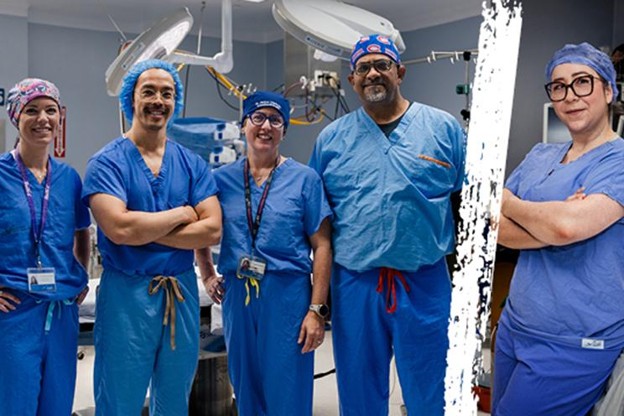
Members of the QEII's anesthesia team, (L-R) Dr. Dana Archibald, Dr. Liem Ho, Dr. Janice Chisholm, Dr. Colin Audain, and Dr. Angela Builes are passionate champions for a dedicated fleet of 18 point-of-care ultrasounds. Right now, all donations to this project will be doubled up to $211,000 thanks to Sherry Porter and Doug Hall. UNCHARTED.MEDIA; DARREN HUBLEY

QEII Foundation raising $1 million for fleet of 18 point-of-care ultrasound systems


Every surgery is built on thousands of critical decisions.


For anesthesiologists, many of those decisions happen in seconds — often while a patient's condition is changing. The more they can see, the faster and more confidently they can respond.


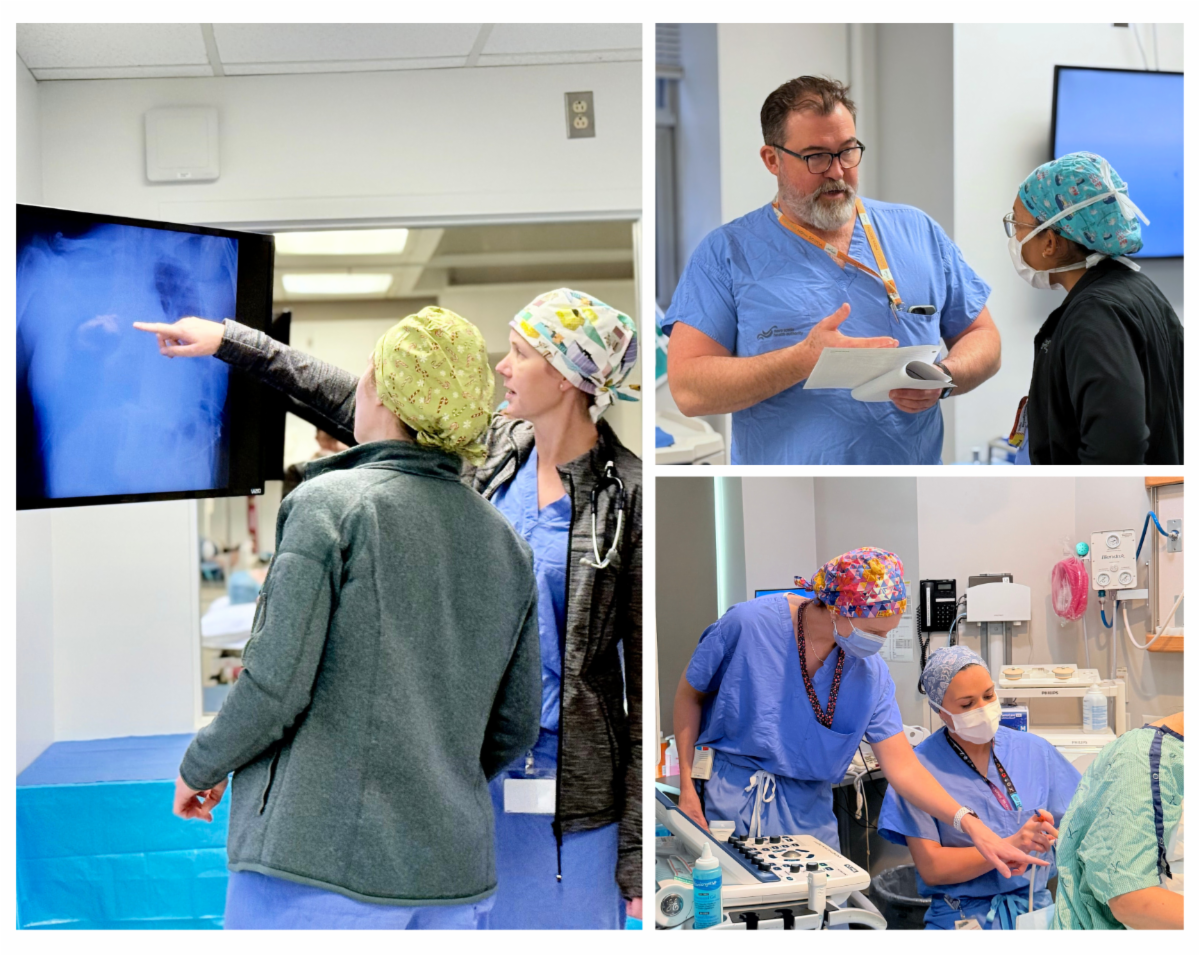
That's why the QEII Foundation is raising $1 million through its We Are campaign to help equip anesthesia teams across the QEII Health Sciences Centre's Halifax Infirmary and Victoria General sites with a fleet of 18 state-of-the-art point-of-care ultrasound (POCUS) systems. Unlike traditional ultrasound, which often requires patients to be transported to an imaging department, POCUS brings imaging directly to the bedside, operating room or recovery unit. Within moments, clinicians can visualize the heart, lungs, blood vessels and other structures, helping guide procedures, diagnose complications and make lifesaving decisions when every second matters.


The impact reaches far beyond the operating room.


This technology helps anesthesiologists safely place IVs and central lines and perform nerve blocks and spinal anesthetics with greater precision. They can assess heart and lung function before surgery, identify complications earlier and provide more personalized pain management. For patients, that can mean less discomfort, fewer complications and safer, more efficient care.


"Ultrasound has completely changed the way I practice," says Dr. Angela Builes, anesthesiologist at the QEII. "When I trained, I relied on what I could hear through a stethoscope and what I believed was happening. With this imaging, I can guide procedures more safely, respond faster during emergencies and know — not just think — what is happening. It has made me a better physician and a better anesthesiologist."


As surgical care continues to evolve, so do the patients receiving it. People are living longer, undergoing more complex procedures and often arriving in the operating room with multiple health conditions. As innovations like robotic surgery continue to advance care at the QEII, anesthesia teams need equally advanced technology to support patients safely through every stage of surgery.


"We're no longer simply putting patients to sleep," says Dr. Dana Archibald, anesthesiologist at the QEII. “We're managing a patient's physiology during some of the highest-acuity moments of their care. Point-of-care ultrasound gives us real-time insight that helps us make safer decisions for our patients."


With specialized fellowship training in point-of-care ultrasound, Dr. Archibald has seen firsthand how access to this technology can completely change a patient's outcome.


"A two-minute POCUS scan can identify a serious heart condition before surgery that might otherwise go undetected," says Dr. Archibald. "It can mean the difference between safely changing a patient's care plan or facing an avoidable emergency. We also use it to improve pain management through safer nerve blocks and help patients recover more comfortably."


Its greatest impact is often felt during the unexpected. When a patient's condition suddenly changes, point-of-care ultrasound can give clinicians immediate answers — helping them identify the cause and guide treatment.


"When a patient is experiencing a medical emergency, I don't have to wonder what's happening — I can see it," says Dr. Builes. "I can see whether the treatment I'm giving is working, adjust my approach immediately and make faster, more informed decisions. In many cases, it changes the trajectory of a patient's care."


With donor support, the QEII Foundation will help ensure anesthesia teams at the region’s most specialized adult hospital have access to the latest point-of-care ultrasound technology.


"This project is about creating a fleet of portable point-of-care ultrasound systems that brings consistency, efficiency and safety across the QEII," says Dr. Janice Chisholm, head of the Department of Anesthesia, Pain Management and Perioperative Medicine for Nova Scotia Health's Central Zone. “When clinicians have access to the same advanced technology throughout a patient's surgical journey, it becomes part of everyday practice and that ultimately translates into better care."


As Dr. Chisholm explains, in an increasingly competitive environment for recruiting specialists, access to cutting-edge technology matters. The latest AI-enabled POCUS systems can support clinician education by helping users obtain and interpret ultrasound images, making them valuable tools for both experienced anesthesiologists and those developing advanced point-of-care ultrasound skills. A state-of-the-art POCUS fleet will help the QEII attract and train the next generation of anesthesiologists while supporting education, research and continued surgical innovation.


"Government funding sustains our healthcare system," says Dr. Chisholm. "Philanthropy accelerates innovation. This investment will help modernize perioperative imaging at the QEII and position our program among the leading centres in Canada."


The QEII Foundation’s POCUS fleet initiative is one of two critical diagnostic imaging projects we’re rallying behind this fall season. Thanks to the generosity of longtime QEII Foundation supporters Sherry Porter and Doug Hall, every donation will be immediately matched, dollar for dollar, up to $211,000. 


To learn more about POCUS or donate now, visit QE2Foundation.ca/Diagnostic-Imaging.

About us

We are a clinical and academic Department affiliated with Dalhousie University’s Faculty of Medicine, Nova Scotia Health (Central Zone) and the IWK Health. Some of our academic faculty are also located in regions across the Maritimes and beyond. 

Follow Us

X

More Information