How a book validated the science behind everything
I believed about LEGO® SERIOUS PLAY® | | |
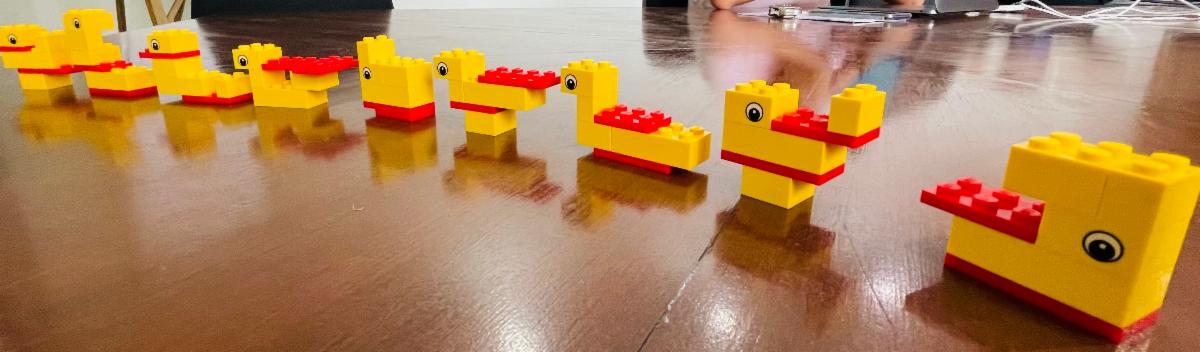
As a design thinker, I’m always looking for unexpected insights. LEGO® SERIOUS PLAY® is one of those methods that keeps unfolding. I’ve used it for strategy, discovery, UX research, team alignment, conflict management. The more I used it, the more I was blown away by what it could unlock. One of the simplest activities can reveal why. Everyone gets the same kit, the same instructions, and ninety seconds to build a duck. But the hands would build different ducks!
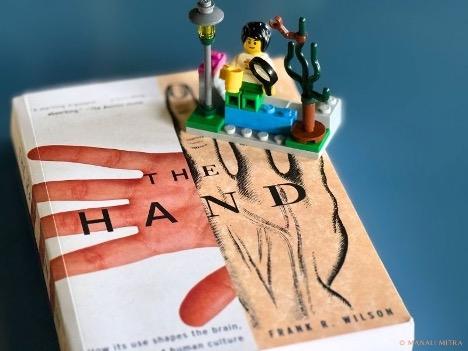
In my six years as an LSP facilitator, I’ve always believed in the hand–mind connection. Robert Rasmussen and Per Kristiansen emphasised it in their book, Building a Better Business Using the LEGO® SERIOUS PLAY® Method, and then a friend handed me Frank R. Wilson’s The Hand. The science finally caught up with the belief.
| | Two students. Same start. Different hands | | |
In the Prologue, Wilson describes two learners with identical backgrounds who start piano and juggling at the same time. After a month, one is clearly advancing faster at piano, the other at juggling. Teachers adjust methods, give equal attention, and focus on each student’s weaker area. Nothing changes. Each continues to accelerate in their original area of strength.
Wilson’s explanation goes beyond talent or practice hours. He points to something structural, neurological, and embodied. The two people’s hands are not identical tools. Each person’s hands carry different histories of movement and experience, different sensory sensitivities, and different ways of learning new tasks. These differences live in the entire connected system of hand, arm, brain, and body, not just in the brain alone.
Reading that, I realised I’ve lived this. I played piano from an early age; my hands just knew it. I even loved improvising and often ignored the written notes, which perpetually irked my teacher. But I’ve tried guitar more times than I can count. Different teachers, different approaches, different moments in my life when I was sure this time would be different. Every time, something just wouldn’t click. I used to call it a failure of discipline. Wilson gave me a different explanation: my hands weren’t failing. They just already had a story and the guitar wasn’t in it.
| | The knowledge that lives in the hands | | |
Wilson writes about microsurgeons who reattach a baby’s finger, manoeuvre fibre-optic tools through a tiny wrist incision and make judgment calls that no textbook could have prepared them for. You’d assume what makes them exceptional is their hands: steadiness and precision. But Wilson surprises you. The real differentiator, he argues, isn’t just motor skill. It’s how they think: pattern recognition, spatial awareness, the ability to read a situation and decide in the moment, all of it channeled through the hand without conscious instruction.
The philosopher Michael Polanyi had a name for this: tacit knowledge. “We can know more than we can tell,” he wrote. The surgeon’s hands know the incision before his conscious mind could ever describe it.
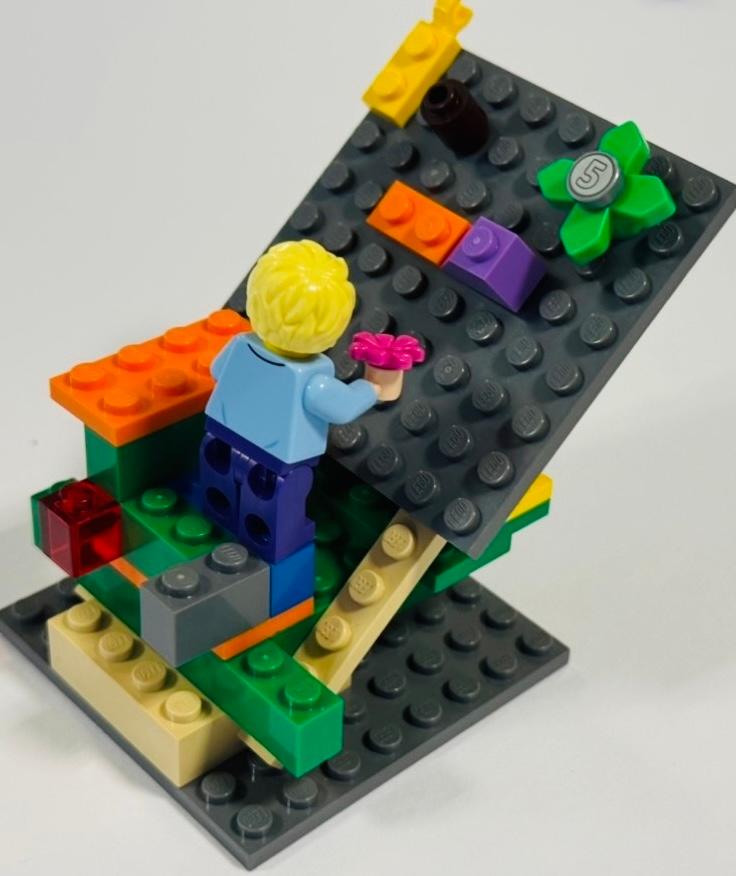
This is one of the strongest arguments for the LSP. The value of the method has never been about dexterity or building talent. Nobody is judged on how neat their model looks. The bricks are simply a medium through which deeper cognitive processes like metaphorical thinking, meaning making, and pattern recognition can emerge. The hand is the entry point, the brain where it goes. Participants often build something, look at it, and only then realize what they’d been carrying all along, something they didn’t know they knew until their hands built it!
| |
Wilson reminds us that healing traditions across cultures have long recognized the significance of touch. “We all need to be touched,” he writes. In LSP, participants don’t just discuss ideas; they engage with them physically. By handling the bricks and constructing metaphors, people give form to thoughts that are difficult to express in words alone. When we ask everyone in a room to build before they speak, we’re accessing forms of intelligence that conversation alone often misses.
And then Wilson goes further. Citing Michael Merzenich’s research, he describes experience-dependent cortical remodeling: the brain physically rewires itself in response to how the hands are used, fastest when motivation is high. And that made me think of exactly what an LSP session is designed to create.
| | |
Wilson describes Anton Bachleitner, a master woodcarver and director of the Düsseldorf Marionette Theatre, watching his puppet Golem come alive on stage. The slightest movement of the head creates a new sculpture. The shoulders rise in a shrug. A palm turns upward, signaling a decision. Bachleitner and Golem, Wilson writes, are actually communicating; their bond so intimate that the technical questions simply evaporate. It is no use asking who is really pulling the strings.
Wilson concludes:
"Thought becomes action, and action becomes thought.”
In LSP, something similar happens. The model a participant builds isn’t separate from them; it is them. What the hands build, the mind owns. And what the mind couldn’t say, the hands already have.
When I finished the book, I excitedly told the master trainer and co-author of the LSP method, Robert Rasmussen, about it. He said The Hand by Frank R. Wilson was one of the first books he had read when he got involved with LSP, and he endorsed the science.
So the hand, the mind, the heart—the pieces had always fitted together.
| | |
Frank R. Wilson, The Hand: How Its Use Shapes the Brain, Language, and Human Culture (Pantheon Books, 1998)
Robert Rasmussen & Per Kristiansen, Building a Better Business Using the LEGO® SERIOUS PLAY® Method (Wiley, 2014)
| | |
Rasmussen Consulting specializes in using LEGO SERIOUS PLAY to effectively harvest an organization's collective intelligence to build a better business. We are also the leading organization for training and certifying facilitators in the LEGO SERIOUS PLAY method. You can view our training schedule at www.rasmussenconsulting.dk.
| | | | |