To Look Closely is to Believe Deeply | | |
Look closely, the beautiful may be small
-Immanuel Kant
| | |
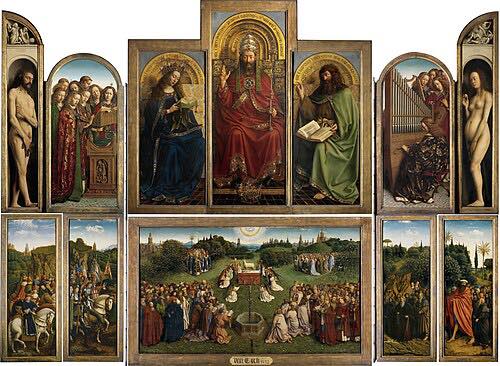
The Ghent Altarpiece has been called the most important and intellectually ambitious work of art in western civilization. This enormous artwork (15 ft by 11 ft) is made up of twelve panels painted in exquisite detail on both sides. It was created by two brothers Jan van Eyck (1390-1441) and Hubert van Eyck (1370-1426).
Housed in St. Bavos Cathedral in Ghent, Belgium and completed in 1432, this vast polyptych operates simultaneously as theology, cosmology, political statement, and optical experiment. In all of its positions, the Ghent Altarpiece is a vision of the visionary. It alludes not only to sight but to sound—musical angels accompanying the elaborate orchestration of the whole.
| |
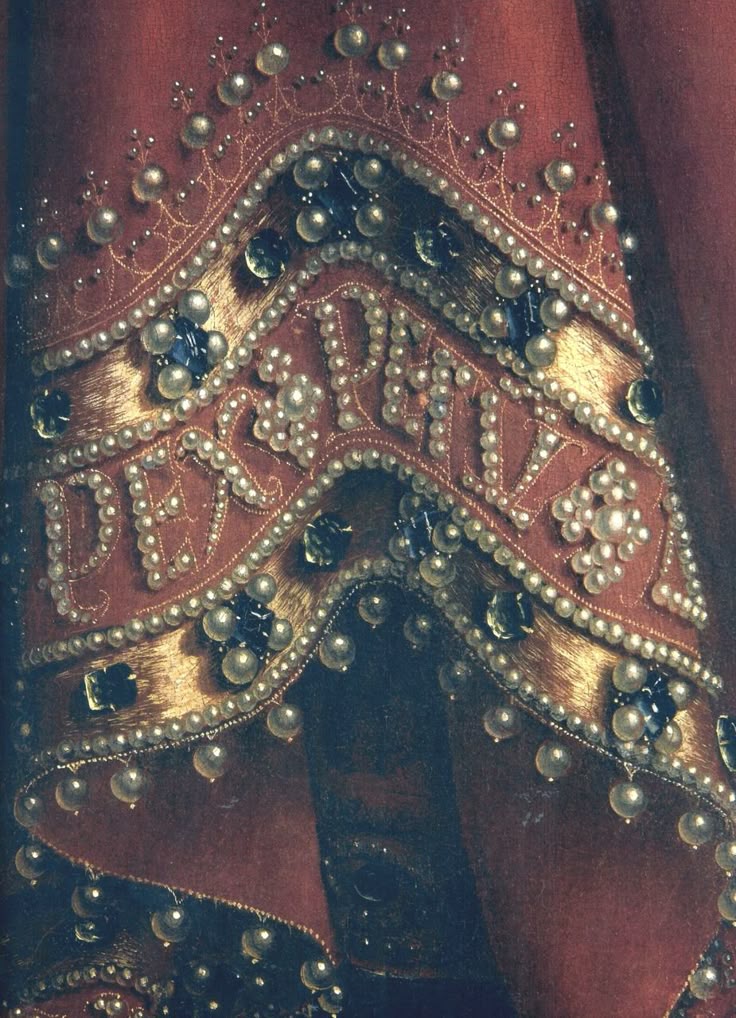
At its core, the altarpiece proposes a radical idea for its time: that the hand of the divine can be understood through visible reality rendered with absolute precision. Van Eyck’s celebrated naturalism is not just a technical flourish but a philosophical position. Every jewel, blade of grass, reflection, and wrinkle is painted with the conviction that material specificity is spiritual truth. Divine truth can be revealed in careful observation of God’s creation.
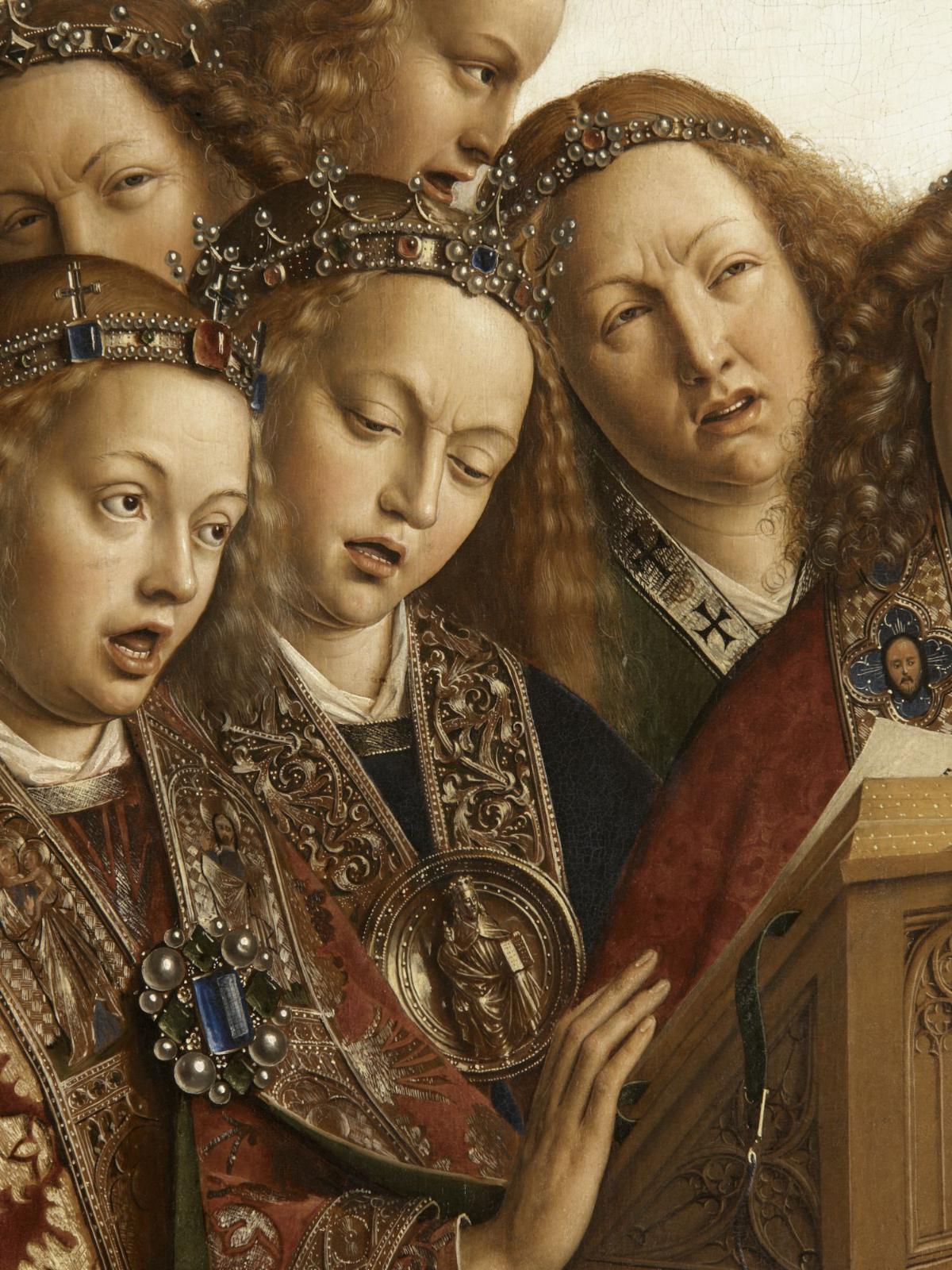
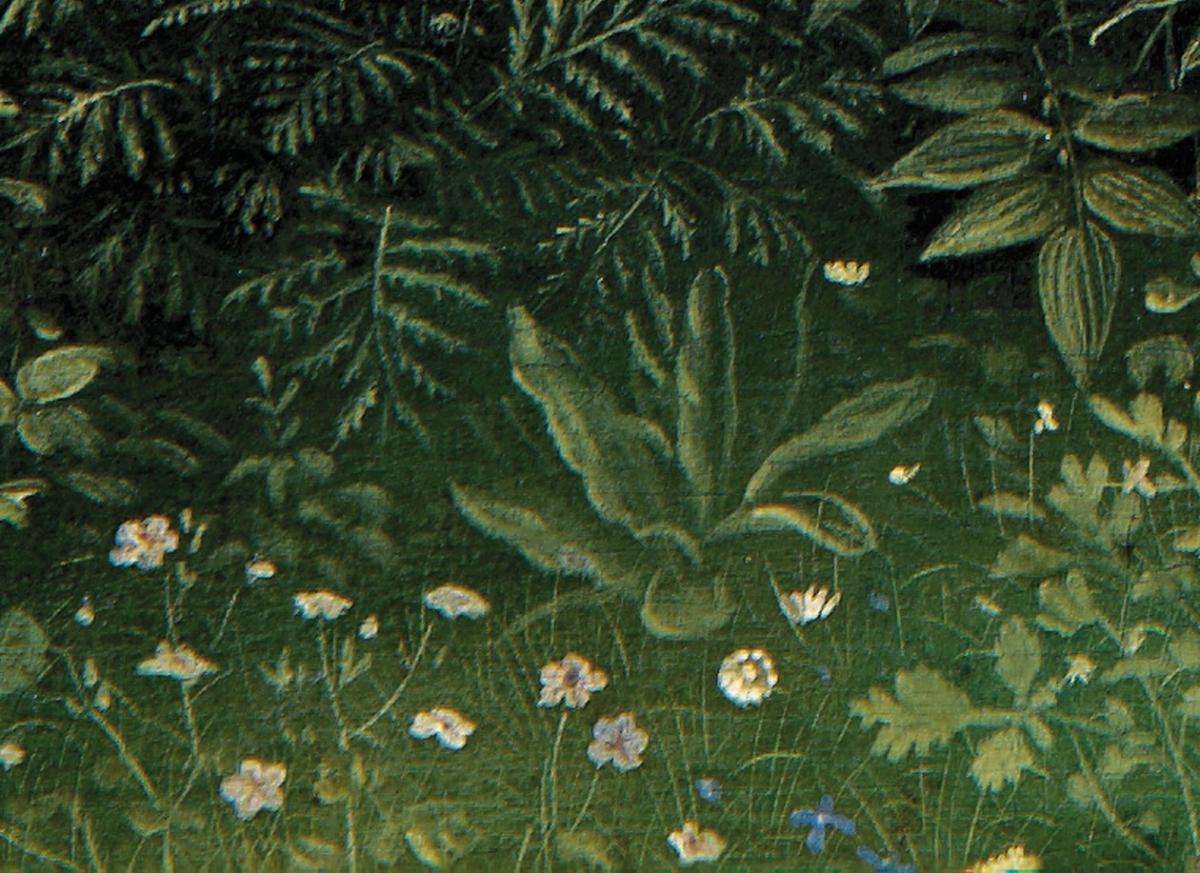
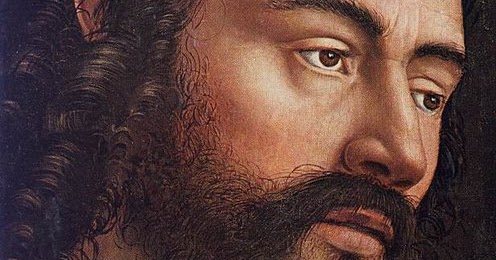
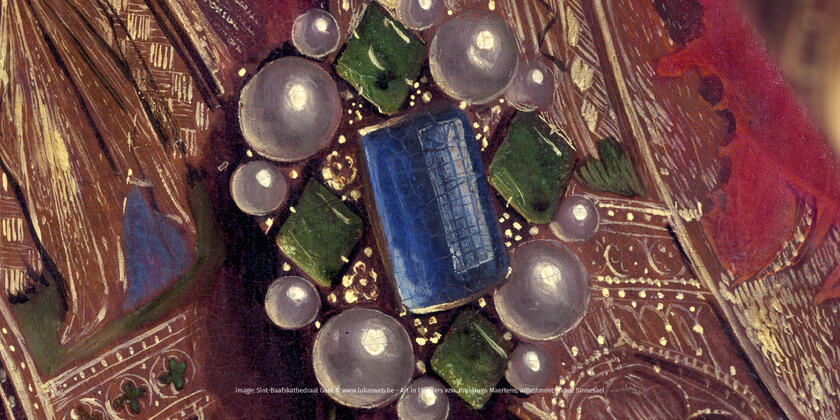
A fractal is a self-repeating pattern like a snowflake. To me, the Ghent Altarpiece, in a metaphorical sense, is a fractal: the deeper one looks and studies it, the ever more detailed, ever more expanding are the myriad wonders of this treasure. Each hair, each petal, each pearl is rendered in perfect detail. You can see the hairs on Adam’s legs, the craters on the moon, the reflection of the window on the brooch of one of the Angels.
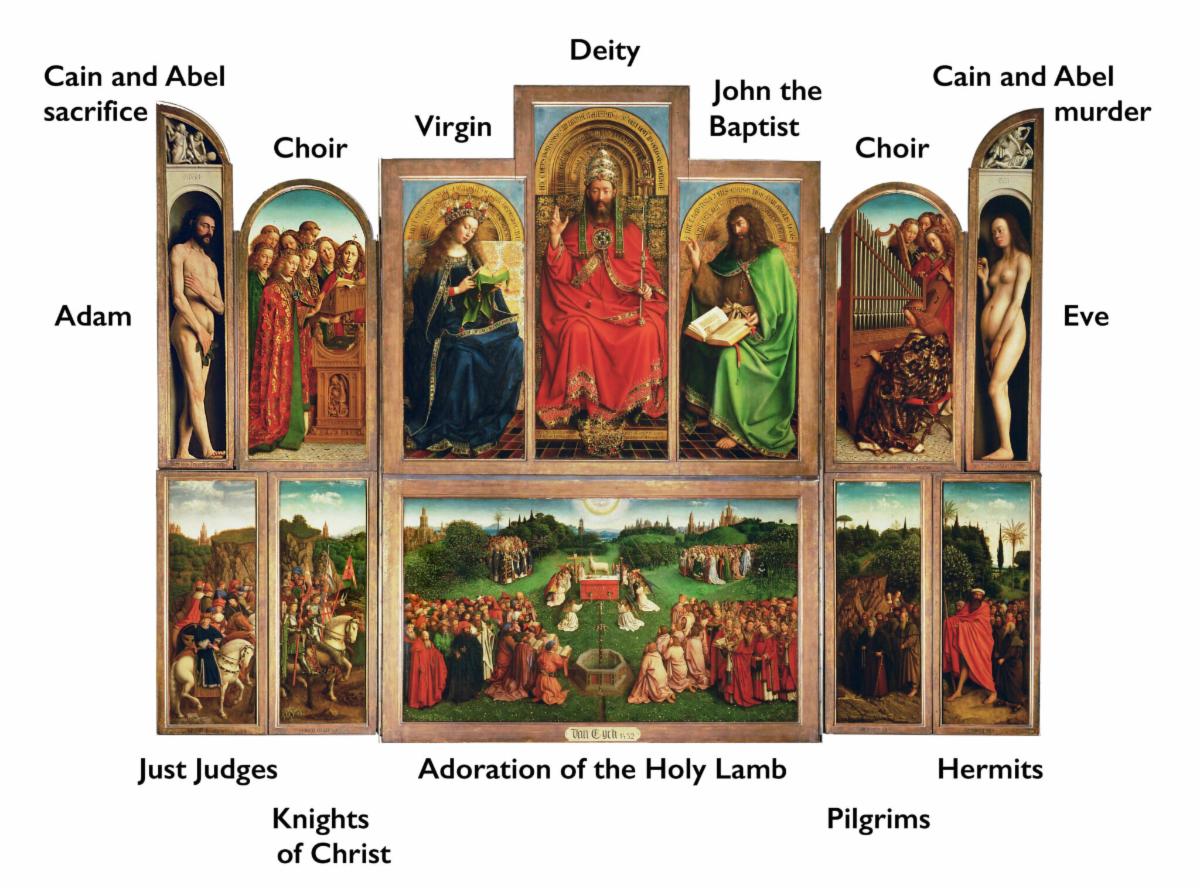
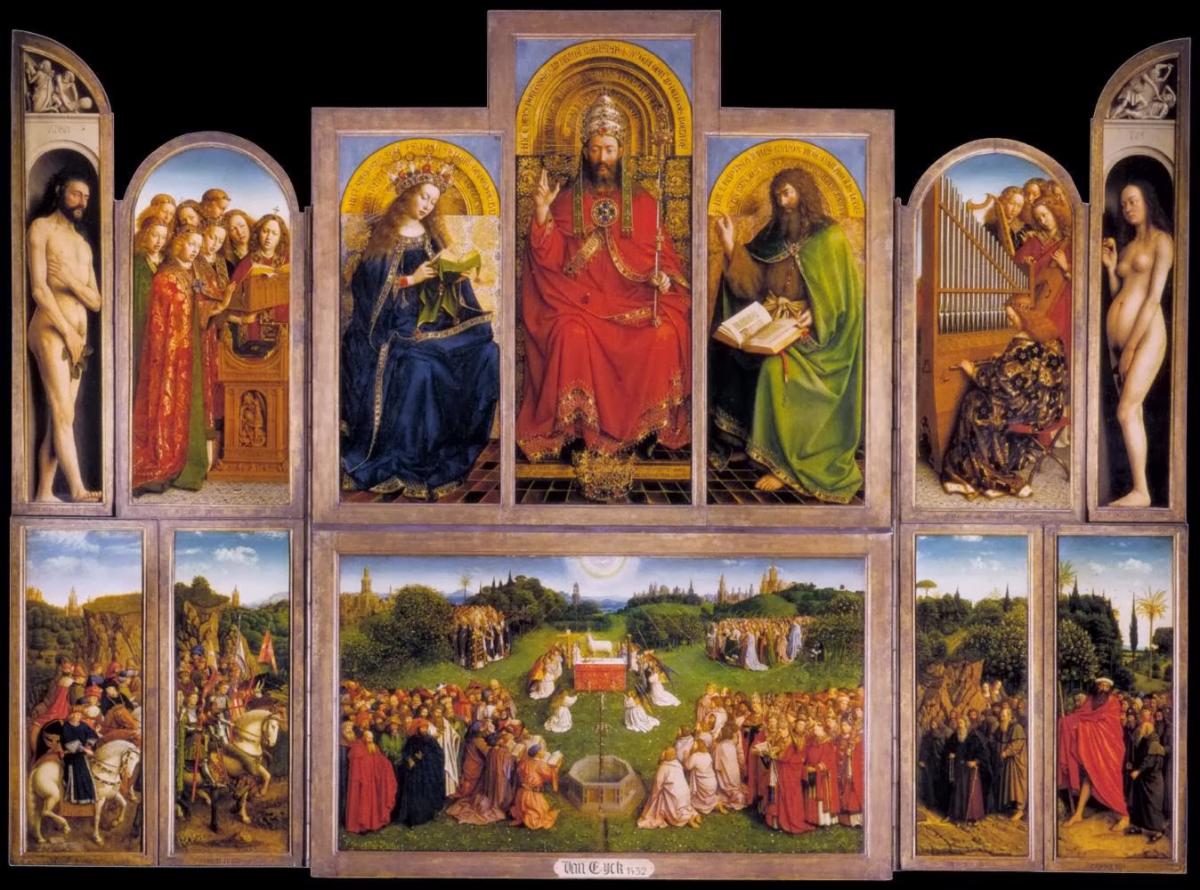
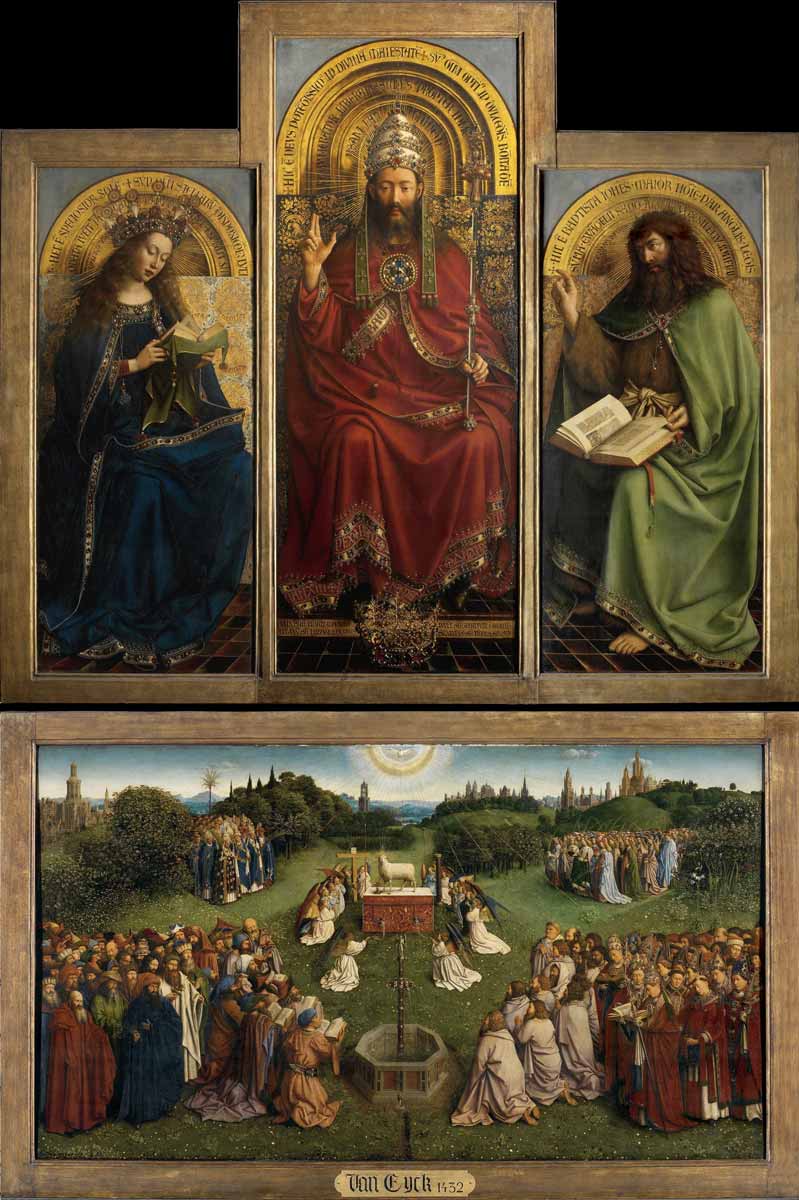
When open, the altarpiece reveals a meticulously ordered universe. At the center sits the enthroned divine figure — at once Christ, God the Father, and eternal judge — flanked by the Virgin Mary and John the Baptist, the patron saint of the cathedral. Their stillness contrasts sharply with the great lower register: The Adoration of the Mystic Lamb. Here, salvation unfolds not through drama but through collective movement. Pilgrims, prophets, martyrs, angels, and the faithful advance calmly toward the Lamb, whose blood flows directly into a chalice. Redemption is presented not as an event, but as an eternal condition.
Time collapses: Old Testament figures stand beside medieval clerics, angels sing in contemporary polyphony, and eternity feels oddly present.
What is striking is the absence of theatrical excess. Unlike later Baroque altarpieces, Van Eyck’s vision is restrained, almost administrative in its clarity. Heaven is organised, legible, governed by harmony rather than ecstasy. The landscape stretches into impossible depth, merging earthly geography with a perfected, redeemed world.
| | |
The closed panels, by contrast, emphasise humility and anticipation. The Annunciation unfolds in a quiet domestic interior, its sacredness embedded in everyday space. Even Adam and Eve — rendered with unprecedented physical honesty — are stripped of idealisation. Their bodies are vulnerable, human, unheroic. Van Eyck refuses allegory where observation will suffice.
Technically, the altarpiece marked a turning point in the art world. Oil paint became a vehicle for optical truth: light refracts, surfaces gleam, textures breathe. But the true innovation lies in how vision itself becomes theological. To look closely is to believe more deeply. Faith here is not blind; it is intensely visual, analytical, and contemplative.
| | |
Stolen
It is absolutely incredible that this painting even exists today, as parts of it were stolen multiple times in its nearly 650 year history.
In 1566, the altarpiece was reportedly stolen by Calvinists who wanted to burn it, and by Napoleon’s soldiers during the French Revolution. Reportedly, four panels were displayed in the Louvre, however, these were returned to Ghent in 1815 by King Louis XVIII.
Also, during 1815/1816 some of the panels were sold to an art dealer and found their way to the Berlin Museum. Other panels were also stolen by Germans during World War I and eventually returned under the Treaty of Versailles. During World War Two, Adolf Hitler and Hermann Göring, also tried to get their hands on the Ghent Altarpiece. The altarpiece was scheduled to be moved to the Vatican in Italy to be kept safe, when Hitler seized it, storing it in the Altaussee salt mines.
The altarpiece was eventually recovered by the group known as the Monuments Men, officially named the Monuments, Fine Arts, and Archives program (MFAA) which was formed from 1943 until around 1946. They were composed of several hundred members who worked to recover and restore stolen cultural items during the war. You might have watched the film titled The Monuments Men from 2014 about their exploits.
| | |
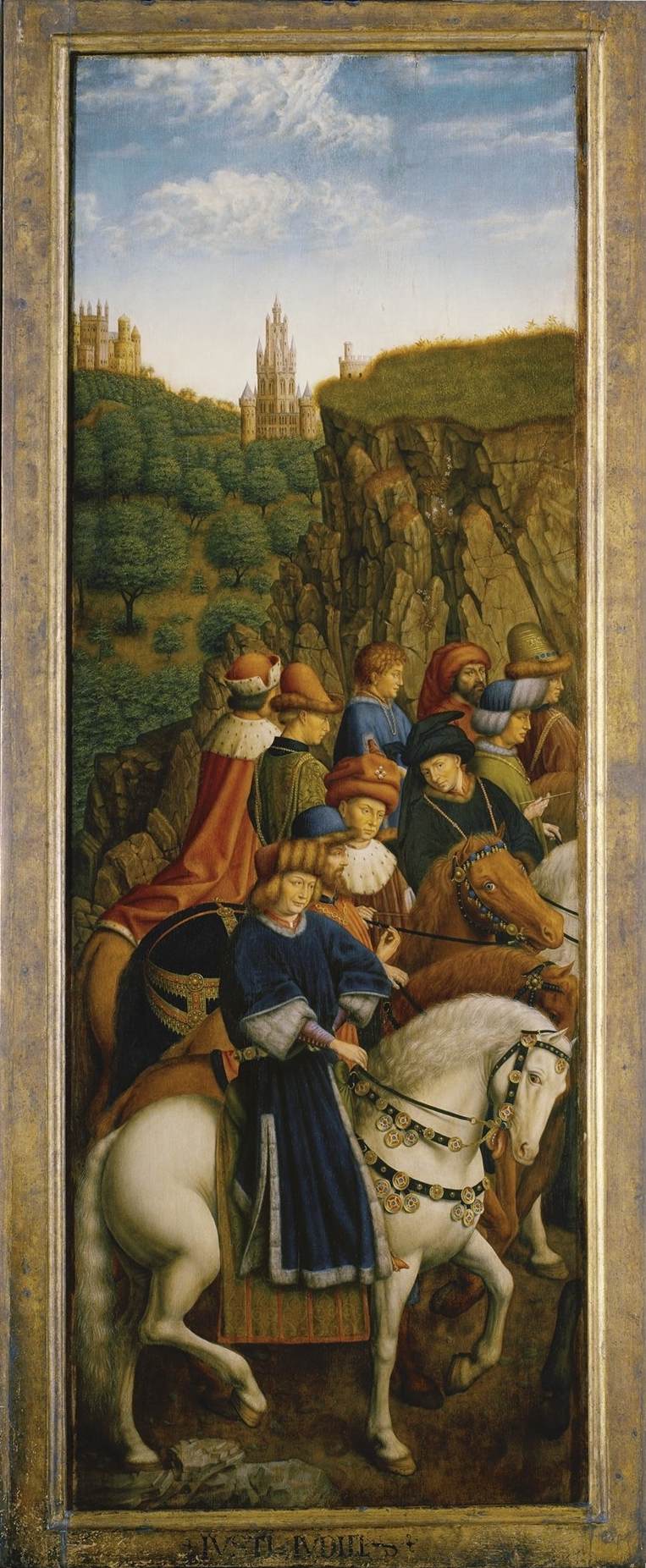
The original Just Judges panel is still missing. It was replaced by a copied version from 1943 to complete the altarpiece. Some sources also question the arrangement of the panels and whether these are correctly sequenced due to the altarpiece’s repeated dismantling over time.
The Ghent Altarpiece has survived iconoclasm, theft, war, and ideological hostility — perhaps because it resists simplification. It is as relevant today as it was when it was created. This artwork is a system: of belief, of sight, of order. Standing before it, you do not merely observe a religious image; you enter a fully articulated worldview in which the sacred is inseparable from the visible world.
| | |
History
Like most Renaissance patrons, Jodocus Vijd was a wealthy merchant who sought to expiate the sin of being too fond of money by spending some of it on creating a monument to God. An influential citizen of Ghent, Vijd commissioned the altarpiece for the Church dedicated to Saint John the Baptist (now the Cathedral of Saint Bavo) in his home city of Ghent, Belgium as a means of saving his soul while simultaneously celebrating his wealth. Vijd was warden of the Church of Saint John and assistant Burgomeister of Ghent, and he had a rich aristocratic wife, so he had plenty of money to commission the Van Eyck brothers. It is uncertain the extent to which he influenced the iconography of the overall work, but he obviously spared no expense.
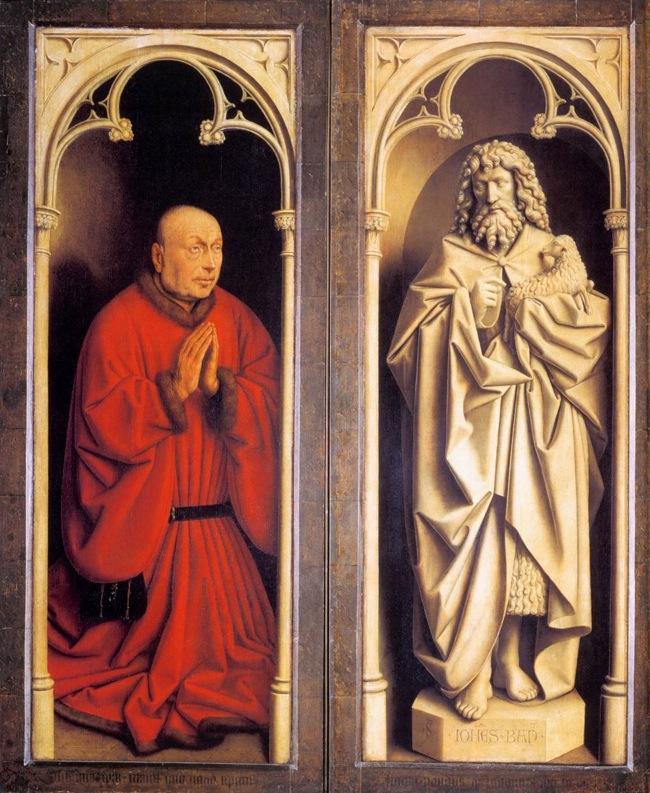
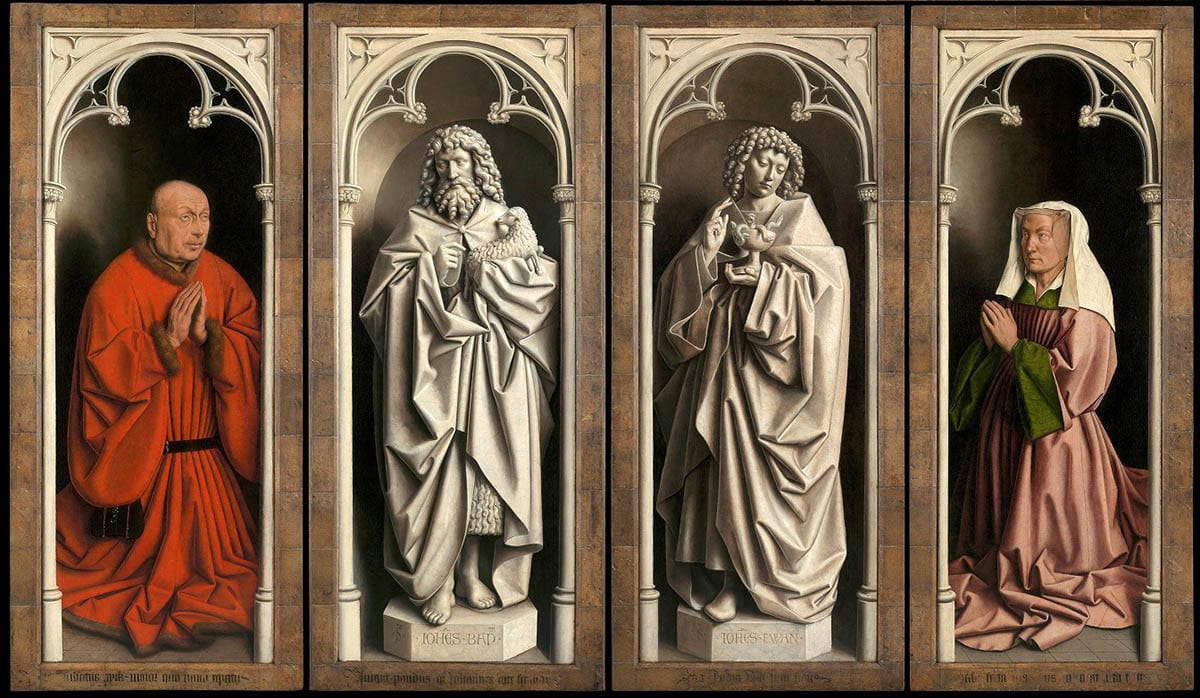
During the 13th century, as the cathedral was redeveloped and rebuilt in the Gothic architectural style, various new chapels were added to the church. A chapel paid for by Vijd and his wife is located off the choir of the cathedral. The Ghent Altarpiece was first unveiled on May 6 in 1432, the year of its completion in the Vijd Chapel where it hangs to this day. Van Eyck painted portraits of the two donors on the back panels of the polyptych, the far left is the kneeling figure of Jodocus, and the far right is the kneeling figure of his wife, Lysbette.
| | |
The subject of the Ghent Altarpiece is the Biblical story of Jesus Christ, His sacrifice, crucifixion, and how His blood has been lifegiving. It illustrates various Biblical passages, most importantly how the Lamb of God gives blood, referring to the passage in the Book of John, 1:29: “Behold the Lamb of God who takes away the sin of the world”.
Other sources also point to the Book of Revelations, 7:9, “After this, I looked, and there before me was a great multitude that no one could count, from every nation, tribe, people and language, standing before the throne and before the Lamb. They were wearing white robes and were holding palm branches in their hands”.
| | |
Exterior Panels/ Closed View
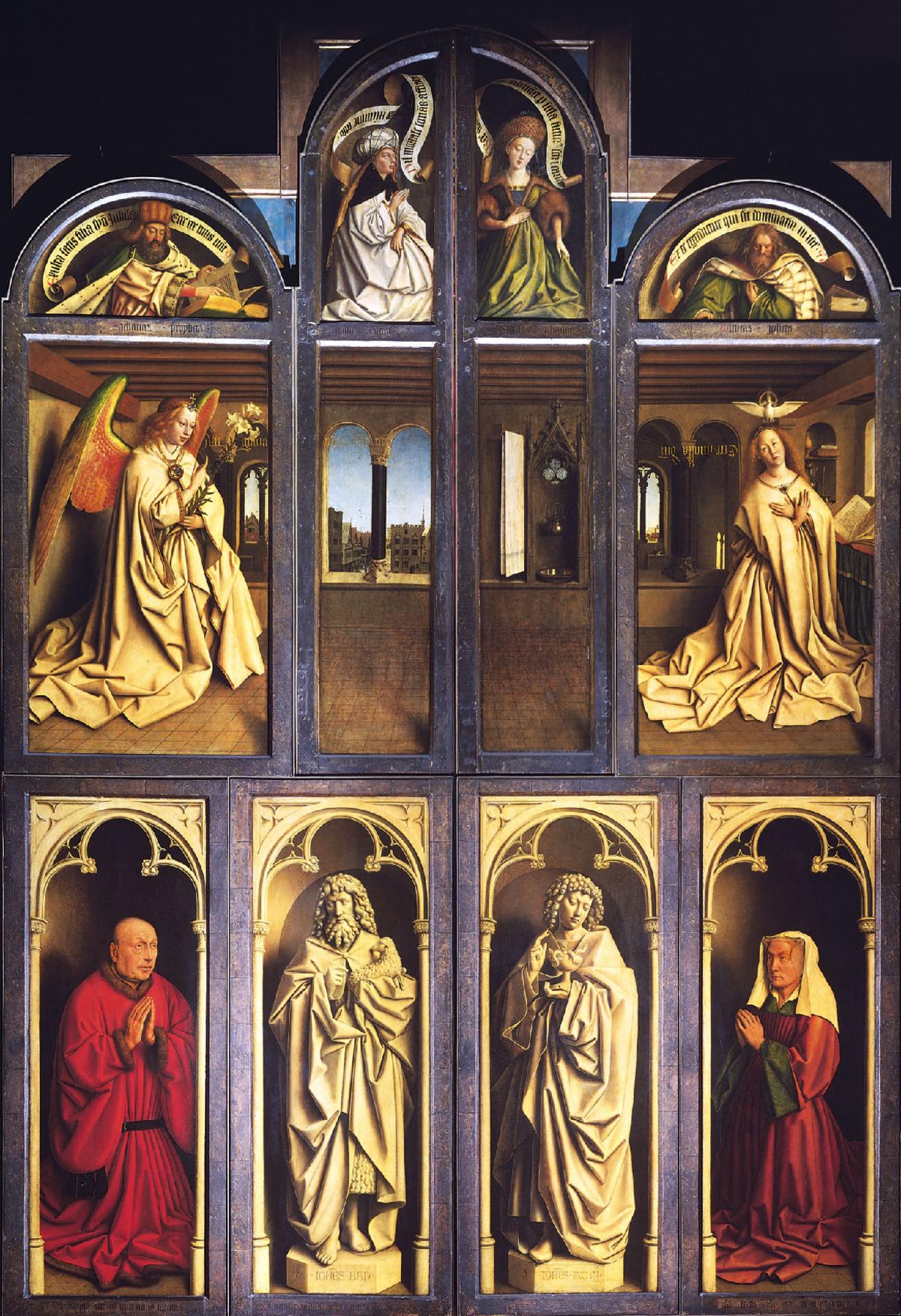
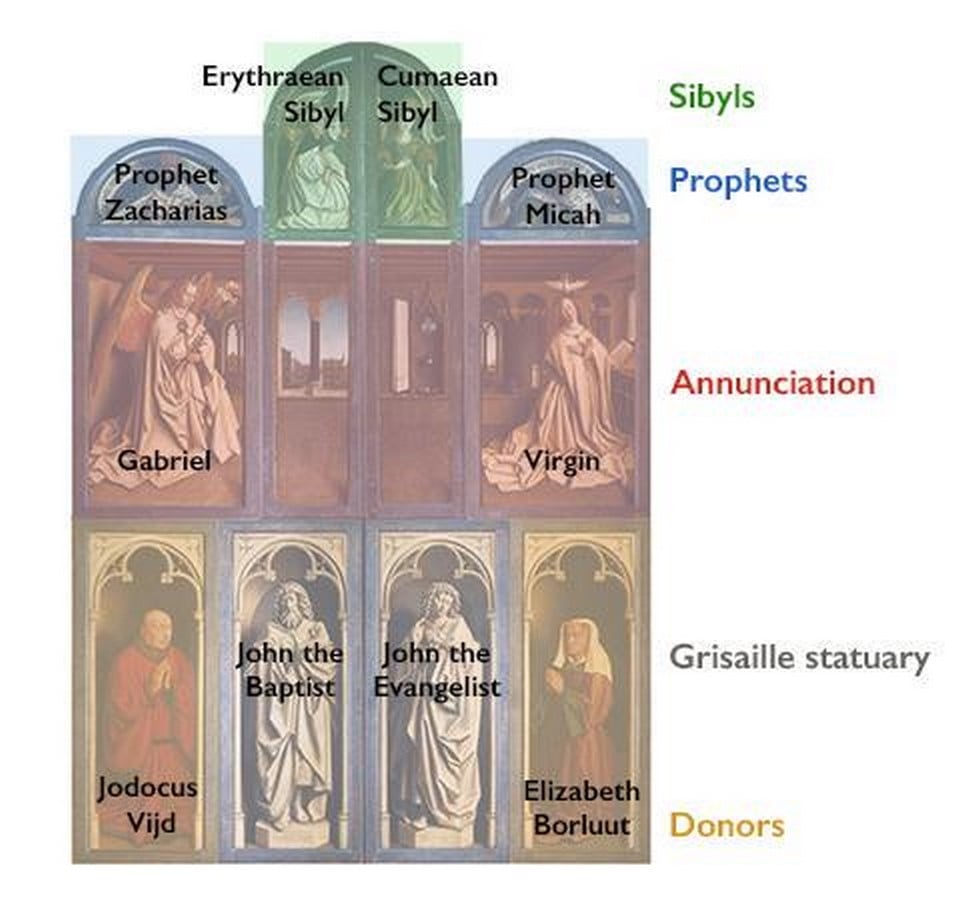
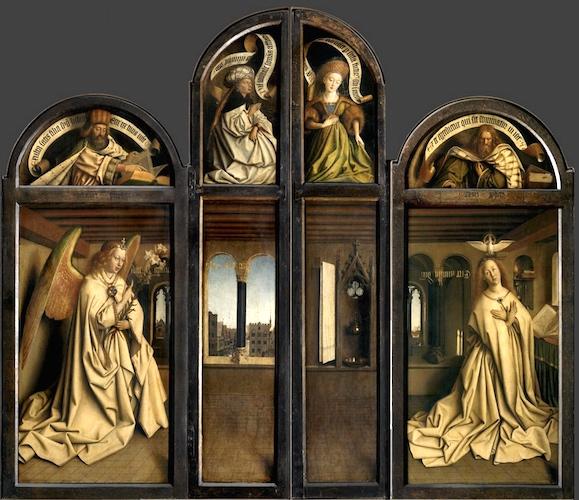
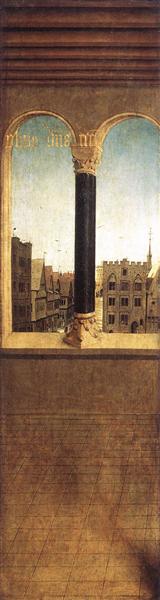
When the altarpiece is closed, visitors see a scene of quiet, earthly expectation. The panels visible in this state are painted mostly in subdued tones, almost monochromatic in parts, as if in a minor key before the major symphony inside. Across the top tier unfolds an image of the Annunciation: the Archangel Gabriel (on the left) and the Virgin Mary (on the right) occupy two separate panels, engaged in that moment when Mary learns she will bear Christ. They are not placed in some distant holy land, but in a very ordinary Flemish interior – one can even see a view of the city through a window behind Mary. Beside the Virgin, a recessed niche holds a silver tray, a small hanging silver pitcher and a linen towel neatly hanging from a rack. These items are consistent with iconography of the period that uses domestic objects as a means of expressing the purity of the Virgin. The artists have lettered Gabriel’s words (in Latin) emanating toward Mary, and Mary’s humble reply, literally painting the dialogue into the air.
Above them, in the uppermost small panels, are prophets and sibyls – those ancient figures who foretold the coming of Christ. It’s as if the top of the closed altarpiece whispers of promises and prophecies, preparing us for what is to come.
For many years the Altarpiece was kept closed inside the chapel and only opened on Feast Days and Holy Days.
| | |
Below, on the closed wings’ lower panels, you find four nearly life-sized figures that bring together the sacred and the everyday. On the outer flanks are the altarpiece’s donors kneeling in prayer; Jodocus Vijd and his wife Lysbette, wealthy citizens of Ghent, depicted with remarkable portrait-like accuracy. They wear modest, dark clothing and are shown at a scale similar to the saints, firmly grounding the scene in the real world of 15th-century worshippers. Inward from them, on the two central lower panels, are two painted “statues”: St. John the Baptist and St. John the Evangelist, rendered in shades of grey (a technique called grisaille) to look like sculpted stone. The illusion is so skillful that you might almost believe two carved figures are standing in niches above the donors. These grisaille saints, stoic and still, reinforce the mood of restraint – the altarpiece in its closed position offers devotion in anticipation, not yet the full glory. The overall impression of the exterior is one of piety and patience.
| | |
Interior Panels - Adam and Eve
Opening the Ghent Altarpiece is like bursting through the gates of paradise. Once the shutters are swung back, a spectacle of colour and detail meets the eye.
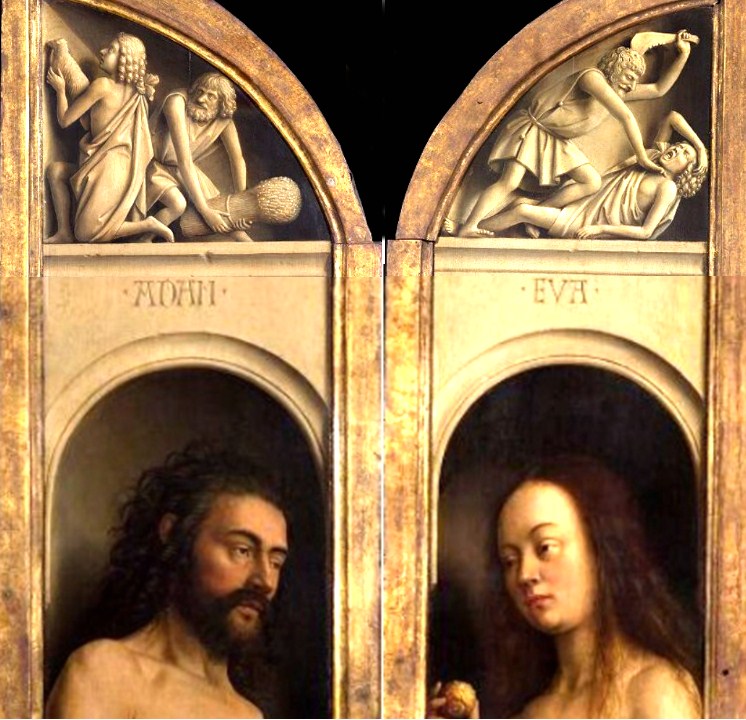
There are seven painted panels along with the upper register of the Ghent Altarpiece. The two outer panels show near life-sized nudes of Adam and Eve standing in niches. They are one of the earliest and most direct treatments of the nude in Western art. Starting from the far top left is the figure of Adam looking inwards towards the other panels, although his head is slightly downcast, his right hand covers his genitalia with several leaves. Above the figure of Adam is a small lunette depicting the two brothers, Cain, and Abel, making their sacrifices to God. Cain and Abel were also Adam and Eve’s “first two sons”.
Directly opposite the figure of Adam, to the far right, is the figure of Eve, also with her head slightly downcast. She is holding a small fruit in her right hand, which is raised while her left-hand rests over her genitalia. Above Eve is another lunette depicting the murder of Abel by Cain. Both Adam and Eve appear despondent, and according to some sources, Van Eyck painted them to portray the sorrow of their sin or the state of the world around them. God’s first human creatures are the parenthetical figures of this upper register and the figures that necessitate the salvation scene below. Their literal marginalization—at the edges of the altarpiece—is indicative of their state of sin.
| | |
Interior Panels - Divine Music
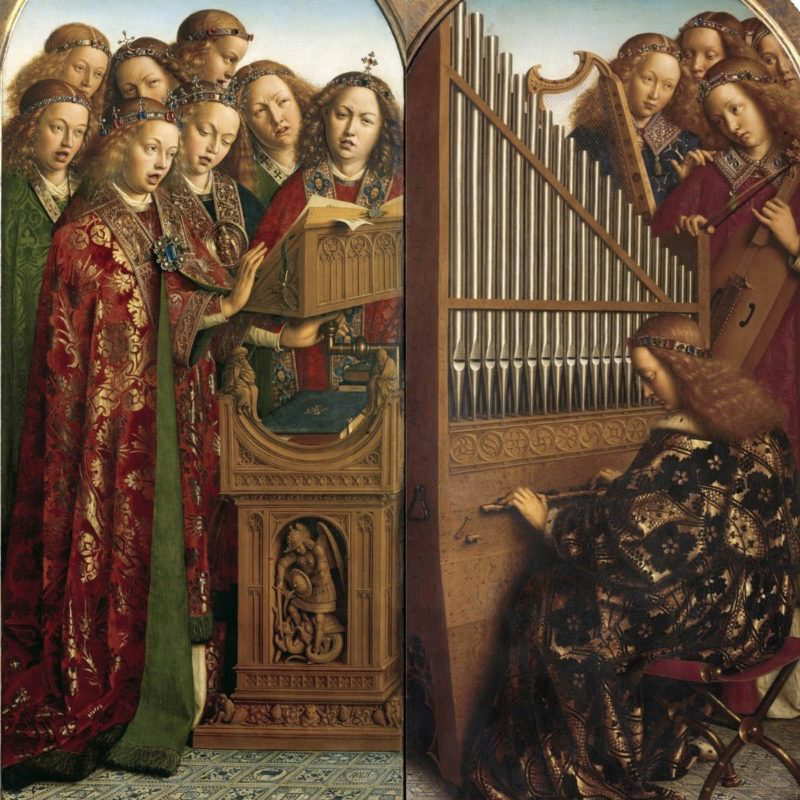
The panels next to Adam and Eve both depict a musical theme, each one with a choir of angels. To the left, which is the panel to the right of Adam, is a group of eight angels standing behind a wooden lectern with a metal adjustment in the center, notice the angel closest to it holding this adjustment with his left hand.
The angels all appear to be singing in polyphony, although each one has a unique facial expression that denotes confusion, concentration, or disinterest, angelic attributes we would not expect from history paintings. Furthermore, scholarly sources have also described them as “unidealized” because of their humanized facial expressions and because they do not have wings.
The panel to the far right, which is the panel to the left of Eve, also depicts these “unidealized” angels, only here there appears to be six, moving further into the distance, and quite cramped into the pictorial space that we can only see part of the head of the angel to the back. The angel in the front is in full view, seated and playing the organ, with two standing angels each holding stringed instruments
| | |
Interior Panels - The Deësis
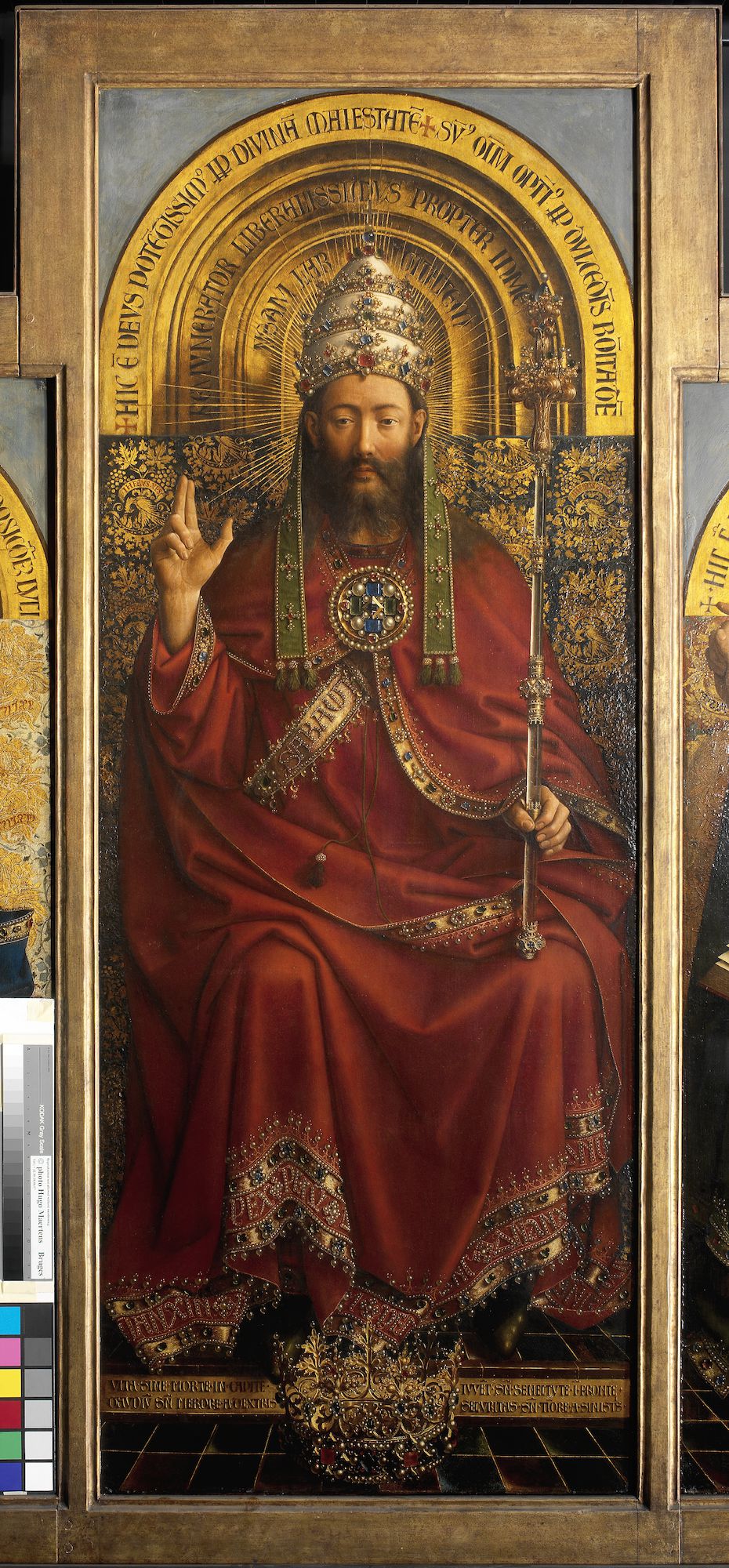
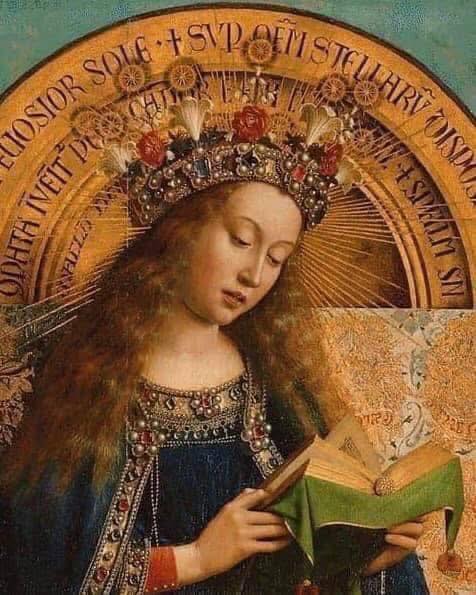
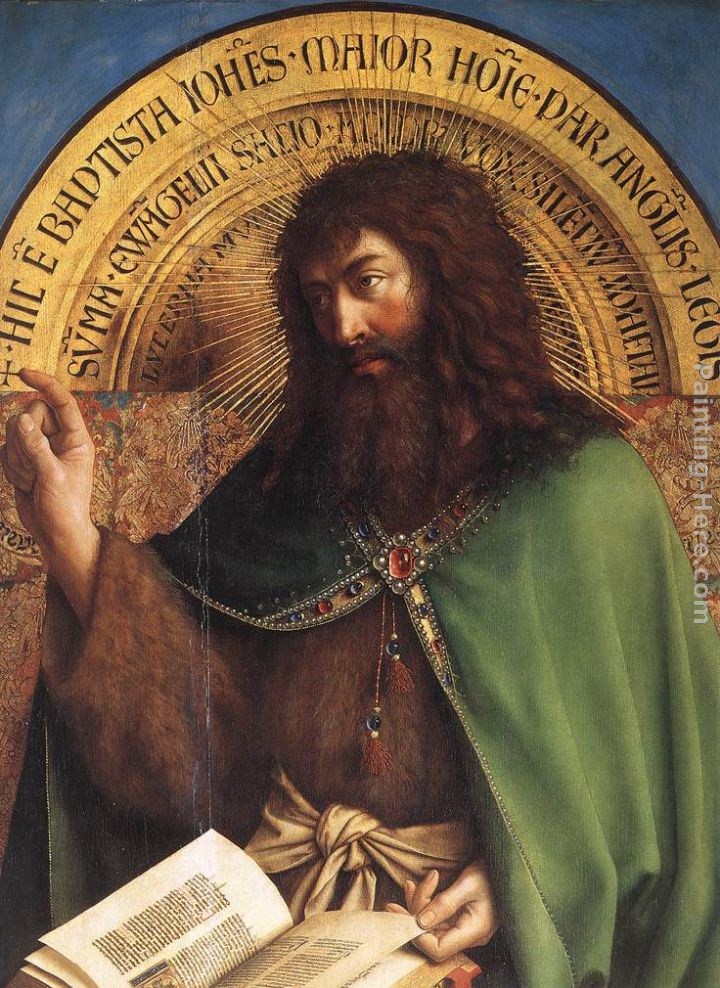
There are three central panels depicting three figures, this arrangement is also referred to as the Deësis; on the left is the Virgin Mary, her head is downward with a book in her hands, the central figure is either Jesus Christ or God, who is staring directly at us, the viewers, his right hand is raised in the gesture of a blessing, and to the right is John the Baptist, his right index finger is lifted and he is gazing in the direction of the Christ figure in the center, there is also a book on his lap.
| | |
All three figures are lavishly draped and bejeweled, surrounded by gilded backgrounds with various inscriptions. At Jesus Christ’s feet is a crown on what appears to be a lower step, of which we see some inscriptions too.
The symbolism of the Trinity (in Christian theology, God, the Holy Spirit and Christ are manifestations of one being) a doctrine that was frequently challenged in the western Church. Again, the Gospel of John is often cited as most strongly defending and defining the divine nature of Jesus, and supporting the Trinitarian belief that the Holy Spirit shares the same being as Jesus and God. In the 13th century, a philosopher named Henry of Ghent, from Ghent of course, waded into the Trinitarian question through his work on the metaphysics of Being, and his work on the Metaphysics of the Trinity. It was not unusual for works of 15th century art to engage with contemporary theological and philosophical debate.
| | |
The Adoration of the Mystic Lamb
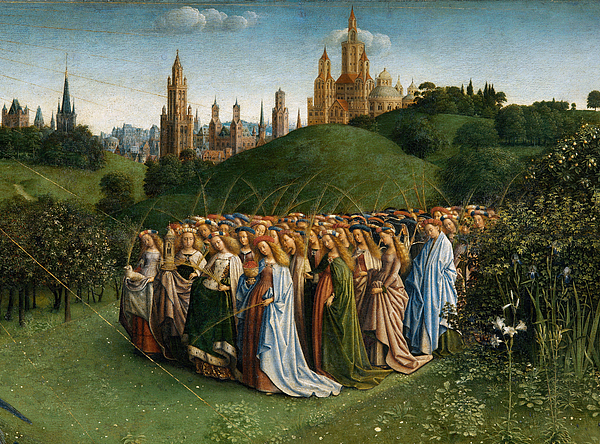
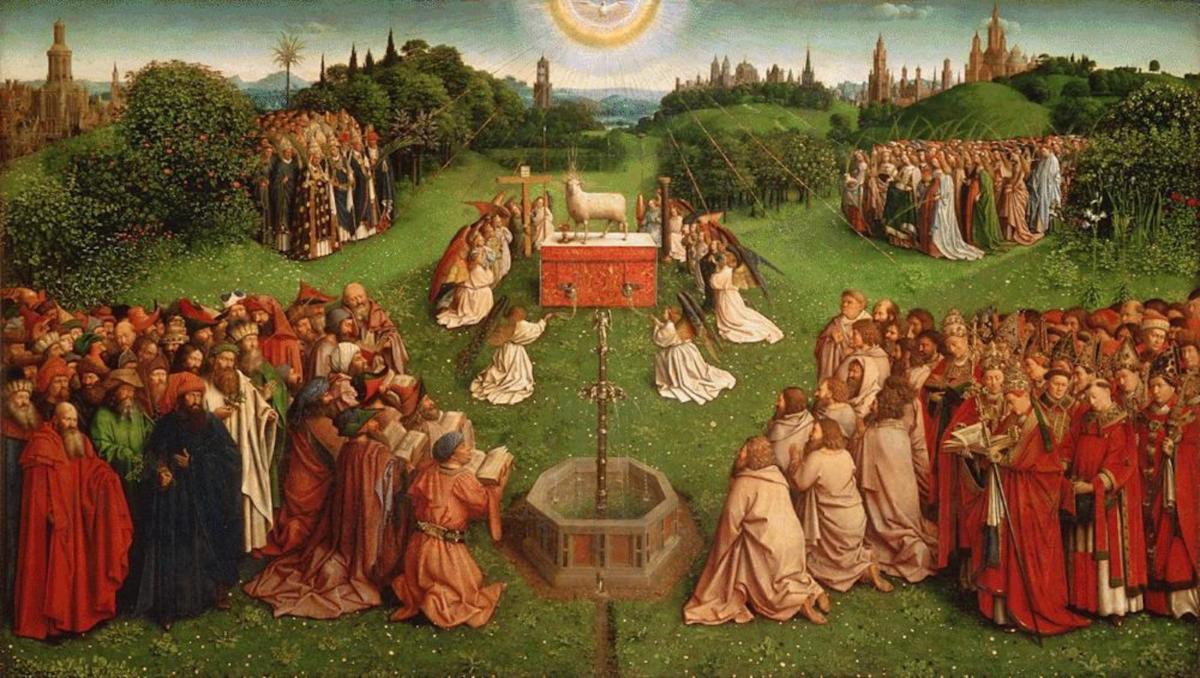
The lower register consists of five panels, which appear almost as one image, depicting a vast green landscape with several groups of people in each. The central panel, however, is one large painting with two smaller paintings next to it on either side.
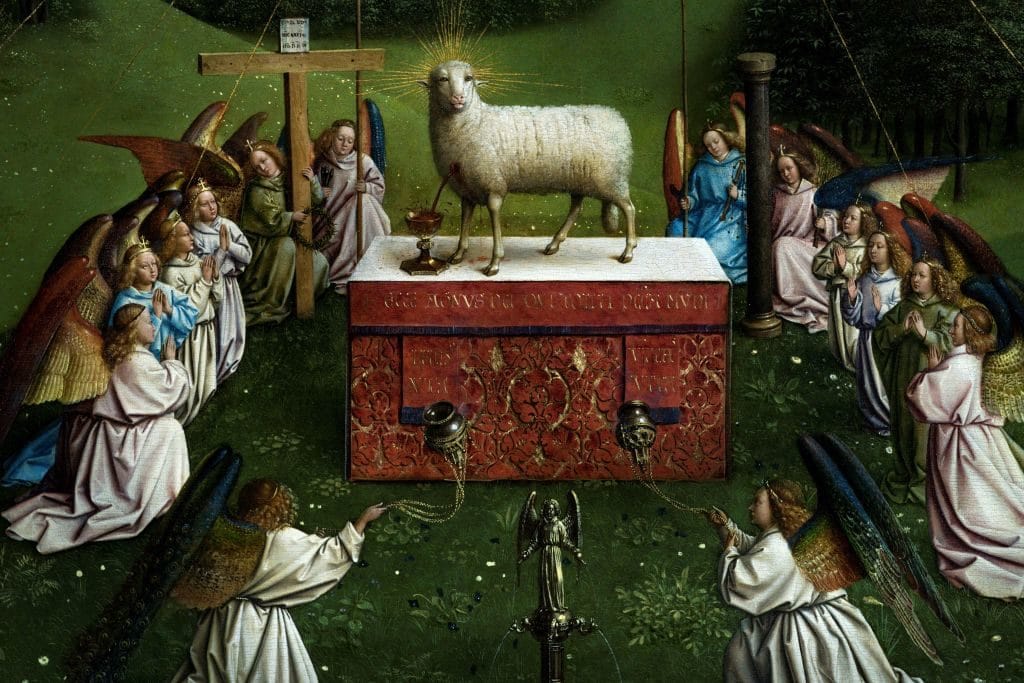
The narrative in the central panel depicts the sacrificial Lamb of God on an altar, with fourteen angels around it. From the outer edges of the lower panels, crowds converge towards the altar in the center, presenting a unified field across the five panels.
From the left come figures known as the Just Judges and the Soldiers of Christ, on horseback, arrayed in glittering armor and armed with swords of Justice, followed by the Judges wearing opulent and various finery.
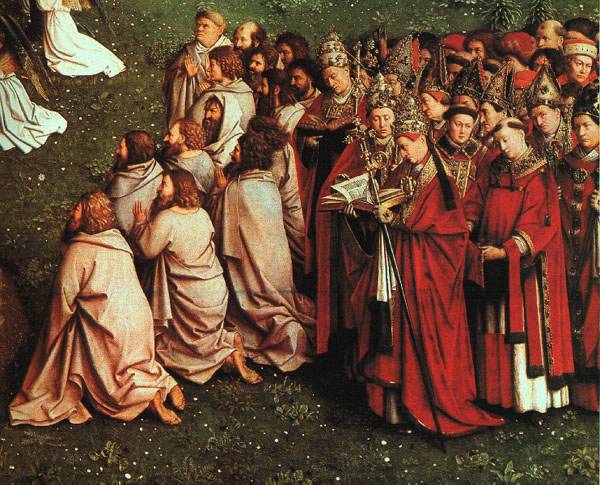
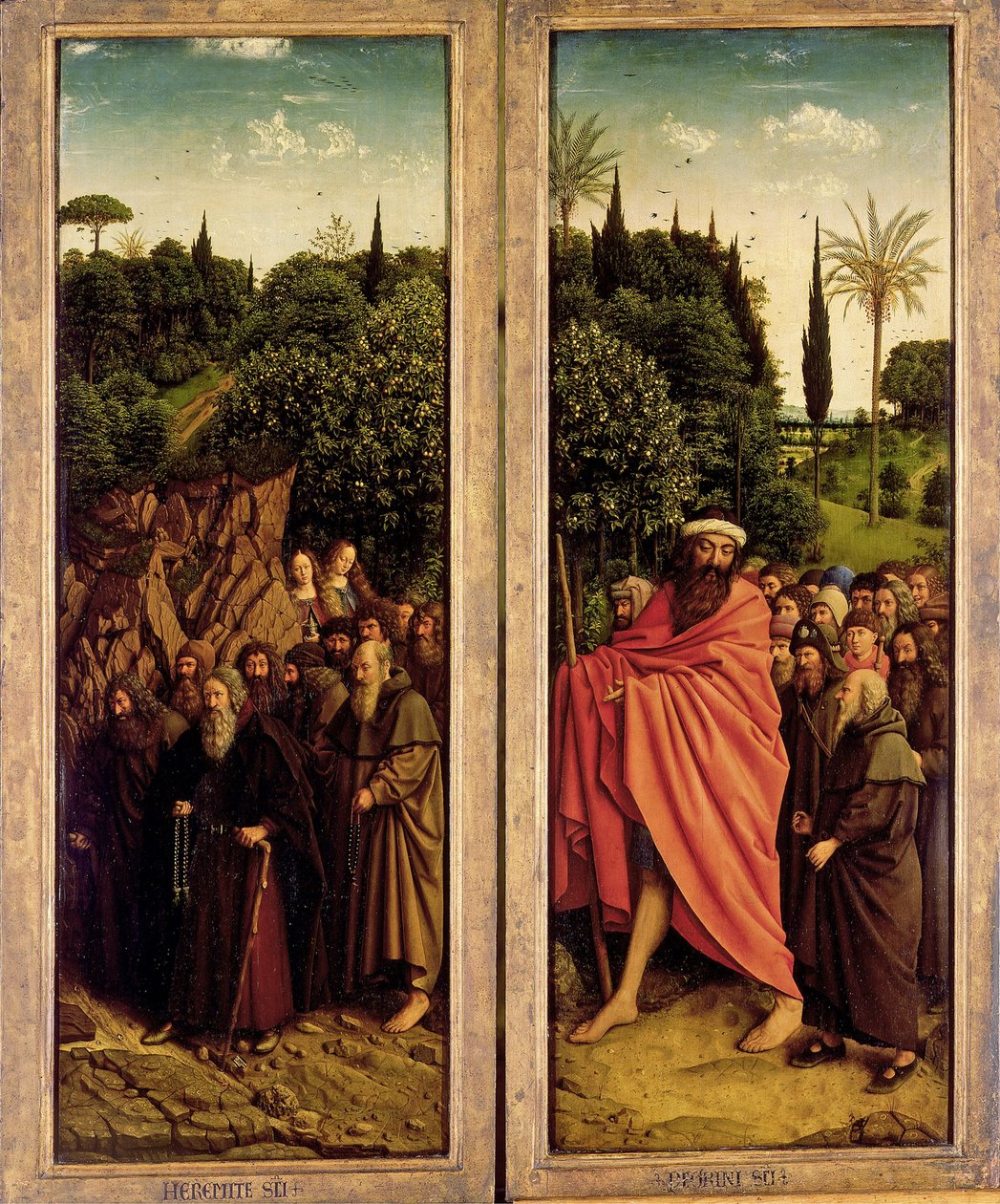
From the right come the saints and the prophets, chief among them the giant (and apocryphal) St. Christopher, the male saints suitably dressed in simple tunics and robes in sober earth tones. These crowds approach the central panel.
The lamb on the altar is standing on all fours facing us, the viewers, while there is a strong stream of blood pouring into a chalice from an open wound on the lamb’s chest. The lamb represents Jesus Christ as the Savior - a symbolic representation of Christ (from Gospel of John: “The next day John saw Jesus coming toward him, and said, ‘Behold! The Lamb of God who takes away the sin of the world!'”—John 1:29).
| | |
The Adoration of the Mystic Lamb
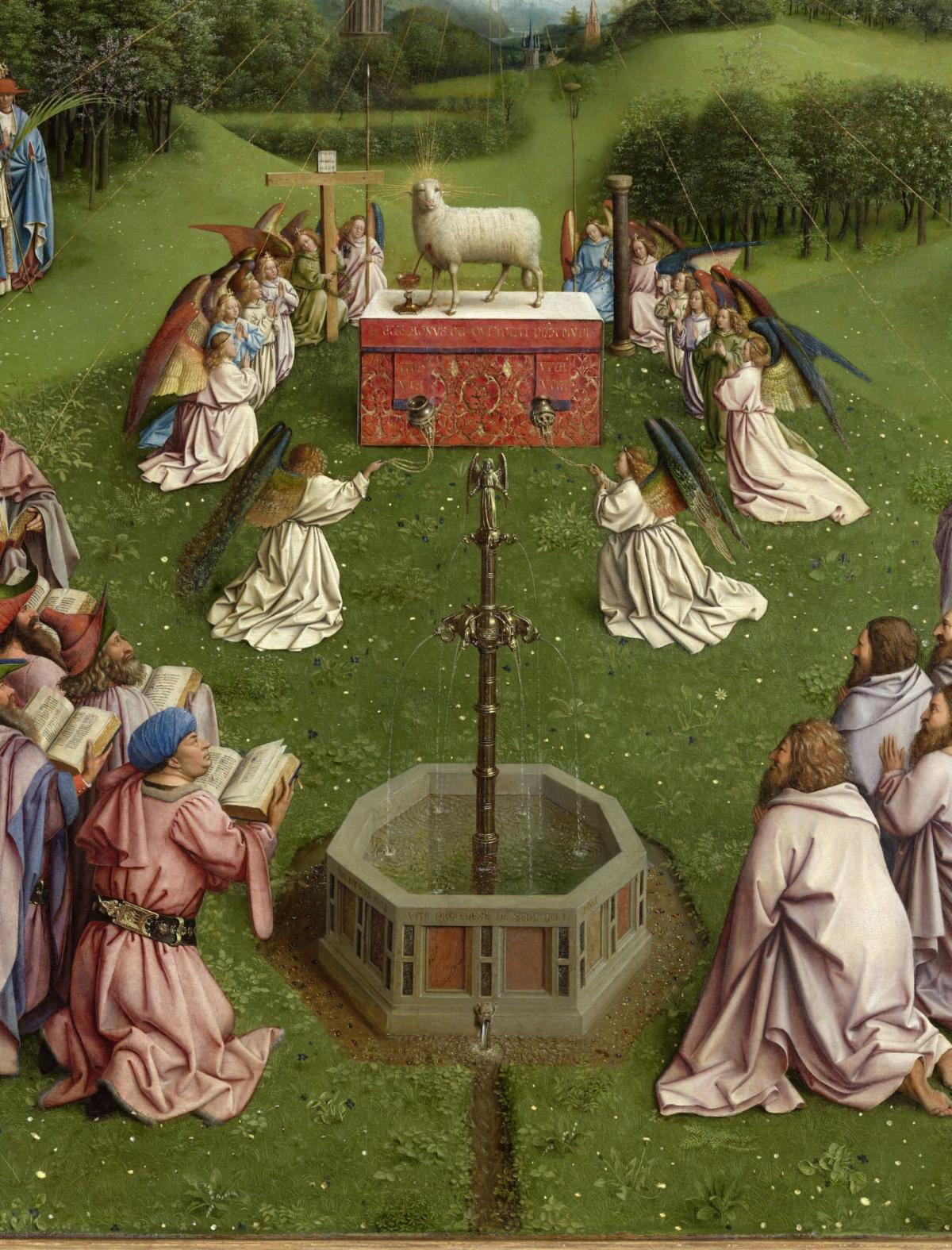
The Mystic Lamb is the Lamb of God—the sacrificial lamb—a symbol of Christ and Christ’s death. The lamb on the altar is equivalent to the crucifixion of Christ, made explicit by the juxtaposition of the lamb with the cross held by the angel. Other angels behind the altar hold the instruments of the Passion (the events surrounding Christ’s death): the column to which Christ was tied during the flagellation, the sponge on a stick used to touch his lips with vinegar (increasing his thirst), the nails and the lance that pierced his flesh. Angels in front of the altar swing censors containing incense. This is also a reference to the sacrament of the Eucharist, where the bread and wine, offered by the priest during Mass, become the body and blood of Christ.
The Lamb bleeds from a wound in his side, and this stream of blood flows directly into a chalice set on the altar cloth (the full inscription on the altar cloth reads, “Ecce Agnus Dei, qui tollis peccata mundi, miserere nobis,” which translates, “Here is the Lamb of God, who takes away the sins of the world”). The flowing of the blood, visually linked to the spouts of water in the foreground fountain, is probably an allusion to Christ as the “living water” of God.
| | |
The Fountain of Life
The fountain is therefore the Fountain of Life—a reference to the promise of eternal life made possible by Christ’s sacrifice. This reference to Christ as the “living water” occurs in the Gospel of John. In that story, Christ meets the Woman of Samaria at the well. When the woman questions Christ’s presence there, Jesus answers “but whoever drinks the water I give them will never thirst. Indeed, the water I give them will become in them a spring of water welling up to eternal life.” (John 4:14).
Inscribed on the fountain, in Latin, we see a verse from the Book of Revelation, “Then the angel showed me the river of the water of life, clear as crystal, proceeding from the throne of God and of the Lamb.” (Revelation, 22:1). In the symbolic context of the Lamb, the fountain is therefore the wellspring of eternal life and salvation.
| | |
Clustered around the fountain are yet more distinct processional groups worshiping the Lamb. These are commonly identified as patriarchs and prophets from the Old Testament and male and female saints and church figures. If you’re wondering what the Old Testament figures are doing in paradise, in the Byzantine tradition, Christ’s death is followed by his Harrowing of Hell (which takes place during the three days before his resurrection). In this episode (while “dead” to the world), Christ breaks open the doors of Hell. He frees and saves pagan writers (like Homer), prophets of the Old Testament (like Moses), and Adam and Eve—all of whose deaths preceded Christ’s birth and who could not otherwise have experienced eternal salvation through his resurrection.
Together, these scenes, which relate to the Gospel of John and the Book of Revelation, invite the viewer to share in the promise of salvation.
| | |
The Artist
Jan van Eyck utilized oil paints in innovative ways, becoming known for his skillful application of glazes to enhance colors on the painting, which also gave the painting its light and luster and the characteristic realism, unlike many Northern Renaissance paintings before him.
Notice the crown and jewelry in the upper register by the central figure of Christ, the various crowns atop the Angels’ heads, as well as the slight shine on the tiles below Christ’s feet.
Observe how light and shadow in the closed view is “soft” in appearance, with the light source from the windows and possibly another unknown light source beyond our view.
| | |
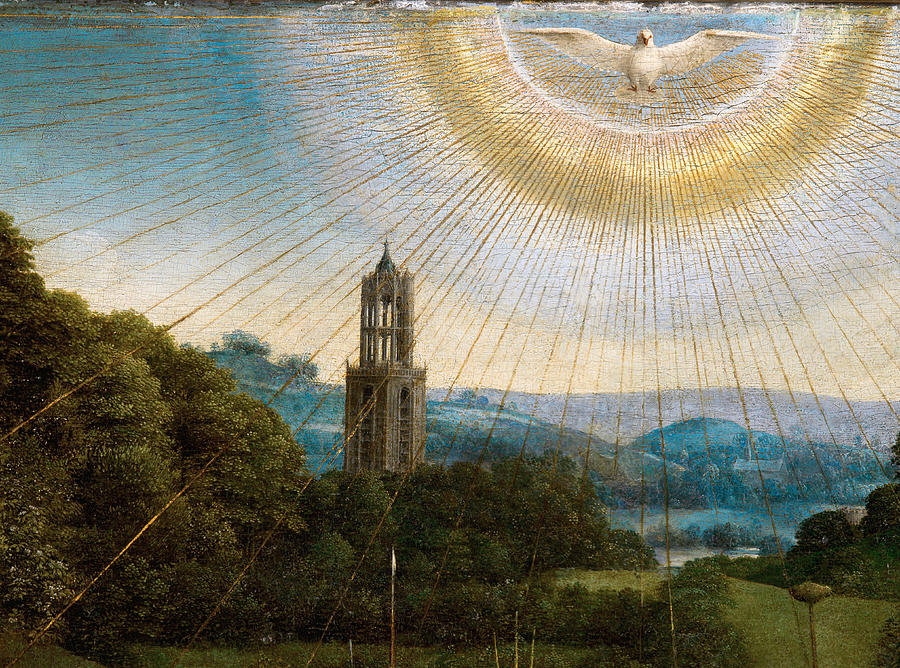
In contrast, in the open view which depicts the Lamb of God, the central light source emanates from the Sun above with visible rays depicted as thin golden beams. There are also various shadows at play here, for example, the shadowing that falls faintly on the water’s surface as it ripples from the fountain.
| | |
Notice that there are no shadows depicted where the Angels are kneeling near the Lamb. Scholarly debates about the meaning of this have pointed to the Biblical passage from the Book of Revelations, 21:23, “And the city has no need of sun or moon to shine on it, because the glory of God illuminates the city, and the Lamb is its lamp”.
Jan van Eyck masterfully utilized space in the Ghent Altarpiece, for example, if we look at the closed view and the figure of Adam to the left, his right foot protrudes seemingly out of the painting’s frame giving it a three-dimensionality, as if the painting of Adam is indeed a real sculpture.
| | |
Furthermore, it is van Eyck’s detailing in the entire composition, which gives it its three-dimensionality. There are also several types of perspectives van Eyck depicts here.
On the upper register, we see mostly frontal and level views of the figures whereas on the lower register van Eyck depicts the landscape from an aerial view as if we are slightly looking from a heightened vantage point over the Lamb and the landscape.
Each panel has its own measurements, but overall, the altarpiece is almost life-sized and gives a spectacular visual composition, not only for modern-day visitors but for its time as well.
| | |
Restoration
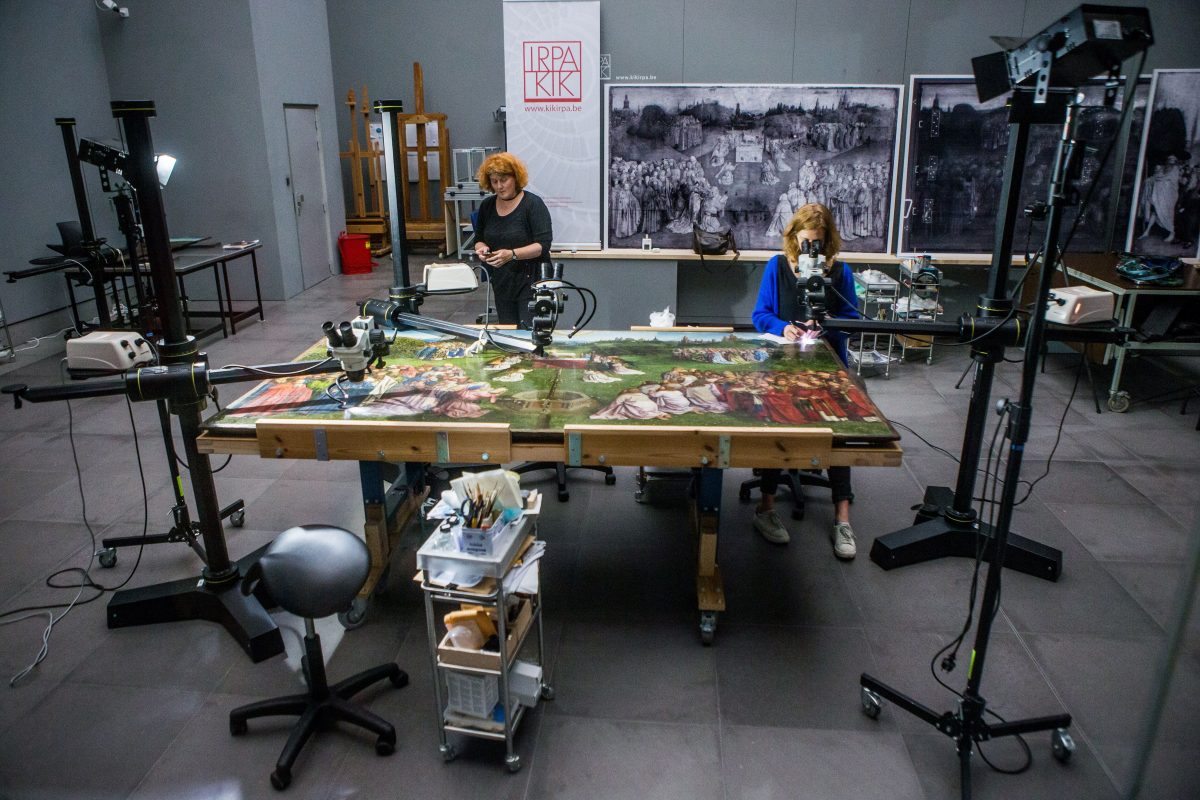
A large restoration project started in October 2012 and was completed in 2020 by the Museum of Fine Arts in Ghent under the Royal Institute for Cultural Heritage. The Getty Foundation in Los Angeles funded a campaign to conserve the Ghent Altarpiece, an effort led by Belgium’s Royal Institute for Cultural Heritage through a painstaking photographic enlargement that captured the altarpiece in 100 million pixels on the “Closer to Van Eyck” website.
You can view the Ghent Altarpiece in extremely high-definition images and zoom in close enough to see individual brushstrokes at the website for the conservation: https://closertovaneyck.kikirpa.be/ghentaltarpiece/
| | |
Reportedly, almost 70% of the altarpiece had been painted over and varnished by later artists, over the years. There were also layers of dirt, all of which undoubtedly hid many of the original features. Uncovering the original colors and details was possible due to significant advances in the imaging technology used by art historians and restorationists since the last restoration attempt in the 1950s.
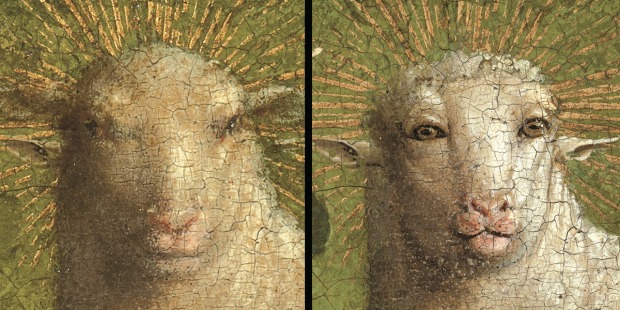
The project restored the altarpiece to its original state, including, most notably, restoring the face of the Lamb of God that stands on the altar, adored by saints and angels. While the image more familiar to most of us has a rather typical looking head for a sheep, the Van Eycks had actually painted a rather striking, human-like face, with front-facing eyes that confront the viewer.
| | |
The central figure—the Mystic Lamb—no longer looks serene or symbolic. It stares back at viewers with wide, human-like eyes. Social media exploded, memes were made, and many accused the restorers of ruining a masterpiece. Art historians argue that this was a conscious choice by Van Eyck, rather than a case of poor knowledge of sheep anatomy, an attempt to convey the identity of this Lamb as no mere lamb, but Christ Himself.
The medieval church understood that religious art should challenge and disturb as much as comfort and inspire. The human-eyed lamb represents this medieval approach to sacred art, where beauty serves spiritual rather than merely aesthetic purposes.
| | |
The cleaning of the side panels revealed equally dramatic transformations in meaning. The panel depicting the Just Judges, which had been stolen in 1934 and replaced with a copy, was revealed to contain hidden self-portraits and contemporary political references that had been invisible under later overpainting. Van Eyck had embedded himself and his contemporaries into this religious narrative, suggesting that salvation wasn’t just an abstract theological concept but a reality for living people in 15th-century Ghent.
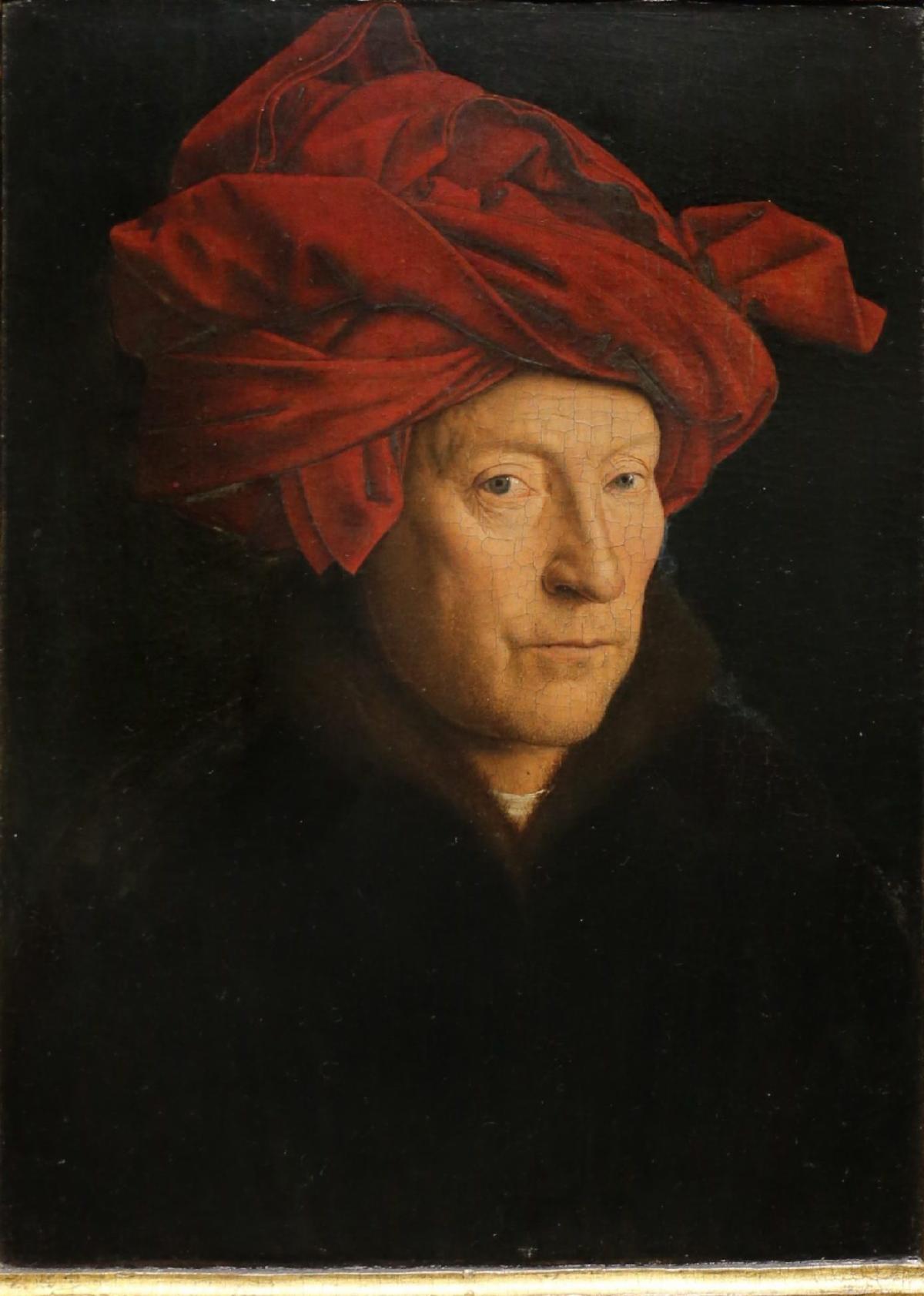
The figure traditionally identified as the hermit Paul was revealed to have the features of Jan Van Eyck himself, creating a complex meditation on the artist’s role in spiritual interpretation. By placing himself within the sacred narrative, Van Eyck was making bold claims about the artist’s spiritual authority and the painting’s role as a window into divine truth rather than mere decoration.
| | The Hermits and the Saints | | |
The restoration’s revelation of hidden inscriptions and symbols throughout the altarpiece has opened entirely new avenues of interpretation. Microscopic examination revealed that Van Eyck included barely visible Latin texts, astrological symbols, and alchemical references that demonstrate his sophisticated understanding of medieval intellectual culture. These hidden elements suggest that the altarpiece functioned as a kind of spiritual encyclopedia, encoding complex theological and philosophical ideas in visual form.
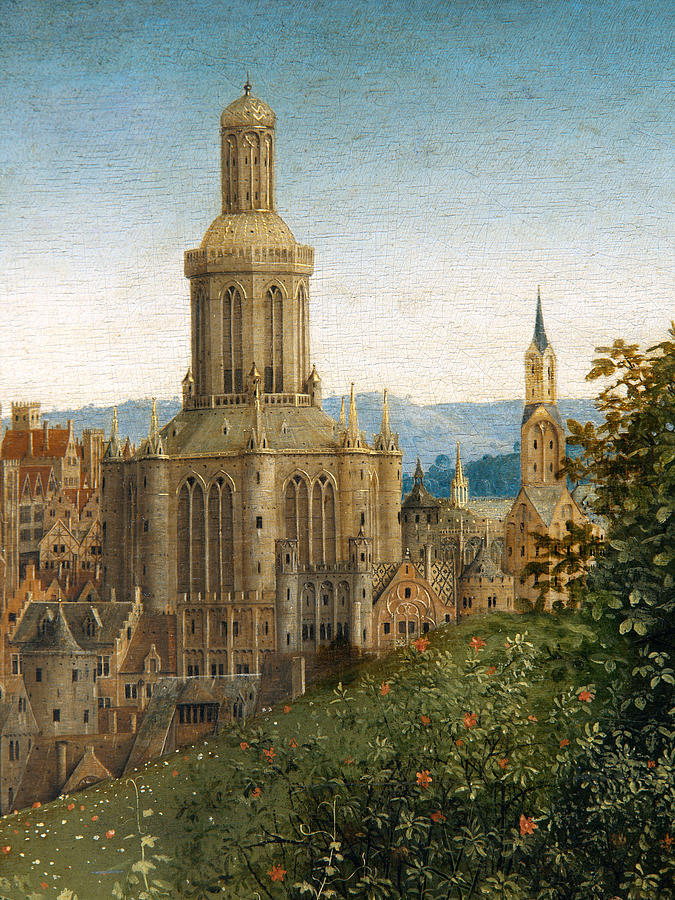
The cleaning process also revealed Van Eyck’s unprecedented technical mastery in ways that hadn’t been visible for centuries. The famous attention to detail – individual hairs, textile patterns, reflections in armor – was revealed to be even more extraordinary than scholars had realized. Other examples include the visible veins on the painted sculptures on the outer panels, cobwebs behind the figure of Lysbette, the window reflected in the angel’s blue brooch, the craters on the moon, and the architectural and landscape details. But this technical virtuosity serves the work’s spiritual purpose: by rendering the physical world with supernatural clarity, Van Eyck proposes that divine truth can be experienced through careful observation of God’s creation.
| | |
The restored panels show that every plant, every architectural detail, every distant figure carries symbolic meaning related to salvation, redemption, and divine grace. The physical world becomes a visual theology, where natural beauty points toward spiritual truth.
The restoration of the original color palette has transformed our understanding of Van Eyck’s artistic intentions. Colors that had appeared muted and earthly were revealed to be jewel-like in their intensity, creating visual experiences that would have seemed almost supernatural to medieval viewers. The blues of the Virgin’s robes, the reds of the martyrs’ garments, the gold of the heavenly city – all were revealed to be far more intense and spiritually significant than the darkened versions had suggested.
Would you like to learn more about the restoration? Follow this video:
In this video, you can dive into the painting, the controversy, and the restoration that shocked the world—only to uncover a story far more complex than anyone expected.
https://youtu.be/sk-YpeqQDpE?si=YXgthrzqPOOFyASR
| | |
A Revelation
In all of its positions, the Ghent Altarpiece is a vision of the visionary. It alludes not only to sight but to sound—musical angels accompanying the elaborate orchestration of the whole. Its appeal to the senses heightens the appreciation for the artist’s genius - his sophisticated understanding of how light, atmosphere and weather affect visual perception.
Like a fractal the more you gaze at this artwork the more incredible and meaningful it becomes. Here is a work of art whose religious and cultural messages are still relevant today. Van Eyck’s social, political and religious references demonstrate a deep understanding of humanity. While his incredible visual storytelling draws the viewer into deeper connection with the spiritual meaning of salvation through Christ. Redemption is presented not as an event, but as an eternal condition available to all. Van Eyck’s innovative painting techniques allowed him to reproduce colors, textures and light effects unknown by artists of his era. These techniques serve the work’s spiritual purpose by creating unprecedented visual realism that makes the sacred narrative tangible and immediate.
| | |
The Ghent Altarpiece marked a turning point in the art world. Here for the first time oil paint became a vehicle for optical truth: light refracts, surfaces gleam, textures breathe. But the true innovation lies in how vision itself becomes theological. To look closely is to believe more deeply. Faith here is not blind; it is intensely visual, analytical, and contemplative.
| | |
Please write and let me know if viewing this artwork expanded your appreciation of how art can carry your messages. Perhaps you’ll be inspired to try something new next time you pick up your brush.
If you would like to add more depth and meaning to your art with me please reach out. If you’d like to learn more about art history or you need help with technique to level up to your taste and the type of painting you admire, I welcome the opportunity to share what I’ve learned over the years in private classes, and/or workshops.
| | |
If someone shared this newsletter with you and you'd like to subscribe, please reach out to me below with your email address. I promise, no spam, no overloading your inbox, just the good stuff.
I welcome the opportunity for connection, conversation, cooperation, collaboration, and commissions.
Live heARTfully
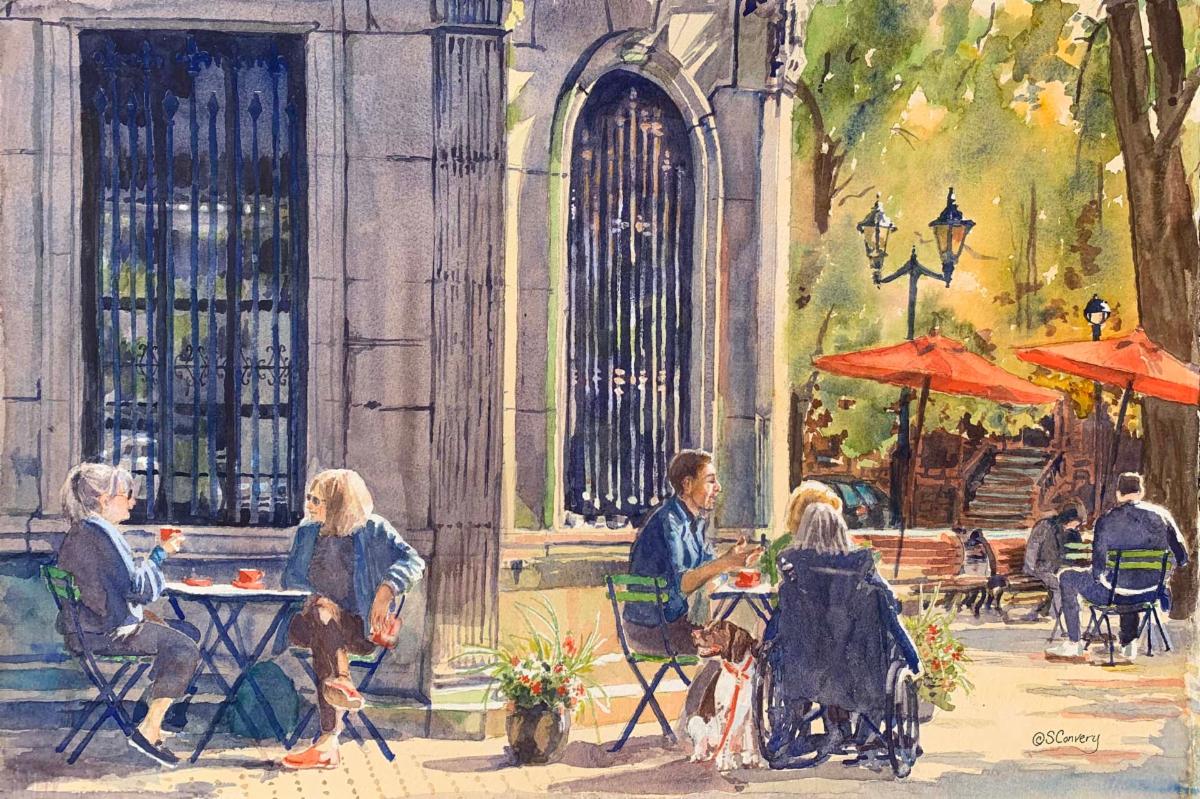
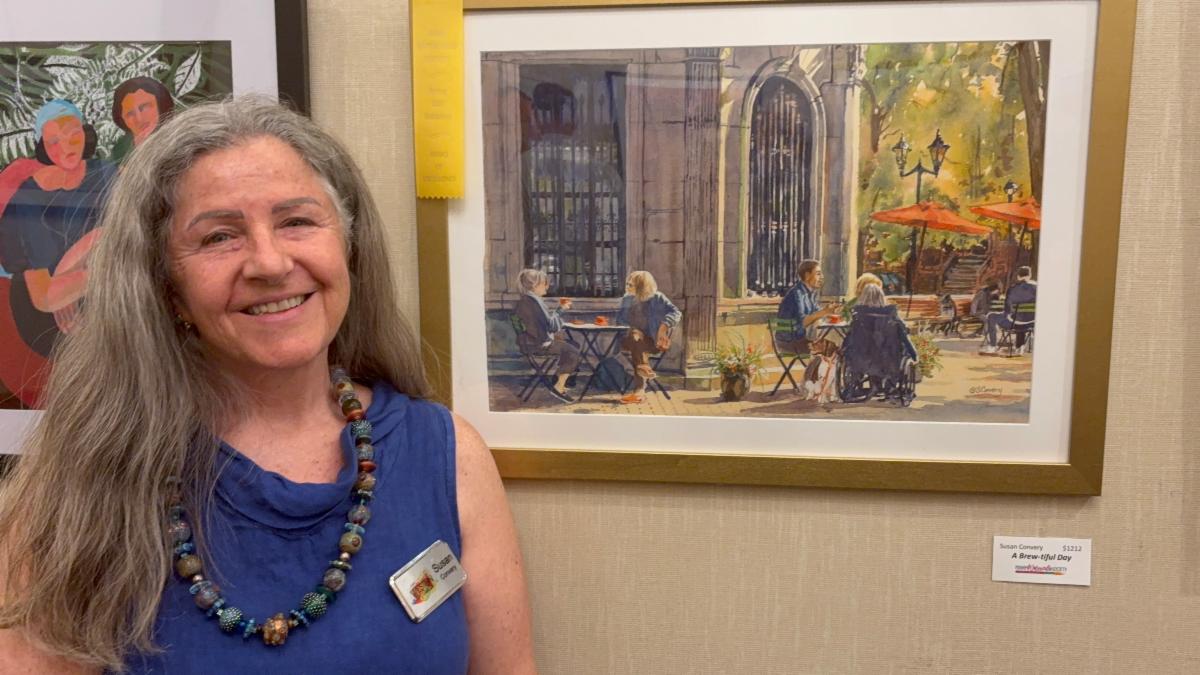
| | P.S. If you didn't get the chance to download your free gift from me: Here are annual collections of my newsletters from September 2022 through December 2025. | | | My painting “A Brew-tiful Day” received the Award of Excellence at the Miami Watercolor Spring exhibit at Wirtz Gallery of Art in Miami. | | |
| |
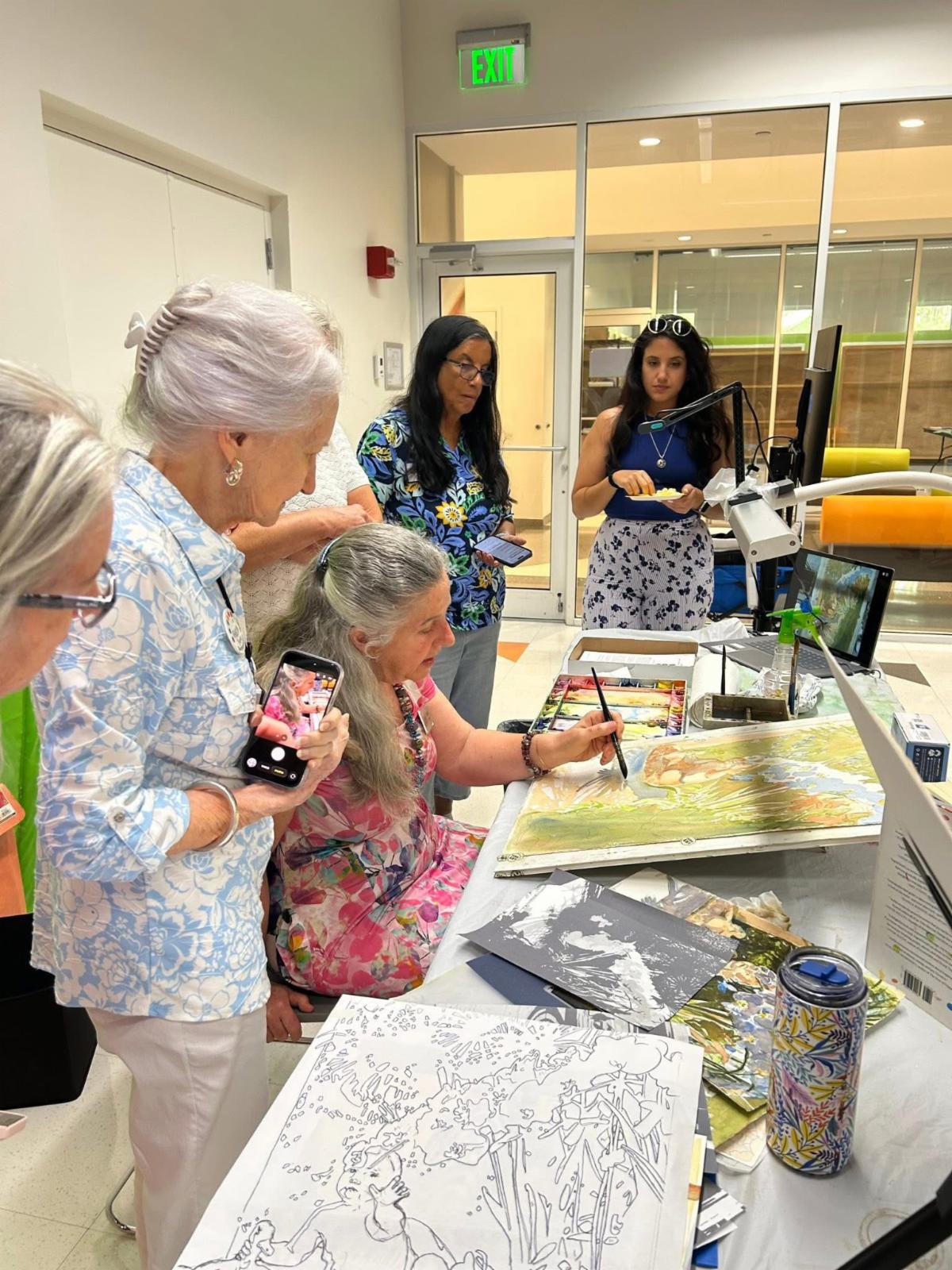
Miami Watercolor Society
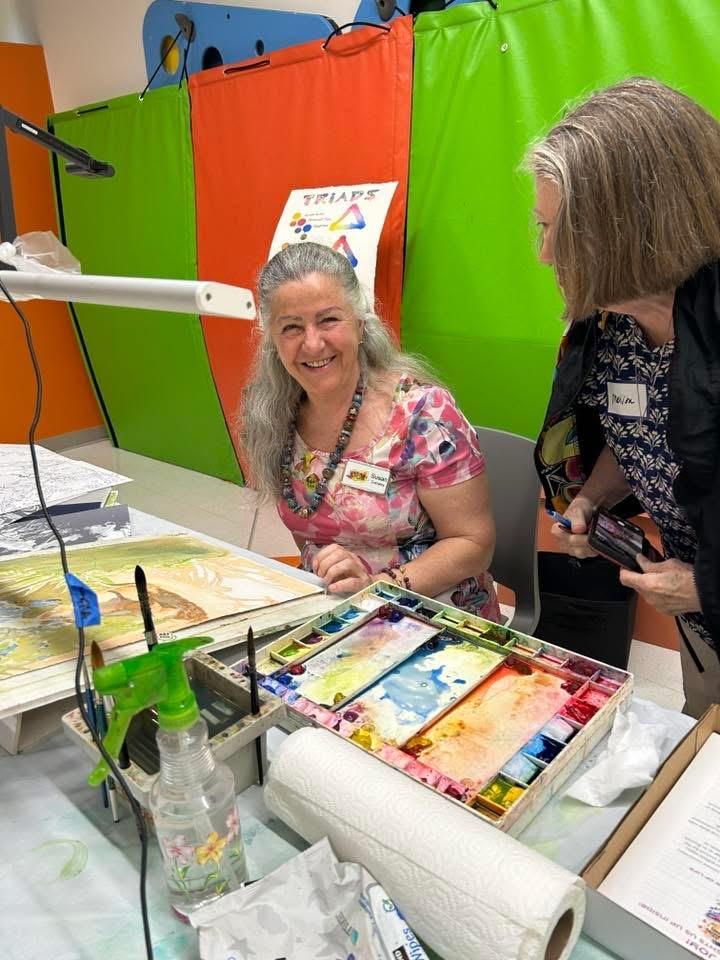
Demonstration
Sunday, April 12, 2026
Pinecrest Community Center
12:30 - 3:30 PM
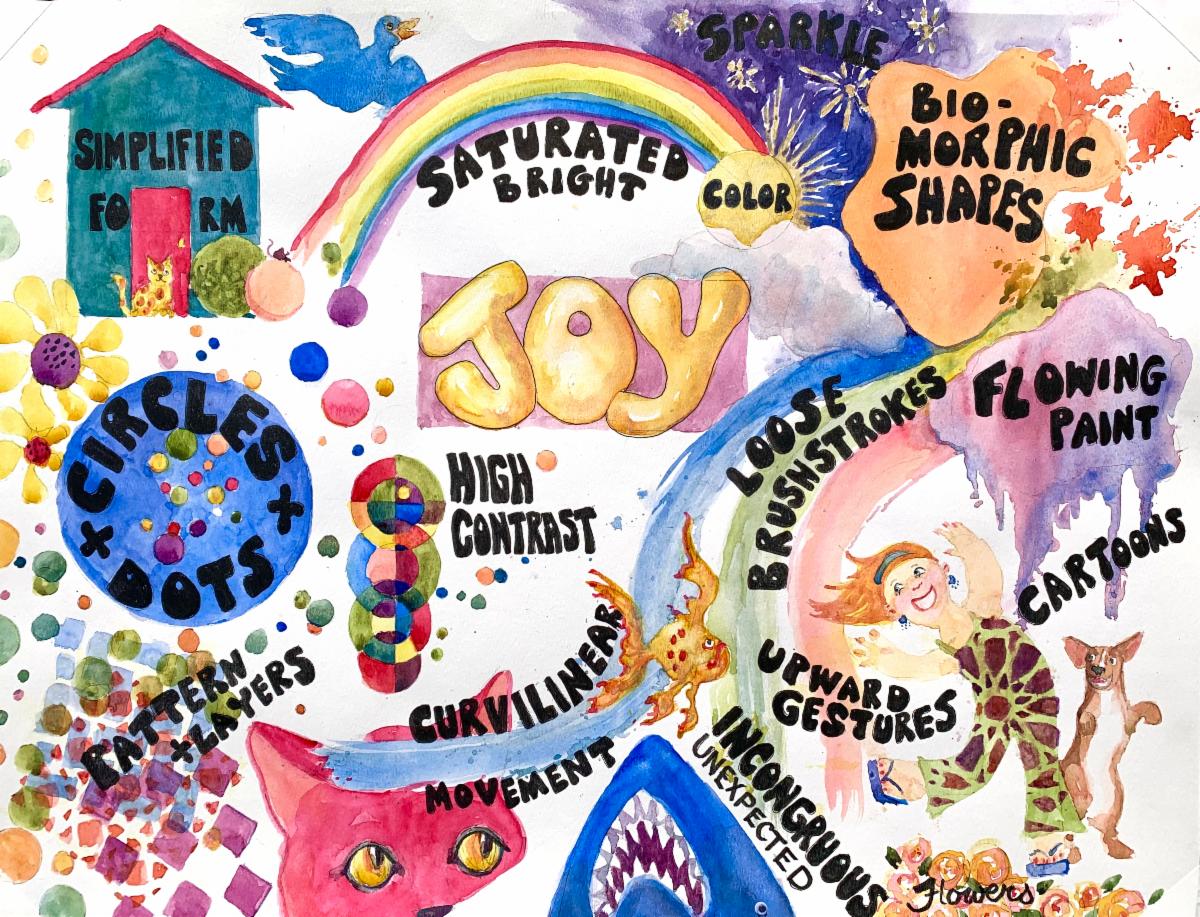
Painting Joy
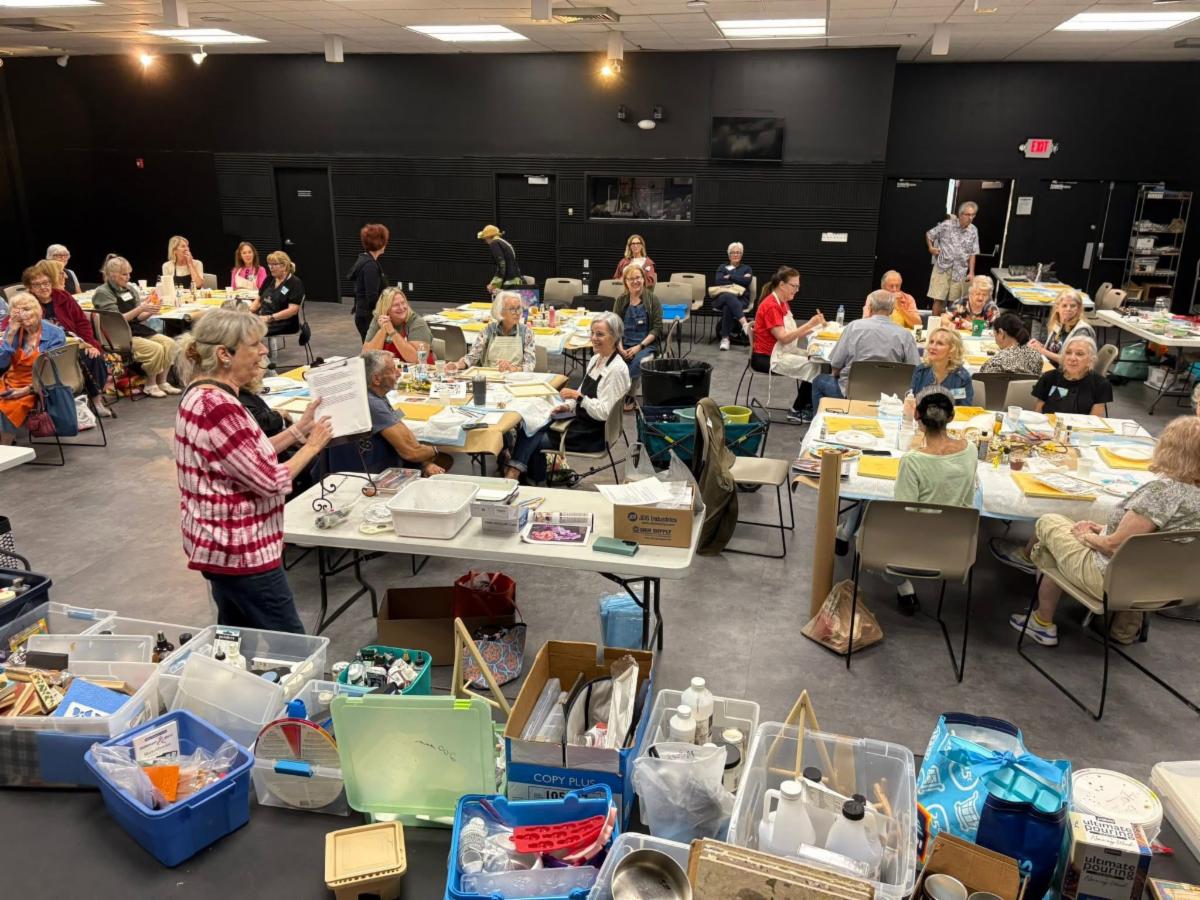
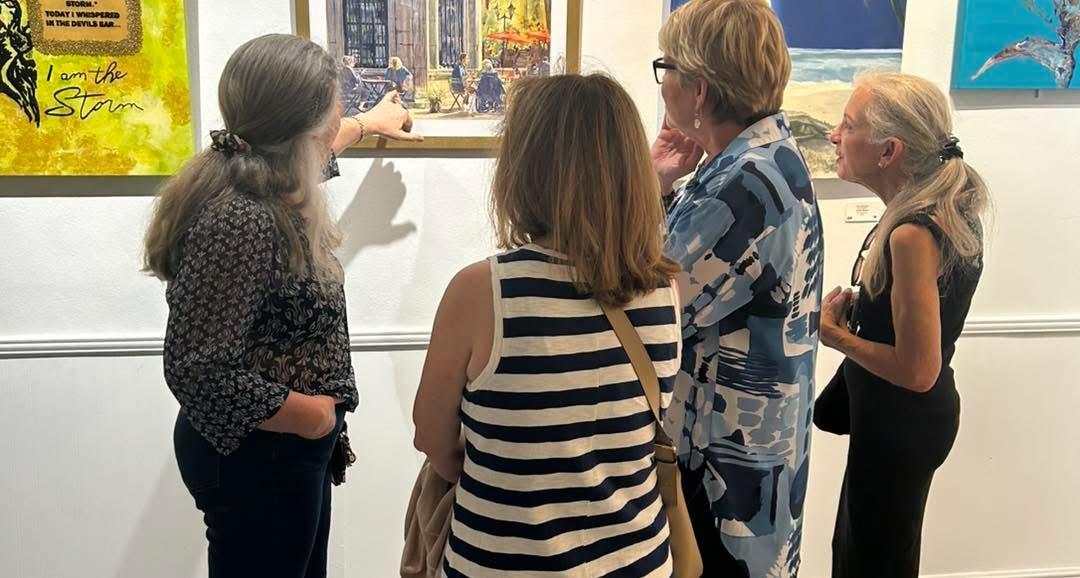
It was a fun day demonstrating how to create art that lights you up inside. I showed my process and some tips and techniques I use for creating more effervescent art.
Miami Watercolor Society
| | | |
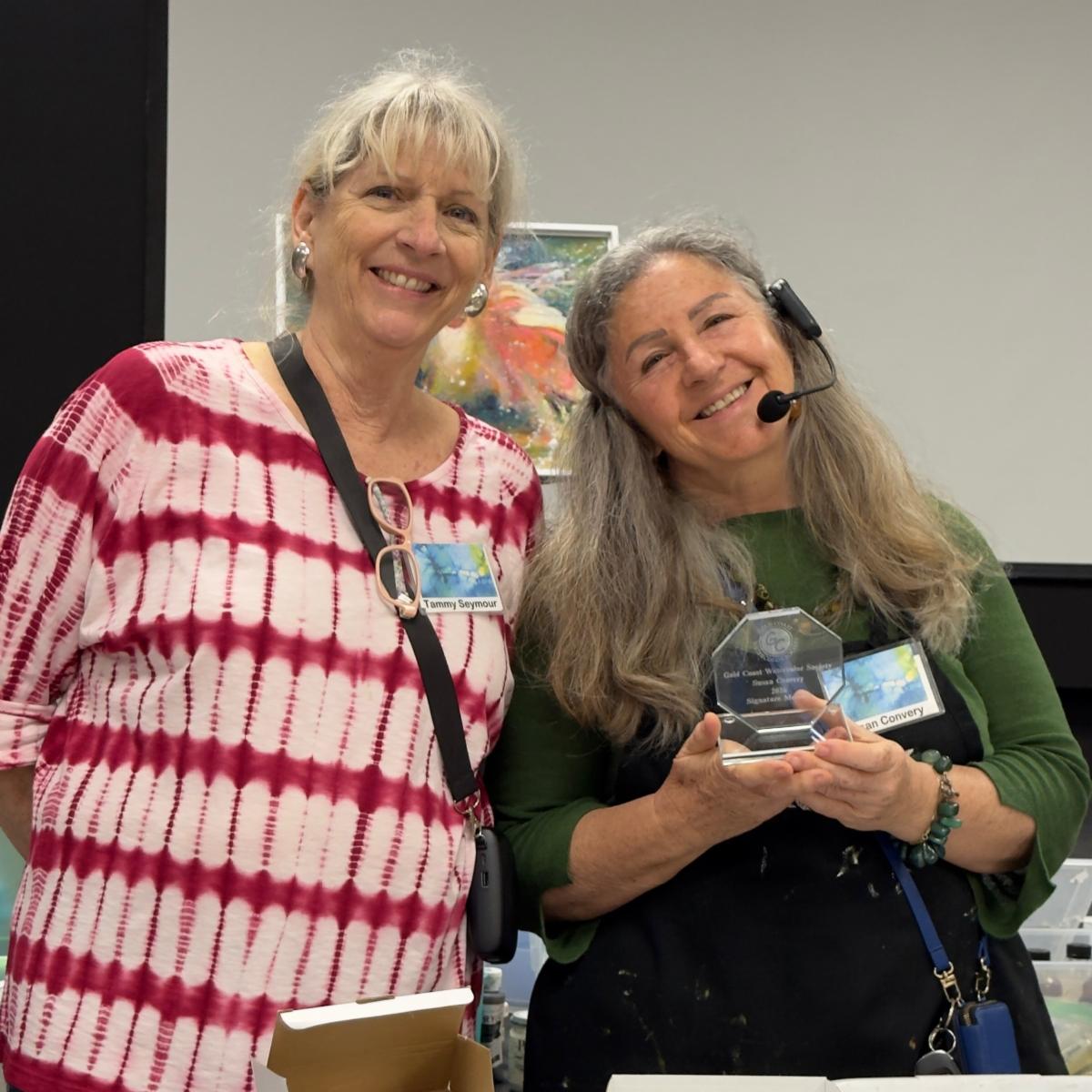
Gold Coast Watercolor Society Signature
It’s official. I’m now a signature member of Gold Coast Watercolor Society. Signature status commemorates repeated participation and awards in Gold Coast sponsored shows. It allows me to put the initials GCWS after my signature on my paintings and I got this beautiful placque
| | |
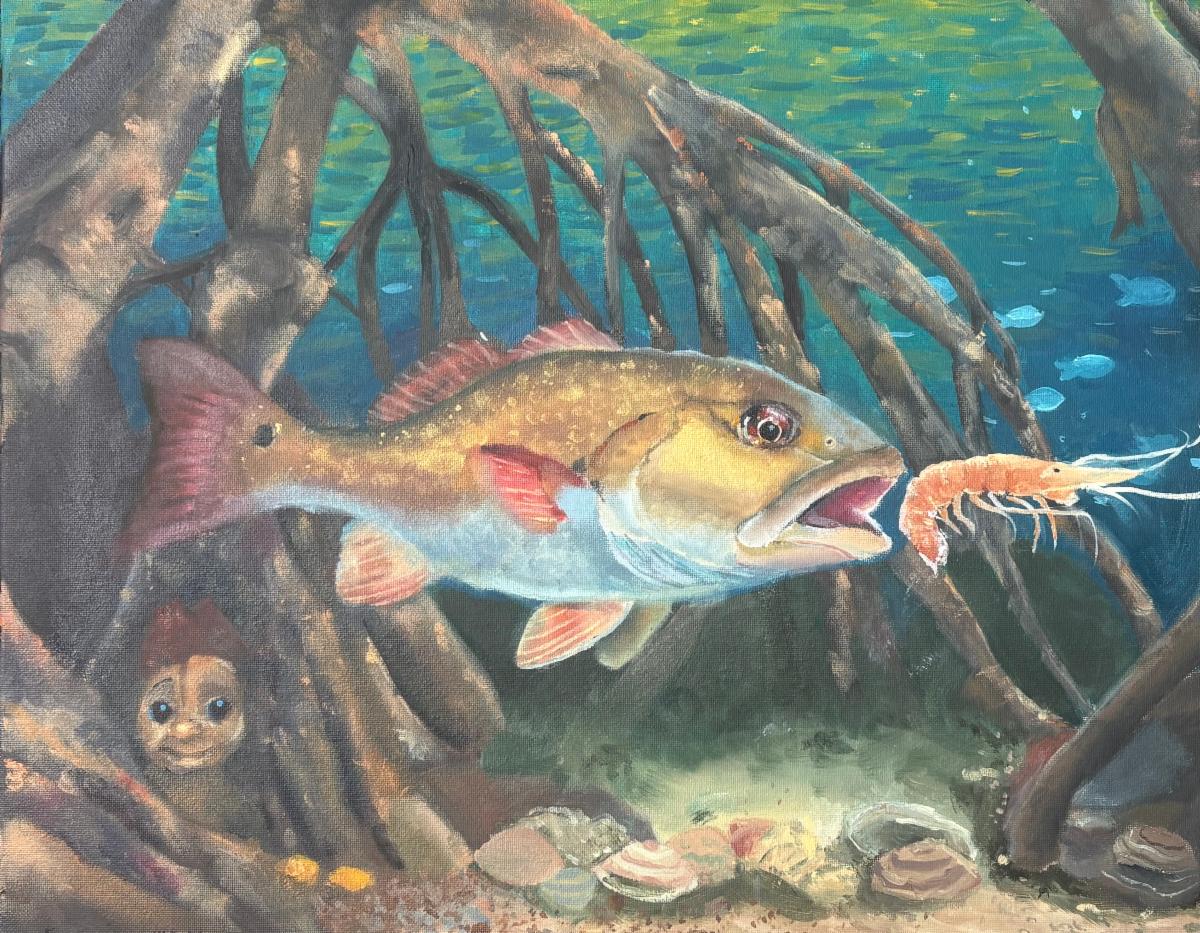
Emma won the Fish Contest!
My 11 year old student, Emma just won first place the 2026 Florida Fish and Wildlife art contest in the grades 4 to 6 bracket. She worked so hard on this oil painting.
Here’s a link to all the winners: https://myfwc.com/education/programs/fish-art/
All first-place winners will receive one fishing rod and reel combo, one Create-a-Lure, and have their artwork advance to the national competition, displayed in FWC offices in Tallahassee, displayed in the FWC’s freshwater or saltwater regulations guide, and receive a signed certificate by either the Division of Freshwater Fisheries Management Director or the Division of Marine Fisheries Management Director.
| | | |
Broward Art Guild - Spring Fling
Broward Art Guild Gallery
2052 East Oakland Park Blvd
Fort Lauderdale, FL 33306
954-537-3370
www.BrowardArtGuild.org
Reception May 2 5:30-8:00
Show Dates May 1 – 22, 2026
| | |
Private Art Retreats
A personalized experience, full of art and discovery, for those who….
- are traveling alone, or with a couple of friends
- would like a much more flexible, and free experience, and lots of fun, too, tailored exactly to your needs, interests, and experience level
- may want to combine painting with organized discovery trips and tours and really get to know the ‘real’ South Florida
- would like to book in for a shorter or longer time than most workshops
- don’t want to have to bring a mountain of supplies in their luggage
- Prices start at $100 per hour
| |
Painting Joy
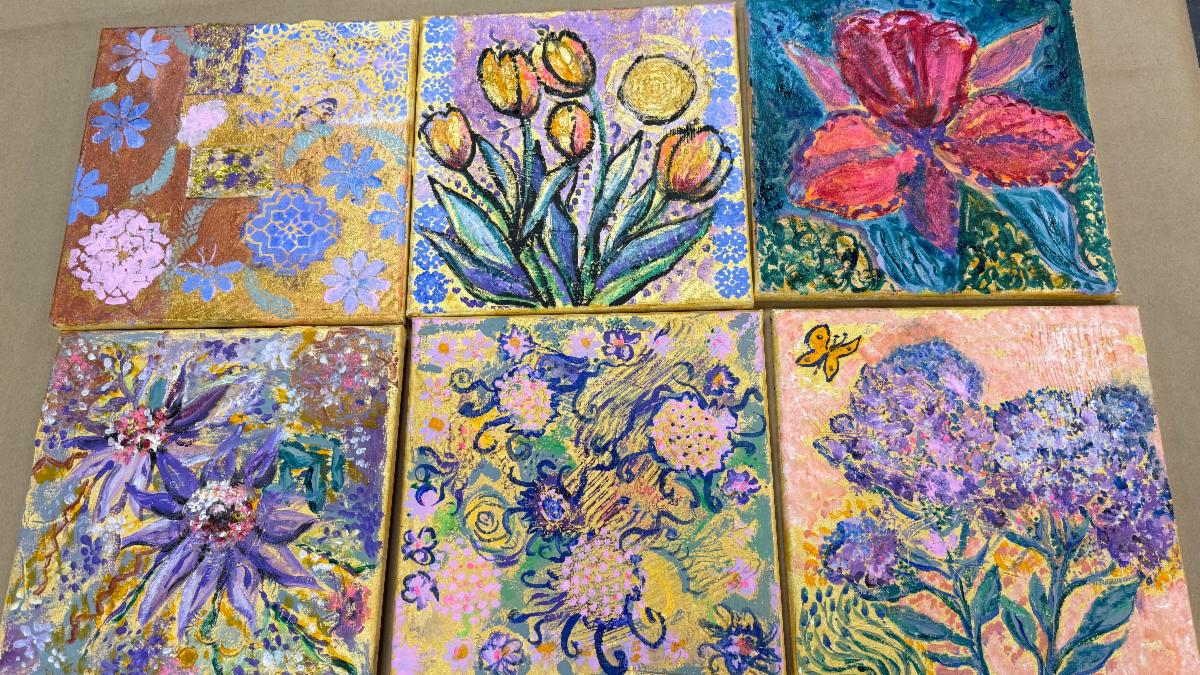
Created especially for artistic women in the third stage of life who are dissatisfied with their artwork and want to have more fun connecting with themselves and others. In this three-day watercolor workshop, we experiment with visual cues that inspire joy, discover personal symbols that resonate, and provide ways to bring more effervescence into our lives and art.
Please recommend any venues you know that might be interested in hosting this workshop in 2026 or 2027.
I am also happy to teach this as a private retreat or for a small group in my studio.
I would very much appreciate your help in getting the next booking.
| | | | | |
Private Portfolio Review
One and a half hour consultation to help you direct your energy into improving your paintings and identifying your “next step"
$250
Text Link
| | | Private Lessons and Events | | | | Master Classes for High School Students | |
Private, highly personalized classes in mastery for artistically-minded US & international students virtually on Zoom or in person at my home.
If you have a student who is a visual thinker, willing to push the boundaries of their own work, and serious about improving their options for college, I want to hear from you! Schedule a time to discuss how I can collaborate with you to build a portfolio that will give your student the greatest chance for success.
Packages start at $130 per hour
Find out more
| | | | Art Workshops, Critiques & Presentations |
Invite me to present or lead a workshop for your school, club, or guild.
I can customize a program for your event or present my skills programs on composition, color theory, drawing faces, coordinating light/shadow or understanding the cues for depth. I am available for judging, confidence-building critiques and recorded tutorials.
| | | | Improve Your Artist Statement | |
If you would like to delve more deeply into your own inner questions and clarify your thoughts as you create an artist statement for your website, a gallery show, a sponsor, or another project, please reach out, and let’s talk. I have helped many students write compelling statements for AP Art, college applications, and competitions.
$250
Find out More:
| | |
Sketchbook Prompt:
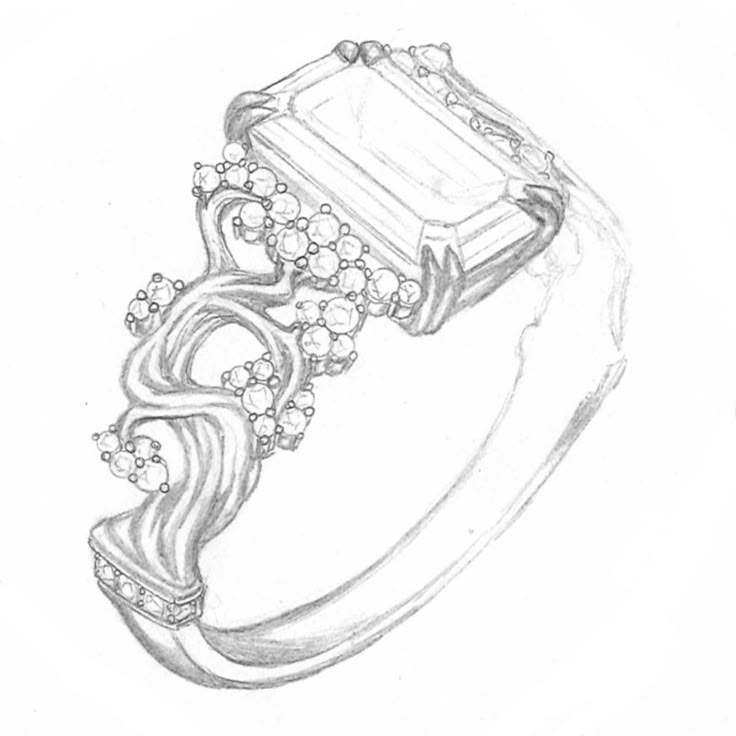
Find a small item to draw in extreme detail - maybe a piece of jewelry or a shell. Use a magnifying glass to really observe the tiny characteristics of your object. Draw it 10 times its size so you can show everything you’ve observed.
| | |
It's time for these artworks to find a forever home. Please contact me if you are interested in adding any of the paintings below to your collection.
I will deliver if you live within a 2-hour drive and if you live further away, I will give you a reasonable price for shipping.
Venmo, CashApp, PayPal and Zelle are welcomed.
| | |
Title: Croatian Kerfluffle
Media: Watercolor
Size: 31”x 29"
Price: $1111
Frame: Gold
| | | |
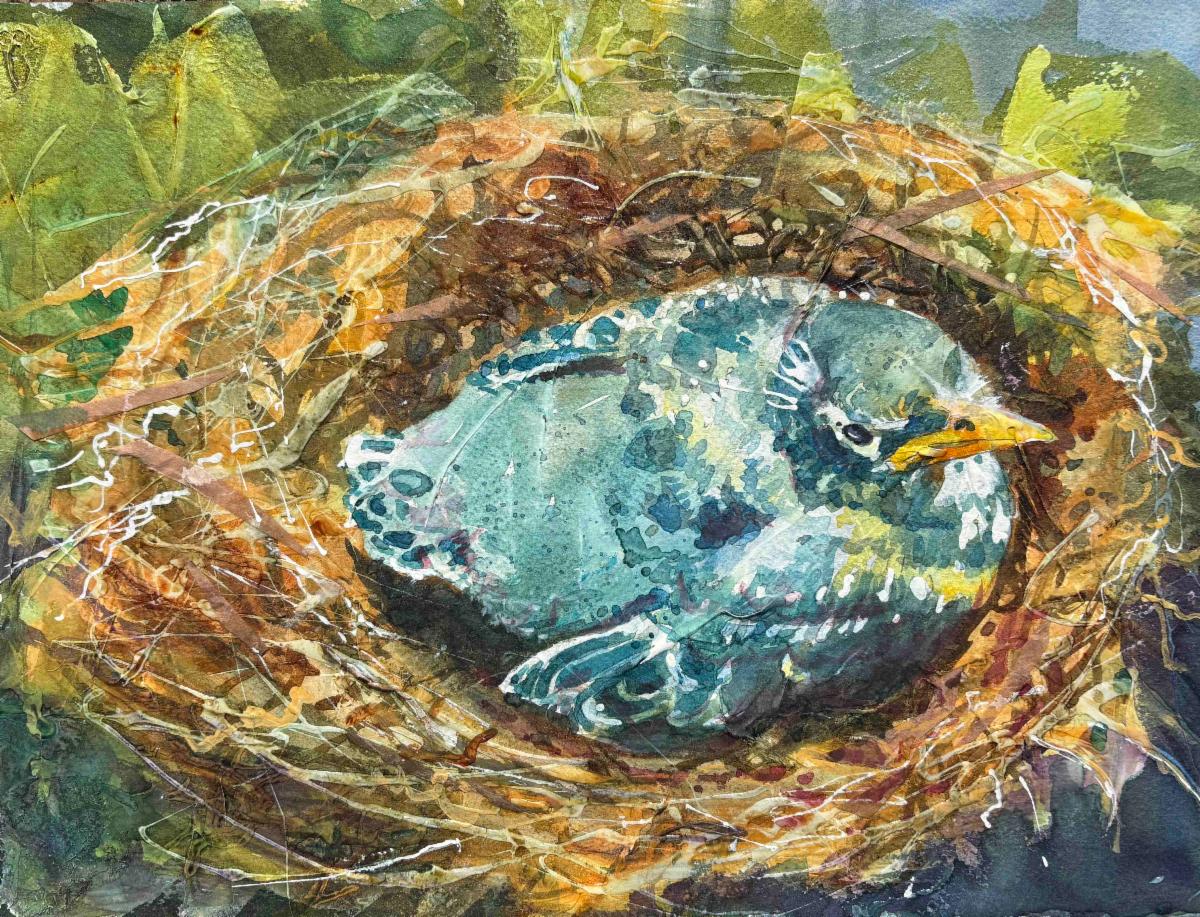
Title: Little Blue
Media: Mixed Media
Size: 22"x 17"
Frame: Gold
Price:$222
.
| | | |
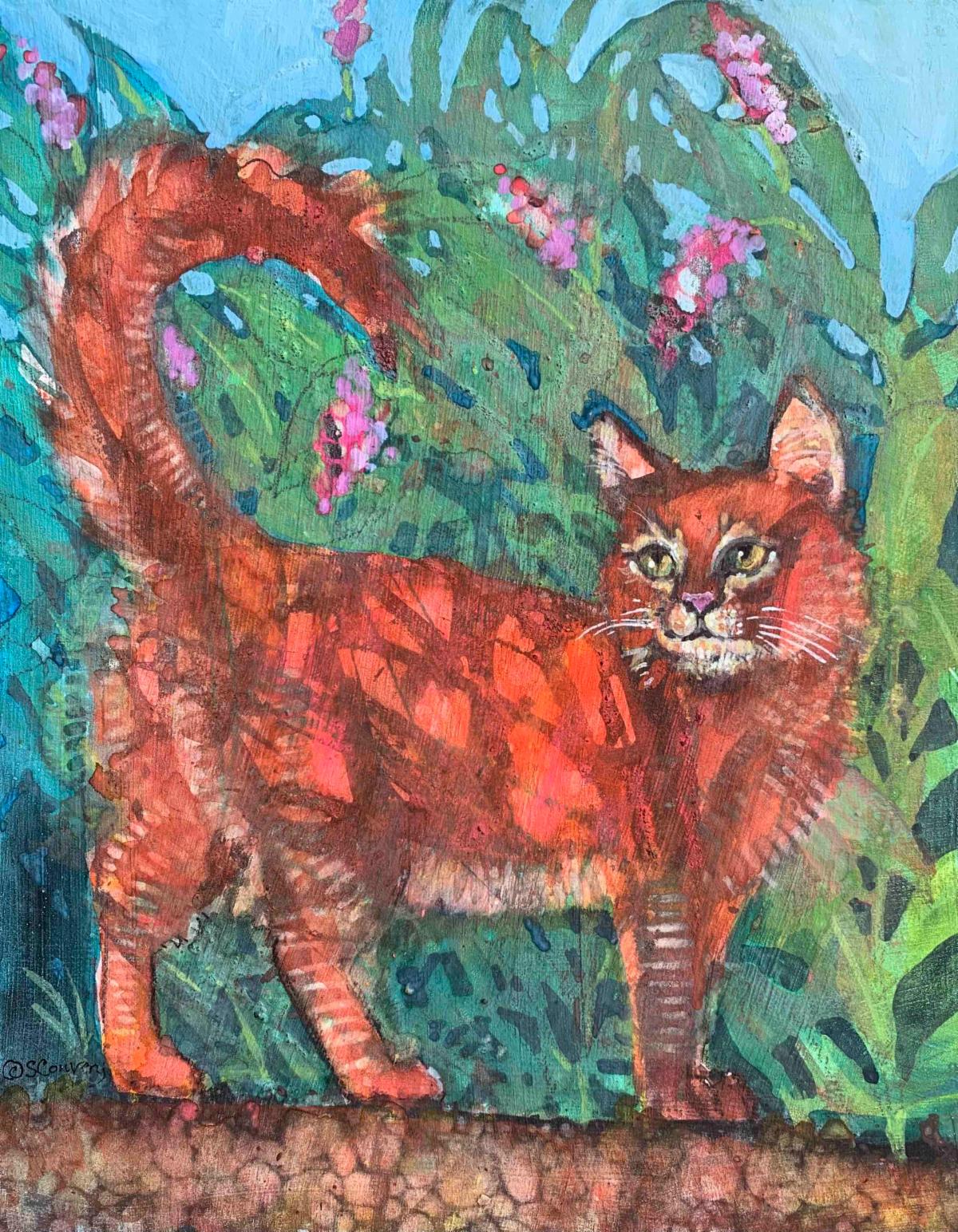
Title: Ginger
Media: Mixed Media
Size: 11" x 14"
Price: $222
Frame: Cradleboard Wood Panel
| | | |
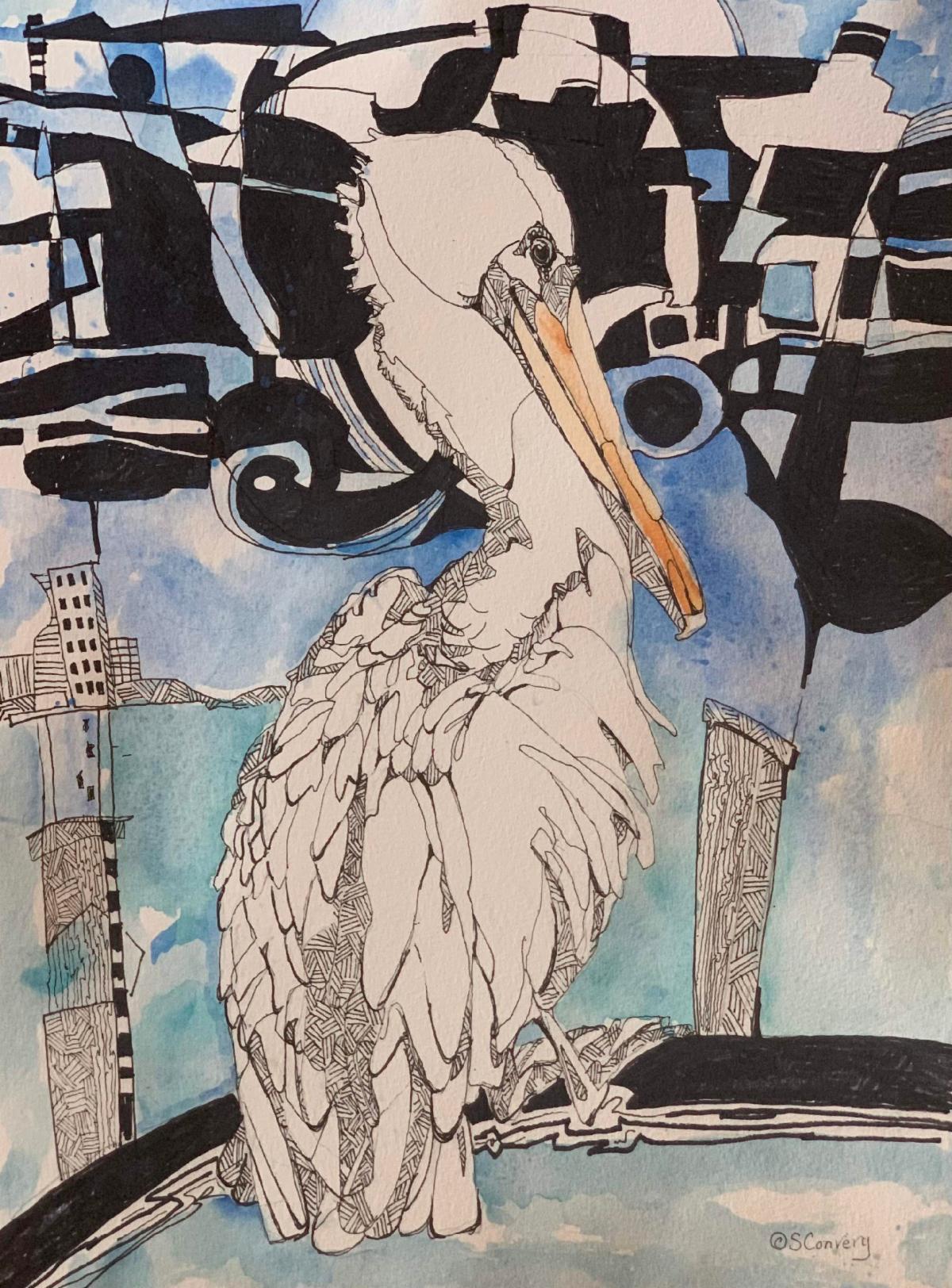
Title: I Wish For Fish
Media: Watercolor & Ink
Size: 16" x 12"
Price: $222
Frame: White
| | | |
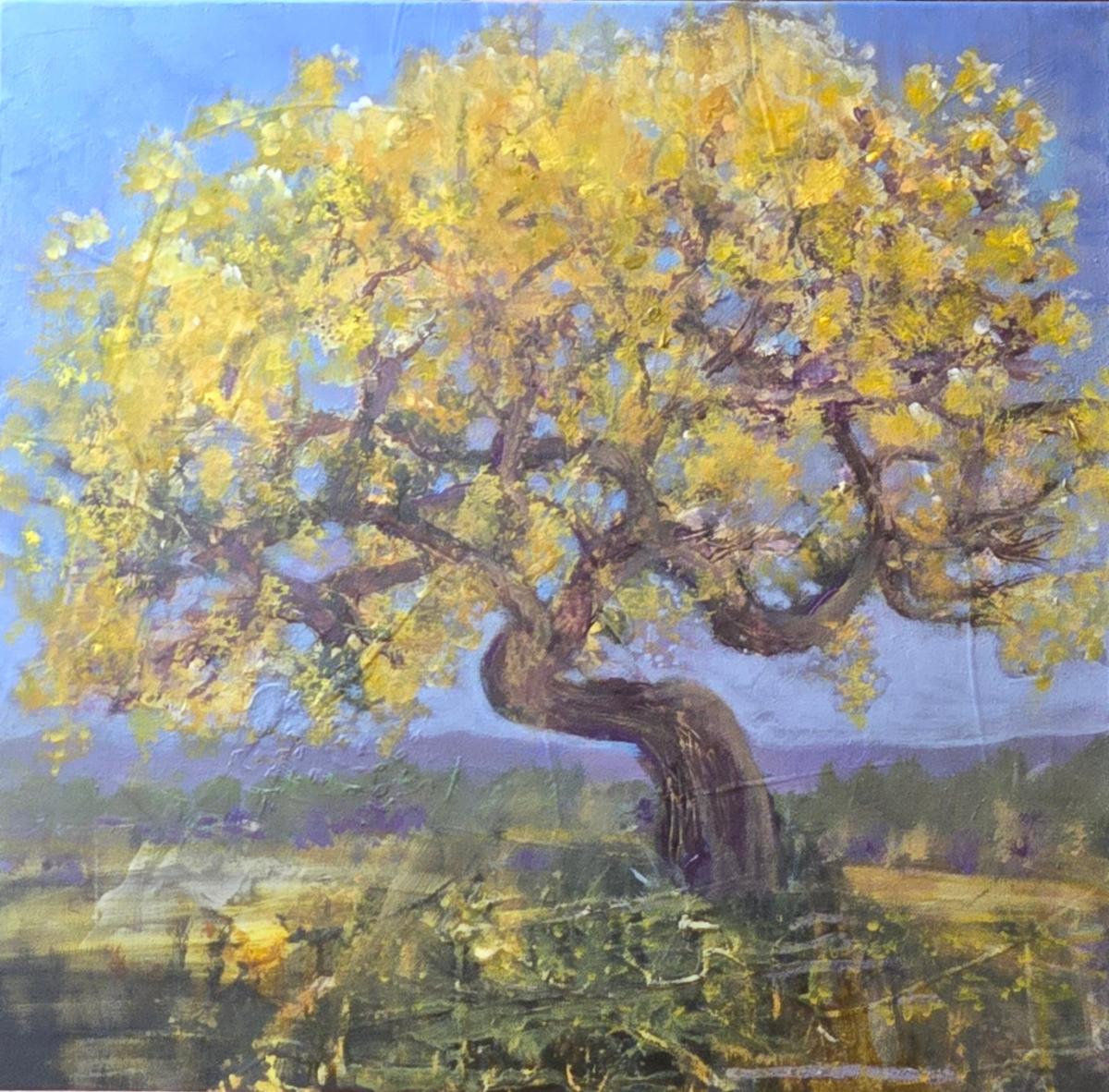
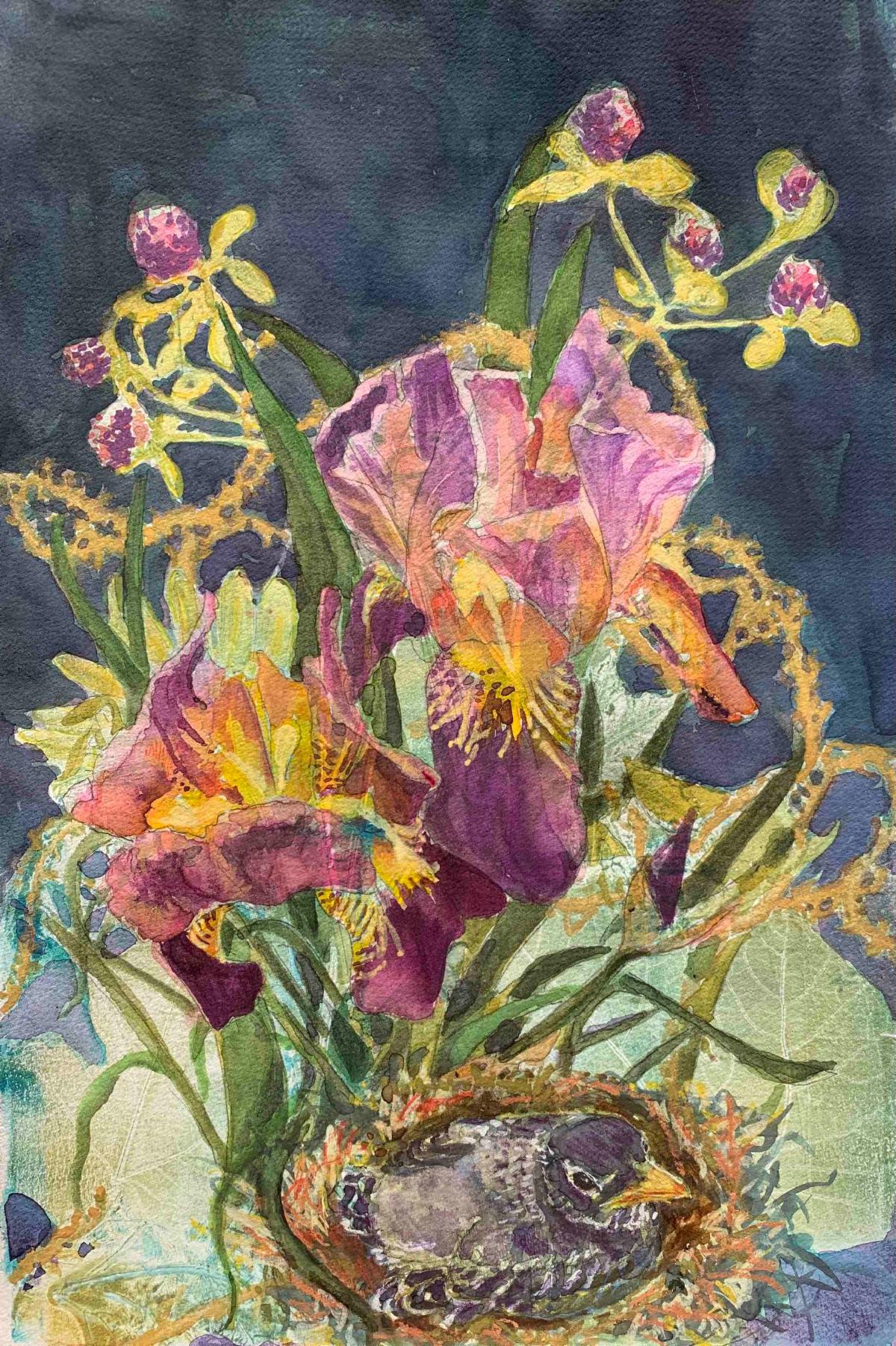
Title: Summer’s Lease
Media: Mixed Media
Size: 16" x 20"
Price: $333
Frame: Gold
| | | Want to see past issues of my newsletters? Visit this link on my website. | |
Subscription Information: You are receiving this email because you subscribed to my mailing list, downloaded a resource, purchased one of my products/programs, or opt-ed in some other way.
Thank you for being part of the Cr8V Soul Arts Tribe!
NOTE: Unsubscribing means you won't receive any more emails from me including information about your paid products and programs.
| | | | |