Guilt
SW - Guilt is a big part of what grieving people go through, but the guilt I want to discuss here is the guilt people feel when they actually feel happy or have a good day after their loved one has died. Is there a brain answer to why that is?
MF: I’m not sure that there’s a brain answer yet. Guilt is not an aspect of grief that we focused on in our neuroimaging studies. But I can say that I also recognize this experience that you are talking about, and it is often not the initial feeling that trips us up.
Sometimes it isn’t the sadness, happiness, or intensity of what we initially feel but in how we react to being a person who has that feeling of guilt. For instance, if we feel relief after a loved one dies, then we often feel guilt for having felt relief.
Sometimes a similar thing happens with the thought, How can I possibly be enjoying this when my loved one isn’t here to enjoy it as well? The way I feel about that is that each person comes to their own understanding, and my understanding might not be helpful to someone else, but I think of it this way:
It’s very comforting to me to think that
my brain has changed by having been
in a loving relationship. My brain
is literally different because I loved
someone, and they loved me.
So I carry that physical part of them—of us—in my own brain, and it is through that brain that I also perceive the world. In some ways, they are always with me. As I am having positive experiences, they are with me because they impact how I perceive things in the world.
SW: That is a beautifully precise way to think of the deep impact loving another has had on us.
I Will Always Be Here ...
SW: In your book, The Grieving Brain, you talk about “two mutual beliefs,” that our loved one is gone and, at the same time, that they will be coming home. Would you speak more about that?
MF: When we form a bond with someone, a part of the encoding of that bond is: I will always be here for you; you will always be here for me, with an emphasis on the “always” part. And while people are alive this is very helpful. They don’t have to be in our presence for us to know they are out there in the world. Otherwise, it would be impossible for us to send our children off to school every day or kiss our spouse goodbye every morning. You have to have that truly deep-seeded belief that you will come back together again at the end of the day.
The trouble is that the brain isn’t really
set up to expect the death of a loved
one. In fact, death is a very rare
event, thankfully.
So when I talk about these two pieces of information that the brain is trying to use at the same time, I am saying that you know that your loved one has died because you have the memories of being at the bedside, getting that phone call, or being at a funeral or memorial. Yet this belief that they will always be there persists as well. And those two things of course can’t both be true.
I think this creates a lot of the disorientation that happens for people after the person has died, especially initially. The brain really is a prediction machine. It functions by trying to take the information it’s had in the past thousands and thousands of days and predict what will happen next. So when your phone rings, it is the natural prediction that it will be the person that you have picked up the phone to speak to over and over again. What happens is that you actually have that experience of he or she is calling me right now, and then you remember that can’t be true.
That’s when the intensity of the grief erupts.
SW: Can you explain how and why our brains do that, and is there an effective way of speeding up the process of knowing that our loved one is gone and never coming back?
MF: No and a little bit yes.
You know people say that time heals,
and I don’t think that is really
accurate, but to some degree
experience heals.
And experience takes time, right? You can’t force your brain to learn new things. It just takes some period of time and experience for us to be able to make new predictions about the world.
Now we can get in the way sometimes of our brain learning new things, and one of the ways that we end up doing that is through avoidance.
Our brain needs lived experiences to update, to understand questions like Who am I now without this person? How do I operate in the world without my spouse? How am I a parent if my child has died? You need experiences in order to learn what the answers are for you.
When we avoid conversations or people or things that remind us of the person who is gone—and while doing so is understandable because it might be a way of preventing the overwhelming pain of that loss—in the long run, it doesn’t give us as many opportunities to learn what life is like now, without that person here.
SW: That is another reason why we need to get out and fully embrace life as soon as possible.
MF: Yes, and I am a person who believes that there is a place for avoidance and a place for denial because grieving is incredibly hard on our brain, our mind, and our body, so sometimes we need a break. The problem comes when we keep using that tool, and we don’t use any of the other coping tools, such as when we don’t also seek out support, we don’t also think about fond memories, and we don’t also try new activities.
It helps to have a big tool kit of coping
strategies, but avoidance should just
be one of them. But it has to be
one that is not used too often.
SW: Exactly. There were times the first couple of years after my daughter Erika’s death when I would find myself in a place where sliding into that intense pain was not the right time, and I would say to myself, “Not now, Susan.” But it took a lot of work before I could control it like that.
MF: I use an example in the book of being at your child's soccer game, and you need to tell yourself that you are going to be right there, in that moment, cheering for him, and you are just going to pretend that none of the loss has happened so you can be fully present for him.
Complicated Grief (Prolonged Grief Disorder)
SW: Can you address this idea of “complicated grief,” or, as it is now known, “prolonged grief disorder”?
As you know, I have a difficult time with the overall concept because the term implies something is abnormal if someone is having grief difficulties after a year. Most of the people I work with who have had significant losses are still deeply grieving after one year. Why have this criteria at all? Is it a guideline for research purposes, therapy insurance, or just something to give clinicians a grasp on whether a person needs additional help, or all of those?
MF: I also think it is somewhat all of those, but I think part of what happens when people hear that this is a disorder or that there might be intervention is that they misunderstand and think with intervention we are trying to take grief away. That’s not actually what intervention intends to do.
The reason I like the term complicated grief, although it is now called prolonged grief disorder, is I think of it like the healing of a broken bone. When you break your leg, you’re not actually doing anything to knit those cells back together because your body is doing that as part of its natural healing process. Yet you might need to provide support, so you might put your leg in a cast or use crutches to support yourself as you’re healing. Yet complications can occur, so you might end up with a secondary break to the bone or an infection. In those cases, it can be helpful to have intervention to get you back on the trajectory of healing.
This analogy then to complicated grief is that, when we’re able to identify people who have really gotten derailed in their grieving, such that there are things getting in the way of their natural healing process, we can step in and help. We know this intervention works because we have specific criteria that we test that shows it helps. Doing so isn’t trying to take their grief away but rather to help them gain skills to overcome the things that have derailed them so they can get back to that natural healing process.
SW: What’s the criteria for complicated grief?
MF: Of course, there is this intense emotional pain and intense yearning for the person, but that's not all. Some additional criteria include things like feeling distant from those around you, feeling intense disbelief that this has happened, feeling that you’re not sure what your role in life is now, and feeling that life has become meaningless. There are a few others as well, but in addition to all of those, it also has to disrupt your day-to-day life, really interfering with your day-to-day functioning such that you are unable to get dinner on the table or spend time laughing with your grandkids.
It also has to have been a year since the death happened. There is some debate about that because different studies show us different things. For example, at two months we can’t predict who is going to have complicated grief at eighteen months, but in some studies we were able to predict who would have complicated grief after six months of grieving. Sometimes it is not until a year that we are able to predict. Because of that, the committee chose a year as the best empirical, but also culturally-informed, timepoint.
Tools That Help the Grieving Brain
SW: We at griefHaven use techniques scientifically proven to be effective, tools that we know will help with various aspects of grieving from a brain perspective. For instance, we use meditation techniques that we know will help the grieving brain. Other such tools include getting regular exercise, experiencing more green in nature by going outside, and protecting oneself by not watching repetitive tragic images on TV. What are some tools you would encourage people to use?
MF: You have chosen fantastic tools to work with. We did a study recently looking at mindfulness meditation and then also something called progressive muscle relaxation. It was not designed originally for grief, but it is a method where you scan your body, contracting and relaxing various muscle groups. We found that by doing the scan exercise, people were able to achieve a state of relaxation.
SW: Is that the one where you go through the body tightening and releasing?
MF: Yes exactly. And we found that both mindfulness meditation and progressive muscle relaxation led to less grief over time. But actually the progressive muscle relaxation performed the best.
The reason we think that might be true is that, for many people, it is difficult to learn mindfulness meditation when they are already having trouble concentrating. And for many people, it’s hard to figure out if they’re actually meditating or if they’re simply ruminating, which is not so great.
But the progressive muscle relaxation gives us a concrete thing that we can do that helps our body. So many of the tools that you mentioned really help your body relax, and that’s an important part of the process.
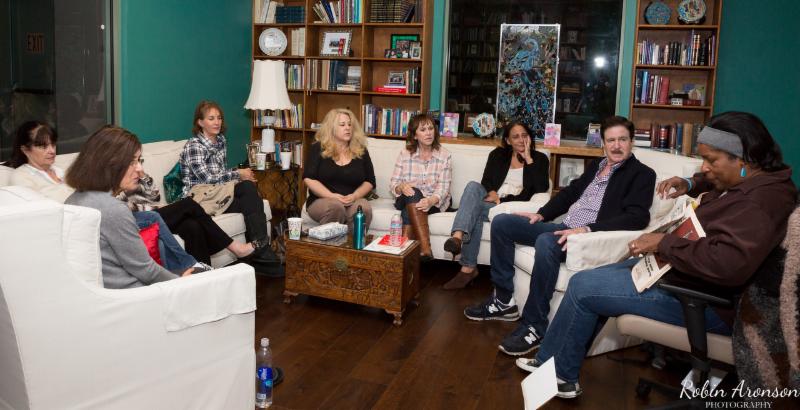
SW: I’ve found that classic mindfulness meditation by itself is often less helpful because people start going to those painful places and re-living them. That’s why we only use guided meditations. We start most groups with a guided meditation, and now we will be using the body scan exercise as well.
MF: That exercise is one that, once they have learned how to do it, they can apply in any situation. It also gives them a sense of a little bit of control over their experience. Having any control in a moment where you’re just overwhelmed can be a good thing.
COMING IN MAY NEWSLETTER
PART II
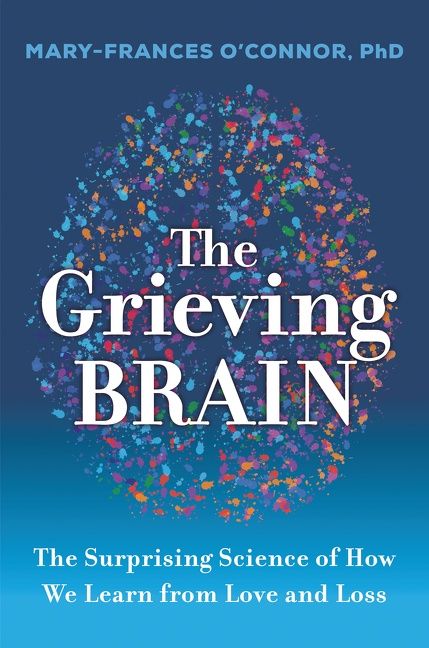
The Grieving Brain
Remaining questions and answers
in the May griefHaven newsletter.
Again, if you can't wait, you can watch the interview here: