Thirty Years,
A Lasting Partnership
| |
Executive Director Message
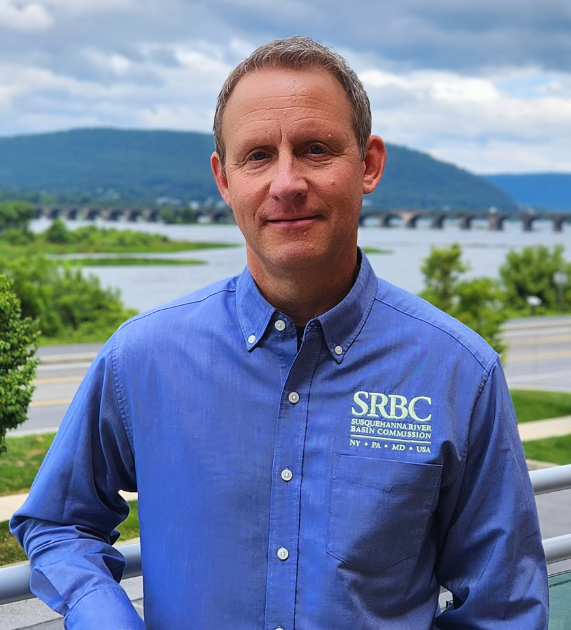
Andrew D. Dehoff, P.E.
Restoring waterways affected by generations of coal mining takes patience, practical knowledge, and people who keep showing up.
For 30 years, Bobby Hughes and the Eastern Pennsylvania Coalition for Abandoned Mine Reclamation (EPCAMR) have brought all three and so much more to communities across the anthracite and northern bituminous coal regions of our basin...
| Forests Foster Thriving Streams | |
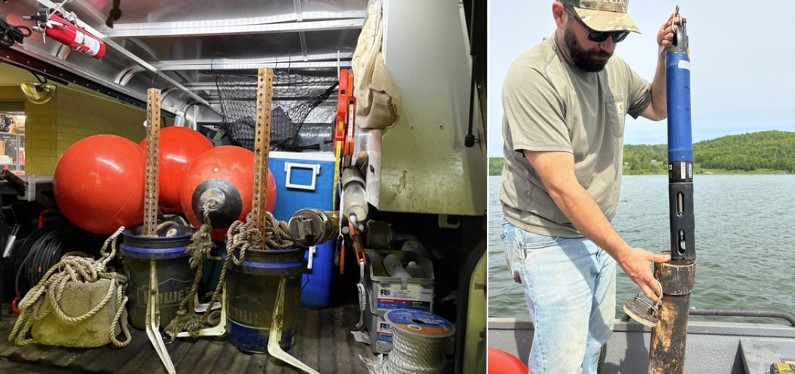
SRBC Aquatic Ecologist Luanne Steffy recently published a technical summary report of biological and water quality data at SRBC continuous monitoring stations (part of the Commission’s Continuous Instream Monitoring network or CIM) within Pennsylvania Department of Conservation and Natural Resources (PADCNR) state forest lands. The report is a follow-up from a similar report produced in 2019 and focuses on CIM stations either located on or draining state forests.
Key Findings include:
- Most stream sites exhibit consistently high macroinvertebrate IBI scores.
- Thermal Fish Index scores indicate generally stable and suitable coldwater thermal conditions.
- Watersheds with greater forest cover tend to support higher biological integrity and water quality.
- Smaller streams predictably have more coldwater taxa.
- Temporal analyses show relatively stable conditions at long-term monitoring sites with limited evidence of widespread degradation.
Overall, the results reinforce the importance of large, intact forested watersheds managed by PADCNR in sustaining high-quality aquatic ecosystems within Pennsylvania’s freestone stream systems.
| |
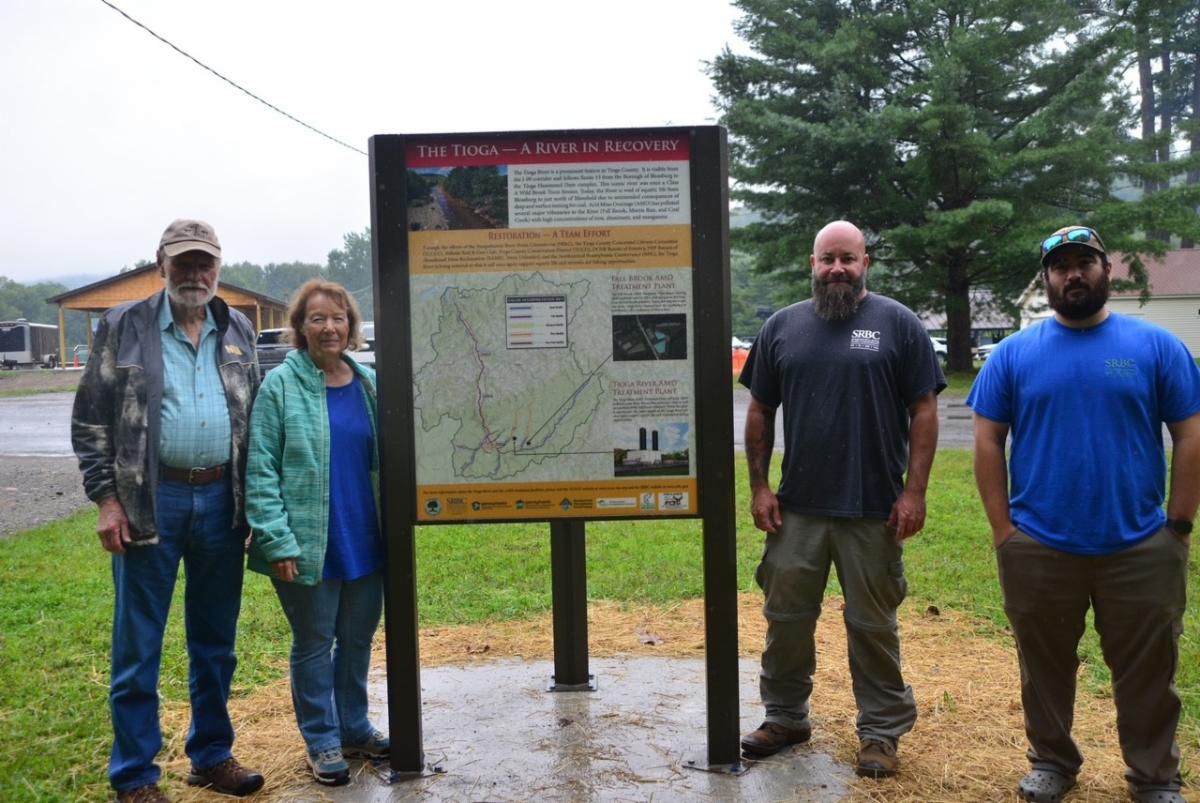
Photo above courtesy Tioga Publishing. Left to right: Charlie Andrews, Joyce Andrews, Andrew King (SRBC), and Jeremy Campbell (SRBC)
Our work to restore the Tioga River watershed from the impacts of historic abandoned mine drainage continues to move forward as construction of a multi-partner, multi-million dollar treatment plant in Blossburg, PA is slated to begin next year. The project will restore 27 miles of the Tioga River, bring aquatic life back to local streams, add recreational and business opportunities to the watershed, and increase property values.
Joyce and Charlie Andrews with the Tioga County Concerned Citizens Committee (TCCCC) have spent countless hours over decades working to restore the Tioga. In partnership with Blossburg Borough, the Andrews were able to coordinate the design and placement of a three-sided kiosk at Island Park next to the Tioga River to educate visitors on the work done and the work yet to come.
Most of the funding for the sign came from a Community Grant from Seneca Resources and Highland Field Services. SRBC helped to fund the design. It displays an aerial view, map and history of the park on one panel. The other two panels display information on river restoration efforts. The Andrews hope to update the sign as the project progresses.
| |
It's Back!
Funding Healthier Waterways
| |
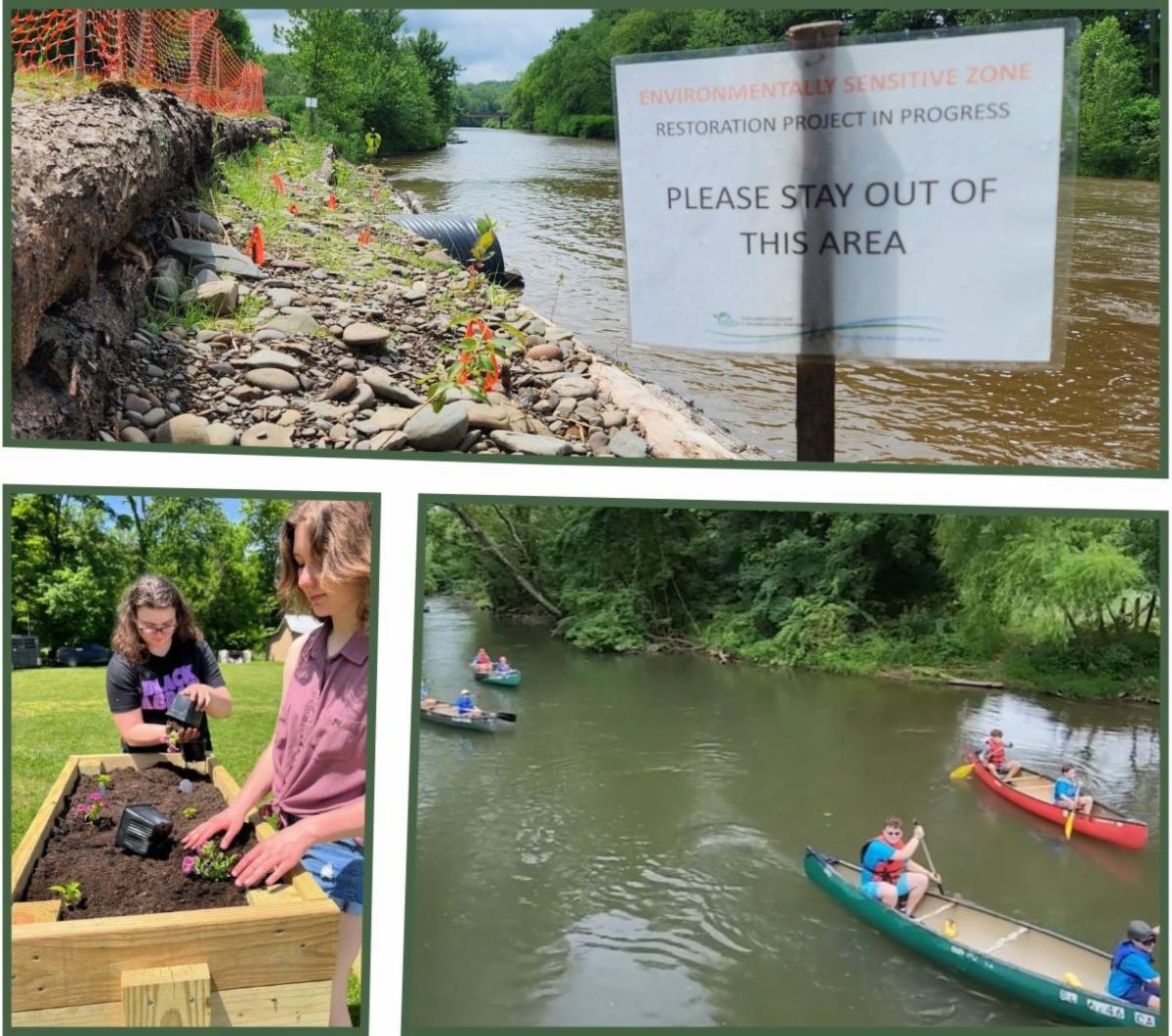
We’ve opened another round of our Stream & Watershed Enhancement Grant program to support local organizations dedicated to the health and wellness of our basin’s waterways. The grant provides funding for community-based environmental and water resource projects or events that improve, restore or protect our watersheds.
In prior years, the Commission awarded more than $300,000 to 68 projects. Awarded projects include an ADA-accessible boat launch, water trail signage, microplastics monitoring, aquatic organism passage, kayak safety training, and many more basin-benefitting initiatives.
This round we anticipate awarding approximately $150,000 in total grant funds, with an individual project cap of $5,000. The application period opened on September 15 and will close October 30. For full details, please visit our website.
|
Fighting for
Freshwater Mussels
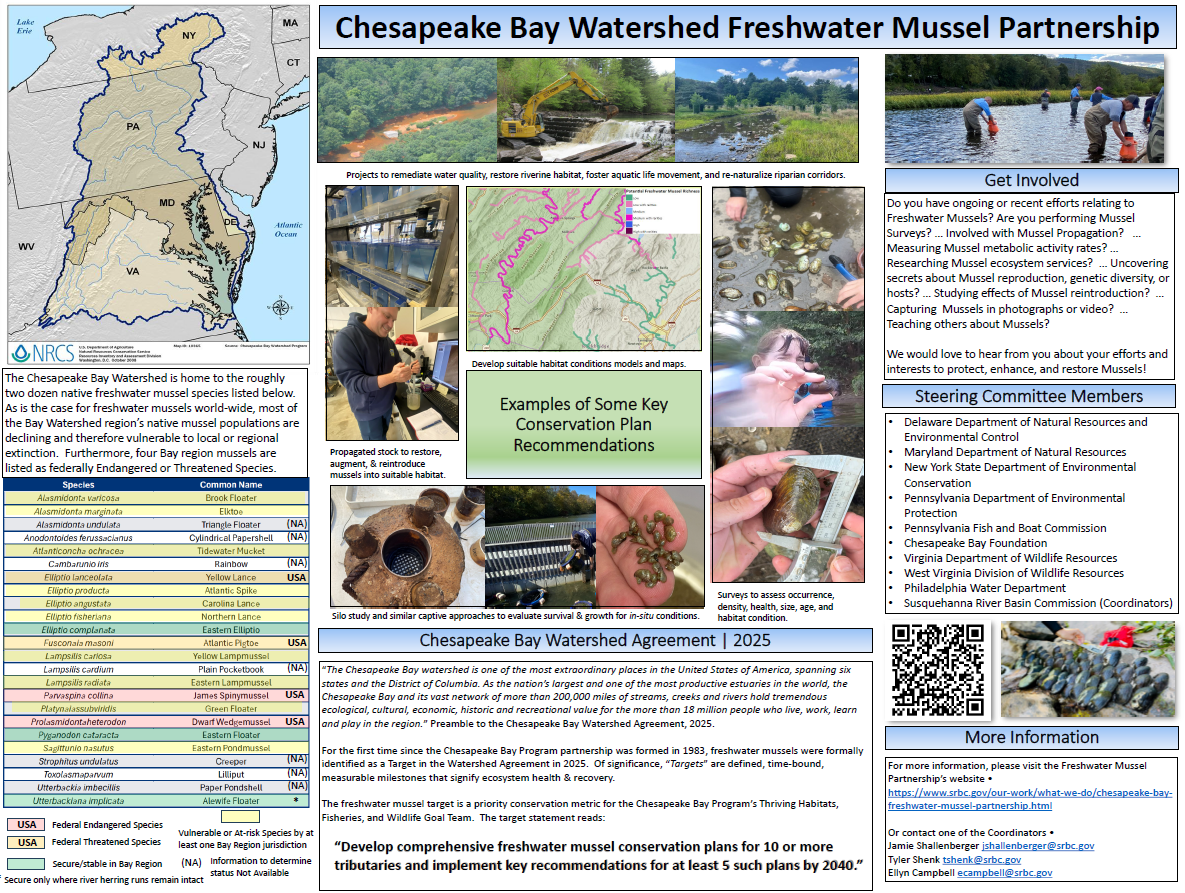
SRBC Manager of Monitoring & Protection Jamie Shallenberger recently co-presented at the Freshwater Mussel Science Symposium in Charles City, VA. His symposium poster (below) highlights the Chesapeake Bay Watershed Freshwater Mussel Partnership, which Shallenberger coordinates, and its role with respect to promoting restoration of freshwater mussel communities in the revised Chesapeake Bay Watershed Agreement.
Learn more about the partnership on our website and see the full poster by following the link below.
|
Environmental Excellence Awarded
We were excited to learn that a 2024 SRBC Consumptive Use Mitigation Grant recipient project recently received a 2026 Governor’s Award for Environmental Excellence.
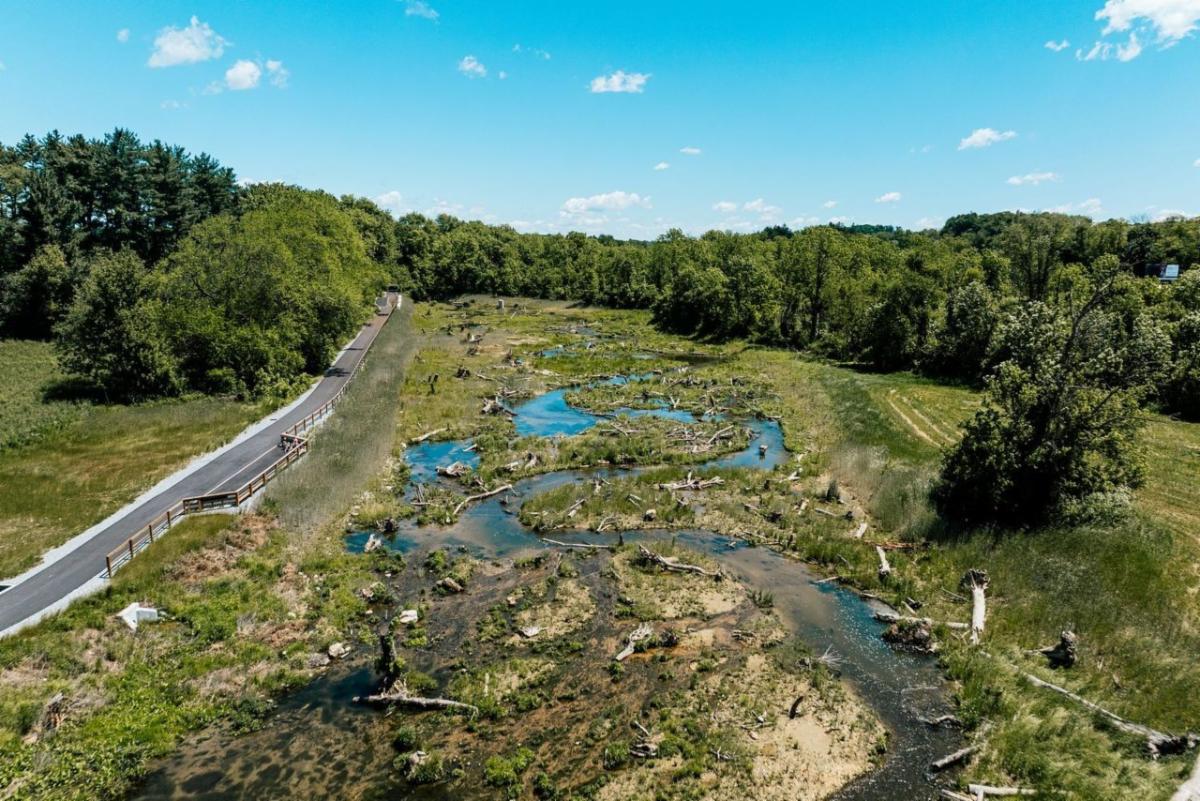
The York County Rail Trail Authority received just over $500,000 in Commission grant funding to restore a section of Oil Creek in York County, PA. We identify the Codorus Creek area as a priority watershed and the Hanover area as a potentially stressed area.
The project increased infiltration and aquifer recharge, improved local and regional water quality, and aided stormwater/floodwater retention and drainage. The project is part of a larger one to construct a new section of the Hanover Trolley Trail.
Photo below courtesy York County
Rail Trail Authority.
| | | New Podcast - Susquehanna Scout! | | |
Susquehanna Scout is WITF's new podcast, hosted by award-winning journalist Karen Hendricks, that explores the Susquehanna River and its ripple effects across Pennsylvania and beyond. WITF explains the podcast name: "A scout is someone who leads the way, asking questions and gathering information to share. We strive to fill that role, through meaningful, thoughtful and often fun conversations about the Susquehanna River."
SRBC staff were excited to make not one, but two appearances on the podcast!
Check out all episodes at witf.org/programs/susquehanna-scout
| | |
Susquehanna Stories:
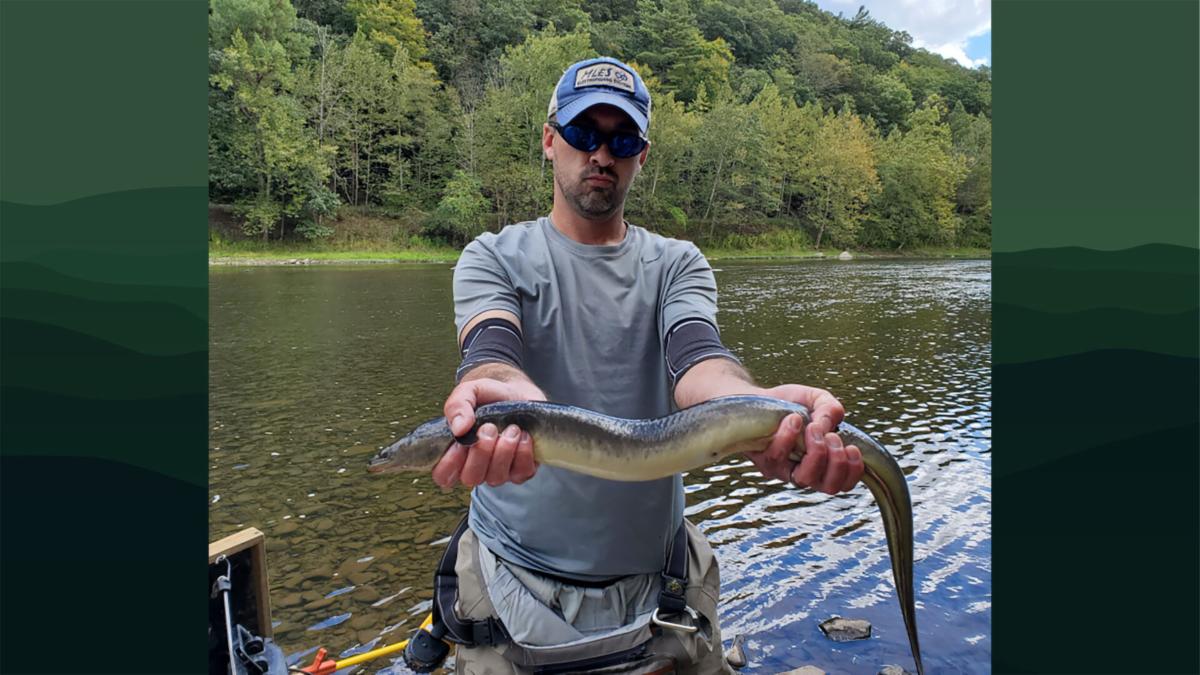
Meet Eel Whisperer Aaron Henning
In this episode, Karen dubs our Aquatic Biologist Aaron Henning an "eel whisperer" or "eel ambassador". Aaron explains why this snake-like fish is so unique and important to our basin.
"Within the last 40 years or so, we started our restoration program to bring them back. It's been pretty successful so now we have over 3 million American Eels in the basin, which previously weren't there... they have a pretty long life-cycle, they'll live up there for 10-15-20 years before out-migrating back to the ocean as adults to spawn and repeat the process."
| |  | |
Data Centers and the Susquehanna:
What You Need to Know
In this episode, our Executive Director Andrew Dehoff explains how hyperscale data centers might affect the Susquehanna River and our basin's water supplies.
"About 15 years ago there was a new, unprecedented demand for water for fracking... and that was a scramble, a 'what now' kind of moment. So the data center issue is kind of reminiscent of all that type of activity that was new, it came up fast... so learning how to accommodate it and adapting our policies, we are actually well-poised to handle this current issue."
| | | Trout, Tires, and Tributaries | | |
By Luanne Steffy
SRBC Aquatic Ecologist
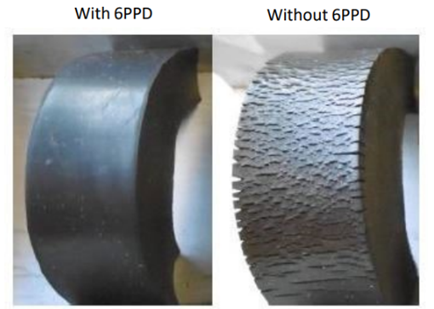
There’s a new emerging aquatic contaminant called N-(1,3- dimethylbutyl)-N’-phenyl-p-phenylenediamine, or 6PPD for short, that poses a potential threat to fish communities. 6PPD has long been used to prevent tires from degrading and cracking, but a study done in the Pacific Northwest in the last few years showed that when that tire chemical is exposed to ozone in the air, the quinone that is formed is lethal to Coho salmon. A quinone (which is the “q” in 6PPD-q) is a class of organic chemical compounds that form when an aromatic compound like 6PPD is exposed to air.
Since there are no Coho salmon in the Susquehanna River Basin, scientists are trying to evaluate if this chemical impacts other fish in the same family such as brook and brown trout, which are important to the basin. Initial results of lethality studies of 6PPD-q on other salmonids concluded that brown and rainbow trout have a higher tolerance to the compound. However, adult brook trout have a similar intolerance as Coho salmon to 6PPD-q, and young of the year brook trout are especially vulnerable.
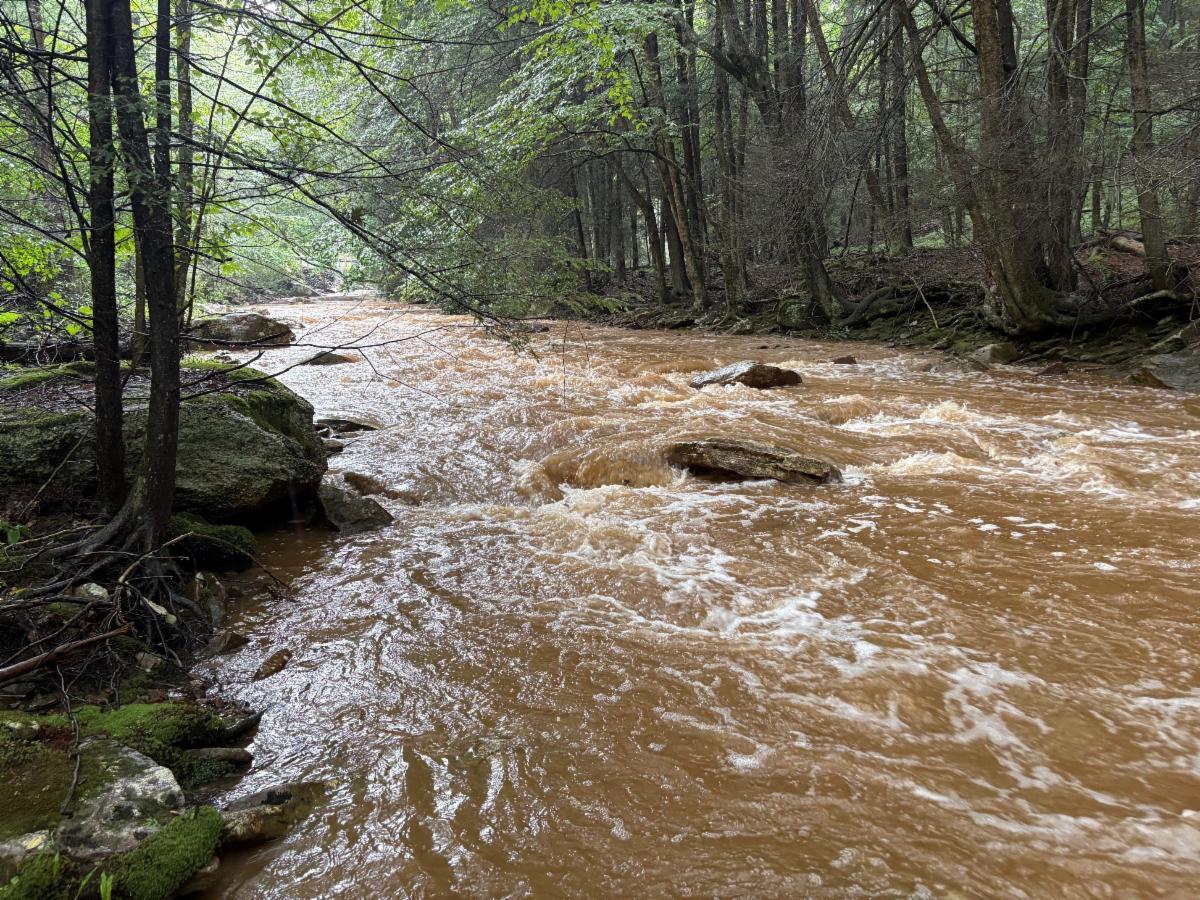
SRBC scientists have kicked-off a study with an assist from the U.S. Geological Survey (USGS) to sample storm runoff in streams where we’ve caught brook trout in the past and are also near paved roads where tire chemical runoff is most likely to be present. We will be sampling around 30 streams across the basin, targeting the first flush runoff (initial surge of stormwater) immediately after a heavy rain storm. The first 10 samples have been collected and we are awaiting results. Sampling will continue through next spring. Stay tuned!
| | | | | |
The image above is one of the streams our scientists sampled during storm flows - Deer Creek near Clearfield, Pa.
The image to the left, from the USGS, shows how rubber tires would wear with and without the 6PPD chemical.
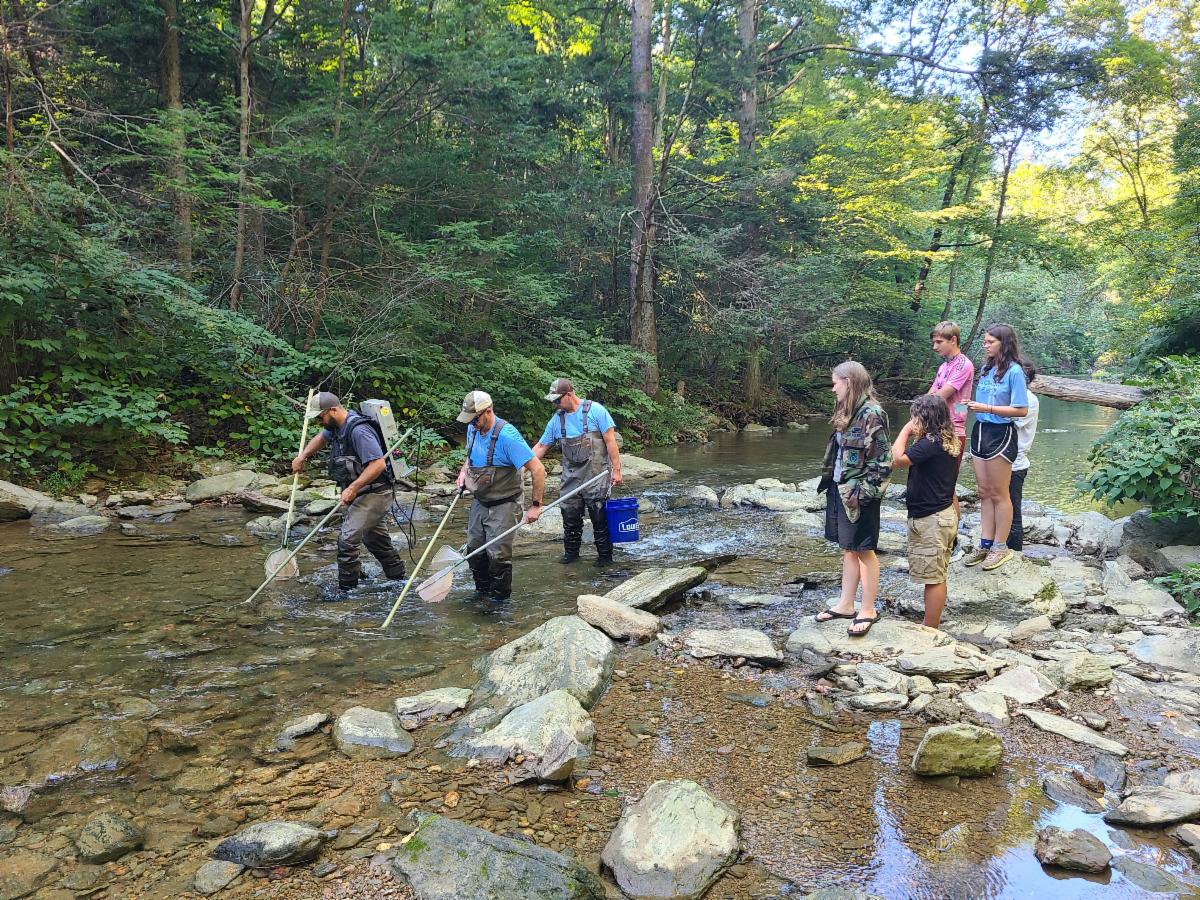
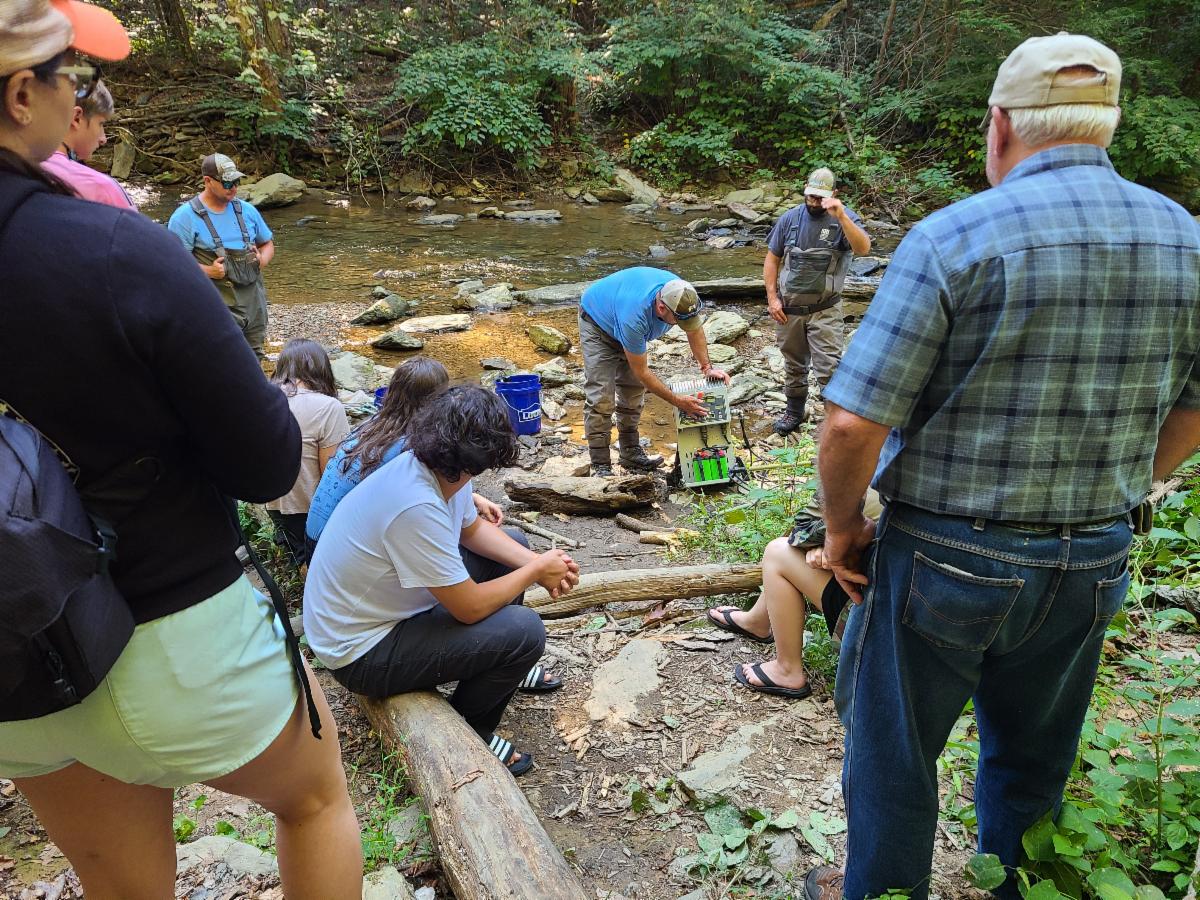
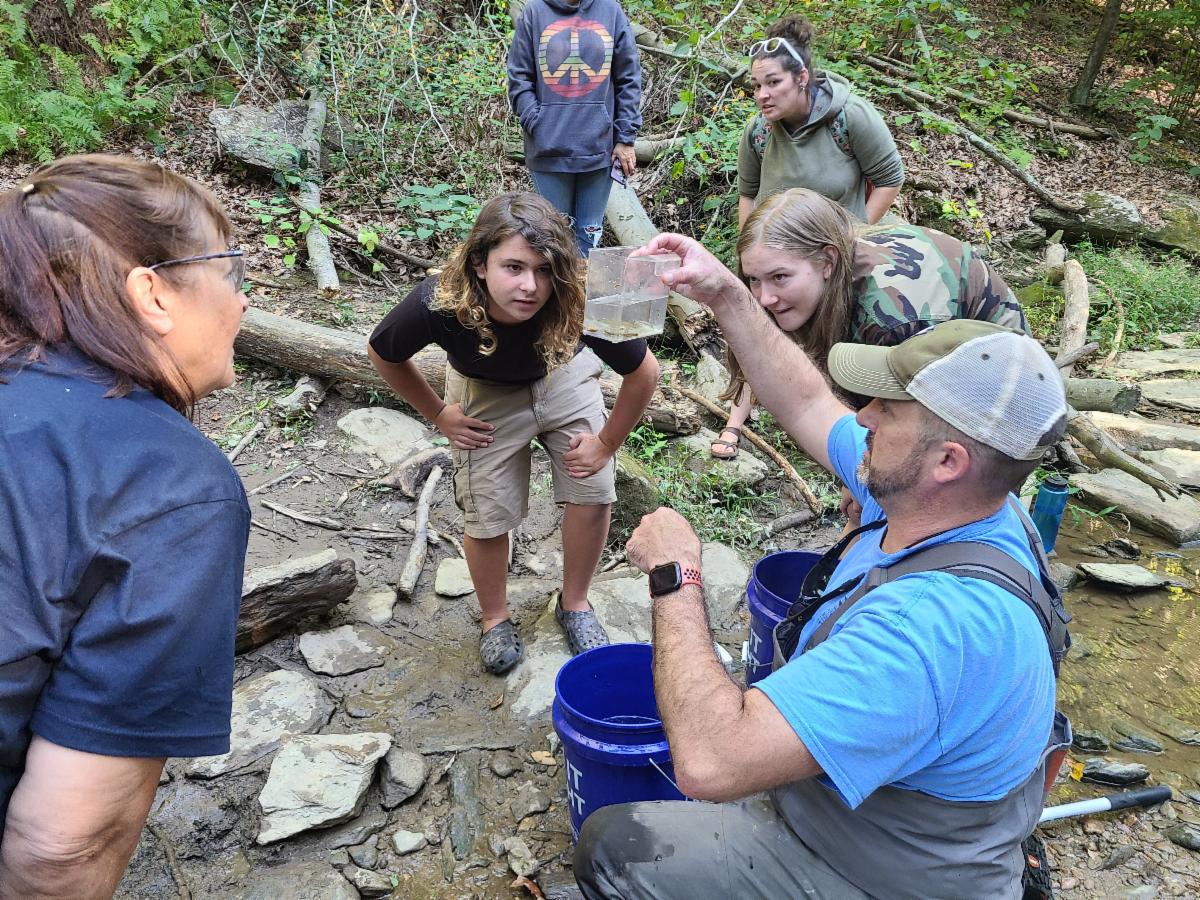
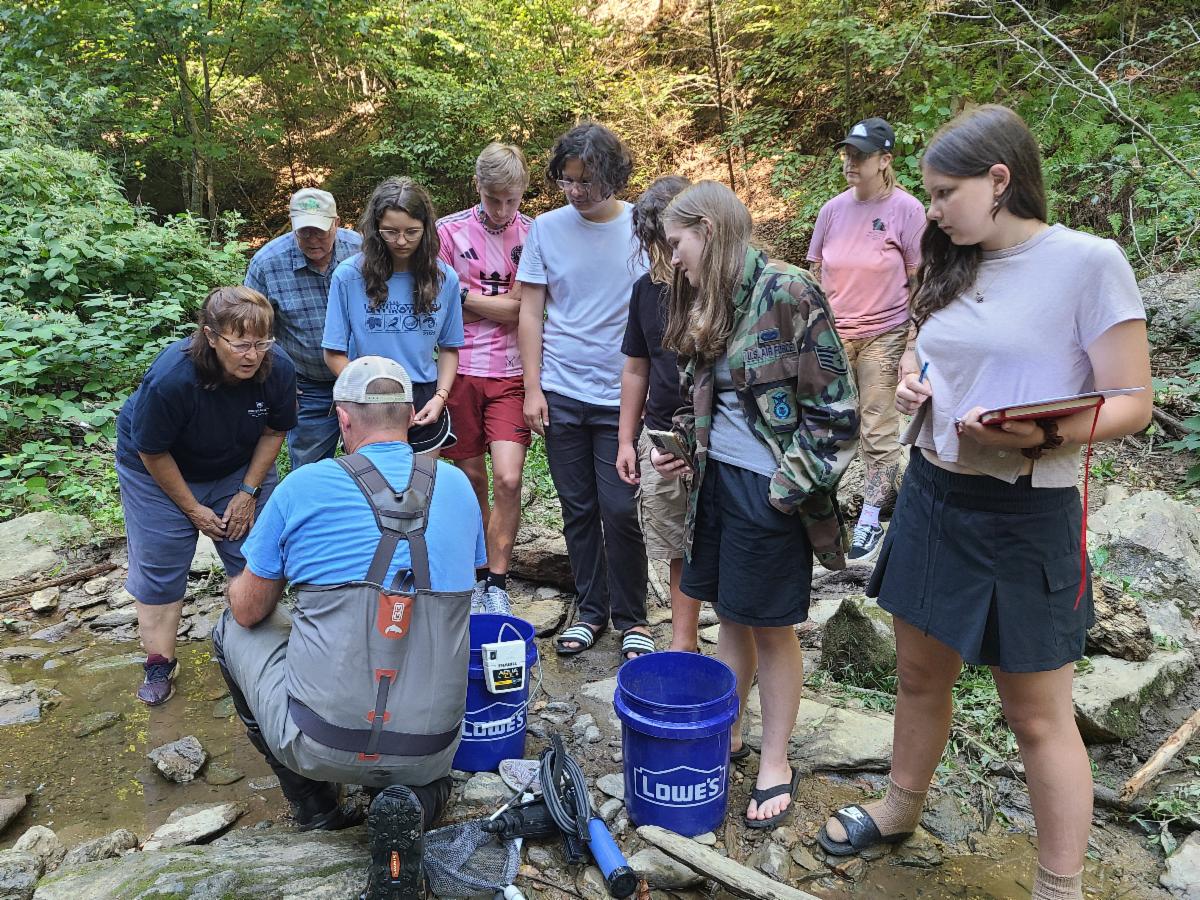
| | SRBC scientists had a blast participating in this year’s Watershed Week hosted by the Watershed Alliance of York (WAY). Aaron Henning, Blake Maurer and Matt Elsasser from our Monitoring & Protection program held an electrofishing demonstration on Fishing Creek in Wrightsville. The team caught a diverse variety of fishes and taught the crowd about using fish as indicators of stream health, reinforcing the importance of clean streams in our communities. Thanks to WAY for sharing these great photos! | | | |
Our Company | Contact Us | FAQs | Privacy Policy | | | | |