Weekly update from the National Housing Conference | |
News from Washington | By Brittany Webb
| |
|
DOJ sues RealPage for alleged price fixing
The Justice Department, along with the Attorneys General of North Carolina, California, Colorado, Connecticut, Minnesota, Oregon, Tennessee, and Washington, filed a civil antitrust lawsuit against RealPage Inc. for allegedly violating antitrust laws through its pricing algorithm. The suit claims that RealPage decreased competition between landlords in apartment pricing, and monopolized the market for commercial revenue management software used by landlords to price apartments. The result is higher rental prices and lower concessions as building owners collaborate on their pricing decisions. The complaint further cites sworn testimony that it alleges makes plain the objective to maximize rental pricing and profitability at the expense of American renters.
“Americans should not have to pay more in rent because a company has found a new way to scheme with landlords to break the law,” said Attorney General Merrick Garland. “We allege that RealPage’s pricing algorithm enables landlords to share confidential, competitively sensitive information and align their rents. Using software as the sharing mechanism does not immunize this scheme from Sherman Act liability, and the Justice Department will continue to aggressively enforce the antitrust laws and protect the American people from those who violate them.”
RealPage has strongly denied the allegations. "Inflation, high interest rates, and a housing supply shortage have driven up rent prices in America," said Jennifer Bowcock, a RealPage spokesperson. “RealPage is designed to help property managers and renters find the right price to fill their units, keep occupancy rates high, and manage seasonal fluctuations in demand so that there are units available at the times prospective renters need them.”
The suit marks the first time the DOJ has sued a company for systematically subverting market competition through mathematical algorithms. RealPage has already been engaged in private litigation with D.C. and Arizona. The company has indicated that it is open to working with the government to resolve the concerns quickly.
| | |
|
Adeyemo calls on FHLBanks to increase affordable housing contribution
Deputy Secretary of the Treasury Wally Adeyemo called on the Federal Home Loan Banks (FHLBanks) to increase their affordable housing support through their Affordable Housing Program (AHP) at a meeting with FHLBank leadership and Federal Housing Finance Agency (FHFA) Director Sandra Thompson. The meeting, which focused on better support of affordable housing and the resources that could potentially increase housing supply, prompted Adeyemo to urge the FHLBanks to spend at least 20% of their net income on affordable housing. Currently, the FHLBanks are voluntarily contributing 15% of their net income to affordable housing programs, 5% above their statutorily required 10%. He asked that they use a portion of their existing unrestricted retained earnings to create a pool of capital aimed at lowering the cost of new housing.
The FHLBanks have commented that the role they play is in gap funding rather than lead lenders. “In this capacity, AHP occupies a complementary role in the affordable housing market and the FHLBanks are not positioned to influence major project changes such as funding or reserves,” reads a press release.
Chief Executive Officer of the Council of Federal Home Loan Banks Ryan Donovan highlighted that burdensome regulations prevent AHP participation stating, “AHP funding has an undeniably positive impact…We strongly encourage FHFA to go beyond the application process and widen its focus to address the limitations inherent in the broad AHP regulatory scheme. We are eager to collaborate with FHFA on this initiative.”
In a letter sent to Director Thompson, the board chairs of the 11 FHLBanks pushed back on the suggestion of 20%.
“We are opposed to any approach that could weaken our capital position, as this would ultimately diminish our ability to fulfill our statutory mandate of providing liquidity to the financial system and supporting housing finance and community development. While the FHLBanks are government sponsored enterprises (GSEs), Congress organized the FHLBanks as private cooperatives, funded by private capital from our diverse membership. This unique structure—one that has consistently allowed us to deliver on our liquidity and affordable housing missions, maintain necessary capital reserves and serve members and communities during volatile economic periods—must be preserved to ensure the continued stability and reliability of the FHLBanks,” it reads.
The FHLBank presidents also sent a letter to Deputy Secretary Adeyemo that proposes other mechanisms to increase their affordable housing support, including removing existing barriers to Community Development Financial Institutions and increasing support for state housing finance agencies.
| | |
The National Housing Conference (NHC) and the Intercontinental Exchange (ICE) are excited to invite you to virtually participate in “Revolutionizing Homeownership: Innovations in Mortgage Tech, AI, and Data,” on September 9. This event will explore how technology is changing the housing industry, focusing on advancements in mortgage platforms, Artificial Intelligence (AI), and data transparency. | 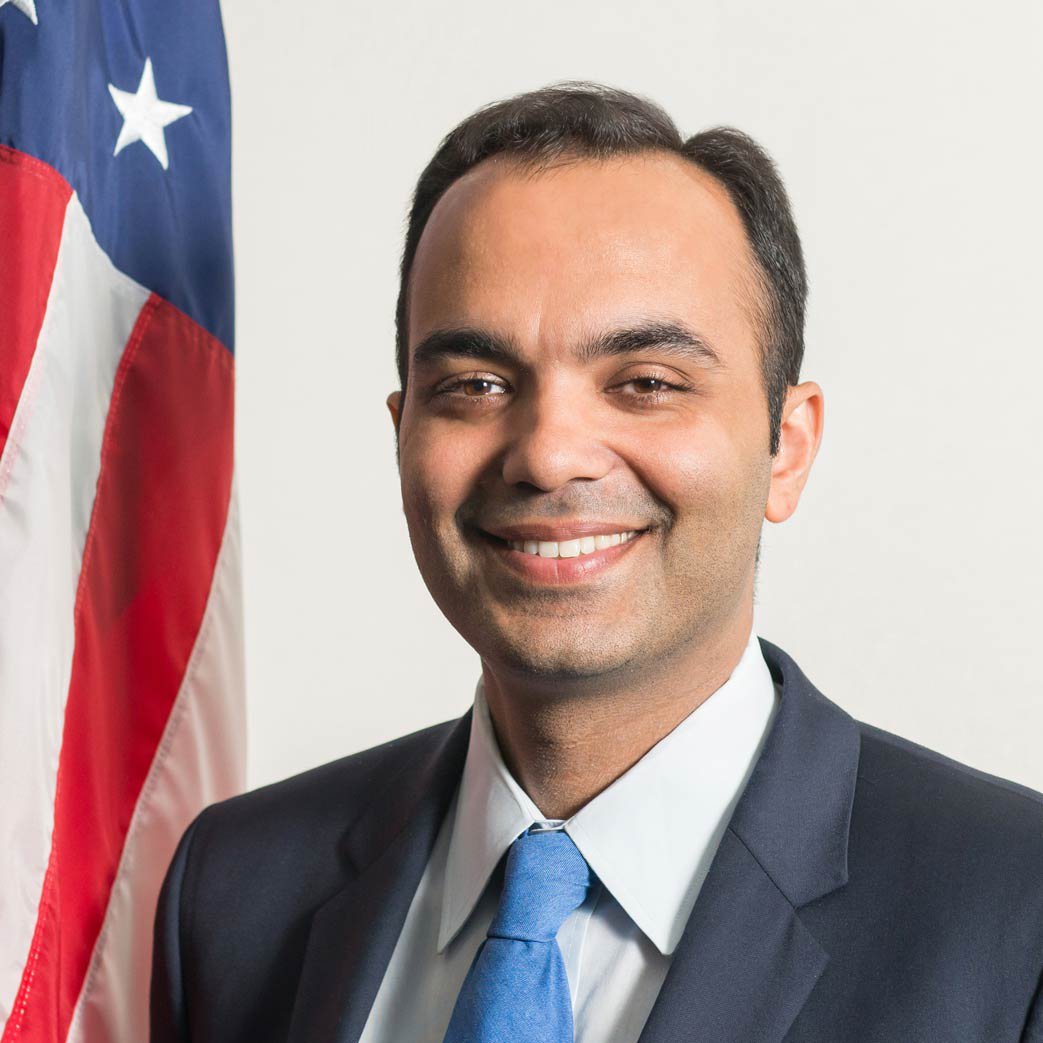 | |
CFPB Director Rohit Chopra will join us as he discusses his insights on the Consumer Financial Protection Bureau's efforts to address the impact of AI-driven decision-making tools on access to credit and fair housing practices.
Join industry leaders as they delve into the latest innovations that are automating and simplifying the home buying process, reshaping banking and finance, and broadening access to homeownership. Our expert speakers will share insights on AI’s growing influence in housing, its role in market sustainability, and its impact on fair and accurate property valuation and lending practices. Additionally, we’ll explore how enhanced data transparency is empowering consumers to make more informed decisions in their homeownership journey. Speakers include:
- The Honorable Rohit Chopra, Director, Consumer Financial Protection Bureau
- Anne Marie Pippin, Deputy Director of the Division of Conservatorship Oversight and Readiness, Federal Housing Finance Agency
- Timothy Bowler, President, ICE Mortgage Technology
- David M. Dworkin, President and CEO, National Housing Conference
- Sarah Myers West, Co-Executive Director, AI Now Institute
- Dr. Michael Akinwumi, Chief Responsible AI Officer, National Fair Housing Alliance
- Scott Levine, Head of Product, Tough Leaf
- Sipho Simela, CEO and Founder, Matrix Rental Solutions
- Vanessa Gail Perry, MBA, PhD, Professor of Strategic Management and Public Policy and Interim Dean, George Washington University School of Business
- Peter Carroll, Executive, Public Policy and Industry Relations, CoreLogic
- Castleigh Johnson, Founder and CEO, My Home Pathway
- Melissa Koide, CEO, FinRegLab
- Kelvin Brown, Sustainable Communities, Fannie Mae
| |
|
FHFA sets housing goals for the Enterprises
FHFA proposed new housing goals for Fannie Mae and Freddie Mac (the Enterprises) to meet in 2025-2027 as required by the Federal Housing Enterprises Financial Safety and Soundness Act of 1992. The established single and multifamily goals intend to ensure that the Enterprises promote equitable access to affordable housing and reach underserved populations.
“Given persistent challenges in the housing market, FHFA is proposing benchmark levels that reflect these dynamics and continue to ensure that the Enterprises remain focused on supporting key affordable housing segments while operating in a safe and sound manner,” said Director Thompson. “The goals proposed today offer a meaningful and realistic calibration that takes into account current and forecasted economic factors.”
The proposal would establish a new process for evaluating compliance, no longer requiring a housing plan to be submitted describing steps to take to improve performance if the Enterprise’s performance meets the required level of the newly-defined Enforcement Factors, which address uncertainty in forecasting and the time lag in determining market actuals.
Comments on the proposals are due on October 28.
| |  |
|
FHFA updates standards for private mortgage insurers
FHFA announced that the Enterprises are updating the Private Mortgage Insurer Eligibility Requirements (PMIERs), which set the financial and operational standards for private mortgage insurance companies providing coverage on loans acquired by the Enterprises.
“Financially sound private mortgage insurance companies play a critical role in a healthy residential mortgage market that helps borrowers, including first-time homebuyers, achieve their homeownership dreams,” said Director Thompson. “These updates represent an ongoing commitment to the safety and soundness of the Enterprises, ensuring that their private mortgage insurer counterparties have the necessary financial strength to pay claims in a wide range of economic environments.”
The revised standards, which have been periodically reviewed since their introduction in 2015, aim to ensure that private mortgage insurers have high-quality, liquid assets available to pay claims. The updates distinguish between bonds based on credit quality and liquidity, and they set limits on assets backed by residential mortgages or commercial real estate to minimize risks during housing market downturns. The updated standards will be phased in over 24 months, with full implementation by September 30, 2026.
Seth Appleton, President of the U.S. Mortgage Insurers, thanked FHFA, Fannie Mae, and Freddie Mac stating, “PMIERs are among the most successful housing market reforms introduced since the Great Financial Crisis and are an important component of a strong, resilient, and reliable private MI industry that is well-positioned to serve low down payment borrowers, mortgage lenders, and the GSEs, and to protect taxpayers in all economic cycles.”
| | |
|
Accessing NHC’s Housing Resource Center
NHC’s Housing Resource Center (HRC) is the definitive destination for all your federal policy needs in housing. Resources include news articles, toolkits, issue papers, research, and congressional actions, all searchable by topic and resource type. The HRC also provides comprehensive collections of housing-related blogs, podcasts, and data tools on current events and shared knowledge of housing and community development best practices.
The HRC is an exclusive benefit reserved for NHC members. As an NHC member, in order to maintain access to this valuable repository of information, you need to create a profile in NHC’s member database.
All NHC members received an email from “National Housing Conference (membership@nhc.org)” which includes all the necessary information to set up your profile. Once your profile is set up, you will need to use your login credentials to access the HRC.
Please contact Demetria Brown, NHC’s Membership Coordinator, at dbrown@nhc.org if you have any questions, or if you encounter any difficulty signing in.
| |
|
GSEs adopt new multifamily lease standards
The Enterprises announced that they are officially adopting new multifamily tenant protections announced earlier this year through a mutually published policy framework. The protections will establish lease standards for multifamily properties backed by Enterprise loans, including requiring a 5-day grace period for rent payments, a 30-day notice for rent increases and a 30-day notice of a lease expiration.
“These lease standards seek to extend the reach of common baseline tenant protections,” said Kevin Palmer, head of Multifamily for Freddie Mac. “Although many borrowers already exceed these minimum standards, all will be required to meet the standards to obtain GSE financing in the future. The details we released today are intended to give lenders, borrowers and other market participants clearer expectations with regard to how we will implement, monitor and enforce the new requirement.”
“Fannie Mae is committed to implementing protections that support housing stability for the individuals and families who live in the multifamily rental properties we back. The new Enterprise Multifamily Lease Standards align with our mission to expand access to housing that is both affordable and sustainable. They reflect our comprehensive Renter Needs Research and methodical approach to analyzing renter obstacles and outcomes and will provide the industry with consistent expectations regarding tenant notification and grace period practices,” said Michele Evans, Executive Vice President and Head of Multifamily, Fannie Mae.
The framework will apply to new loans beginning in February 2025. Additional details will be provided around the same time.
| | |
|
HUD updates FFB Risk Sharing
The U.S. Department of Housing and Urban Development (HUD) and the U.S. Department of the Treasury have announced new measures aimed at providing greater interest rate stability for state and local Housing Finance Agencies (HFAs) that use the Federal Housing Administration’s (FHA) risk sharing initiative with the Federal Financing Bank (FFB) to finance new construction of affordable housing. The new measures include an interest rate "collar," which sets a floor and cap on the benchmark Treasury rate used to calculate financing costs. This adjustment is expected to make the program more accessible, enabling the development of more affordable multifamily properties.
HUD Acting Secretary Adrianne Todman emphasized the importance of these changes, stating, “Let’s face it – we don’t have enough affordable homes. Here at HUD, we are making changes to build new, quality, affordable homes like never before.”
According to the announcement, the FFB Risk Sharing program has facilitated over $2.7 billion in financing since restarting in 2021, supporting the development or rehabilitation of more than 16,200 affordable rental homes. With these new changes, FHA anticipates the creation or preservation of approximately 38,000 additional affordable rental homes over the next decade.
| | |
|
HUD expands housing access for people with disabilities
HUD is expanding its support for people with disabilities through new policy changes and financial awards to enhance housing access. The Department introduced new flexibilities within the Mainstream Voucher program, which is critical in assisting non-elderly people with disabilities in transitioning from institutional settings and avoiding homelessness. The new guidelines include alternative requirements such as extended search times for housing and removing residency preferences that previously limited voucher holders to specific jurisdictions. Additionally, public housing agencies can now partner more effectively with organizations like Medicaid agencies to ensure people with disabilities can access both housing and necessary support services.
Additionally, HUD announced nearly $140 million in grants to expand affordable housing options for people with disabilities. These grants, part of the Section 811 Project Rental Assistance (PRA) program, will be distributed to 18 state housing agencies. The funding will support the creation of affordable housing within multifamily developments and the integration of supportive services in partnership with Medicaid and other health agencies. HUD Acting Secretary Adrianne Todman emphasized that the grants will “support Americans with disabilities by both creating affordable housing and expanding crucial support services.”
| | |
|
VA awards $800 million for homeless veterans programs
The U.S. Department of Veterans Affairs announced it will provide over $806 million in grants to help homeless and at-risk veterans through the Supportive Services for Veteran Families and Homeless Providers Grant and Per Diem programs, emphasizing that ending Veteran homelessness is a top priority for the Administration. The announcement notes that in 2023, VA placed over 46,500 individuals into permanent housing build upon Housing First programs, exceeding its goal by almost 23%.
“We’re making real progress in reducing Veteran homelessness, but there is much more work to do,” said VA Secretary Denis McDonough. “These grants allow VA and the entire Biden-Harris Administration, alongside community partners, to provide more housing and wraparound services to more homeless and at-risk Veterans than ever before.”
HUD also announced over $10 million in funding available for the HUD-U.S. Department of Veterans Affairs (VA) Supportive Housing (Tribal HUD-VASH) program, building on the recent new set of policy changes to the HUD-Department of Veteran Affairs (VA) Supportive Housing (HUD-VASH) program.
| | |
|
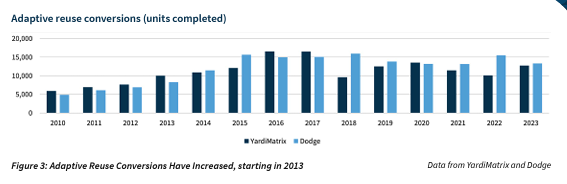
Adaptive reuse conversions surge since 2013
A research report published by Fannie Mae on Commercial to Residential Conversions illustrates the trend of adaptive reuse conversions from 2010 to 2023, which has seen significant growth since 2013. This increase in conversions reflects broader trends in using commercial properties, such as offices and hotels, for residential purposes. While adaptive reuse conversions account for a small percentage of overall multifamily production, this approach has gained importance, particularly in dense urban areas. However, regional variations exist, with Los Angeles County seeing higher conversion rates compared to other regions like San Diego and Sacramento. However, data on these conversions remains scarce, making it challenging to fully assess the impact.
| |
|
NHC published its 2023 Annual Report, highlighting our achievements over the past year from launching new policy resources to convening diverse working groups to address today’s most pressing housing issues. 2023 marked a pivotal year in housing policy, with NHC engaging in timely policy discussions, providing leadership on issues such as closing the homeownership gap for all Americans, bank capital standards, CRA modernization, increasing the affordable housing supply for renters and homebuyers, and reducing the cost of financing a first home purchase. The report demonstrates our ongoing commitment to delivering tangible, impactful, and achievable solutions for affordable housing.
A report from the Government Accountability Office (GAO) reviews HUD’s Continuum of Care (CoC) program, which funds supportive services to help people experiencing or at risk of homelessness. It highlights the challenges CoCs face, such as difficulties in hiring and retaining staff and insufficient annual funding increases for supportive services. HUD has responded by seeking authority from Congress to adjust grant funding and providing technical assistance to CoC’s on staffing.
The New York Times published an article discussing the impact of rising property insurance costs on the affordable housing sector, especially in states hit by severe weather like Texas, Florida, and California. Nonprofit housing developers, who cannot offset these costs by raising rents are struggling to maintain existing properties and fund new projects, potentially leading to a reduction in affordable housing and an increase in homelessness. Developers and insurers are searching for solutions, including stronger building techniques and potential federal reinsurance programs.
| |
The National Housing Conference is a diverse continuum of affordable housing stakeholders that convene and collaborate through dialogue, advocacy, research, and education, to develop equitable solutions that serve our common interest. | |
Defending Our American Home since 1931 | |
Copyright © 2024. All Rights Reserved. | | | | |