The Coast
We cover coastal Carolina from the Grand Strand to Beaufort
News and views from people you can trust
- Featured stories -
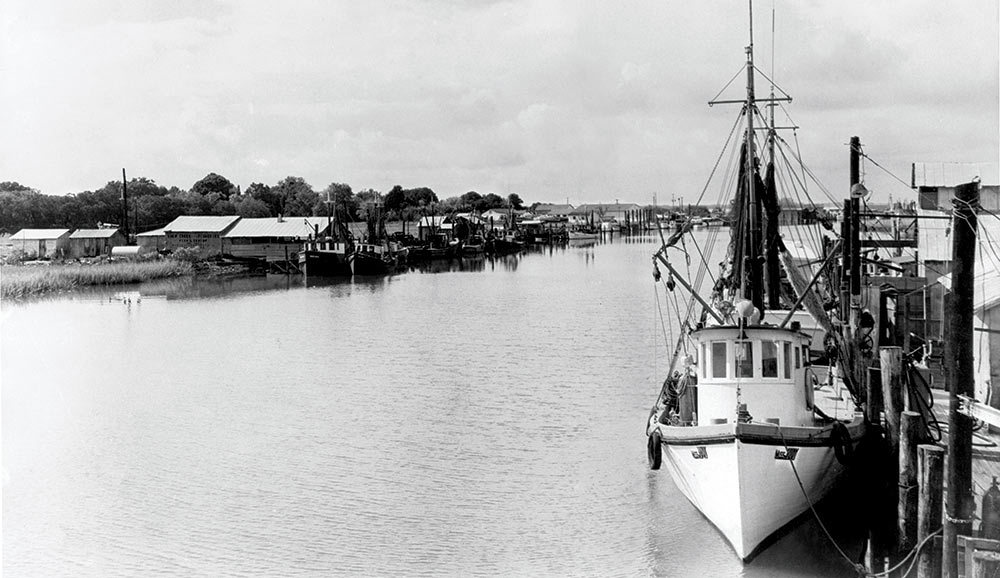
History/Culture: Shem Creek's historic ebb and flow.
In his own words: In 2015, a tragedy turned Chris Singleton's life upside down.
Sports: Beckham named tennis champs.
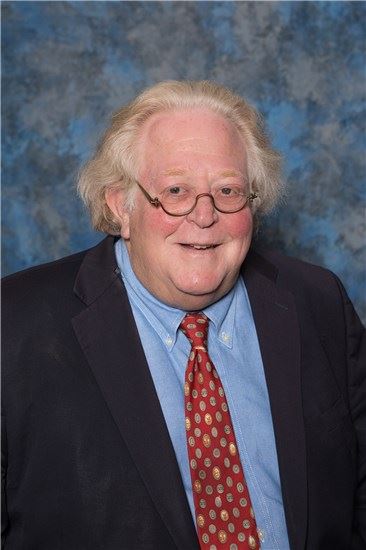
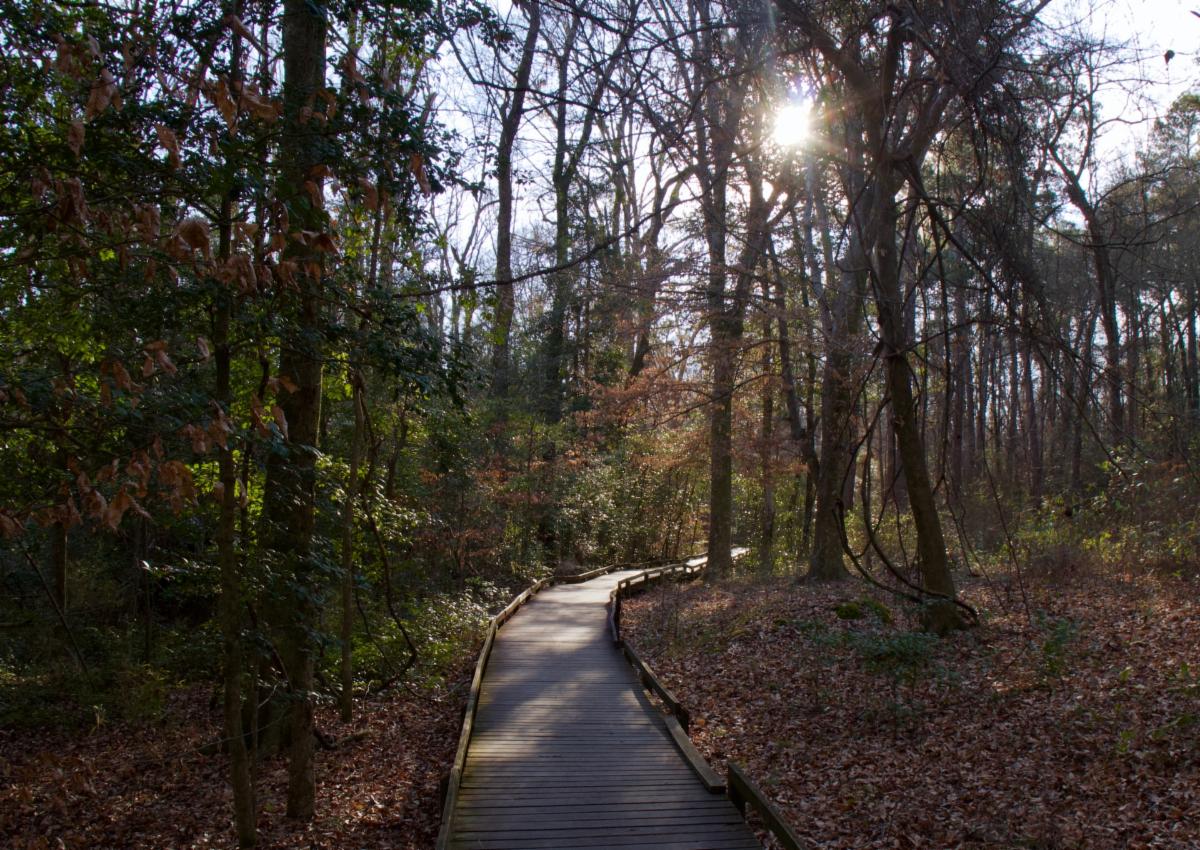
Politics: Legislature needs to wake up to environmental needs.
Business: COVID crisis gave birth to new venture.
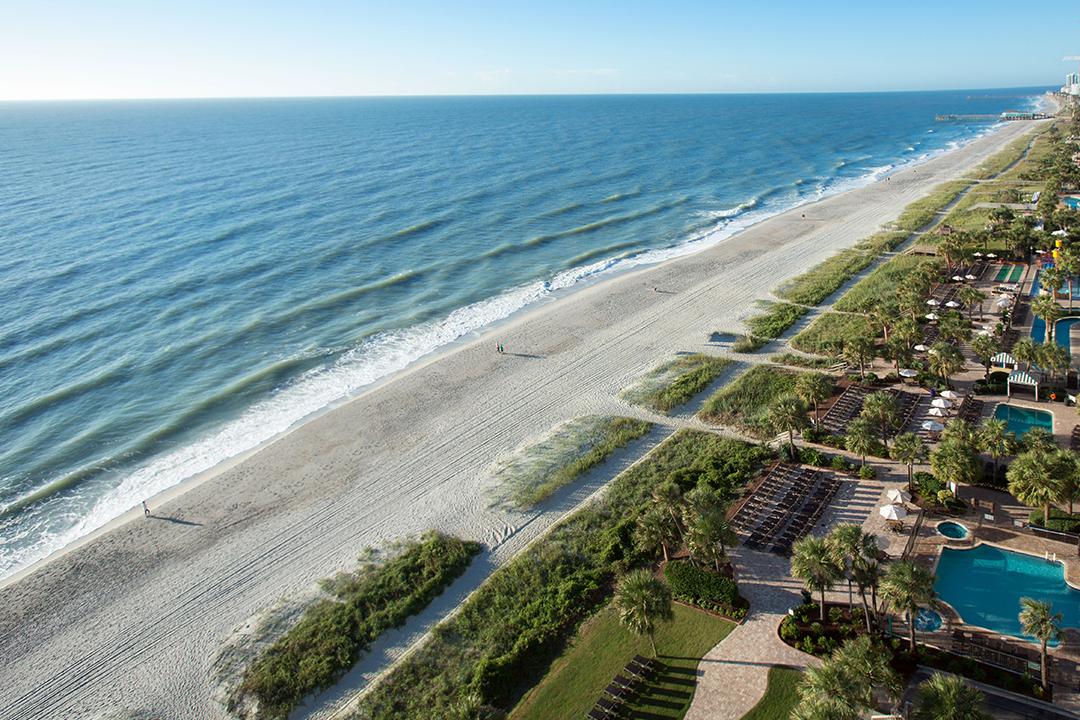
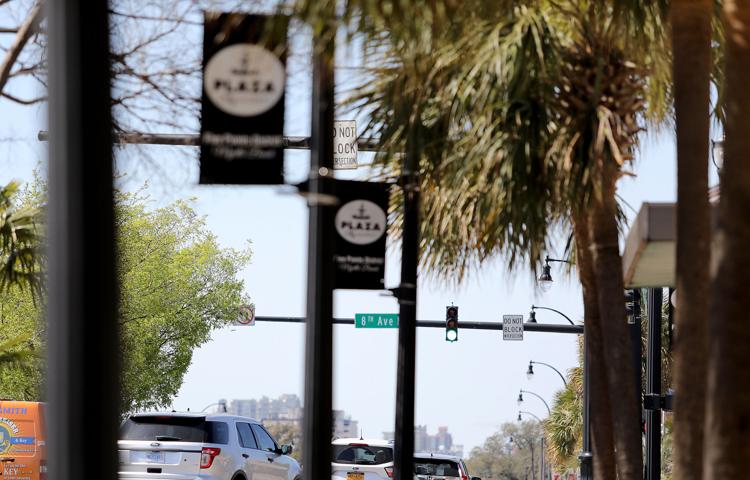
Leisure: Is a remodeled downtown Myrtle Beach in the works?
|
|
|
Continuing to Hold Water: The Heart, Soul and History of Shem Creek
|
|
Waterway has long been industrious, idyllic marine workhorse |
Inlet stands out as Mount Pleasant's nautical epicenter
Photos provided by
Town of Mount Pleasant
Mount Pleasant Magazine
Shem Creek has always been a working creek. It fed the Sewee Indians and ferried the father of our country safely across the harbor. It powered sawmills and rice mills and pumped money into Mount Pleasant’s economy with each net of shrimp the trawlers hauled to the docks. And it worked magic for children, opening arms to generations of little boys and girls who paddled into its currents.
Despite changing tides through the centuries, Shem Creek still provides a livelihood, a playground and a sense of place. It’s the town’s touchstone — a picture-perfect place that will always capture the heart and soul of Mount Pleasant.
Bricks, Buckets, Ferries and Fleets
The Indians are thought to have called the creek Shemee, possibly for a small tribe that lived on its banks. Shem Creek, with its head near present-day Bowman Road, was known in the 1700s by the name of the men who owned land alongside it.
Back then, it was Sullivan’s Creek, for Capt. Florence O’Sullivan, the patriot for whom Sullivan’s Island is named; Dearsley’s Creek, for George Dearsley, thought to have been one of the first shipbuilders on the creek; and Parris Creek, after Alexander Parris, who also owned land near Beaufort, where the Parris Island Marine Corps facilities are today.
Shipbuilding made Shem Creek a working creek, but that was far from the only enterprise there. Peter Villepontoux ran a lime kiln on the creek in the 1740s to supply the growing number of brickyards in the Lowcountry. Between 1745 and the start of the Civil War in 1861, more than 50 brickyards had operations on the Wando and Cooper rivers.
Ferry service made Shem Creek a hub of business as well. In 1770, Englishman Andrew Hibben bought a charter to run a ferry from the south side of Shem Creek to Charleston. Hibben’s Ferry was the first to connect Haddrell’s Point — the name given to the Old Village area, after colonist George Haddrell — with the city of Charleston; other ferries had run from Hobcaw Creek. Hibben charged 33 cents for passengers, 21 cents for horned cattle, 75 cents for two-wheeled carriages and $1.75 for four-wheeled carriages.
In 1795, millwright and inventor Jonathan Lucas built a combination rice mill/sawmill on Shem Creek — the first water-driven rice mill in the area. The man and his work live on in the names of thoroughfares along the creek — Mill Street and Lucas Street, specifically. Lucas’ mill was on the site of an earlier mill called Greenwich Mill, built by landowner Jonathan Scott. In the mid-1800s, John Hamlin’s Mount Pleasant Bucket Factory was on the south side of the creek, in the area of present-day Live Oak Drive and Bennett Street. The factory supplied not only buckets but painted and unpainted pine, cypress, assorted lumber and lathes.
War on the Creek
The Civil War touched Shem Creek, just as it did the rest of the Charleston area. In the early 1860s, workers at Jones Shipyard on Shem Creek had built a steamer called The Planter that owner F.M. Jones intended for use by nearby plantations. The vessel was instead put into service as a blockade runner for the Confederacy because of its shallow draft and speed. On May 13, 1862, while the vessel’s white officers were ashore, The Planter’s Black quartermaster, Robert Smalls, and the rest of the Black crew saw their opportunity and seized it. Smalls and his fellow sailors steered the ship out to meet Union vessels at the mouth of the harbor and were later rewarded for their daring feat.
At the time of the war, there was a grist mill on Shem Creek in the area that is now the Shemwood II subdivision. The mill ground rice and corn grown on local plantations. In February 1865, Mount Pleasant’s intendant, Henry Slade Tew, wrote a letter to his daughter telling her of the ill fate that befell the mill:
“I heard that orders had been given to burn the mill and contents … the destruction of the mill itself would deprive the people of a means of having any rice beat or corn ground, and must cause great suffering.”
Tew went to the mill to try to stop the burning, appealing personally to Capt. C.P. Bolton and his cavalry as they approached, bearing torches. He wrote, “He [Bolton] admitted the cruelty of the act … but his orders compelled him to destroy it, and fire was accordingly applied, and the devilish act, I must call it, accomplished.”
Terrapins and Trawlers
More than two decades after the war ended, the modern seafood and boat building industries on Shem Creek were born. In 1890, William Hale was operating an oyster factory on the creek, and in 1895, Capt. Robert Holman Magwood bought the Mount Pleasant Boat Building Co., docking his boats there and operating a turtle crawl. The “Cooter Pen” shipped live diamondback terrapins to the larger cities in the Northeast, where they appeared on menus of the finest hotel restaurants.
By the 1930s, shrimping and boat building were the major industries on the creek. The Darby family bought the Mount Pleasant Boat Building Co. in 1921, and the business thrived, specializing in engine installation, repairs and equipment sales, as well as construction. When the company finally closed in 1990, the boat building business ceased on the creek. While the shrimping industry continues at Shem Creek, it faces pressure from cheap foreign imports and commercial development.
In 2002, the town of Mount Pleasant appointed a special Shem Creek Management Committee to “determine a vision and outline issues of importance to the future of Shem Creek.” After several months spent gathering opinions and information, the committee concluded “that the character of the creek remains as it is — natural, water-dependent, charming — a working creek.”
More than two decades after the war ended, the modern seafood and boat building industries on Shem Creek were born. In 1890, William Hale was operating an oyster factory on the creek, and in 1895, Capt. Robert Holman Magwood bought the Mount Pleasant Boat Building Co., docking his boats there and operating a turtle crawl. The “Cooter Pen” shipped live diamondback terrapins to the larger cities in the Northeast, where they appeared on menus of the finest hotel restaurants.
By the 1930s, shrimping and boat building were the major industries on the creek. The Darby family bought the Mount Pleasant Boat Building Co. in 1921, and the business thrived, specializing in engine installation, repairs and equipment sales, as well as construction. When the company finally closed in 1990, the boat building business ceased on the creek. While the shrimping industry continues at Shem Creek, it faces pressure from cheap foreign imports and commercial development.
In 2002, the town of Mount Pleasant appointed a special Shem Creek Management Committee to “determine a vision and outline issues of importance to the future of Shem Creek.” After several months spent gathering opinions and information, their conclusion was “that the character of the creek remains as it is — natural, water-dependent, charming — a working creek.”
The Tides of Time on Shem Creek
- 1680 – Mount Pleasant’s first white settlers arrive from England under the leadership of Capt. Florentia O’Sullivan, who had been granted 2,340 acres, including the current Sullivan’s Island and Mount Pleasant.
- 1740s – Peter Villepontoux runs a lime kiln on Shem Creek, supplying the Lowcountry’s burgeoning brick business.
- 1770 – Andrew Hibben’s ferry connects Haddrell’s Point, now referred to as the Old Village, to the city of Charleston. The charge is 33 cents for passengers, 21 cents for cattle and 75 cents for two-wheeled carriages.
- 1784-1793 – Jonathan Lucas arrives in the new world, possibly after being shipwrecked near Cape Romain at the mouth of the Santee River. He builds water-powered rice mills for planters along the Santee, Waccamaw, Wando, Combahee, Edisto and Ashepoo Rivers and on Winyaw -- today Winyah -- Bay. A mechanical genius, Lucas also erects a windmill on Hog Island, near the mouth of Shem Creek, likely to provide power for a sawmill.
- 1793-1795 – The Lucas family buys the estate of Jonathan Scott for 500 pounds sterling. Today, the property would be bounded by Shem Creek, McCants Drive, Simmons Street and Myrick Road. Lucas builds an innovative, tidal-powered rice mill and sawmill, with a large holding pond, along the eastern edge of Shem Creek. It is the first mill of its kind in the Charleston area.
- 1816 – Lucas’ son purchases Haddrell’s Point Plantation and Greenwich Mill on Shem Creek from his father for 2,000 pounds sterling. He obtains a small fleet of sailing vessels to enhance his transportation network.
- 1835 – The Lucas family buys approximately 180 acres on Shem Creek, between the Lucas Mill and the Ferry Tract. This property is laid out as the town of Lucasville, which later becomes the town of Mount Pleasant.
- 1862 – The Planter, a steamer intended for use by nearby plantations, is built at Jones Shipyard on Shem Creek. The vessel is instead pressed into service as a blockade runner for the Confederacy. On May 16, while the steamer’s white officers are ashore, Black quartermaster Robert Smalls and an all-Black crew steer the ship out to join up with Union vessels at the mouth of Charleston Harbor.
- 1865 – Confederate troops burn the Lucas buildings and Greenwich Mill to prevent supplies from falling into the hands of the approaching Union army. All that remains of the once-thriving business are what’s left of the brick and timber foundations of the mill, wooden posts that once reinforced the dikes and a small cemetery.
- 1890 – William Hale launches the modern seafood industry on Shem Creek, operating an oyster factory.
- 1895 – Capt. Robert Holman Magwood buys the Mount Pleasant Boat Building Co., docking his boats there and also operating a turtle crawl that produces live diamondback terrapins for restaurants in Northeastern cities.
- 1930s – Shrimping and boat-building are Shem Creek’s major industries.
- 1945 – A Shem Creek fixture, Mount Pleasant Seafood, is established by W.D. Toler.
- 2002 – The Town of Mount Pleasant forms the Shem Creek Management Committee to “determine a vision and outline issues of importance to the future of Shem Creek.”
- 2009 – A 3.4-acre tract at the headwaters of Shem Creek, near James B. Edwards Elementary School, is donated to the Mount Pleasant Open Space Foundation by the
East Bay Company. The land will be protected from development and will provide an outdoor classroom setting for students.
- 2011 – Shem Creek Park opens in October. A 2,200-foot-long boardwalk stretches from just beyond the Shem Creek Bridge on Coleman to the mouth of the Charleston Harbor.
- 2013 – The town of Mount Pleasant approves a parking garage/mixed use building on the corner of Mill Street and Coleman Boulevard, just a stone’s throw away from Shem Creek.
- 2016 – The town of Mount Pleasant rules to condemn the OK Tire property on the northern side of Shem Creek. The city opens an additional 1,500-foot-long section of the boardwalk that connects to the original, providing spectacular birding opportunities.
- 2019 – The pedestrian bridge over Shem Creek is complete. The bridge connects the Coleman Boulevard sidewalk near Tavern & Table to the boardwalk near Mount Pleasant Seafood on the other side of the creek.
- 2020 – Mount Pleasant Town Council voted to name the Shem Creek pedestrian bridge in honor of Captain Wayne Magwood and his family. It will be called Magwood Boardwalk.
|
|
es
Big Goat Island and the Goat Man
|
|
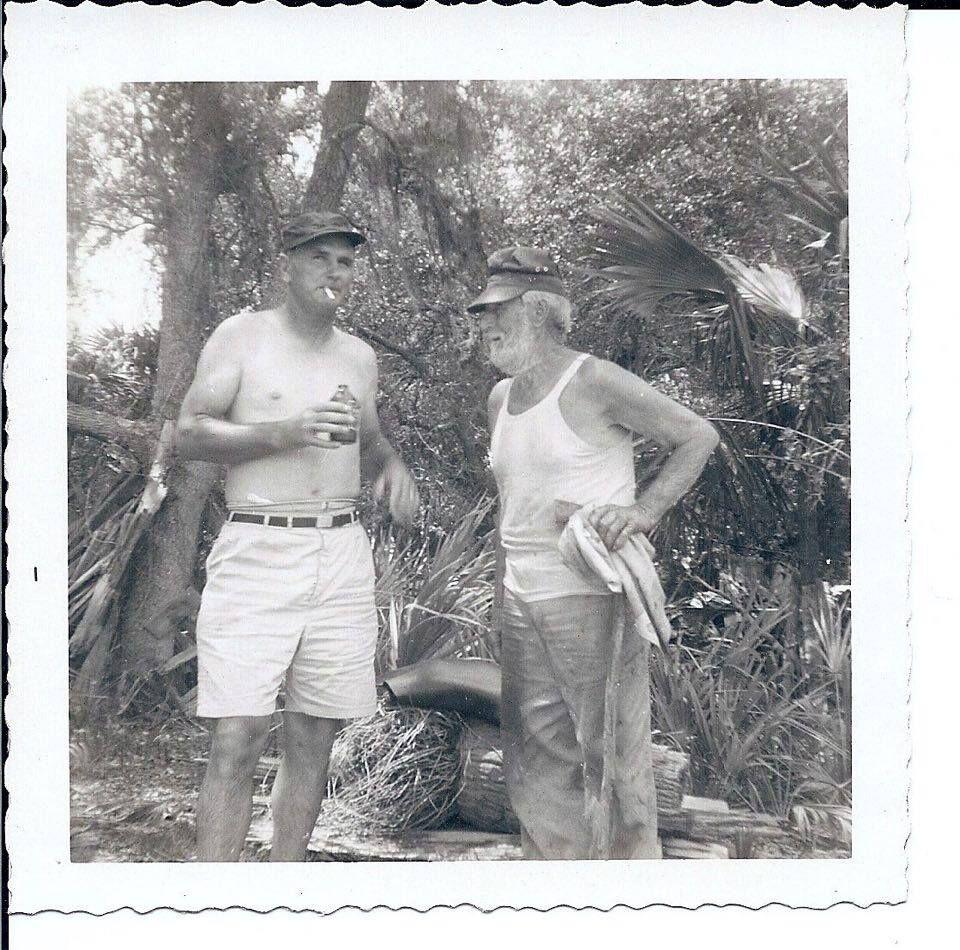
This photo, courtesy of John Midgett’s son, Raymond Midgett, is one of the few pictures remaining of when Goat Island was wild and nearly uninhabited. It shows John Midgett on the left and Henry Holloway — the Goat Man — on the right.
By Suzannah Smith Miles
Today, passing Big Goat Island by boat on the Intracoastal Waterway is pretty much a non-event. With its private docks and comfortable homes tucked under groves of palmettos, the island is not much different than other waterfront residential areas.
But back in the day when Goat Island was wild and undeveloped, every time a boat passed by — big boat, small boat, sailboat or a 60-foot barge — its arrival was heralded with gleeful waves and shouts of “hallo” from two of the most unusual characters in the Lowcountry at the time, the Goat Man, Henry Holloway and his wife, Blanche.
Wild haired, dressed in clothes that were almost rags, these two unusual souls lived as hermits on the island’s jungle shores. From the early 1940s to their passing in the early 1960s, the two lived alone on the island, then entirely uninhabited except for Holloway’s herd of some 200 goats.
The Holloways hadn’t always been hermits. Henry had started life as a butcher in Charleston. When the Great Depression hit and prices for meat plunged, the two looked for alternatives. Blanche also may have suffered mental health issues stemming from severe menopause. Whatever the reasons, the two chose the life of recluses, first setting up a small squatter’s compound in the remote jungles on the north end of Isle of Palms (today’s Wild Dunes) and later, moving across the water to Goat Island.
That they lived a rustic life is an understatement. Their “house” was basically a lean-to made of driftwood and tree boughs which, according to a reporter who visited in the 1950s, was encircled by crude fences made of old lumber, wire, burlap and other castoffs that drifted up to the shores with the tide. For food they grew vegetables. They drank rain water flavored with goat’s milk.
The Holloways soon became a familiar and beloved twosome for boaters on the waterway. They may have been recluses, but they apparently enjoyed greeting passing boaters with waved hellos. Certainly, those of us who were children at the time were thrilled to see these Robinson Crusoe-types in person.
While they enjoyed waving from afar, they didn’t cotton much to visitors and preferred their solitary life with their goats.
They did allow visits from John Midgett, commander of the U.S. Coast Guard base on Sullivan’s Island at the time, who checked on the Holloways on a regular basis and brought them supplies and other necessaries.
|
|
Small business gains national traction, opens shop downtown |
|
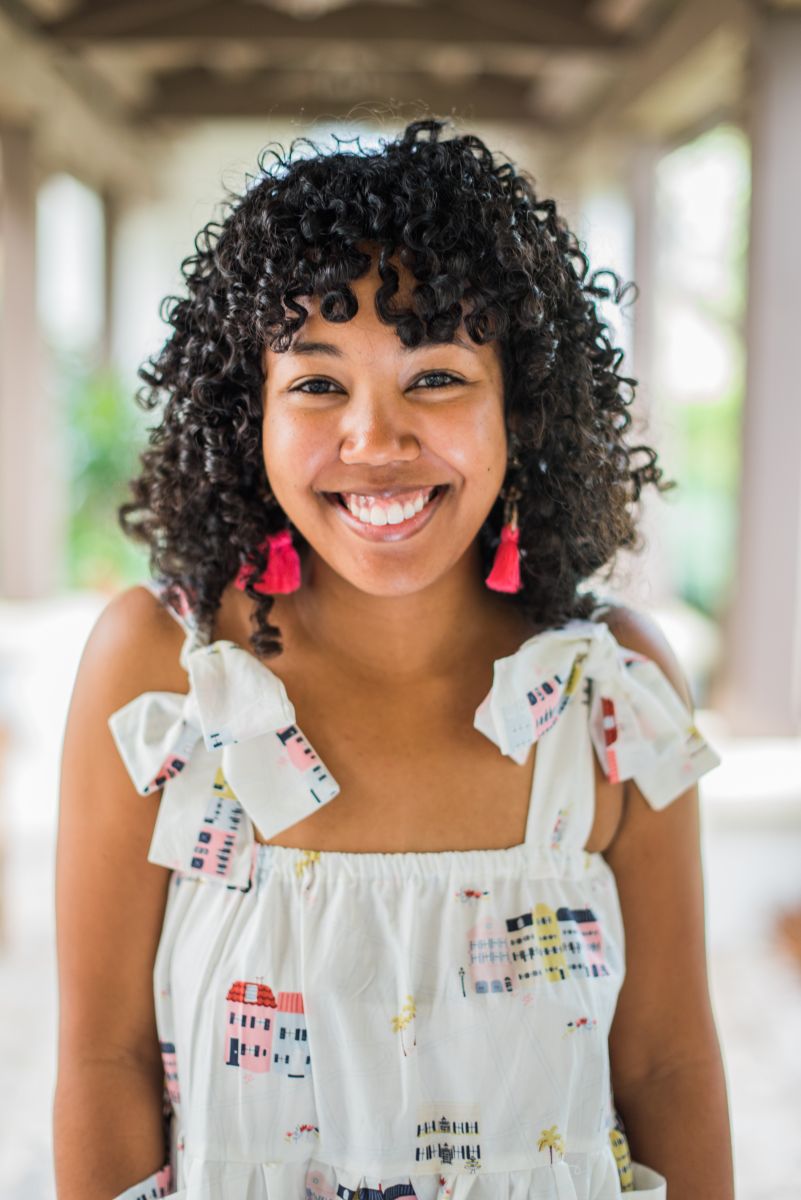
Mimi Striplin began her jewelry company Tiny Tassel out of her 500-square-foot apartment. She sold her signature tassel earrings on her website and at weekend markets for less than $20.
By Teri Errico Griffis
tgriffis@scbiznews.com
On a whim in 2015, Mimi Striplin began her jewelry company Tiny Tassel out of her 500-square-foot apartment. She sold her signature tassel earrings on her website and at weekend markets for less than $20.
In June, that same business grew 1,022% — a major success for the small, female- and Black-owned company. Now, just in time for the holidays, the 28-year-old Striplin is opening her first flagship shop at 46 Spring St., one block off of King Street.
“It’s surreal. There were a lot of times over the summer that I almost felt guilty because there were so many terrible things going on in the country, and I was experiencing so much success all at once,” she said.
What started as a side hustle for a pair of hand-made earrings has now expanded to include bracelets and necklaces, garments and accessories — all named with local nods to things, like the Pineapple Fountain, Avondale, azaleas and influential women Striplin has met along her journey. Tiny Tassel also sells wholesale party goods from other small businesses.
Other than her father who supported Tiny Tassel since the start, Striplin’s entire staff is made up of women. Among others, that includes her mother, who hand sews all the clothing, and her sister, who designs a curated collection of jewelry.
“At first, I did a ton of markets every weekend, starting at the Celadon Sunday flea market, which is still one of my favorites when it happens,” Striplin said. “I would do events every Saturday and Sunday when not working a full-time job, then made an Etsy shop, and it grew from there.”
Eventually, Striplin quit her day job to focus solely on Tiny Tassel.
Tiny Tassel opened in 2015 with a line of handmade jewelry. The company's business has grown 1,000% this year.
This summer, she celebrated her shop’s five-year anniversary, as well as her birthday, with a special gift: a featured spot on NBC’s Today Show that catapulted her business.
She followed up that success with a nod from Facebook Chief Operating Officer Sheryl Sanberg nominating her to the company’s #BuyBlackFriday initiative. To uplift the Black community, Facebook highlighted Black-owned businesses every Friday in November to curate into a gift guide.
“I never thought this would be a full time job,” Striplin said. “It’s been a roller coaster but it’s been amazing. The support here in Charleston has been mind-blowing.”
In June, Striplin said she reviewed Tiny Tassel’s numbers and realized that her small-business had grown more than 1,000% year-over year. Her excitement at how it happened was almost instantly met with worry as to whether her business’ growth was sustainable with hand-made pieces.
“That was a big wake-up call to start growing the different facets of the business, to promote our clothing more and to have more curated designs that I don’t hand make,” she said.
While a pandemic can be a potentially unnerving time to open a brick-and-mortar shop, Striplin said her push came from the consistent sales surge over the summer because people want to support a Black-owned business.
As she rises, Striplin has made it her mission to highlight the women who supported her business — mentioning the photographers, the videographers, the jewelers and accessory makers she works with on the Today show and across her platform.
She also wants other women to realize they don’t have to wait to find success in their careers because they’re “too young.”
“You don’t have to stick to the status quo of going to school, getting a corporate job and all these things we’re trained in society to do. I never would have imagined I could do this so young, in downtown Charleston, as a Black business owner,” Striplin said.
“I always reiterate to other women: Do the work. Do your research. No matter what, you’re going to get through and make it if that’s where you’re meant to be. I encourage others to take the first step and get started.”
Reach Teri Errico Griffis at 843-849-3144.
|
|
Property a study in black and white |
|
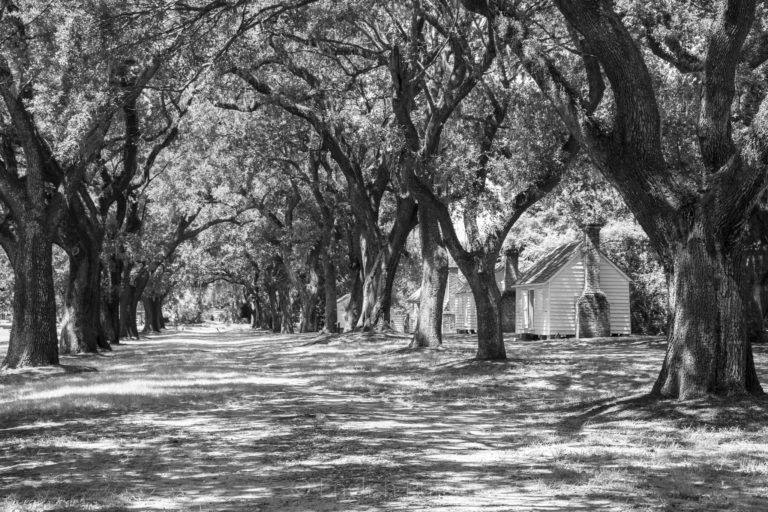
Many of the bricks used in the building of antebellum Charleston were made on plantations by the enslaved.
By English Purcell
I grew up on James Island and was always fascinated with McLeod Plantation. Its slave quarters were visible near one of only two ways off the island. The owner at the time, Willie McLeod, always sat behind my grandmother at St. James Episcopal Church.
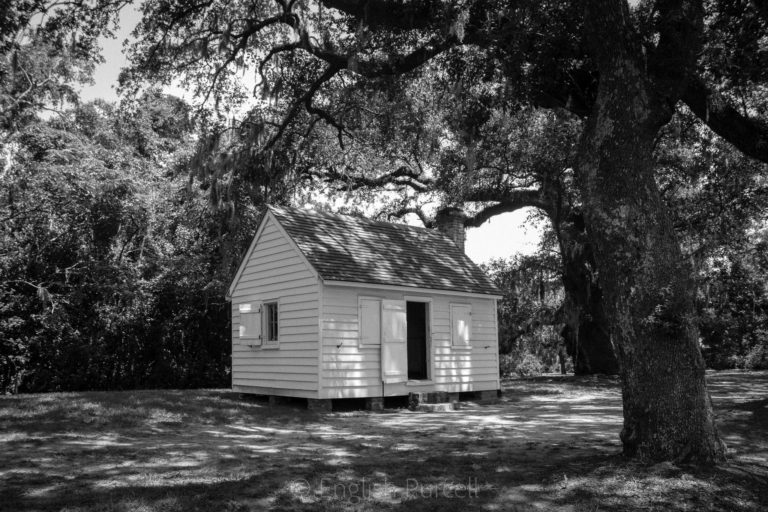
More recently, I took one of the interpretive tours at McLeod. It focused on enslaved Africans and their lives there. I decided to shoot pictures from the perspective of the enslaved on a plantation to draw attention to what they saw in their everyday lives. I must note that the enslaved were not just on plantations. Behind just about every big house on the peninsula of Charleston were slave quarters: laundries, kitchen houses, carriage houses and stables.
This series tells a story without words. The title “A study in black and white” has, of course, a double meaning: Black, representing the enslaved, and white, representing the slave owners. I also edited the photos in black and white.
Each photo is meant to evoke an emotion. For example, there’s the diminutive size of the slave cabin versus the grandeur of the big house. I also can imagine the enslaved gathering near the big oak tree and peaking around it at the big house. In one of the photos, the tree is the focus, with the house a bit blurred in the background.
Many of the bricks used in the building of antebellum Charleston were made on plantations by slaves. You can often find their fingerprints if you look hard enough. The bricks in the chimney are a reminder of the immense contributions of enslaved Africans to the building of our city. This series is meant to honor those who were enslaved and tell their story subtly, but poignantly.
English Purcell is a local photographer who also serves as an administrator of the popular Facebook group, “Charleston History before 1945," and serves on the board of trustees of the Charleston Museum. Have a comment? Send to: feedback@charlestoncurrents.com
|
|
Lucy Beckham High School wins state championship in tennis
|
|
“I told the girls that when you look at a success story like this, there’s so much behind the scenes work that goes on,” said Lizl Kotz, Beckham’s Girls Tennis head coach.
Moultrie News
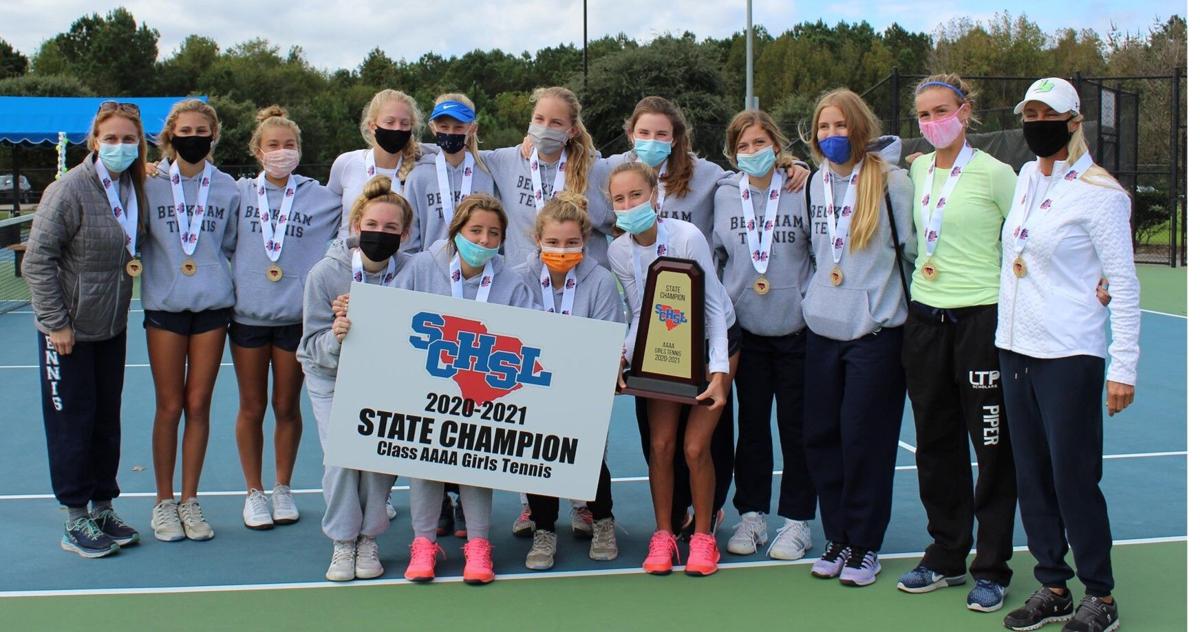
The first-year Lucy Beckham High School Girls Tennis team did something remarkable for a start-up program; It won the state AAAA division championship.
“I told the girls that when you look at a success story like this, there’s so much behind the scenes work that goes on,” said Lizl Kotz, Beckham’s Girls Tennis head coach.
On Oct. 31, the team faced its final competitor, Greenville Senior High School after winning a difficult match against Hilton Head Island High School in the semi-finals.
Kotz did not want the players going into the championship with any expectations, even though Beckham was favored to win. She said it was their chance to finish what they started. The result? A 5-1 victory over Greenville and Beckham’s first state title.
Piper Charney, a tenth grader and Beckham’s top player, also made school history with a first place win in the AAAAA-AAAA individual bracket. Ella DeFord, an eighth grader, won third place in the individual bracket.
Charney said it’s been fun to be a part of a team instead of only playing individually, which is what she’s used to. After the team win, she enjoyed celebrating with her teammates and taking photos with the trophy. The players already designed their championship rings with the words “first ever” engraved on the inside.
Beckham, Mount Pleasant’s newest public high school, opened its doors in September with only ninth and tenth grade students for its first year. For Crystal Daniel, parent of ninth grade player Kate Daniel, the championship was a surreal moment because many of their competitors had never heard of the school.
“You get to see the hard work these girls put into tennis. It doesn’t happen overnight,” said Crystal Daniel, adding that the teammates’ chemistry on and off the court was something that stood out to her. She credits the players’ supportive attitudes toward the coaching staff, Kotz and Michelle Kraus.
Leslie Charney, parent of Piper Charney, also acknowledged Kotz’s role in the team’s success.
“We were super lucky to have somebody who actually knows a lot about tennis, plays the sport herself and is really good from a mental aspect,” Leslie Charney said.
Kotz played tennis at Indiana University and has a degree in physical therapy. She continues to compete on the court and said it has helped her as a coach because she can relate to the pressure her players face.
As a coach, she said she looks for moments to build mental training skills because it’s an important aspect of tennis competition.
“If you don’t have your head on right, you can be a really good athlete, but you can’t always access your skills,” Kotz said.
She helps the players minimize performance anxiety by using the mantra “progress over perfection” and compares competition to taking an exam: It’s an opportunity for the players to show what they are working and improving on.
Kotz explained she also focuses on building a mindset of gratitude among the team. Before each match, the players gather in a circle and say two things they are thankful for. Gratitude reminders were especially important during the uncertainty of this season.
“COVID helped drive home the message that we’re just very thankful to have a season,” Kotz said.
The tennis season was delayed a month and the decision to start the season was still up in the air until two days before it started. Kotz said a lot of energy went into following health guidelines that would have gone towards coaching. For example, each player could only use their three labeled balls to prevent the spread of germs.
Even with the uncertainty, Kotz saw this tennis season as something that provided a sense of normality and stability for the players.
“With COVID, you start seeing the effects on lack of social input, lack of having friends around, lack of seeing a lot of smiles,” Kotz said.
Since Beckham is a new school, the tennis season was the players’ introduction to their school and classmates.
“Tennis season actually started before we all went into school, so it was so nice to get to meet people before actually walking into the building for the first time,” Piper Charney said.
For a team with a state championship already under its belt, the standards are high for next season, but Kotz said she wouldn’t make any predictions because for any coach the goal should be to train the best team you can for that particular year.
“I know that each year will be a new team, a new experience,” Kotz said.
Crystal Daniel said that the championship win put Beckham in the “state spotlight.” Looking forward to the program’s growth, she said she is hoping Beckham eventually gets its own tennis courts instead of having to use the Mount Pleasant Tennis Complex courts.
Kate Daniel said she is excited about developing her tennis skills throughout her next three years in high school.
“I’m looking forward to working more with my coaches. They feel like such a big part of our family,” Kate Daniel said. She is also excited to meet new players who join the team and “expand the family.”
|
|
|
Love Is Stronger Than Hate -- A Son Reflects on his Five-Year Journey since his Mother Was Murdered at Emanuel AME
|
|
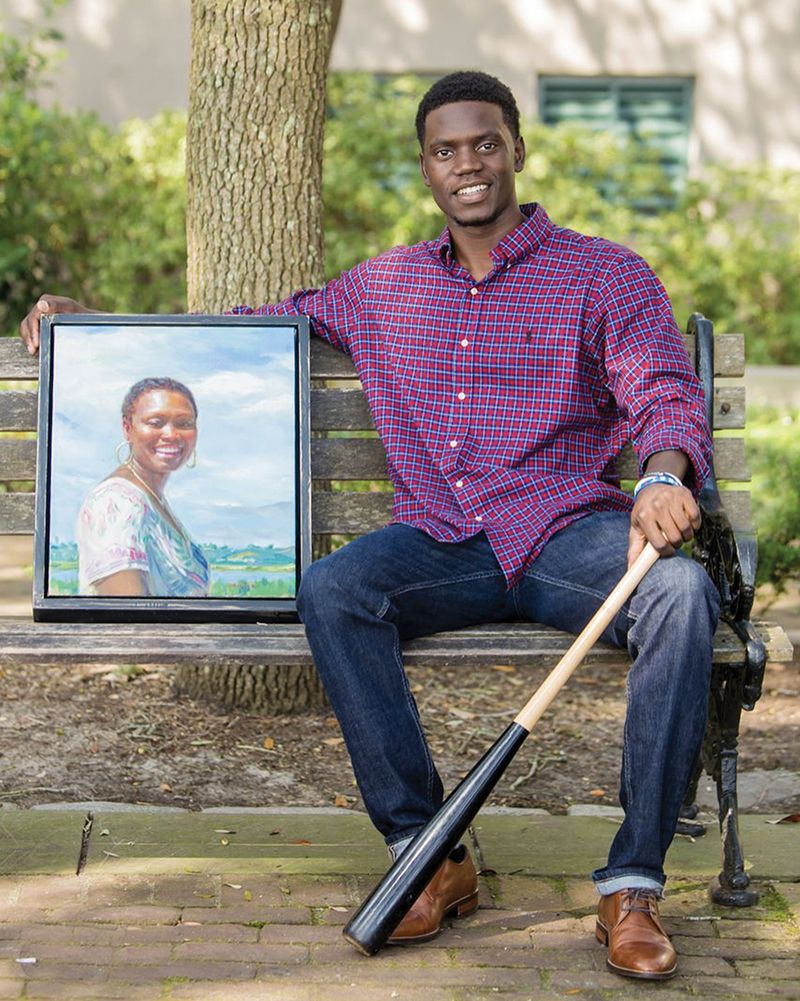
Chris Singleton, a former professional baseball player who is now an inspirational speaker and employee of the RiverDogs, sits with a portrait of his late mother painted by Ricky Mujica.
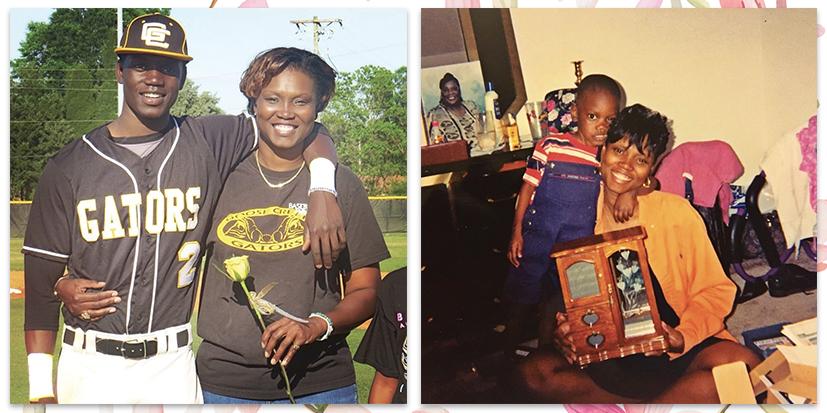
"Five years ago, my life turned upside down. On June 17th, 2015, 21-year-old Dylann Roof walked into my church and took the life of my mother, Sharonda Coleman-Singleton, and the lives of eight others. He murdered my mother and her fellow Bible study friends at Mother Emanuel AME Church solely because they were African American."
By Chris Singleton/Charleston Magazine
Five years ago, my life turned upside down. On June 17th, 2015, 21-year-old Dylann Roof walked into my church and took the life of my mother, Sharonda Coleman-Singleton, and the lives of eight others. He murdered my mother and her fellow Bible study friends at Mother Emanuel AME Church solely because they were African American.
My mom was the most selfless, God-fearing woman you could have ever met. I always joked, though, that while my mom was such a smiling, Christ-filled lady, she was also a lioness when it came to protecting her kids.
Once in 2004, my mom took me to an Atlanta Hawks game — it was the highlight of my childhood, plus we had phenomenal seats right next to their starting forward Josh Smith’s parents. On our way out, I remember my mom walking through downtown Atlanta with her keys held in-between her fingers, making a fist. I asked her why she was doing that and if we were in danger. She said, “No, we aren’t in danger, but I’m not going to let anything happen to my baby.”
I’d give anything to have been able to protect her the way she protected me. Now, I seek to honor my mom by giving my all in any and everything that I do. The social media hashtag that I use, #CantLetMomsDown, is my way of sharing that everything I do is a testament to the kind of mother she was and the awesome parents that I had in her and my late father, for whom I was named. My mission now is to teach others to love the way my mom did.
As I sit here at my desk in my new home in Hanahan, I can’t help but think about how much my life has changed since that June night five years ago. All the highs I’ve experienced — like being drafted by the Chicago Cubs; getting married to my high school sweetheart, Mariana; having our son, CJ; and traveling the country speaking to groups of people — are things that I would never have expected after experiencing the lows of losing my mother and then two years later, losing my dad.
I’ve been fortunate to speak to 67 different organizations, colleges and schools in 2019 and 24 so far this year, and there’s a question I’m always asked: “How are you able to keep the perspective that you have on life at such a young age?”
People think that there’s a mystical power that I possess that allows me to stay so positive after going through some of the most adverse circumstances imaginable. But to me, there’s no secret, no magic. I just feel as though I’ve been through the storm numerous times, and I’ve come to realize that it won’t rain forever.
Often when I travel to speak, I explain to employees of companies or students that we all will experience things that we simply don’t have control over. If you think back on your life, you can easily name four or five things that you didn’t have control over: your parents, your native language, your birthplace, your name, your skin color. Just as we did not choose those things, we will likely face experiences in life that we wouldn’t have chosen either.
I have very vivid memories of June 17, 2015. I was at home when I received a call rushing me down to Calhoun Street, where I discovered that my mom had been taken away from me. These vivid and painful memories are what allow me to keep pushing forward in my mission of unity. I believe what I said after the shootings — that love is stronger than hate. In fact, I know it to be even more true now than I did then.
I also know now that things do, in time, get better — even if they are so bad that you think they never will. A buddy of mine suggested it’s like walking into your house when the lights are off and walking directly to your room without being able to see anything. Maybe you stick one arm out in front of you to keep from running into a wall? I bet most of us have done that. But because you know what it’s like to walk in your house with the lights on, you remember the way. You know where to turn, where to reach for the knob to open your bedroom door.
I believe the same is true when experiencing hardships in life. I remember the nights my family cried after losing my mother. I remember the hard times watching my father take his last breaths. These are the low moments when I thought things would never get better, but my calling now is to share with people my belief that they will.
Now, I think about this year and dealing with COVID-19; something we didn’t see coming. I think about the lives lost and all the suffering experienced by those both young and old. Some people may be feeling down and hopeless, worrying that there’s no coming back from this, but I suggest otherwise. We will all experience storms — some will be a light drizzle, and others will be a hailstorm — but no matter the severity of the storm, it won’t last forever. If this doesn’t seem like it’s true, hopefully my next sentence will inspire you and change your mind.
On June 17th, 2015, my life was flipped upside down when Dylann Roof walked into my church and killed my mother and eight others simply because they were African American and he wanted to start a racially motivated civil war. Exactly five years later on June 17, 2020, I, Chris Singleton, the son of the late Sharonda Coleman-Singleton, am releasing my first book — a children’s book teaching our youth about acceptance and inclusion of all races and religions in our world. The book’s title: Different: A Story About Loving Your Neighbor.
I can’t wait for you to help me spread this message to love your neighbor. I hope in another five years your test might become your testimony as well. And I hope you will always remember that love is stronger than hate.
Tough times don’t last; tough people do.
|
|
The COVID-19 crisis didn’t just destroy businesses; it birthed some, too |
|
"Then people were like, 'Hey, we want to pay you to make us masks for our whole family,'" Yasmina Bizri said. "That's how the business really started."
By Tamara E. Holmes/
Special to USA TODAY
While some businesses have struggled to maintain their customer base throughout the pandemic, others identified a need and target audience because of the COVID-19 crisis.
Siblings Yasmina and Nour Bizri were students at College of Charleston in South Carolina, and their brother Afif Bizri had just graduated when the pandemic led to the cancellation of their summer internships. Finding themselves with a lot more time on their hands, the siblings along with their mother, Tina Khouja, decided to develop masks for the family to wear. The idea came after Nour experienced an allergic reaction to a mask she had bought. Initially, they donated the extra masks they created.
"Then people were like, 'Hey, we want to pay you to make us masks for our whole family,'" Yasmina Bizri said. "That's how the business really started."
Using Instagram and Facebook Marketplace to publicize their designs, interest spiked in the company they named MINO Charleston, and the family began growing their customer base. Shortly after, they landed an order for 500 masks by the United States Postal Service, followed by orders from companies in New York, Ohio and as far as London. They've since expanded their product line to include lanyards and other clothing items so their business will have staying power even when the pandemic subsides and masks are no longer in high demand.
-Delving into different markets
While the pandemic prompted the Bizri family to go into business, it provided other companies with revenue streams they had never dreamed of.
In January, when Robbie Friedman and Allison Zofan were preparing to launch their business ootbox, they intended to lease their portable, temporary workspace pods to corporations running short on three- to four-person conference rooms. By the time the Columbus, Ohio-based company launched in June, companies had sent their workers home and Friedman and Zofan had to come up with a different plan.
One new market for the work pods was households where working parents conducted Zoom meetings and children logged onto laptops for virtual learning.
"Suddenly, every single person understood that it doesn't matter the size of your home; sometimes, you need a place outside your house," Zofan said.
But they also found a unique customer in the health care industry as doctors started using the ootboxes to conduct telehealth visits in private, away from the rest of their family. The ootboxes also proved popular with some hospitals, who used them to conduct COVID-19 testing and other lab services.
While the business model was borne out of the crisis, it has long-term appeal, Zofan said.
"We've talked to leadership at hospitals and they've told us they feel like it's going to be a long-term shift to provide some services outside," she said.
-Reinventing to stay alive
Some businesses saw their revenue streams dry up and had to invent new ones that catered to the new normal. That's what happened to Juneau Food Tours in Juneau, Alaska, a company that made its mark providing culinary experiences for tourists.
Had it not been for the pandemic "this year I would have seen nearly a 200% growth in sales over last year," owner Midgi Moore said. "To say the pandemic was devastating is an understatement."
But Moore wasn't ready to quit. If the coronavirus was keeping tourists from traveling to Alaska, she would bring Alaska to them. She launched Taste Alaska!, a subscription box service that delivers treats and other goodies unique to the state.
"The impact on my business has been significant," Moore says. "While I am not going to see the gross income I expected from operating tours, I have generated a new revenue stream that will become a long-term business venture for me."
After the pandemic ends, Moore expects to continue selling subscriptions to "anyone who loves Alaska, who loves food and who loves adventure."
While entrepreneurship by its nature is unpredictable, 2020 has shown that business can turn on a dime. And while a crisis can make some products and services obsolete, it can birth the need for new offerings overnight.
"This pandemic has changed every part of daily life," Zofan said. For businesses who are looking for a way to pivot, "think about all the different angles of where your product can work."
|
|
|
A new vision for downtown Myrtle Beach? |
|
By Viraj Naik viraj.naik@myhorrynews.com
A group of local business and community leaders hopes a framework to create a thriving downtown in Myrtle Beach will spark investment and interest from developers as well as create job opportunities and more housing in the district.
The nonprofit One Grand Strand, that’s focused on diversifying and growing Myrtle Beach’s economy, presented its vision for the city’s downtown during a special City Council meeting Tuesday aimed at helping small businesses succeed and tying with planning efforts already underway. Rather than identify big ticket public projects, the framework looks to hone in on small-scale investments and opportunities for local stakeholders in the private marketplace.
“What you have seen is exactly why we have invested in the downtown master plan,” Mayor Brenda Bethune said. “There have been comments that the city is trying to be a developer, and that is not true. But we are a partner, and it’s crucial for the downtown master plan to be successfully implemented … that we make the first investment and we have done that.”
A year ago, One Grand Strand, which voluntarily formed, hired James Lima Planning + Development and Plan & Process, two firms from New York City, to create a vision for Myrtle Beach’s opportunity zones.
The firms studied an area bounded by 20th Avenue North, 3rd Avenue North and Canal Street, King Street, Washington Street, Robert M. Grissom Parkway and the ocean.
The nonprofit’s leaders said they hope to help the city retain and attract the next generation of great residents and make downtown a safe place to live, work and play.
The efforts look to add upon initiatives already underway by the city government, including the establishment of the Arts and Innovation District, steps toward creating a Coastal Carolina University campus in the city, establishing a downtown ambassador program, looking at a rail-to-trail project as well as the adoption of the downtown master plan.
“I’m here to support this,” said Bill Pritchard, city planning commission chairman, adding a public-private partnership in Myrtle Beach has been rare in his four decades he’s spent in the city. For him, it takes the small but important Arts and Innovation District “and expands it in a way to make it truly sustainable, something that is able to impact many areas of our community in a very positive way.”
There are challenges, though, as the council was presented a grim economic outlook, particularly for a small-business-driven economy heavily dependent on tourism.
The firms drew on 2018 data from the Distressed Communities Index, or DCI, a comparative measure of the economic vitality and well-being of U.S. communities established by the Economic Innovation Group.
According to the DCI, Myrtle Beach’s primary zip code, 29577, was found to be in economic distress.
In its research, the firms highlighted a concerning poverty rate of 24%.
Within the zip code, 15% of adults don’t have a high school diploma, 19% of housing units are vacant.
Also, 31% of adults between 25 and 64 are not working.
In five years, the total number of jobs grew 6% with the total number of businesses growing just 1% during that same stretch.
The firms’ study found a lack of economic diversity, office jobs and social infrastructure such as arts and culture spaces, public parks and cafes in Myrtle Beach.
The research also points to a “sparse and distressed residential population,” the downtown area not being particularly bike-able and walk-able compared with its competitors, and a need to meet safety thresholds and for place management.
Crime in downtown Myrtle Beach was found to be six times higher than the state’s average.
The framework presents an atmosphere anchored by the CCU campus.
The city’s Arts and Innovation District would be connected by a 3rd Avenue Gateway, using Broadway Street as a connecting corridor to a proposed Withers Swash Greenway.
The oceanfront and boardwalk would be featured as a scenic destination.
One idea included in the plan is to develop the Withers Swash corridor, and the presentation shows an illustration of housing units on a denser Broadway Street.
James Lima, of James Lima Planning + Development, said as communities examine uncertainty caused by COVID-19 and start to recover, there’s a desire to make them more resilient.
Both firms’ research found that healthy downtowns propel city economies, make out-sized contributions to tax revenue, aid a city when it comes to competing for talent and resources and are vital for a city’s image, identity and brand. Typically, residents are younger and better educated.
Additionally, the new downtown would look to tie together Myrtle Beach’s natural assets -- including the oceanfront and Withers Swash -- and to connect these to the Intracoastal Waterway via the proposed bike and pedestrian trail.
The proposal essentially calls for a governing entity or “place management organization.” Such groups are helpful in creating downtown atmospheres that generate economic value and tax revenue, addressing safety and other issues and working toward plans and projects being realized, according to planners.
The council must decide on establishing a privately-led nonprofit with a board comprised mainly of downtown business and property owners who will partner with the city.
What’s proposed is a “networked governance model” centered on the private sector leading efforts to enhance the downtown area.
The board would be comprised of 11 downtown property or business owners, four government appointees (three from the city and one from Horry County) and three nongovernmental organization reps including at least one from the Grand Strand.
There would also be four full-time staff members (president/CEO, marketing director, events and operations manager and administrative assistant) who’d be helped by the new Gold Cap ambassadors.
Tuesday’s presentation took place over a year after the dissolution of the Downtown Redevelopment Corporation. The new organization looks to be more focused on achieving action items.
As for funding, the city could look at implementing a municipal improvement district (MID) to fund management and activities. An MID is an area in which property owners (typically, excluding owner-occupied residences) agree to be assessed for supplemental services to improve the district.
The organization could also draw on tax increment financing (TIF) for capital improvements.
A TIF utilizes the incremental increase in tax revenue generated by investments in infrastructure and other improvements in the TIF district as the funding source for debt service on a municipal bond issued to fund those district enhancements.
Also, money could be used from public or philanthropic contributions, corporate sponsorships or through program services.
Under the framework’s model, the city would work with the place management organization, chamber of commerce, One Grand Strand and downtown business and property owners.
The city’s already existing downtown development office could serve as a liaison between the new place management organization and the city.
The council is expected to vote on directing the city manager to develop a draft business plan, including a proposed budget and sources of funding that would support a new place management organization, and an advanced implementation plan.
While Michelle Kerscher of the Gay Dolphin Gift Cove responded positively to the presentation, she hoped to know more about the plan’s logistics and funding sources.
City resident Ann Dunham, meanwhile, reminded the council of the city’s debt, which totals over $100 million.
Additionally, former Horry County Council Chairman Mark Lazarus, who owns and operates Wild Water & Wheels, Myrtle Waves and Myrtle Beach Grand Prix along the Grand Strand, suggested adding a city-county government complex, noting that perhaps a former Kmart on North Kings Highway could be an option.
|
|
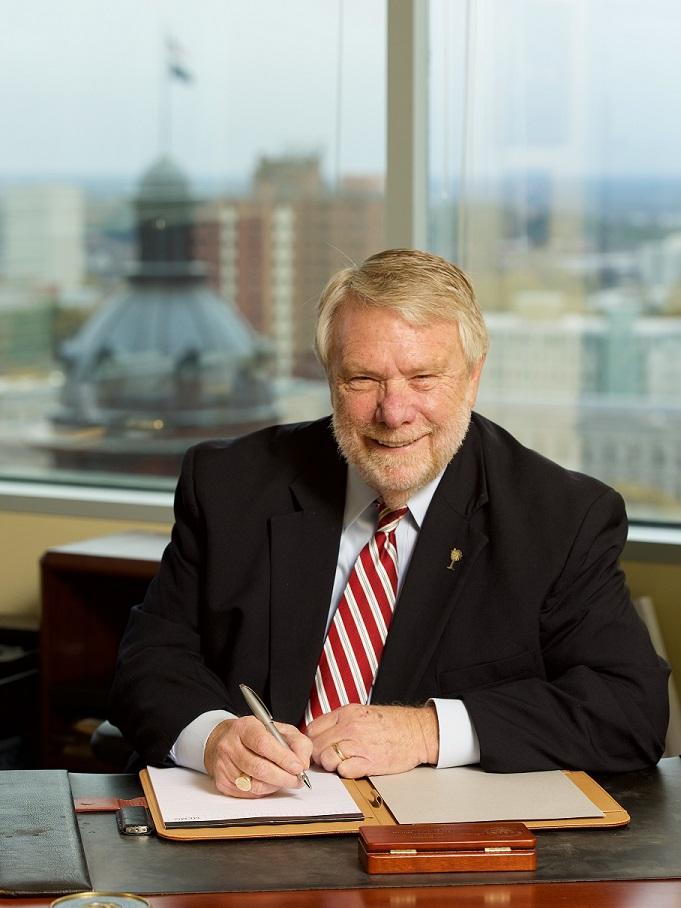
Outgoing Beaufort mayor reflects on city's progress
By Kristen Rary/WTOC
BEAUFORT- Tuesday evening the city of Beaufort will swear in their new mayor, but on Monday the current mayor looked back on 12 years.
“I feel great. I don’t think of it as my last day in office. I think of it as my last day on this job,” said Mayor Billy Keyserling.
Keyserling has been mayor of Beaufort for 12 years. He says looking back on his time, the most important thing he ever did was simple.
“The most important thing is the most fun I’ve had in leading our work sessions,” he said.
Keyserling says he’s proud of the way he worked with the city through a recession, through growth, and through a pandemic. Now, he’s looking to the future.
“I think that we have, excuse me, I think they have a lot of work to do. That work is no shortlist,” he said. It includes, “Diversifying the economy, housing, sticking to our plan, responding and continuing our diligence on the virus, which is going to be here longer than we like, and keeping a steady hand on the budget."
But he feels confident. “Beaufort’s in good shape.”
Keyserling says he knows firsthand, because he knows the people he’s leaving behind.
“The staff couldn’t have been better, the citizens could not have been better, my colleagues couldn’t have been better. And you know, it’s time to make room for the next generation.”
After hundreds of ribbon-cuttings, meetings and hours of hard work, he feels he has done the right thing.
“I’m walking away with no regrets, with great hope, that the wonderful citizens of the best hometown in America are going to move forward in the right way.”
He says he knows it’s time and he’s grateful for the time he was given.
“I leave with great joy," Keyserling said. "Will I miss the job? Yeah. Can someone else do the job as well or better than I ? Of course."
|
|
Viewpoint: SC legislature needs to wake up on environment |
|
About a dozen years ago, a think tank challenged Southern legislators to engage on multiple environmental challenges.
Unsurprisingly, they mostly just nibbled around the edges, tweaking this and slapping putty on that. They haven’t confronted climate change seriously or done much to truly embrace renewable energy. Seeking environmental justice for the downtrodden is mostly just a good idea — still. Preserving land and cleaning up pollution get a lot of lip service. In the years since the book, other challenges have emerged — flooding, infrastructure, old dams — but they never get the priority they deserve.
It’s past time for the Palmetto State to step up to the plate and do more to protect her environment and special places. Just as the National Wildlife Federation’s Collin O’Mara says Congress needs a bold blueprint in 2021, the South Carolina General Assembly must start doing some measurable, real things to deal effectively with environmental challenges. No more sweeping things under the rug.
An environmental blueprint for South Carolina
- Get rid of coal-fired power plants. There are five of these plants left. While they mostly are used for needs in peak power, they’re dirty and need to be shuttered. Give renewable energy the investment and love it deserves. It’s less expensive to generate over the long haul and it’s a gift that keeps on giving.
“Closing coal plants is one of the top things we can do to reduce carbon emission,” said Alan Hancock of the Coastal Conservation League. “It’s also important for power bills, public health concerns, environmental justice concerns and for localized air pollution, (reducing) particulate matter, ozone pollution and mercury pollution.”
John Tynan, head of the Conservation Voters of South Carolina, said while moving away from coal-based energy, the state should also “transition to at least 50% of (electricity) generation being clean energy in the next 10 to 15 years” and be on a path to 100% from renewables over 30 years.
- Deal with Santee Cooper. The state-owned utility is again being threatened for sale or some kind of rearranged management deal. State lawmakers have it in their power to keep the utility in state hands but make it work better for everyone. They need to stop kicking the can down the road and give it a chance to clean up its act. Literally. Whatever happens, Hancock said, “We want to ensure there’s some level of Public Service Commission accountability and oversight with the South Carolina General Assembly.”
- Clean up our drinking water. “Forever chemicals” are used in everything from firefighting to making wrinkle-free shirts. Unregulated, they are contaminating local water supplies, particularly in areas where low-income people live because of their proximity to military bases and industrial facilities, said Rep. J.A. Moore, D-North Charleston. He plans to file a bill again to have the state set acceptable levels of contaminants, which will cause local water systems to remove unsafe levels of these chemicals from water. He noted: “Once you start regulating them, it’s just like Pandora’s box … because it will cost billions of dollars to fix.”
- Reduce plastic pollution. Here’s a case where the legislature needs to do nothing: Stop considering proposed bans on bans of single-use plastic by local governments. They should be able to get rid of plastic bags if they want, particularly on the coast to help clear it of trash.
- Protect more land. The state has a plethora of special places that need to be kept out of the hands of developers. Protecting land also allows areas that are vital for mitigation of flooding and more. There should be “a dramatic increase over time in land protection, supported by both funding increases and innovative policies,” Tynan said. “One bill introduced last session set a goal of protecting 30% of the state by 2030.”
- Engage on climate change meaningfully. And then there’s the increasing number of headaches caused by failing to manage climate change. Policymakers need to listen to scientists, not the tin hat crowd. Strategies need to be developed and implemented to reduce flooding (not only on the coast) and to boost community resilience.
Make green investments and policies that make a difference. Now is the time.
Andy Brack is publisher of Charleston City Paper. Have a comment? Send to feedback@charlestonypaper.com.
|
|
Bobby Hitt: Consumers altering spending habits; hitting keys rather than stores
The 2020 holiday shopping season will be unlike any other as the world continues to navigate impacts from the coronavirus.
Consumers are altering their shopping habits during this critical time period for businesses. Instead of hitting the stores, shoppers are hitting their keyboards - and making history in the process.
In fact, this past Cyber Monday set a record for the largest U.S. internet shopping day ever, according to Adobe Analytics data. Consumers spent $10.8 billion on Cyber Monday, a more than 15% increase over last year's spending.
The explosion in e-commerce is an opportunity for tremendous growth in South Carolina -- and, we are ready. Our state's prime geographic location, superior infrastructure and robust logistics networks offer companies unparalleled connectivity.
As the trend for e-commerce continues to skyrocket, technology is at the forefront of growth. According to the 2020 SC Logistics Study, the logistics industry's reliance on technology has tripled over the last decade. That technology reliance is leading to innovations in supply chain automation -- which reduce costs, increase efficiency and improve profitability. Innovative solutions must continue to evolve to make online commerce accessible and affordable for businesses of all sizes.
The growth of e-commerce is also increasing demand for cybersecurity networks and investment in technology workers. Having a qualified tech workforce that manages the equipment, consumer data and network security is imperative to competing in the marketplace.
In a comprehensive look at technology trends across South Carolina, the SC Council on Competitiveness' newest cluster, SC Tech, planned to release the first statewide technology cluster impact study on Dec. 9. The report reveals companies across industries are relying on tech firms in S.C. more than ever -- with transportation and warehousing technology supplier spending up more than 144% since 2010, and retail trade reliance on technology up over 77% since 2010.
E-commerce is the driving force of the 2020 holiday shopping season and will only continue to grow. With the strategic and innovative development of our state's technology and logistics assets, South Carolina is poised for unlimited e-commerce growth potential.
Bobby Hitt is a Charleston native, a graduate of Charleston High School and the University of South Carolina and is
Secretary of Commerce.
|
|
Chuck Boyd: A warning sign ... if you're on a diet
A "Warning" Sign...if you're on a diet.
It was a bright red, glowing beacon.
A warm spot with delicious aromas.
My eyes almost glazed.
I had read the light had been turned off for about four days for remodeling and I am sure the recognized symbol was sorely missed.
But, tonight it was alight again and tranquility along Savannah Highway was restored.
Yes, the symbol of hot stuff at Krispy Kreme was shining again.
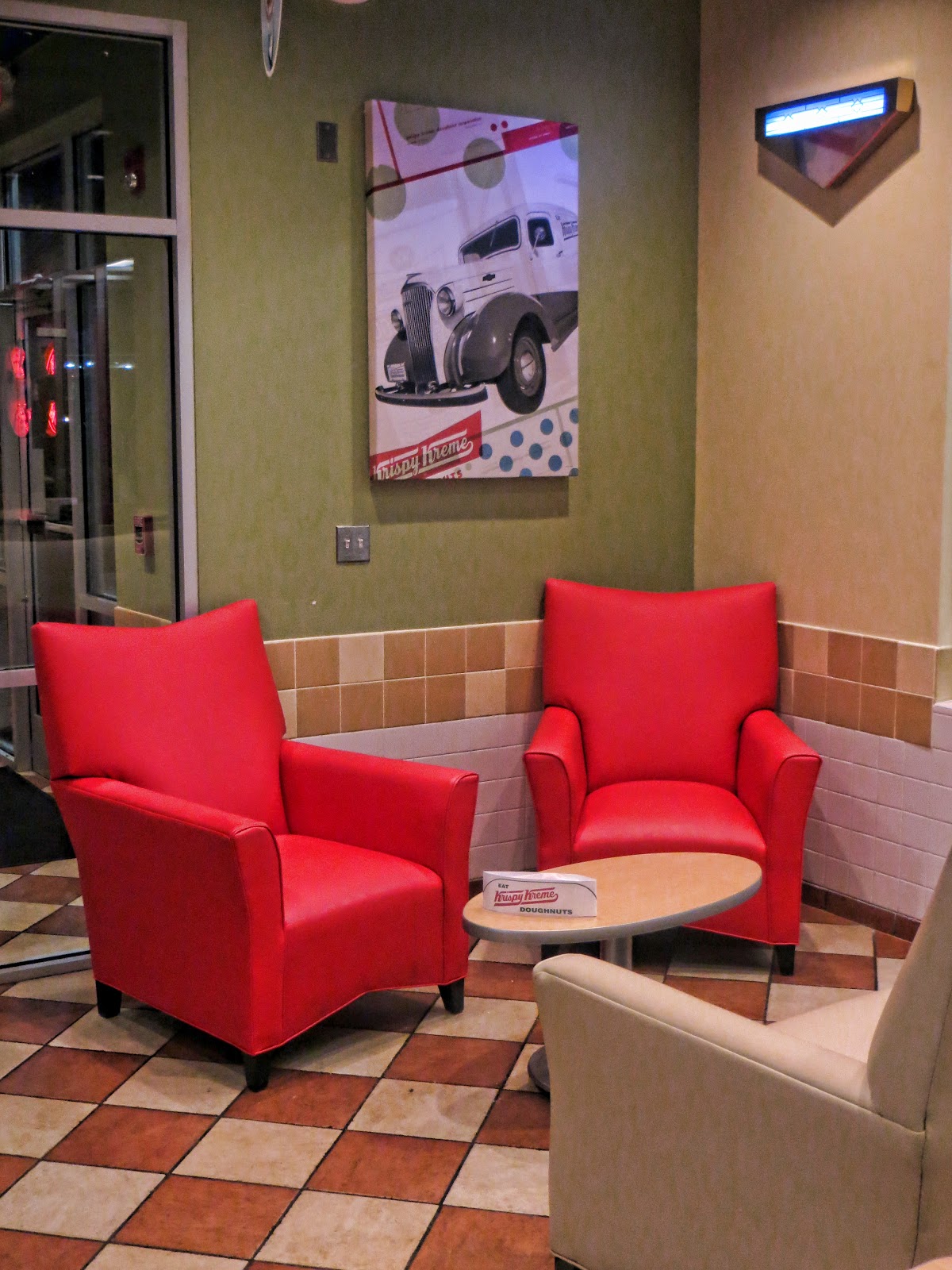
I had read that the place had closed for less than a week to do a major facelift, brightening and new tables and chairs.
Passing by, I was curious to see how it looked now.
As some know, I have been successfully dieting for several months and have dropped my weight from 206 down to 182-183.
Needless to say I have NOT been hanging out at a doughnut shop.
But this was "research" so I grabbed my camera and pushed through the glass doors to see what had changed.
First I noticed a Starbucks look with comfy chairs and a couch forming a small conversation area.
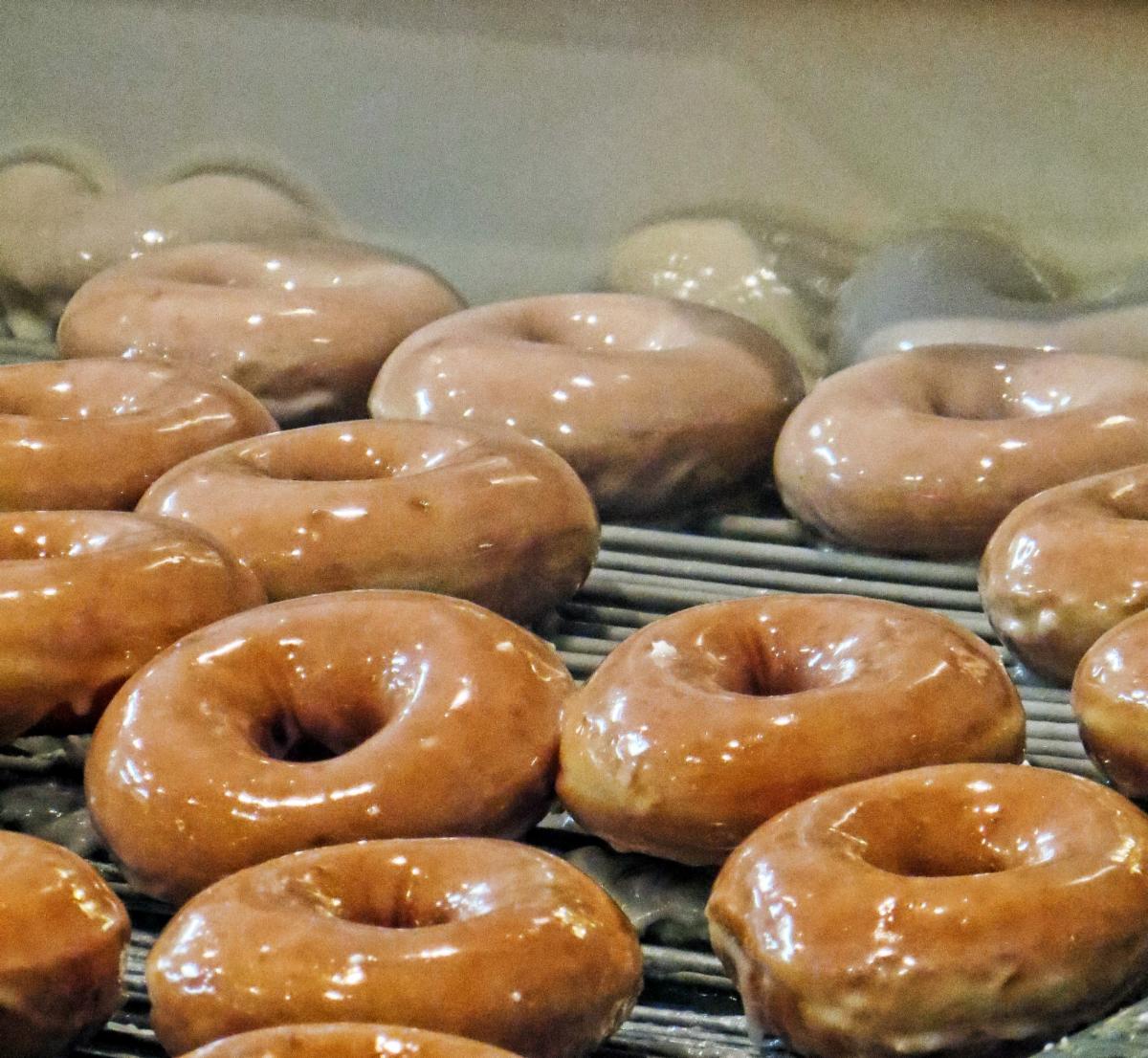
Lots of new tile work was evident and the close-up viewing area near the assembly line of tasty treats now had a solid wall keeping curious kids' fingers and hands away from moving parts. Good idea!
It sure looked bright and clean. The new tables -- some short, some high -- had an inviting look.
"Get some doughnuts, a cup of coffee and settle back for a nice break," the room seemed to say.
Admittedly, I came in during a lull.
Three people arrived just before I did and they were talking about the changes. We all seemed to agree it was bright and cheerful.
The difference was they were ordering several dozens of the glazed and some chocolate ones.
If you are going to get doughnuts at the "factory" where they are made, you ask that they be plucked right off the line, still delightfully warm.
Otherwise, you could pick up a box or so at a nearby grocery store.
Years and years ago, before Krispy Kreme was available on the West Coast, I had sent a wrapped dozen to my daughter as a present for her graduation.
From the California Police Academy.
She passed them around to fellow new officers and everyone enjoyed being part of a law enforcement cliche.
No, I did NOT eat a doughnut.
Really. Just took some pictures, jotted down some notes, climbed back in my car, and drove home.
This morning my scale read 181 pounds.
Chuck Boyd is a retired newspaperman, a former Marine and worked as an executive in the hospitality and tourism fields for a number of years before he returned home to Charleston as director of Infoline for The Post and Courier.
|
|
Climate on the Carolina coast
|
A high of around 68 and low of 47.
The Coast is published once a week.
Publisher: Charles deV. Williams.
Ass't publisher: Jim Parker.
Office: 264 Molasses Lane, Mount Pleasant.
|
|
|
Places to eat in Myrtle Beach
Sea Captain's House
Seafood restaurant
Traditional seafood favorites served in a bustling yet cozy 1930s cottage overlooking the ocean.
Dine-in, and curbside pickup and delivery are available.
|
|
|
|
|
|
|