|
Spring Greetings! I’d like to update you on the Maryland Pesticide Education Network’s (MPEN) efforts to phase out PFAS-pesticides in the 2025 Maryland General Assembly session (Jan-Apr 2025). Although the bill did not pass, we achieved a crucial PFAS victory. And it has implications to the health care field.
This is a David vs. Goliath story.
Unexpectedly, Maryland became the target of a pesticide industry attack on the scientific definition of PFAS, known as ‘forever chemicals.’ PFAS are highly persistent and cumulative, causing certain cancers and linked to various health issues like cardiovascular disease, birth defects, and immune suppression. In fact, PFAS contamination has now been recognized as a national crisis.
We worked with key legislators on drafting a Maryland bill they sponsored, phasing out PFAS-pesticides, supported by a coalition of public health and environmental organizations and globally renowned PFAS scientists.
Unfortunately, well-resourced chemical industry lobbyists successfully pushed for amendments that significantly altered the scientifically accepted PFAS definition. Established by the global Organization for Economic Cooperation and Development (OECD), this definition, co-authored by the U.S. EPA and 36 other nations, is used by multiple government agencies and is already codified in Maryland law and 23 other states. The amended bill proposed a narrower, industry-favored interpretation that excludes many PFAS-containing substances, including pesticides, from regulatory oversight, without scientific basis.
Despite evidence countering industry false narratives and MPEN’s offering concessions, the Maryland House passed the revised bill, driven by legislators’ well-intentioned desire to address PFAS this year.
This matters: The amended PFAS definition exempted half of the 15,000 PFAS chemicals and 90% of PFAS-pesticides from regulation, yet they remain hazardous. This change would have protected the chemical industry, not people or the environment, by shielding products, profits, and liability.
Worse, the bill codified the weakened definition into MD law, indemnifying PFAS-pesticides and the industry from future protections. It would have threatened Maryland’s existing PFAS protection laws and affect future protections on all PFAS products. This industry change was meant to justify similar changes in other states and nationally, as part of the chemical industry’s strategy to weaken PFAS protection laws nationwide.
Important to healthcare facilities: PFAS-pesticides, though less than 8% of registered pesticides in Maryland, are widely used in healthcare settings, schools, homes, and agriculture. Only Maine and Minnesota have passed laws phasing them out, which are now being challenged by the global pesticide industry. MPEN and the MD public health and environmental advocacy community fought to kill their own bill, preventing it from becoming a gift to the chemical industry and a disaster for Marylanders and the nation.
A victory: We stopped the industry-amended Maryland bill from becoming law! We prevented a destructive pesticide industry win from setting a national precedent.
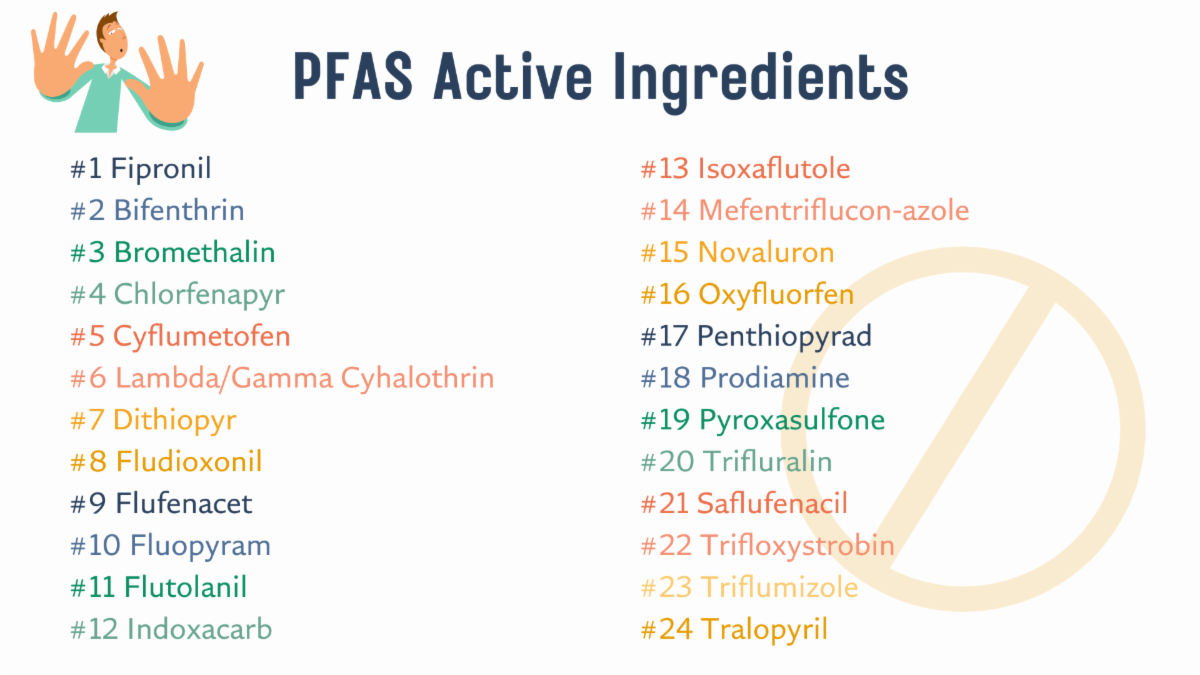
Hospitals and healthcare facilities should be aware of this situation. See posting below regarding a first-in-the-state study on PFAS in Marylanders’ blood. Imagine facility areas where patients cannot be removed prior to a pesticide application (e.g. NICUs, ICUs, ERs) and thereby potentially exposing them to a PFAS-pesticide. Even just one exposure can impact them for years. It has now become even more important to know what your pest control vendor is using at your facility. To assist you in this effort- see the chart below of the 24 most widely used PFAS-pesticides in our state to ensure they are not being used in your facility. For a full list of Maryland registered 66 PFAS active ingredients to avoid, click here. Insist on PFAS-free products and a prioritized IPM approach to pest management.
Learn more about the fate of this bill:
For information on non-toxic pest control options for facilities, visit our fact sheets, sample policies, guidance, articles, and video library. The Project's IPM Toolkit is available online. Contact Sean at sean@mdpestnet.org or call 301-664-4374 for support.
|